Gir Cow Price, Milk Yield & A2 Ghee Farming Guide 2026
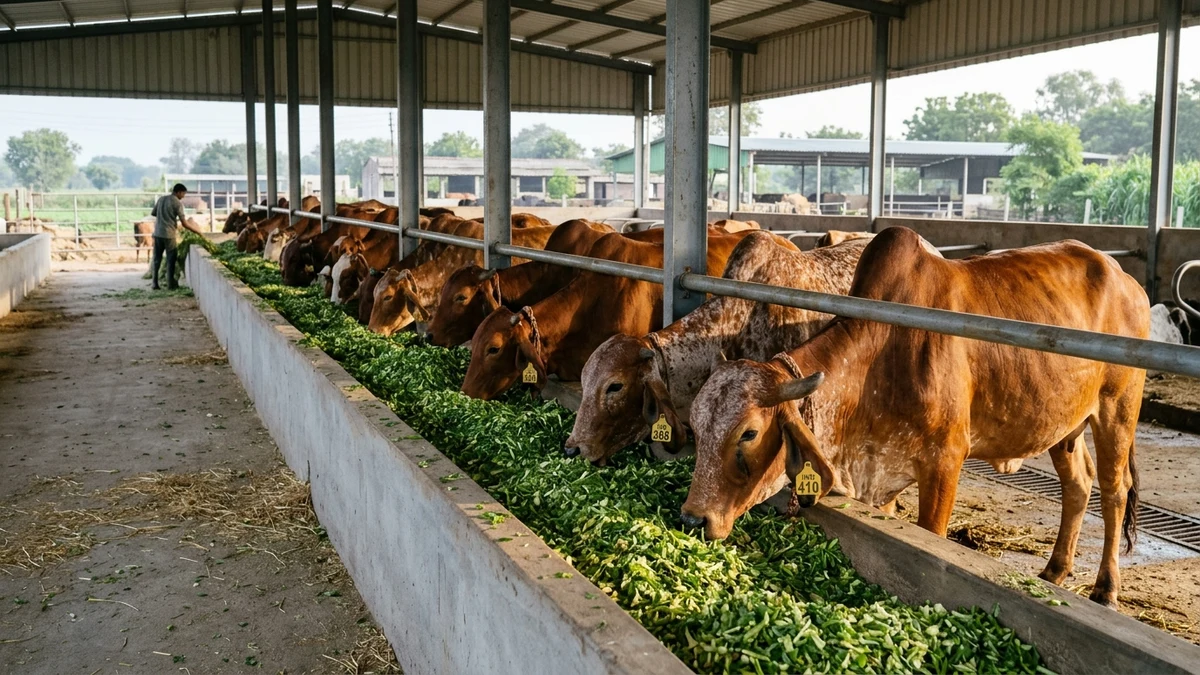
Key takeaways
- Purebred Gir cows (Bos indicus) yield an average of 12 to 18 liters of milk per day in commercial dairies, with elite champion cows reaching 20 to 25 liters daily under scientific management.
- Market purchase prices for verified healthy Gir cows in 2026 range from ₹45,000 to ₹65,000 for first-calvers, up to ₹90,000 to ₹1,50,000+ for high-yielding second/third lactation cows with pedigree certificates.
- Gir milk is 100% natural A2 beta-casein milk, commanding premium farmgate prices of ₹70 to ₹120 per liter in urban direct-to-consumer markets, while Vedic Bilona A2 ghee sells for ₹2,000 to ₹3,500 per kg.
- Under the Central Rashtriya Gokul Mission (RGM), entrepreneurs and dairy farmers receive 50% capital subsidies (up to ₹2.00 Crore) to establish indigenous breed multiplication farms.
- Pashu Kisan Credit Card (Pashu KCC) provides collateral-free working capital loans of ₹40,000 to ₹44,000 per milch cow at an effective 4% interest rate with prompt 3% central subvention.
The Gir cow (Bos indicus), native to the Kathiawar and Gir hills of Saurashtra in Gujarat, is India's most celebrated indigenous milch cattle breed (profiled in our comprehensive dairy farming livestock directory). Widely searched across Indian livestock communities as "gir cattle", "gir breed cow", and "gir cow in india", this majestic zebu breed is internationally revered for its exceptional thermo-tolerance, high natural resistance to tropical tick-borne diseases (theileriosis and babesiosis), extended commercial productive life exceeding 12 to 15 years, and rich A2 beta-casein milk composition. Verify related KisanPe comparisons and official portal references via fertilizer calculator.
In modern commercial dairy farming, progressive entrepreneurs are expanding indigenous herds alongside allied livestock ventures detailed in our commercial poultry farming guide. The rising health awareness regarding A2 beta-casein protein, coupled with premium retail realizations for chemical-free A2 raw milk and traditional Vedic Bilona cultured ghee, has made Gir dairy farming a lucrative enterprise; model herd revenues using our farm income calculator.
Gir Cow Price in India 2026: Lactation, Age & Pedigree Matrix
The purchase price of a Gir cow varies according to maternal genetics monitored by the Department of Animal Husbandry and Dairying (dahd.nic.in), documented lactation yields, and physical conformation. The table below outlines indicative price ranges observed across primary cattle breeding fairs (such as Jasdan and Pushkar) and certified dairy breeding farms as of November 2026:
| Lactation Stage / Animal Category | Daily Milk Yield (L/day) | Average Age | Indicative Price Range (2026) | Breeding / Commercial Utility |
|---|---|---|---|---|
| Pregnant Heifer (ग्याभिन बछिया) | Expected 12 – 14 L | 2.5 to 3.0 Years | ₹45,000 – ₹60,000 | Entry-level farm foundation; minimal transit stress |
| 1st Lactation Cow with Female Calf | 12 – 15 Liters | 3.5 to 4.0 Years | ₹55,000 – ₹75,000 | Proven mothering ability; valuable future female heifer |
| 2nd & 3rd Lactation (Peak Milking) | 15 – 18 Liters | 4.5 to 6.0 Years | ₹75,000 – ₹1,10,000 | Maximum commercial milk volume; peak fat and SNF |
| Elite Pedigree / Show Champion Cow | 18 – 24+ Liters | 4.0 to 7.0 Years | ₹1,20,000 – ₹2,00,000+ | Breeding bull mother; embryo transfer donor cow |
| Purebred Gir Breeding Bull | Mother Yield > 3500 L | 2.0 to 3.5 Years | ₹80,000 – ₹1,50,000 | Natural service or semen straw production |
When purchasing Gir cattle, verify official ear-tag records under INAPH alongside physical parameters detailed in our Gir cattle breed guide, completing three consecutive on-site test milkings.
Anatomy and Physical Breed Identification of Purebred Gir Cattle
Identifying authentic Gir genetics is critical to avoiding substandard crossbred animals often marketed at inflated prices. Purebred Gir cattle exhibit distinct morphological characteristics documented by the National Bureau of Animal Genetic Resources (nbagr.icar.gov.in):
- Convex Forehead (डोम शेप्ड माथा): The most prominent visual marker is an ultra-convex, rounded bony forehead that acts like a sun-shield, protecting the eyes and brain from intense tropical solar radiation.
- Long Pendulous Leaf-Like Ears (लटकते मुड़े कान): The ears are remarkably long, flexible, and fold inward like a curling leaf, hanging down past the jawline with a characteristic notch near the tip.
- Half-Moon Shaped Horns: Horns emerge downwards and backwards from the sides of the head, sweeping upward in a graceful backward curve resembling a crescent moon.
- Prominent Hump and Large Dewlap: A well-developed, muscular hump sits squarely over the shoulder, containing a dense network of blood vessels that aid heat dissipation. The loose dewlap (गलकम्बल) is large and pliable.
- Coat Color Varieties: Coat colors range from reddish brown and deep red to white with large dark red patches, speckled brown, or spotted red on a white base.
Milk Production Economics: A2 Beta-Casein Milk & Vedic Bilona Ghee
Unlike western exotic cows whose milk contains the A1 beta-casein protein variant (which hydrolyzes during digestion into the inflammatory peptide beta-casomorphin-7 or BCM-7), Indian indigenous zebu cattle naturally produce 100% A2 beta-casein milk. The presence of proline at position 67 of the amino acid chain prevents BCM-7 release, resulting in superior gut digestibility and reduced cardiovascular inflammation.
In Indian retail markets, A2 cow milk commands a substantial commercial premium:
| Product Category | Commercial Standard Milk Price | Pure Gir A2 Farm Price | Processing Method / Standard | Target Customer Base |
|---|---|---|---|---|
| Fresh Chilled Raw Milk | ₹35 – ₹45 / Liter | ₹75 – ₹110 / Liter | Raw chilled, glass bottle delivered | Health-conscious urban households |
| A2 Pasteurized Pouch Milk | ₹40 – ₹50 / Liter | ₹80 – ₹120 / Liter | Standardized, HTST pasteurized | Retail supermarkets and organic stores |
| Vedic Cultured Bilona Ghee | ₹550 – ₹800 / kg | ₹2,000 – ₹3,500 / kg | Curd churned, slow firewood boiled | Ayurvedic wellness, infant nutrition |
| A2 Paneer (Cottage Cheese) | ₹350 – ₹450 / kg | ₹600 – ₹850 / kg | Citric/whey coagulated whole milk | Gourmet cooking and dietary protein |
| Gir Cow Dung & Urine (Gomutra) | Nominal / Zero | ₹15 – ₹30 / Liter / Cake | Distilled Gomutra / manure | Organic farming & inputs calculated on our fertilizer calculator |
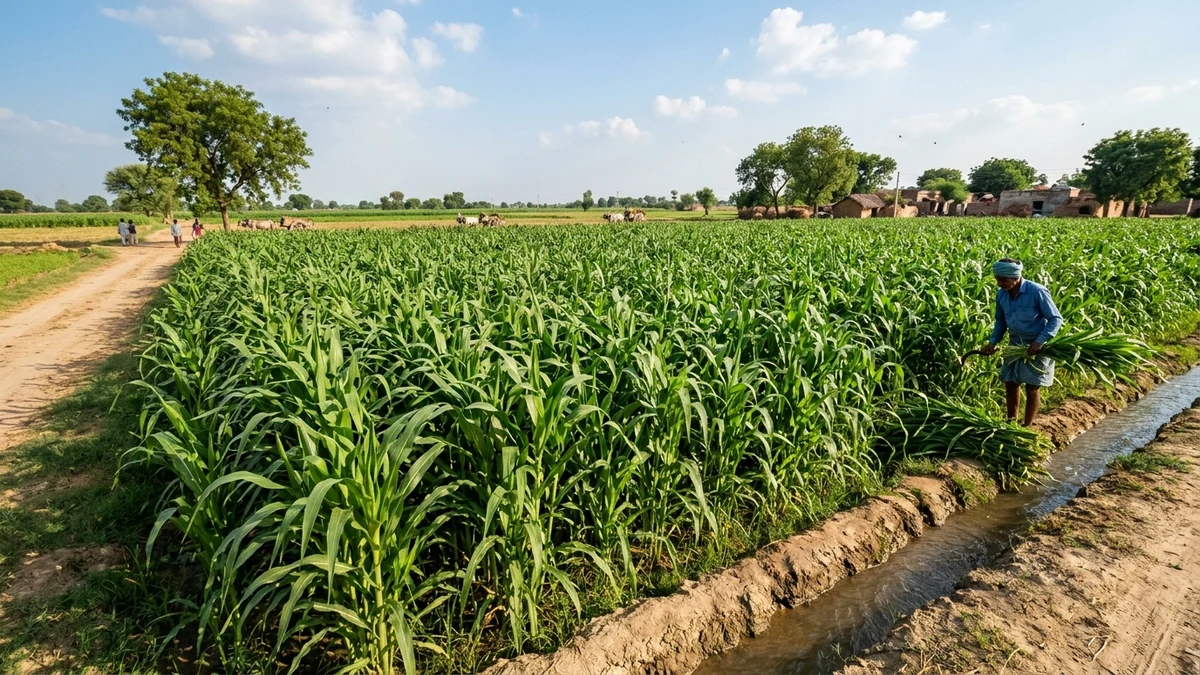
Scientific Daily Feeding Schedule: Total Mixed Ration (TMR) Chart
To sustain 15 to 18 liters of daily milk yield with 4.5%+ butterfat, a lactating Gir cow weighing approximately 400 to 450 kg requires a scientifically balanced Total Mixed Ration (TMR) containing 2.8% to 3.2% dry matter (DM) of body weight (approx. 12 to 14 kg DM per day):
- Green Fodder (25 to 30 kg daily): Succulent green roughage provides essential carotene and natural moisture. Combine cereal fodder (hybrid Napier grass, green Jowar chari managed per our jowar grass agronomy guide, or maize) with leguminous crops in a 3:1 ratio.
- Dry Fodder (5 to 6 kg daily): Wheat straw (bhusa), dry Jowar kadbi, or paddy straw (harvested per standards in our paddy cultivation guide) chopped into 1-to-2-inch lengths provides dietary fiber for rumen health and milk fat.
- Concentrate Cattle Feed (4 to 6 kg daily): Formulated with 20% to 22% crude protein (CP) and 70% total digestible nutrients (TDN). Feed 1.5 kg for body maintenance plus 1.0 kg for every 2.5 to 3.0 liters of milk produced. Mix crushed maize (40%), soybean DOC/mustard cake (30%), wheat bran (27%), and common salt (1%).
- Chelated Mineral Mixture & Buffers: 50 to 80 grams of chelated mineral mixture daily prevents silent heat and retention of placenta (ROP). Add 30 to 40 grams of sodium bicarbonate (soda bicarb) to stabilize rumen pH during heavy grain feeding.
- Clean Drinking Water: Provide ad-libitum clean, cool water (70 to 100 liters daily). Monitor summer heat stress on our 7-day agricultural weather platform to prevent dehydration-induced yield drops.
Government Subsidies and Loan Schemes for Gir Dairy Farming
The Government of India and state animal husbandry departments actively incentivize indigenous breed conservation and commercial multiplier herds through targeted fiscal schemes:
- Rashtriya Gokul Mission (RGM) Breed Multiplication Farms: Commercial herds receive a 50% capital subsidy up to ₹2.00 Crore, supported by NABARD refinancing (nabard.org) and our central agricultural schemes guide.
- Animal Husbandry Infrastructure Development Fund (AHIDF): Provides a 3% interest subvention on bank term loans for automated processing units, supported through KisanPe farmer loan assistance.
- Pashu Kisan Credit Card (Pashu KCC): Farmers qualify for ₹40,000 to ₹44,000 working capital per milch cow under the Kisan Credit Card (KCC) scheme. Calculate your credit entitlement on our KCC loan eligibility calculator.
- State Indigenous Cow Subsidies: States offer direct cash incentives for indigenous cattle rearing on parcels documented via Bhulekh land records.
Frequently asked questions
- How much milk does a Gir cow give per day on average?
- A healthy purebred Gir cow yields between 12 and 18 liters of milk per day under scientific stall-fed dairy management. Calculate potential dairy revenue across seasonal lactations with our farm income calculator.
- What is the price of a good Gir cow in India in 2026?
- In 2026, a healthy second-lactation Gir cow giving 14 to 16 liters daily trades between ₹65,000 and ₹95,000. Review official breeding standards from the Department of Animal Husbandry and Dairying (dahd.nic.in).
- Why is Gir cow milk considered healthier than regular dairy milk?
- Gir cow milk naturally contains 100% A2 beta-casein protein without any inflammatory A1 beta-casein variant. It is rich in conjugated linoleic acid (CLA), omega-3 fatty acids, and strontium, which boost immunity, enhance cardiovascular health, and prevent lactose-associated digestive distress.
- What is the selling price of authentic A2 Gir cow ghee per kg?
- Authentic Vedic Bilona cultured A2 ghee prepared from curd (not cream) commands ₹2,000 to ₹3,500 per kg in Indian retail markets. Because it requires approximately 25 to 30 liters of whole Gir cow milk to produce 1 kg of cultured ghee, the premium reflects its labor and ingredient purity.
- How much feed and fodder does a Gir cow require daily?
- A 450 kg lactating Gir cow requires 25 to 30 kg of succulent green fodder (see cultivation guidelines in our jowar grass guide), 5 to 6 kg of dry roughage, and 4 to 6 kg of balanced concentrate grain feed daily.
- What is the average lifespan and productive milking period of a Gir cow?
- Gir cows have an exceptional lifespan of 18 to 22 years, remaining commercially productive and calving regularly for 12 to 15 years (producing 10 to 12 calves in a lifetime), compared to exotic HF and Jersey cows which rarely produce past 4 or 5 lactations in tropical heat.
- What government subsidies exist for starting a Gir cow dairy farm?
- Under the central Rashtriya Gokul Mission (RGM), entrepreneurs receive up to 50% capital subsidy (capped at ₹2.00 Crore) backed by NABARD rural finance (nabard.org).
- What is the Pashu Kisan Credit Card (Pashu KCC) loan amount for Gir cows?
- Under Pashu KCC guidelines, farmers receive collateral-free working capital of ₹40,000 to ₹44,000 per cow at an effective 4% interest rate. Calculate customized credit limits on our KCC calculator and review terms in our KCC loan guide.
- How can you physically identify an original purebred Gir cow?
- Authentic Gir cattle possess a domed convex forehead, long pendulous ears, and backward curving horns verified under NBAGR breed registration standards (nbagr.icar.gov.in).
- Are Gir cows resistant to tropical heat and tick diseases?
- Yes. Purebred Gir cows possess specialized sweat glands, loose vascularized skin folds, and dark skin pigmentation under their coat that reflect intense ultraviolet solar radiation. They exhibit near-total natural resistance to tick fever, theileriosis, and babesiosis.
- What is the calving interval of a Gir cow?
- Under proper nutritional management with timely artificial insemination (AI) or natural service at 60 to 90 days postpartum, Gir cows maintain a clean calving interval of 13 to 14 months, ensuring one calf and one full lactation every year.
- Can Gir cows adapt and produce milk outside Gujarat in states like UP, Punjab, or Maharashtra?
- Yes. Gir cows have demonstrated outstanding adaptability across diverse Indian agro-climatic zones, flourishing in Haryana, Punjab, Uttar Pradesh, Rajasthan, Maharashtra, Karnataka, and Tamil Nadu, as long as clean airy sheds, balanced green fodder, and clean water are provided.
This article is for general information only and is not financial advice. Loan and scheme eligibility depends on partner and government criteria.