Harvester Machine Price: Combine Types & Subsidy Guide
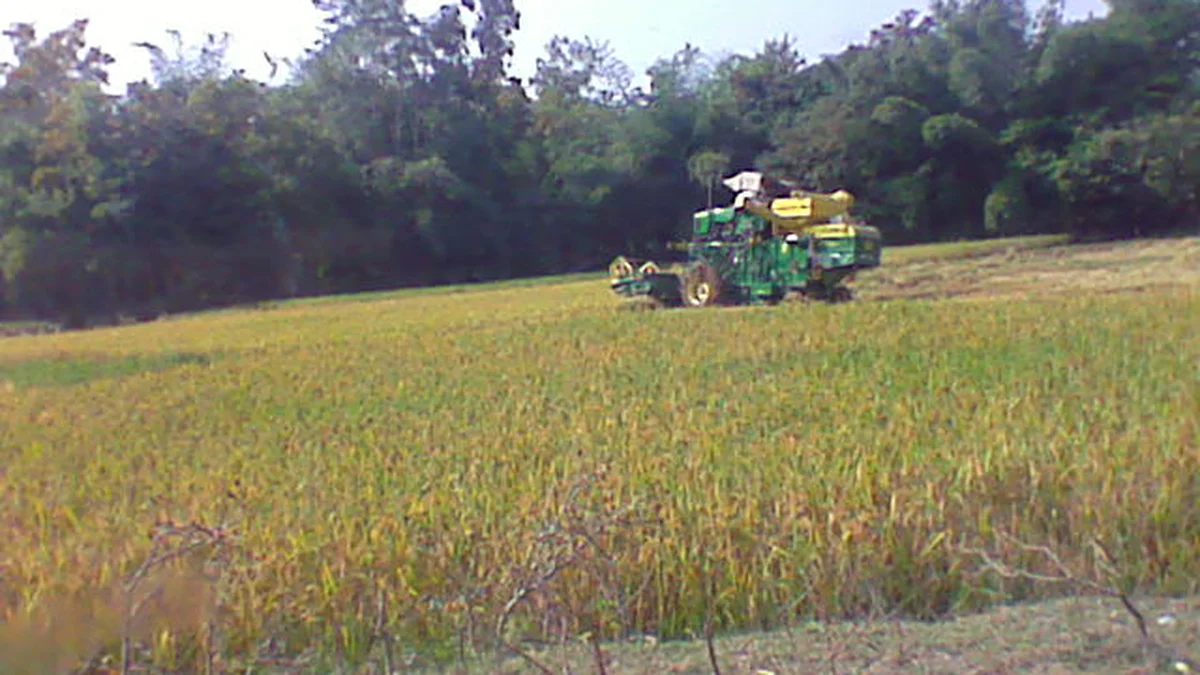
Agricultural mechanization represents the single most transformative lever for enhancing farm productivity, mitigating severe rural labor shortages, and ensuring timely harvesting before inclement weather ruins standing crops. Among modern farm implements, the combine harvester stands as the ultimate multi-operational marvel—seamlessly executing cutting, threshing, de-chaffing, cleaning, and grain collection in a single pass across the field. With India cultivating over 10 crore hectares under cereal grain crops (paddy, wheat, maize, soybean, and pulses), tracking the latest harvester machine price is an imperative commercial decision for progressive farmers, custom hiring center (CHC) entrepreneurs, agricultural contractors, and machinery cooperatives.
In the Indian market, harvester machinery spans a diverse spectrum: from compact tractor-mounted harvesting attachments (priced between ₹4.5 lakh and ₹9 lakh) and specialized rubber-track paddy harvesters designed for wet wetland fields (priced from ₹18 lakh to ₹32 lakh) to massive self-propelled multi-crop giants manufactured by industry leaders like Preet, Kartar, Claas, John Deere, Shaktiman, and New Holland (commanding ₹22 lakh to ₹45 lakh). Governed by technical safety and testing standards enforced through the Ministry of Agriculture and Farmers Welfare (Mechanization and Technology Division) and supported by 40% to 50% capital subsidies under the Sub-Mission on Agricultural Mechanization (SMAM Machinery Portal), this comprehensive engineering and buying guide explores commercial price lists across machine categories, analyzes custom hiring rental economics, compares tire versus track configurations, and details bank financing pathways.
1. Harvester Machine Price List 2026: Popular Brands & Models in India
Combine harvester prices vary substantially depending on engine horsepower (typically 75 HP to 130 HP), cutter bar width (8 feet to 14 feet), drive mechanism (wheeled versus rubber crawler tracks), and grain tank storage capacity (1,200 to 2,400 liters). Below is an indicative market price benchmark for leading commercial harvester models available in India.
| Manufacturer / Brand | Model Name / Specification | Engine Power & Drive Type | Cutter Bar Width | Target Crops | Indicative Price (Ex-Showroom) |
|---|---|---|---|---|---|
| Preet Agro | Preet 987 Self-Propelled | 101 HP (Ashok Leyland Engine, 4WD/2WD) | 14 Feet | Wheat, Paddy, Soybean, Mustard | ₹26,50,000 – ₹29,50,000 |
| Kartar Agro | Kartar 4000 Self-Propelled | 101 HP / 110 HP, Heavy Duty | 14 Feet | Multi-crop (Wheat, Paddy, Maize) | ₹27,00,000 – ₹30,50,000 |
| Claas India | Crop Tiger 40 Terra Trac | 76 HP (Rubber Crawler Track) | 9 Feet / 10 Feet | Wet Wetland Paddy, Soybean | ₹28,50,000 – ₹33,00,000 |
| John Deere | John Deere W70 Grain Harvester | 100 HP, Turbocharged Engine | 14 Feet | Paddy, Wheat, Pulses | ₹32,00,000 – ₹36,50,000 |
| Kubota Agricultural | Kubota DC-68G / DC-70 Plus | 70 HP (Full Crawler Rubber Track) | 7 Feet / 8.5 Feet | Wet Muddy Paddy Fields | ₹24,00,000 – ₹27,50,000 |
| Shaktiman | Shaktiman Sugarcane Harvester 3737 | 173 HP, Heavy-Duty Diesel | Billet Cane Harvester | Sugarcane | ₹85,00,000 – ₹98,00,000 |
| Swaraj (Mahindra) | Swaraj 8100 EX Combine | 101 HP, 6-Cylinder Engine | 13.5 Feet | Wheat, Paddy, Gram | ₹25,50,000 – ₹28,50,000 |
| Balkar Combines | Balkar 654 Wheeled Combine | 101 HP, Multi-Speed Thresher | 14 Feet | Paddy, Wheat, Sunflower | ₹25,00,000 – ₹28,00,000 |
| Tractor-Mounted Units | Standard Tractor PTO Harvester | Requires 55–75 HP Tractor | 8 to 11 Feet | Wheat, Soybean, Paddy | ₹5,50,000 – ₹8,50,000 |
| Mini Paddy Combines | Walking / Riding Mini Track Harvester | 18–25 HP Diesel Engine | 4 to 5 Feet | Small Terraced Paddy Plots | ₹3,80,000 – ₹5,50,000 |
Source: Central Farm Machinery Training and Testing Institute (CFMTTI Budni), manufacturer bulletins, and dealer networks (November 2026). Indicative commercial rates excluding local state RTO road taxes and insurance. Actual prices vary with optional accessories like Straw Management Systems (SMS) and cabin air conditioning.
2. Major Types of Harvester Machines: Wheel vs Track vs Tractor-Mounted
Choosing the appropriate engineering architecture depends on soil topography, seasonal rainfall conditions, and farm plot sizing:
A. Self-Propelled Wheeled Combines
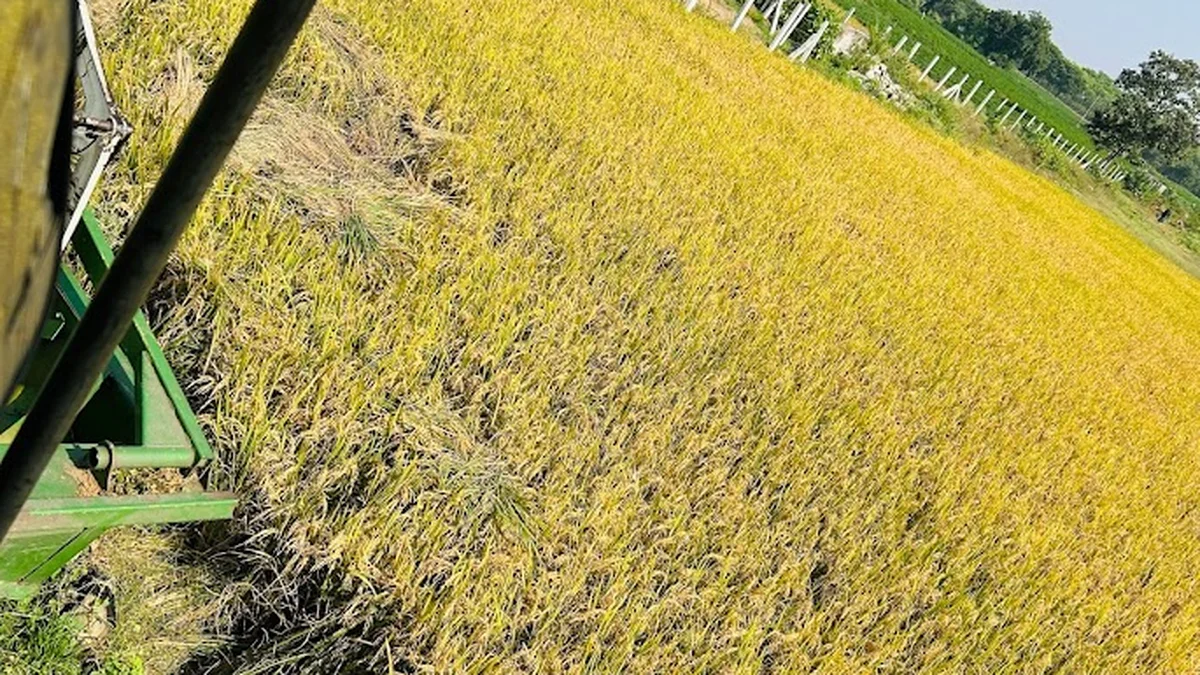
Equipped with heavy-duty pneumatic drive tires, self-propelled wheeled combines (such as Preet 987 or Kartar 4000) are the undisputed kings of the Indo-Gangetic plains (Punjab, Haryana, Uttar Pradesh, Rajasthan, Madhya Pradesh). Designed for firm, dry soil conditions, they harvest wheat, mustard, and dry-season paddy at rapid forward speeds (3 to 5 km/h), covering 1.5 to 2.5 acres per hour with high fuel efficiency. They can also travel independently on paved state highways between harvesting contracts.
B. Track Combines (Rubber Crawler Track)
In wet, deltaic, or marshy paddy soils (such as the Cauvery delta in Tamil Nadu, Godavari basin in Andhra Pradesh, West Bengal, Odisha, and Kerala), heavy wheeled machines instantly sink and become immobilized. Track combines (like Claas Crop Tiger Terra Trac or Kubota DC-70) utilize continuous rubber crawler tracks that distribute the machine’s 4 to 6-tonne weight over a massive ground contact area, exerting a remarkably low ground pressure (under 0.20 kg/cm²). This allows track harvesters to float effortlessly through waterlogged, kneedeep mud.
C. Tractor-Mounted Combine Attachments
For farmers or custom hiring operators who already own a 55 HP to 75 HP utility tractor, purchasing a tractor-mounted combine kit provides an affordable entry into mechanization. The tractor is mounted atop a purpose-built harvesting chassis, utilizing the tractor's engine and PTO to drive the cutter bar, thresher, and straw walkers. At ₹5.5 to ₹8.5 lakh, it requires less than one-third the capital of a dedicated self-propelled unit.
3. Government Subsidies on Harvesters Under SMAM
To promote farm mechanization and eliminate crop residue burning (parali burning), the Government of India provides substantial capital grants under the Sub-Mission on Agricultural Mechanization (SMAM) and State Farm Mechanization Schemes:
| Beneficiary Category / Scheme Tier | Subsidy Percentage (%) | Maximum Grant Cap (₹ Lakh) | Eligible Machinery / Implements |
|---|---|---|---|
| Individual Farmers (SC/ST/Women/Small & Marginal) | 50% of machine cost | Up to ₹11.00 – ₹13.50 Lakh | Self-propelled combines, track harvesters |
| Individual Farmers (General Category) | 40% of machine cost | Up to ₹8.50 – ₹10.00 Lakh | Self-propelled combines, tractor attachments |
| Custom Hiring Centers (CHCs) by FPOs / PACS | 40% to 50% project cost | Up to ₹25.00 – ₹40.00 Lakh | Bankable project package including combine + tractor + baler |
| Crop Residue Management (CRM) Scheme (Punjab, Haryana, UP) | 50% individual / 80% group | Up to ₹12.00 Lakh individual | Combines fitted with mandatory Super-SMS (Straw Management System) |
Mandatory Super-SMS Regulation: In northern agrarian states, state pollution control boards mandate that wheeled combine harvesters must be fitted with a Super Straw Management System (Super-SMS). This auxiliary unit chops paddy straw uniformly and scatters it across the field behind the thresher, allowing immediate direct seeding of wheat using Happy Seeders or Super Seeders without burning.
4. Custom Hiring Rental Business Economics: ROI and Payback Period
Most Indian farmers with small landholdings (1 to 5 acres) cannot justify owning a ₹30 lakh combine. Instead, they hire machinery on an hourly or per-acre rental basis. This creates a lucrative business opportunity for Custom Hiring Center (CHC) operators:
- Commercial Rental Rates: During the peak wheat season, custom hiring rates average ₹1,800 to ₹2,400 per acre. During wet paddy harvesting with track machines, rental charges rise to ₹2,500 to ₹3,500 per acre due to heavy machine wear and diesel consumption.
- Seasonal Operational Capacity: A reliable 14-foot wheeled combine harvests 18 to 22 acres per day. Over a 30-day regional harvesting window, a single machine easily covers 500 to 650 acres.
- Migratory Harvesting Circuit: Enterprising operators mount combines on flatbed trailers and follow the harvesting season northwards—beginning in Madhya Pradesh in March, moving to Punjab and Haryana in April, and shifting to Rajasthan in May. In the Kharif season, they operate in southern paddy belts between October and January, achieving 90 to 120 operational days annually.
- Gross Revenue & Net Profit: Harvesting 1,200 acres across both seasons at an average rental fee of ₹2,200/acre yields ₹26,40,000 in gross revenue. After deducting diesel (7 to 9 liters/acre = ₹9.5 lakh), operator and helper wages (₹3.5 lakh), and annual maintenance/depreciation (₹3.0 lakh), net annual profit reaches ₹10.4 lakh, enabling full machine loan amortization within 3 to 4 seasons.
5. Key Factors to Inspect Before Buying a Used Harvester
Because brand-new self-propelled combines require significant capital, a thriving secondary market exists across Punjab (Moga, Nabha, Malerkotla) and Haryana. Buyers considering a used machine must thoroughly examine:
- Threshing Drum & Concave Clearance: Inspect the rasp bars on the threshing cylinder for excessive wear or broken teeth. A damaged concave causes grain cracking or excessive unthreshed heads passing into the straw walkers.
- Straw Walker Bearings & Wooden Bushings: Shake straw walker cranks to detect radial play. Worn bearings cause unbalance, vibrating the entire rear chassis and leading to metal fatigue cracks.
- Cutter Bar Alignment & Knife Sections: Check the wobble box drive and ledger plates. Misaligned knives tear grain stalks rather than cleanly shearing them, causing high shattering loss in the field.
- Engine Compression & Hydraulic Pump Pressure: Ensure the 6-cylinder diesel engine shows zero black/white exhaust smoke under full load, and verify that the hydraulic lift cylinder raises the heavy 14-foot cutter bar instantaneously without stuttering.
6. Farm Mechanization Ecosystem & Implement Matching
Harvesting machinery forms the apex tier of agricultural capital investments. Cultivators and custom hiring operators managing large equipment fleets frequently pair combines with high-torque tractors and implements. Explore popular tractor models in our Swaraj 744 FE guide, heavy-duty options in our John Deere tractor review, utility machines in our Mahindra 575 DI specifications, and reliable workhorses in our Eicher 380 price list.
For post-harvest residue incorporation and seedbed preparation, review implement dynamics in our rotavator price and PTO matching guide, explore grain agronomy in our paddy cultivation guide, and discover local trading yards through our kisan mandi directory. Operators evaluating capital funding and harvest-linked repayment schedules can calculate interest terms via our Kisan Credit Card guide and check government machinery grants in our tractor subsidy scheme guide.
Official regulatory portals consulted for this guide include the Sub-Mission on Agricultural Mechanization (Farmech SMAM Portal), machinery testing bulletins from the Farm Machinery Testing & Mechanization Division (DAC&FW), equipment technical documentation from Mahindra Farm Machinery India, and precision equipment releases from John Deere Agricultural Equipment.
Frequently asked questions
- What is the average harvester machine price in India for self-propelled models?
- The price for standard 101 HP self-propelled multi-crop combine harvesters (like Preet 987, Kartar 4000, and Swaraj 8100) generally ranges between ₹25 lakh and ₹32 lakh. Premium global models from Claas and John Deere range from ₹30 lakh to ₹38 lakh. Compare heavy tractors in our John Deere equipment guide.
- How much does a tractor-mounted combine harvester cost?
- A tractor-mounted combine harvester attachment costs between ₹5.5 lakh and ₹8.5 lakh. It requires an existing 55 HP to 75 HP tractor to power the cutting, threshing, and cleaning mechanism, such as models featured in our Swaraj 744 FE guide.
- What government subsidy is available on combine harvesters in India?
- Under the Sub-Mission on Agricultural Mechanization (SMAM Portal), individual farmers receive 40% to 50% capital subsidies (capped at ₹8.5 to ₹13.5 lakh). Farmer Producer Organizations (FPOs) establishing Custom Hiring Centers can receive up to 50% project subsidies. Explore related support in our tractor subsidy guide.
- What is the difference between a wheel combine and a track combine harvester?
- Wheeled combines operate on large rubber tires and are ideal for dry, firm fields (wheat, mustard, soybean). Track combines feature continuous rubber crawler tracks that exert minimal ground pressure, allowing them to harvest waterlogged and muddy wetland paddy fields without getting stuck, as detailed in our paddy cultivation guide.
- What is Super-SMS and why is it mandatory on combine harvesters?
- Super Straw Management System (Super-SMS) is an attachment mounted at the rear of combine harvesters. It chops loose paddy straw into small shreds and spreads it evenly across the field, allowing farmers to sow wheat directly using Super Seeders without burning crop residue (parali). Post-harvest tillage can be paired with equipment from our rotavator guide.
- How many acres can a standard combine harvester cut in one day?
- A 14-foot self-propelled combine harvester typically harvests 18 to 25 acres per day (1.5 to 2.5 acres per hour) under favorable, dry field conditions.
- What are the typical custom hiring rental charges for a harvester machine?
- Custom hiring rental rates range from ₹1,800 to ₹2,400 per acre for wheat, and from ₹2,500 to ₹3,500 per acre for wet paddy harvested with rubber-track machines, including diesel and operator charges.
- Can mini combine harvesters be used on small hill terraces?
- Yes, compact 18 HP to 25 HP mini crawler combine harvesters (with 4 to 5-foot cutter bars) are designed specifically for small, fragmented plots and hill terraces in Uttarakhand, Himachal Pradesh, and the Northeast. They cost between ₹3.8 lakh and ₹5.5 lakh.
- What engine horsepower is required to operate a combine harvester efficiently?
- Standard 14-foot self-propelled multi-crop combines require 101 HP to 110 HP heavy-duty turbocharged diesel engines (such as Ashok Leyland, Simpson, or Kirloskar) to handle simultaneous propulsion, cutting, threshing, and cleaning loads.
- What bank loan options are available for purchasing a combine harvester?
- Nationalized commercial banks and rural institutions provide agricultural term loans covering 80% to 85% of the machine cost, repayable over 5 to 7 years in bi-annual harvest-linked installments. Estimate repayment schedules using our KCC loan guide.
- How much diesel does a combine harvester consume per acre?
- Under standard conditions, a wheeled combine consumes approximately 7 to 9 liters of diesel per acre for wheat, while track machines in wet mud consume 9 to 12 liters per acre. Compare utility tractor fuel benchmarks in our Mahindra 575 DI guide.
- What is the expected operating life of a commercial combine harvester?
- With diligent routine greasing, timely replacement of rasp bars and cutting knives, and post-season sheltered storage per DAC&FW mechanization guidelines, a commercial combine harvester easily delivers 8,000 to 10,000 working hours (10 to 15 productive years).
This article is for general information only and is not financial advice. Loan and scheme eligibility depends on partner and government criteria.