PM Kusum Yojana: Solar Pump Subsidy, Targets & Apply 2026
Key takeaways
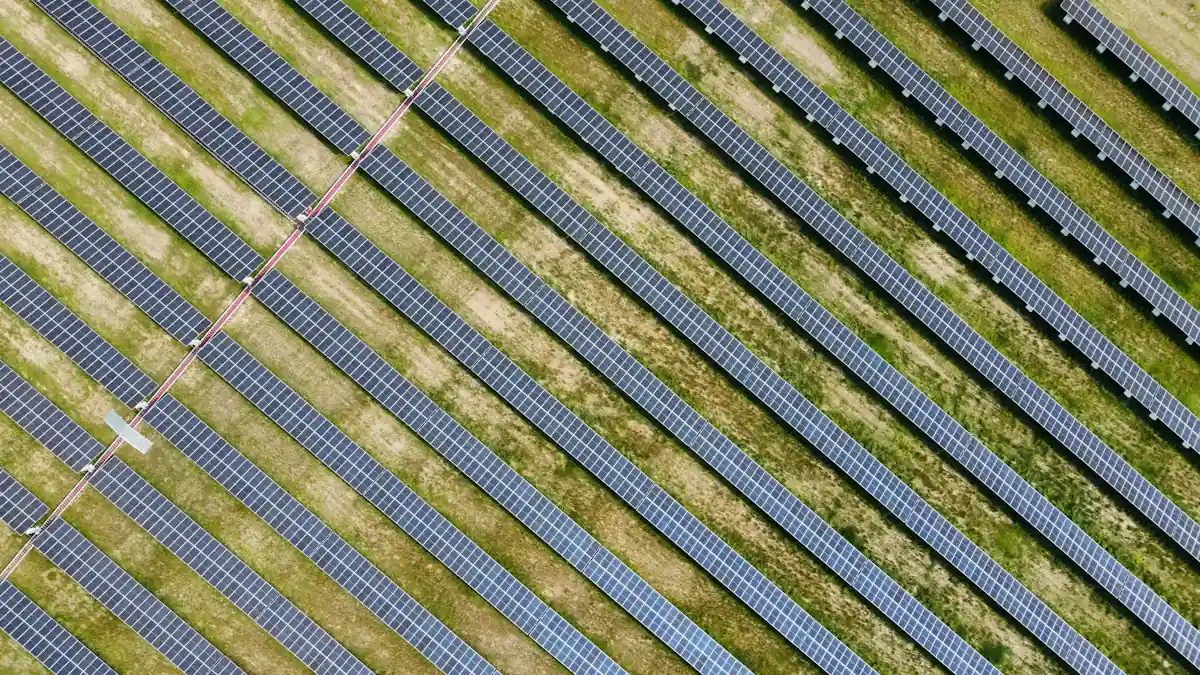
- Kisanon ke liye PM Kusum Yojana ka mukhiya lakshya (primary objective) is to provide energy security, daytime solar irrigation, replacement of expensive diesel pumps, and supplementary farm income through the sale of surplus solar electricity.
- Under Component B of PM-KUSUM, farmers receive up to 60% capital subsidy (30% Central Financial Assistance from MNRE + 30% State Government subsidy), requiring only a 10% upfront farmer contribution, with the remaining 30% available through low-interest bank loans.
- The scheme operates across three components targeting 34,800 MW of solar capacity by March 2026: Component A (10,000 MW grid-tied plants on barren land), Component B (20 Lakh standalone off-grid solar pumps), and Component C (15 Lakh grid-connected pump solarisations).
- Farmers applying for solar pumps must register strictly on designated State Renewable Energy Development Agency portals (e.g. HAREDA in Haryana, MEDA in Maharashtra, RREC in Rajasthan, UPNEDA in UP) and avoid unverified third-party phishing websites.
- For broader farm mechanization schemes and solar irrigation calculation tools, consult our companion guides on solar pumps and central Kisan welfare portals.
Understanding kisanon ke liye PM Kusum Yojana ka lakshya kya hai is central to unlocking one of the most transformative agricultural renewable energy initiatives ever rolled out by the Government of India. The Pradhan Mantri Kisan Urja Suraksha evam Utthaan Mahabhiyan (PM-KUSUM), launched under the aegis of the Ministry of New and Renewable Energy (MNRE), represents a multi-billion-dollar national strategy aimed at de-dieselizing the Indian agrarian landscape, guaranteeing daytime field irrigation, and turning rural farmers into solar power producers ("Urjadata").
For decades, Indian farmers have contended with two chronic irrigation hurdles: the exorbitant recurring operating costs of diesel engine pumps (which consume over 5.5 billion liters of diesel annually) and unreliable, erratic night-shift agricultural grid power supply that forces cultivators to irrigate freezing fields in the dark, exposing them to snake bites and physical hazards. By delivering up to 60% capital subsidies for solar-powered agricultural pumps through our solar pump scheme hub, PM-KUSUM provides complete energy independence, cuts farm overheads by ₹45,000 to ₹75,000 per year, and fosters environmental sustainability by eliminating agricultural carbon emissions.
What are the Core Objectives of PM Kusum Yojana? (Lakshya & Vision)
When farmers and rural entrepreneurs search "kisanon ke liye pm kusum yojana ka lakshya kya hai", the scheme encompasses five strategic national and farm-level objectives formulated by the Central Government alongside agricultural welfare initiatives like PM Kisan Samman Nidhi:
- 1. Total De-Dieselization of Farm Irrigation: Replacing over 2 million polluting, expensive diesel-operated centrifugal pump sets with standalone off-grid solar water pumping systems, safeguarding farmers against volatile global diesel prices.
- 2. Assured Daytime Irrigation Access: Supplying continuous, reliable water discharge during daylight hours, allowing cultivators to irrigate standing crops comfortably and efficiently without waiting for erratic midnight grid supply.
- 3. Solar Power Generation as an Income Stream: Enabling farmers, cooperatives, and panchayats to set up 500 kW to 2 MW ground-mounted solar power plants on uncultivated, barren, or fallow land, selling electricity directly to state DISCOMs under 25-year Power Purchase Agreements (PPA) at pre-fixed feed-in tariffs (typically ₹3.10 to ₹3.60 per kWh).
- 4. Alleviating Financial Stress on State DISCOMs: Lowering the immense burden of heavily subsidized agricultural power tariffs on state electricity distribution companies, cutting agricultural cross-subsidies, and drastically reducing rural transmission and distribution (T&D) losses.
- 5. Environmental Carbon Abatement: Achieving an annual carbon dioxide (CO2) emission reduction of 32 million tonnes and adding 34,800 megawatts (MW) of clean renewable solar capacity across rural India by March 2026, as highlighted in official reports from the Press Information Bureau (PIB).
Structural Breakdown: Components A, B, and C of PM KUSUM
PM-KUSUM is architected across three distinct operational components, catering to varied agrarian topographies, groundwater availability profiles, and electrical grid connectivity states. Farmers can assess how these systems integrate with broader mechanization assets like John Deere tractors or Swaraj tractor implements for integrated farm efficiency:
| Scheme Component | National Capacity Target | Target Beneficiaries | System Specifications | Primary Operating Mechanism |
|---|---|---|---|---|
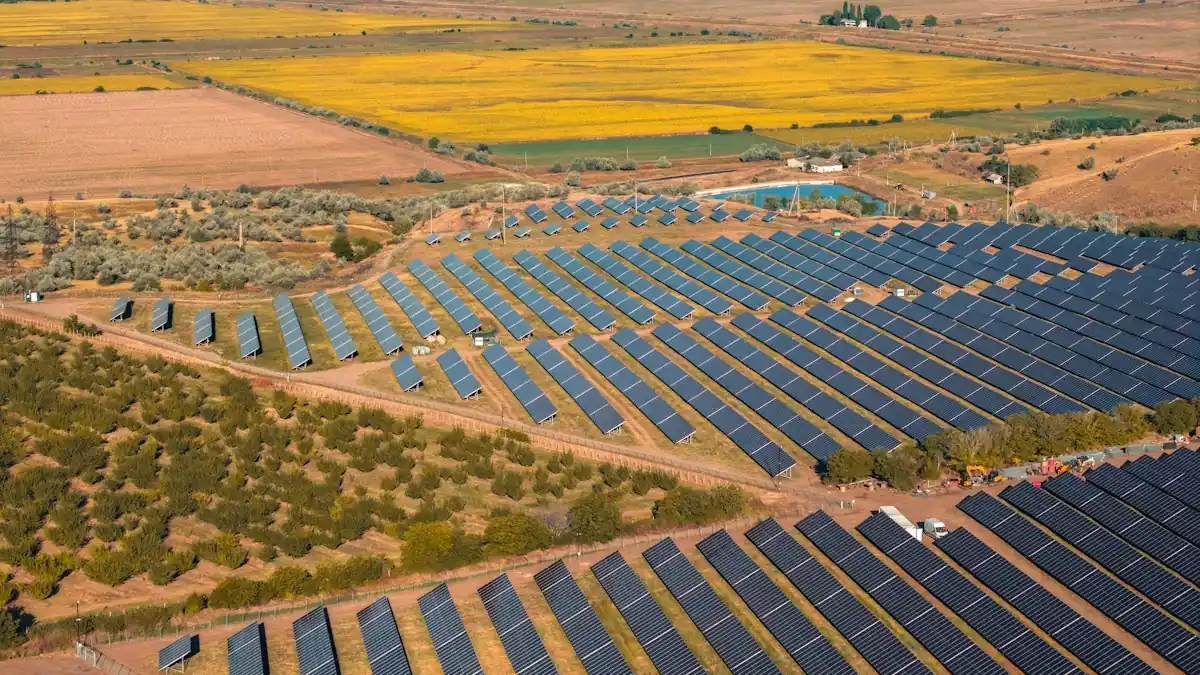
| Component A | 10,000 MW Solar Plants | Farmers, FPOs, Cooperatives, Panchayats | 500 kW to 2 MW ground-mounted or stilt solar arrays | Installed within 5 km of local 33/11 kV DISCOM substations on barren/cultivable farmland. Electricity fed to grid under 25-year PPA. |
| Component B | 20 Lakh Standalone Pumps | Individual Farmers in off-grid zones | 3 HP, 5 HP, 7.5 HP & 10 HP solar pumps (surface/submersible) | Complete standalone off-grid DC/AC solar pumping system replacing diesel engines in non-electrified dark zones. |
| Component C (Individual) | 15 Lakh Grid-Tied Pumps | Farmers with existing electric connections | Solar PV capacity up to 2 times existing pump HP | Solarises existing grid pumps. Farmer runs pump during day and sells surplus electricity back to DISCOM via net meter. |
| Component C (Feeder Level) | Feeder-Level Solarisation (FLS) | Entire Agricultural Feeders | Dedicated solar plants for 11 kV agriculture feeders | Solarises agricultural power supply at the substation feeder level without requiring individual farm rooftop arrays. |
Subsidy Pattern and Cost Sharing Architecture (Component B Standalone Pumps)
Component B offers one of the most generous capital subsidy frameworks in Indian public welfare history. The benchmark cost of an agricultural solar pumping system is shared cooperatively between the Centre, State, and Farmer, supported by institutional credit from NABARD and concessional credit limits under the Kisan Credit Card (KCC):
| Financing Stakeholder | Standard General States Subsidy Share | Special Category States (NE, J&K, HP, UK) | Mode of Settlement |
|---|---|---|---|
| Central Government (MNRE CFA) | 30% of benchmark cost | 50% of benchmark cost | Direct release to empanelled vendor via state nodal agency |
| State Government Subsidy | 30% of benchmark cost | 30% of benchmark cost | State budget budgetary allocation to state nodal account |
| Farmer Upfront Contribution | 10% of benchmark cost (minimum) | 10% of benchmark cost (minimum) | Paid online by farmer upon final application approval |
| Bank Loan Facilitation | Up to 30% of benchmark cost | Up to 10% of benchmark cost | Concessional priority sector agricultural loan via KCC / NABARD |
Under this financial structure, an individual farmer pays only ₹25,000 to ₹45,000 out-of-pocket for a modern 3 HP to 5 HP solar irrigation setup that would otherwise cost between ₹2.20 Lakh and ₹3.40 Lakh on the open retail market. The investment is typically recovered within 8 to 14 months through eliminated diesel purchase expenses, freeing up working capital for certified seeds, balanced nutrition through our fertilizer calculator, and essential soil testing.
How to Apply Online for PM KUSUM Solar Pump (State-Wise Registration)
A critical administrative reality is that PM-KUSUM is implemented at the grassroots level by State Designated Renewable Energy Agencies (SDAs) and local power distribution companies (DISCOMs). There is no single central direct application form for individual farmers; applications must be routed through your state’s designated portal, linked with verified state land registry data from Bhulekh land records:
| State | Implementing Agency (SDA) | Official State Application Portal | Current Priority Focus |
|---|---|---|---|
| Haryana | HAREDA (New & Renewable Energy Dept) | hareda.gov.in / saralharyana.gov.in | 3 HP to 10 HP Standalone Off-Grid Solar Pumps |
| Rajasthan | RRECL / Rajasthan Horticulture Dept | energy.rajasthan.gov.in / RajKisan Saathi | Component B solar pumps & Component A barren land tenders |
| Maharashtra | MEDA (MahaUrja) / MSEDCL | mahaurja.com / mageltyalasolarpump.mahadiscom.in | Magel Tyala Solar Pump (Component B & C saturation) |
| Uttar Pradesh | UPNEDA (Non-Conventional Energy Agency) | upneda.org.in / agriculture.up.gov.in | Solar pump subsidy booking linked with Kisan Parivahan ID |
| Gujarat | GUVNL / GEDA | geda.gujarat.gov.in / Suryashakti Kisan Yojana (SKY) | Grid-tied agricultural feeder solarization (Component C) |
| Madhya Pradesh | MP Urja Vikas Nigam (MPUVNL) | mpuvnl.com / cmsolarpump.mp.gov.in | Mukhyamantri Solar Pump Yojana integrated with KUSUM |
| Punjab | PEDA (Punjab Energy Development Agency) | peda.gov.in | Surface & submersible solar pumps for canal/well command zones |
| Bihar | BREDA (Bihar Renewable Energy Dev Agency) | breda.bih.nic.in | Decentralized solar pumping for vegetable & paddy growers |
Step-by-Step Online Application Procedure for Farmers
To successfully register on your state portal when application intake windows open, prepare the required documentation and follow these steps:
- Step 1: Check Open Booking Windows: State agencies announce booking windows in regional newspapers and portal notices. Growers can also review other central welfare opportunities on our government schemes portal.
- Step 2: Authenticate Identity via Aadhaar / Parivar Pehchan Patra: Log in to the state portal using your Aadhaar number or state family identification number, ensuring your bank account has active DBT seeding verified via PM Kisan beneficiary status.
- Step 3: Upload Mandatory Land Records: Upload a clear digital copy of your latest Jamabandi / Khatauni / RoR confirming agricultural land ownership, along with a self-declaration confirming an operative borewell, tube-well, or farm pond with adequate water discharge.
- Step 4: Select Pump Rating and Type: Choose your required motor horsepower (3 HP, 5 HP, 7.5 HP, or 10 HP) and technology type (AC vs DC, Surface monobloc vs Submersible) based on your water depth and seasonal crop water needs for crops like paddy cultivation.
- Step 5: Deposit Farmer Beneficiary Share: Upon initial document scrutiny by the District Agriculture or Renewable Energy Officer, deposit your 10% farmer share via online net banking or generate an authorized bank challan.
- Step 6: Site Inspection and Vendor Commissioning: An empanelled solar vendor surveys the farm, installs the solar array with lightning arrestors and dual-axis manual tracking, and tests the water discharge.
Fraud Alert: Beware of Fake PM KUSUM Portals and Phishing Scams
Due to the immense popularity of the 60% solar pump subsidy, cyber fraudsters frequently create lookalike fraudulent websites demanding registration fees via UPI QR codes. Protecting farm finances is as essential as managing operational risk through PM Fasal Bima Yojana and monitoring fair commodity realisations on our mandi rates platform:
- Official Central Domain: The ONLY official central informational portal is pmkusum.mnre.gov.in. MNRE never collects registration fees directly through private UPI accounts or WhatsApp numbers.
- Official State Registration: All financial transactions take place strictly through authenticated state government payment gateways (e.g., e-Gras in Haryana, RajKisan in Rajasthan, or MahaOnline in Maharashtra).
- Toll-Free Helpline: If you suspect fraudulent activity or wish to verify an empanelled vendor, dial the national MNRE toll-free helpdesk at 1800-180-3333 immediately.
By coupling solar water security with allied agricultural enterprises—such as dairy farming or high-density horticultural orchards—farmers can generate year-round cash flow while taking advantage of digital marketing channels like state e-Mandikaran digital mandis.
Frequently asked questions
- Kisanon ke liye PM Kusum Yojana ka lakshya kya hai?
- PM Kusum Yojana ka mukhiya lakshya kisanon ko diesel pump se mukti dilana, daytime me surakshit aur muft solar sinchai (irrigation) uplabdh karana, aur banjar zameen par solar plant lagakar bijli bechkar atirikt aamdani pradan karna hai. Complete details ke liye hamara solar pump guide padhein.
- What is the total subsidy provided under PM Kusum Yojana for solar pumps?
- Under Component B of PM-KUSUM, farmers receive a total capital subsidy of up to 60% of the benchmark cost (30% Central Financial Assistance from MNRE + 30% State Government subsidy). The farmer pays only 10% upfront, with the remaining 30% available through low-interest bank loans evaluated via our KCC loan calculator.
- Who is eligible to apply for a solar agricultural pump under PM Kusum?
- Individual farmers, farmer groups, water user associations (WUAs), and Farmer Producer Organizations (FPOs) who own agricultural land with an operative water source (borewell, tube-well, or open well) and do not have an existing grid electric connection are eligible for Component B.
- What are Components A, B, and C of PM Kusum Yojana?
- Component A covers 500 kW to 2 MW ground-mounted grid-connected solar plants on barren farmland. Component B provides 60% subsidies for individual standalone off-grid solar pumps (3 HP to 10 HP). Component C solarises existing grid-connected agricultural pumps and dedicated agricultural feeders.
- Can a farmer sell surplus solar electricity back to the power grid?
- Yes. Under Component C (grid-connected solar pumps) and Component A (solar power plants), farmers install net-metering systems and sell excess daytime solar electricity directly to state DISCOMs under 25-year Power Purchase Agreements (PPA) at pre-agreed feed-in tariffs (typically ₹3.10 to ₹3.60 per unit).
- How much does a 5 HP solar pump cost a farmer after subsidy?
- A complete 5 HP solar pumping system has a benchmark cost of approximately ₹2.50 Lakh to ₹2.80 Lakh. With the 60% combined subsidy (₹1.50L–₹1.68L), the farmer contributes only 10% upfront (₹25,000–₹28,000), with the balance financed through bank loans or self-funds.
- Where can farmers apply online for PM Kusum solar pumps?
- Farmers must apply through their specific State Designated Agency portal—such as HAREDA (Haryana), RajKisan Saathi (Rajasthan), MEDA MahaUrja (Maharashtra), or UPNEDA (Uttar Pradesh). The central portal pmkusum.mnre.gov.in provides national guidelines and state portal links.
- What documents are required for PM Kusum online registration?
- Mandatory documents include: 1. Aadhaar Card, 2. Land ownership record (Bhulekh Jamabandi / Khatauni), 3. Bank passbook with Aadhaar seeding, 4. Passport photo, 5. Proof of existing water source, and 6. Mobile number linked to Aadhaar.
- What is the comprehensive warranty on solar pumps installed under PM Kusum?
- All solar pumping systems commissioned under PM-KUSUM carry a mandatory 5-year comprehensive on-site warranty covering the solar PV panels, pump controller, motor, and mounting structures provided by the empanelled vendor.
- How can farmers protect themselves from fake PM Kusum websites?
- Always check that the website domain ends in ".gov.in" (e.g. pmkusum.mnre.gov.in or official state energy portals verified by the Ministry of New and Renewable Energy). Never transfer registration money to private UPI QR codes or individuals claiming to be solar agents.
- Can farmers get bank loans under the Kisan Credit Card (KCC) for solar pumps?
- Yes. The farmer’s 30% contribution can be financed through commercial and regional rural banks under priority sector agricultural lending, with concessional interest rates facilitated through NABARD and KCC working capital frameworks.
- What is the national target completion deadline for PM Kusum Yojana?
- The Central Government has extended the implementation timeline of PM-KUSUM until March 31, 2026, targeting a cumulative solar capacity addition of 34,800 MW to achieve universal de-dieselization of Indian farm irrigation, as officially notified on PIB.
This article is for general information only and is not financial advice. Loan and scheme eligibility depends on partner and government criteria.