Rust of Wheat: Yellow, Brown & Black Stem Control Guide
Key takeaways
- Rust of wheat in India comprises three distinct airborne fungal diseases caused by Puccinia species: Yellow/Stripe Rust (Puccinia striiformis), Brown/Leaf Rust (Puccinia triticina), and Black/Stem Rust (Puccinia graminis).
- Yellow rust thrives in cool 10°C–15°C fog and rain across Punjab, Haryana, Himachal, and Tarai UP (causing 40%–75% losses if unchecked), while brown rust favors 18°C–25°C across all plains and black stem rust develops at 20°C–30°C in central and peninsular zones.
- Planting resistant ICAR cultivars such as HD 3226 (Pusa Yashasvi) and DBW 187 (Karan Vandana) offers primary genetic protection before relying on chemical sprays.
- Upon confirmed spot pustules, ICAR-IIWBR Karnal recommends foliar sprays of Propiconazole 25% EC @ 0.1% (1 ml/L = 200 ml/acre in 200 L water) or Tebuconazole 50% + Trifloxystrobin 25% WG @ 0.06% (120 g/acre).
- Applying extra urea nitrogen top-dressing will NOT cure wheat rust and actually worsens fungal canopy spread.
Controlling rust of wheat early is the single most critical crop-protection priority for Indian wheat growers between January and March, when humid western disturbances, morning dew, and shifting air currents spread microscopic fungal spores across entire districts within days. Left untreated in susceptible fields, severe epidemics of yellow stripe rust, brown rust of wheat, or black stem rust of wheat rupture leaf cuticles, starve developing spikes of carbohydrates, shrivel grain test weight, and slash final harvest yield by 30% to 100%. Developed around official surveillance bulletins from the ICAR-Indian Institute of Wheat and Barley Research (ICAR-IIWBR Karnal), broader research from the Indian Council of Agricultural Research (ICAR), and registered fungicide label limits of the Central Insecticides Board & Registration Committee (CIB&RC), this manual breaks down exact fungal diagnostics, resistant varieties, and calibrated chemical sprays. Growers monitoring winter crop health can combine daily KisanPe weather spray advisories with our dedicated regional wheat rust emergency protocol and full rabi wheat cultivation manual.
1. Causes & Field Identification: Yellow vs Brown vs Black Stem Rust of Wheat
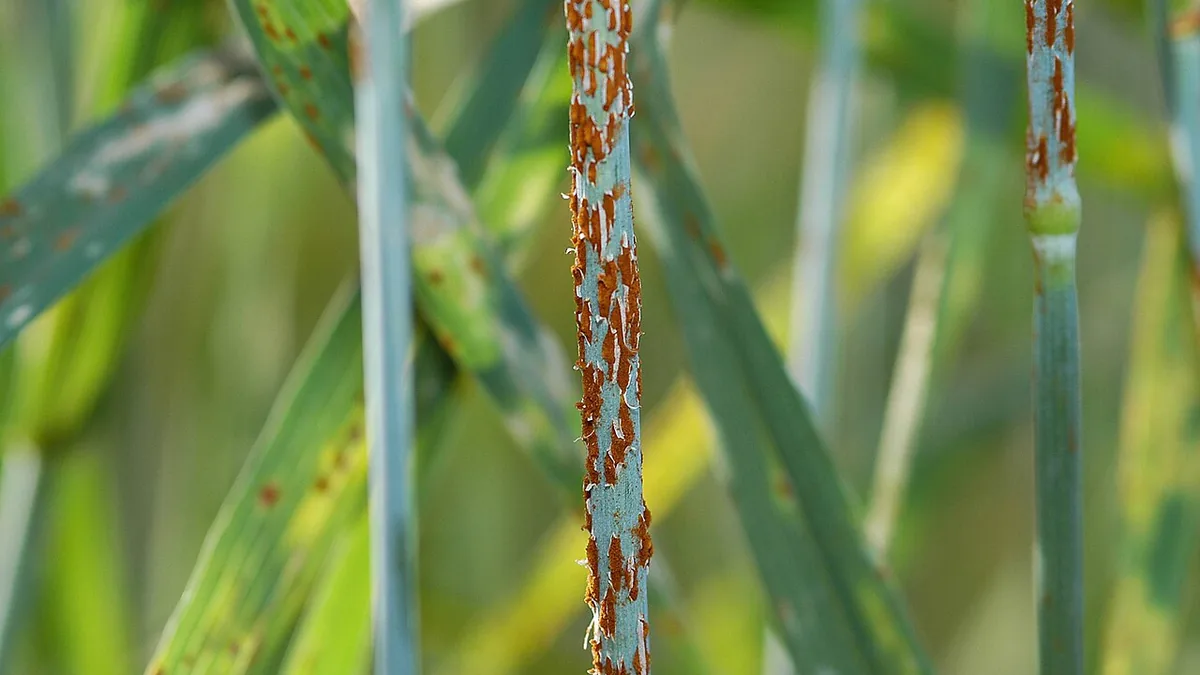
Whenever farmers ask black rust of wheat is caused by which organism—or how to distinguish orange leaf flecks from toxic nitrogen scorching—diagnostic certainty begins with identifying the three obligate biotrophic fungal pathogens belonging to genus Puccinia. Each rust leaves unmistakable spore pustules (uredinia) that smudge bright orange, yellow, or rusty brown powder onto your fingertips when wiped across leaves. Crucially, unlike nutrient deficiency, rust infections ignite in isolated 'hotspots' along windbreaks, shade trees, or damp hollows before radiating down rows. Growers inspecting suspicious patches can cross-check foliar disorders inside our wheat pest and disease guide, choose tolerant cultivars via our best Indian wheat varieties catalog, and compare susceptible legacy varieties like HD 2967 agronomy notes on the KisanPe wheat farmer hub.
| Diagnostic Parameter | Yellow / Stripe Rust | Brown / Leaf Rust | Black / Stem Rust |
|---|---|---|---|
| Causative Fungal Species | Puccinia striiformis f. sp. tritici | Puccinia triticina (syn. P. recondita) | Puccinia graminis f. sp. tritici |
| Pustule Shape, Color & Layout | Bright lemon-yellow pustules aligned in narrow parallel stripes along veins | Small round/oval orange-brown pustules scattered randomly on leaf blade | Large elongated dark reddish-brown to black torn pustules (splits epidermis) |
| Primary Plant Tissues Attacked | Leaf blades first; later leaf sheaths, glumes, and awns | Upper & lower leaf surfaces mainly; rarely stems | Stems, leaf sheaths, neck nodes, and spike glumes |
| Optimal Temperature & Weather | 10°C - 15°C (Cool foggy nights, drizzle, heavy dew) | 18°C - 25°C (Moderate daytime warmth + leaf moisture) | 20°C - 30°C (Warm late-winter/spring winds) |
| High-Risk Indian Regions | Sub-mountainous foothills (J&K, HP, Uttarakhand), Punjab, Haryana, West UP | Ubiquitous across NWPZ, NEPZ, Central & Peninsular Wheat Belts | Madhya Pradesh, Maharashtra, Gujarat, Karnataka (warmer spring zones) |
| Untreated Potential Yield Loss | 40% - 75% (Up to 100% in early hotspot epidemics) | 15% - 35% (Accelerates premature leaf drying) | 50% - 100% (Severe stem lodging & shriveled kernels) |
2. Brown Rust vs Black Stem Rust: How Infection Spreads Across India's Plains
Unlike soil-borne root rot fungi that persist locally in stubbles, Indian wheat rusts follow distinct atmospheric migration corridors mapped over decades by ICAR pathologists. Yellow (stripe) rust survives off-season on cool Himalayan grasses and high-altitude wheat crops across Jammu, Himachal, and Uttarakhand before drifting onto northern plains crops in Punjab, Haryana, and Western UP during cold foggy January spells. Conversely, brown rust of wheat and black stem rust of wheat oversummer on volunteer wheat in the Nilgiri and Pulney hills of southern India, moving northward with warm cyclonic winds into Karnataka, Maharashtra, and Madhya Pradesh once February temperatures touch 22°C–30°C. Understanding these wind corridors explains why planting regionally recommended seed genetics—backed by clean seed treatment practices and verified NSC certified seed channels—prevents rapid district-wide outbreaks before farmers even spot first lesions.
3. Genetic Shield First: High-Yielding Rust-Resistant ICAR Wheat Varieties
Chemical fungicides represent an expensive rescue fallback—whereas genetic rust resistance baked into modern ICAR-IIWBR seeds protects yields free of spray costs. Across the North Western Plains Zone (Punjab, Haryana, Delhi, Western UP), HD 3226 (Pusa Yashasvi) demonstrates high resistance against yellow, brown, and black rust simultaneously (plus Karnal bunt), minimizing chemical interventions under normal conditions. Multi-zone powerhouse DBW 187 (Karan Vandana)—adapted across NWPZ, NEPZ, and Central Zone—alongside DBW 303 (Karan Vaishnavi), HD 3086 (Pusa Gautami), and WH 1105 carry stacked durable adult-plant resistance genes engineered to outlast mutating Puccinia pathotypes. Conversely, older farmers continuing heavily susceptible heritage seeds like HD 2967 or PBW 343 in foothills face recurring stripe rust flare-ups and must transition seed plots cleanly—browse zone-by-zone yield trials inside our best Indian wheat varieties directory and calculate acreage seed weights with our KisanPe seed rate calculator.
4. ICAR-IIWBR Recommended Chemical Fungicides, Dosages & Waiting Periods
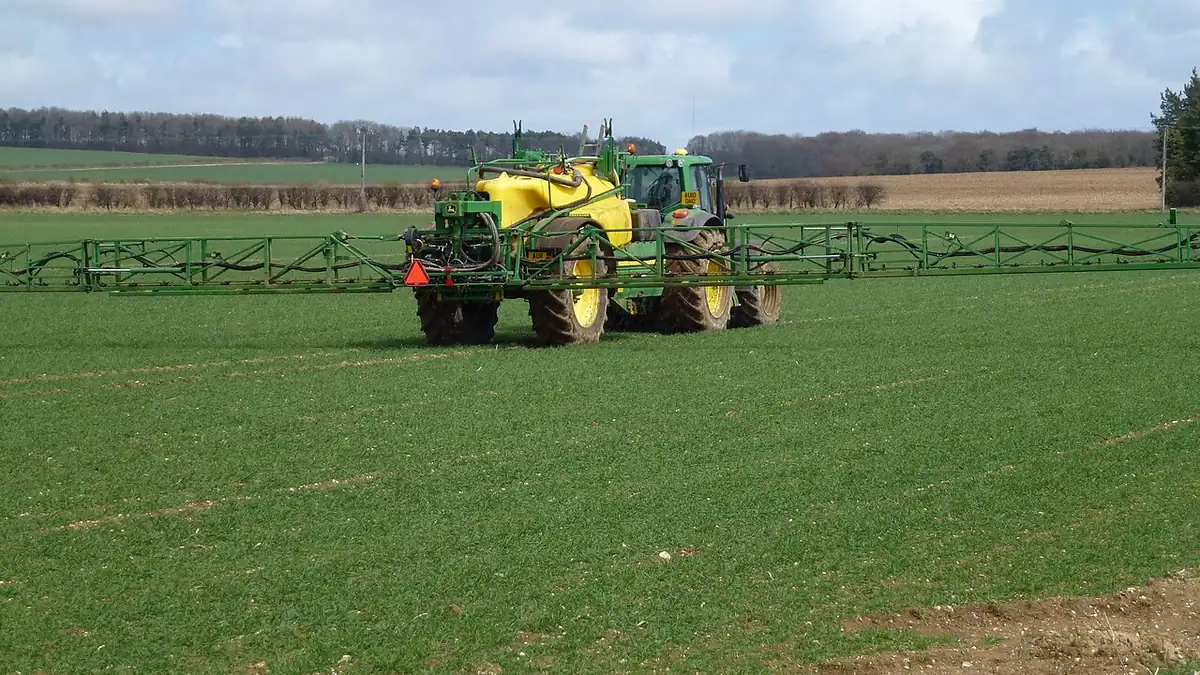
The moment field scouting along tree-shaded borders confirms live yellow or brown rust pustules, swift targeted spraying across hotspots and surrounding buffers halts spore germination before upper flag leaves succumb. Per ICAR-IIWBR Karnal advisory schedules and CIB&RC registered labels, spray Propiconazole 25% EC @ 0.1% (1 ml per litre = 200 ml per acre mixed in 200 litres of clean water) using fine hollow-cone nozzles under calm morning skies once dew dries. Where stubborn resistance or co-occurring blast/glume blotch risks emerge, ICAR guidelines highlight Tebuconazole 50% + Trifloxystrobin 25% WG @ 0.06% (120 g/acre in 200 L water), alongside single-active triazoles such as Tebuconazole 25.9% EC or strobilurin mixes like Azoxystrobin + Tebuconazole. Always rotate FRAC triazole modes if repeating after 15 days and respect the mandatory pre-harvest waiting interval (~30 days before harvesting). Explore product economics inside our Tebuconazole-Trifloxystrobin (Nativo) guide, Azoxystrobin + Tebuconazole comparison, systemic triazole mechanism guide, and broad-spectrum fungicide directory.
| CIB&RC Approved Technical Active | Target Rust Pathogens | Calibrated Dose (Per Acre) | Water Volume & Concentration | Practical Agronomy Note & PHI |
|---|---|---|---|---|
| Propiconazole 25% EC (Triazole) | Yellow (Stripe), Brown (Leaf) & Stem Rust | 200 ml / Acre | 200 Litres Water (0.1% / 1 ml/L) | Standard ICAR-IIWBR primary curative spray; ~30-day PHI |
| Tebuconazole 50% + Trifloxystrobin 25% WG | Yellow, Brown & Black Stem Rust + Leaf Blight | 120 g / Acre | 200 Litres Water (0.06% / 0.6 g/L) | Dual systemic + mesostemic action; excellent persistence |
| Tebuconazole 25.9% EC | Yellow & Brown Leaf Rust | 200 ml / Acre | 200 Litres Water (0.1% Solution) | Fast acropetal uptake; repeat once after 14–15 days if humid |
| Azoxystrobin 11% + Tebuconazole 18.3% SC | Stripe Rust, Leaf Rust & Powdery Mildew | 200 - 300 ml / Acre | 200 Litres Water (Per Label) | Broad disease shield at flag-leaf to boot stage; follow label PHI |
| Hexaconazole 5% EC (Selective Alternative) | Early Leaf Rust / Localized Hotspots | 200 - 400 ml / Acre | 200 Litres Water (1 - 2 ml/L) | Follow strict state department local extension dosing |
5. Common Mistakes to Avoid (Urea Myth, Spraying Timing & Nozzle Calibration)
Many farmers mistakenly confuse yellowing stripe rust borders with winter nitrogen deficiency and broadcast an emergency bag of extra urea fertilizer—a dangerous mistake that softens wheat cell walls with succulent nitrogen growth and accelerates fungal pustule explosion across the entire field! Similarly, foliar micronutrient tonics or botanical decoctions cannot eradicate established Puccinia mycelia inside leaf tissue once rust appears. Always avoid spraying just ahead of rainstorms or over heavily dripping dawn dew that washes fungicide off waxy leaf cuticles; use uniform flat-fan or hollow-cone nozzles via well-calibrated sprayers described in our battery knapsack sprayer guide, boom & power sprayer selection guide, and check wind limits on KisanPe weather spray advisories. For balanced baseline nutrition without excessive canopy softness, calculate exact NPK rates on the KisanPe fertilizer calculator and verify safe dosing in our wheat urea application guide.
6. Frequently Asked Questions About Wheat Rust Diseases & Treatment
Consult quick, ICAR-IIWBR-grounded answers below on yellow vs brown vs black stem rust identification, fungal pathogens, resistant seed choices, Propiconazole/Tebuconazole dosing, and clean grain harvests.
Frequently asked questions
- Black rust of wheat is caused by which pathogen and how is it identified?
- Black (stem) rust of wheat is caused by the fungus Puccinia graminis f. sp. tritici. It produces dark reddish-brown to black elongated pustules that visibly tear open the outer skin of wheat stems, leaf sheaths, and neck nodes during warm 20°C–30°C late-season weather—verify regional warnings in our wheat rust control protocol.
- How do farmers tell yellow stripe rust apart from brown rust of wheat?
- Yellow (stripe) rust (Puccinia striiformis) creates bright turmeric-yellow pustules arranged in neat parallel stripes along leaf veins during cool 10°C–15°C winter weather, whereas brown/leaf rust (Puccinia triticina) forms random circular orange-brown dots across leaf blades at 18°C–25°C. Browse symptom checklists in our wheat disease guide.
- Which chemical fungicide is best for rust of wheat according to ICAR-IIWBR?
- Per ICAR-IIWBR Karnal guidelines, spray Propiconazole 25% EC @ 0.1% (200 ml/acre in 200 litres of water) or Tebuconazole 50% + Trifloxystrobin 25% WG @ 0.06% (120 g/acre in 200 L water) immediately upon confirmed rust spots—compare cost benchmarks in our Nativo fungicide guide.
- Does broadcasting extra urea cure yellowing leaves caused by wheat rust?
- No—extra urea never stops fungal wheat rust and actually damages the crop further by creating lush, thin-walled foliage that helps Puccinia spores multiply faster. Keep balanced baseline dosing via our fertilizer calculator and apply a recommended triazole fungicide instead.
- Which Indian wheat varieties have high resistance against all three rust diseases?
- ICAR-released varieties including HD 3226 (Pusa Yashasvi), DBW 187 (Karan Vandana), DBW 303, and HD 3086 carry high multi-rust resistance. Especially HD 3226 normally requires no preventive rust spraying unless unexpected new pathotypes emerge—compare zonal picks inside our best Indian wheat varieties guide.
- How can farmers quickly differentiate stripe rust from cold injury or zinc deficiency?
- Wipe a dry white handkerchief or clean fingertip directly over the yellow streaks on the wheat leaf: true yellow or brown rust immediately rubs bright orange-yellow powder onto the cloth or skin, whereas frost yellowing, herbicide drift, or nutrient deficiency leaves zero spore dust behind.
- Should farmers spray entire wheat fields or only localized infected spots first?
- At very early sighting along northern boundary trees or shaded wet depressions (1%–5% severity), spray the focal patch plus a 10–15 metre concentric buffer zone immediately to contain airborne spread cleanly, conserving fungicide budget while protecting undamaged strips via our precision sprayer setup.
- What weather time of day gives maximum fungicide effectiveness against wheat rust?
- Spray during clear, calm, dry weather once morning dew evaporates (typically 9:30 AM to 4:00 PM) so systemic triazoles penetrate waxed leaves quickly without rain wash-off. Check hourly humidity and wind gusts via the KisanPe weather spray advisory before mixing tanks.
- How many litres of water per acre must be used while spraying Propiconazole or Tebuconazole?
- Always mix your acre dose in 200 litres of clean water (roughly 12–13 standard 16-litre knapsack tanks or calibrated tractor boom coverage) so fine hollow-cone droplets thoroughly coat lower leaves, upper flag leaves, and vertical stems; verify legal safety limits via CIB&RC labels.
- What is the mandatory pre-harvest waiting interval (PHI) after fungicide sprays on wheat?
- Do not harvest or spray fungicides late during dough maturity; observe the label pre-harvest interval (~30 days for standard Propiconazole 25% EC per extension rules) so finished flour and grain lots contain zero excessive residue ahead of wheat mandi procurement.
- Can organic bio-fungicides like Trichoderma cure an active black stem rust outbreak?
- Beneficial antagonists like Trichoderma viride work strictly in the soil rhizosphere during seed treatment to guard against root rot, and cannot cure airborne foliage rust pustules once leaf-tissue epidemics begin—targeted chemical sprays remain essential upon scouting confirmation.
- Where do farmers track official Indian wheat rust warnings and crop advisories?
- State agricultural universities (PAU Ludhiana, HAU Hisar) and ICAR-IIWBR alongside Agricoop publish weekly winter stripe-rust alerts on official state kisan portals and SMS extension networks throughout January–March.
This article is for general information only and is not financial advice. Loan and scheme eligibility depends on partner and government criteria.