Avocado Price in India: Hass, Mandi Rates & Farm Guide
Key takeaways
- Avocado prices in India exhibit a distinct two-tier structure: indigenous green-skin "butter fruit" trades at ₹60 to ₹180 per kg wholesale, whereas premium commercial Hass avocados command ₹220 to ₹450 per kg in wholesale terminal APMCs.
- Terminal metro APMCs in Delhi (Azadpur) and Mumbai (Vashi) rely heavily on air-freighted and reefer container shipments from New Zealand, Peru, Chile, and Tanzania, where retail prices frequently reach ₹600 to ₹900 per kg.
- Indigenous production is historically concentrated in the humid subtropical hill belts of Tamil Nadu (Nilgiris, Kodaikanal), Karnataka (Kodagu/Coorg, Chikmagalur), and Kerala (Wayanad), traditionally cultivated as an intercrop within coffee and cardamom plantations.
- High-Density Planting (HDP) of grafted Hass varieties (400 to 500 trees per acre) on certified rootstocks delivers commercial yields from Year 4, yielding gross revenues exceeding ₹10 to ₹15 Lakh per acre at mature bearing.
- Under the National Horticulture Board (NHB) Commercial Horticulture Scheme and Mission for Integrated Development of Horticulture (MIDH), commercial growers can access 40% to 50% capital subsidies for open-field orchard establishment and drip fertigation.
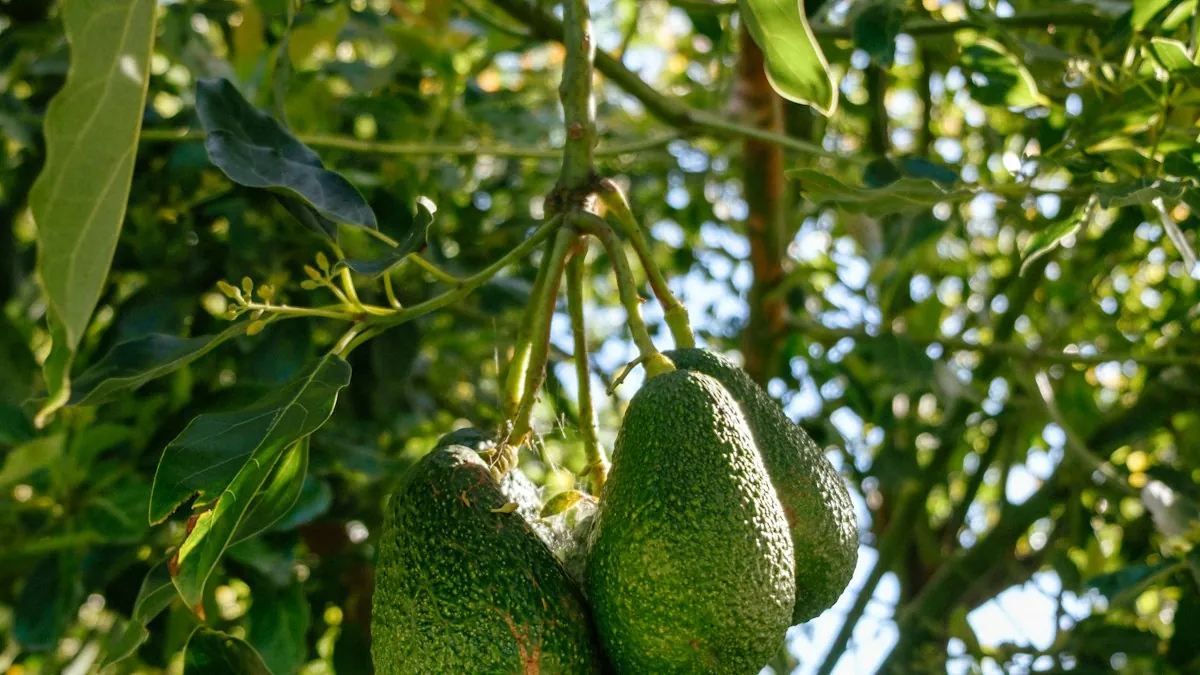
The commercial avocado market in India is undergoing unprecedented expansion, transitioning rapidly from an exotic specialty item found only in luxury hotels into a high-demand consumer staple across metropolitan cities. Known botanically as Persea americana and commonly referred to across South India as "butter fruit" or "makhanphal", this nutrient-dense subtropical fruit is prized for its high concentration of heart-healthy monounsaturated fatty acids (principally oleic acid), dietary fiber, potassium, and plant sterols.
For commercial fruit traders, institutional buyers, and progressive horticultural growers, understanding the dynamics of avocado price formation requires distinguishing between two distinct market categories: domestic open-pollinated seedling varieties (indigenous butter fruit) and certified commercial cultivars, predominantly the world-renowned Hass avocado. While local green-skin varieties flood southern regional markets during peak harvest seasons with farmgate prices ranging between ₹50 and ₹120 per kg, imported and domestic grafted Hass avocados maintain a robust wholesale premium between ₹240 and ₹450 per kg in terminal markets like Delhi, Mumbai, and Bengaluru, verifiable on our live mandi rates platform and official Agmarknet portals.
As Indian consumers increasingly prioritize functional nutrition, domestic cultivation is shifting from haphazard coffee-estate intercropping toward structured, high-density commercial orchards. This comprehensive intelligence report examines wholesale mandi rate benchmarks across major agricultural trading hubs, provides a granular comparison of Hass versus indigenous butter fruit varieties, breaks down one-acre orchard capital economics, and explains post-harvest cold chain and National Horticulture Board (NHB) subsidy frameworks.
Indicative Wholesale Avocado Mandi Rates Across India
Wholesale avocado prices vary substantially across regional assembly mandis, primary hill assembly points, and northern consumption terminals based on variety, grade, fruit size (count per 4kg box), and post-harvest handling. The table below outlines prevailing indicative wholesale benchmark price ranges across major APMC markets and farmgate assembly centers as of November 2026:
| Mandi / Wholesale Terminal Hub | State / Geography | Primary Variety Handled | Wholesale Indicative Range (₹/kg) | Dominant Sourcing Origin |
|---|---|---|---|---|
| Binny Mill / Kalasipalyam APMC | Bengaluru, Karnataka | Indigenous Butter Fruit (Green) | ₹80 – ₹160 | Coorg, Chikmagalur, Hassan |
| Yeshwanthpur Wholesale Hub | Bengaluru, Karnataka | Domestic & Imported Hass | ₹220 – ₹360 | Nilgiris, New Zealand, Peru |
| Azadpur Mandi (Subzi / Fruit Wing) | New Delhi, NCT | Premium Imported Hass Grade A | ₹260 – ₹450 | Chile, New Zealand, Kenya, Peru |
| Azadpur Mandi (Domestic Lot) | New Delhi, NCT | South Indian Butter Fruit | ₹130 – ₹210 | Kodaikanal, Ooty (Reefer Cargo) |
| Vashi APMC (Turbhe Wholesale) | Navi Mumbai, Maharashtra | Imported Hass & African Fuerte | ₹240 – ₹420 | Tanzania, South Africa, Chile |
| Koyambedu Wholesale Terminal | Chennai, Tamil Nadu | Indigenous Green Butter Fruit | ₹75 – ₹155 | Lower Palani Hills, Dindigul |
| Gaddiannaram Fruit Market | Hyderabad, Telangana | Mixed Green & Imported Hass | ₹110 – ₹280 | Karnataka & Mumbai Importers |
| Ooty Charring Cross Assembly | The Nilgiris, Tamil Nadu | Farmgate Raw Butter Fruit | ₹60 – ₹120 | Direct Nilgiri Smallholder Orchards |
| Madikeri / Gonikoppal Market | Kodagu (Coorg), Karnataka | Farmgate Estate Butter Fruit | ₹50 – ₹110 | Coffee & Pepper Plantation Intercrop |
| Kodaikanal Ghat Assembly Point | Dindigul, Tamil Nadu | Farmgate Round/Oval Green Fruit | ₹65 – ₹125 | Perumalmalai & Thandikudi Belts |
In retail supermarkets, premium hypermarkets, and app-based quick-commerce platforms operating in tier-1 metro cities, retail consumer pricing for single Hass avocados typically ranges from ₹120 to ₹250 per piece (translating to ₹600 to ₹900 per kg), while domestic green butter fruit retails at ₹150 to ₹280 per kg depending on maturity and physical blemish score. Growers can also compare fruit realisations with regional terminal markets like Muhana Mandi Jaipur or our general vegetable mandi rates directory.
Commercial Comparison: Hass Avocado vs Indigenous Butter Fruit
To understand why price differentials of 200% to 300% persist between varieties, growers must evaluate the agronomic, biochemical, and post-harvest shipping attributes distinguishing commercial cultivars:
| Agronomic / Market Trait | Commercial Hass Avocado | Indigenous Indian Butter Fruit (Green) | Commercial Market Consequence |
|---|---|---|---|
| Oil Content (Dry Basis) | 18% to 24% healthy natural fats | 8% to 12% lower oil content | Hass delivers rich nutty flavor preferred by food service |
| Fruit Skin Texture & Thickness | Thick, pebbled, leathery skin | Thin, smooth, papery green skin | Hass resists mechanical bruising during long transit |
| Ripening Color Transition | Emerald green turns dark purple/black | Remains pale green even when overripe | Consumers easily identify Hass ripeness without squeezing |
| Shelf Life at 5°C to 7°C | 3 to 4 weeks under cold storage | 7 to 10 days maximum storage life | Hass enables nationwide reefer logistics and export trade |
| Average Individual Fruit Weight | 170g to 260g (uniform packaging count) | 300g to 600g (variable and bulky) | Hass fits standard 4kg carton export count norms |
| Tree Architecture & Yield | Compact canopy; ideal for HDP (400 trees/ac) | Vigorous spreading tree (100 trees/ac) | Hass yields 3x higher commercial output per acre |
Because indigenous green-skin cultivars bruise easily during transport and rot rapidly once softened, they cannot withstand multi-day road transit from the Western Ghats to northern consuming markets without massive wastage. In contrast, thick-skinned Hass avocados can be shipped across the country or imported by sea via APEDA-certified reefer channels.
One-Acre Commercial Avocado Orchard Economics: Costs & Returns
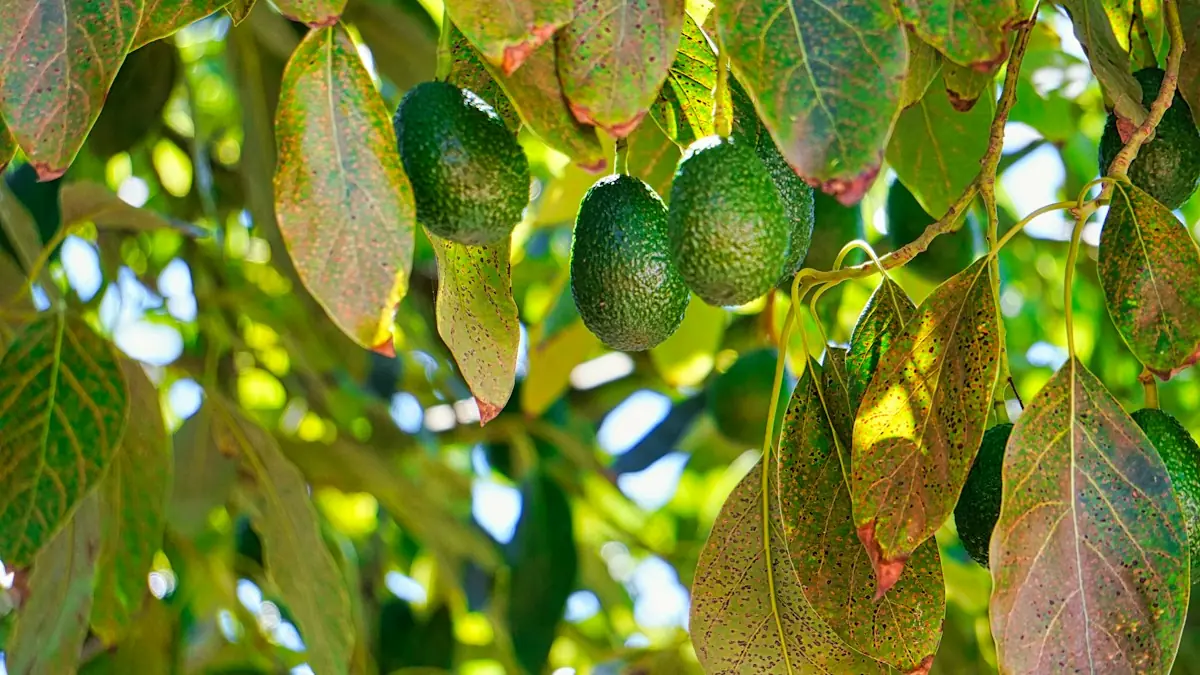
Transitioning to commercial avocado cultivation demands careful capital planning, soil preparation, and patience, as grafted trees require three to four years to reach commercial bearing. Farmers can utilize our crop income calculator to model long-term returns. The table below illustrates the projected capital expenditures, operational maintenance, and revenue projections for a 1-acre High-Density Planting (HDP) Hass orchard (400 trees at 4m x 2.5m spacing):
| Development Stage / Year | Primary Farm Operations & Inputs | Cost per Acre (₹) | Gross Revenue (₹) | Net Cash Flow (₹) |
|---|---|---|---|---|
| Year 1: Establishment | Deep ripping, pit digging, 400 grafted Hass plants, drip irrigation | ₹3,20,000 – ₹3,80,000 | ₹0 (Vegetative Stage) | -₹3,50,000 (Capital Outlay) |
| Year 2: Vegetative Growth | Canopy training, pruning, fertigation, weeding, cover crops | ₹60,000 – ₹80,000 | ₹0 (De-blossoming) | -₹70,000 (Maintenance) |
| Year 3: First Bearing | Structural pruning, organic manures, initial light fruit set (5-8 kg/tree) | ₹75,000 – ₹95,000 | ₹2,40,000 – ₹3,60,000 | +₹1,60,000 (Break-Even Starts) |
| Year 4: Commercial Yield | Full fertigation schedule, bee pollination, 20-30 kg/tree yield | ₹90,000 – ₹1,20,000 | ₹9,60,000 – ₹14,40,000 | +₹8,50,000 to +₹13,20,000 |
| Year 5 to Year 15+: Peak Bearing | Mature canopy management, 45-60 kg/tree at ₹120-150/kg farmgate | ₹1,20,000 – ₹1,60,000 | ₹21,60,000 – ₹32,40,000 | +₹20,000,00 to +₹30,80,000/yr |
During the initial three years before commercial fruiting, growers can offset operational expenses by intercropping with short-duration crops like pulses, exotic vegetables, or papaya. Maintaining soil fertility requires regular soil testing and balanced basal inputs planned via our fertilizer dose calculator.
Government Subsidies and Scheme Guidelines for Avocado Orchards
Establishing a high-density fruit orchard requires substantial upfront capital. The Government of India, through the Ministry of Agriculture & Farmers Welfare, offers extensive financial incentives to promote high-value horticulture under central agricultural schemes:
- National Horticulture Board (NHB) Scheme: Under the "Development of Commercial Horticulture through Production and Post-Harvest Management", NHB provides a back-ended capital investment subsidy of 40% of the project cost (up to ₹30 Lakh per project for open-field cultivation up to 5 acres) in general areas, and 50% (up to ₹37.50 Lakh) in Northeast, Himalayan, and ITDP tribal areas.
- Mission for Integrated Development of Horticulture (MIDH): Implemented via State Horticulture Departments, MIDH provides per-hectare cost norms for high-density perennial fruit tree plantations, subsidizing grafted planting material, integrated pest management, and drip irrigation installation.
- Per Drop More Crop (Pradhan Mantri Krishi Sinchayee Yojana): Provides 45% to 55% direct financial subsidy for installing micro-irrigation in newly established orchard blocks, which pairs seamlessly with solar irrigation under PM KUSUM solar pumps.
- Agriculture Infrastructure Fund (AIF): Offers a 3% interest subvention on institutional bank loans up to ₹2 Crore for building post-harvest infrastructure, including on-farm packhouses, cold storage units, sorting/grading lines, and reefer transport vans.
Growers can also fund field mechanization like specialized orchard tractors (John Deere 3028EN or Swaraj mini tractors) using our tractor loan EMI calculator, secure working capital under the Kisan Credit Card, and safeguard against weather risks via PM Fasal Bima Yojana.
For diversified farm holdings incorporating livestock or composting, exploring indigenous breeds like the Gir cow on our dairy farming hub or integrating organic farming certification provides valuable natural manure for avocado root aeration.
Frequently asked questions
- What is the current wholesale avocado price per kg in Indian mandis?
- Wholesale avocado prices depend heavily on the variety. Indigenous green butter fruit trades between ₹80 and ₹160 per kg in southern assembly markets like Bengaluru and Chennai. Premium commercial Hass avocados command ₹220 to ₹450 per kg in metro terminal APMCs such as Delhi (Azadpur) and Mumbai (Vashi), as tracked on our mandi rates platform.
- Why is Hass avocado significantly more expensive than Indian butter fruit?
- Hass avocado has a higher natural oil content (18-22% vs 8-12%), a rich nutty flavor, a thick pebbled skin that resists bruising, and a distinct ripening trait where the skin turns dark purple-black. This extended shelf life allows pan-Indian cold chain shipping, whereas thin-skinned butter fruit bruises easily and must be sold locally within a few days.
- Where are avocados grown in India commercially?
- Commercial avocado cultivation is concentrated in the humid subtropical hill zones of South India: The Nilgiris and Kodaikanal in Tamil Nadu, Kodagu (Coorg), Chikmagalur, and Hassan in Karnataka, and Wayanad and Idukki in Kerala. Emerging high-altitude commercial trials are also underway in Sikkim, Mizoram, and parts of Maharashtra under NHB guidelines.
- How much profit can a farmer earn from 1 acre of avocado cultivation?
- In a modern High-Density Planting (HDP) system with 400 grafted trees per acre, trees begin commercial bearing in Year 4. At mature yields (40 to 60 kg per tree) and an average farmgate price of ₹150 to ₹180 per kg, a 1-acre Hass orchard can generate gross annual revenues of ₹25 to ₹35 Lakh, yielding a net operating profit of ₹15 to ₹25 Lakh per acre. You can project cash flows using our crop income calculator.
- How long does a grafted avocado tree take to bear fruit?
- Grafted Hass avocado trees begin flowering in Year 2 and Year 3, but commercial harvesting is recommended from Year 4 onwards once tree architecture is established. In contrast, seedling-grown trees take 6 to 8 years to bear fruit and produce highly variable fruit quality.
- Why do avocados not ripen on the tree?
- Avocados are climacteric fruits that produce a natural ripening inhibitor while attached to the parent branch. Ripening (production of ethylene and respiration surge) only begins after the fruit is physically harvested. Immature fruit with low dry matter (under 21%) will shrivel rather than ripen properly.
- Can avocado trees tolerate hot summer temperatures or frost in India?
- Avocados thrive in temperatures between 18°C and 30°C. Prolonged summer heat exceeding 38°C during flowering causes severe blossom and fruit drop. Similarly, frost below -2°C damages foliage and young fruitlets. Humid subtropical hill belts (800 to 1,600m altitude) provide the ideal microclimate.
- What type of soil is required for successful avocado farming?
- Avocados demand deep, fertile, well-aerated sandy loam to clay loam soils with a pH between 5.5 and 6.5. Feeder roots require high oxygen levels; waterlogged soils or heavy impermeable clay will quickly cause Phytophthora root rot. Farmers should verify soil parameters using our soil testing guide.
- What government subsidies are available for planting avocado orchards?
- The National Horticulture Board (NHB) offers a 40% capital investment subsidy (up to ₹30 Lakh) in general areas and 50% (up to ₹37.5 Lakh) in hilly and scheduled areas for commercial horticulture. Additional subsidies for drip irrigation (45% to 55%) are available through the Per Drop More Crop scheme.
- Why do avocado growers need both Type A and Type B flowering trees?
- Avocado exhibits unique synchronous dichogamy: each flower opens twice over two days, functioning first as female and then as male. Type A cultivars (e.g. Hass) open as female in the morning and male the next afternoon, while Type B cultivars (e.g. Fuerte, Bacon) open as female in the afternoon and male the next morning. Interplanting Type B trees (approx. 10%) ensures abundant cross-pollination and high fruit set, as certified by ICAR-IIHR.
- What is the best storage temperature for fresh avocados to prevent spoilage?
- Unripe green Hass avocados should be stored at 5°C to 7°C with 90% relative humidity, giving a shelf life of 14 to 21 days. Storing unripe fruit below 4°C causes chilling injury. Once fully ripe, fruit can be held at 2°C to 4°C for 2 to 3 days.
- How does India import avocados and from which countries?
- India imports commercial Hass avocados primarily from New Zealand, Peru, Chile, Tanzania, and Kenya via sea reefer containers and air cargo under APEDA guidelines. Consignments undergo strict phytosanitary inspection, cold disinfestation treatment, and customs clearance before entering terminal APMC cold storage networks.
This article is for general information only and is not financial advice. Loan and scheme eligibility depends on partner and government criteria.