Boron Fertilizer Uses, Dose & Boron 20% Price in India
Key takeaways
- Under India's Fertilizer Control Order (FCO), the two dominant boron fertilizer grades are Boron 20% water-soluble Disodium Octaborate Tetrahydrate (e.g., Solubor) for foliar/fertigation sprays and Boron 10.5% agricultural Borax for basal soil mixing.
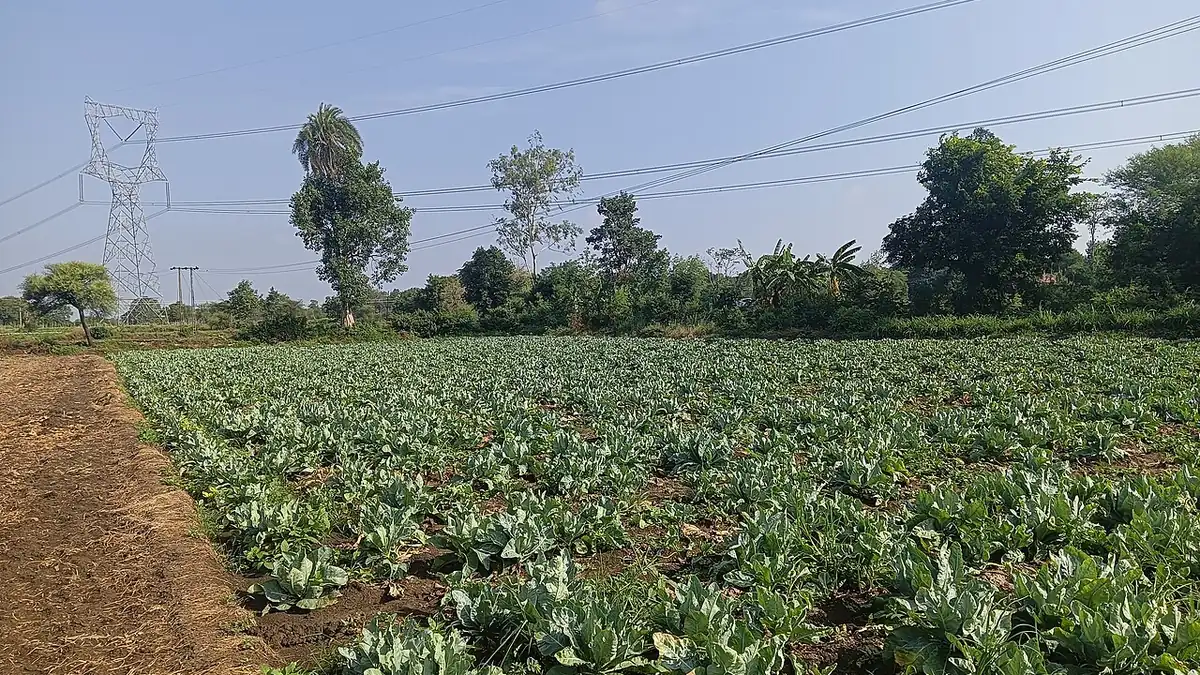
- ICAR and state agricultural university guides prescribe 1 to 2 grams per litre (0.2% spray, ~300–400 g/acre in 150–200 L water) of Boron 20% during pre-flowering and fruit-set stages to halt flower drop, pod sterility, and cauliflower hollow stem.
- Because the safety window between boron deficiency (<0.5 mg/kg available soil B per ICAR Soil Health Card norms) and leaf-burn toxicity is very narrow, never exceed recommended soil doses (1–2 kg/acre of 20% grade or 4–8 kg/acre Borax 10.5%).
- Indicative retail Boron 20% price bands across Indian agro-input counters stand around ₹110–₹185 per 250g pack, ₹210–₹340 per 500g pack, and ₹390–₹640 per 1 kg box depending on brand and micro-granulation.
- Soil-test before spending on micronutrients via soilhealth.dac.gov.in and calculate total crop nutrient budgets accurately on KisanPe's Fertilizer Calculator.
Severe flower shedding in cotton and chilli, hollow watery stems inside cauliflower heads, empty pods in groundnut, and uneven grain filling in sunflower and wheat often trace back to one hidden micronutrient shortage: boron fertilizer deficiency across leached sandy loams or high-pH calcareous soils. Regulated under India's statutory Fertilizer Control Order (FCO) and mapped widely by Soil Health Card testing labs, boron drives cell-wall strength, sugar transport, and pollen-tube germination at tiny doses. Farmers shopping for Boron 20% (Disodium Octaborate Tetrahydrate) or Boron 10.5% (agricultural Borax) must balance exact gram-level dosing—because exceeding soil safety thresholds quickly scorches leaf tips! Explore our companion Borax soil application breakdown, Calcium-Boron synergy guide, and Zinc & Boron micronutrient chart before calculating field quantities.
1. FCO Boron Fertilizer Grades, Dosages & Indicative India Prices (2026)
When dealers quote boron 20 price versus crude Borax rates, always check the exact elemental B% percentage printed under FCO specification on the sealed pouch rather than comparing pack prices blindly. Boron 20% dissolves crystal clear even in cold spray tanks and delivers nearly double the elemental boron per kilogram compared to traditional 10.5% Borax crystals (which need warm water stirring for foliar mixing). Compare verified formulations, approved ICAR foliar/basal doses, and indicative November 2026 Indian retail price bands below:
| FCO Boron Grade | Chemical Compound & Elemental B% | Foliar Spray Dose (per Acre) | Basal Soil Dose (per Acre) | Indicative Retail Price Band (India, Nov 2026) |
|---|---|---|---|---|
| Boron 20% (Water Soluble / Solubor-type) | Disodium Octaborate Tetrahydrate (DOT) · 20.0% min B | 300–400 g/acre (1–2 g/L in 150–200 L water) | 1.0 – 2.0 kg/acre mixed in dry soil/compost | ₹210–₹340 (500 g) · ₹390–₹640 (1 kg) |
| Boron 10.5% (Agricultural Borax) | Sodium Tetraborate Decahydrate · 10.5% min B | 300–400 g/acre (2–2.5 g/L pre-dissolved) | 4.0 – 8.0 kg/acre (~10 kg/ha soil basal) | ₹120–₹210 (1 kg) · ₹450–₹780 (5 kg bag) |
| Boron 14.5% (Granular Soil Grade) | Sodium Tetraborate Pentahydrate · 14.5% min B | Not for foliar spray (soil use only) | 2.5 – 4.0 kg/acre broadcast before sowing | ₹320–₹520 (1 kg) · ₹1,300–₹1,950 (5 kg) |
| Boronated SSP / NPK Fortified Grades | Single Super Phosphate + 0.15%–0.20% Boron | Soil basal application only | 50–100 kg/acre per Soil Health Card P/B target | MRP-linked SSP + ₹40–₹70/bag fortification premium |
If you are comparing boron fertilizer prices for a 5-acre vegetable or mustard holding, note that one 1-kg pack of Boron 20 fertilizer covers up to 2.5–3.3 acres via targeted flowering sprays (costing roughly ₹125 to ₹200 per acre per spray), whereas crude soil Borax requires 4 to 8 kg/acre up front on severely B-deficient plots. Use our KisanPe Fertilizer Calculator alongside DAP basal fertilizer norms, Urea top-dressing timings, and your block-level Soil Health Card portal (soilhealth.dac.gov.in) to avoid blind micronutrient overspending.
2. Recognizing Boron Deficiency Symptoms Across Major Indian Crops
Unlike nitrogen deficiency—which turns older lower leaves pale yellow—boron is largely immobile inside plant phloem. Consequently, shortage hits growing buds, shoot tips, pollen grains, and young expanding fruits first. Spot these crop-specific warning signs before yield loss locks in:
- Cauliflower, Cabbage & Broccoli: Stems crack and turn brown/hollow internally ('hollow stem'), heads brown prematurely ('brown rot'), and young curd buttons stay stunted despite healthy NPK 19-19-19 feeding.
- Pomegranate, Tomato, Chilli & Guava: Severe pre-harvest fruit cracking on thick skins, bumpy corky fruit corking, empty blossom-drop flowers, and brittle upward curling of young terminal shoots (compare tomato nutrient schedules and chilli nutrition guides).
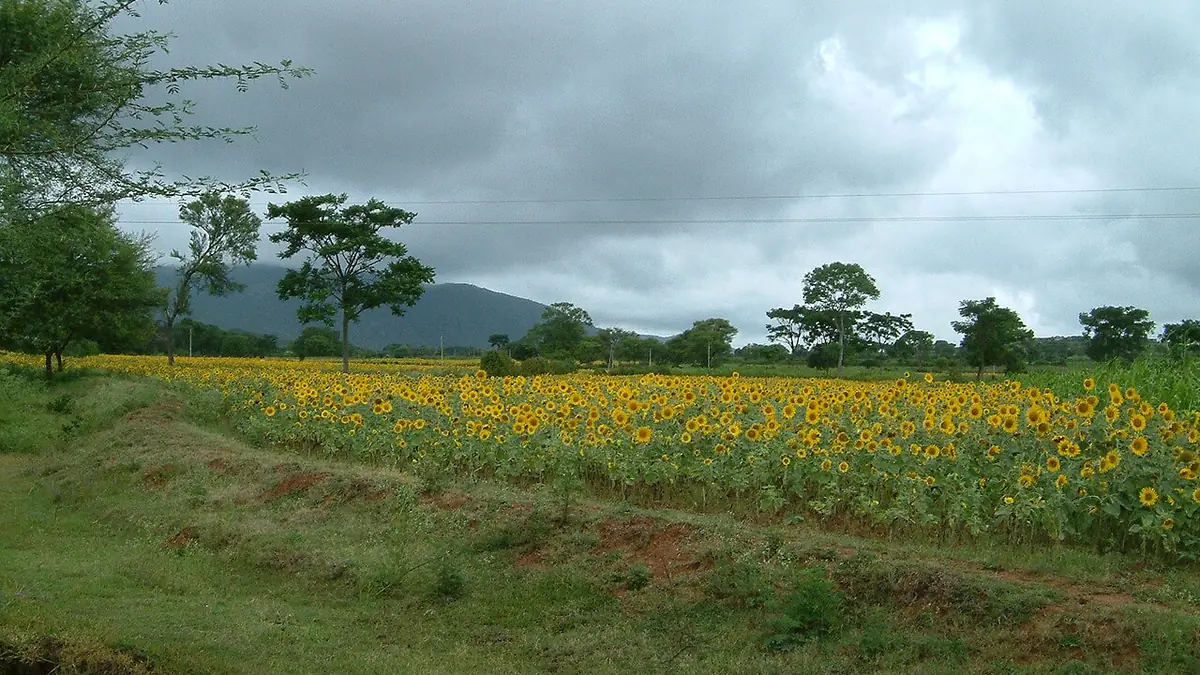
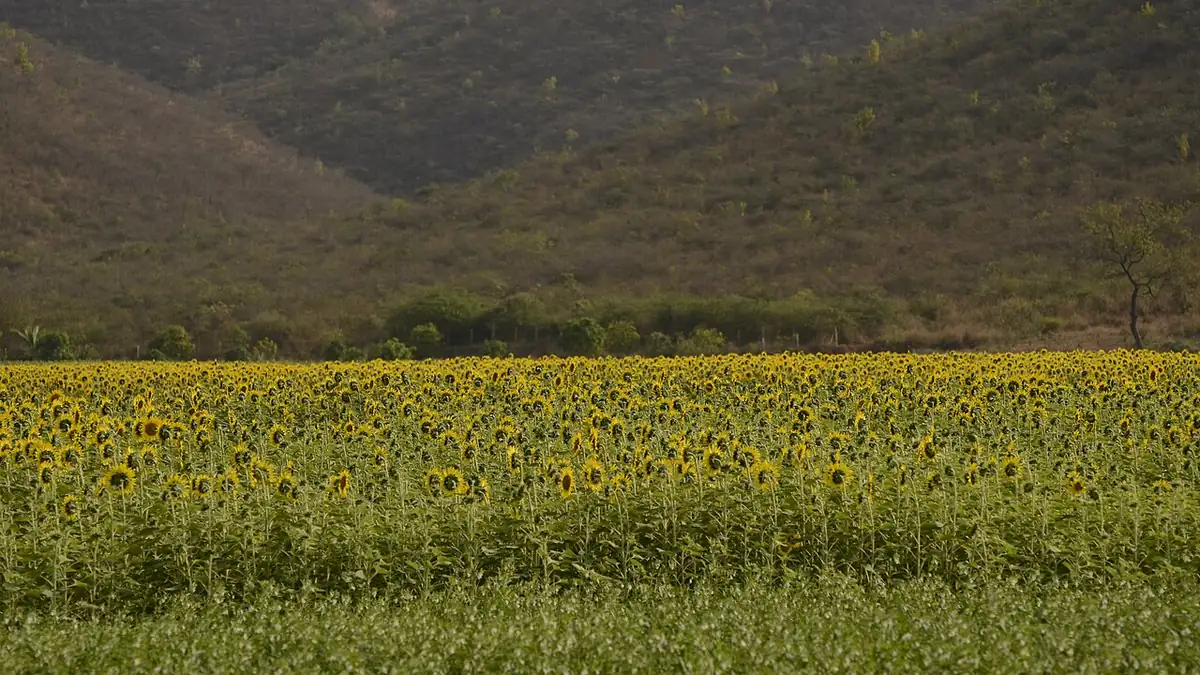
- Mustard, Sunflower & Groundnut: Hollow shriveled groundnut kernels ('pops') and poorly filled central sunflower disks because pollen fails to germinate along the silk/style without adequate floral boron.
- Wheat, Paddy & Cotton: Poor panicle sterility ('white chaff heads') in Eastern Gangetic alluvial soils under cold foggy winters, or excessive square shedding and boll deformation on Bt cotton hybrids.
3. Foliar Spray vs Basal Soil Application: Which Wins in 2026?
Both ICAR institutes (including the Indian Institute of Soil Science, Bhopal) and state agricultural universities emphasize matching application mode to soil pH and crop growth stage. In alkaline soils above pH 7.8 or heavily limed clay fields, soil-applied boron locks up quickly or leaches past shallow roots during heavy monsoon rain. Therefore:
- Choose Foliar Spraying (Boron 20%) for Reproductive Rescue: Dissolving 1 to 2 grams per litre (300–400 g/acre in 150–200 L clean tank water) and misting cleanly over flower buds/panicles during pre-flowering and pinhead-fruit-set delivers fast localized uptake exactly when pollen needs boron—without polluting soil salinity.
- Choose Basal Soil Application for Confirmed Low Soil Test Plots: Whenever soil testing verifies available hot-water-soluble Boron below 0.5 mg/kg (ppm), mix 1–2 kg/acre of Boron 20% (or 4–8 kg/acre of 10.5% Borax) uniformly with moist compost, vermicompost, or dry basal NPK granules before final planking.
- Avoid High-Dose Tank Mixing Mistakes: Do NOT mix raw Borax or concentrated Boron 20% blindly with concentrated Calcium Nitrate or unchelated Calcium Chloride inside one drum—follow separate spray schedules or pre-formulated balanced Calcium-Boron chelates detailed on KisanPe to prevent insoluble calcium borate precipitate clogging spray nozzles.
4. Boron Toxicity Risk: Why Exact Gram Measurement Matters
No agricultural micronutrient has a tighter safety threshold between deficiency (<0.5 ppm) and acute crop toxicity (>2.0–5.0 ppm) than boron. Applying an extra scoop ('double dose') to hurry fruit sizing causes unmistakable marginal yellowing and necrotic brown scorching along leaf margins, leaf cupping, and permanent yield decline, especially in sensitive pulses (urad, moong), snap beans, and shallow drip root zones. Always weigh exact gram doses on a pocket kitchen/fertilizer scale rather than estimating by handfuls, spray strictly during cool morning or late-afternoon hours checked against spray weather advisories, and apply foliar feeds using clean constant-pressure sprayers.
5. Checking Genuine Soil Need via Soil Health Card & Complementary Inputs
Farmers across light-textured red soils of Karnataka/Andhra Pradesh, acid lateritic soils of Odisha/Assam/West Bengal, and calcareous Indo-Gangetic pockets frequently see multi-micronutrient gaps where boron shortage overlaps with zinc or potash deficits. Verify your village block's sample maps inside our AI Soil Health Card Reader and soil sample collection manual. Pair corrected basal boron smoothly with 0-52-34 Mono Potassium Phosphate at flowering, 13-0-45 Potassium Nitrate at fruit swelling, or 0-0-50 SOP for sugar translocation, alongside organic microbial biofertilizers and humus buildup practices. Input buyers can also reduce working-capital burden through Kisan Credit Card accounts or check input scheme support on state subsidy trackers and our subsidy calculator.
Drip Fertigation Schedule & Indian Boron-Deficient Soil Hotspots
According to national ICAR-IISS micronutrient mapping surveys, nearly 23% to 33% of cultivated soils across eastern and southern India—prominently in Bihar's calcareous floodplains, Odisha and West Bengal's leached red-lateritic rice soils, Assam's heavy-rainfall foothills, Karnataka's light red sandy loams, and dry Maharashtra/Gujarat horticultural orchards—test below the critical 0.5 mg/kg available boron line. In drip-irrigated tomato, pomegranate, banana, chilli, and sugarcane blocks, split soluble Boron 20% cleanly through Venturi injectors during two windows rather than dumping one heavy dose: inject 500 g/acre dissolved inside 50 L clean stock barrel water at active vegetative branching, followed by 500 g/acre at early pinhead fruit/boll initiation. Flush drip lateral lines thoroughly for 20 minutes after every fertigation cycle, keep venturi stock tanks strictly separated from acidic or calcium-rich nutrient barrels, and inspect regional nutrient advisories anytime via Urea scheduling.
6. Frequently Asked Questions on Boron Fertilizer & Boron 20% Price
Review clear agronomic answers on FCO Boron 20% vs 10.5% Borax doses, per-acre spray dilutions, current indicative India prices, fruit cracking prevention, and tank-mix compatibility.
Frequently asked questions
- What is the recommended dosage of Boron 20% fertilizer per acre for foliar spray?
- ICAR and state agricultural advisories recommend 1 to 2 grams of Boron 20% per litre of water (~0.2% spray solution), totaling roughly 300 to 400 grams per acre mixed in 150–200 litres of water during cool morning or evening hours. Confirm balanced NPK ratios first on our Fertilizer Calculator.
- What is the indicative Boron 20% price per kg in India in 2026?
- Depending on brand and regional dealer freight, FCO-certified Boron 20% (Disodium Octaborate Tetrahydrate) typically costs an indicative ₹210–₹340 per 500g and ₹390–₹640 per 1 kg box, whereas lower-concentration 10.5% agricultural Borax runs roughly ₹120–₹210 per kg.
- What is the difference between Boron 20% (Solubor) and Boron 10.5% (Borax)?
- Boron 20% uses water-soluble Disodium Octaborate Tetrahydrate with twice the active boron density, dissolving fast in cold spray drums without nozzle clogging; agricultural Borax (10.5% B) dissolves slower and is mainly broadcast in basal soil mixes at 4–8 kg/acre—see our Borax guide.
- How do farmers test whether their field truly needs boron fertilizer?
- Test topsoil before buying micronutrients through your nearest Soil Health Card laboratory. Per ICAR-IISS thresholds, soil levels below 0.5 mg/kg (ppm) hot-water extractable boron indicate genuine deficiency—learn sample steps in our soil testing guide.
- Can I mix Boron 20% with Calcium Nitrate, NPK 19-19-19, or pesticides in the same tank?
- Foliar Boron 20% generally mixes cleanly with neutral NPK 19-19-19 in separate pre-dissolved slurries, but avoid tank-mixing high-dose Boron directly with concentrated Calcium Nitrate fertilizers unless using pre-chelated Calcium-Boron formulations, and always run a jar test first.
- Which growth stage gives the best yield response to boron spraying?
- Apply foliar boron sprays just before flower-bud emergence and early fruit/pod setting, as boron fuels active pollen germination, reduces blossom shedding in cotton/chilli, and prevents cauliflower hollow stem and pomegranate fruit cracking.
- What happens if too much boron fertilizer is applied to crops?
- Because boron has a very narrow margin between deficiency and toxicity, excessive doses trigger yellow-brown marginal leaf scorching, stunted shoots, and sharp yield drops—especially in boron-sensitive beans, pulses, and drip-fed orchards.
- Should boron fertilizer be applied via soil or drip fertigation?
- In sandy soils below 0.5 ppm B, combine a light basal dose (1–2 kg/acre Boron 20%) mixed with compost plus split reproductive sprays or fertigation injections alongside balanced Zinc & Micronutrients for maximum absorption.
This article is for general information only and is not financial advice. Loan and scheme eligibility depends on partner and government criteria.