Cotton Seed Varieties 2026: Hybrid, Bt & High Yield Guide
Key takeaways
- Bollgard II (BG-II) dual-gene transgenic hybrids expressing Cry1Ac and Cry2Ab account for over 90% of India's 12.5 million hectare cotton crop across Central, Northern, and Southern zones.
- Under India's Cotton Seeds Price (Control) Order, certified 450-gram BG-II cotton seed packets carry a statutory maximum retail price (MRP) ceiling of ₹864/packet nationwide.
- High Density Planting Systems (HDPS) calibrated at 60x15 cm or 90x20 cm boost plant stands to 25,000–45,000 plants/acre, raising rainfed yields by 35%–50%.
- Seed treatment with Thiamethoxam 30 FS or Imidacloprid 70 WS plus bio-antagonist Trichoderma protects early seedlings against jassids, thrips, and Cotton Leaf Curl Virus.
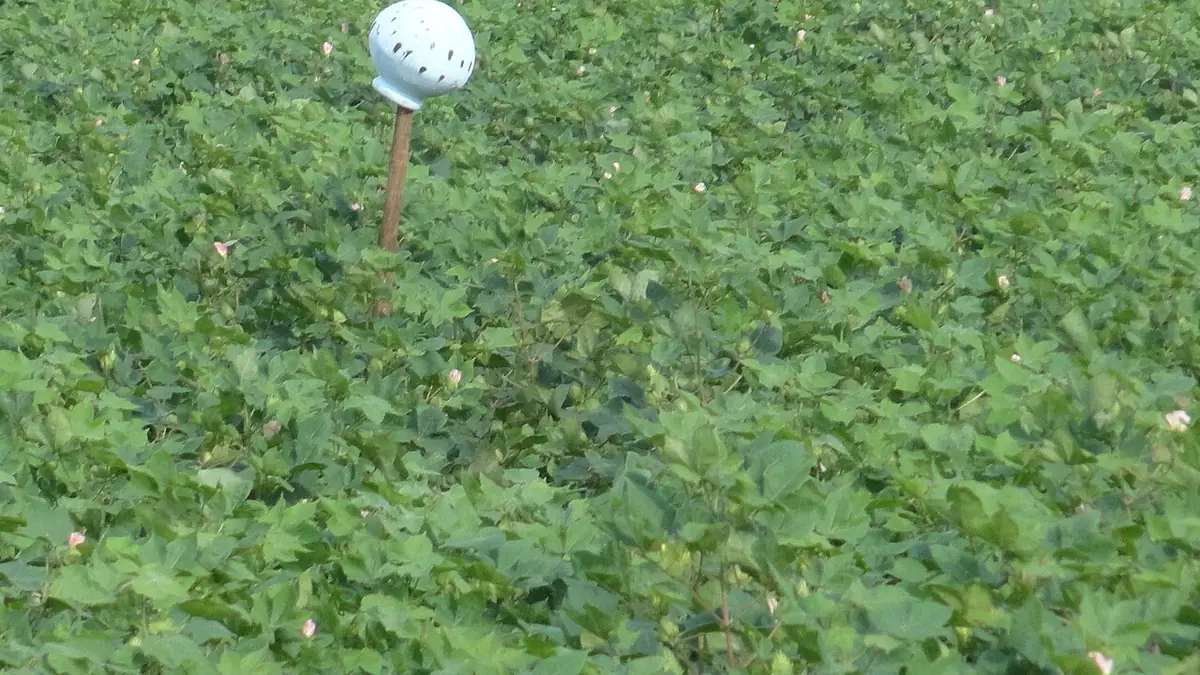
- Adhering strictly to the 5-point Pink Bollworm IPM strategy—including planting the bundled 120g non-Bt refugia border, pheromone traps, and December crop termination—prevents field resistance.
Selecting the optimal cotton seed variety is the single most decisive factor determining harvest yield, ginning outturn, and multi-lakh farmgate profitability for cotton growers across India in 2026. Cotton (known as 'White Gold') occupies over 12.5 million hectares across the Central Zone (Maharashtra, Gujarat, Madhya Pradesh), Northern Zone (Punjab, Haryana, Rajasthan), and Southern Zone (Telangana, Andhra Pradesh, Karnataka). High-performing genetically engineered Bt cotton hybrids containing Bollgard II (BG-II) technology, certified by the ICAR-Central Institute for Cotton Research (CICR) and regulated under the Seednet India Portal, have delivered substantial boll protection against American bollworm, spotted bollworm, and pink bollworm. However, navigating unpredictable monsoon rains, emergence of secondary sucking pests (whiteflies, thrips, jassids), and varying soil vertisols requires a rigorous understanding of seed vigor, seed treatment protocols, High Density Planting Systems (HDPS), and government ceiling price structures enforced by the Cotton Corporation of India (CCI) and the Ministry of Agriculture. Verify related KisanPe comparisons and official portal references via Pink Bollworm IPM, water-soluble NPK (19:19:19).
1. Classification of Cotton Seed Varieties in India: BG-II, Non-Bt & Desi Cotton
The Indian cotton seed commercial catalog is categorized into three primary genetic groups. The dominant segment, comprising over 90% of commercial acreage, is Bollgard II (BG-II) Transgenic Cotton. BG-II incorporates two synthetic genes derived from Bacillus thuringiensis—Cry1Ac and Cry2Ab—which express endotoxin proteins within plant foliage and fruiting forms, providing broad-spectrum protection against lepidopteran caterpillar pests. Commercial seed packets are sold in standardized 450-gram net weight units accompanied by a 120-gram packet of non-Bt 'refugia' seeds, designed to prevent target insects from mutating and developing insecticide resistance.
The second category is Non-Bt Hybrids and High-Density Certified Varieties, developed by state agricultural universities for organic cotton cultivation and specialized export fiber markets. The third category is Desi Arboreum Cotton (Gossypium arboreum), indigenous varieties renowned for their extreme drought tolerance, resistance to cotton leaf curl virus (CLCuV), and minimal fertilizer dependency. While American upland cotton (Gossypium hirsutum) dominates commercial spinning due to staple lengths exceeding 28 to 32 mm, desi cotton provides invaluable genetic security across rainfed, marginal tracts. Farmers evaluating crop diversification alongside staple cereals can cross-reference our field guides on wheat mandi rates or monitor oilseed revenues through sarso ka bhav trends to balance seasonal crop rotations.
2. Top Certified Hybrid Cotton Seed Varieties Across Indian States
Commercial hybrid selection must align precisely with your regional rainfall patterns, irrigation infrastructure, and soil depth. In deep black soils of Maharashtra's Vidarbha and Marathwada, hybrids exhibiting medium-to-late maturity (160 to 180 days) with indeterminate growth habits produce superior multi-flush yields. In contrast, irrigated canal tracts of Punjab and Haryana require early-to-medium maturing varieties (140 to 150 days) that vacate the field on schedule for timely rabi wheat sowing. Leading commercial seed brands such as Rasi Seeds, Mahyco, Nuziveedu Seeds, Bayer CropScience, Ankur Seeds, and Kaveri Seeds offer top-tier performers certified under national AICRP trials.
| Hybrid Seed Brand & Name | Breeding Source / Firm | Maturity Duration | Average Boll Weight (g) | Ginning Outturn (GOT %) | Targeted Farming States |
|---|---|---|---|---|---|
| RCH 659 BG-II | Rasi Seeds Pvt Ltd | 150 - 165 Days | 4.8 - 5.5 g | 35.5 - 37.0% | Maharashtra, Gujarat, Telangana, MP |
| First Class BG-II | Mahyco (Maharashtra Hybrid) | 160 - 175 Days | 5.2 - 6.0 g | 36.0 - 38.0% | Maharashtra, Karnataka, AP, Gujarat |
| Bhakti BG-II (KCH 14K59) | Kaveri Seed Company | 150 - 160 Days | 4.5 - 5.2 g | 35.0 - 36.5% | Telangana, Andhra Pradesh, Maharashtra |
| Brahma BG-II (NC 3532) | Nuziveedu Seeds Ltd | 165 - 180 Days | 5.0 - 5.8 g | 36.5 - 38.5% | Gujarat, MP, Rajasthan, Maharashtra |
| Ankur 3028 BG-II | Ankur Seeds Pvt Ltd | 145 - 155 Days | 4.6 - 5.3 g | 34.5 - 36.0% | Punjab, Haryana, Northern Rajasthan |
| Surpass Jadoo BG-II | Bayer CropScience | 155 - 170 Days | 5.0 - 5.7 g | 35.5 - 37.2% | Maharashtra, MP, Gujarat, Karnataka |
Source: ICAR-Central Institute for Cotton Research (cicr.icar.gov.in) and All India Coordinated Research Project on Cotton (AICRP).
3. Precision Agronomy: Spacing, Seed Rate & HDPS Technology
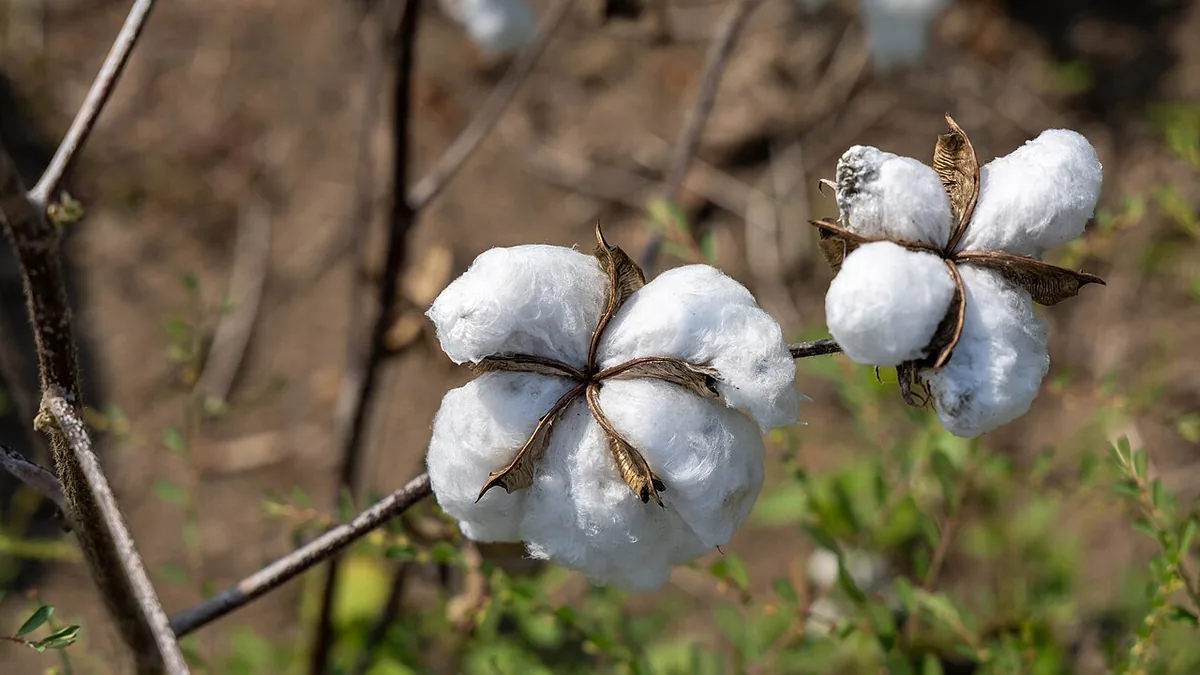
Yield in cotton is fundamentally a product of plant population per acre and the number of harvestable bolls per square meter. Traditional broad spacing of 120 cm x 60 cm (4x2 feet) or 90 cm x 90 cm (3x3 feet) yields a population of 5,500 to 7,500 plants per acre, necessitating large, bush-type plants with extensive horizontal branching. While effective in deep irrigated tracts, rainfed crops suffer severe flower drop and boll shedding during sudden dry spells.
In response, ICAR-CICR has spearheaded the adoption of the High Density Planting System (HDPS). By utilizing compact, semi-erect non-hybrid varieties or specialized short-duration hybrids sown at narrow spacing of 60 cm x 15 cm or 90 cm x 20 cm, plant densities reach 25,000 to 45,000 plants per acre. Under HDPS, each plant produces only 6 to 8 bolls, but total harvestable bolls per acre increase by 35% to 50%, resulting in yields exceeding 14 to 18 quintals per acre even in rainfed conditions. Land preparation for cotton demands deep summer ploughing utilizing heavy moldboard ploughs drawn by high-torque machines like the Mahindra 575 DI (45 HP), followed by two passes of a rotavator to achieve an uncompacted, friable seedbed.
| Production System | Row-to-Row & Plant Spacing | Seed Packets / Acre | Target Plant Density / Acre | Fertilizer Schedule (N:P:K kg/Acre) | Expected Yield Range |
|---|---|---|---|---|---|
| Traditional Broad Bed (Irrigated) | 120 cm x 60 cm (4 x 2 ft) | 1.5 - 2 Packets | 5,500 - 6,000 Plants | 50:25:25 kg NPK + Micronutrients | 12 - 16 Quintals / Acre |
| Standard Ridge & Furrow (Rainfed) | 90 cm x 60 cm (3 x 2 ft) | 2 Packets (900g) | 7,400 - 8,000 Plants | 40:20:20 kg NPK Split Doses | 8 - 12 Quintals / Acre |
| Drip Fertigation Paired Rows | 150 x 60 x 60 cm Paired | 2.5 Packets | 8,800 - 9,500 Plants | Water Soluble water-soluble NPK (19:19:19) via Drip | 15 - 22 Quintals / Acre |
| High Density Planting (HDPS) | 60 cm x 15 cm / 90 cm x 20 cm | 4 - 5 Packets / Desi Seed | 25,000 - 45,000 Plants | 60:30:30 kg NPK + Growth Regulators | 14 - 19 Quintals / Acre |
Source: Directorate of Cotton Development (e-National Cotton Portal) and State Agricultural Universities Agronomy Manual.
4. Seed Treatment & Protection Against Sucking Pests and Diseases
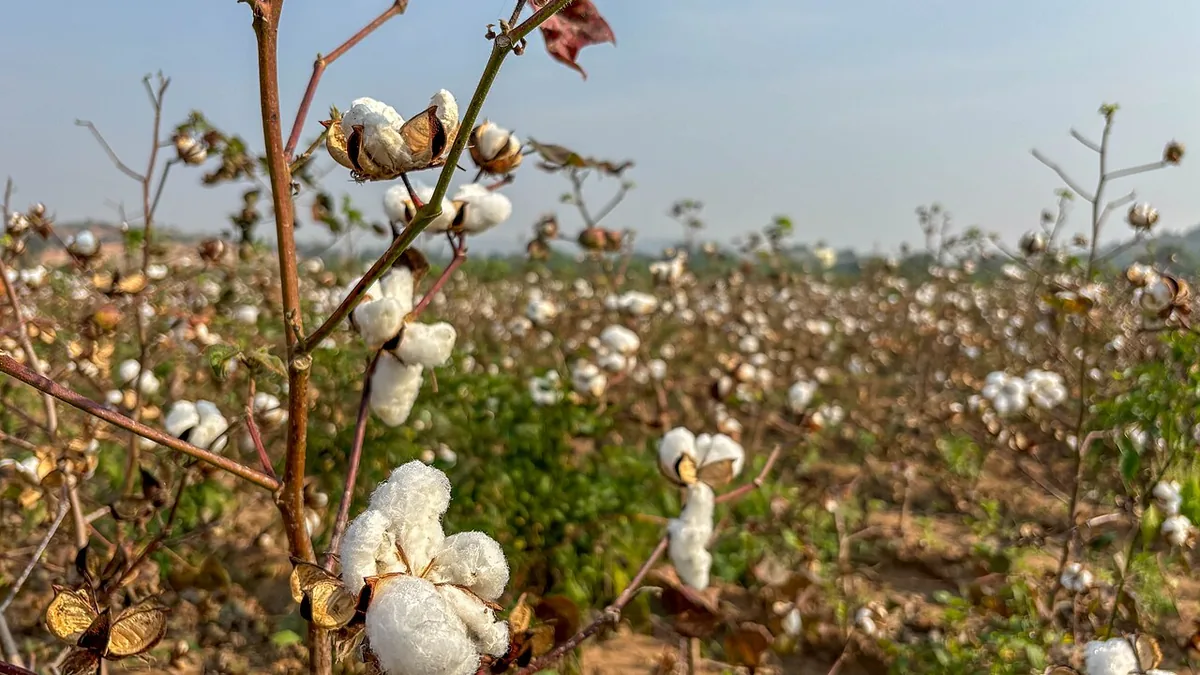
Although certified BG-II cotton seeds arrive pre-treated with systemic insecticides, executing supplementary on-farm seed treatment provides an indispensable protective barrier during the critical first 30 to 45 days after emergence. Young cotton seedlings are extraordinarily vulnerable to early-season piercing and sucking pests, including cotton jassids (Amrasca biguttula), thrips (Thrips tabaci), and whiteflies (Bemisia tabaci), which transmit debilitating viral pathologies like Cotton Leaf Curl Disease (CLCuD).
Agronomic best practice mandates treating seeds with systemic neonicotinoid & Thiamethoxam 30 FS at 7 to 10 ml per kg of seed, or Imidacloprid 70 WS at 5 to 7 grams per kg of seed, which shields emerging leaves from sap-sucking foliage damage. For biological defense against soil-borne damping-off, collar rot (Rhizoctonia solani), and vascular wilt (Fusarium oxysporum), treat seeds with Trichoderma viride or Pseudomonas fluorescens at 10 grams per kg of seed 24 hours prior to sowing. Once seedlings reach the vegetative stage, monitoring pest population densities and applying targeted chemistries like Emamectin Benzoate 5% SG ensures caterpillar and bollworm containment without harming beneficial predatory insects.
5. Pink Bollworm Management: The 5-Point Refugia Strategy
Over the past several seasons, field populations of Pink Bollworm (Pectinophora gossypiella) across Gujarat, Maharashtra, and Telangana have demonstrated resistance to Cry1Ac and Cry2Ab proteins. Controlling this pest requires strict adherence to the Integrated Pest Management (IPM) guidelines formulated by ICAR-CICR.
- 1. Sowing Non-Bt Refugia Borders: Always plant the 120-gram packet of non-Bt seeds provided in your commercial packet as 5 to 7 border rows around your Bt cotton plot. These border plants provide refuge for susceptible bollworm moths to mate with resistant survivors, diluting genetic resistance in subsequent generations.
- 2. Synchronized Community Sowing: Avoid extended, staggered sowing windows. Complete cotton planting across entire village clusters between June 1st and June 30th to starve early-emerging moth populations.
- 3. Delta Pheromone Trap Installation: Install gossyplure delta pheromone traps at 5 traps per acre at 45 days after sowing. Monitor daily moth catches to calculate Economic Threshold Levels (ETL = 8 to 10 moths per trap per night for 3 consecutive days).
- 4. Trichogramma Biological Parasitoid Release: Release Trichogramma bactrae egg parasitoids at 60,000 per acre at 10-day intervals during flowering and early boll development.
- 5. Strict Crop Termination by December: Never continue cotton into January or February for 'fardi' (ratoon/late flush) picking. Terminate the crop, deep-plough residual stalks, and prepare land for rabi legumes to break the bollworm diapausing cycle.
6. Government Seed Pricing, Subsidies & Legal Quality Assurance
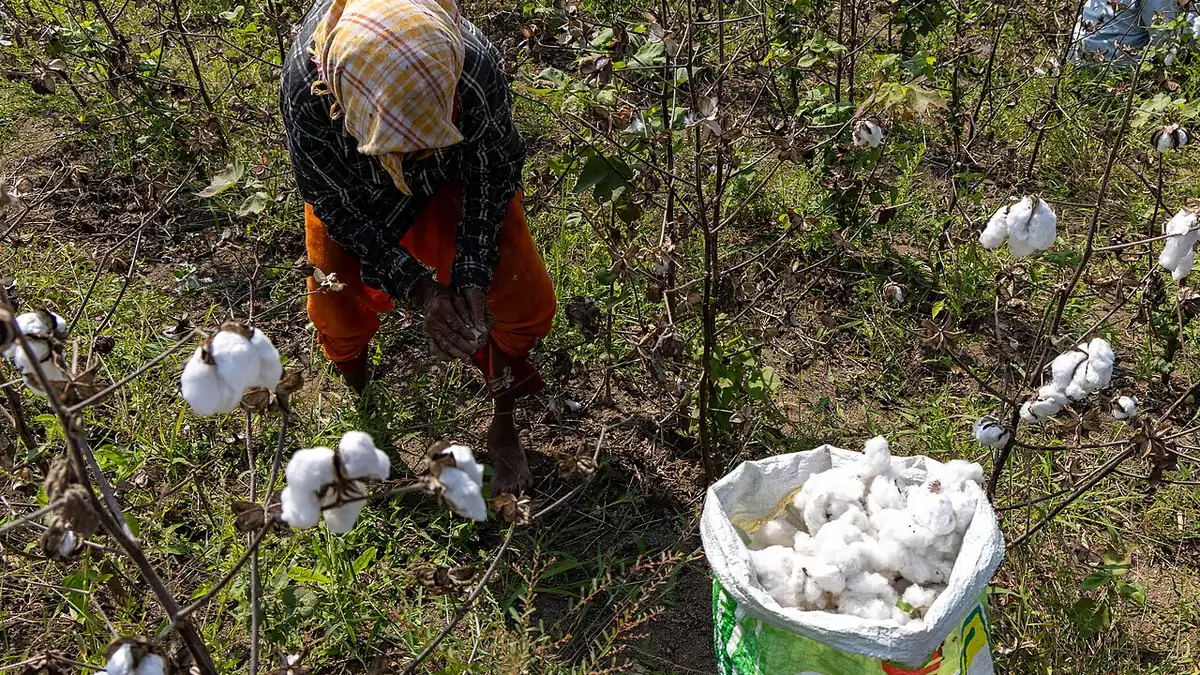
Under the Cotton Seeds Price (Control) Order administered by the Department of Agriculture & Farmers Welfare, the maximum sale price (MRP) for a 450-gram packet of certified BG-II cotton seed is statutory across India, capped at ₹864 per packet (including trait value fees). Selling certified hybrid seed packets above this gazetted price is illegal under the Essential Commodities Act. Farmers should purchase seeds exclusively from licensed agri-input dealers, verify the 3D security hologram on the pouch (checking seed tag colour standards and germination test guides), calculate planting needs with our seed rate calculator and fertilizer calculator, compare market returns on cotton mandi rates or KCC crop credit, and obtain a computer-generated GST tax invoice containing the batch number, germination test date, and expiry period.
Furthermore, state governments provide targeted seed subsidies under the National Food Security Mission (NFSM) (NFSM-Commercial Crops) and Rashtriya Krishi Vikas Yojana (RKVY). Farmers registered under the national Kisan Identity Card (Farmer ID) can access direct DBT seed subsidy tranches deposited into their Aadhaar-linked accounts. When planning seasonal farm machinery investments, farmers can calculate equipment operating budgets using our Tractor Loan EMI Calculator or evaluate multi-utility tractors like the Swaraj 735 FE (40 HP) and the robust Farmtrac 60 Powermaxx.
7. Frequently Asked Questions About Cotton Seed Varieties & Prices
Consult concise, ICAR-CICR verified answers below covering statutory ₹864 BG-II seed MRP, Maharashtra hybrid rankings, refugia rules, seed treatment doses, and pink bollworm control.
Frequently asked questions
- What is the official government price of Bt cotton seeds in India for 2026?
- The Ministry of Agriculture and Farmers Welfare caps the maximum retail price (MRP) of a standard 450-gram packet of BG-II hybrid cotton seed (with 120g refugia) at ₹864. Retailers are legally prohibited from charging above this statutory rate.
- Which are the best cotton seed varieties for Maharashtra black soil?
- Top-performing hybrids for Maharashtra's vertisol soils include RCH 659 BG-II (Rasi Seeds), Mahyco First Class BG-II, Kaveri Bhakti (KCH 14K59), and Bayer Surpass Jadoo BG-II, known for high boll weight (4.8-5.8g) and superior drought tolerance.
- How many packets of cotton seeds are needed per acre?
- Under traditional ridge-and-furrow planting (90x60 cm), 2 packets (900 grams) are required per acre, providing approximately 7,500 plants. Under High Density Planting Systems (HDPS at 60x15 cm), 4 to 5 packets are needed.
- What is the difference between BG-I and BG-II cotton seeds?
- Bollgard I (BG-I) contained a single Cry1Ac gene. Bollgard II (BG-II) developed under ICAR-CICR incorporates two distinct genes—Cry1Ac and Cry2Ab—which provide double-barrel protection against American, spotted, and pink bollworms, delaying insect resistance.
- What is refugia seed and why is it packed with Bt cotton?
- Refugia consists of non-Bt cotton seeds (120g packet) supplied with Bt seeds. Planting refugia as border rows sustains a small population of non-resistant bollworm moths, ensuring that any resistant moths mate with susceptible partners to preserve Bt efficacy.
- What is the recommended sowing time for cotton across central India?
- Across Maharashtra, Gujarat, and Madhya Pradesh, sowing should coincide with the onset of the southwest monsoon between June 15th and July 10th, once the soil receives at least 75 to 100 mm of cumulative rainfall.
- How should cotton seeds be treated before sowing to stop sucking pests?
- Treat seeds with seed dressing with Thiamethoxam 30 FS at 7-10 ml/kg or Imidacloprid 70 WS at 5-7 g/kg of seed to protect seedlings against aphids, jassids, and thrips for the first 35 to 45 days after germination.
- What is the minimum germination percentage for certified cotton seeds?
- Under Indian Minimum Seed Certification Standards, certified cotton seed must exhibit a minimum germination rate of 65% (with many commercial hybrids guaranteeing 75% or higher) and physical purity above 98%.
- What causes square and young boll shedding in cotton?
- Boll shedding is triggered by sudden soil moisture stress (drought or prolonged waterlogging), cloudy weather causing light deficiency, nitrogen-induced excessive vegetative growth, or sucking pest punctures by mirid bugs.
- What is High Density Planting System (HDPS) in cotton?
- HDPS is an agronomic technique where compact, semi-erect plants are sown at narrow spacing (60x15 cm) achieving 25,000 to 45,000 plants per acre. Each plant yields 6 to 8 bolls, delivering 15% to 35% higher total harvest yields in rainfed tracts.
- How can pink bollworm infestation be identified early in the field?
- Look for 'rosetted flowers' (petals twisted and glued together by young larvae), small entry pinholes on green bolls, and capture rates exceeding 8 moths per night across delta pheromone traps.
- Can farmers save and replant seeds harvested from BG-II cotton crops?
- No. Commercial BG-II cottons are F1 hybrids. Harvesting and re-sowing F2 seeds results in genetic segregation, causing severe loss of vigor, uneven boll size, reduced ginning outturn, and diminished pest resistance.
This article is for general information only and is not financial advice. Loan and scheme eligibility depends on partner and government criteria.