Sarso Ka Bhav Today: Mustard Mandi Rates & 42% Oil Guide
Key takeaways
- As of November 2026, indicative wholesale 42% lab-condition mustard seed (sarson) rates span ₹5,750 to ₹6,250 per quintal across benchmark Rajasthan, Haryana, UP, and MP APMC mandis.
- Under Government of India MSP approvals reported via PIB and CACP, Rapeseed & Mustard MSP stands at ₹6,200 per quintal for RMS 2026-27 (up ₹250 from ₹5,950 in RMS 2025-26), targeting 93% return over ₹3,210 A2+FL cost.
- Jaipur, Alwar, Khairthal, and Bharatpur mandis price black and brown mustard lots using the standard 42% oil content lab formula—adjusting net payouts based on oil extraction percentage and <=8% moisture limits.
- Rayda ka bhav (Indian raya / brown mustard traded across Gujarat and western Rajasthan) typically tracks Jaipur and Gondal benchmarks with ±₹75 to ₹150 per quintal basis differences.
- Farmers verify live daily APMC arrivals and closing bids officially through Agmarknet and settle electronic payments directly under the e-NAM platform.
Tracking accurate sarso ka bhav today (सरसों का भाव / Indian Mustard Mandi Rates) is essential for oilseed growers, oil expeller millers, and APMC commission agents across Rajasthan, Haryana, Uttar Pradesh, Madhya Pradesh, and Gujarat. As India's premier rabi oilseed crop (Brassica juncea), mustard and rapeseed supply roughly one-third of domestic edible oil production, making daily sarson ke bhav a decisive benchmark for rural farm incomes and kachi ghani crushing parity. Official Minimum Support Price decisions recommended by the Commission for Agricultural Costs and Prices (CACP), published through the Press Information Bureau (PIB India), and daily regulated mandi arrivals published by the Agricultural Marketing Information Network (Agmarknet) give farmers transparent price discovery before unloading grain sacks at the auction floor. Growers monitoring daily oilseed parity can compare state-wide market movements on the KisanPe mandi rates portal alongside our dedicated sarso ka bhav reference guide and sarson rate per quintal breakdown.
1. Sarso Ka Bhav Today in Rajasthan, Haryana, UP & MP (November 2026 Indicative Ranges)
Mustard auction bids across northern and western India revolve tightly around Jaipur, Bharatpur, Alwar, and Khairthal in eastern Rajasthan—commonly known as India's mustard price belt—alongside Rewari and Hisar in Haryana, Agra and Mathura in Uttar Pradesh, and Morena in Madhya Pradesh. In late November 2026, while freshly sown rabi mustard crops establish vegetative canopies across the Indo-Gangetic plain, off-season buffer arrivals of cleaned 42% lab-condition seed from stockists and farmer warehouses trade in an indicative band of ₹5,750 to ₹6,250 per quintal depending on moisture, test weight, and free fatty acid stability. Farmers delivering bold-seeded raya lots in western Rajasthan and Gujarat—locally searched as rayda ka bhav—see indicative quotes hovering within ₹5,680 to ₹6,120 per quintal depending on crushing demand. You can evaluate historical shifts through our mandi price trend analyzer, check regional quotes on mustard rate today updates, and compare oilseed alternatives with soyabean mandi prices and Bhawani Mandi Rajasthan auction benchmarks.
| Mandi Yard / Market Center | State | Primary Trade Grade | 42% Lab Condition Basis | Indicative Wholesale Range (₹/Quintal) |
|---|---|---|---|---|
| Jaipur APMC (Kukarkhera / Mill Delivery) | Rajasthan | 42% Lab Oil Standard | Baseline Benchmark | ₹6,025 - ₹6,250 |
| Khairthal Krishi Upaj Mandi | Rajasthan | Clean Dry Sarson (Loose & Bags) | 41.5% - 42.5% Lab Tested | ₹5,880 - ₹6,140 |
| Alwar APMC Yard | Rajasthan | Mill-Ready Bold Raya / Black | 41% - 42% Condition | ₹5,850 - ₹6,110 |
| Bharatpur Mandi Yard | Rajasthan | Eastern Rajasthan Crushing Grade | 41.5% Lab Condition | ₹5,820 - ₹6,060 |
| Kota & Baran Mandis | Rajasthan | Hadoti Raya / Black Mustard | 40.5% - 41.5% Lab Oil | ₹5,720 - ₹5,960 |
| Rewari & Dadri Mandis | Haryana | Dry Non-Rainfed Haryana Mustard | 41.5% - 42% Condition | ₹5,860 - ₹6,120 |
| Hisar & Sirsa Anaj Mandis | Haryana | RH-749 / Bold Black Seed | 41% Standard Condition | ₹5,790 - ₹6,040 |
| Morena & Bhind Mandis | Madhya Pradesh | Chambal Belt High-Pungency Mustard | 41.5% - 42.5% Oil Basis | ₹5,840 - ₹6,090 |
| Agra & Shamsabad Mandis | Uttar Pradesh | Doab Mill Crushing Stock | 41% Mill Delivery | ₹5,800 - ₹6,030 |
2. How Khairthal Mandi, Alwar & Rajasthan 42% Oil Lab Condition Pricing Works
Unlike cereals such as wheat or paddy that are graded purely on physical appearance and moisture, commercial sarson ka rate across Rajasthan and Haryana is governed by solvent and oil-content laboratory testing known locally as the '42% Condition' benchmark. Whenever a tractor trolley enters Khairthal Mandi, Alwar, or Bharatpur, commission agents extract a small representative probe sample and test seed oil recovery using laboratory NMR analyzers or Soxhlet extraction units alongside a calibrated moisture meter. Every full percentage point above or below the 42.0% reference baseline adjusts the realized quintal payout proportionally—typically adding or deducting ₹75 to ₹150 per quintal per percentage point based on the prevailing wholesale oil price. Simultaneously, the seed price reflects oil-cake (khali) realization, making high-oil hybrids tested under Indian Council of Agricultural Research (ICAR) Directorate of Rapeseed-Mustard Research recommendations far more lucrative at auction. Farmers looking to boost seed oil density can consult our top Indian mustard varieties guide, high-oil variety selection comparison, and complete sarso ki kheti agronomy manual.
3. Official CACP & PIB Mustard MSP vs Market Parity & Rayda Ka Bhav
Under India's national oilseed price support policy, the Cabinet Committee on Economic Affairs revises the Minimum Support Price for Rapeseed & Mustard ahead of each rabi sowing cycle based on CACP cost calculations. According to official Government of India releases on PIB, the MSP for Rapeseed & Mustard was fixed at ₹5,950 per quintal for Rabi Marketing Season (RMS) 2025-26 and raised by ₹250 to ₹6,200 per quintal for RMS 2026-27 against an estimated all-India weighted average A2+FL cost of production of ₹3,210 per quintal—delivering a 93% return over cost. Whenever peak March–April harvest arrivals temporarily pull spot auctions at Bhattu Mandi, Ramganj Mandi, or Neemuch Mandi below MSP, central procurement agencies including the National Agricultural Cooperative Marketing Federation of India (NAFED) procure FAQ-grade mustard through state federations under the PM-AASHA Price Support Scheme. Across Gujarat and Saurashtra yards such as Gondal, Unjha, and Patan—where brown mustard is universally traded as rayda—spot rayda ka bhav mirrors Jaipur condition parity after accounting for interstate freight, while growers selling into Delhi-NCR can cross-check arrivals at Narela Mandi and the national anaj mandi network.
| Marketing Parameter | RMS 2024-25 Benchmark | RMS 2025-26 Benchmark | RMS 2026-27 Approved Benchmark | Policy / Cost Reference |
|---|---|---|---|---|
| Official Rapeseed & Mustard MSP | ₹5,650 / Quintal | ₹5,950 / Quintal | ₹6,200 / Quintal | CACP / CCEA Cabinet Approval |
| Year-on-Year MSP Hike | +₹200 / Quintal | +₹300 / Quintal | +₹250 / Quintal | Annual Price Policy Increase |
| Published Cost of Production (A2+FL) | ₹2,855 / Quintal | ₹3,011 / Quintal | ₹3,210 / Quintal | National Weighted Cost Basis |
| Guaranteed Return Over Cost | 98% Margin | 98% Margin | 93% Margin | Above National 50% Floor Mandate |
| Max Fair Average Quality (FAQ) Moisture | <= 8.0% | <= 8.0% | <= 8.0% | NAFED / FCI Procurement Standard |
4. Factors Driving Kachi Ghani Mill Demand, Oil Cake Recovery & Spot Rates
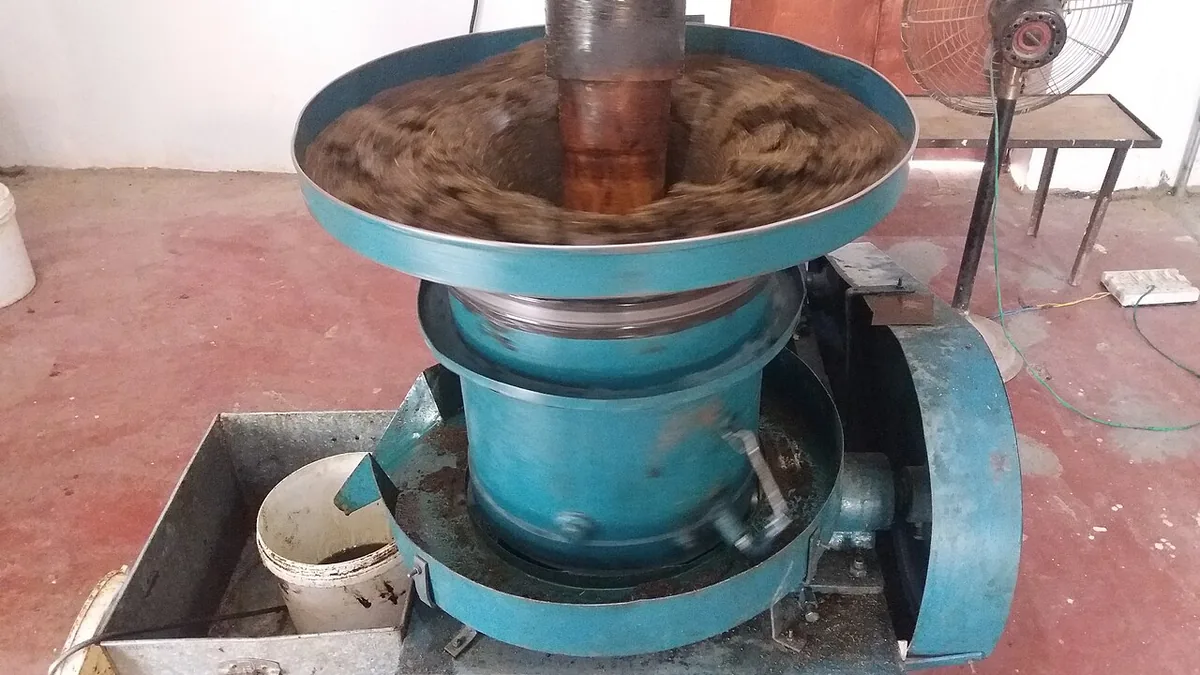
Every 100 kg of clean 42%-condition mustard crushed in a commercial cold-press kachi ghani expeller yields roughly 34 to 38 kg of crude pungent mustard oil and 60 to 63 kg of high-protein mustard de-oiled cake (sarso ki khal), while solvent extraction plants recover nearly the full 41 to 42 kg oil fraction alongside solvent cake used in cattle rations. Consequently, daily sarson ke bhav reacts immediately to three parallel price triggers: bulk loose oil quotes in Alwar and Morena, livestock dairy demand for mustard khali in Haryana and Punjab cattle belts, and international import tariffs on competing palm, soybean, and sunflower oils notified by the Department of Agriculture & Farmers Welfare (Agricoop). Processors comparing retail bottle margins regularly monitor sarson ka tel price per litre, mustard oil vs sunflower oil nutritional parity, and capital returns detailed in our oil mill ghani business feasibility guide, alongside rabi cereal competition in our gehu ka bhav wheat tracker.
5. Agronomic Quality Standards That Earn Top Auction Bids at Mandis
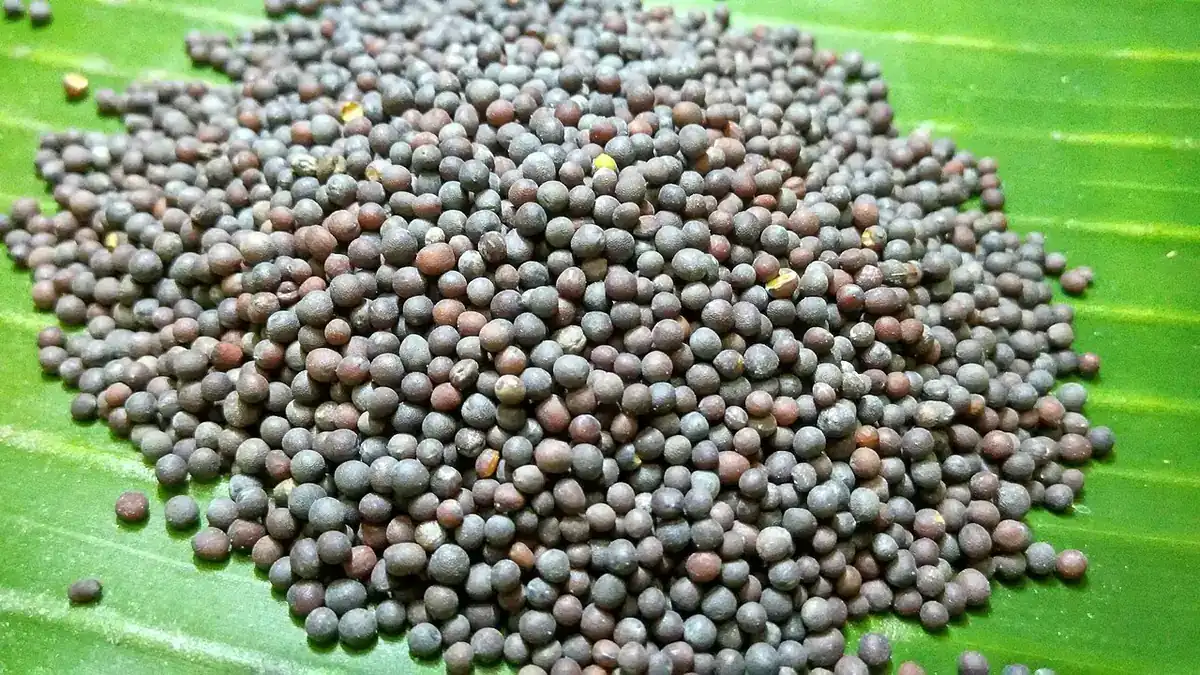
Two adjacent farmers arriving at Khairthal or Rewari mandi on the exact same morning often see a ₹300 to ₹500 per quintal price spread purely from field agronomy and post-harvest threshing discipline. Clean sun-drying down to 7.5%–8.0% seed moisture prevents fungus heating and green crushed spots during kachi ghani expelling, while zero immature greenish pods ensures vibrant amber oil clarity. On the production side, split-applying Sulphur alongside basal NPK fertilizers improves glucosinolate oil synthesis, whereas timely aphid (mahoo) and white rust checks prevent shriveled, low-density grain lots. Growers aiming for maximum clean test weight can calculate nutrient doses with the KisanPe fertilizer calculator, review recommended sprays in our mustard pest and disease control guide, explore oilseed diversification like linseed (alsi) cultivation, and check full agronomic schedules inside our mustard crop cultivation guide.
6. How to Verify Official Mandi Prices & Maximize Returns via e-NAM and WDRA Warehousing
Rather than relying on unverified morning forward messages, serious mustard farmers confirm real transacted auction bids across three reliable checkpoints before loading transport trolleys. First, check previous-day closing modal rates and arrival tonnage on Agmarknet using our step-by-step mandi bhav lookup tutorial, or scan regional spreads via the KisanPe Mandi Intelligence engine and nearest APMC mandi finder. Second, compare open yard commission cuts with transparent e-NAM national electronic auction bidding. Third, avoid distress selling during March–April peak glut weeks when daily Jaipur arrivals exceed 8 lakh bags: storing dried clean grain below 8% moisture inside accredited godowns to generate electronic Negotiable Warehouse Receipts (e-NWR) funded through a Kisan Credit Card crop loan typically enables growers to hold inventory until October–December festive demand lifts prices above MSP. Watch monthly seasonal curves inside the KisanPe mandi price watch dashboard alongside pulse realization trends like chana dal wholesale pricing.
7. Frequently Asked Questions About Sarso Ka Bhav & Mustard Pricing
Review the quick-reference answers below for verified MSP numbers, Khairthal and Jaipur 42% lab-condition deductions, Gujarat rayda price parity, NAFED procurement moisture limits, and official daily rate lookup procedures.
Frequently asked questions
- What is the indicative sarso ka bhav today in Rajasthan and Haryana mandis?
- As of November 2026, indicative wholesale 42%-condition mustard rates span ₹5,820 to ₹6,250 per quintal across benchmark Rajasthan yards (Jaipur, Khairthal, Alwar, Bharatpur) and ₹5,790 to ₹6,120 per quintal in Haryana (Rewari, Hisar, Sirsa). Verify live daily auction closings on Agmarknet or track regional markets on the KisanPe mandi rates dashboard.
- What is the official Government MSP for Mustard (Sarson) for RMS 2025-26 and 2026-27?
- Based on CACP cost recommendations released via PIB India, the central Minimum Support Price for Rapeseed & Mustard is ₹5,950 per quintal for RMS 2025-26 and ₹6,200 per quintal for RMS 2026-27 (+₹250 increase over ₹3,210 A2+FL cost). Farmers can enroll for official MSP sales when spots drop under the PM-AASHA scheme guide.
- How is Khairthal Mandi sarso bhav calculated on 42% lab condition?
- At Khairthal, Alwar, and Jaipur APMCs, 42% condition serves as the pricing baseline. Commission agents run a lab oil extraction and moisture test on every trolley lot: each 1% oil gain above 42% earns an additional ₹75 to ₹150 per quintal bonus, while higher moisture above 8% or lower oil recovery triggers proportional deductions as explained in our complete sarso bhav guide.
- What is rayda ka bhav and how does it differ from black sarso?
- Rayda (or Raya, botanically Brassica juncea) refers to bold reddish-brown Indian mustard widely cultivated in Gujarat, western Rajasthan, and parts of Haryana. Indicative rayda ka bhav tracks Jaipur 42%-condition parity (typically ₹5,680 to ₹6,120 per quintal) adjusted for local freight and oil recovery, helping growers compare hybrid performance in our best mustard varieties guide.
- Where can farmers check official daily sarson ke bhav without fake rumors?
- Farmers should verify actual auction weights, minimum/maximum ranges, and modal rates directly on the Directorate of Marketing & Inspection's Agmarknet portal or the national e-NAM portal. Follow our how to check mandi bhav tutorial to filter specific APMC districts reliably.
- How does moisture percentage affect sarson ka rate at auction time?
- Standard FAQ procurement by NAFED and commercial oil mills requires seed moisture at or below 8.0%. Harvested lots carrying 10% to 12% moisture face stiff weight cuts and mould discounts of ₹200 to ₹450 per quintal because excess water dilutes crushing yield and heats sacks during warehouse storage.
- How much oil and khali (cake) is recovered from 100 kg of clean mustard seed?
- Mechanical kachi ghani cold expellers recover roughly 34 to 38 kg of pungent edible oil and 60 to 63 kg of high-protein cattle oil-cake (sarso ki khali) per quintal of clean 42%-condition seed. Modern processors evaluate machinery economics inside our oil mill business guide alongside sarson ka tel price benchmarks.
- What are the NAFED FAQ quality rules to sell mustard at ₹6,200 MSP?
- Under central procurement norms overseen by NAFED and the Department of Agriculture (Agricoop), mustard lots must contain maximum 8% moisture, up to 2% foreign matter, up to 4% damaged/shrivelled seeds, and zero live weevils to qualify for full MSP settlement.
- Does Yellow Mustard (Pili Sarson) fetch a higher rate than Black Raya?
- In regional mandis across eastern UP, Bihar, and Madhya Pradesh, bold Yellow Sarson often commands a ₹200 to ₹400 per quintal premium during selective milling months because its light seed coat produces golden oil and higher seed protein meal, though overall national arrival liquidity remains dominated by black and brown raya.
- Which months usually offer the highest sarson ke bhav in Indian mandis?
- Historically, mustard prices bottom out between March and May during peak rabi threshing arrivals and climb steadily from August through December as festive cooking demand expands and miller crush spreads tighten. Holding clean stock under KCC warehouse pledge financing often recovers storage cost many times over.
- How can farmers increase mustard oil percentage in the field before harvest?
- Applying 20 to 30 kg/hectare elemental Sulphur alongside balanced Nitrogen and Phosphorus fertilizers directly boosts lipid synthesis in brassica oilseeds, typically raising oil content by 1.5% to 2.5%. Pair soil-tested fertilizer schedules via our fertilizer dosage calculator with timely irrigation at pre-flowering and pod-filling stages.
- Is e-NAM online trading better than traditional local commission agents for selling mustard?
- Yes—e-NAM enables transparent electronic assaying of 42%-condition lab percentages and allows remote millers across other districts to bid on your stacked lot, curbing localized syndicate pricing and transferring proceeds directly to your Aadhaar-linked bank account as detailed in our e-NAM vs local mandi guide.
This article is for general information only and is not financial advice. Loan and scheme eligibility depends on partner and government criteria.