Gehu Ka Bhav Today: Daily Wheat Mandi Rates & MSP 2026
Key takeaways
- As of November 2026, indicative wholesale Fair Average Quality (FAQ) mill wheat ranges between ₹2,425 and ₹2,680 per quintal across northern and central mandis.
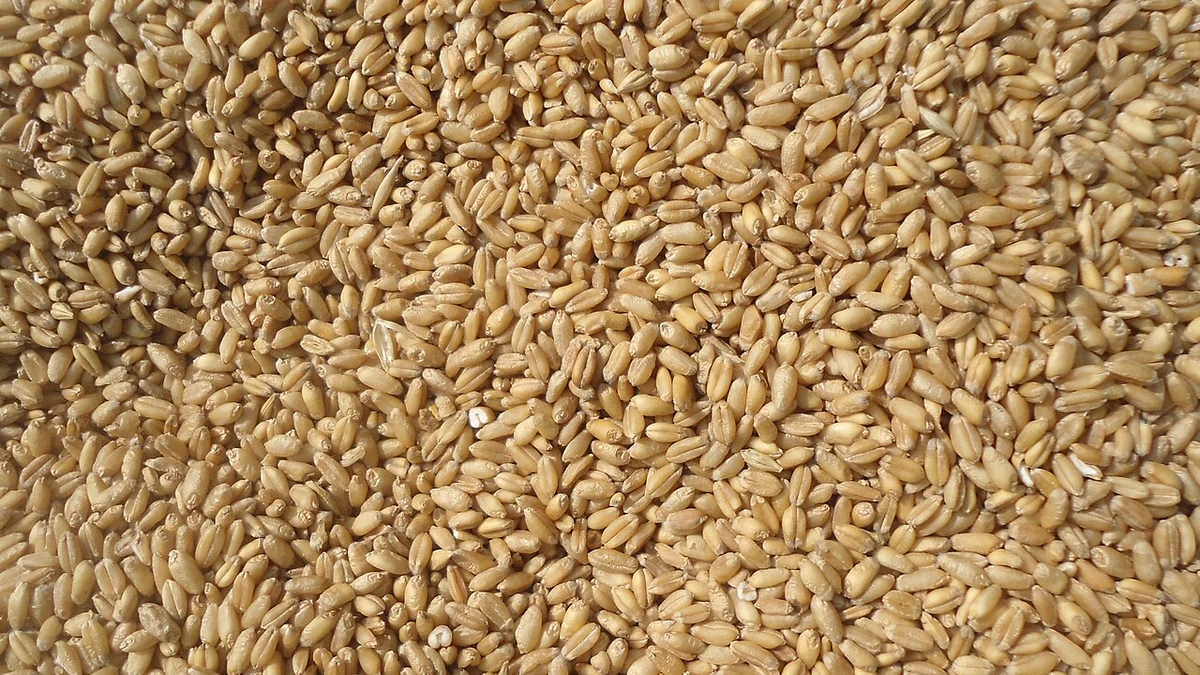
- Specialty rainfed Sehore Sharbati wheat commands indicative auction ranges of ₹3,450 to ₹4,450 per quintal due to its golden luster and natural sweetness.
- Based on CACP cost recommendations, the central Minimum Support Price (MSP) for wheat stands at ₹2,425 per quintal (up from ₹2,275 in the prior cycle).
- To earn 100% MSP without deductions, grain lots must comply with FCI FAQ standards: moisture below 12.0%, foreign matter below 0.75%, and Karnal bunt under 2.0%.
- Farmers holding dry wheat in WDRA-accredited godowns via electronic Negotiable Warehouse Receipts (e-NWR) often secure 15% to 20% better post-monsoon realizations.
In the daily agricultural commerce of northern, central, and western India, Gehu Ka Bhav (गेहूं का भाव / Wheat Mandi Rates) is the primary market benchmark dictating rural liquidity, flour mill procurement, and household food security. Wheat (गेहूं) is India's principal rabi cereal staple, cultivated across over 31 million hectares in Uttar Pradesh, Madhya Pradesh, Punjab, Haryana, and Rajasthan. Governed by Minimum Support Price (MSP) recommendations established by the Commission for Agricultural Costs and Prices (CACP) and tracked through the central Directorate of Marketing & Inspection (Agmarknet), monitoring mandi rates helps growers choose between commercial APMC auctions and government procurement centers. Farmers can also compare regional wheat price reports across our gehu rate today analysis, wheat rate today tracker, and KisanPe daily mandi rates portal.
1. Gehu Ka Bhav: Indicative State-Wise Mandi Rates (November 2026)
As of November 2026, indicative wholesale wheat prices across major Indian APMC mandis range from ₹2,350 to ₹2,680 per quintal for standard Fair Average Quality (FAQ) mill wheat, while specialty varieties such as Sehore Sharbati and Malvi Durum trade in an indicative range of ₹3,200 to ₹4,450 per quintal. Under central price support policy overseen by the Department of Food & Public Distribution, the Government of India set the Wheat MSP at ₹2,425 per quintal (up from ₹2,275 per quintal in the preceding cycle), establishing a guaranteed floor at official purchase centers. Below is the indicative wholesale price table across major trading yards in Punjab, Haryana, Madhya Pradesh, Uttar Pradesh, and Rajasthan, which growers also track alongside our anaj mandi directory and national wheat rate guide.
| State & Primary Mandi Yard | Predominant Wheat Variety | Typical Peak Arrivals (Bags) | Indicative Minimum (₹/Q) | Indicative Modal Bhav (₹/Q) | Indicative Maximum (₹/Q) |
|---|---|---|---|---|---|
| Khanna Mandi (Punjab) | HD-2967 / HD-3086 (Mill FAQ) | 18,000 - 35,000 Bags | ₹2,425 (MSP Floor) | ₹2,450 - ₹2,540 | ₹2,620 / Quintal |
| Karnal Mandi (Haryana) | DBW-187 / DBW-222 (Mill Quality) | 12,000 - 25,000 Bags | ₹2,425 (MSP Floor) | ₹2,460 - ₹2,560 | ₹2,640 / Quintal |
| Sehore Mandi (Madhya Pradesh) | Sharbati C-306 (Super Premium) | 4,500 - 9,000 Bags | ₹2,950 | ₹3,450 - ₹3,850 | ₹4,450 / Quintal |
| Indore Mandi (Madhya Pradesh) | Malavraj (Durum / Kathia) | 8,000 - 16,000 Bags | ₹2,500 | ₹2,680 - ₹2,880 | ₹3,150 / Quintal |
| Alwar Mandi (Rajasthan) | Mill Quality Desi Gehu | 6,000 - 12,000 Bags | ₹2,400 | ₹2,480 - ₹2,590 | ₹2,680 / Quintal |
| Bareilly Mandi (Uttar Pradesh) | Standard Commercial Bread Wheat | 10,000 - 20,000 Bags | ₹2,425 (MSP Floor) | ₹2,460 - ₹2,550 | ₹2,650 / Quintal |
Source: Indicative price ranges, November 2026. Compiled from Agmarknet daily mandi arrival records (agmarknet.gov.in), CACP MSP notifications (cacp.dacnet.nic.in), and State Agricultural Marketing Boards.
2. Sharbati Wheat vs. Commercial Mill Quality Gehu
Wheat trading in central India is distinctly divided between commercial mill-quality wheat and high-value Sharbati Gehu: 1. Sharbati Wheat: Grown in the rainfed black clay soils of Sehore, Vidisha, Raisen, and Hoshangabad in Madhya Pradesh, Sharbati grains are heavy, bold, golden-amber, and naturally sweet. It commands prices 50% to 100% higher than standard wheat, prized by packaged whole-wheat flour brands. 2. Mill Quality Bread Wheat: High-yielding semi-dwarf cultivars (HD-2967, DBW-187, DBW-222) optimized for protein content (11.5% to 12.5%) and gluten strength, purchased by commercial roller flour mills. Regional growers across MP and Haryana also monitor grain markets at Betul Mandi, Bhattu Mandi, Narela Mandi Delhi, Neemuch Mandi, and Mandsaur Mandi, alongside winter rabi oilseeds in our sarso ka bhav guide and pulses in chana dal price analysis.
3. Fair Average Quality (FAQ) Standards & Moisture Deductions
To receive full central MSP or top commercial bids, harvested wheat lots must comply with official Fair Average Quality (FAQ) benchmarks established by the Food Corporation of India (FCI): 1. Moisture Content: Must not exceed 12.0% by weight. Lots containing 12.1% to 14.0% face proportionate weight deductions, while grain over 14.0% is rejected. 2. Foreign Matter: Inanimate matter (dust, stones, chaff) must not exceed 0.75%. 3. Damaged / Weeviled Grains: Karnal bunt damaged grains must be below 2.0%, and insect-damaged grains under 1.0%. Growers protecting standing wheat against yellow rust and Karnal bunt can review agronomic strategies in our wheat rust management guide and Saaf fungicide handbook.
| Quality Parameter | FCI Statutory FAQ Limit | Permissible Tolerance with Value Cut | Rejection Threshold |
|---|---|---|---|
| Moisture Content (Max) | 12.0% by weight | 12.1% - 14.0% (Weight deduction applied) | Above 14.0% (Immediate rejection) |
| Foreign Matter (Inorganic) | 0.75% by weight | Up to 1.5% (Cleaning charges deducted) | Above 2.0% |
| Other Food Grains | 2.0% by weight | Up to 4.0% | Above 5.0% |
| Slightly Damaged Grains | 4.0% by weight | Up to 6.0% | Above 8.0% |
| Shrivelled & Broken Kernels | 6.0% by weight | Up to 8.0% | Above 10.0% |
Source: Statutory Uniform Specifications issued by the Food Corporation of India (fci.gov.in) and Department of Food & Public Distribution (dfpd.gov.in), reviewed November 2026.
4. Government Procurement Under Open Market Sale Scheme (OMSS)
During peak rabi procurement (April 1 to May 31), state agencies (HAFED, Markfed, MP Civil Supplies, UP SFC) purchase 25 to 35 million tonnes of wheat for the central buffer stock under oversight from the Department of Agriculture & Farmers Welfare. Later in the year, to stabilize domestic flour prices, FCI releases grain to commercial millers through weekly electronic auctions under the Open Market Sale Scheme (Domestic) / OMSS-D. Farmers preparing for MSP procurement can follow registration tutorials in our MP Kisan and e-Uparjan guide, Meri Fasal Mera Byora guide, MSP grain procurement guide, and Farmer ID registration guide.
5. Strategic Selling, Agronomy & Mechanization Economics
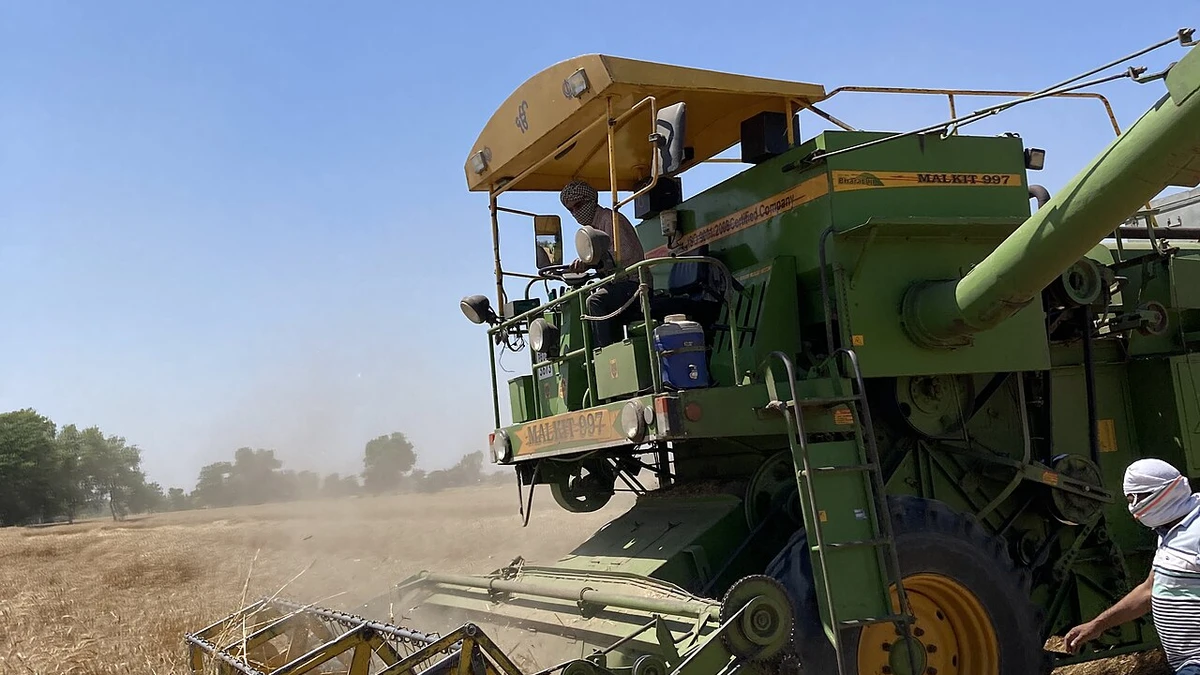
Agricultural market analysis demonstrates that wheat prices follow a clear seasonal cycle: rates dip during peak harvest arrivals in April–May and typically appreciate by ₹250 to ₹450 per quintal between November and February. Farmers storing dry grain (under 11% moisture) in WDRA-accredited warehouses can pledge electronic Negotiable Warehouse Receipts (e-NWR) for low-interest credit, or review working capital options with our KCC loan calculator, loan eligibility checker, and farmer loans portal. Maximizing wheat yields per acre also begins with certified high-yielding seeds, balanced phosphate application in our DAP fertilizer guide, proper tillage using a rotavator pulled by tractors like the John Deere 5050D/5310 or New Holland 3630, and clean threshing with modern wheat thresher machines.
6. How to Check Official Daily Gehu Bhav on Your Mobile Phone
Before hauling produce in a hydraulic tractor trolley, growers can verify official mandi arrival figures and modal prices directly on smartphones via Agmarknet, e-NAM, or our mandi intelligence platform and all-India mandi bhav tracker. Cultivators can also check weather-linked sowing windows in our crop calendar, calculate tractor EMIs on the EMI calculator, verify PMFBY crop insurance coverage, browse government agricultural schemes, read wheat terminology in Hindi, and explore mobile tools in our Kisan app guide.
7. Post-Harvest Cleaning & Dockage Prevention for Wheat
To secure top auction bids at APMC grain yards, growers should pass harvested wheat through rotary grain cleaners or aspirator winnowers before bagging. Removing broken kernels, chaff, weed seeds, and dust lowers dockage below 0.5%, ensuring smooth inspection clearance by flour millers and FCI procurement officers without moisture or impurity deductions.
8. e-NAM Assaying, State Mandi Commissions & Harvest Moisture Management
Modernized APMC terminals linked to the electronic National Agriculture Market (e-NAM) increasingly rely on standardized physical assaying before electronic bidding opens. When wheat trailers arrive at Khanna, Karnal, Sehore, or Bareilly mandis, trained assayers draw composite probe samples to measure grain moisture, hectoliter test weight, and shriveled kernel percentages. Because digital assay certificates allow distant flour millers and food processors across India to place competitive bids remotely, properly cleaned lots with test weights above 78 kg/hl regularly attract ₹80 to ₹150 per quintal premiums above local courtyard averages.
Understanding state APMC mandi rules also protects farmers from unauthorized deductions. Across Punjab, Haryana, Uttar Pradesh, and Madhya Pradesh, statutory APMC guidelines mandate that commission agent (arhatiya) brokerages, mandi user fees, and rural development cesses are borne by the licensed grain buyer—never deducted from the farmer's MSP or auction invoice. Before loading combine-harvested wheat directly into trailers, cultivators should verify field moisture with a handheld grain meter and sun-dry early-morning cuts on clean tarpaulins for 24 to 48 hours until moisture drops securely under 11.5%.
Frequently asked questions
- What is the indicative gehu ka bhav across Indian mandis in 2026?
- As of November 2026, indicative standard mill-quality wheat ranges between ₹2,425 and ₹2,680 per quintal, while specialty Sharbati wheat trades at ₹3,450 to ₹4,450 per quintal. Verify daily district arrivals on Agmarknet and our KisanPe mandi rates page.
- What is the official central MSP for wheat?
- Based on CACP cost estimates, the Government of India set the Minimum Support Price (MSP) for wheat at ₹2,425 per quintal (up from ₹2,275 in the previous cycle). Explore central procurement subsidies on our government schemes hub.
- What is Sharbati gehu, and why does it command a high price?
- Grown in Sehore, Vidisha, and Raisen (MP), Sharbati wheat features bold, translucent, golden grains with natural sweetness, frequently fetching ₹3,450 to ₹4,450 per quintal.
- What is the maximum moisture allowed for wheat at government procurement?
- Wheat must maintain a moisture content of 12.0% or less for full MSP payment under Food Corporation of India (FCI) Fair Average Quality (FAQ) standards.
- When does wheat procurement begin in Punjab and Haryana mandis?
- Government wheat procurement officially commences in April and runs through mid-May across northern mandis.
- What is the Open Market Sale Scheme (OMSS) for wheat?
- OMSS is a market intervention managed by FCI that releases wheat from central buffer stocks to private flour millers through weekly e-auctions to stabilize retail flour prices.
- Which state in India produces the largest volume of wheat?
- Uttar Pradesh is the largest wheat producer by total volume, while Punjab and Haryana achieve the highest per-hectare yields.
- How can farmers sell wheat at MSP online?
- Farmers must register on state portals—such as e-Uparjan in MP (see our MP Kisan guide) or Meri Fasal Mera Byora in Haryana—to book a procurement slot.
- What is the best month to sell stored wheat for maximum profit?
- Holding well-dried wheat until the winter months of November through February typically yields higher realizations than peak April harvest rates.
- Can stored wheat be pledged for agricultural bank loans?
- Yes, farmers can deposit grain in WDRA-accredited warehouses, receive an electronic Negotiable Warehouse Receipt (e-NWR), and pledge it at roughly 7% subsidized interest for short-term farm cash needs.
- What causes black tips on wheat grains (Karnal Bunt)?
- Karnal Bunt is a fungal disease caused by Tilletia indica during cool humid flowering, imparting a fishy odor; lots exceeding 2% infection face price cuts. Learn preventive disease sprays in our wheat disease management guide.
- How is wheat payment disbursed to farmers after mandi sales?
- Government procurement payments are credited directly into farmers' Aadhaar-linked bank accounts via DBT within 48 to 72 hours of J-form generation.
This article is for general information only and is not financial advice. Loan and scheme eligibility depends on partner and government criteria.