Sarso Ka Bhav: Mustard Mandi Rates Across India 2026
Key takeaways
- Indicative wholesale sarso ka bhav across primary Indian APMC mandis (November 2026) trades between ₹5,350 and ₹6,150 per quintal for standard black/brown mustard (42% oil condition benchmark).
- In Rajasthan (the nation's mustard heartland), Jaipur benchmark mandi rates stand at ₹6,000 to ₹6,150 per quintal, with Alwar, Bharatpur, and Kota mandis trading between ₹5,650 and ₹5,950 per quintal.
- For Uttar Pradesh, the sarso ka rate today in up ranges from ₹5,400 to ₹5,850 per quintal across major crushing hubs including Agra, Mathura, Aligarh, and Hathras.
- Specialty pili sarso ka rate (yellow mustard) commands a premium valuation of ₹6,800 to ₹8,200 per quintal due to higher 44% to 46% oil content and strong culinary export demand.
- The Government of India has fixed the Minimum Support Price (MSP) for rapeseed-mustard at ₹5,950 per quintal for the 2025-26 marketing season, supporting market prices via NAFED and HAFED procurement.
Indicative wholesale sarso ka bhav across primary agricultural APMC mandis in India (November 2026) ranges between ₹5,350 and ₹6,150 per quintal for standard black and brown mustard as of 23 November 2026. In leading consumption and processing centers, the sarson ka rate in benchmark Rajasthan markets like Jaipur commands ₹6,000 to ₹6,150 per quintal under 42% condition specifications. Meanwhile, cultivators tracking the sarso ka rate today in up find prevailing mandi transactions settling between ₹5,400 and ₹5,850 per quintal across Agra, Mathura, and Aligarh crushing hubs, while premium specialty pili sarso ka rate trades at ₹6,800 to ₹8,200 per quintal.
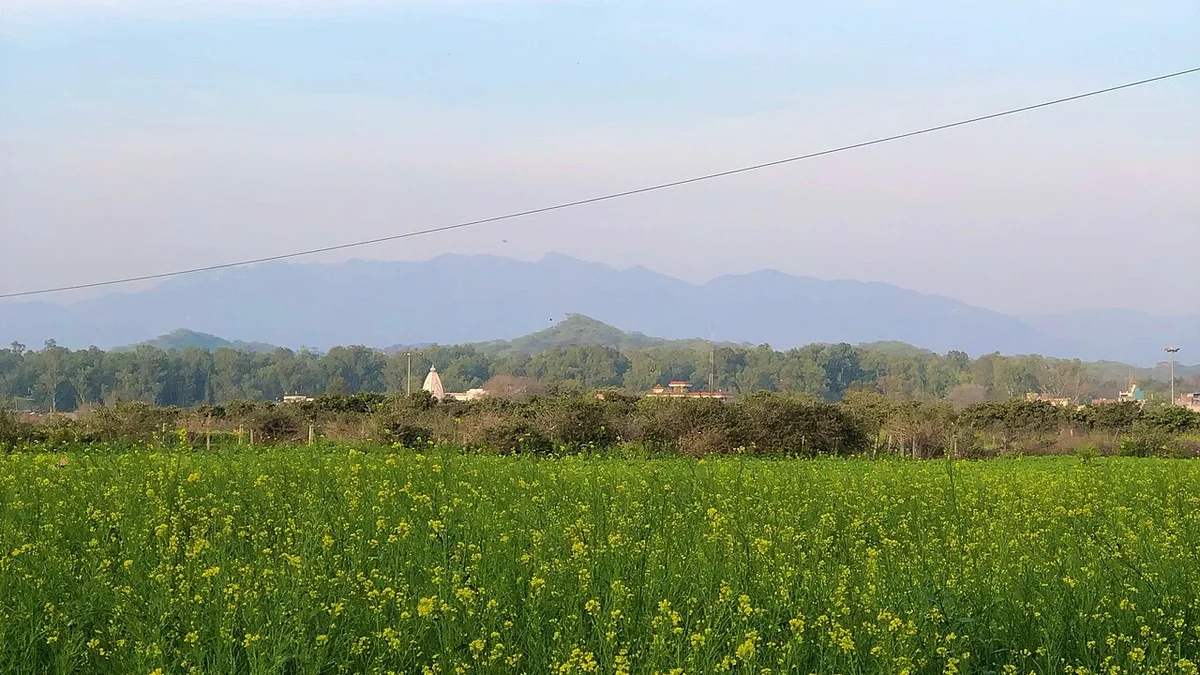
Rapeseed and mustard (Brassica juncea, Brassica rapa, Brassica napus) constitute the cornerstone of India’s domestic edible oil economy, accounting for over 30 percent of indigenous vegetable oil production. Concentrated across the north-western and central agricultural plains of Rajasthan, Uttar Pradesh, Madhya Pradesh, Haryana, and Gujarat, mustard is predominantly cultivated as a Rabi winter cash crop. Because mustard seed valuation in agricultural exchanges is inextricably linked to lab-tested seed oil content (standard 42% condition), moisture levels (8% to 10%), global palm and soybean oil import parities, and Central Government Minimum Support Price (MSP) operations, farmers must monitor market arrivals and pricing dynamics carefully to maximize realization.
Sarso ka bhav across major states: Rajasthan, UP, MP, and Haryana
Domestic mustard pricing exhibits distinct regional variation driven by proximity to major industrial expeller crushing clusters, local arrival volumes, and regional seed quality characteristics. Rajasthan accounts for over 45 percent of India’s annual mustard crop, making its mandis the primary price-setting exchanges for national physical and futures commodity trading.
Below is an indicative price summary for standard commercial black/brown mustard across major agricultural state mandis as of November 2026. Prices reflect physical spot transactions per quintal (100 kg) for FAQ (Fair Average Quality) grade seed.
| State / Agricultural Zone | Key APMC Mandis | Min Rate (INR/qtl) | Max Rate (INR/qtl) | Modal Rate (INR/qtl) | Benchmark Oil Condition |
|---|---|---|---|---|---|
| Rajasthan (Jaipur Hub) | Jaipur, Chomu, Dausa | ₹5,900 | ₹6,150 | ₹6,050 | 42% Lab Tested Condition |
| Rajasthan (Mewat / East) | Alwar, Bharatpur, Kherli | ₹5,650 | ₹5,950 | ₹5,820 | 40% - 42% Standard |
| Rajasthan (Hadoti / South) | Kota, Baran, Bundi | ₹5,500 | ₹5,850 | ₹5,700 | 40% - 41% Standard |
| Rajasthan (Shekhawati / North) | Sriganganagar, Hanumangarh | ₹5,600 | ₹5,900 | ₹5,760 | 41% - 42% Standard |
| Uttar Pradesh (Braj Belt) | Agra, Mathura, Firozabad | ₹5,550 | ₹5,850 | ₹5,720 | 40% - 42% Standard |
| Uttar Pradesh (Central / West) | Aligarh, Hathras, Bareilly | ₹5,450 | ₹5,750 | ₹5,600 | 39% - 41% Standard |
| Uttar Pradesh (Eastern Hub) | Kanpur, Lucknow, Varanasi | ₹5,400 | ₹5,700 | ₹5,550 | 39% - 41% Standard |
| Madhya Pradesh (Chambal) | Morena, Bhind, Gwalior | ₹5,450 | ₹5,750 | ₹5,620 | 40% - 42% Standard |
| Madhya Pradesh (Malwa) | Ujjain, Dewas, Mandsaur | ₹5,350 | ₹5,650 | ₹5,500 | 39% - 41% Standard |
| Haryana (South / Central) | Hisar, Sirsa, Rewari | ₹5,600 | ₹5,950 | ₹5,780 | 41% - 42% Standard |
| Gujarat (North Belt) | Palanpur, Deesa, Mehsana | ₹5,500 | ₹5,800 | ₹5,660 | 40% - 42% Standard |
Source: Indicative daily spot market prices compiled from Agmarknet (agmarknet.gov.in), State Agricultural Marketing Boards (RSAMB, UP Mandi Parishad, MP Mandi Board), and industrial oil expeller mill trade quotations, November 2026.
Cultivators tracking live agricultural commodity pricing can also check daily updates across our dedicated market intelligence portals, including [mandi intelligence](/services/mandi-intelligence/), [cotton market rate today](/blog/cotton-market-rate-today/), [mentha oil rate](/blog/mentha-oil-rate/), [sugar price](/blog/sugar-price/), and [paddy procurement guidelines](/blog/paddy-procurement/).
Sarso ka rate today in UP: Agra, Mathura, Aligarh, and Kanpur mandis
Uttar Pradesh is India’s second-largest consumer and processing state for mustard oil. Popular search queries such as sarso ka rate today in up reflect the intense daily trading activity across the Braj agricultural corridor (Agra, Mathura, Hathras, and Aligarh). This region houses hundreds of mechanized mustard oil expellers and solvent extraction plants producing the region’s renowned pungent "kacchi ghani" mustard oil.
In Agra and Mathura mandis, spot sarso rate today ranges between ₹5,550 and ₹5,850 per quintal for standard black Laha and Varuna varieties. Commercial expellers in Agra operate on a base 42% oil condition specification. Under this standard trade contract, if a farmer’s mustard lot tests at 42% oil, the full agreed price is disbursed. If the oil content tests higher (e.g., 43% or 44%), the buyer awards an upward bonus premium of approximately ₹60 to ₹70 per quintal per additional percentage point of oil. Conversely, if seed oil falls below 40%, deductions are applied.
In Central and Eastern Uttar Pradesh mandis—such as Kanpur, Bareilly, and Lakhimpur Kheri—prices average ₹5,400 to ₹5,700 per quintal. Arrivals in these mandis often carry slightly higher moisture levels (10% to 12%) due to winter fog and humid river basin soils, requiring slight moisture discounts by local arhtiyas before milling.
Pili sarso ka rate: premium yellow mustard valuation and end-use markets
While standard black and brown mustard (Rai / Laha) accounts for over 85 percent of all mustard cultivated in India, specialty yellow mustard (Pili Sarso / Sinapis alba / Brassica hirta) occupies a lucrative high-value niche. The pili sarso ka rate commands a substantial market premium, trading between ₹6,800 and ₹8,200 per quintal in specialized mandis across Rajasthan (Kota, Alwar), Uttar Pradesh (Hathras), and West Bengal.
Several technical factors explain why pili sarso consistently fetches ₹1,200 to ₹2,000 more per quintal than black mustard:
- Higher Oil Extraction Percentage: Pili sarso seeds contain between 44% and 46% extractable oil content, compared to 38% to 42% in standard black mustard.
- Mild Pungency & Golden Luster: Oil cold-pressed from yellow mustard possesses a light golden color and pleasant mild aroma, preferred in culinary traditions across Bengal, Odisha, Assam, and Bihar for fish and delicate vegetable dishes.
- Food & Condiment Processing: Whole yellow mustard seeds are heavily demanded by industrial spice processors, pickle manufacturers, and international mustard paste exporters, insulating prices from general cooking oil slumps.
- Lower Acreage & Yield Scarcity: Pili sarso varieties (such as Pitambari and YST-151) require precise sandy-loam soils and are more susceptible to aphid attacks, keeping total national supply tight.
Government MSP benchmarks, NAFED procurement, and market price safety nets
To protect oilseed cultivators from distress selling during peak post-harvest harvest gluts (February to April), the Central Government fixes the Minimum Support Price (MSP) for rapeseed-mustard based on comprehensive cost-of-cultivation recommendations from the Commission for Agricultural Costs & Prices (CACP). For the 2025-26 marketing season, the central MSP has been established at ₹5,950 per quintal, representing a substantial ₹300 per quintal increase over the previous year.
When open physical mandi rates fall below the MSP threshold during peak harvest arrivals, the National Agricultural Cooperative Marketing Federation of India (NAFED), alongside state agencies such as HAFED in Haryana and RAJFED in Rajasthan, opens direct procurement centers under the Price Support Scheme (PSS). Under PSS procurement, registered farmers sell their FAQ-standard mustard directly at the full MSP rate, with payment credited directly into their Aadhaar-linked bank accounts within 3 to 7 business days.
To qualify for government procurement at MSP, mustard produce must meet strict Fair Average Quality (FAQ) parameters:
- Moisture Content: Must not exceed 8.0 percent by weight. Produce containing 8.1% to 9.0% moisture is subject to value deduction, while produce exceeding 9.0% moisture is rejected at government gates.
- Foreign Matter / Admixture: Maximum permissible limit is 2.0 percent (including dust, chaff, weed seeds, and stones).
- Damaged, Shrivelled & Immature Seeds: Maximum 3.0 percent by weight.
- Slightly Damaged & Discolored Seeds: Maximum 2.0 percent by weight.
Key market factors driving aaj ka sarso ka bhav fluctuations
Farmers inquiring about aaj ka sarso ka bhav should recognize that mustard seed pricing is governed by a complex matrix of domestic and international market forces. Because India imports over 55 percent of its annual domestic edible oil requirement—primarily crude palm oil from Indonesia and Malaysia, and soybean and sunflower oil from Argentina, Brazil, and Russia—domestic mustard prices track international edible oil parities closely.
The primary market drivers influencing day-to-day mustard price movements include:
- Import Duty Structure on Edible Oils: Revisions in basic customs duties and Agriculture Infrastructure Development Cess (AIDC) on imported crude and refined palm oil directly influence domestic seed prices. Higher import duties make imported oils expensive, stimulating local expeller demand for domestic mustard.
- Daily Mandi Arrival Volumes: During peak post-harvest months (March-May), daily all-India mustard arrivals surge to 8 to 12 lakh bags (50 kg each), creating temporary seasonal price dips. By July to October, arrivals thin down to 1.5 to 2.5 lakh bags, causing prices to firm up.
- Festive Mustard Oil Demand: Mustard oil consumption surges dramatically across North and Eastern India from September through December due to festive sweet preparation, frying, and cold-weather culinary consumption.
- Mustard De-Oiled Cake (DOC) Export Demand: After oil extraction, the remaining meal (mustard cake / DOC) contains 36% to 38% crude protein and is exported globally for livestock and poultry feed. Strong export demand for mustard DOC bolsters crushing margins, allowing millers to bid higher for raw seed.
Post-harvest storage, moisture management, and holding profit strategies
A common dilemma confronting mustard growers at harvest is whether to sell immediately at mandi gates or hold dried stock in warehouse storage for higher festive prices. Historical price records across Jaipur and Agra exchanges demonstrate that mustard prices in October-November consistently trade 12% to 18% higher than prices during peak March-April harvest gluts.
However, realizing this holding gain requires scientific moisture and storage management to prevent seed spoilage:
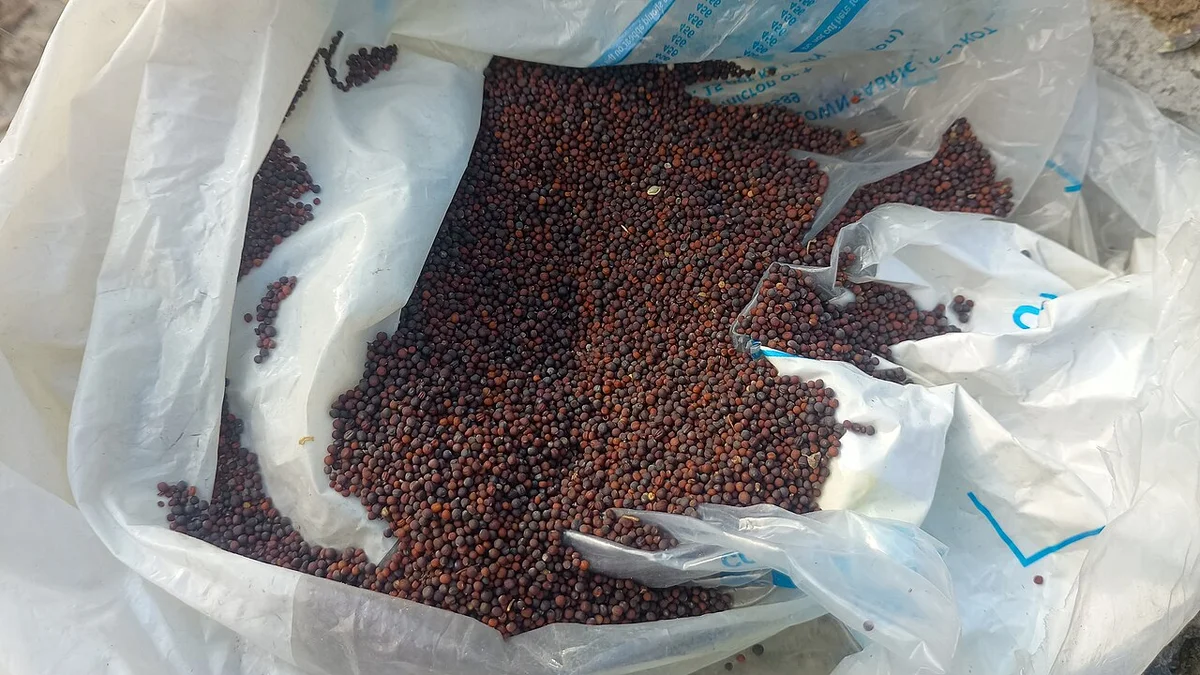
- Sun Drying to 7-8% Moisture: Harvested mustard typically contains 12% to 15% moisture. Seeds must be spread in thin layers on clean tarpaulins and sun-dried for 3 to 4 days until moisture drops below 8%. Storing damp mustard causes rapid internal heating, fungal mold, and rancidity that destroys oil quality.
- Hermetic / Polypropylene Bag Storage: Store clean dried seed in airtight HDPE bags or galvanized iron storage bins. Avoid storing seed directly on damp concrete floors; stack bags on raised wooden pallets at least 1 foot away from warehouse walls.
- Warehouse Receipt Financing (Pledge Loans): Farmers holding mustard in registered Central Warehousing Corporation (CWC) or state warehousing godowns can obtain electronic Negotiable Warehouse Receipts (e-NWR). Commercial banks disburse pledge loans up to 70% to 75% of the crop valuation at concessional interest rates, providing immediate working capital while farmers wait for favorable market pricing.
Official regulatory portals and agricultural price resources
Farmers, oil millers, and commodity aggregators can track authenticated daily arrivals, modal auction rates, and official procurement circulars through central government platforms. Verified daily price data across thousands of wholesale mandis is maintained on Agmarknet by the Directorate of Marketing & Inspection, while annual cost calculations and MSP recommendations are published by the Commission for Agricultural Costs & Prices (CACP). Price support scheme (PSS) market interventions and buffer stock purchases are executed through the National Agricultural Cooperative Marketing Federation (NAFED) under overall policy supervision from the Ministry of Agriculture & Farmers Welfare.
To optimize harvest returns and assess agricultural mechanization, farmers can leverage KisanPe tools and agronomy guides. Track wholesale edible oil benchmarks in our sarson ka tel rates guide, monitor grain arrivals in the anaj mandi directory, and explore real-time pricing on the mandi intelligence dashboard. For crop protection and soil management, consult our guides on agricultural spray machines, broad-spectrum insecticides, Saaf fungicide dosage, and DAP fertilizer application. Financial planning resources include our Kisan Credit Card (KCC) calculator, farm machinery EMI calculator, and government schemes directory.
Frequently asked questions about sarso ka bhav and mustard marketing
Frequently asked questions
- What is the current sarso ka bhav in India in 2026?
- In November 2026, the indicative sarso ka bhav for standard commercial black/brown mustard across primary Indian APMC mandis ranges between ₹5,350 and ₹6,150 per quintal. Benchmark Rajasthan markets like Jaipur trade at ₹6,000 to ₹6,150 per quintal under 42% condition specifications, while Uttar Pradesh mandis average ₹5,450 to ₹5,850 per quintal. For retail edible oil benchmarks, check our sarson ka tel price analysis.
- What is the government Minimum Support Price (MSP) for mustard in 2025-26?
- The Central Government has fixed the Minimum Support Price (MSP) for rapeseed and mustard at ₹5,950 per quintal for the 2025-26 marketing season, an increase of ₹300 per quintal over the previous year. If open market prices dip during harvest gluts, NAFED (nafed-india.com) and state agencies procure mustard directly from registered farmers. You can also view broader MSP programs on our agricultural schemes hub.
- What is the prevailing sarso ka rate today in UP mandis?
- The sarso ka rate today in UP ranges from ₹5,400 to ₹5,850 per quintal across major processing hubs. Prominent markets in the western Braj region—such as Agra, Mathura, and Aligarh—command ₹5,550 to ₹5,850 per quintal due to active oil expeller buying, while central and eastern UP mandis trade between ₹5,400 and ₹5,700 per quintal.
- Why is pili sarso ka rate higher than black mustard?
- Pili sarso (yellow mustard) commands a premium rate of ₹6,800 to ₹8,200 per quintal—roughly ₹1,200 to ₹2,000 more than black mustard. Yellow mustard contains higher oil content (44% to 46%), produces a milder golden edible oil favored in eastern India, and is in high demand for whole-seed spices, pickles, and export condiments.
- What does 42% condition mean in mustard mandi transactions?
- In commercial mustard trading, 42% condition is the standard contractual benchmark for laboratory-tested seed oil content. If a farmer’s mustard lot tests at 42% oil, the agreed price is paid in full. If oil content is higher, buyers pay a premium bonus (typically ₹60 to ₹70 per quintal per 1% extra oil). If oil content is lower, deductions are applied.
- What is the maximum moisture content permitted for mustard in mandis?
- For government procurement under NAFED/PSS at MSP, the maximum permissible moisture limit is 8.0 percent by weight. In open APMC mandis, buyers accept up to 9% to 10% moisture, but apply value discounts (dockage) for produce exceeding 8% moisture to account for drying costs and weight loss.
- Which months offer the highest prices for selling stored mustard?
- Historically, mustard prices reach seasonal lows during peak harvest arrivals between March and May. Prices firm up significantly from July to November, reaching peak valuations ahead of Diwali and winter cooking oil demand. Holding properly dried mustard until autumn typically yields 12% to 18% higher returns.
- How should farmers store mustard to prevent oil rancidity and spoilage?
- Mustard seed should be sun-dried on clean tarpaulins until moisture drops below 7% to 8%. Store clean seed in airtight polypropylene (HDPE) bags or galvanized metal bins placed on raised wooden pallets at least 1 foot away from walls. To protect standing crops against fungal alternaria blight prior to harvest, refer to our Saaf fungicide application guide.
- Can farmers obtain bank loans against stored mustard stock?
- Yes. Farmers storing dried mustard in accredited state or Central Warehousing Corporation (CWC) godowns receive an electronic Negotiable Warehouse Receipt (e-NWR). Commercial and cooperative banks provide pledge loans covering up to 70% to 75% of produce value. Explore institutional financing options using our Kisan Credit Card (KCC) calculator and loan eligibility checker.
- What is the difference between Rai, Sarson, and Toria?
- Rai (Indian mustard, Brassica juncea) is dark brown/black, highly pungent, and the most widely grown commercial variety. Sarson (Brassica rapa) includes yellow and brown types with higher oil content and milder flavor. Toria is an early-maturing catch crop harvested in December-January with smaller reddish-brown seeds.
- How do international edible oil import duties affect domestic mustard prices?
- Because India imports over half of its edible oil as crude palm and soybean oil, lowering import duties allows cheap foreign oil to flood domestic markets, dampening local mustard seed demand. Raising import duties on foreign vegetable oils makes imports costlier, driving millers to buy more domestic mustard and boosting farmer mandi prices.
- Where can farmers check certified daily APMC mustard mandi rates online?
- Farmers can check authenticated daily arrivals and modal prices across all notified APMC mandis nationwide on the Ministry of Agriculture’s Agmarknet portal and through the KisanPe live mandi rates dashboard.
This article is for general information only and is not financial advice. Loan and scheme eligibility depends on partner and government criteria.