Anaj Mandi: Grain Market Rates, APMC Trading & e-NAM Guide
Key takeaways
- An anaj mandi (grain wholesale market) operates under state Agricultural Produce Market Committee (APMC) regulations, providing structured physical and electronic trading yards for cereals, pulses, and oilseeds across India.
- Over 2,400 principal regulated anaj mandis operate nationwide, with Asia's largest grain markets including Khanna (Punjab), Narela (Delhi), Kota (Rajasthan), and Gondal (Gujarat) handling millions of tonnes annually.
- Price discovery in an anaj mandi is governed by open-cry competitive auctions or digital e-NAM bidding, anchored by the central government Minimum Support Price (MSP) floor for 23 notified crops.
- Under national agricultural modernization programs, 1,361+ mandis are integrated with the electronic National Agriculture Market (e-NAM), facilitating inter-state online commodity market trading, digital assaying, and electronic warehouse receipt (e-NWR) financing.
- Farmers selling in an anaj mandi receive statutory sale settlement documents (such as J-Forms in Punjab and Haryana or Anujnyapatra in Madhya Pradesh) with direct bank account transfer within 48 to 72 hours.
- Tracking daily anaj mandi bhav online via official portals like Agmarknet and specialized commodity apps protects farmers from distress sales, localized trader cartels, and unauthorized commission deductions.
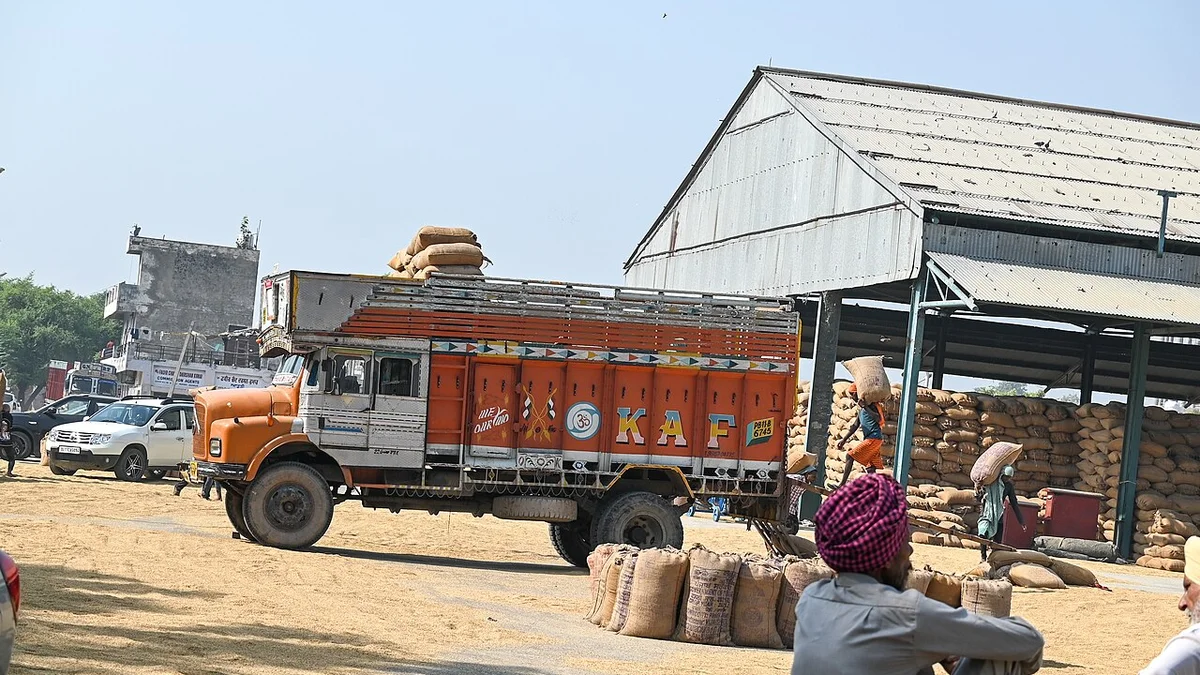
An anaj mandi (अनाज मंडी)—known across various Indian states as a grain market, APMC yard, krishi upaj mandi, or regulated market committee—serves as the primary physical nerve center of agricultural commerce in India. These wholesale marketplaces handle hundreds of millions of metric tonnes of staple food grains every year, including wheat, paddy (rice), maize, bajra, jowar, barley, gram, and mustard. Regulated under state-specific Agricultural Produce Marketing Committee (APMC) legislation, an anaj mandi provides smallholders and commercial cultivators with a dedicated, legally safeguarded platform where agricultural produce can be weighed, inspected, auctioned, and sold to licensed traders and government procurement agencies under standardized market rules.
In the modern agrarian economy, the traditional anaj mandi has undergone a profound structural transformation. While open-cry auctions and physical bargaining on auction platforms remains widespread, the integration of digital commodity online tracking systems, the electronic National Agriculture Market (e-NAM) network, mechanized grain cleaning infrastructure, electronic weighbridges, and specialized mobile commodity app solutions has revolutionized how grain prices are discovered. Farmers are no longer dependent solely on village-level middlemen; by monitoring live anaj mandi rates across regional trading centers, cultivators can time their market arrivals, demand fair prices above government Minimum Support Price (MSP) benchmarks, and execute secure cashless transactions. This comprehensive industry guide unpacks the operational architecture, trading workflows, pricing dynamics, digital platforms, and statutory farmer protections across India's grain mandis.
What Is an Anaj Mandi? Institutional Architecture and APMC Governance
The concept of a regulated anaj mandi was introduced across post-independence India to eliminate historic exploitation suffered by peasant farmers under informal village moneylender networks. Before statutory regulation, farmers faced arbitrary grain deductions (known colloquially as karda, dhalta, or chungi), fraudulent manual scale manipulation, unauthorized brokerage charges, and delayed credit payments. To establish market transparency, state governments enacted Agricultural Produce Market Acts, demarcating specific geographic market areas and establishing autonomous statutory bodies termed Agricultural Produce Market Committees (APMCs).
An APMC anaj mandi consists of a designated principal market yard (and several subordinate sub-market yards) equipped with specialized public infrastructure designed to facilitate bulk agricultural trade:
- Covered and Open Auction Platforms (Phad): Large concrete yards where tractor-trolleys, bullock carts, and trucks unload grain heaps for inspection, grading, and competitive bidding.
- Licensed Commission Agents (Kaccha & Pakka Arhtiyas): Statutory intermediaries licensed by the APMC. Kaccha arhtiyas represent the selling farmer, facilitating unloading, cleaning, weighing, and auctioning; pakka arhtiyas act on behalf of distant corporate buyers, millers, and processors.
- Certified Electronic Weighbridges: High-precision computerized scales calibrated and stamped regularly by state Weights and Measures inspectors to guarantee zero tare and gross weight discrepancies.
- Assaying and Quality Testing Laboratories: Modern diagnostic facilities equipped with digital moisture meters, grain grading sieves, optical color sorters, and refraction assessment kits.
- Public Amenities and Storage Godowns: Farmer rest houses (Kisan Bhawans), subsidized dining canteens (such as Atal Canteens in Haryana), input supply shops, and Scientific Storage Warehouses (CWC/SWC).
Every transaction within an anaj mandi is governed by statutory bylaws. The APMC levies a nominal market development fee (typically 0.5% to 2% of transaction value) and rural development cess from buyers (never from farmers) to finance ongoing rural infrastructure, rural link roads, and mandi maintenance.
India's Premier Anaj Mandis: Regional Grain Market Clusters
While over 2,400 principal mandis and 4,000+ sub-yards operate across India, certain historic trading centers dominate national grain logistics due to their immense arrival volumes, advanced storage networks, and strategic connectivity to major railway freight corridors and industrial processing clusters.
The table below details the operational profile, predominant commodities handled, peak daily throughput, and regional importance of India's largest anaj mandi trading hubs:
| Anaj Mandi Hub | State | Major Grains / Commodities | Peak Daily Arrivals (Tonnes) | Auction System | Key Trading Belt |
|---|---|---|---|---|---|
| Khanna Grain Market | Punjab | Wheat, Basmati & Non-Basmati Paddy, Maize | 35,000 - 55,000 | Open-cry / e-NAM | Malwa Grain Bowl / Asia's Largest Mandi |
| Narela Anaj Mandi | Delhi (NCR) | Basmati Paddy (1121, 1509, 1718), Wheat | 20,000 - 30,000 | Open auction | North India Commercial Basmati Hub |
| Kota Anaj Mandi (Bhamashah) | Rajasthan | Soybean, Wheat, Mustard, Coriander, Gram | 25,000 - 40,000 | Digital e-auction | Hadoti Agricultural Zone / Central Corridor |
| Gondal Krishi Upaj Mandi | Gujarat | Groundnut, Wheat, Cumin, Castor, Cotton | 18,000 - 28,000 | Electronic & Open Cry | Saurashtra Commercial Oilseed & Grain Hub |
| Karnal Anaj Mandi | Haryana | Paddy (PR, Pusa Basmati), Wheat, Mustard | 22,000 - 32,000 | Regulated Arhtiya / e-NAM | GT Road Agricultural Corridor |
| Ujjain Mandi Samiti | Madhya Pradesh | Sharbati Wheat, Soybean, Gram, Garlic | 15,000 - 25,000 | Sauda Patrak / e-Auction | Malwa Plateau High-Protein Wheat Hub |
| Hapur Anaj Mandi | Uttar Pradesh | Wheat, Paddy, Mustard, Maize, Jaggery | 12,000 - 20,000 | Open-cry auction | Western UP / National Capital Supply Basin |
| Gulbarga (Kalaburagi) Mandi | Karnataka | Red Gram (Tur Dal), Jowar, Bajra, Bengal Gram | 10,000 - 18,000 | ReMS Unified Electronic Bidding | Kalyana Karnataka Pulses & Coarse Grain Hub |
Khanna in Punjab remains celebrated as Asia's largest grain market, boasting over 40 acres of dedicated asphalt auction yards and processing upwards of 1.5 lakh bags of wheat daily during the peak rabi procurement season. In Western India, Kota's Bhamashah Mandi serves as the regional benchmark for soybean and mustard seed, dictating futures sentiment on commodity bourses.
Step-by-Step Anaj Mandi Trading Process: Gate Entry to Final Payment
Selling agricultural commodities in a regulated anaj mandi follows a formalized, multi-stage statutory procedure designed to protect growers from arbitrary price slashing and unrecorded transactions. The sequence encompasses five standardized operational phases:
1. Arrival, Gate Pass Generation, and Lot Unloading
Upon arriving at the mandi premises in a tractor-trolley or truck, the farmer passes through the APMC entry gate. The mandi gate clerk inspects the produce, records the vehicle number, driver details, estimated quantity, and commodity type, and issues an electronic Gate Pass. The farmer is then directed to an assigned open or covered auction platform (phad) managed by their chosen licensed commission agent (kaccha arhtiya). The grain is unloaded and spread in a uniform pyramidal heap or rectangular lot to facilitate inspection.
2. Cleaning, Sieving, and Scientific Assaying
Before bidding begins, laborers (palledars) winnow and sieve the grain heap using mechanical blowers and rotary sieves to remove chaff, dust, straw, pebbles, and foreign matter. A representative composite sample is drawn from the top, middle, and bottom of the lot. The sample is tested in the mandi laboratory for moisture percentage (using a digital capacitance moisture meter) and foreign refraction percentage. Standard procurement standards dictate maximum moisture levels of 12% to 14% for cereals like wheat and paddy; higher moisture levels attract dockage or price deductions from traders.
3. Competitive Auction and Price Bidding
Auctioning typically commences between 9:00 AM and 11:30 AM every morning. Mandi bidding is executed through two primary mechanisms:
- Open-Cry Auction (Boli): The APMC auction supervisor, accompanied by licensed traders and commission agents, walks from heap to heap. The arhtiya calls out the opening base bid. Interested traders call out ascending bids in real time. The auction supervisor concludes the transaction at the highest bid with the farmer's explicit verbal consent.
- Electronic e-NAM Bidding: In digital mandis, the assaying lab uploads moisture and refraction parameters directly to the e-NAM portal linked to the lot's unique barcode. Registered buyers across India view the digital quality certificate on their terminals and submit anonymous electronic bids within a stipulated bidding window.
If the highest bid offered is unsatisfactory or falls below prevailing market expectations, the farmer holds the statutory legal right to reject the bid and retain the produce in the mandi godown or reload it without incurring punitive fees.
4. Electronic Weighment and Standardized Bagging
Once the bid is finalized, authorized licensed weighmen (tolas) weigh the grain on calibrated digital platform scales. Grains are packed into standard jute gunny bags or HDPE bags (typically 50 kg net weight per bag) and stitched. The weighman issues a certified Weighment Slip (Tola Parchi) detailing gross weight, tare weight of empty bags, and net grain weight.
5. Statutory Sale Billing (J-Form) and Direct Bank Settlement
The commission agent generates the statutory sale bill—designated as the J-Form in Northern states or Sauda Patrak in Central India. The J-Form provides legal proof of sale, itemizing the total weight, agreed rate per quintal, gross sale proceeds, and statutory deductions. Under modern direct payment mandates, the buyer or state procurement agency transfers the sale proceeds directly into the farmer's Aadhaar-seeded bank account via RTGS, NEFT, or the Public Financial Management System (PFMS) within 48 to 72 hours.
Price Determination in an Anaj Mandi: MSP Floor vs Free-Market Rates
Price discovery in an anaj mandi operates as an interplay between statutory government price support and macro supply-demand fundamentals. The Government of India, based on empirical cost-of-production recommendations from the Commission for Agricultural Costs and Prices (CACP), announces Minimum Support Prices (MSP) for 23 mandated kharif and rabi agricultural commodities ahead of each sowing season.
The table below illustrates representative benchmark price ranges across primary grain mandis alongside prevailing MSP floor levels and statutory quality moisture thresholds:
| Commodity | Benchmark Anaj Mandi | State | MSP 2026-27 (Rs/q) | Prevailing Mandi Rate (Rs/q) | Moisture Standard (%) |
|---|---|---|---|---|---|
| Wheat (Gehun) | Khanna / Karnal | Punjab / Haryana | Rs 2,425 | Rs 2,450 - Rs 2,680 | Max 12.0% |
| Sharbati Wheat (Premium) | Sehore / Ujjain | Madhya Pradesh | Rs 2,425 | Rs 3,200 - Rs 4,100 | Max 11.5% |
| Paddy (Common / PR) | Amritsar / Kurukshetra | Punjab / Haryana | Rs 2,300 | Rs 2,320 - Rs 2,400 | Max 17.0% |
| Basmati Paddy (Pusa 1121) | Narela / Kaithal | Delhi / Haryana | Market Driven | Rs 3,800 - Rs 4,450 | Max 14.0% |
| Maize (Makka) | Gulabbagh (Purnia) | Bihar | Rs 2,225 | Rs 2,180 - Rs 2,380 | Max 14.0% |
| Barley (Jau) | Jaipur / Sirsa | Rajasthan / Haryana | Rs 1,980 | Rs 2,050 - Rs 2,250 | Max 13.0% |
| Gram (Chana) | Bikaner / Akola | Rajasthan / Maharashtra | Rs 5,650 | Rs 5,850 - Rs 6,300 | Max 10.0% |
| Mustard (Sarson) | Alwar / Bharatpur | Rajasthan | Rs 5,950 | Rs 5,800 - Rs 6,250 | Max 8.0% |
During official government procurement windows, public procurement agencies—such as the Food Corporation of India (FCI), NAFED, Cotton Corporation of India (CCI), and state civil supplies corporations—set up dedicated procurement counters within regulated anaj mandis. If open-market trader bids dip below the declared MSP, public agencies intervene to purchase Fair Average Quality (FAQ) grain directly from farmers at full MSP, ensuring that market prices do not crash during bumper harvest gluts.
Digital Modernization: e-NAM, Commodity Online Tracking & Mobile Apps
The traditional Indian anaj mandi is experiencing rapid digitization powered by national digital public infrastructure. The flagship Electronic National Agriculture Market (e-NAM), launched by the Ministry of Agriculture and Farmers Welfare, integrates fragmented physical APMC mandis onto a unified pan-India electronic trading network.
- National Price Transparency: e-NAM breaks geographic market boundaries. A flour miller based in Bengaluru or Coimbatore can directly inspect digital quality assaying reports of wheat lots arriving in Kota or Indore and place competitive electronic bids on the portal.
- Online Commodity Market Intelligence: Farmers no longer rely on unverified hearsay. Through the national Agmarknet portal (agmarknet.gov.in) and modern commodity app platforms, growers access real-time mandi arrival quantities, minimum, maximum, and modal wholesale rates updated hourly across 3,000+ mandis.
- Electronic Negotiable Warehouse Receipts (e-NWR): Farmers unwilling to sell at depressed harvest rates can deposit their grain in WDRA-accredited warehouses adjacent to anaj mandis. The warehouse issues a digital e-NWR, against which banks provide immediate 70% pledge crop loans under Kisan Credit Card concessions, allowing farmers to hold grain until prices appreciate.
- Unified Farmer Payments via Bharatkosh & DBT: Digital mandis eliminate cash settlement delays. Payments flow seamlessly from buyer escrow accounts through the Public Financial Management System (PFMS) directly into farmer bank accounts.
Common Mandi Malpractices and Statutory Farmer Safeguards
Although APMC regulations provide robust institutional protections, growers must remain vigilant against subtle fraudulent practices that can erode profit margins:
- Arbitrary Refraction & Moisture Deductions: Unethical buyers may exaggerate moisture content to cut prices by Rs 50 to Rs 100 per quintal. Always insist on formal digital moisture testing in the mandi laboratory rather than informal hand-crushing assessments.
- Excess Weight Deductions: Mandi bylaws mandate that the buyer pay for every single kilogram of net weight. Unofficial deductions for tare or gunny bag allowances (karda) beyond certified standard tare weight are illegal.
- Unauthorized Arhatiya Brokerage Deductions: In most reformed state APMC acts, commission agent brokerage fees (ranging from 1.5% to 2.5%) are strictly payable by the buyer, not deducted from the farmer's gross proceeds.
- Delayed Payment Penalties: State APMC acts stipulate that buyers must credit sale proceeds within 24 to 72 hours. Failure to settle on time attracts mandatory interest penalties payable to the seller.
- Mandi Samiti Grievance Redressal: Every regulated anaj mandi houses an APMC Secretary and Market Committee Inspector. In case of weighing disputes, unauthorized deductions, or payment defaults, farmers can register formal complaints for instant on-spot arbitration.
- Check Crop Insurance Coverage under PMFBY
- Custom Hiring Centre (CHC) Farm Equipment Subsidies
- Solar Water Pump Subsidies under PM-KUSUM
- Drip & Micro Irrigation Subsidies Guide
- Agricultural Subsidies & Government Scheme Portal
- Kisan Call Centre Directory & Expert Helplines
- Organic Farming Certification & Biofertilizer Advisory
- Tractor Subsidy Schemes Across Indian States
- Swaraj Tractors Price, HP & Subsidy Guide
- Eicher Tractors Models, Specifications & Prices
- Dairy Farming Loan & Pashu KCC Scheme Guide
- Paddy Cultivation, Agronomy & High-Yielding Varieties
- Wheat Farming & Commercial Agronomy Guide
- PM-KISAN Status Check and Beneficiary Verification
- PM-KISAN Payment Status & DBT Credit Guide
- Karnataka Agricultural Mandis & Regional Schemes
Frequently asked questions
- What is an anaj mandi and how does it function?
- An anaj mandi is a state-regulated agricultural wholesale market operating under APMC legislation. It provides physical auction yards, computerized weighbridges, grading labs, and commission agents where farmers bring harvested grains for open competitive bidding by licensed buyers, with live prices tracked on our mandi rates platform.
- What is the role of an arhtiya in an anaj mandi?
- An arhtiya is a licensed commission agent. A kaccha arhtiya acts on behalf of the farmer, facilitating unloading, scientific cleaning, auction bidding, weighment, and J-Form sale billing, while a pakka arhtiya executes procurement for institutional buyers and millers.
- What is a J-Form in an anaj mandi sale transaction?
- A J-Form is the statutory sale receipt issued by the commission agent to the selling farmer under APMC rules. It serves as legal income proof, itemizing total crop weight, agreed auction price, gross proceeds, and statutory fees for bank loans and tax exemptions.
- How does e-NAM change grain trading in anaj mandis?
- The electronic National Agriculture Market (e-NAM) connects 1,361+ mandis into a unified digital portal. Instead of relying only on local traders, farmers have their crop quality assayed and listed online, enabling licensed buyers nationwide to submit electronic bids; see grain dynamics in our wheat mandi rates guide.
- What is the standard moisture limit for wheat and paddy in anaj mandis?
- Standard Fair Average Quality (FAQ) specifications require maximum moisture levels of 12% for wheat and 17% for common paddy during mandi procurement. Higher moisture content leads to drying deductions or lot rejection by government procurement agencies, as explained in our paddy procurement guide.
- Who pays the commission agent charges in an anaj mandi?
- Under reformed Agricultural Produce Market Committee (APMC) regulations across most Indian states, commission charges (typically 1.5% to 2.5%) and mandi development cess are payable by the purchasing trader, not deducted from the farmer's sale proceeds.
- Can a farmer reject an auction bid in an anaj mandi?
- Yes, farmers retain the statutory right to reject any auction bid that falls below their price expectation or prevailing market rates. The seller can store the grain in the mandi godown or transport it to another marketplace without penalty.
- What is the difference between an anaj mandi and a sabji mandi?
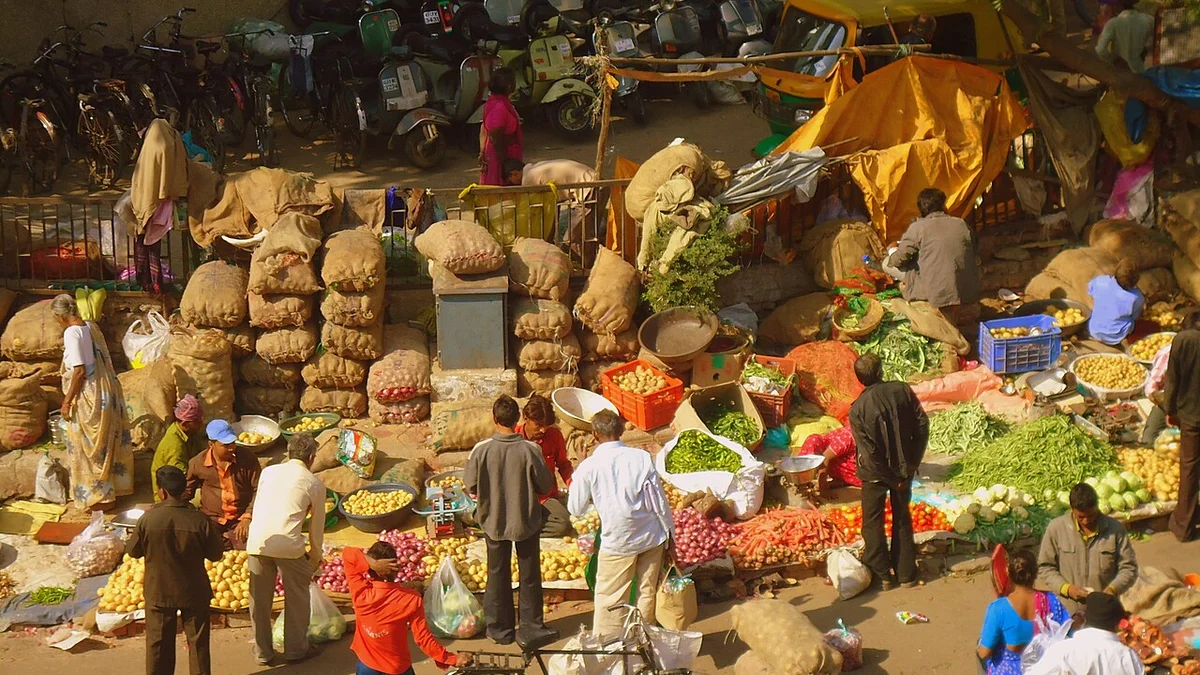
- An anaj mandi specializes in non-perishable food grains, cereals, pulses, and oilseeds sold in dry bulk bags, whereas a sabji mandi handles perishable fresh vegetables, fruits, and greens requiring immediate daily retail and wholesale clearance, which can be reviewed on our sabji mandi rates page.
- How can farmers check live anaj mandi rates online?
- Farmers can check real-time daily anaj mandi rates on official portals such as Agmarknet (agmarknet.gov.in), e-NAM (enam.gov.in), and modern agri-fintech platforms like KisanPe, which aggregate wholesale arrival volumes and modal prices hourly.
- What is an electronic Negotiable Warehouse Receipt (e-NWR)?
- An e-NWR is a digital certificate issued when farmers deposit grains in WDRA-accredited warehouses adjacent to anaj mandis. Farmers can pledge this digital receipt with commercial banks to secure immediate low-interest post-harvest credit without selling, often structured alongside a Kisan Credit Card.
- What happens if a grain trader delays payment to a farmer?
- APMC bylaws mandate payment within 24 to 72 hours of sale settlement. If a buyer delays payment, the Market Committee can impose penal interest on the buyer, forfeit their security deposit, and suspend their trading license.
- Which is the largest anaj mandi in India and Asia?
- The Khanna grain market in Ludhiana district, Punjab, is recognized as Asia's largest anaj mandi, sprawling over 40 acres of auction yards and handling millions of metric tonnes of wheat and basmati paddy during peak harvest seasons.
This article is for general information only and is not financial advice. Loan and scheme eligibility depends on partner and government criteria.