Mentha Oil: Uses, Extraction, Price & Farming Guide
Key takeaways
- Mentha oil is the essential oil steam-distilled from Mentha arvensis (Japanese mint), containing 75% to 82% natural L-menthol, with India producing over 80% of global commercial supplies (CSIR-CIMAP).
- High-yielding cultivars developed by CSIR-CIMAP—specifically Kosi, Shivalik, and Kushal—yield 20 to 25 kg of crude oil per acre in the first cutting and test consistently above 78% menthol purity.
- Field steam distillation uses an airtight retort, counter-current coil condenser, and Florentine separator to extract oil with a specific gravity of 0.890 to 0.910 within 90 to 120 minutes per batch.
- Commercial uses span pharmaceuticals (analgesic balms and cough syrups), oral hygiene (toothpastes and mouthwashes), confectionery (chewing gums and mints), cosmetics, and crystalline menthol export.
- Physical spot mandi prices across Sambhal, Chandausi, and Barabanki trade in the benchmark range of Rs 940 to Rs 1,010 per kg, valuing a standard 180 kg commercial export drum between Rs 1,69,200 and Rs 1,81,800 (Agmarknet, November 2026).
- Two-cut farm economics deliver 35 to 45 kg total oil yield per acre over a 90 to 100-day summer crop cycle, generating Rs 33,000 to Rs 45,000 gross revenue and an attractive return compared to conventional zayad crops.
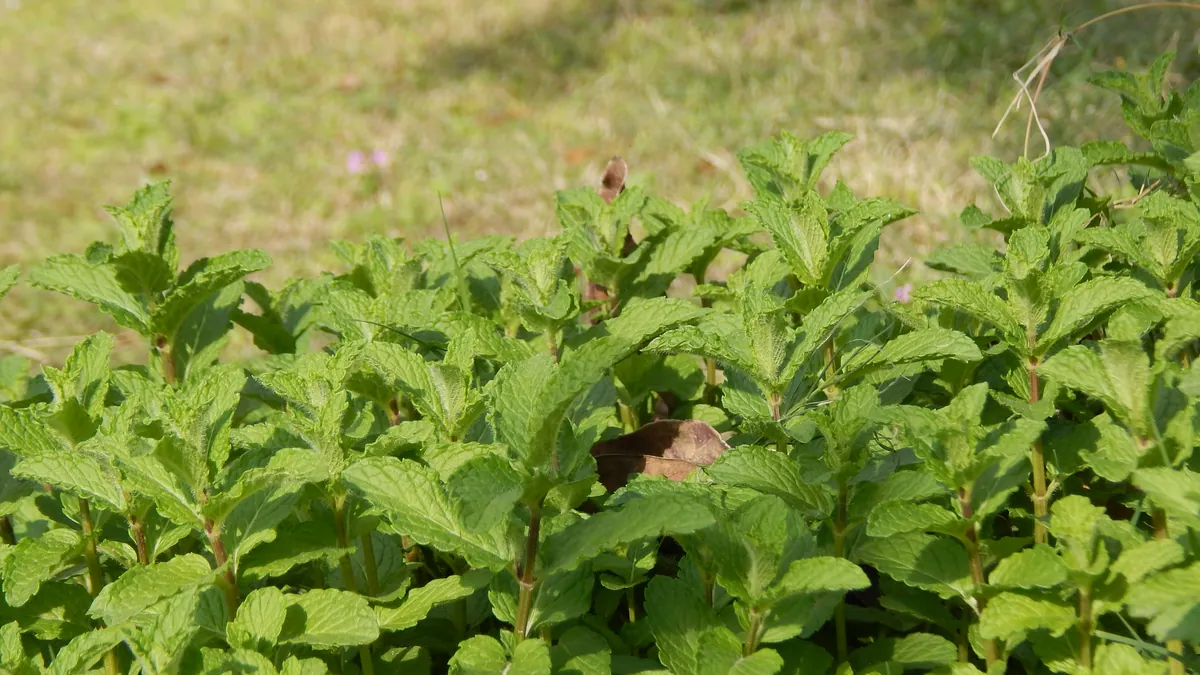
Mentha oil, commercially steam-distilled from Mentha arvensis (commonly known as Japanese mint or cornmint), is one of India's premier agricultural export commodities and the foundation of the global natural menthol industry. India stands as the undisputed global leader in mentha oil production, supplying over 80% of the world's natural menthol demand. Within India, the agricultural heartland of the Indo-Gangetic plains—specifically the Rohilkhand, Terai, and central agrarian belts of Uttar Pradesh—accounts for more than 85% of total national acreage, concentrated across Sambhal, Chandausi, Barabanki, Sitapur, Rampur, Budaun, and Bareilly. Growers tracking regional APMC trading can inspect daily mandi arrivals via our mandi rates platform and check wholesale agricultural rates across the national commodity price tracker.
Cultivated primarily as an intensive short-duration cash crop during the hot summer window (Zayad season) between the rabi harvest of potato or mustard and the kharif transplanting of paddy crops, Mentha arvensis provides North Indian farmers with vital liquid cash flow in under 100 days. Understanding mentha oil extraction mechanics, high-yielding cultivar genetics developed by CSIR-CIMAP, distillation parameters, chemical purity benchmarks, domestic industrial uses, and physical spot price drivers enables commercial growers and essential oil processors to maximize farm-gate margins. Farmers comparing cash crops can review market trends in our mentha oil rate today guide and contrast margins with plantation commodities like our rubber price today report.
What Is Mentha Oil? Botanical Identity and Menthol Chemistry
Mentha oil is the volatile essential oil obtained by steam distillation of the freshly harvested, shade-wilted above-ground biomass of Mentha arvensis L. subspecies haplocalyx Briquet (family Lamiaceae). While the genus Mentha encompasses numerous aromatic species, commercial production is sharply divided into distinct botanical groups based on chemical composition and organoleptic profiles:
- Mentha arvensis (Japanese Mint / Cornmint): Characterized by exceptionally high L-menthol concentration (75% to 82%). It serves as the primary commercial raw material for industrial menthol crystallization and de-mentholized oil (DMO) production across India.
- Mentha piperita (Peppermint): Originating in Europe and North America, containing 35% to 50% menthol alongside high menthyl acetate and menthofuran concentrations, offering a sweeter, mellower profile favored in premium confectioneries and gourmet beverages.
- Mentha spicata (Spearmint): Rich in L-carvone (55% to 65%) rather than menthol, providing the classic spearmint flavour utilized in toothpastes, chewing gums, and savory culinary seasonings.
- Mentha citrata (Bergamot Mint): Dominant in linalool and linalyl acetate, harvested exclusively for high-end perfumery, soaps, and cosmetic fragrance formulations.
The commercial and economic value of crude mentha oil is fundamentally governed by its chemical purity. Natural Mentha arvensis oil contains over 40 distinct volatile aromatic constituents, with five dominant monoterpenes dictating physical properties, commercial grade, and industrial pricing:
- L-Menthol (75% to 82%): The principal bioactive therapeutic compound responsible for characteristic physiological cooling sensations, local anesthetic properties, and antipruritic efficacy.
- Menthone (10% to 14%): A key cyclic monoterpene ketone that imparts crisp herbal aroma; oxidation of menthone into menthol can be controlled during post-distillation processing.
- Isomenthone (2% to 4%): A stereoisomer of menthone influencing the scent profile and congealing threshold of the essential oil.
- Menthyl Acetate (1.5% to 3.0%): An ester contributing pleasant floral-fruity undertones, critical for flavoring balance in confectionery formulations.
- Limonene and Terpenes (1.5% to 3.5%): Hydrocarbon monoterpenes that govern specific gravity, volatility, and solubility in organic cosmetic solvents.
A vital commercial indicator evaluated by mandi traders and chemical processors is the congealing point of the oil. High-purity crude mentha oil testing above 78% L-menthol naturally congeals and solidifies into a dense crystalline white mass at temperatures between 24 deg C and 28 deg C. When cooled down under controlled industrial refrigeration (down to minus 5 deg C to 5 deg C), pure natural L-menthol forms transparent needle-shaped hexagonal crystals. The liquid mother liquor remaining after centrifuging out the crystalline menthol is marketed separately as Dementholized Peppermint Oil (DMO), retaining 30% to 45% residual menthol.
High-Yielding Mentha Arvensis Varieties Developed by CSIR-CIMAP
The global dominance of Indian mentha oil is direct testament to pioneering agricultural biotechnology and breeding programs spearheaded by the CSIR - Central Institute of Medicinal and Aromatic Plants (CIMAP), Lucknow. Prior to the release of CIMAP varieties in the 1980s and 1990s, Indian farmers relied on unimproved local selections yielding less than 15 kg of oil per acre with low menthol percentages (60% to 65%). Through rigorous genetic mutation, clonal selection, and polycross breeding, CSIR-CIMAP developed cultivars that transformed India from a net importer into the world's export powerhouse. Cultivators preparing fields can calculate balanced nutrient requirements using our fertilizer calculator and evaluate organic bio-stimulant schedules with our humic acid soil guide.
The table below details the performance parameters, oil recovery rates, menthol concentration, and maturity schedules for top recommended CSIR-CIMAP varieties cultivated across Uttar Pradesh, Punjab, Haryana, and Bihar:
| Variety Name | Breeding Institute | Fresh Herb Yield (q/ha) | Distillation Oil Recovery (%) | Total Oil Yield (kg/ha) | Menthol Content (%) | Key Agronomic Strengths |
|---|---|---|---|---|---|---|
| Kosi | CSIR-CIMAP Lucknow | 350 – 400 | 0.80% – 0.90% | 130 – 150 | 80% – 82% | Early maturity (90 days), high menthol purity, excellent lodging tolerance |
| Shivalik | CSIR-CIMAP Lucknow | 300 – 350 | 0.75% – 0.85% | 120 – 140 | 78% – 80% | Broad ecological adaptability, robust stolon production, rust tolerance |
| Kushal | CSIR-CIMAP Lucknow | 320 – 380 | 0.70% – 0.80% | 125 – 145 | 77% – 79% | Exceptional post-harvest tillering, rapid second-flush regeneration |
| CIM-Kranti | CSIR-CIMAP Lucknow | 360 – 420 | 0.85% – 0.95% | 135 – 155 | 81% – 83% | Thick canopy, elevated biomass per acre, high industrial crystal recovery |
| Gomti | CSIR-CIMAP Lucknow | 280 – 320 | 0.70% – 0.75% | 110 – 125 | 76% – 78% | Bred specifically for partially alkaline and light alluvial river soils |
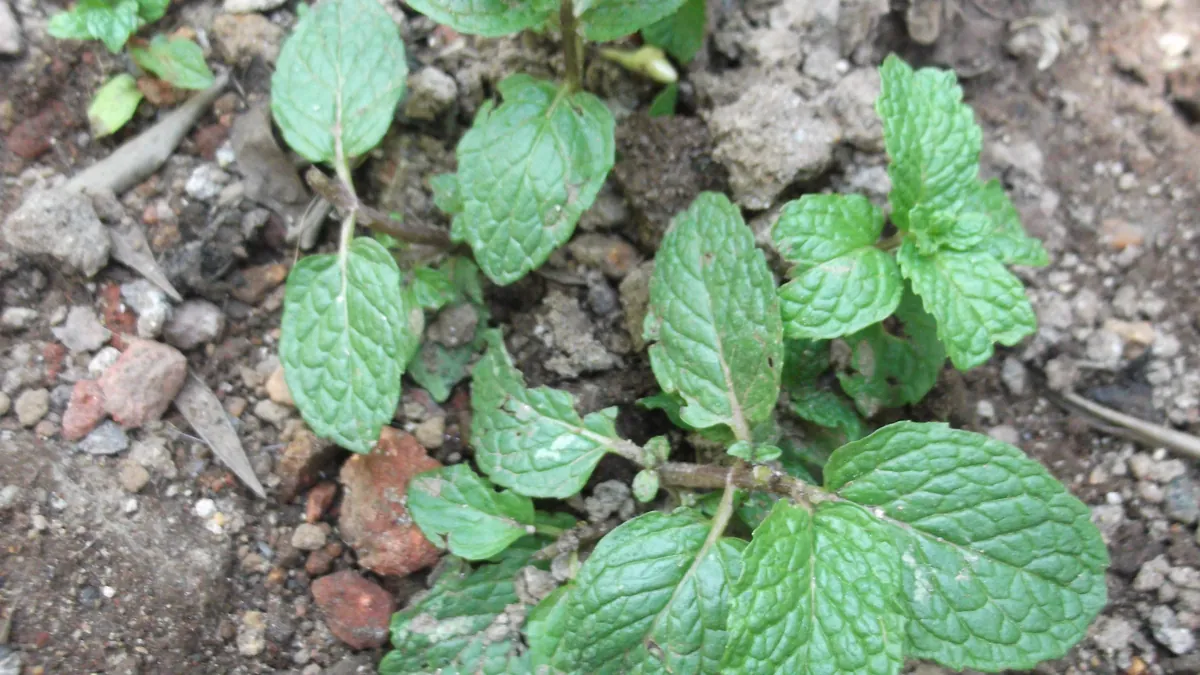
Among these cultivars, Shivalik and Kosi represent over 75% of commercial field acreage in Uttar Pradesh. Shivalik, characterized by thick reddish-purple stems, compact dark green ovate leaves, and pronounced stolon proliferation, exhibits strong resistance to fungal leaf spot and root rot. Kosi, recognized for its lighter green foliage, erect growth habit, and exceptional early vigor, yields up to 150 kg of pure oil per hectare across two flushes, offering commercial distillers oil testing up to 82% pure menthol.
Kushal is particularly prized by intensive multi-cropping growers because of its rapid post-harvest tillering capacity. Following the first harvest in late May, Kushal generates vigorous auxiliary shoots 5 to 7 days faster than conventional varieties, ensuring a bountiful second harvest before heavy monsoon rains arrive. Growers managing multiple field tasks often deploy haulage and field machinery from the Mahindra tractor range or dependable tractors from the Swaraj tractor lineup.
Mentha Arvensis Cultivation: Agronomic Best Practices for Maximum Oil Yield
Achieving profitable mentha cultivation requires precise agronomic execution. Because Mentha arvensis is cultivated as a summer cash crop subjected to intense solar radiation and high temperatures (38 deg C to 44 deg C) in North India, optimizing soil preparation, vegetative propagation, irrigation intervals, nutrient feeding, and weed eradication directly dictates vegetative biomass accumulation and essential oil biosynthesis.
1. Soil, Climate, and Land Preparation
Japanese mint flourishes best in deep, fertile, well-drained sandy loam to clay loam soils rich in organic humus. Soil pH should ideally range between 6.5 and 7.5. Highly alkaline soils (pH above 8.2) or waterlogged heavy clays cause root chlorosis, stunt stolon expansion, and promote fatal Sclerotium root rot. Field preparation begins immediately following the winter harvest of potato, sugarcane, or mustard in January or February. The land must receive 2 to 3 deep cross-ploughings with a tractor disc harrow or cultivator, followed by precise rotavator pulverization to achieve a fine, clod-free tilth. Incorporating 8 to 10 tonnes of well-rotted farmyard manure (FYM) or composted pressmud per acre during initial ploughing substantially enhances soil moisture retention during searing summer months. Basal application of phosphatic nutrients like DAP fertilizer establishes vigorous initial root networks.
On-Farm Steam Distillation Mechanics: From Fresh Herb to Crude Oil
Essential oil in Mentha arvensis is synthesized and stored in specialized microscopic glandular peltate trichomes located predominantly on the abaxial (underside) surface of the leaves. Extracting this volatile oil without thermal degradation requires field-level steam distillation. In traditional North Indian producing belts, distillation is performed using direct-fired village distillation units or modern indirect steam boilers developed by CIMAP:
- Field Wilting: Harvested mint herb must not be distilled fresh and wet. It must be spread thinly in the field and allowed to shade-wilt for 24 to 36 hours. Wilting reduces moisture content by 25% to 30%, which concentrates essential oil in the leaf, reduces steam consumption, and prevents condenser waterlogging.
- Airtight Retort Packing: Wilted herb is packed tightly into the cylindrical steel distillation tank (retort). Laborers stomp the herb firmly along tank walls to eliminate air pockets and steam channeling.
- Controlled Steam Injection: Low-pressure saturated steam (15 to 25 psi) is injected through a perforated sparger coil at the tank base. Rising steam ruptures the fragile peltate glands, vaporizing the oil and forming a mixed steam-oil vapor stream.
- Counter-Current Condensation: The vapor passes into a submerged multi-coil copper or stainless-steel condenser cooled by continuous cold water circulation. Efficient cooling maintains distillate temperatures between 35 deg C and 40 deg C.
- Florentine Receiver Separation: The cooled condensate flows into a Florentine separator vessel. Because mentha oil has a specific gravity of 0.890 to 0.910 (lighter than water), it naturally floats to the top as a golden-yellow layer while waste floral hydrosol water drains continuously from the bottom discharge pipe.
A standard 1.5-tonne field distillation batch runs for 90 to 120 minutes. Distillation is halted once the outflow drops below 5 ml of oil per 15 minutes of condensate. A remarkable circular economy advantage of mentha farming is that the de-oiled spent biomass (termed mint marc or bagasse) is sun-dried in the field for 2 to 3 days and recycled directly as boiler furnace fuel for subsequent distillation batches, making field distillation nearly self-sufficient in thermal energy. Energy costs can be further curtailed by adopting solar water lifting equipment under the PM Kusum solar scheme or installing dedicated solar water pumps.
Industrial and Commercial Mentha Oil Uses
Mentha oil is not a consumer commodity in its raw state; it serves as a versatile, indispensable intermediate raw material across multinational pharmaceutical, dental hygiene, oral care, confectionery, cosmetic, and flavor chemistry sectors. Its massive global demand arises from the unparalleled physiological cooling sensation, therapeutic analgesic properties, and crisp organoleptic aroma of pure natural L-menthol. Many progressive mint farmers diversify farm incomes into dairy operations covered in our dairy farm guide, evaluate egg poultry units in our NECC egg rate report, or check fruit cash crops in our avocado price analysis:
- Pharmaceutical Formulations: Mentha oil and crystallized L-menthol are premier active ingredients in topical pain-relief balms (such as Amrutanjan, Tiger Balm, Zandu Balm, and Moov), counter-irritant pain sprays, chest rubs, medicated inhalers, nasal decongestants, soothing throat lozenges, and cough syrups. Menthol selectively activates cold-sensitive TRPM8 receptors in human sensory nerve endings, producing intense soothing coolness and desensitizing local nociceptors to dull pain.
- Oral Hygiene and Dental Care: Over 30% of global mentha derivatives are consumed in toothpastes, mouthwashes, dental floss, tooth gels, and oral breath fresheners manufactured by Colgate, Dabur, Unilever, and Procter & Gamble. Its potent antibacterial properties combat anaerobic oral bacteria, inhibit plaque biofilm formation, and eradicate oral malodor.
- Confectionery and Flavorings: Crystalline menthol and DMO are heavily used in chewing gums, mint drops, hard-boiled candies, chocolates, breath mints, and tobacco/pan masala flavor enhancement.
- Cosmetics and Personal Grooming: Shaving creams, cooling shampoos, face washes, foot creams, and sun-soothing lotions leverage menthol’s invigorating scent and skin-cooling stimulation.
Physical Mandi Price Dynamics: Sambhal, Chandausi & Global Factors
The physical spot trade for mentha oil in India is anchored in Western Uttar Pradesh, with Sambhal and Chandausi universally recognized as the twin commercial pricing capitals. Daily price discovery in these mandis mirrors the organized auction systems seen in regional APMCs like Bhawani Mandi Rajasthan and the coriander auction floor at Ramganj Mandi Kota. Physical spot prices are influenced by global macro factors:
- Seasonal Arrival Pressures: Spot rates typically experience seasonal softening during peak summer harvesting in late May, June, and July as hundreds of village distillation units deliver fresh crude oil into regional mandis.
- Winter Pharmaceutical Surge: Prices historically strengthen between October and February when domestic and global pharmaceutical manufacturing of cold balms, cough syrups, and throat lozenges escalates sharply.
- Monsoon Timing and Acreage: Heavy pre-monsoon rains in June damage second-cutting yields in low-lying riverine belts, triggering immediate speculative rallies on commodity bourses.
- Export Inquiries from China and the United States: China imports thousands of metric tonnes of crude Indian mentha oil annually for secondary refining and crystallization, making Chinese import orders a dominant price mover.
- Synthetic Menthol Price Parity: Global chemical conglomerates produce synthetic menthol via petrochemical citral or thymol routes. High natural menthol prices incentivize global oral care brands to substitute natural oil with synthetic alternatives.
Farmer Economics: Cost of Cultivation and Net Profit per Acre
Mentha farming represents one of the most commercially lucrative short-duration cropping enterprises available to irrigated North Indian smallholders. It requires zero marketing middleman risk, as village essential oil aggregators and APMC commission agents pay cash upon delivery. Farmers can project full seasonal yields on our crop income calculator and evaluate working capital finance on our Kisan Credit Card loan calculator:
- Deep Land Preparation, Disc Harrowing, and Ridging: Rs 3,000 - Rs 3,500
- Certified CSIR-CIMAP Root Suckers (180 kg @ Rs 25 - Rs 30/kg): Rs 4,500 - Rs 5,400
- Sucker Cutting, Furrow Sowing, and Labor: Rs 2,500 - Rs 3,000
- Chemical Fertilizers (Urea, DAP, Zinc, Potash): Rs 3,500 - Rs 4,500
- Frequent Irrigation (8 to 10 irrigations @ Rs 400 - Rs 600 each): Rs 4,000 - Rs 6,000
- Manual Weeding and Interculture (Two operations): Rs 3,000 - Rs 4,000
- Harvesting Labor (Two cuts): Rs 3,500 - Rs 4,500
- Custom Boiler Distillation Charges (35-45 kg oil @ Rs 50 - Rs 65/kg): Rs 2,000 - Rs 2,800
- Total Operational Cost per Acre: Rs 26,000 - Rs 33,700
At an average wholesale price of Rs 980 per kg, a 40 kg oil harvest per acre generates Rs 39,200 in gross revenue, delivering net profit of Rs 10,000 to Rs 15,000 per acre in under 100 days. Farmers can also verify state agricultural welfare transfers through our DBT payment status guide and complete Aadhaar verification via the farmer e-KYC portal.
Frequently asked questions
- What is mentha oil and how is it extracted?
- Mentha oil is the pure essential oil extracted by steam distillation from the fresh or shade-wilted green biomass of Mentha arvensis (Japanese mint). Steam generated in a field boiler ruptures glandular leaf trichomes, carrying oil vapors into a coil condenser before separation in a Florentine receiver. Track daily commercial prices in our mentha oil rate today guide.
- Which Indian state produces the highest quantity of mentha oil?
- Uttar Pradesh produces over 85% of India's total mentha oil, with intensive cultivation hubs clustered across Sambhal, Chandausi, Barabanki, Sitapur, Rampur, Budaun, and Bareilly in the fertile Indo-Gangetic plains. Track physical spot arrivals on our mandi rates platform and official spot prices via the Agmarknet portal.
- What is the standard menthol content in Indian Mentha arvensis oil?
- High-quality Indian Mentha arvensis oil naturally contains between 75% and 82% pure L-menthol by weight, alongside secondary terpenes including menthone (10% to 14%), isomenthone, and menthyl acetate.
- What are the top high-yielding mentha varieties developed by CSIR-CIMAP?
- The top CSIR-CIMAP varieties include Kosi (130-150 kg oil/ha, 80-82% menthol), Shivalik (120-140 kg oil/ha, 78-80% menthol), Kushal (fast regenerator), and CIM-Kranti (up to 155 kg oil/ha, 81-83% menthol). Research guidelines are published on cimap.res.in.
- How much mentha oil is produced per acre of cultivation?
- A properly managed two-cut crop yields between 35 and 45 kg of crude mentha oil per acre (22 to 26 kg in the first cutting in June, and 14 to 18 kg in the second cutting in July/August). Growers can project overall returns with our crop income calculator.
- What is the standard commercial drum weight and trading unit for mentha oil?
- In physical APMC mandis and export logistics, mentha oil is packed in standard galvanized iron (GI) drums holding exactly 180 kg net weight. On the MCX exchange, 1 trading lot equals 360 kg (2 drums).
- Why does high-purity mentha oil freeze or turn solid in winter?
- Pure natural mentha oil naturally solidifies and crystallizes below 24 deg C to 28 deg C because pure L-menthol has an intrinsic melting point of approximately 42 deg C. Rapid solid crystallization is a primary indicator of high menthol purity.
- What is the difference between crude mentha oil, menthol crystals, and DMO?
- Crude mentha oil is the complete unrefined essential oil containing 75% to 82% menthol. When chilled, solid menthol crystals precipitate out, leaving behind liquid Dementholized Oil (DMO) with 30% to 45% residual menthol.
- What are the main commercial and industrial uses of mentha oil?
- Mentha oil is primarily used in pharmaceuticals (pain balms, rubs, cough syrups, sprays), oral hygiene (toothpastes, mouthwashes), confectionery (chewing gums, mint candies), cosmetics (after-shaves, shampoos), and aromatherapy.
- How should farmers store mentha oil to prevent evaporation and quality loss?
- Mentha oil should be stored in airtight galvanized iron (GI) or epoxy-lined steel drums filled to 95% capacity, kept in cool, dark, well-ventilated godowns away from open flames, heat, and direct sunlight.
- When do mentha oil prices usually peak during the year?
- Prices historically soften during peak summer distillation arrivals in May through July, and rise to seasonal peaks between November and February driven by winter pharmaceutical demand and declining physical supplies. Check state commodity trends across our national commodity price tracker.
- Can spent mentha biomass be used after oil extraction?
- Yes, dried spent mint biomass (marc) is commonly recycled as zero-cost biomass boiler fuel for subsequent distillation batches, or used as organic field mulch, compost material, and livestock bedding in accordance with organic farming practices.
This article is for general information only and is not financial advice. Loan and scheme eligibility depends on partner and government criteria.