Narela Mandi Bhav: Delhi Grain APMC Rates & Basmati Guide
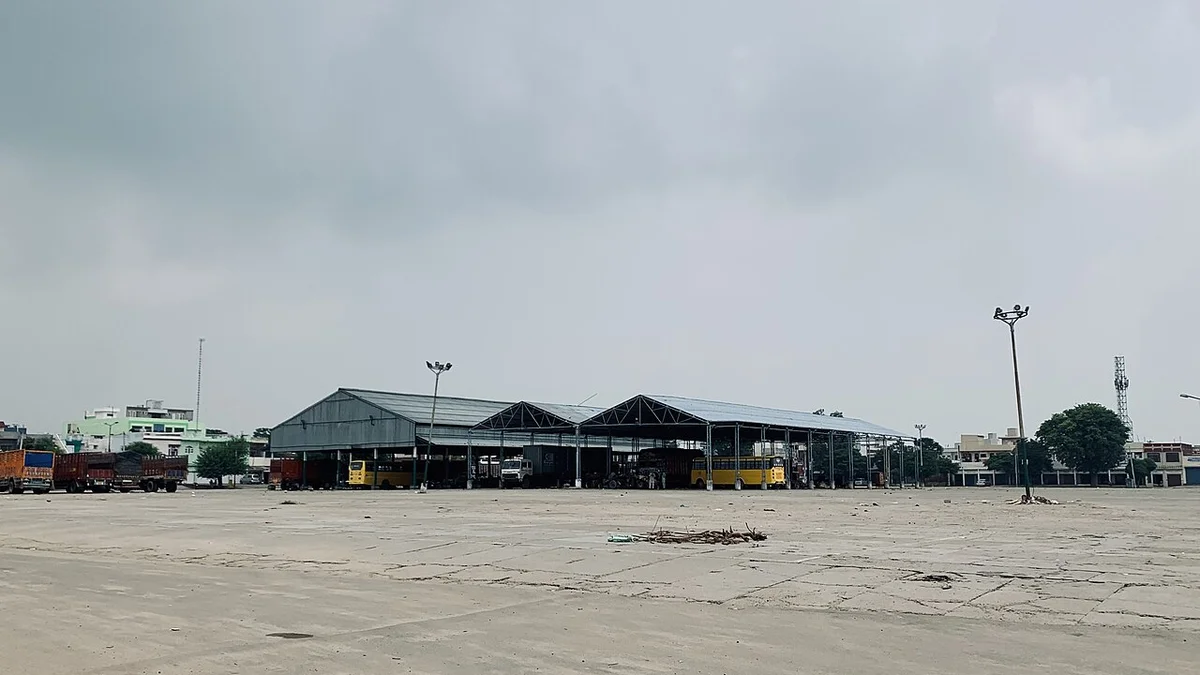
Narela Mandi (Krishi Upaj Mandi Samiti Narela), located in the North Delhi sub-city near the Haryana border, is recognized as Asia’s largest wholesale terminal foodgrain market. Spanning over 40 hectares of integrated commercial trading yards, massive covered auction sheds, computerized weighbridges, and extensive warehousing silos, Narela handles an annual grain turnover exceeding 1.5 million metric tons. Functioning under the regulatory authority of the Delhi Agricultural Marketing Board (DAMB Delhi), integrated with the National Agriculture Market (e-NAM Portal), and connected with the Food Corporation of India (FCI Procurement Division) alongside the Directorate of Marketing and Inspection (Agmarknet Agricultural Network), Narela serves as the definitive price-discovery benchmark for Basmati paddy, milling wheat, pearl millet (bajra), and mustard across the entire National Capital Region (NCR).
1. Indicative Wholesale Commodity Price Benchmarks at Narela Mandi
Wholesale prices at Narela Mandi are determined through competitive vocal auctions and electronic e-NAM bidding. Quotes vary based on moisture percentage, grain elongation index, foreign matter content, and buyer presence from leading rice export houses and flour millers across Delhi, Haryana, and Uttar Pradesh. The following table provides indicative modal wholesale benchmarks recorded during recent trading cycles:
| Commodity & Variety | Arrival Volume (Bags/Qtl) | Min Rate (Rs/Qtl) | Modal Rate (Rs/Qtl) | Max Rate (Rs/Qtl) | Peak Marketing Season |
|---|---|---|---|---|---|
| Basmati Paddy (Pusa 1121 Combine) | 18,500 Bags | Rs 3,850 | Rs 4,280 | Rs 4,550 | October – December (Kharif) |
| Basmati Paddy (Pusa 1509 Early) | 14,000 Bags | Rs 3,250 | Rs 3,620 | Rs 3,880 | September – November (Early) |
| Basmati Paddy (Pusa 1718 / 1401) | 11,200 Bags | Rs 3,700 | Rs 4,120 | Rs 4,380 | November – January (Kharif) |
| Wheat (Mill Quality / Sharbati) | 24,000 Bags | Rs 2,420 | Rs 2,680 | Rs 2,890 | April – June (Rabi Post-Harvest) |
| Pearl Millet (Bajra - Hybrid) | 6,800 Bags | Rs 2,150 | Rs 2,340 | Rs 2,520 | October – December (Kharif) |
| Mustard (Sarson - High Oil) | 4,500 Bags | Rs 5,100 | Rs 5,650 | Rs 6,120 | March – May (Rabi Harvest) |
| Barley (Jau - Malt Quality) | 2,800 Bags | Rs 1,950 | Rs 2,240 | Rs 2,480 | March – May (Rabi Harvest) |
| Maize (Yellow Commercial) | 5,200 Bags | Rs 2,050 | Rs 2,280 | Rs 2,440 | November – January (Kharif) |
2. Basmati Paddy Trading Dynamics at Narela
Narela Mandi is celebrated as the premier Basmati paddy pricing barometer in northern India. Situated at the gateway to the fertile Basmati Geographical Indication (GI) cultivation belt encompassing Haryana and western Uttar Pradesh, Narela receives massive daily arrivals of elite export varieties during autumn harvest:
- Pusa 1121 Basmati Paddy: Renowned for its extraordinary cooked kernel elongation (reaching up to 22 mm). Commanded by leading Indian basmati export millers (including KRBL, LT Foods, and Kohinoor) for shipping to Saudi Arabia, Iran, Iraq, the UAE, and the European Union. Prices range between ₹3,850 and ₹4,550 per quintal depending on moisture and head rice recovery (HRR).
- Pusa 1509 Basmati Paddy: An early-maturing semi-dwarf strain that ripens in 120 days, allowing farmers to harvest early in September and October before peak arrivals saturate the market. It clears at indicative rates of ₹3,250 to ₹3,880 per quintal.
- Pusa 1718 & Pusa 1401: Bacterial blight-resistant improved strains of 1121 that yield exceptionally clean golden grains with minimal discoloration, consistently achieving high bids among premium private millers.
- Moisture Penalties: Paddy with moisture exceeding 17% incurs mandatory moisture dockage deductions (cut) or requires spreading on mandi concrete aprons for sun drying prior to electronic lot registration.
3. Wheat Procurement, Sharbati Milling & Private Trade
During the post-Rabi harvest wave between April and June, Narela transforms into northern India’s largest private wheat clearing platform. Daily wheat inflow regularly surpasses 50,000 bags as farmers from Sonipat, Panipat, Rohtak, Jhajjar, Baghpat, and Aligarh transport their produce to Delhi to capitalize on vibrant private flour mill competition:
Because Delhi hosts hundreds of commercial roller flour mills (Atta Chakkis, Maida and Suji processors), private auction bids at Narela frequently surpass the central government Minimum Support Price (MSP) by ₹150 to ₹350 per quintal. High-gluten Sharbati and Lokwan wheat varieties from Madhya Pradesh and Rajasthan also arrive via rail wagons, commanding premium bids for packaged branded chakki atta manufacturers.
4. Step-by-Step Selling Process at Narela Mandi
The Delhi Agricultural Produce Marketing (Regulation) Act mandates transparent weighing, fair open auctions, and prompt payment settlement for all agricultural producers visiting Narela:
- Gate Entry Slip: Upon arrival at the entry toll gates, an automated computer entry slip is generated documenting the farmer’s identity, vehicle number, village, commodity type, and estimated bag count.
- Auction Platform Assignment: The vehicle is directed to designated commodity platforms where sacks are unloaded into neat heaps or vehicle tailgates opened for buyer inspection.
- Open Bidding & Hammer Price: Licensed commission agents (Kachha Arhatiyas) conduct competitive vocal bidding with registered millers and wholesalers. The lot is awarded to the highest bid per quintal.
- Farmer Consent: The farmer retains full statutory authority to accept the final price or decline the sale without penalty.
- Computerized Weighment: Accepted grain lots are weighed on certified electronic weighbridges or calibrated platform scales under direct farmer supervision to guarantee zero weight manipulation.
- Settlement Bill (J-Form): The buyer issues a formal Bikri Parcha specifying gross weight, deductions for tare bag weight, final rate, and net payable amount. Payment is transferred directly to the farmer’s bank account via NEFT/RTGS or disbursed in cash within mandated timelines.
5. Highway Connectivity, Silos and Storage Facilities
Narela Mandi enjoys unmatched logistics connectivity. Directly accessible from National Highway 44 (GT Karnal Road) and the Kundli-Manesar-Palwal (KMP) Expressway interchange, commercial trucks bypass inner Delhi city traffic restrictions entirely. Modern steel grain silos and Central Warehousing Corporation (CWC) warehouses with a combined holding capacity exceeding 1.2 lakh metric tons operate adjacent to the yard, enabling traders to deposit grain and obtain Negotiable Warehouse Receipts (NWR) for pledge finance.
6. Agricultural Inputs, Mechanization & Allied Farm Operations
Maximizing farm gate returns in narela mandi begins with strong agronomic management, calibrated soil nutrition, clean irrigation, and efficient harvesting machinery. Growers systematically coordinate crop care through NPK fertilizer grade selection and NBS pricing, DAP 50 kg bag subsidy and application rates, Saaf systemic and contact fungicide dosage, Roko (Thiophanate Methyl) disease control schedule, Coragen stem borer and caterpillar control, selective and pre-emergent herbicide management, commercial flower seed varieties, certified seeds policy and germination standards, rajgira amaranth seed farming. Modern field execution and transport rely heavily on comparing specs and subsidies across field tractor power testing and safety buying checks, Solis 4515 E Yanmar-tech tractor specifications, Swaraj 744 FE and XT torque and fuel economy.
7. Regional Mandi Networks, Credit Schemes & Official Data Sources
Across India's regulated market ecosystem, farmers compare live realizations across state trading yards and tap formal welfare and institutional financing. Growers benchmark regional supply arrivals and MSP procurement across north Indian Anaj Mandi procurement operations, Kisan Mandi, Gazipur Sabji Mandi wholesale vegetable rates, all-India APMC mandi bhav directory, Piplia Mandi wholesale garlic auctions, Neemuch Mandi posta dana and ashwagandha benchmarks, Neemuch Mandi medicinal spice and grain rates, Bhawani Mandi Rajasthan commodity rates, Ramganj Mandi coriander trading yard, Betul Mandi oilseed and maize auctions, Bhattu Mandi Haryana mustard and wheat auctions, mill-quality wheat realizations. Key grain, oilseed, and pulse realization corridors additionally track state wheat procurement benchmarks, APMC wheat arrivals and central buffer MSP, sarso ka bhav APMC updates, regional sarso mandi rates, mustard seed wholesale benchmarks, cold-pressed mustard oil economics, onion storage life and wholesale arrivals, Lasalgaon and metro onion mandi quotations, cotton market CCI MSP rates, castor seed GCH hybrid prices, water-soluble NPK 19-19-19 foliar spray dosage, Maharashtra sugar mill ex-factory and APMC rates, domestic S-30 and M-30 sugar mill pricing, sugar release quota and FRP economics, ethanol blending and sugar wholesale trends, retail and wholesale chini rate benchmarks. Agricultural diversification and specialty value chains spanning spices, plantation crops, dairy, and poultry offer steady cash flow—tracked via commercial button and oyster mushroom cultivation, Spices Board cardamom auction prices, small green cardamom e-auction grades, Kashmiri Mongra saffron prices and GI purity, Shivalik mentha oil MCX and distillation yields, daily crude mentha oil spot rates, mentha herb agronomic cultivation and boiler distillation, raw cashew nut (RCN) processing realizations, processed cashew kernel export grades, W180 and W240 cashew wholesale pricing, California and Mamra almond wholesale rates, Kashmiri walnut giri and shell-out grades.
Other specialized horticulture and livestock enterprises include dried fig (anjeer) cultivation and mandi prices, Hass avocado commercial orchard economics, red and white dragon fruit per-kg realizations, Karnataka supari and arecanut auction prices, Shivamogga and TUMCOS adike mandi rates, daily NECC wholesale egg price movements, all-India NECC egg rate directory, Namakkal poultry belt NECC dispatch rates, Barwala layer farm paper rates and margins. Operational working capital, DBT cash transfers, and subsidized farm solar or e-KYC infrastructure can be accessed via Kisan Credit Card 4% subvention loan and KRP application, PM-KISAN installment status and PFMS verification, PM-KUSUM solar irrigation pump capital subsidy. Primary regulatory notifications, technical bulletins, and statutory benchmark portals are published by Delhi Agricultural Marketing Board (DAMB Official Portal), Food Corporation of India (FCI Official Portal), National Agriculture Market Platform (e-NAM), and Agmarknet Agricultural Marketing Information Network.
Frequently asked questions
- Where is Narela Mandi located and which crops is it famous for?
- Narela Mandi (Krishi Upaj Mandi Samiti Narela) is situated in North Delhi near the Kundli Haryana border along National Highway 44. It is famous across India as Asia’s largest wholesale terminal foodgrain market, specializing in Basmati paddy (1121, 1509), milling wheat, bajra, and mustard.
- What are the main Basmati paddy varieties traded at Narela Mandi?
- The dominant Basmati paddy varieties traded at Narela include Pusa 1121 (famed for extra-long grain elongation), Pusa 1509 (early-maturing), Pusa 1718 (blight-resistant), Pusa 1401, and traditional Basmati. Official regulatory guidelines can also be verified on the Delhi Agricultural Marketing Board (DAMB Official Portal).
- How can farmers check daily Narela Mandi bhav online?
- Daily wholesale auction prices, arrival quantities, and modal rates can be checked online on the Agmarknet portal (agmarknet.gov.in), the e-NAM digital market portal (enam.gov.in), and the Delhi Agricultural Marketing Board website (damb.delhi.gov.in).
- What is the average wholesale price of Pusa 1121 Basmati paddy at Narela?
- Pusa 1121 Basmati paddy typically clears at indicative wholesale auction rates between ₹3,850 and ₹4,550 per quintal, depending on grain moisture level, milling recovery, and export demand. Official regulatory guidelines can also be verified on the Food Corporation of India (FCI Official Portal).
- Why do private wheat auction prices at Narela often exceed central MSP?
- Delhi hosts hundreds of commercial roller flour mills and packaged chakki atta manufacturing units with huge daily milling requirements. Intense competition among private millers at Narela frequently bids wheat prices ₹150 to ₹350 per quintal above central MSP.
- Who pays the mandi market fee at Narela APMC?
- Under the Delhi Agricultural Produce Marketing (Regulation) Act, statutory mandi fees (1% market fee + 1% DAMB cess) are paid by purchasing millers, traders, and wholesale buyers, not deducted from the farmer’s sale proceeds.
- What documents should farmers bring when selling grain at Narela Mandi?
- Farmers should carry a valid photo identity proof (Aadhaar Card, Voter ID, or Kisan Credit Card), vehicle registration documents, and bank passbook details for direct RTGS/NEFT electronic payment transfer.
- What happens if paddy moisture is higher than 17% at Narela?
- Excess moisture leads to fungal mold and grain breakage during milling. Lots with moisture above 17% attract moisture dockage deductions (cut) or must be sun-dried on mandi aprons before lot auctioning.
- What storage facilities are available near Narela Mandi?
- Narela features modern metal grain silos and Central Warehousing Corporation (CWC) warehouses with over 1.2 lakh metric tons capacity. Farmers can deposit grains and secure pledge loans against Negotiable Warehouse Receipts (NWR).
- What road connectivity advantages does Narela Mandi have?
- Narela is situated directly off National Highway 44 (GT Road) and connects immediately with the Kundli-Manesar-Palwal (KMP) Expressway, providing rapid transit for heavy commercial trucks without entering congested inner Delhi zones.
- Can farmers reject auction bids at Narela if they are not satisfied?
- Yes, under APMC regulations, farmers possess the complete legal right to accept or decline any auction bid. If dissatisfied, they can hold their produce in designated yard bays for re-auction or transfer it to warehouse storage.
- How does Narela Mandi integrate with the central e-NAM platform?
- Narela Mandi utilizes e-NAM for computerized lot issuance, electronic weighing scale integration, grain quality assaying, and competitive digital bidding by verified interstate rice millers and exporters.
This article is for general information only and is not financial advice. Loan and scheme eligibility depends on partner and government criteria.