Arecanut Price Today: MAMCOS Bhav & All-India Mandi Rates
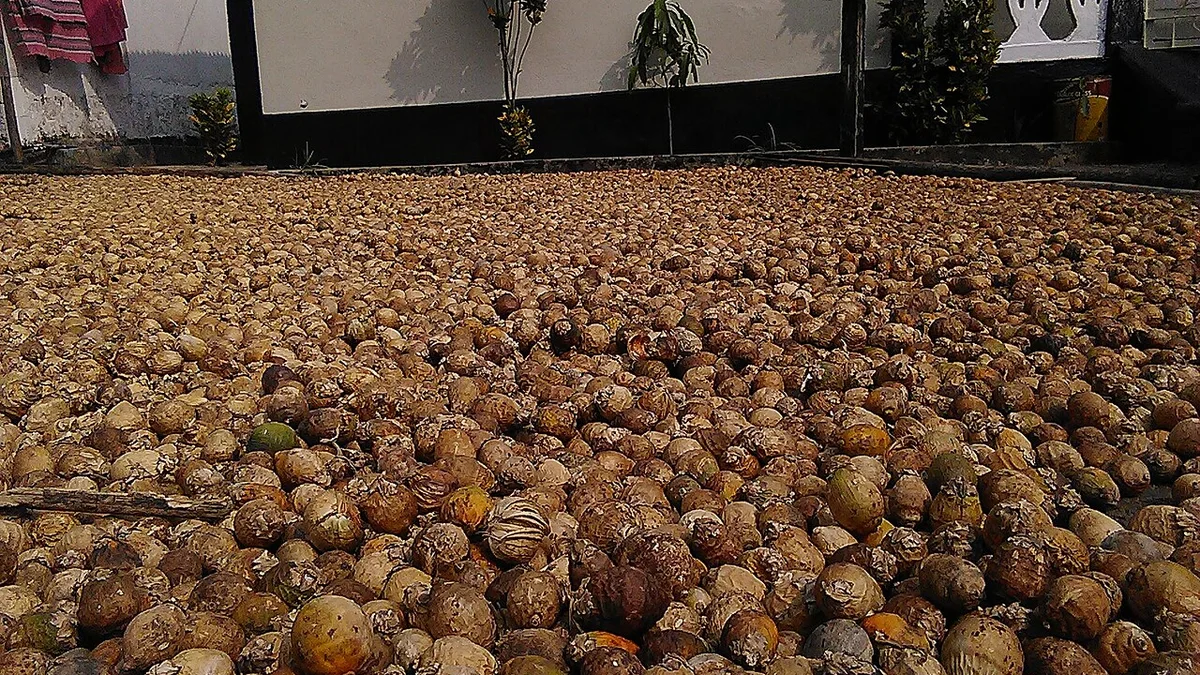
Arecanut (Areca catechu), commercially termed Supari across North India and Adike in the southern peninsula, is one of the nation's most economically significant plantation cash crops. Cultivated primarily across Karnataka, Kerala, Assam, Meghalaya, West Bengal, and Tamil Nadu, India is both the world's largest producer and the foremost consumer of arecanut, generating over 15 to 16 lakh metric tonnes annually. The commodity sustains major domestic processing industries—ranging from traditional cultural masticatories and sweetened flavored mouth fresheners (mukhwas) to large-scale commercial pan masala manufacturing clusters centered in Kanpur, Varanasi, and Delhi. As a result, tracking the arecanut price today across primary cooperative auction floors and APMC terminal mandis is vital for growers, processors, and spice commodity traders.
Daily market sentiment is steered by premier grower-owned cooperative marketing societies—foremost among them being The Central Arecanut and Cocoa Marketing and Processing Co-operative (CAMPCO Portal) and The Malnad Areca Marketing Co-operative Society (MAMCOS) in Shivamogga. Supported by statutory trade data published by the Directorate of Cashewnut and Cocoa Development (DCCD Kochi), the Directorate General of Foreign Trade (DGFT Portal), and the Ministry of Agriculture’s Agmarknet network (Agmarknet Agricultural Marketing Network), this comprehensive all-India market report details prevailing wholesale prices across Karnataka, Kerala, and the Northeast, explains MAMCOS tender grading rules, analyzes industrial consumption drivers, and outlines Minimum Import Price (MIP) trade protections.
1. All-India Arecanut Price Today: Major Mandi Rates & Cooperative Bhav
In Indian mandis, arecanut is traded per quintal (100 kg) or per kilogram based on processing style (Red Boiled Rashi vs White Sun-Dried Chali), moisture levels, kernel hardness, and size uniformity. Below is an indicative overview of prevailing wholesale modal, minimum, and maximum rates across primary consuming and producing hubs.
| State / Hub | APMC / Cooperative Market | Dominant Commercial Grade | Min Rate (₹/Qtl) | Max Rate (₹/Qtl) | Modal Rate (₹/Qtl) | Indicative Rate (₹/kg) |
|---|---|---|---|---|---|---|
| Karnataka | MAMCOS Shivamogga | Rashi Iddu (Premier Boiled Red) | 48,500 | 56,200 | 53,500 | ₹535.00 |
| Karnataka | MAMCOS Shivamogga | Bette (Tender Flat Red) | 46,000 | 52,500 | 49,800 | ₹498.00 |
| Karnataka | TUMCOS Channagiri | Rashi (Central Plains Red) | 49,000 | 56,800 | 54,200 | ₹542.00 |
| Karnataka | CAMPCO Mangaluru / Puttur | Chali New (Current Season White) | 35,000 | 41,500 | 39,200 | ₹392.00 |
| Karnataka | CAMPCO Mangaluru / Puttur | Chali Old (Matured Vintage White) | 41,000 | 48,500 | 45,800 | ₹458.00 |
| Karnataka | Sagar APMC | Rashi / Gorabalu | 47,000 | 54,800 | 52,300 | ₹523.00 |
| Karnataka | TSS Sirsi | Chali / Saraku Top Grade | 37,000 | 44,500 | 42,000 | ₹420.00 |
| Kerala | Kasargod APMC | Chali White Commercial | 36,000 | 43,000 | 40,500 | ₹405.00 |
| Kerala | Thrissur / Vatanappally | Raw Ripe Tender / Neettadikka | 33,000 | 40,000 | 37,500 | ₹375.00 |
| Assam | Guwahati (Fancy Bazar) | Assam Matured Raw / Tamul | 30,000 | 38,000 | 35,000 | ₹350.00 |
| West Bengal | Siliguri Wholesale | North Bengal Chali / Bette | 34,000 | 42,000 | 38,500 | ₹385.00 |
| Uttar Pradesh | Kanpur Terminal Market | Rashi Grade A (Processed Chevon) | 54,000 | 63,000 | 59,000 | ₹590.00 |
Source: Agmarknet (agmarknet.gov.in), MAMCOS Shivamogga, TUMCOS Channagiri, and CAMPCO market intelligence bulletins (November 2026). Indicative wholesale mandi rates across major Indian markets. Actual transactional prices fluctuate based on lot cutting yield, zero-mold certification, and moisture content (ideal under 10%).
2. The Role of MAMCOS Shivamogga in Arecanut Price Discovery
Established in 1939, The Malnad Areca Marketing Co-operative Society (MAMCOS) based in Shivamogga represents over 25,000 grower-members across the lush Western Ghats. The daily mamcos arecanut price today serves as the primary price discovery benchmark for the entire red arecanut industry:
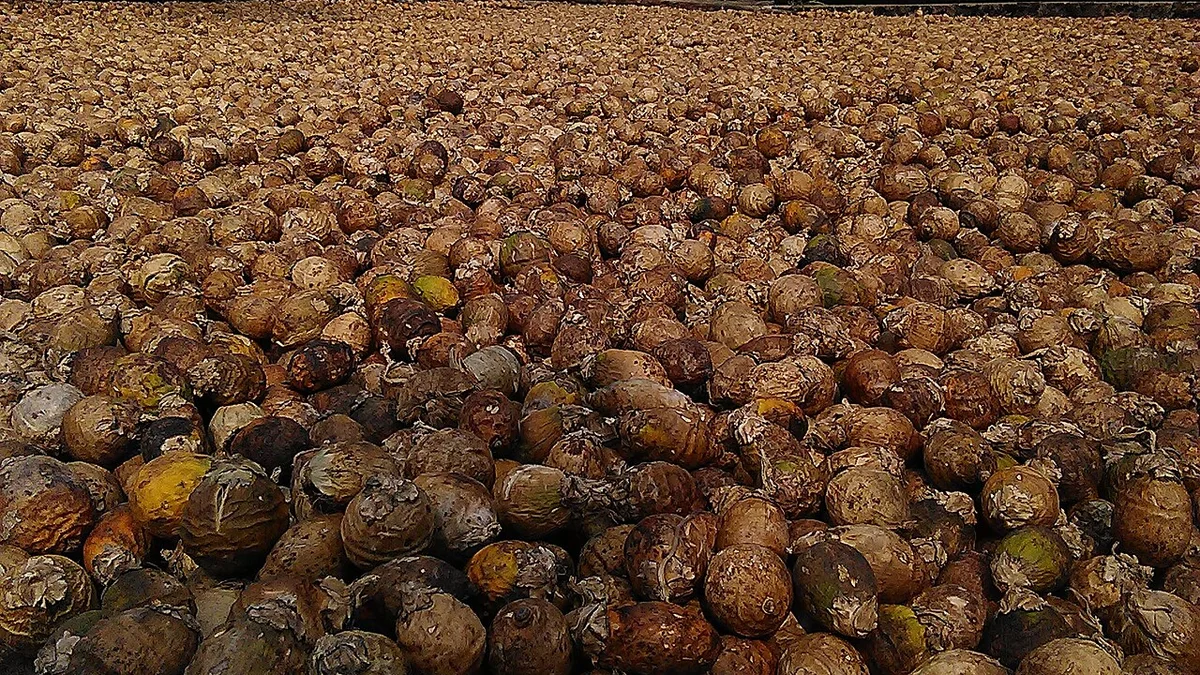
- Electronic Sealed-Tender Bidding: MAMCOS collects cured produce from growers, grades each consignment into standardized lots, and displays representative sample trays. Registered buyers from across India inspect samples and submit secret electronic bids, preventing cartelization and maximizing farmer realization.
- Warehouse Receipt Financing (Pledge Loans): When market prices experience seasonal post-harvest slumps (December to March), farmers deposit their dried arecanut bags in MAMCOS warehouses and receive immediate pledge loans of up to 75% of market value at concessional interest rates. This financial buffer prevents distress selling.
- Quality Grading Verification: MAMCOS employs certified classifiers who assess color depth (deep mahogany red derived from optimal Kali boiling), internal texture (mottled ruminated endosperm without black rot), and kernel hardness.
- Daily Price Bulletins: MAMCOS publishes daily minimum, maximum, and modal auction rates for Rashi Iddu, Bette, Gorabalu, and Koka, which are broadcast via mobile apps and regional agricultural news.
3. Red Arecanut (Rashi) vs White Arecanut (Chali): Processing & Market Dynamics
The Indian arecanut market is bifurcated into two completely distinct commercial products, each serving different consumer tastes and geographic markets:
A. Red Arecanut (Rashi / Kempu Adike)
Red arecanut is prepared from semi-mature green nuts harvested at 6 to 7 months of development. Workers de-husk the green fibrous husk, extract the soft kernel, and boil it in copper cauldrons with concentrated tannin liquor (Kali) for about an hour. The boiled nuts are then sun-dried for 7 to 10 days. The resultant dark-red, high-tannin nut is primarily consumed in North India as the foundational raw material for scented supari and industrial pan masala manufacturing. Prices for Rashi typically hover ₹8,000 to ₹14,000 per quintal higher than Chali due to intensive processing labor and boiling costs.
B. White Arecanut (Chali / Bili Adike)
White arecanut is produced from fully ripe, golden-yellow areca fruits harvested at 9 to 10 months. The intact whole fruits are spread on outdoor drying floors (patte) for 40 to 45 days under intense tropical sunlight until the kernel rattles freely inside the dried husk. The nuts are then mechanically de-husked to reveal the pale white-brown kernel. Chali is favored in Maharashtra, Gujarat, and South India for traditional masticatory use with betel leaves (paan).
4. Industrial Pan Masala Demand & Kanpur Processing Clusters
Over 80% of India’s commercial red arecanut harvest is transported northward to industrial processing clusters in Uttar Pradesh (Kanpur, Varanasi, Lucknow), Delhi NCR, and Gujarat. In these manufacturing hubs, cured Rashi and Bette arecanut undergoes precision slicing, roasting, flavoring with aromatic compounds (menthol, cardamom, sandalwood oil, saffron), and packaging in airtight multi-layer sachets.
Industrial demand peaks during the festive corridor (August to November) and wedding season (November to February). Leading manufacturing conglomerates maintain massive forward-buying desks at Shivamogga, Channagiri, and Davanagere, heavily influencing weekly mandi liquidity.
5. Trade Policy Protections: DGFT Minimum Import Price (MIP) & Anti-Smuggling
The domestic arecanut price is heavily shielded by government trade policy interventions:
- Statutory Minimum Import Price (MIP) of ₹351/kg: The Directorate General of Foreign Trade (DGFT) mandates that no foreign arecanut can be imported into India below the CIF value of ₹351 per kg. Coupled with a 100% basic customs duty, this policy ensures landed imported nuts cost over ₹700 per kg, protecting domestic growers from predatory dumping by low-cost producers in Indonesia, Myanmar, and Sri Lanka.
- Border Surveillance & Transit Checks: Unscrupulous syndicates attempt to smuggle cheap Southeast Asian arecanuts across porous land borders in the Northeast (Myanmar-Mizoram-Assam corridor) disguised as indigenous betel nuts. Enhanced border checks by customs authorities and strict e-Way bill tracking have curbed illegal inflows, stabilizing domestic APMC prices.
- SAFTA Rules of Origin Enforcement: Authorities enforce strict country-of-origin verification on consignments arriving under the South Asian Free Trade Area (SAFTA) to prevent third-party routing of non-member produce.
6. Scientific Storage Protocols: Mitigating Weight Loss and Beetle Infestation
Cured arecanut can be safely stored for 18 to 24 months provided proper post-harvest protocols are maintained:
- Moisture Threshold (9% to 10%): Storing nuts with over 11% moisture triggers fungal growth (Aspergillus and Penicillium), resulting in blackened, sour-smelling kernels that suffer severe market discounts.
- Dunnage & Bagging: Bags should be stacked on elevated wooden pallets (dunnage) at least 1 foot away from warehouse masonry walls to prevent moisture absorption.
- Pest Fumigation: Stored arecanut is vulnerable to the cigarette beetle (Lasioderma serricorne), whose larvae bore tunnels inside the hard kernel, reducing it to powder. Periodic aluminum phosphide fumigation under airtight tarpaulins keeps stocks pest-free.
7. Plantation Trade Dynamics & Inter-Crop Economic Analysis
Commercial arecanut growers across South India operate in deeply integrated plantation ecosystems alongside spices and nut crops. Cultivators can cross-reference regional APMC tender auctions through our adike rate today Shivamogga guide, track spice market realizations via our cardamom price today tracker, and assess dry fruit alternatives in our cashew nut price guide and cashew retail market guide.
For diversified farm management, explore commercial fruit cultivation in our dragon fruit price guide, locate wholesale agricultural markets on our kisan mandi directory, and evaluate working capital loans under our Kisan Credit Card guide. Plantation owners utilizing mechanization can also check compact tractors in our mini tractor price list and assess small commercial freight vehicles via the Mahindra Supro commercial vehicle review.
Official regulatory portals consulted for this guide include the Central Arecanut and Cocoa Marketing and Processing Co-operative (CAMPCO), plantation development programs under the Directorate of Cashewnut and Cocoa Development (DCCD Kochi), import policy notifications from the Directorate General of Foreign Trade (DGFT), and daily market arrivals recorded on Agmarknet.
Frequently asked questions
- What is the current arecanut price today per quintal in Karnataka?
- The modal wholesale price for premier red boiled arecanut (Rashi Iddu) in Karnataka APMCs (Shivamogga, TUMCOS Channagiri) hovers between ₹52,000 and ₹55,000 per quintal (₹520 to ₹550/kg). White arecanut (Chali) trades between ₹39,000 and ₹46,000 per quintal in coastal markets, with local Shivamogga tender movements detailed in our adike rate today guide.
- What is MAMCOS and how does its daily price bulletin work?
- The Malnad Areca Marketing Co-operative Society (MAMCOS) in Shivamogga conducts regular electronic sealed-tender auctions for red and white arecanut. Its daily price bulletin publishes verified minimum, maximum, and modal auction rates across Rashi, Bette, and Gorabalu grades.
- What is the Minimum Import Price (MIP) on arecanut in India?
- The Directorate General of Foreign Trade (DGFT Portal) enforces a statutory Minimum Import Price (MIP) of ₹351 per kg on imported arecanuts. With 100% customs duty, landed foreign nuts cost over ₹700/kg, effectively preventing cheap foreign dumping.
- Why is red arecanut (Rashi) priced higher than white arecanut (Chali)?
- Rashi requires labor-intensive harvesting of tender green nuts, precision de-husking, boiling in specialized tannin liquor (Kali), and careful sun-drying. It is also the preferred raw material for large-scale North Indian pan masala manufacturing.
- What is Old Chali and why does it command a premium over New Chali?
- Old Chali refers to white arecanut aged in dry warehouses for 12 to 18 months. Curing ensures complete moisture evaporation and mature flavor, allowing sweet supari and pan manufacturers to achieve uniform slicing with zero weight shrinkage.
- Which states produce the most arecanut in India?
- Karnataka is India's undisputed leader, producing over 75% of the national crop across Malnad, coastal, and central plains belts per DCCD official statistics. Kerala and Assam represent the other major producing states, followed by Meghalaya and West Bengal.
- What industrial sector consumes the majority of India's arecanut production?
- Over 80% of commercial arecanut production is consumed by the pan masala, scented supari, and mukhwas manufacturing industries centered in Kanpur, Varanasi, Lucknow, Delhi NCR, and Gujarat.
- How does Yellow Leaf Disease (YLD) affect arecanut supply and pricing?
- Yellow Leaf Disease (YLD), caused by phytoplasma, induces chlorosis, palm crown reduction, and drastic fruit drop. Severe outbreaks in the Malnad and coastal belts reduce regional production, driving up prices for healthy lots.
- Can farmers avail pledge loans against stored arecanut at MAMCOS and CAMPCO?
- Yes, cooperative federations like MAMCOS and CAMPCO offer warehouse pledge loan facilities, disbursing up to 70% to 75% of stored produce value at low interest rates to help farmers avoid distress selling. For bank-sanctioned credit, review our Kisan Credit Card guide.
- What is the difference between Bette and Rashi arecanut grades?
- Rashi consists of round, mature boiled whole nuts with balanced tannins. Bette consists of slightly flat, younger nuts harvested prior to full kernel hardening, possessing concentrated astringency favored for specialized chewing blends.
- What is the ideal moisture content for dried arecanut before marketing?
- Arecanut must be cured to an internal moisture level between 9% and 10%. Excess moisture invites internal mold growth and beetle infestation, while under-moisture causes fragile brittle breakage during transport.
- How does illegal cross-border smuggling impact domestic arecanut prices?
- Smuggled arecanuts from Southeast Asia (via Myanmar) evade the ₹351/kg MIP and customs duties, depressing domestic prices when entering Indian markets recorded on Agmarknet. Strict border enforcement in the Northeast is crucial for stabilizing domestic prices.
This article is for general information only and is not financial advice. Loan and scheme eligibility depends on partner and government criteria.