Adike Rate Today: Shivamogga, TUMCOS & APMC Mandi Bhav
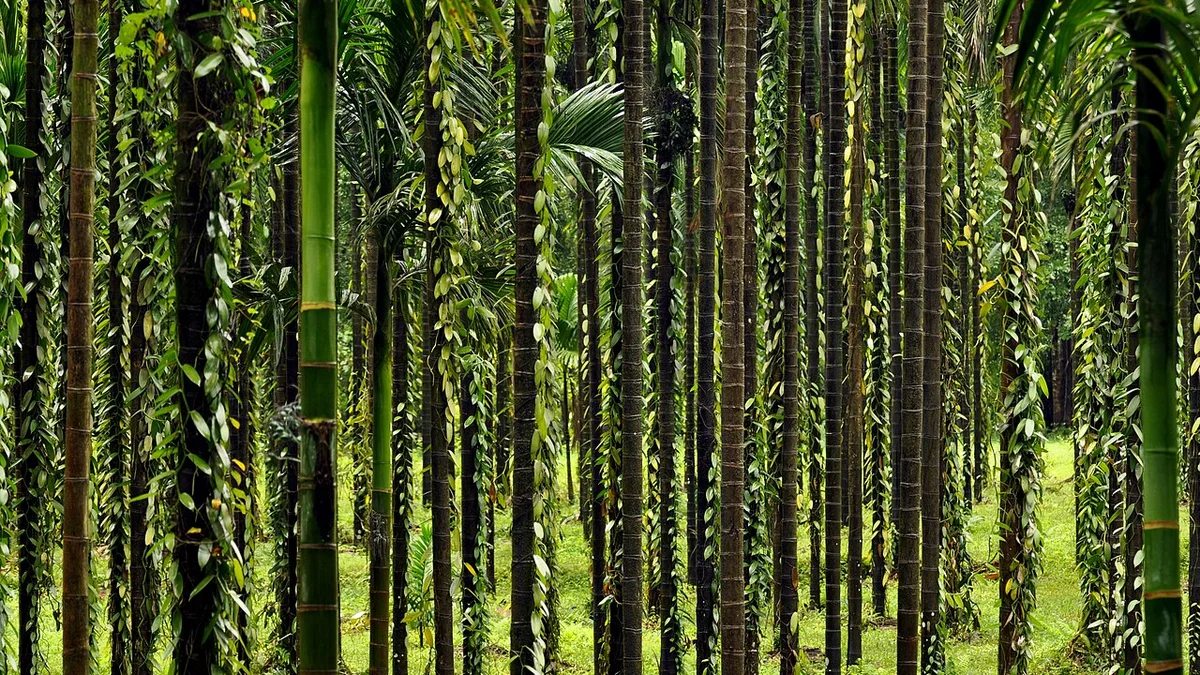
Arecanut (Areca catechu), locally celebrated across Karnataka as Adike (or Supari in Hindi), forms the economic lifeblood of the Malnad, coastal, and central plains (Bayaluseeme) belts. Cultivated across an estimated 5.5 to 6.2 lakh hectares, Karnataka accounts for over 75% of India's total arecanut production. The commodity commands immense commercial significance across confectionery, mouth freshener (mukhwas), traditional social rituals, and pan masala manufacturing industries. Consequently, tracking adike rate today—particularly across premier cooperative trading societies and APMC mandis in Shivamogga, Channagiri, Sirsi, Sagar, Davanagere, and Mangalore—is a matter of critical daily financial interest for lakhs of plantation growers.
Unlike unorganized open grain markets, Karnataka’s arecanut trade is uniquely organized around farmer-owned cooperative marketing federations—including The Central Arecanut and Cocoa Marketing and Processing Co-operative (CAMPCO Portal), The Totgars' Cooperative Sale Society (TSS Sirsi), The Malnad Areca Marketing Co-operative Society (MAMCOS Shivamogga), and TUMCOS at Channagiri. Monitored statewide via the Ministry of Agriculture’s Agmarknet network (Agmarknet Mandi Network) and the Directorate of Cashewnut and Cocoa Development (DCCD Kochi), daily tender auctions establish transparent price benchmarks. This comprehensive market analysis details regional mandi rates, commercial grade classifications (Rashi, Bette, Chali, Gorabalu), cooperative auction mechanisms, import policy protections (MIP), and scientific curing storage protocols.
1. Wholesale Adike Rate Today: Major APMC & Cooperative Mandi Rates
In Karnataka, arecanut is traded per quintal (100 kg) based on processing type—predominantly Red Arecanut (Kempu Adike, prepared by de-husking tender green nuts, boiling in copper cauldrons with Kali extract, and sun drying) in the inland Malnad regions, and White Arecanut (Chali Adike, prepared by sun-drying whole ripe yellow-orange nuts for 40 to 45 days before de-husking) in the coastal districts. Below is an indicative overview of prevailing wholesale modal, minimum, and maximum rates across prominent auction hubs.
| Mandi / Cooperative Society | District / Region | Dominant Grade / Category | Min Rate (₹/Qtl) | Max Rate (₹/Qtl) | Modal Rate (₹/Qtl) | Indicative Rate (₹/kg) |
|---|---|---|---|---|---|---|
| Shivamogga APMC / MAMCOS | Shivamogga (Shimoga) | Rashi Iddu (Premier Boiled Red) | 48,500 | 56,200 | 53,400 | ₹534.00 |
| Shivamogga APMC | Shivamogga | Bette (Flat Red Grade) | 46,000 | 52,800 | 49,500 | ₹495.00 |
| TUMCOS Channagiri | Davanagere | Rashi (Central Plains Red) | 49,000 | 56,800 | 54,200 | ₹542.00 |
| TSS Sirsi | Uttara Kannada | Chali (Sun-Dried White Supari) | 36,500 | 44,200 | 41,800 | ₹418.00 |
| TSS Sirsi | Uttara Kannada | Rashi (Boiled Red Supari) | 47,500 | 55,400 | 52,800 | ₹528.00 |
| Sagar APMC | Shivamogga | Rashi / Gorabalu | 47,000 | 54,900 | 52,100 | ₹521.00 |
| CAMPCO Mangaluru / Puttur | Dakshina Kannada | Chali New (Fresh Season White) | 35,000 | 41,500 | 39,000 | ₹390.00 |
| CAMPCO Mangaluru / Puttur | Dakshina Kannada | Chali Old (Matured Vintage White) | 41,000 | 48,500 | 45,600 | ₹456.00 |
| Chitradurga APMC | Chitradurga | Rashi Red Arecanut | 48,000 | 55,500 | 53,000 | ₹530.00 |
| Tumakuru (Tumkur) APMC | Tumakuru | Rashi / Bette Mixed | 47,500 | 54,800 | 52,400 | ₹524.00 |
| Yellapur APMC | Uttara Kannada | Chali / Gotu Commercial | 34,000 | 42,000 | 38,500 | ₹385.00 |
| Bhadravathi APMC | Shivamogga | Rashi Commercial Grade | 48,000 | 55,100 | 52,700 | ₹527.00 |
Source: Agmarknet (agmarknet.gov.in), MAMCOS Shivamogga, TUMCOS Channagiri, and CAMPCO official daily bulletins (November 2026). Indicative wholesale mandi rates across major Karnataka APMCs. Actual spot auction rates fluctuate daily based on bag moisture, kernel hardness, and North Indian gutkha processing demand.
2. Commercial Arecanut Grading System: Rashi, Bette, Gorabalu & Chali
Arecanut pricing is highly grade-specific. Cured nuts brought by farmers are manually or mechanically sieved and hand-sorted into defined commercial categories:

- Rashi / Rashi Iddu: The primary commercial grade of boiled and sun-dried red arecanut. Consists of mature, well-formed round whole kernels boiled in tannic liquor. Represents over 70% of volume in Shivamogga, Channagiri, and Davanagere auctions, commanding top market prices (₹52,000 to ₹56,000/Qtl).
- Bette: Slightly tender or flat nuts harvested just prior to full maturity. Possesses high tannin content and astringency. Preferred by specialized pan masala blending units and traded at ₹48,000 to ₹53,000/Qtl.
- Gorabalu: Over-mature or slightly hollow nuts harvested from the lower tier of the arecanut bunch. Lighter in density and traded at a 15% to 20% discount to standard Rashi.
- Api / Saraku: Selected whole round nuts boiled with zero surface cracking, boasting deep mahogany-red color and rich glossy luster. Traded as a luxury confectionery masticatory grade.
- Chali (White Arecanut): Made by allowing arecanuts to ripen completely on the palm until yellow-orange, then sun-drying the whole fruit on drying yards (patte) for 40 to 45 days before mechanical de-husking. Divided into "Old Chali" (vintage nuts aged 12-18 months in warehouses, commanding a ₹50-₹70/kg premium due to zero moisture and uniform texture) and "New Chali" (current season harvest).
- Patora & Koka: Lower-tier grades consisting of split, cracked, or shriveled nuts culled out during mechanical sieving. Sold for industrial tannin extraction or low-cost chewing blends.
3. The Cooperative Advantage: TUMCOS, MAMCOS, and CAMPCO Auctions
Karnataka’s arecanut farmers are largely insulated from exploitative private moneylenders due to the formidable presence of farmer-owned cooperatives:
- TUMCOS (Channagiri): The Totgars' Cooperative Sale Society in Channagiri, Davanagere district, operates one of Asia’s largest tender markets for red arecanut. TUMCOS conducts transparent sealed-tender auctions multiple times a week, where registered traders submit electronic bids per lot based on verified sample trays.
- MAMCOS (Shivamogga): Serving the Malnad belt since 1939, MAMCOS provides scientific warehouse receipt financing, allowing farmers to store cured arecanut during harvest slumps and take 75% pledge loans to avoid distress selling.
- CAMPCO (Mangalore): Headquartered in Mangaluru, CAMPCO operates across Karnataka and Kerala. It stabilizes white arecanut (Chali) prices by entering the market as a direct buyer whenever private traders attempt to suppress bids below fair production parity.
- TSS (Sirsi): The Totgars' Cooperative Sale Society in Sirsi serves Uttara Kannada, conducting specialized daily tender auctions for Chali, Api, and Rashi varieties.
4. Key Macroeconomic Drivers Shaping Adike Rate Volatility
Arecanut prices fluctuate dynamically in response to trade policies, disease outbreaks, and industrial consumption trends:
- Minimum Import Price (MIP) Enforcement: To shield domestic growers from cheap foreign dumping (from Indonesia, Myanmar, and Sri Lanka), the Directorate General of Foreign Trade (DGFT) maintains a statutory Minimum Import Price (MIP) of ₹351 per kg on imported arecanuts, supplemented by 100% basic customs duty. Strict border surveillance against illegal overland smuggling via the Myanmar-Mizoram corridor is vital for maintaining domestic mandi price buoyancy.
- Pan Masala and Chewing Demand: The bulk of red arecanut (Rashi) is purchased by large commercial pan masala processing clusters in Kanpur, Varanasi, Lucknow, and New Delhi. Industrial stocking cycles prior to major holiday festivals heavily dictate weekly mandi momentum.
- Fungal Disease Pressures (Koleroga and YLD): Severe southwest monsoon downpours often trigger Phytophthora meadii fruit rot (Koleroga or Mahali) and Yellow Leaf Disease (YLD) across Malnad plantations. Severe outbreaks reduce supply, lifting spot prices sharply for unaffected premium lots.
5. Post-Harvest Processing & Scientific Curing Practices
Proper post-harvest curing directly enhances grade value by ₹3,000 to ₹6,000 per quintal:
- De-Husking: Tender green nuts harvested at 6 to 7 months of development are de-husked using manual curved blades or motorized mechanized de-huskers to extract the raw kernel without bruising.
- Boiling in Kali Extract: Extracted kernels are boiled in wide copper or stainless steel cauldrons for 60 to 90 minutes. The boiling liquor (Kali) is enriched with condensed arecanut tannins from previous batches, imparting the distinctive uniform dark-red coloration.
- Sun Drying to 10% Moisture: Boiled nuts are spread thinly on elevated wire-mesh drying trays or cement patios (patte) for 7 to 10 days of continuous sunlight until internal moisture drops below 10%. Over-drying causes brittle fracturing, while under-drying invites internal fungal mold.
- Warehouse Fumigation: Stored arecanut is susceptible to the cigarette beetle (Lasioderma serricorne) and rice moth (Corcyra cephalonica). Cooperative warehouses utilize controlled aluminum phosphide fumigation to safeguard long-term stored inventory.
7. Market Linkages & Commercial Plantation Commodity Networks
Arecanut cultivators across Karnataka’s Malnad and coastal tracts often manage multi-tier agroforestry plantations alongside black pepper, cardamom, and cocoa. Growers can evaluate broader national market realizations in our dedicated arecanut price today guide, check high-range spice realizations in our cardamom price today tracker, or track commercial dry fruit returns in our cashew nut price guide and cashew retail market guide.
For comprehensive farm-gate income management, compare orchard profitability with our dragon fruit price guide, review local trading centers on our kisan mandi directory, and evaluate concessional credit schemes using our Kisan Credit Card guide. Cultivators deploying inter-cultivation machinery can also explore utility equipment in our mini tractor price list and check small commercial farm logistics via our Mahindra Supro review.
Official regulatory portals consulted for this guide include the Central Arecanut and Cocoa Marketing and Processing Co-operative (CAMPCO), daily APMC auction bulletins on Agmarknet, plantation development programs under the Directorate of Cashewnut and Cocoa Development (DCCD Kochi), and policy standards from the National Horticulture Board (NHB).
Frequently asked questions
- What is the average adike rate today in Shivamogga (Shimoga) APMC?
- The modal wholesale rate for premier Rashi Iddu arecanut in Shivamogga APMC and MAMCOS auctions generally ranges between ₹52,000 and ₹55,000 per quintal (₹520 to ₹550 per kg). Bette grade trades around ₹48,000 to ₹52,000 per quintal, with comprehensive pan-India rates tracked in our arecanut price today guide.
- What is TUMCOS Channagiri and why is its arecanut rate significant?
- TUMCOS (The Totgars' Cooperative Sale Society) in Channagiri, Davanagere district, is one of Asia’s largest tender markets for red arecanut. Its biweekly electronic tender prices serve as a benchmark across all Malnad and central plains arecanut mandis.
- What is the difference between Rashi and Chali arecanut?
- Rashi is red arecanut prepared by harvesting tender green nuts, de-husking, boiling in tannic liquor (Kali), and sun-drying (prevalent in Shivamogga and Davanagere). Chali is white arecanut prepared by drying whole ripe yellow-orange nuts in the sun for 45 days before de-husking.
- Why does Old Chali arecanut command a higher price than New Chali?
- Old Chali has been aged in ventilated warehouses for 12 to 18 months, allowing residual internal moisture to evaporate completely and tannins to mature. Manufacturers prefer Old Chali because it yields superior crispness and consistent cutting with zero weight shrinkage.
- What is the Minimum Import Price (MIP) on arecanut in India?
- The Government of India (DGFT) enforces a statutory Minimum Import Price (MIP) of ₹351 per kg on all imported arecanuts, alongside 100% basic customs duty, to prevent cheap international dumping and protect domestic farmers' livelihoods.
- Where can farmers check daily verified arecanut rates online?
- Farmers can monitor official daily tender rates directly on cooperative websites (campco.org, mamcos.com, tumcos.com), the Karnataka APMC portal, and Agmarknet, alongside our daily updated mandi platforms.
- What is Bette grade arecanut and how is it used?
- Bette consists of slightly flat, immature arecanuts harvested just prior to full kernel hardening. It contains concentrated astringent tannins, making it highly sought-after by specialized pan masala blending manufacturers.
- How does Koleroga (fruit rot) affect arecanut supply and prices?
- Koleroga (caused by Phytophthora meadii) causes premature nut drop during heavy southwest monsoon rains. Severe regional outbreaks reduce marketable yields by 20% to 40%, triggering sharp price spikes in post-monsoon auctions.
- Can farmers pledge stored arecanut for loans at cooperative societies?
- Yes, cooperative societies like MAMCOS, CAMPCO, and TUMCOS offer warehouse pledge loan facilities, disbursing up to 70% to 75% of the stored produce value at low interest rates. For formal agricultural bank financing, see our KCC loan guide.
- What is the ideal moisture percentage for dried arecanut before selling?
- Properly cured arecanut must have an internal moisture content between 9% and 10%. Excess moisture leads to fungal mold growth and price deductions, while under-moisture causes fragile brittle breakage during transit.
- Why are arecanut prices in Karnataka generally higher than in Kerala or Assam?
- Karnataka’s dominance in processed red arecanut (Rashi and Bette) perfectly aligns with industrial pan masala demand from North India. Furthermore, organized cooperative tender auctions (TUMCOS, MAMCOS) eliminate intermediary margins, ensuring higher farm-gate realizations. Compare other plantation produce in our cashew nut price guide.
- What pests attack stored arecanut and how can they be controlled?
- The cigarette beetle (Lasioderma serricorne) and coffee bean weevil are major storage pests. They are controlled by maintaining warehouse hygiene per DCCD guidelines, storing nuts in clean gunny bags on wooden dunnage, and performing controlled fumigation.
This article is for general information only and is not financial advice. Loan and scheme eligibility depends on partner and government criteria.