Dragon Fruit Price: 1 Kg Mandi Bhav & Farming Rates
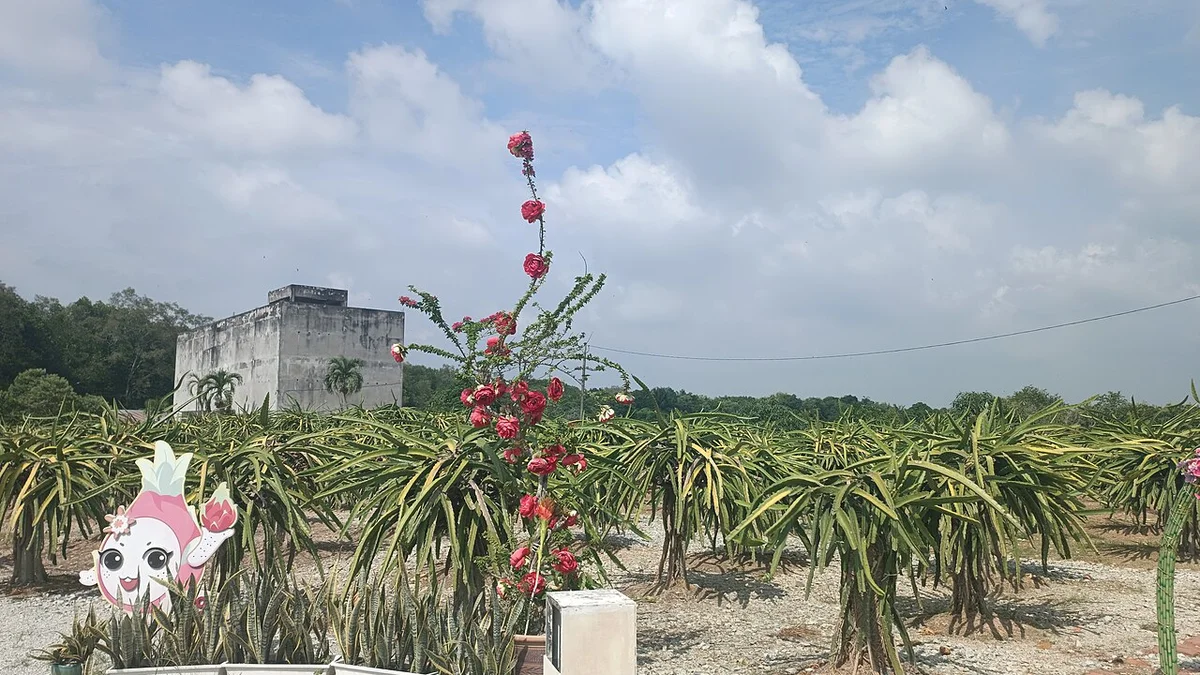
Dragon fruit (Hylocereus species), officially rechristened as Kamalam by the Government of India due to its lotus-like appearance, has transformed from an obscure exotic novelty into one of the country’s most lucrative commercial horticulture crops. Renowned for its vibrant aesthetic appeal, high dietary fiber, rich betalain and antioxidant concentrations, and low glycemic index, dragon fruit enjoys surging consumer demand across metropolitan retail bazaars, high-end supermarkets, hotel chains, and wellness juice bars. Consequently, tracking the dragon fruit price—both at the wholesale farm-gate level and per single kilogram at the retail counter—is vital for commercial orchardists, fruit wholesalers, commission agents, and consumers.
Traditionally dependent on sea-container imports from Vietnam and Thailand, India’s domestic dragon fruit farming footprint has expanded rapidly across Gujarat (particularly the arid tracts of Kutch), Maharashtra (Solapur, Baramati, Sangli), Karnataka, Andhra Pradesh, Tamil Nadu, and West Bengal. Backed by capital subsidies under the Mission for Integrated Development of Horticulture (MIDH Portal) and monitored across wholesale markets by the National Horticulture Board (NHB Portal) and Agmarknet (Agmarknet Market Network), domestic farmers are capturing substantial import substitution profits. This comprehensive price and agronomic report details prevailing wholesale mandi rates, retail per-kilo price spreads, varietal pricing differences, commercial trellis establishment economics, and post-harvest handling.
1. Wholesale Dragon Fruit Price: Regional Mandi & Farm-Gate Rates
In Indian wholesale fruit mandis, dragon fruit is traded in corrugated cartons (typically 10 kg to 12 kg boxes containing 20 to 30 fruits) or directly per kilogram based on weight grade, skin brightness, bract freshness (green scales), and pulp color. Below is an indicative overview of prevailing wholesale modal, minimum, and maximum rates across key wholesale consuming and producing markets.
| State / Market Hub | APMC / Terminal Mandi | Dominant Variety / Origin | Min Rate (₹/kg) | Max Rate (₹/kg) | Modal Rate (₹/kg) | Indicative Box Rate (10kg) |
|---|---|---|---|---|---|---|
| Gujarat | Kutch / Bhuj Farm-Gate | Kamalam Red Pulp (Domestic) | ₹90 | ₹140 | ₹115 | ₹1,150 |
| Gujarat | Ahmedabad APMC (Naroda) | Local Gujarat & MP Arrivals | ₹100 | ₹160 | ₹130 | ₹1,300 |
| Maharashtra | Mumbai (Vashi Fruit Market) | Imported Vietnam & Baramati | ₹120 | ₹190 | ₹155 | ₹1,550 |
| Maharashtra | Pune (Gultekdi APMC) | Solapur & Sangli Red Flesh | ₹105 | ₹165 | ₹135 | ₹1,350 |
| Delhi NCR | Azadpur Fruit Mandi | Vietnam White & Domestic Red | ₹125 | ₹200 | ₹160 | ₹1,600 |
| Karnataka | Bengaluru (Yeshwanthpur) | Kolar & Chikkaballapur Red | ₹110 | ₹175 | ₹140 | ₹1,400 |
| Telangana | Hyderabad (Gaddi Annaram) | Telangana Red & Andhra Local | ₹100 | ₹160 | ₹130 | ₹1,300 |
| Tamil Nadu | Chennai (Koyambedu Mandi) | Tamil Nadu Red & Imported | ₹115 | ₹180 | ₹145 | ₹1,450 |
| West Bengal | Kolkata (Mechua Mandi) | Midnapore Red & Thailand Mix | ₹120 | ₹185 | ₹150 | ₹1,500 |
| Rajasthan | Jaipur (Muhana Mandi) | Alwar & Gujarat Supply | ₹110 | ₹170 | ₹140 | ₹1,400 |
Source: Agmarknet (agmarknet.gov.in), National Horticulture Board (NHB), and terminal APMC fruit market surveys (November 2026). Indicative wholesale spot rates for Grade A & B fruit. Actual rates fluctuate based on seasonal harvest peaks (June to November), fruit size calipers, and arrival volumes.
2. Retail 1 Kg Dragon Fruit Price: Supermarket vs Quick-Commerce
While commercial growers receive between ₹90 and ₹140 per kg at the farm gate, consumers purchasing at retail counters encounter a substantially higher dragon fruit price 1kg, ranging between ₹180 and ₹320 per kg. A single medium-sized dragon fruit (approx. 350 to 450 grams) typically retails for ₹70 to ₹120 per piece.
The retail price differential is shaped by three key channels:
- Local Fruit Stalls & Bazaars (₹160 – ₹220/kg): Street fruit vendors buy directly from APMC terminal markets. Lower overheads allow them to offer competitive prices, though fruits are exposed to ambient temperatures that cause bract dehydration.
- Modern Retail Supermarkets (₹200 – ₹280/kg): Air-conditioned supermarkets (such as Reliance Fresh, Nature’s Basket, Spencer’s) package individual fruits in foam netting. Price markups cover cold chain display, air conditioning, store rents, and shrinkage culling.
- Quick-Commerce & Online Grocery Apps (₹220 – ₹320/kg): Platforms like Blinkit, Zepto, and Instamart sell dragon fruit in branded 1-piece or 2-piece packs (approx. 700g to 900g total weight). Premium pricing accounts for rapid doorstep fulfillment, moisture-locking shrink wrapping, and dark store inventory losses.
3. Commercial Varietal Differences & Price Matrix
Not all dragon fruits command the same market realization. Commercial trade recognizes three primary botanical varieties based on epicarp (skin) and mesocarp (pulp) coloration:

| Botanical Species / Variety | Pulp & Skin Color | Brix Sugar Content | Average Fruit Weight | Wholesale Rate (₹/kg) | Retail Rate (₹/kg) |
|---|---|---|---|---|---|
| Hylocereus polyrhizus (Red Dragon / Kamalam) | Pink/Red skin with deep magenta/ruby red pulp | 14° to 17° Brix (Sweeter, richer flavor) | 350g to 600g | ₹110 – ₹160 | ₹190 – ₹260 |
| Hylocereus undatus (White Dragon Fruit) | Pink/Red skin with snow-white pulp & black seeds | 11° to 13° Brix (Mildly sweet, refreshing) | 300g to 550g | ₹90 – ₹130 | ₹160 – ₹210 |
| Hylocereus megalanthus (Yellow Pitaya) | Bright golden yellow skin with translucent white pulp | 18° to 22° Brix (Extremely sweet, honeyed notes) | 200g to 350g | ₹280 – ₹420 | ₹450 – ₹650 |
In the Indian market, red-fleshed varieties (Hylocereus polyrhizus) command a 15% to 25% premium over white-fleshed ones because domestic consumers perceive the intense crimson betalain pigmentation as more visually attractive, nutrient-dense, and sweeter.
4. Domestic Indian Kamalam vs Imported Vietnamese Dragon Fruit
For over a decade, imported dragon fruit from Vietnam dominated Indian retail shelves. However, Indian-grown Kamalam possesses critical qualitative and economic advantages that are steadily capturing market share:
- Vine-Ripened Freshness: Domestic Indian fruit is harvested at optimal tree-ripeness (30 to 35 days post-flowering) and reaches urban markets within 24 to 48 hours. In contrast, Vietnamese consignments require 12 to 18 days of refrigerated sea freight, necessitating premature harvesting that results in lower natural sugar accumulation.
- Higher Brix Sweetness: Indian red Kamalam consistently measures between 15° and 17° Brix, offering a distinctly superior mouthfeel compared to commercial imported white varieties which often measure below 12° Brix.
- Pricing Competitiveness: Imported fruit incurs international refrigerated maritime shipping, port handling, import duties, and importer distribution margins, keeping its landed wholesale cost above ₹140 to ₹160 per kg. Domestic produce can be profitably marketed by local growers at ₹100 to ₹120 per kg.
- Residue-Free Cultivation: Indian farmers face minimal pest pressures under semi-arid conditions, using significantly fewer chemical sprays compared to humid Southeast Asian monocultures.
5. Dragon Fruit Cultivation Economics & Trellis Setup Costs
Because dragon fruit is a perennial climbing cactus, it requires a sturdy physical support system (trellis) to bear the heavy vegetative canopy over its 20-year productive lifespan. Understanding the establishment expenditure and yield progression explains why growers can achieve excellent net returns:
- Planting Density & Trellis Architecture: A standard commercial acre requires 450 to 500 Reinforced Concrete Cement (RCC) poles spaced at 10x10 feet or 12x8 feet. Each 6.5 to 7.0 foot pole is anchored 1.5 to 2.0 feet into the ground and crowned with a circular RCC ring or discarded rubber tyre on an iron cross-arm. Four rooted branch cuttings are planted around each pole, totaling 1,800 to 2,000 plants per acre.
- Capital Establishment Cost (Year 1): Initial establishment entails ₹3.5 to ₹4.5 lakh per acre, covering RCC poles and top rings (₹1.8 to ₹2.2 lakh), certified high-brix cuttings (₹70,000 to ₹1,00,000 at ₹40-50 per cutting), drip irrigation system (₹35,000 to ₹50,000), land preparation, farmyard manure (FYM), and labor.
- Yield Ramp-Up Timeline: First harvest begins in Year 2 (approx. 1.5 to 2.5 tonnes/acre). Year 3 yields 4.0 to 6.0 tonnes/acre. Full commercial bearing is achieved from Year 4 through Year 15+, delivering steady yields of 8.0 to 10.0 tonnes per acre annually.
- Net Profit Realization: At an average wholesale farm-gate realization of ₹100 per kg and an annual yield of 8 tonnes (8,000 kg), gross revenue reaches ₹8,00,000 per acre. Annual recurring maintenance costs (fertilization, drip fertigation, pruning, harvesting labor) amount to approx. ₹1,20,000 to ₹1,50,000, leaving a net annual profit of ₹6.5 to ₹6.8 lakh per acre.
6. Government Subsidies for Dragon Fruit Under MIDH
To accelerate domestic import substitution and enhance farm incomes in semi-arid zones, the Ministry of Agriculture and Farmers Welfare and State Horticulture Missions offer substantial financial subsidies:
- MIDH Capital Grant: Under the Mission for Integrated Development of Horticulture, commercial dragon fruit cultivation is subsidized at 40% to 50% of recognized normative project costs (up to ₹1,25,000 to ₹1,50,000 per hectare).
- State Horticulture Incentives: Leading horticulture states provide dedicated packages. For instance, the Gujarat Horticulture Mission provides subsidies of up to ₹3,00,000 per hectare in phased installments for trellis installation and planting material.
- Micro-Irrigation Subsidies (PMKSY): Drip irrigation networks essential for precise cactus fertigation are subsidized up to 55% for small and marginal farmers and 45% for general category farmers under the Pradhan Mantri Krishi Sinchayee Yojana.
7. Quality Grading Standards in APMC Mandis
Wholesale buyers categorize dragon fruit into three strict commercial weight classes:
- Grade A (450g to 650g+ per piece): Large, symmetrical fruit with flawless red coloration and intact, upright green scales (bracts). Fetches the highest wholesale premium (₹130 to ₹160/kg) and is purchased by luxury retail brands and export buyers.
- Grade B (300g to 450g per piece): Medium-sized fruit representing the primary commercial volume in domestic retail markets. Traded at ₹100 to ₹130/kg.
- Grade C (Under 300g per piece): Small, misshapen, or cosmetically scarred fruit. Sells at a discount (₹70 to ₹90/kg) for ice cream manufacturing, smoothie bars, and pulp extraction.
8. Horticulture Market Linkages & Value Addition Opportunities
Progressive fruit growers establishing high-density perennial orchards frequently evaluate complementary cash crops and organic soil enrichment inputs. Orchard operators can benchmark profitability against other plantation nuts in our cashew nut price guide, track consumer market rates via our cashew price analysis, or evaluate natural fertilization practices using cow dung organic compost.
For direct farmer-to-buyer sales, discover regional trading clusters through our kisan mandi directory, check daily arrival bhav on our onion rate today tracker, or review labor welfare registrations via the UPLMIS labour portal. Cultivators deploying inter-row tillage and sprayers can review compact machinery in our mini tractor price list and calculate credit requirements using our Kisan Credit Card guide.
Official regulatory portals consulted for this guide include the National Horticulture Board (NHB), horticulture scheme frameworks under the Mission for Integrated Development of Horticulture (MIDH), wholesale commodity transactions on Agmarknet, and technical cultivation manuals published by the Indian Council of Agricultural Research (ICAR).
Frequently asked questions
- What is the average dragon fruit price per kg in Indian wholesale mandis?
- In primary wholesale fruit mandis (such as Vashi, Azadpur, and Naroda), the wholesale dragon fruit price generally fluctuates between ₹100 and ₹160 per kg for Grade A and B commercial red-fleshed fruit, with farm-gate realizations recorded on Agmarknet ranging from ₹90 to ₹140 per kg.
- How much does 1 kg of dragon fruit cost in retail supermarkets and online apps?
- Retail consumers typically pay between ₹180 and ₹300 per kg for fresh dragon fruit. In quick-commerce platforms and supermarkets, a single medium-sized fruit weighing 350 to 450 grams sells for ₹70 to ₹120.
- Why was dragon fruit officially renamed Kamalam in India?
- The Government of India and the Gujarat State Government named it Kamalam (meaning Lotus in Sanskrit) due to the outer fruit's petal-like bracts resembling the national flower lotus, and to distinguish domestically grown produce from foreign branding.
- Which dragon fruit variety is more expensive: red flesh, white flesh, or yellow pitaya?
- Yellow Pitaya (Hylocereus megalanthus) is by far the most expensive, commanding ₹280 to ₹420 per kg wholesale due to exceptional sweetness (18° to 22° Brix) and rarity. Between standard varieties, Red Flesh commands a 15% to 25% premium over White Flesh due to higher demand and richer color.
- How does Indian Kamalam compare with imported Vietnamese dragon fruit?
- Indian Kamalam is tree-ripened and reaches consumers within 24 to 48 hours, delivering superior sweetness (14° to 17° Brix) and fresher green bracts. Vietnamese imports spend 2 to 3 weeks in cold transit, resulting in lower sweetness and accelerated dehydration.
- How much does it cost to set up a 1-acre dragon fruit orchard in India?
- Establishing one acre requires an initial capital expenditure of ₹3.5 to ₹4.5 lakh. This includes 450 to 500 RCC concrete poles with top rings (₹1.8 to ₹2.2 lakh), 1,800 to 2,000 quality cuttings (₹70,000 to ₹1,00,000), drip irrigation (₹40,000), land prep, and labor. Farm finances can be modeled via our KCC loan guide.
- What is the annual yield and profit from one acre of mature dragon fruit plants?
- From Year 4 onwards, a mature orchard produces 8 to 10 tonnes (8,000 to 10,000 kg) per acre annually. At an average farm-gate rate of ₹100/kg, gross revenue reaches ₹8,00,000 to ₹10,00,000, yielding a net profit of ₹6.0 to ₹7.5 lakh after recurring costs.
- What government subsidies are available for dragon fruit cultivation?
- Under the Mission for Integrated Development of Horticulture (MIDH) and NHB guidelines, farmers can receive 40% to 50% capital subsidies (up to ₹1.25 to ₹1.50 lakh per hectare). Compare with plantation schemes in our cashew nut price guide.
- What are the main harvesting months for dragon fruit in India?
- Dragon fruit flowering begins with the onset of the pre-monsoon season in May. Harvesting occurs in multiple flushes (typically 4 to 6 harvest cycles) between June and November each year.
- How long can fresh dragon fruit be stored without spoilage?
- At ambient room temperature (25°C to 30°C), dragon fruit maintains marketable freshness for 4 to 7 days. In cold storage at 7°C to 10°C with 85% to 90% relative humidity, shelf life extends up to 21 to 30 days without quality degradation.
- What weight grades are used for sorting dragon fruit in commercial trade?
- Mandis classify fruits into Grade A (450g to 650g+ per piece), Grade B (300g to 450g per piece), and Grade C (under 300g per piece). Grade A commands the highest prices in premium supermarkets and export consignments.
- Is dragon fruit farming suitable for arid and water-scarce regions?
- Yes, dragon fruit is a drought-tolerant epiphytic cactus with CAM photosynthesis. It requires only 1,500 to 2,000 liters of water per pole annually through drip irrigation, thriving in sandy loam soils where conventional fruit crops struggle. For machinery suitable for narrow orchard rows, explore our mini tractor guide.
This article is for general information only and is not financial advice. Loan and scheme eligibility depends on partner and government criteria.