Cow Dung Fertilizer: FYM, Jeevamrit & Price Guide 2026
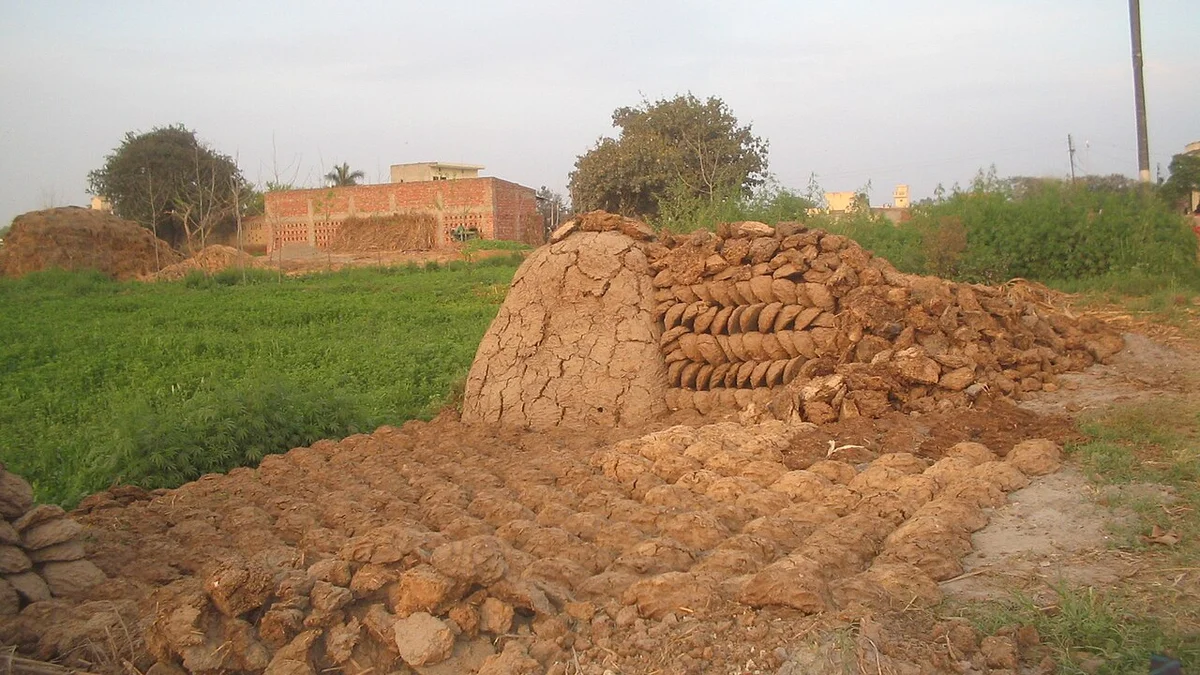
Key takeaways
- Cow dung (gobar) is the foundation of Indian agrarian soil health, supplying essential macronutrients (0.5-1.2% N, 0.5-0.8% P2O5, 0.8-1.4% K2O), vital micronutrients, and 30% organic carbon.
- Raw, unfermented green cow dung should never be applied directly to active standing crops because high ammonia volatilization and exothermic microbial decomposition can burn delicate root systems.
- Aged Farmyard Manure (FYM) decomposed in shaded aerobic compost pits for 90 to 120 days eliminates harmful pathogens and weed seeds, converting raw organic matter into stable humus.
- Traditional desi cow dung serves as the primary microbial inoculant in natural farming bio-formulations including Jeevamrit, Ghanjeevamrit, Beejamrit, and Panchagavya.
- Indicative wholesale prices range from ₹1,800 to ₹2,500 per tractor trolley for fresh dung, ₹2,800 to ₹3,600 per trolley for well-rotted FYM, and ₹320 to ₹420 per 50kg bag for commercial vermicompost as of November 2026.
For thousands of years, cow dung (known across the Hindi heartland as gobar and celebrated in traditional Vedic agriculture as Gomaya) has served as the lifeblood of Indian rural sustainability. Beyond its historic roles as cooking fuel, plastering material, and spiritual offering, cow dung is the most potent and ecologically indispensable organic soil amendment available to farmers. In an era where decades of excessive synthetic chemical fertilization have depleted topsoil organic carbon (SOC) levels across the Indo-Gangetic plains to critical lows below 0.4%, restoring soil fertility through bovine manure has become an urgent national priority.
Whether utilized as traditional pit-cured Farmyard Manure (FYM), transformed into nutrient-dense vermicompost by epigeic earthworms, fermented into billion-microbe liquid Jeevamrit inoculants, or processed in bio-methanation digesters under the central government’s GOBARdhan initiative, bovine waste fuels a circular bio-economy. For farmers seeking clarity on cow dung green versus aged dark compost, researching cow dung fertilizer nutritional ratios, or calculating cow dung manure procurement economics, this authoritative guide provides an end-to-end breakdown of biochemical composition, decomposition methods, field application schedules, retail price benchmarks, and central government subsidies.
Nutritional composition: fresh green cow dung vs aged FYM vs vermicompost
The nutritional value of cow dung varies significantly based on bovine breed (indigenous Bos indicus Zebu cattle vs exotic Bos taurus crossbreeds), feeding regime (concentrate cattle feed vs green roughage/fodder), and processing stage. The table below outlines the analytical composition of bovine manure across three standard forms on a dry matter basis according to ICAR-NDRI standards:
| Nutrient / Parameter | Fresh Green Cow Dung | Well-Decomposed FYM (90+ Days) | Cow Dung Vermicompost |
|---|---|---|---|
| Moisture Content | 75% – 82% | 30% – 40% | 20% – 25% |
| Total Nitrogen (N) | 0.40% – 0.60% | 0.75% – 1.20% | 1.50% – 2.20% |
| Available Phosphorus (P2O5) | 0.20% – 0.35% | 0.50% – 0.85% | 0.90% – 1.40% |
| Available Potassium (K2O) | 0.45% – 0.65% | 0.80% – 1.40% | 1.20% – 1.80% |
| Organic Carbon (SOC) | 18% – 22% | 28% – 35% | 32% – 42% |
| C:N Ratio | 30:1 to 40:1 | 18:1 to 22:1 | 12:1 to 15:1 |
| Microbial Flora Count | Moderate (anaerobic gut flora) | High (aerobic actinomycetes) | Extremely High (beneficial fungi & bacteria) |
Notice how the Carbon-to-Nitrogen (C:N) ratio narrows as cow dung transitions from fresh dung (up to 40:1) to mature vermicompost (12:1). A C:N ratio below 20:1 is critical because it ensures that soil nitrogen is immediately available for crop root uptake rather than being temporarily immobilized by soil microbes decomposing excess cellulose.
Why fresh "cow dung green" must never be applied directly to crops
A frequent error made by novice gardeners and commercial cultivators is spreading fresh, unfermented cow dung green directly around plant stems or tilling it immediately into seedbeds before sowing. Applying raw green dung causes severe agronomic hazards:
- Root Burn & Thermogenic Shock: Fresh cattle dung contains high concentrations of active uric acid, free ammonia, and volatile fatty acids. As microorganisms rapidly decompose fresh proteins, internal pile temperatures spike to 65°C to 70°C, causing lethal heat damage and ammonia scorching to delicate tender seedling roots.
- Nitrogen Immobilization (Robbing): Because fresh dung has a high C:N ratio, indigenous soil bacteria consume all available ambient soil nitrogen to break down tough plant lignin and cellulose, temporarily starving standing crop roots and causing sudden leaf yellowing.
- Viable Weed Seed Infestation: Ruminant digestive tracts do not destroy tough-coated weed seeds (such as Parthenium, Phalaris minor, or Cyperus rotundus) consumed in fodder. Uncomposted green dung distributes millions of viable weed seeds across farm plots.
- Pathogen Proliferation: Fresh manure can harbor enteric coliform bacteria, Salmonella, and fungal pathogens (like Fusarium and Rhizoctonia) that induce seedling damping-off and root rot.
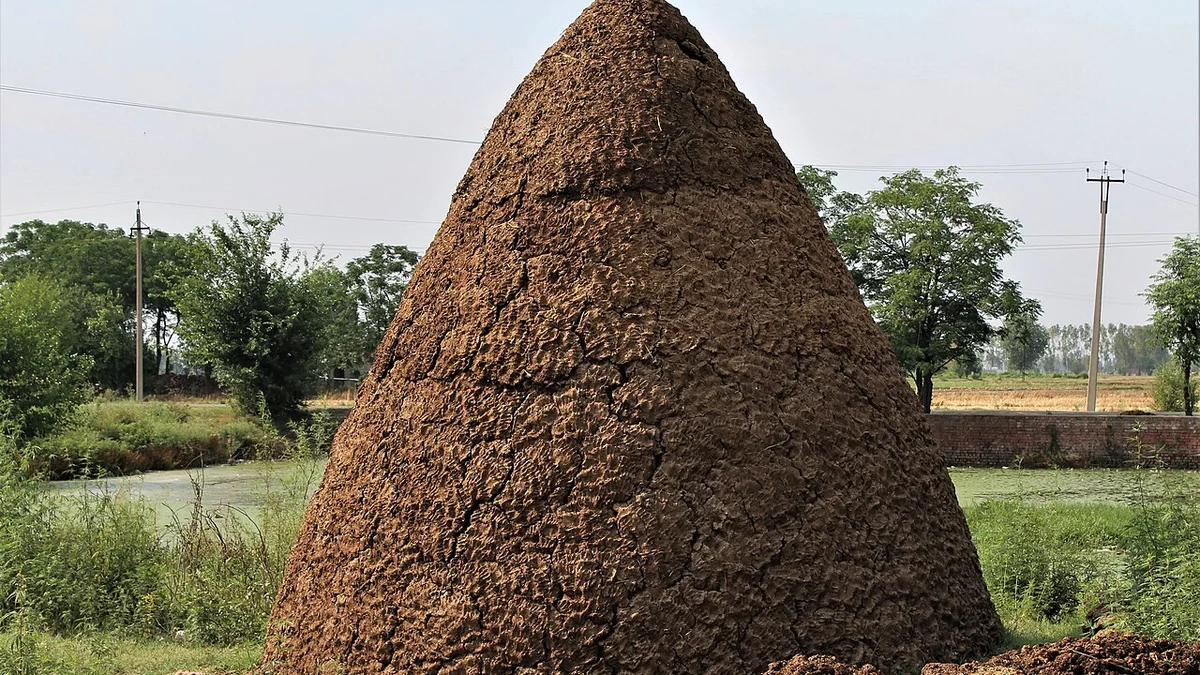
How to prepare superior farmyard manure (FYM) & pit composting
Transforming raw livestock waste into premium Farmyard Manure requires a structured composting process that conserves volatile nitrogen while accelerating aerobic decomposition:
- Compost Pit Dimensions: Dig a shaded trench 1 meter deep, 1.5 to 2 meters wide, and 5 to 6 meters long (varying according to herd size). Ensure the pit is situated on elevated ground to prevent monsoon waterlogging.
- Layering Ratio (Browns to Greens): Deposit daily dung accumulations mixed with livestock urine-soaked bedding straw, dried crop residues, sugarcane bagasse, or dry leaves in alternating 15 cm layers. Cattle urine contains 1.0% to 1.2% nitrogen and 1.5% potassium, making urine conservation essential.
- Microbial Inoculation: Spray a diluted solution of Waste Decomposer (developed by NCONF) or 5 litres of fresh cow milk buttermilk (chaas) over each layer to introduce billions of active cellulolytic fungi.
- Moisture & Aeration: Maintain 50% to 60% moisture content (the pile should feel like a damp, wrung-out sponge without oozing standing water). Turn the compost heap once every 30 days to introduce fresh oxygen, dissipate excessive heat, and ensure uniform decomposition.
- Maturity Signs: Within 90 to 120 days, the dung transforms into dark brown to pitch-black, crumbly humus with a pleasant earthy forest smell and zero offensive odor. It is now fully stabilized and safe for immediate field application.
Bio-formulations: Jeevamrit, Beejamrit & Panchagavya preparation
In Zero Budget Natural Farming (ZBNF) and Subhash Palekar Natural Farming (SPNF), cow dung is celebrated not merely as a bulk fertilizer, but as a biological catalyst. Dung from indigenous Indian humped cows (Bos indicus breeds like Gir, Sahiwal, Tharparkar, or Rathi) harbors exceptionally dense populations of beneficial gut microflora:
- Jeevamrit (Liquid Fermented Bio-fertilizer): Mix 10 kg of fresh desi cow dung, 10 litres of fresh cow urine (gomutra), 2 kg of organic jaggery (gur), 2 kg of pulse flour (besan/gram flour), and a handful of virgin forest soil in 200 litres of water. Stir clockwise twice daily for 48 to 72 hours under shade. Apply through flood irrigation, drip fertigation, or foliar spray at 200 litres per acre once every 21 days.
- Ghanjeevamrit (Solid Storage Formulation): Blend 100 kg of well-dried desi cow dung powder with 5 litres of cow urine, 2 kg jaggery, 2 kg besan, and virgin soil. Dry in shade for 7 days. Apply at 100 to 200 kg per acre as basal soil placement during land preparation.
- Beejamrit (Seed Treatment Inoculant): Mix 5 kg of desi cow dung, 5 litres of cow urine, 50 grams of slaked lime (chuna), and a handful of soil in 20 litres of water. Soak seeds for 10-15 minutes before sowing to shield against soil-borne pathogens and enhance germination vigor.
Cow dung market price list (Indicative ranges, November 2026)
Driven by booming urban terrace gardening, organic horticulture, and commercial bio-CNG bottling plants under the SATAT initiative, bovine manure commands substantial commercial value across rural and peri-urban markets as of November 2026:
| Commodity / Product Format | Packaging / Quantity Specification | Indicative Market Price Range (₹) | Primary End-Use / Trade Sector |
|---|---|---|---|
| Fresh Cow Dung (Bulk Farm-Gate) | Standard tractor trolley (2.5 – 3.0 Tonnes) | ₹1,800 – ₹2,500 | Bio-gas digesters, large field basal dressing |
| Aged Decomposed FYM (Compost) | Standard tractor trolley (2.5 – 3.0 Tonnes) | ₹2,800 – ₹3,600 | Commercial horticulture, orchard basal dressing |
| Commercial Vermicompost | Heavy HDPE woven bag (50 Kilograms) | ₹320 – ₹420 | Vegetable nurseries, polyhouse greenhouses |
| Pure Cow Dung Dry Cakes (Upla/Kanda) | Corrugated carton pack (100 Pieces) | ₹350 – ₹500 | Urban retail, traditional havan ceremonies |
| Fermented Organic Manure (FOM) | Pelletized or bulk powder (50kg Bag) | ₹250 – ₹320 | By-product of commercial CBG bio-gas plants |
| Refined Desi Cow Gomutra (Ark) | Distilled food-grade bottle (1 Litre) | ₹80 – ₹130 | Organic bio-pesticide mixing & Ayurvedic use |
Source: Indicative ranges, November 2026. Sourced from wholesale livestock dairy cooperative unions, registered gaushalas, and regional organic farmer producer organizations (FPOs). Prices vary based on transportation hauling radius, moisture percentage, and screened compost purity.
Government schemes: GOBARdhan, SATAT & bio-gas subsidies
To capitalize on India’s estimated 300 million bovine population generating over 3 million tonnes of manure daily, the Government of India has instituted major financial subsidy programs:
- GOBARdhan Scheme (Galvanizing Organic Bio-Agro Resources Dhan): Administered by the Department of Drinking Water and Sanitation (Ministry of Jal Shakti), this scheme provides financial assistance up to ₹50 Lakh per district to Gram Panchayats and self-help groups (SHGs) to establish community bio-gas and bio-slurry processing plants.
- SATAT Initiative (Sustainable Alternative Towards Affordable Transportation): Led by the Ministry of Petroleum and Natural Gas, SATAT supports entrepreneurs establishing commercial Compressed Bio-Gas (CBG) plants using cow dung and agricultural residue, offering guaranteed PSU oil company off-take agreements at fixed rates of ₹46 to ₹54 per kg of purified CBG.
- Market Development Assistance (MDA) for FOM: Under the PM PRANAM umbrella, the central government grants ₹1,500 per metric tonne of Fermented Organic Manure (FOM) produced by biogas facilities to promote rural organic fertilizer adoption and reduce chemical urea dependency.
For comprehensive guidance on indigenous cattle breeds and dairy farm economics, explore our detailed profile of the gir cow.
Explore related livestock, fertilizer & farm machinery resources
Enhance your agricultural knowledge with our in-depth guides on farm implements, fertilizers, and live wholesale market prices across KisanPe:
- Gir Cow Price, Milk Yield, A2 Beta-Casein & Dairy Economics Guide
- DAP Fertilizer Price, Subsidy Rates & Balanced Soil Application Guide
- Rotavator Price, Tractor PTO Compatibility & Field Tillage Guide
- Paddy Cultivation, MSP Rates & Agronomic Management Guide
- Cotton Market Rate Today: Mandi Bhav, Kapas Prices & Quality Grading
- Mini Tractor Price List 2026: 15 HP to 30 HP Models & Subsidies
- Mahindra Tractor Price List: Yuvo, 475 DI Specs & Financing Guide
- Sonalika Tractor Price List: 45 HP to 50 HP Models & Subsidy Guide
- Saaf Fungicide: Carbendazim Mancozeb Dose & Price Guide
- Cardamom Price: Idukki Auction & Grade Rate Guide
- Onion Price Today: Wholesale Lasalgaon Mandi Bhav & Retail Trends
- Kisan App: Digital Mandi Rates, Weather Alerts & Farmer Schemes
Official regulatory portals and agricultural research institutes consulted for this guide:
Frequently asked questions
- What is the nutritional value of cow dung as a fertilizer?
- On a dry matter basis, well-decomposed cow dung farmyard manure (FYM) contains 0.75% to 1.20% Nitrogen (N), 0.50% to 0.85% Phosphorus (P2O5), 0.80% to 1.40% Potassium (K2O), and 28% to 35% Organic Carbon, alongside vital micronutrients like zinc, iron, and manganese, providing sustainable fertility comparable to mineral programs analyzed in our DAP fertilizer guide.
- Why should fresh green cow dung not be used directly in soil?
- Fresh green cow dung contains active uric acid and volatile ammonia that cause chemical root burn. Its high C:N ratio causes temporary nitrogen immobilization, while high decomposition heat (up to 70°C) and viable weed seeds can severely damage standing crops.
- How long does it take for cow dung to decompose into mature manure?
- Under standard aerobic pit composting with monthly turning and 50% moisture maintenance, cow dung decomposes into stabilized, pathogen-free Farmyard Manure (FYM) in 90 to 120 days. Vermicomposting accelerates this to 60 to 75 days.
- What is the price of a tractor trolley of cow dung in India in 2026?
- As of November 2026, indicative farm-gate prices for a standard tractor trolley (2.5 to 3.0 tonnes) range from ₹1,800 to ₹2,500 for fresh cow dung and ₹2,800 to ₹3,600 for aged, well-rotted FYM, depending on transportation distance, which can be hauled efficiently using equipment featured in our mini tractor price guide.
- How much cow dung manure should be applied per acre of crop land?
- For field crops (such as paddy, wheat, and maize; see our paddy agronomy guide), apply 4 to 6 tonnes (roughly 2 tractor trolleys) of well-rotted FYM per acre. For intensive horticulture (vegetables, bananas, and orchards), apply 8 to 10 tonnes per acre during summer land preparation.
- How is liquid Jeevamrit prepared from cow dung?
- Mix 10 kg fresh desi cow dung, 10 litres cow urine, 2 kg jaggery, 2 kg gram flour (besan), and a handful of fertile soil into 200 litres of water. Stir twice daily for 48 to 72 hours under shade. Apply through irrigation or as a foliar spray at 200L/acre.
- Is dung from indigenous (desi) cows better than hybrid cow dung?
- Indigenous humped cattle (Bos indicus) possess higher microbial diversity in their rumens, providing superior biological inoculants for natural farming formulations like Jeevamrit and Beejamrit, though both provide excellent organic carbon and macronutrients, with breed-specific milk and manure economics detailed in our Gir cow guide.
- What is the GOBARdhan scheme and what subsidy is offered?
- The GOBARdhan scheme is a central initiative under the Ministry of Jal Shakti offering financial assistance up to ₹50 Lakh per district to establish community bio-gas and fermented manure processing units that convert cow dung and agro-waste into clean energy and bio-fertilizer.
- How does cow dung compare to chemical fertilizers like Urea and DAP?
- While synthetic fertilizers provide concentrated single nutrients (like 46% N in Urea or 46% P in DAP), cow dung provides balanced NPK, essential secondary nutrients, beneficial soil microbes, and critical organic carbon that enhances soil water retention and prevents soil compaction, working effectively when incorporated with implements profiled in our rotavator guide.
- Can cow dung be used to make vermicompost?
- Yes, semi-decomposed cow dung (aged 15 to 20 days to dissipate initial heat) is the ideal substrate for epigeic earthworms like Eisenia fetida, producing premium vermicompost with twice the available nutrient concentration of raw dung in 60 to 75 days.
- What are the benefits of applying cow dung manure before sowing?
- Applying decomposed cow dung 3 to 4 weeks before sowing improves soil aeration, enhances microbial biomass, balances soil pH, increases moisture retention during dry spells, and promotes deep, vigorous root colonization in emerging seedlings.
- Where can farmers sell surplus cow dung commercially?
- Farmers can sell surplus cow dung to commercial bio-gas and Compressed Bio-Gas (CBG) plants operating under the SATAT scheme, regional vermicompost producers, commercial fruit orchards, and urban nursery aggregators.
This article is for general information only and is not financial advice. Loan and scheme eligibility depends on partner and government criteria.