Cotton Market Rate Today: Mandi Bhav, MSP & Kapas Guide
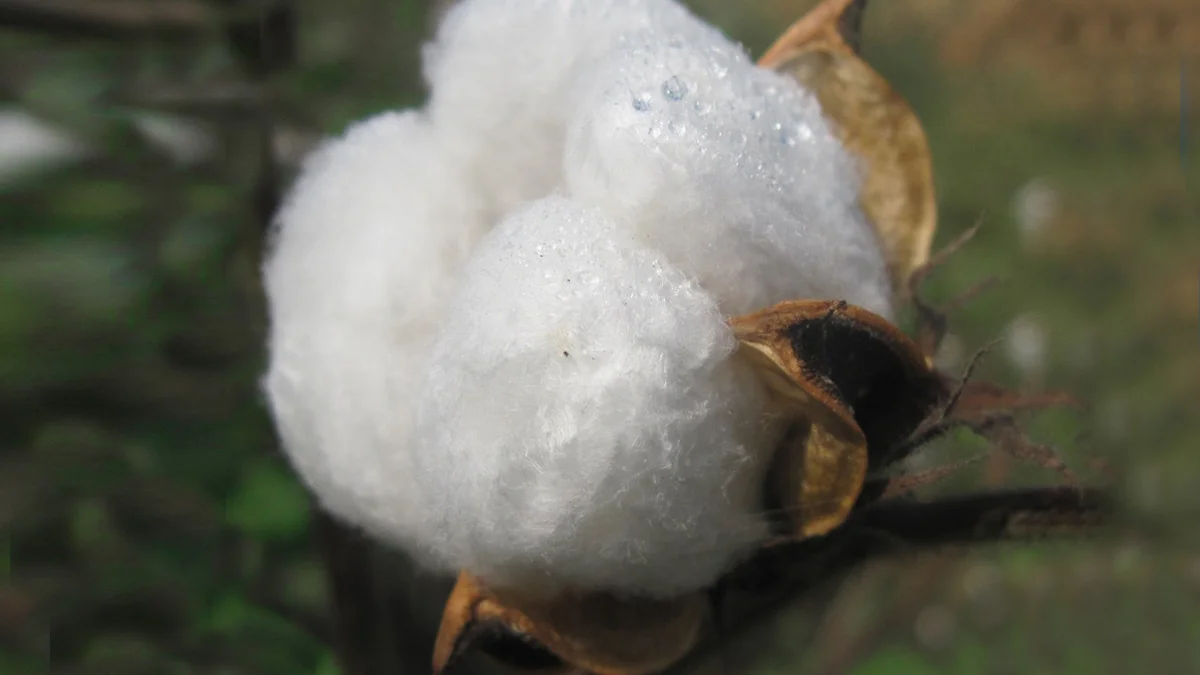
Key takeaways
- Benchmark cotton market rate today for standard Shankar-6 and long-staple raw kapas ranges between ₹7,150 and ₹7,850 per quintal across primary APMC mandis in Gujarat, Maharashtra, and Telangana.
- The Government of India's official Minimum Support Price (MSP) stands at ₹7,521 per quintal for Medium Staple cotton (24.5mm to 25.5mm) and ₹8,080 per quintal for Long Staple cotton (29.5mm to 30.5mm).
- The Cotton Corporation of India (CCI) operates over 450 direct MSP procurement centers across 11 producing states, intervening whenever spot mandi auction rates drop below the government benchmark floor.
- Under standardized ginning outturn ratios, every 100 kg of raw seed cotton (kapas) yields approximately 34 to 36 kg of clean ginned lint cotton and 62 to 64 kg of high-protein cottonseed (binola).
- Moisture content is the primary price determinant at mandis: lots dried to 8% moisture fetch full bid value, whereas moisture between 9% and 12% incurs statutory proportional price deductions.
Understanding the prevailing cotton market rate today is critical for over six million Indian cotton farmers, ginning millers, spinning textile enterprises, and commodity market participants. Cotton (Gossypium hirsutum and Gossypium arboreum), revered throughout the subcontinent as "White Gold" (Safed Sona), represents India's premier commercial fiber crop. Cultivated across nearly 12.5 million hectares spanning the northern, central, and southern agrarian zones, cotton anchors India's trillion-rupee domestic textile manufacturing and garment export economy.
The commercial pricing structure for cotton operates across two distinct physical stages: the primary mandi auction market for raw un-ginned seed cotton (popularly called "kapas" or "phutti"), and the processed wholesale market for compressed ginned lint cotton bales (traded in 170 kg bales or 356 kg commercial candies). While kapas rate today at the farmgate is influenced by local APMC arrivals, moisture levels, and trash content, processed lint prices track international benchmarks like the New York ICE Cotton Futures and domestic Multi Commodity Exchange (MCX) contracts.
In this comprehensive cotton market intelligence report, KisanPe delivers granular mandi rate benchmarks across major agricultural trading hubs in Gujarat, Maharashtra, Telangana, Andhra Pradesh, Madhya Pradesh, and the northern canal belts. We also break down official MSP procurement operations by the Cotton Corporation of India (CCI), quality appraisal parameters, ginning outturn economics, and practical harvest management tips to maximize realization per quintal.
Indicative Cotton Mandi Rates Across Major Producing States
Physical spot trading of raw seed cotton (kapas) occurs daily in authorized APMC assembly yards across the primary cotton-producing states. Mandi prices vary according to botanical variety (Shankar-6, Bunny, Brahma, RCH-2), staple length (medium versus extra-long staple), ginning lint outturn, moisture percentage, and cleanliness. The table below outlines prevailing indicative wholesale benchmark price ranges per quintal across key agricultural mandis:
| Producing State & District | Primary APMC Mandi Hub | Dominant Variety Handled | Staple Class & Length | Indicative Modal Price (₹/Quintal) |
|---|---|---|---|---|
| Gujarat (Rajkot) | Rajkot APMC | Shankar-6 (Hybrid) | Long Staple (28 – 29 mm) | ₹7,250 – ₹7,780 |
| Gujarat (Mehsana) | Kadi APMC | Shankar-6 / BT Cotton | Medium-Long (27 – 29 mm) | ₹7,200 – ₹7,720 |
| Gujarat (Amreli) | Amreli APMC | Shankar-6 Premium | Long Staple (29 – 30 mm) | ₹7,300 – ₹7,820 |
| Maharashtra (Yavatmal) | Yavatmal APMC | Bunny / RCH-2 (Vidarbha) | Long Staple (28 – 29.5 mm) | ₹7,050 – ₹7,580 |
| Maharashtra (Jalgaon) | Jalgaon / Bodwad APMC | Khandesh Local Hybrid | Medium Staple (26 – 28 mm) | ₹6,950 – ₹7,480 |
| Maharashtra (Akola) | Akola APMC | Desi & BT Hybrid | Medium-Long (27 – 29 mm) | ₹7,020 – ₹7,540 |
| Telangana (Warangal) | Warangal (Enumamula) | Brahma / Kaveri Hybrid | Long Staple (29 – 30 mm) | ₹7,150 – ₹7,650 |
| Telangana (Adilabad) | Adilabad APMC | Adilabad Long Staple | Long Staple (29 – 30.5 mm) | ₹7,100 – ₹7,620 |
| Andhra Pradesh (Kurnool) | Adoni APMC | Jayadhar / Long Hybrid | Long Staple (28 – 29 mm) | ₹7,080 – ₹7,590 |
| Madhya Pradesh (Khargone) | Khargone APMC | Nimar White Cotton | Long Staple (28.5 – 30 mm) | ₹7,120 – ₹7,640 |
| Punjab & Haryana | Abohar / Sirsa APMC | J-34 / Desi Hybrid | Medium Staple (24.5 – 26 mm) | ₹6,880 – ₹7,380 |
| Rajasthan (Sri Ganganagar) | Sri Ganganagar APMC | Canal Belt J-34 | Medium Staple (25 – 27 mm) | ₹6,920 – ₹7,420 |
Mandi prices in Gujarat's Saurashtra belt (Rajkot, Amreli, Gondal) consistently maintain a ₹150 to ₹250 per quintal premium over central Indian assembly points. Saurashtra hosts the highest density of modern double-roller ginning mills and export-oriented spinning units, creating intense competitive bidding among institutional buyers, export houses, and local ginners.
Minimum Support Price (MSP) & Government Safety-Net Benchmarks
The Government of India notifies the Minimum Support Price (MSP) for raw cotton annually prior to the Kharif sowing season, based on empirical cost-of-cultivation recommendations from the Commission for Agricultural Costs and Prices (CACP). The MSP provides a statutory price safety net ensuring farmers earn a minimum return of at least 50% over their comprehensive all-India weighted average cost of production (A2 + FL formula).
For the marketing season, the Government of India has fixed the following MSP rates for Fair Average Quality (FAQ) raw seed cotton:
| Cotton Classification | Staple Length Specification | Basic Fiber Parameters | Official MSP Rate (₹/Quintal) | Absolute Annual Increase (₹) |
|---|---|---|---|---|
| Medium Staple Cotton | 24.5 mm to 25.5 mm | Micronaire: 3.5 – 4.9 | Strength: 22 – 24 g/tex | ₹7,521 | + ₹501 / quintal |
| Long Staple Cotton | 29.5 mm to 30.5 mm | Micronaire: 3.7 – 4.5 | Strength: 28 – 30 g/tex | ₹8,080 | + ₹501 / quintal |
Whenever private trade cartels depress open mandi auction prices below these benchmark rates, the Cotton Corporation of India (CCI), acting as the central nodal agency under the Ministry of Textiles, steps in to execute price support operations without quantity restrictions.
How Cotton Corporation of India (CCI) Conducts MSP Procurement
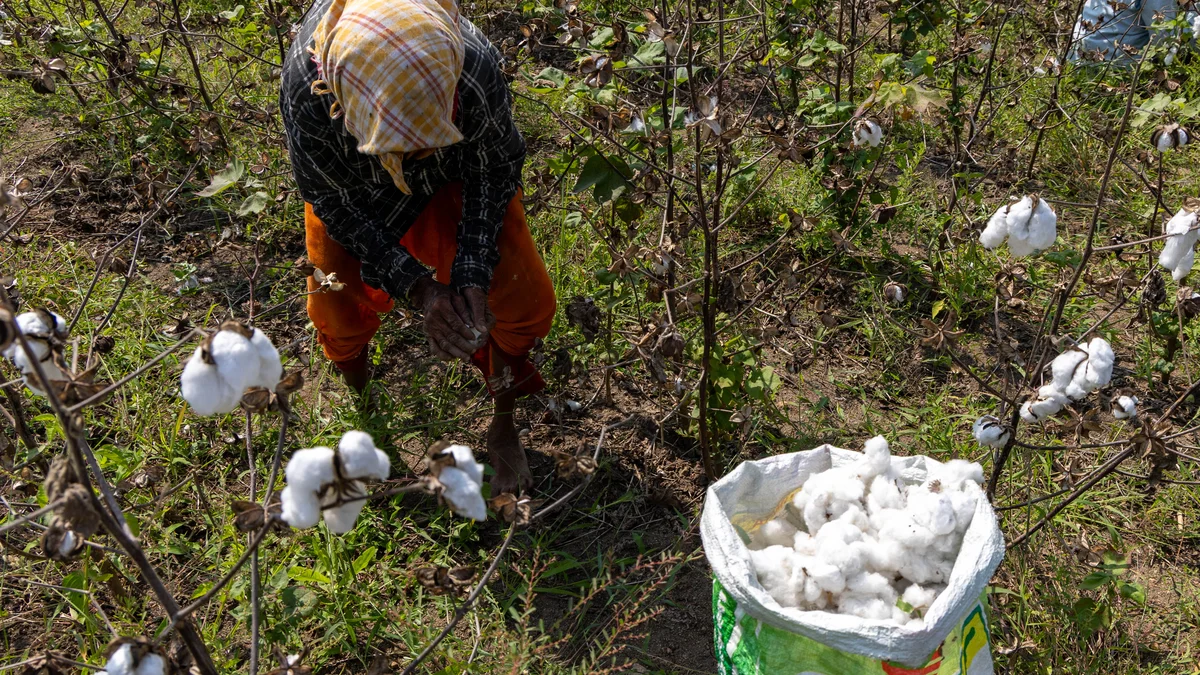
The Cotton Corporation of India (CCI) maintains over 450 operational procurement centers across 11 cotton-growing states. CCI procures directly from registered farmers through dedicated APMC auction platforms and cooperative ginning societies, transferring sale proceeds directly to farmers' Aadhaar-linked bank accounts via Direct Benefit Transfer (DBT) within 72 hours of purchase.
To sell kapas under the CCI MSP scheme, farmers must meet several standardized operational requirements:
1. Mandatory Digital Farmer Registration: Farmers must be registered on the state agriculture portal (such as e-NAM, MahaDBT in Maharashtra, or Rythu Bandhu in Telangana) with verified land ownership records (7/12, Khasra, Khatauni) confirming cotton acreage.
2. Moisture Standards & Deduction Slabs: Moisture content is the single most critical quality parameter evaluated at CCI procurement centers using calibrated digital moisture meters. The Fair Average Quality (FAQ) baseline moisture level is strictly 8.0%. The table below details the official CCI price adjustment slabs based on moisture testing:
| Moisture Level in Kapas (%) | Procurement Status & Action | Statutory Price Deduction | Effective Realization on Long Staple MSP (₹/Q) |
|---|---|---|---|
| Up to 8.0% (FAQ Norm) | Accepted at Full MSP Price | Zero Deduction (100% Rate) | ₹8,080 (Full MSP) |
| Above 8.0% to 9.0% | Accepted with Proportional Deduction | 1.0% deduction on base MSP | ₹7,999.20 |
| Above 9.0% to 10.0% | Accepted with Proportional Deduction | 2.0% deduction on base MSP | ₹7,918.40 |
| Above 10.0% to 11.0% | Accepted with Proportional Deduction | 3.0% deduction on base MSP | ₹7,837.60 |
| Above 11.0% to 12.0% | Accepted with Proportional Deduction | 4.0% deduction on base MSP | ₹7,756.80 |
| Above 12.0% | Strictly Rejected by CCI | Not accepted under MSP norms | Re-drying required before re-offering |
Cotton brought to mandis with excessive moisture above 12% is rejected by CCI quality inspectors because high internal moisture causes spontaneous combustion, fungal rotting, and yellowish fiber staining during warehouse bale storage. Farmers are strongly urged to sun-dry freshly harvested kapas on clean tarpaulins for 1 to 2 days prior to mandi transport.
Kapas to Bales: The Industrial Ginning Conversion Equation
Understanding how millers evaluate kapas price requires understanding the mechanical ginning conversion equation. Raw kapas harvested from fields consists of two distinct components: pure cellulose lint fiber tightly attached to hard oil-bearing seeds (cottonseed / binola). The primary role of ginning mills is to mechanically sever lint from seed without snapping delicate fiber strands.
Under standard industrial ginning conditions in India, every 100 kg of FAQ raw seed cotton yields:
• 34 to 36 kg of Clean Lint (34% to 36% Ginning Outturn / Linting Percentage)
• 62 to 64 kg of Cottonseed (Binola) used for vegetable oil extraction and cattle feed cake
• 2 to 3 kg of Trash and Invisible Moisture Loss (dirt, dry bract leaves, sand, broken stems)
| Commercial Component | Physical Outturn (per 100 kg Kapas) | Wholesale Value Realization (₹) | Contribution to Gross Processor Revenue (%) |
|---|---|---|---|
| Ginned Cotton Lint (Compressed into Bales) | 35.0 kg lint (@ ₹165/kg lint) | ₹5,775.00 | 72.6% |
| Cottonseed / Binola (For Oil & Cattle Khal) | 63.0 kg seed (@ ₹34/kg cottonseed) | ₹2,142.00 | 26.9% |
| Trash & Invisible Moisture Loss | 2.0 kg waste (Zero value) | ₹0.00 | 0.5% |
| Gross Revenue Realization per 100 kg Kapas | 100.0 kg raw input | ₹7,917.00 | 100.0% |
| Less: Ginning, Pressing & Labor Cost | Per quintal processing fee | (- ₹420.00) | - |
| Net Processor Parity Value per Quintal Kapas | Break-even procurement ceiling | ₹7,497.00 | - |
This equation explains why cottonseed (binola) market rates exert a massive influence on raw kapas pricing. When edible washed cottonseed oil rates rise, cottonseed prices climb from ₹3,000 to ₹3,800 per quintal, enabling ginners to bid higher prices for raw kapas even if global lint demand remains sluggish.
Key Quality Parameters That Determine Your Cotton Price at Mandis
Commercial buyers and ginning lab technicians assess five critical physical properties of cotton lint to determine whether a farmer's lot deserves a top-tier premium or a discount:
1. Staple Length (2.5% Span Length): Measures average fiber length in millimeters. Longer fibers (29mm to 32mm) enable spinning mills to produce fine, high-count yarns (40s, 60s, and 80s counts) used for luxury apparel, commanding the highest market prices. Medium staple (24mm to 27mm) is spun into coarse yarns (20s to 30s counts) for denim and bed linen.
2. Micronaire Value (Fiber Fineness & Maturity): Measured by airflow through a fiber plug, optimal commercial micronaire ranges strictly between 3.5 and 4.9. Immature cotton with micronaire below 3.5 forms neps (tiny entangled knots) that resist dyeing, resulting in white specks on finished dyed fabrics and leading to severe price dockages.
3. Fiber Bundle Strength (Tenacity in g/tex): High-speed modern air-jet spinning looms require fiber strength of 28 to 32 grams per tex. Fibers below 25 g/tex rupture during twisting, causing spinning machinery downtime.
4. Trash Content (% by weight): The percentage of extraneous plant debris, leaf fragments, and soil particles. FAQ norms mandate trash below 3.0%. Lots harvested haphazardly with sticks and burrs exceeding 5% trash are heavily discounted.
5. Color Grade & Reflectance (Rd and +b): Clean ivory-white cotton with high reflectance (Rd > 75) indicates fresh, rain-free picking. Cotton exposed to unseasonal post-monsoon rains turns grayish or dull yellow (+b > 11), demoting it to spotted or tinged grades.
Global Factors Influencing Indian Cotton Prices
While domestic MSP sets a psychological floor price in India, commercial cotton prices are tightly integrated with global macroeconomic developments. Several major international forces dictate price trajectory throughout the marketing year:
• US ICE Cotton Futures: The Intercontinental Exchange (ICE) Cotton No. 2 contract in New York is the worldwide price discovery benchmark. Indian lint prices typically trade at an import parity band relative to ICE futures, influenced by currency exchange rates (USD/INR).
• Sowing & Crop Yields in Major Exporting Nations: Production estimates in the United States (Texas, Mississippi delta), Brazil (Mato Grosso), and Australia directly determine global export supply. When drought impacts West Texas cotton crops, global prices rally, spurring aggressive export demand for Indian Shankar-6 bales.
• Demand from Asian Textile Mills: Bangladesh, Vietnam, Indonesia, and China are the primary export destinations for Indian raw cotton bales. Bangladesh's garment manufacturing industry depends heavily on Indian cotton due to short land-route transit times via Petrapole and Gede border crossings.
• Domestic Yarn Spinning Mill Utilization: Indian spinning mills consume approximately 300 to 320 lakh bales (170 kg each) annually. When yarn demand from garment export hubs in Tirupur (Tamil Nadu), Surat (Gujarat), and Ludhiana (Punjab) softens, mills reduce fiber inventories, dampening spot mandi bids.
Farmer Advisory: Best Practices to Secure Top Mandi Bhav
Cotton farmers can significantly increase their net revenue per quintal by implementing rigorous harvesting and post-harvest management protocols:
• Timely Morning Picking: Begin picking cotton only after morning dew has completely evaporated from crop canopies (typically after 10:00 AM). Harvesting damp cotton introduces mold, causes fiber discoloration, and leads to immediate mandi moisture deductions.
• Separate Clean First Pickings: The first and second picking rounds produce the longest, cleanest, and highest-micronaire bolls. Never mix high-grade first pickings with late third or fourth pickings that contain immature, pest-damaged, or stained fibers from pink bollworm infestation.
• Clean Cloth Collection Bags: Use 100% cotton cloth aprons or clean jute sheets during field picking. Strictly avoid polypropylene (plastic) fertilizer bags or nylon cords, as synthetic plastic fibers contaminate cotton and are impossible to remove during spinning, ruining entire yarn export batches.
• Mandatory Sun-Drying: Spread harvested kapas in a 5 cm thin layer on clean plastic tarpaulins or concrete threshing floors under direct sunlight for 1 to 2 days until moisture drops below 8%. Use a portable moisture tester before transporting to the mandi.
• Track Daily Mandi Bhav on KisanPe: Compare real-time modal prices across neighboring APMC mandis. If local private traders offer rates below MSP, transport your produce directly to the nearest CCI procurement yard with verified portal registration documents.
Explore Agricultural Tools, Mandi Rates & Farmer Services
Empower your crop marketing and farm business decisions with KisanPe's verified agricultural calculators, live commodity trackers, and crop advisory resources:
- Cotton Farmers Pest Management & Yield Guide
- Maharashtra Cotton Farmers Hub & APMCs
- Commodity Mandi Rates Today
- Mandi Price Trends & Historic Analytics
- Mandi Price Watch & Arrival Tracking
- Best Mandi Near Me Locator
- Crop Income & Profit Calculator
- Crop Seasonal Calendar & Sowing Windows
- Crop Nutrition & Balanced Fertilization
- Crop Protection & Integrated Pest Management
- Fertilizer Application & Bag Calculator
- Soil Health Card & Soil Testing Guide
- Agricultural Subsidy Directory & Schemes
- Kisan Credit Card (KCC) Application & Limits
- KCC Interest Subvention Calculator
- Farmer Producer Organization (FPO) Solutions
- One District One Product (ODOP) Directory
- Krishi Vigyan Kendra (KVK) Locator
- Tractors Directory & Brand Price Comparison
- Farm Equipment & Custom Hiring Centers
- Maharashtra Agriculture & Mandi Bhav
- Gujarat Krishi Mandi Rates & APMCs
- Karnataka Agricultural Mandis & Crops
- Punjab Agriculture & Canal Mandis
- Madhya Pradesh Mandi Bhav & Crops
- Soybean Farmers Crop Management
- Wheat Farmers Sowing & MSP Guide
- Rice & Paddy Procurement MSP Guide
- DAP Fertilizer Price & Bag Subsidy
- Mentha Oil Rate Today & Mandi Trading
- Sugar Price Today & Mill Realization
- Cotton Corporation of India (CCI)
- Agmarknet Agricultural Marketing Information Network
- Ministry of Textiles, Government of India
Frequently asked questions
- What is the current cotton market rate today in Indian APMC mandis?
- The prevailing cotton market rate for standard Shankar-6 and long-staple raw seed cotton (kapas) ranges between ₹7,150 and ₹7,850 per quintal across primary APMC mandis in Gujarat, Maharashtra, and Telangana. Premium lots with low moisture (<8%) and high staple length (29mm+) command ₹7,650 to ₹7,850 per quintal, which growers can monitor live on our mandi rates ticker.
- What is the official Government MSP for cotton in 2025-26?
- The Government of India has fixed the Minimum Support Price (MSP) at ₹7,521 per quintal for Medium Staple cotton (24.5mm to 25.5mm) and ₹8,080 per quintal for Long Staple cotton (29.5mm to 30.5mm). This ensures a guaranteed minimum profit margin of at least 50% over production costs. Cultivators can calculate seasonal margins using our crop income calculator.
- What is the difference between Kapas and Cotton Lint (Bales)?
- Kapas (seed cotton) is the raw agricultural produce harvested directly from cotton bolls, containing both lint fiber and seeds. Cotton lint refers to the pure de-seeded fiber obtained after mechanical ginning, which is compressed into standard 170 kg bales for spinning into yarn.
- How much lint and cottonseed is produced from 100 kg of raw kapas?
- Under standard double-roller ginning, 100 kg of FAQ raw kapas yields approximately 34 to 36 kg of pure lint cotton (34-36% ginning outturn), 62 to 64 kg of cottonseed (binola) used for oil and cattle feed cake, and 2 to 3 kg of trash and moisture loss.
- What are the moisture standards for selling cotton under CCI MSP procurement?
- The Cotton Corporation of India (CCI) accepts cotton at 100% MSP price if moisture is at or below 8.0%. For moisture between 8.0% and 12.0%, proportional statutory price deductions of 1% to 4% are applied. Any cotton lot with moisture exceeding 12.0% is rejected and must be dried before re-tendering.
- Why do Gujarat cotton mandis often offer higher rates than Maharashtra mandis?
- Gujarat, particularly the Saurashtra region (Rajkot, Kadi, Amreli), possesses the highest concentration of modern ginning units, export spinning mills, and proximity to major seaports (Mundra, Kandla). Strong industrial competition among local ginners and lower transportation costs create higher average bid prices.
- What documents are required for a farmer to sell cotton to CCI under MSP?
- Farmers need: (1) Valid registration on their state agriculture DBT/e-NAM portal, (2) Recent land record document (7/12 extract, Khasra, Khatauni) showing cotton crop acreage, (3) Aadhaar Card copy, and (4) Bank passbook linked to Aadhaar for direct benefit transfer (DBT) payment within 72 hours, often utilized alongside a Kisan Credit Card account.
- What is a Cotton Candy and how is it traded in India?
- A cotton candy is a traditional Indian wholesale trading unit representing 356 kg of ginned lint cotton (equivalent to approximately 2.09 standard 170 kg bales). Spot and forward contracts among textile spinning mills and MCX derivatives are quoted in rupees per candy.
- How does cottonseed (binola) price impact raw kapas market rates?
- Cottonseed accounts for roughly 63% of the physical weight of raw kapas. When cottonseed prices rise due to high demand for washed cottonseed edible oil and cattle feed cake, ginners earn higher byproduct revenues, enabling them to pay farmers higher rates for raw kapas even if lint prices are stable.
- What staple length is considered Long Staple cotton in India?
- In Indian agricultural standards, cotton fibers measuring between 29.5 mm and 32.0 mm are classified as Long Staple cotton. Varieties like Shankar-6, Brahma, Bunny, and RCH-2 belong to this category and are spun into medium-to-fine yarns (30s to 50s counts).
- Why should farmers avoid using plastic or fertilizer bags when harvesting cotton?
- Plastic, nylon, and polypropylene fibers from fertilizer sacks fray easily and mix into raw cotton. These synthetic fibers do not absorb cotton dyes and melt during spinning, ruining large fabric batches and leading to heavy export rejection penalties for textile mills. Farmers using balanced soil inputs can verify packaging guidelines in our DAP fertilizer guide.
- How can farmers track live cotton mandi bhav and arrival volumes?
- Farmers can monitor real-time APMC auction rates, daily arrival volumes, and historical price trends across all producing states on KisanPe's Mandi Rates portal (kisanpe.com/mandi-rates/) and the official Central Government Agmarknet portal (agmarknet.gov.in).
This article is for general information only and is not financial advice. Loan and scheme eligibility depends on partner and government criteria.