Cardamom Price: Idukki Auction & Grade Rate Guide 2026
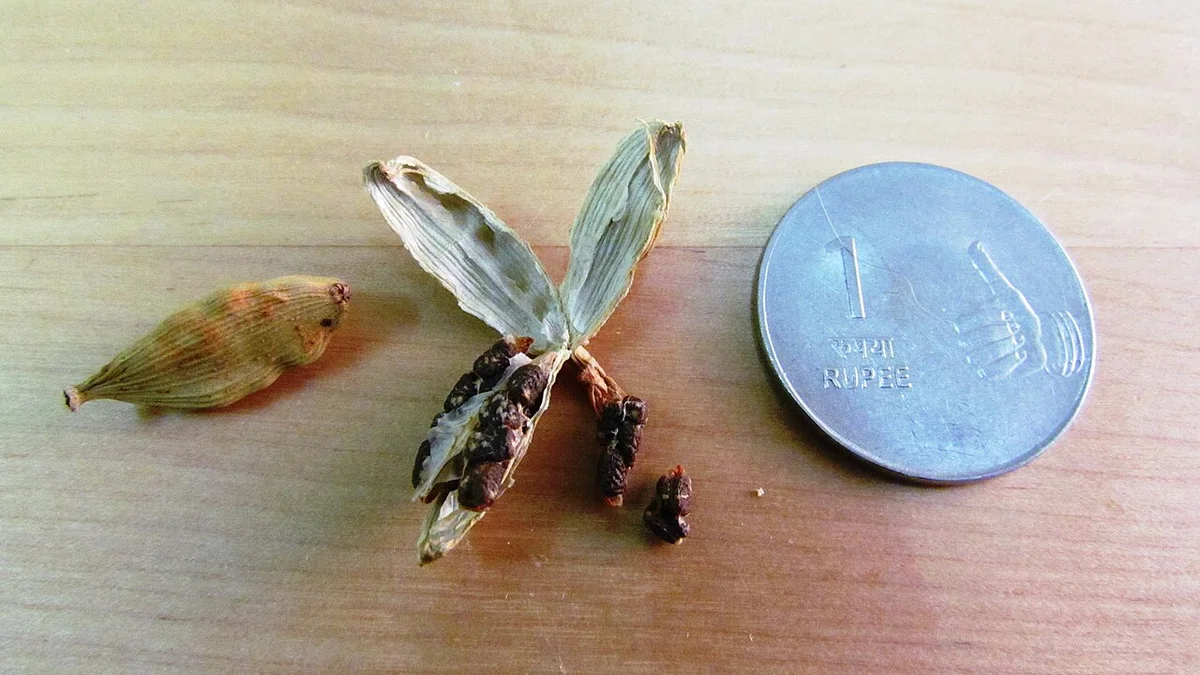
Key takeaways
- Cardamom (often crowned the "Queen of Spices") is predominantly cultivated in the misty, high-altitude rainforests of the Western Ghats, with Idukki district in Kerala accounting for over 75% of Indian domestic production.
- Wholesale cardamom price benchmarks are established through mandatory electronic auctions regulated by the Spices Board of India at primary trading centers in Puttady (Kerala) and Bodinayakanur (Tamil Nadu).
- Pricing is fundamentally determined by pod diameter, color retention, bulk density, and curing quality: 8mm+ Extra Bold (AGEB) commands premium rates of ₹2,700 to ₹3,100 per kg, while 7-8mm Bold (AGB) trades between ₹2,200 and ₹2,550 per kg as of November 2026.
- Average composite auction prices in Idukki currently hover between ₹2,150 and ₹2,450 per kg, influenced by post-monsoon harvest arrivals, curing kiln operational costs, and festive export demand across the Middle East.
- Smallholder growers can optimize net realizations by leveraging e-auction grower registrations, adhering to Agmark grading parameters, and timing bulk sales outside peak October-November harvest surges.
Cardamom (Elettaria cardamomum, known colloquially across India as choti elaichi or green cardamom) is among the most valuable agricultural commodities traded in global spice markets. Revered as the "Queen of Spices" for its intoxicating aromatic profile and intense essential oil content, green cardamom represents an indispensable cash crop for over 45,000 plantation families across the Cardamom Hills of Kerala, Tamil Nadu, and Karnataka. For plantation owners, wholesale traders, confectioners, and retail consumers, tracking daily cardamom price fluctuations is vital to navigating this high-volatility agricultural trade.
Unlike grain or pulse crops whose minimum support prices (MSP) are backed by state procurement agencies, small cardamom prices are determined entirely by free-market electronic bidding conducted under the strict statutory purview of the Spices Board of India. Daily auctions held at the electronic auction terminals of Puttady in Idukki district and Bodinayakanur in Theni district create the definitive national and global price discovery benchmarks. Whether you are researching today cardamom auction price in idukki, monitoring wholesale today cardamom price in idukki grade variances, or comparing retail cardamom price today in kerala idukki against urban consumer markets, this master guide provides an exhaustive analysis of auction dynamics, AGMARK grading criteria, production economics, price drivers, and historical rate spreads.
How cardamom auction prices are determined in Idukki, Kerala
Idukki district in central Kerala is the undisputed heart of India’s small cardamom production, contributing roughly three-quarters of the country’s annual output. The Spices Board of India operates a state-of-the-art e-auction facility at the Spices Park in Puttady (near Kumily), alongside registered private auctioneer terminals across Nedumkandam, Vandanmettu, and neighboring Bodinayakanur across the Tamil Nadu border.
The electronic auction mechanism operates on transparent commercial protocols designed to protect smallholder growers while ensuring fair price discovery for buyers:
- Pooling & Sampling: Registered growers deliver cured and dried cardamom lots to licensed auctioneers. From each incoming lot (typically weighing 200 kg to 1,500 kg), a composite test sample of 2 kilograms is drawn, cleaned, and sieved to verify moisture content (maximum 11%), weight per litre (bulk density), and pod size distribution.
- Electronic Catalogue Listing: Each lot is assigned a unique lot number, net weight, grower code, and visual sample tray placed on the auction floor for inspection by registered dealer representatives.
- Real-time Competitive Bidding: Licensed buyers bid simultaneously through dedicated auction software terminals. Starting from an opening bid suggested by the auctioneer, buyers place incremental bids (minimum ₹1/kg steps). The highest bidder wins the lot, subject to grower confirmation.
- Grower Withdrawal Option: If the final clearing bid does not meet the planter’s reserve expectations, the grower reserves the statutory right to withdraw ("withheld") the lot from the day’s auction and re-enter it in subsequent auction schedules.
Cardamom grades & market specifications: AGMARK quality standards
In wholesale trade, green cardamom is graded rigorously by millimeter diameter sieves and physical characteristics. Pod size correlates directly with market valuation, with larger diameter pods commanding significant price premiums because of higher seed counts and greater essential oil density. The standard AGMARK commercial grades are outlined below:
| Commercial Grade Name | AGMARK Code | Sieve Size (Diameter) | Visual & Physical Characteristics | Price Premium |
|---|---|---|---|---|
| Extra Bold | AGEB | 8.0 mm and above | Vibrant deep parrot green, robust whole pods, zero splits | High (+25% to +35% above avg) |
| Bold | AGB | 7.5 mm to 8.0 mm | Uniform mature green, well-developed seeds, heavy bulk weight | Moderate (+10% to +15% above avg) |
| Superior / Standard | AGS | 6.5 mm to 7.5 mm | Medium green to pale green pods, sound seeds | Base Auction Average Benchmark |
| Small / Medium | AGM | 6.0 mm to 6.5 mm | Smaller mature pods, ideal for domestic ground spice blends | Discount (-15% to -20% below avg) |
| Open / Splits (Panbar) | AGS-Splits | Variable / mixed sizes | Split capsules where dark seeds are visible, high aroma | Discount (-35% to -45% below avg) |
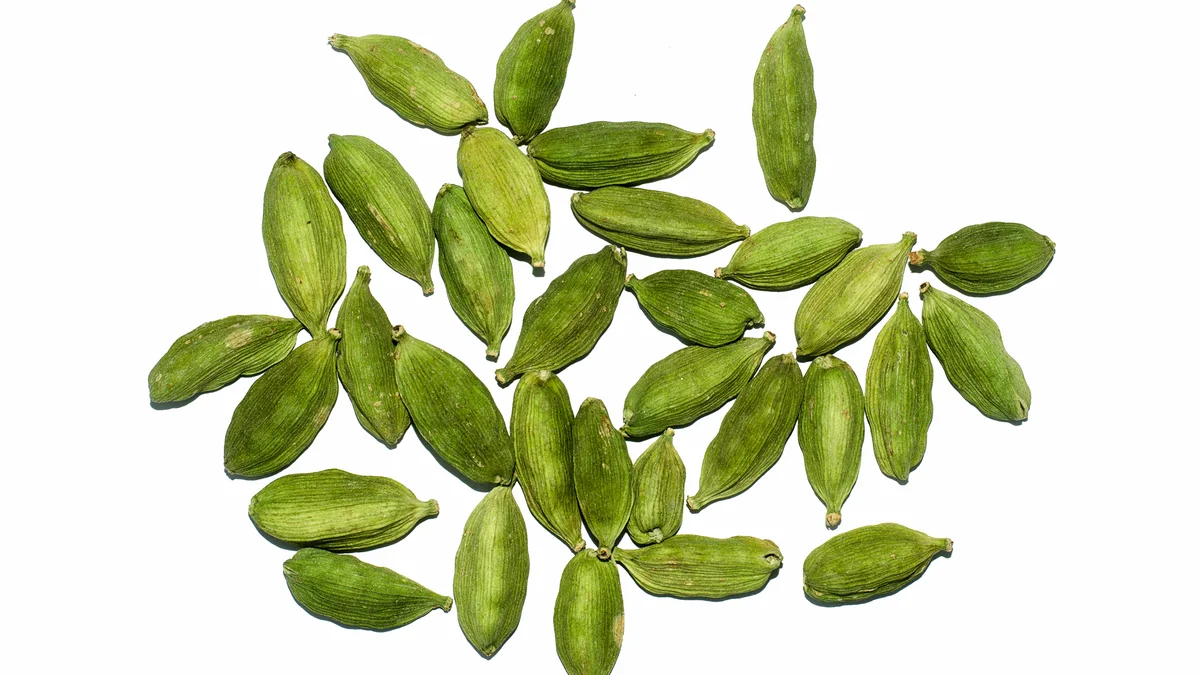
Cardamom price list 2026: auction averages & retail benchmarks
Cardamom rates vary across trade channels, from farm-gate auction clearances to metropolitan supermarket consumer packs. Below are current indicative price ranges recorded across primary trade nodes as of November 2026:
| Trade Channel / Grade | Pack Specification | Indicative Rate Range (₹/kg) | Primary Market / Trade Hub |
|---|---|---|---|
| Idukki E-Auction Composite Average | Bulk uncleaned lot (per kg) | ₹2,150 – ₹2,450 | Spices Board Puttady / Vandanmettu |
| 8mm Extra Bold (AGEB Grade) | Cleaned wholesale lot (per kg) | ₹2,700 – ₹3,100 | Bodinayakanur / Mumbai APMC Spices |
| 7-8mm Bold (AGB Grade) | Cleaned wholesale lot (per kg) | ₹2,200 – ₹2,550 | Kochi / Delhi Khari Baoli Mandi |
| 6-7mm Medium / Commercial | Cleaned wholesale lot (per kg) | ₹1,800 – ₹2,100 | Kolkata Posta / Ahmedabad APMC |
| Splits & Open Pods | Wholesale processing lot (per kg) | ₹1,400 – ₹1,650 | Pan-masala / extraction industry buyers |
| Branded Retail Pouch (100 Grams) | Sealed stand-up pouch (100g) | ₹260 – ₹320 | National retail grocery & supermarkets |
| Premium 8mm Retail Tin (250 Grams) | Air-tight canister (250g) | ₹750 – ₹900 | Direct-to-consumer gourmet spice brands |
Source: Indicative ranges, November 2026. Sourced from Spices Board of India daily auction bulletins, Bodinayakanur Cardamom Traders Association circulars, and wholesale APMC terminal markets. Realized auction rates fluctuate daily according to lot quality, moisture readings, and export demand volumes.
Key factors driving green cardamom price fluctuations
Cardamom is recognized as one of India’s most weather-sensitive cash crops. Understanding the structural market forces that govern price shifts allows growers and traders to make informed inventory decisions:
- Monsoon Patterns & Drought Vulnerability: Cardamom plants possess shallow adventitious root systems that require continuous soil moisture and 60-70% canopy shade. Extended dry spells or erratic southwest monsoon rainfall during flowering (March to May) lead to flower drop, dramatically trimming yield and driving wholesale prices upward.
- Guatemala Production & Global Supply: Guatemala is India’s chief rival in global cardamom production, exporting large volumes of lower-cost machine-dried cardamom. When Guatemalan crops suffer from pest infestations (such as thrips) or hurricanes, Indian export demand surges, boosting domestic auction rates.
- Middle East Export Demand: Over 60% of India’s premium extra bold cardamom exports head to Saudi Arabia, the United Arab Emirates, Kuwait, and Qatar, where green cardamom is an indispensable ingredient in traditional gahwa (Arabic coffee). Export demand peaks ahead of Ramadan, Eid, and regional wedding seasons.
- Processing & Curing Firewood Costs: Transforming raw green capsules (which carry 80% initial moisture) into stable dried pods requires 18 to 24 hours of controlled indirect firewood flue curing. Escalating curing firewood prices and labor wages have elevated the baseline cost of production for planters.
- Domestic Festive & Wedding Seasons: In India, domestic confectionery demand climbs sharply from Raksha Bandhan through Diwali, Durga Puja, and the winter wedding circuit, absorbing thousands of tonnes of medium and bold grades.
Cultivation economics & post-harvest curing for maximum price realization
Achieving premium prices requires meticulous attention to post-harvest curing. Freshly picked green capsules must reach the curing chamber within 24 to 36 hours of harvest to avoid capsule yellowing and fermentation. Traditional wood-fired curing kilns maintain temperatures between 45°C and 55°C to preserve natural chlorophyll, giving Indian cardamom its coveted vibrant green hue that commands top export rates.
Growers who invest in modern electric or diesel-fired thermic fluid curing systems achieve over 92% green retention, compared to 75-80% in older direct-flue kilns. Furthermore, sieving cured produce on 7mm and 8mm sorting screens before auction submission prevents growers from having whole lots discounted as composite commercial mixtures.
For insights on managing complementary cash crops and dry fruits, read our complete market price guides on almond 1kg price and anjeer price.
Explore related mandi rates, commodity guides & farming tools
Stay updated with live wholesale rates, commodity analysis, and government agricultural welfare schemes across KisanPe:
- Almond 1kg Price: Badam Wholesale Rates & California vs Gurbandi Specs
- Anjeer Price: Wholesale Dried Fig Rates & Quality Grading Guide
- Kaju Price: Cashew Nut W180 to W320 Wholesale Rate Guide
- Coffee Price Today: Robusta, Arabica Raw Cherry & Parchment Rates
- Avocado Price Today: Wholesale Market Trends, Hass Cultivation & Margins
- Rubber Price Today: RSS-4 Kottayam Mandi Rates & Rubber Board Subsidies
- Cotton Market Rate Today: Mandi Bhav, Kapas Prices & Quality Grading
- Onion Price Today: Wholesale Lasalgaon Mandi Bhav & Retail Trends
- Saaf Fungicide: Carbendazim Mancozeb Dose & Price Guide
- Nativo Fungicide: Uses, Dosage, Chemical Composition & Price Guide
- Anaj Mandi Directory: Grain Auction Schedules & Farmer Rights
- Kisan App: Digital Mandi Rates, Weather Alerts & Farmer Schemes
Official regulatory portals and agricultural marketing boards consulted for this guide:
Frequently asked questions
- What is the current cardamom price per kg in India?
- As of November 2026, indicative wholesale auction prices in Idukki, Kerala average between ₹2,150 and ₹2,450 per kg. Top-grade 8mm Extra Bold green cardamom trades at ₹2,700 to ₹3,100 per kg, while retail branded consumer packs range from ₹2,500 to ₹3,500 per kg. Planters can compare daily plantation crop rates on our coffee price today guide.
- Where is the main cardamom auction market located in India?
- The primary electronic cardamom auction markets are situated in Idukki district, Kerala (at the Spices Board Park in Puttady and Vandanmettu) and in Bodinayakanur (Theni district, Tamil Nadu), functioning through structured auction networks similar to those detailed in our anaj mandi guide.
- Why does 8mm green cardamom command a higher price than smaller pods?
- Cardamom pods measuring 8mm and above in diameter contain higher numbers of fully matured, essential oil-dense dark seeds with stronger camphoraceous aroma. They represent only 10% to 15% of a total harvest and are highly coveted by Middle Eastern export buyers.
- How can small cardamom growers register to sell at Spices Board e-auctions?
- Growers can register by providing their land revenue patta (land possession certificate), Aadhaar card, PAN card, and bank account details at the nearest Spices Board regional office or approved auctioneer center to obtain a registered planter code.
- What is the difference between green cardamom and black cardamom in price?
- Green cardamom (small cardamom, Elettaria cardamomum) is valued far higher due to its delicate aroma and confectionery usage, trading at ₹2,000–₹3,000/kg. Black cardamom (large cardamom, Amomum subulatum, grown primarily in Sikkim) trades at roughly ₹1,100–₹1,500/kg.
- What is the best moisture percentage for cured cardamom before sale?
- The ideal moisture content for cured cardamom is between 9% and 11%. Moisture above 11% risks fungal mold development and leads to auction penalties, while moisture below 8% causes pod brittleness and loss of volatile essential oils. Field fungal protection strategies are covered in our Saaf fungicide guide.
- How does weather impact cardamom price movements?
- Cardamom requires continuous soil moisture, regular summer showers, and 60% shade. Severe summer droughts or inadequate monsoon rains reduce flowering panicles and pod set, causing sudden national crop contractions that sharply drive up prices.
- What are the main export destinations for Indian green cardamom?
- Saudi Arabia is the largest importer of Indian small cardamom, followed by the United Arab Emirates, Kuwait, Oman, the United Kingdom, and the United States, primarily for use in Arabic coffee (gahwa; see commodity economics in our coffee price guide) and culinary spices.
- What causes the green color of cardamom to fade during storage?
- Exposure to light, elevated ambient temperatures (above 25°C), and fluctuating humidity degrade chlorophyll pigments. To preserve vibrant green coloration, cured cardamom should be stored in food-grade black polyethylene bags inside sealed master cartons.
- How much cured cardamom does one hectare of plantation yield?
- Under optimal agronomic management with high-yield varieties (such as IISR Vijetha, IISR Avinash, or Njallani), yield ranges from 350 to 500 kg of cured cardamom per hectare, though rainfed smallholdings may average 200 to 300 kg/ha.
- What are cardamom "splits" and why do they sell at a discount?
- Splits (or open pods) are capsules that have naturally burst open during over-ripening or rapid drying. Because their exposed seeds can lose volatile oils, they are sold at a 30% to 45% discount, predominantly to spice grinding and pan-masala industries.
- How often are electronic cardamom auctions held in Kerala and Tamil Nadu?
- Electronic auctions are held almost daily (Monday through Saturday) during the peak harvest season (August through February), rotating between designated licensed auction houses under Spices Board supervision, with daily price insights available on the KisanPe mobile app.
This article is for general information only and is not financial advice. Loan and scheme eligibility depends on partner and government criteria.