Kaju Price: Cashew Nut Per Kg Rates, Grades & Guide
Key takeaways
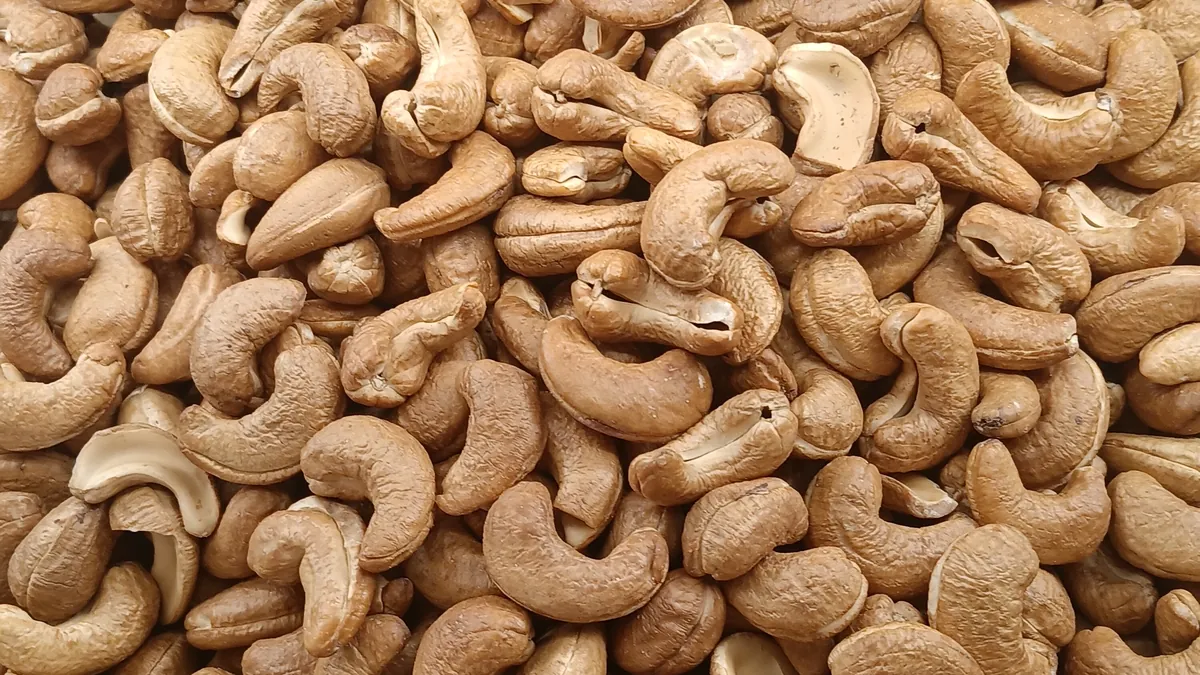
- Benchmark wholesale kaju price for standard consumer grade W-320 ranges between ₹700 and ₹820 per kg in primary terminal markets, while premium jumbo W-180 (King of Cashews) commands ₹1,050 to ₹1,280 per kg.
- Domestic Raw Cashew Nut (RCN) farmgate procurement rates stand at ₹95 to ₹138 per kg across Konkan (Maharashtra and Goa), coastal Karnataka, and Kerala, driven by superior outturn ratios of 50 to 55 lbs per 80 kg bag.
- Cashew processing requires approximately 4.0 to 4.3 kg of raw unshelled nuts to produce 1 kg of finished whole white kernels, representing a net commercial shelling recovery rate of 22% to 25%.
- Valuable industrial byproducts, particularly Cashew Nut Shell Liquid (CNSL) extracted during thermal roasting, contribute ₹40 to ₹55 per kg in processing revenue, offsetting shelling labor and energy expenditures.
- Under the Mission for Integrated Development of Horticulture (MIDH) and National Horticulture Board (NHB), farmers can access 40% to 50% capital subsidies for high-density cashew orchard establishment using certified grafted cultivars.
Understanding prevailing kaju price dynamics is fundamental for cashew farmers, commercial processing millers, commodity traders, and food enterprise procurement officers across India. Cashew (Anacardium occidentale), originally introduced by Portuguese botanists in Goa to prevent coastal soil erosion, has transformed into one of India's most lucrative commercial horticultural cash crops. Today, India stands as one of the world's foremost producers, processors, and domestic consumers of cashew kernels, with annual domestic consumption surpassing 400,000 metric tonnes.
The commercial cashew nut price structure operates through two interconnected market tiers: the farmgate and primary mandi market for unprocessed Raw Cashew Nuts (RCN), and the wholesale terminal market for graded, roasted, peeled, and sorted cashew kernels. While raw nuts sell in gunny bags based on moisture content and cutting outturn, processed kernel prices are strictly governed by international Cashew Export Promotion Council of India (CEPCI) count-per-pound grading systems, ranging from jumbo W-180 wholes down to industrial small broken bits.
In this definitive market intelligence guide, KisanPe analyzes current wholesale kaju price per kg benchmarks across all CEPCI whole and broken grades, farmgate RCN procurement rates across primary coastal producing states, factory processing conversion economics, import parity from West Africa, and practical strategies for horticultural growers to maximize orchard profit margins.
Indicative Wholesale Kaju Price Across Kernel Grades (CEPCI Standards)
Cashew kernel wholesale pricing is primarily determined by nut count per pound (453.6 grams), kernel color, and structural integrity (whole versus broken). White Wholes (W) represent the highest commercial grade, dried to under 5% moisture with uniform ivory-white color and zero scorching. The following table provides benchmark indicative wholesale price ranges per kg across terminal hubs like Vashi (Navi Mumbai), Mattancherry (Kollam-Kochi), and Khari Baoli (Delhi):
| Kernel Grade | Count Specification (Per Lb / 453.6g) | Wholesale Price Range (₹/kg) | Retail Price Range (₹/kg) | Dominant Commercial Market Segment |
|---|---|---|---|---|
| W-180 (King of Cashew) | 170 – 180 nuts / lb | ₹1,050 – ₹1,280 | ₹1,450 – ₹1,850 | Luxury festive gifting, premium dry fruit boutique boxes, export |
| W-210 (Jumbo Wholes) | 200 – 210 nuts / lb | ₹920 – ₹1,050 | ₹1,250 – ₹1,450 | Supermarket retail packs, tier-1 sweet confectioners, premium catering |
| W-240 (Standard Large) | 220 – 240 nuts / lb | ₹820 – ₹940 | ₹1,100 – ₹1,300 | Mainstream consumer packaging, corporate gifting, high-end bakery |
| W-320 (Standard Popular) | 300 – 320 nuts / lb | ₹700 – ₹820 | ₹950 – ₹1,150 | Industry benchmark volume leader, highest retail sales volume |
| W-400 (Small Wholes) | 380 – 400 nuts / lb | ₹640 – ₹720 | ₹850 – ₹980 | Economy snack packaging, nut mixes, regional sweet shops |
| JH / Splits (Jumbo Halves) | Halved longitudinally | ₹580 – ₹680 | ₹750 – ₹890 | Kaju katli manufacturing, restaurant gravies, ice cream toppings |
| K / Large Pieces | Broken pieces (1/3 nut) | ₹520 – ₹600 | ₹680 – ₹790 | Confectionery, commercial kaju paste, bakery biscuit dough |
| LWP (Large White Pieces) | Broken white kernel pieces | ₹470 – ₹540 | ₹600 – ₹720 | Commercial sweet catering, confectionery fillings, blended butter |
| SWP / BB (Small White Pieces & Baby Bits) | Fine broken bits / grits | ₹380 – ₹450 | ₹500 – ₹620 | Industrial chocolate manufacturing, energy bars, instant premixes |
Grade W-320 accounts for more than 60% of total whole cashew transactions across Indian APMC mandis. It serves as the standard settlement contract for commercial forward contracts and retail private-label packaging. Premium jumbo grades such as W-180 and W-210 command a steep 30% to 55% price markup due to limited availability, as only about 8% to 12% of an average harvested crop lot yields whole kernels large enough to satisfy W-180 grading parameters.
Raw Cashew Nut (RCN) Farmgate & Mandi Rates Across Primary States
For cashew orchard growers, the primary pricing metric is the farmgate price of Raw Cashew Nuts (RCN). Unlike processed kernels that are traded year-round from vacuum-sealed cold storage facilities, raw cashew nut prices fluctuate heavily during the domestic harvesting window between February and June. RCN rates are governed by three crucial physical metrics: moisture content (must be dried below 8.0%), nut count per kilogram (typically 170 to 210 nuts per kg), and cutting outturn expressed in pounds per 80 kg bag (KOR - Kernel Output Ratio).
The table below details indicative farmgate procurement benchmarks and APMC arrival prices across the primary cashew-producing belts of India:
| Producing State & Belt | Primary Harvest Season | Average Outturn (KOR in lbs) | Farmgate RCN Rate (₹/kg) | Key Assembly Mandis & Hubs |
|---|---|---|---|---|
| Maharashtra (Sindhudurg, Ratnagiri, Raigad) | March to May | 52 – 55 lbs / bag | ₹115 – ₹138 | Vengurla, Sawantwadi, Malvan, Lanja |
| Goa (North & South Goa) | February to May | 50 – 53 lbs / bag | ₹110 – ₹132 | Bicholim, Sanquelim, Valpoi, Ponda |
| Karnataka (Dakshina Kannada, Udupi, Uttara Kannada) | March to May | 49 – 52 lbs / bag | ₹105 – ₹126 | Mangaluru, Puttur, Kundapura, Kumta |
| Kerala (Kasaragod, Kannur, Kollam, Palakkad) | February to April | 48 – 51 lbs / bag | ₹102 – ₹124 | Kollam APMC, Mattannur, Kanhangad |
| Odisha (Koraput, Ganjam, Puri, Dhenkanal) | April to June | 46 – 49 lbs / bag | ₹92 – ₹112 | Brahmapur, Koraput, Jeypore, Khurda |
| Andhra Pradesh (Srikakulam, Vizianagaram, Visakhapatnam) | March to June | 47 – 50 lbs / bag | ₹94 – ₹115 | Palasa-Kasibugga, Tekkali, Srikakulam |
| Tamil Nadu (Cuddalore, Ariyalur, Pudukkottai) | March to May | 46 – 48 lbs / bag | ₹90 – ₹110 | Panruti, Vridhachalam, Jayankondam |
Konkan-origin raw cashew nuts from Maharashtra and Goa consistently command the highest farmgate price premium across India. Konkan RCN kernels boast exceptional sweetness, higher fat content, ivory whiteness, and an outturn often exceeding 53 lbs per bag. In contrast, eastern coastal producing centers in Odisha and Andhra Pradesh typically exhibit smaller kernel counts and lower KOR figures, resulting in a ₹15 to ₹25 per kg discount compared to western coast lots.
The KOR Equation: How Raw Cashew Nut Quality Determines Mandi Price
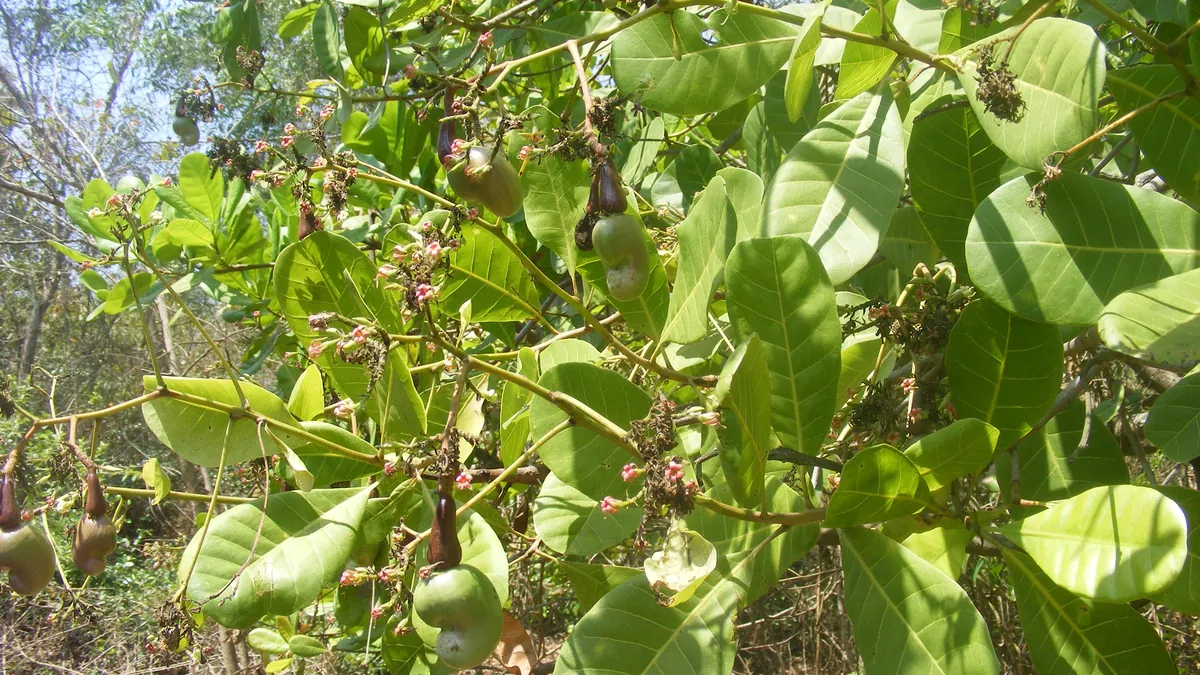
Traders and mill owners calculate the exact procurement price of raw cashew nuts using a standardized physical cutting test. When a farmer brings a lot to the mandi or processing mill, a representative 1 kg sample is randomly drawn from multiple bags. The nuts are counted, cut open with a manual guillotine blade, and inspected for kernel development, insect damage, void shells, and moisture.
The Kernel Output Ratio (KOR) measures the total weight of usable, wholesome kernels obtained from an 80-kilogram bag of raw cashew nuts, expressed in British pounds (lbs). A lot with 52 lbs KOR yields roughly 23.6 kg of edible kernels per 80 kg bag (or 29.5% gross kernel outturn before peeling). Every additional pound of KOR typically translates to a ₹2.50 to ₹3.50 per kg premium in farmgate pricing. Farmers who fail to sun-dry their harvest adequately face immediate dockage penalties or outright rejection by industrial shellers.
Industrial Cashew Processing Stages & Cost Breakdown
Transforming hard, caustic raw cashew nuts into ready-to-eat white kernels is an energy-intensive and labor-demanding multi-stage process. Understanding processing economics explains why retail kaju price per kg is roughly 6 to 8 times higher than raw farmgate nut rates. The processing flow comprises four mandatory technological stages:
1. Steam Conditioning and Roasting: Raw nuts are conditioned with water to soften the outer shell and roasted in pressurized steam boilers (90 to 100 psi) for 20 to 25 minutes. Steam roasting has largely replaced traditional open-pan drumming because it prevents kernel charring and preserves valuable Cashew Nut Shell Liquid (CNSL) within the shell matrix.
2. Shelling and CNSL Extraction: De-shelling is executed using specialized hand-and-pedal mechanical cutters or automated centrifugal shelling lines. Shellers must split the outer pericarp without cracking the inner kernel. The outer shells are routed to hydraulic expeller presses to extract industrial CNSL oil, an important natural source of cardanol used in marine paints, friction linings, and epoxy resins.
3. Borma Drying (Kernel Conditioning): Freshly shelled kernels are coated in a thin reddish-brown fibrous skin called the testa. To loosen this membrane without degrading kernel oils, kernels are placed in hot air circulation chambers (Borma dryers) maintained at 70°C to 80°C for 6 to 8 hours. Moisture content is reduced from 9% down to 3.5% to 4.5%.
4. Mechanical Peeling, Optical Grading, and Vacuum Packing: Softened testa skins are removed using rubber-roller peeling machines and air-jet blowers. Kernels are subsequently sorted through optical color sorters and vibratory sizing screens into CEPCI standard grades. Finally, kernels are vacuum-packed in food-grade tins or multi-layer barrier pouches infused with food-grade carbon dioxide (CO2) or nitrogen gas to prevent rancidity.
| Processing Cost Component | Estimated Cost (₹ per kg of Processed Kernel) | Share of Total Production Cost (%) | Key Drivers & Variables |
|---|---|---|---|
| Raw Material Sourcing (RCN 4.1 kg @ ₹115/kg) | ₹471.50 | 76.5% | Harvest quality, KOR outturn, transport freight, mandi cess |
| Boiler Fuel & Thermal Roasting | ₹18.00 | 2.9% | Biomass briquettes, firewood, boiler water treatment |
| Shelling Labor & Mechanization | ₹42.00 | 6.8% | Skilled manual cutter wages, machine blade maintenance, power |
| Borma Hot Air Drying & Peeling | ₹24.00 | 3.9% | Electrical heating, peeling labor, broken kernel loss factor |
| Grading, Optical Sorting & Quality Testing | ₹16.50 | 2.7% | Camera sorter maintenance, manual visual inspection lines |
| Vacuum Tin / Pouch Packaging & Gas Flushing | ₹22.00 | 3.6% | CO2 gas flush, 4-ply barrier vacuum bags, outer master cartons |
| Factory Overhead, Finance Cost & Compliance | ₹22.00 | 3.6% | FSSAI licensing, working capital interest, factory depreciation |
| Gross Processing Expenditure | ₹616.00 | 100.0% | Total cost before byproduct recovery credits |
| Less: Byproduct Credit (CNSL Oil & Spent Shell Cake) | (- ₹48.00) | - | 1.8 kg shell waste yields CNSL @ ₹45/kg + boiler cake fuel |
| Net Production Cost per kg of Mixed Kernels | ₹568.00 | - | Break-even cost before grade-wise value realization |
Because processing converts raw material into a mix of whole kernels (65-72%) and broken pieces (28-35%), processors must sell high-value whole grades (W-180 to W-320) at a substantial markup above the ₹568 net production cost to subsidize the lower realization from broken pieces (JH, LWP, and BB) which often sell below ₹500 per kg.
Global Import Parity & African RCN vs Domestic Cashew Nut Dynamics
India possesses an annual cashew processing capacity exceeding 2.5 million metric tonnes, yet domestic farm production accounts for only 750,000 to 850,000 tonnes. Consequently, Indian processing clusters in Kollam (Kerala), Mangaluru (Karnataka), and Palasa (Andhra Pradesh) depend heavily on imported raw cashew nuts sourced from West and East African nations, including Côte d'Ivoire (Ivory Coast), Ghana, Benin, Tanzania, Mozambique, and Guinea-Bissau.
Imported African RCN prices are quoted on a Cost, Insurance, and Freight (CIF) basis in US Dollars per metric tonne (ranging historically between $1,150 and $1,550/MT). Government tariff policies, specifically the 2.5% Basic Customs Duty (BCD) and 7.5% Agriculture Infrastructure and Development Cess (AIDC), directly influence domestic processing margins. When the Indian Rupee weakens against the US Dollar or African exporting nations impose minimum export prices, processing mills adjust domestic raw nut procurement prices upwards, directly benefiting Indian cashew farmers.
Despite the massive volume of African imports, Indian domestic raw nuts command a steady 10% to 15% price premium over imported lots. Domestic Konkan and Malabar nuts reach mills freshly dried within days of harvesting, whereas ocean-freighted African container cargo spends 30 to 60 days in marine transit, often suffering slight moisture absorption, shell hardening, and a higher proportion of yellowed kernels upon shelling.
Major Terminal APMC Wholesale Mandi Dynamics in India
Physical spot trading of processed cashew kernels converges in several historic terminal wholesale dry fruit hubs across the subcontinent. Each hub serves distinct consumer channels and dictates pan-Indian price discovery:
1. Vashi APMC (Navi Mumbai, Maharashtra): Situated in Sector 19, Vashi is the preeminent terminal market for the western region. It receives direct daily dispatches from Konkan processing mills in Vengurla and Sawantwadi. Vashi sets the benchmark rate for whole grades W-240 and W-320 supplied to Mumbai's upscale confectionery and corporate gift industries.
2. Khari Baoli & Naya Bazar (Old Delhi): Asia's largest wholesale spice and dry fruit hub handles astronomical turnover, particularly ahead of Raksha Bandhan, Diwali, and the winter wedding season. Wholesale transactions in Khari Baoli are executed in 10 kg tins and 25 lb vacuum cartons. Premium jumbo W-180 and W-210 grades experience extreme liquidity here.
3. Kollam Cashew Hub (Kerala): Known historically as the "Cashew Capital of the World", Kollam is home to hundreds of export-oriented processing facilities and cooperative marketing federations like CAPEX and KSCDC. Kollam primarily drives export FOB contracts and institutional tender supplies.
4. Palasa-Kasibugga (Srikakulam, Andhra Pradesh): The commercial nerve center of Andhra Pradesh's cashew trade houses over 250 processing units. Palasa is celebrated for producing high-grade splits (JH) and large broken white pieces (LWP) heavily supplied to commercial sweetmakers and halwais across Hyderabad, Vijayawada, and Bhubaneswar.
Commercial Cashew Cultivation: High-Yielding Varieties & Orchard Economics
Cashew cultivation has evolved far beyond marginal wasteland planting. By adopting scientific High-Density Planting (HDP) techniques and elite grafted varieties developed by the Indian Council of Agricultural Research (ICAR) - Directorate of Cashew Research (DCR) in Puttur and state agricultural universities, farmers can achieve annual gross returns exceeding ₹1.5 to ₹2.5 Lakh per acre.
Prominent high-yielding commercial varieties recommended for commercial planting include:
• Vengurla-4 and Vengurla-7: Developed by Dr. Balasaheb Sawant Konkan Krishi Vidyapeeth (DBSKKV), these varieties feature bold nuts (8 to 9 grams per nut), high shelling outturn (30% to 32%), and average mature yields of 12 to 15 kg of raw nuts per tree.
• Bhaskara: Released by ICAR-DCR Puttur, Bhaskara is renowned for mid-season flowering that escapes early coastal pre-monsoon rains, delivering compact clusters with an outturn of over 53 lbs/bag.
• Ullal-3 and Priyanka: Outstanding heavy-yielding selections optimized for southern Karnataka and Kerala conditions, producing uniform medium-bold nuts with excellent resistance to blossom blight.
| Orchard Year | Operational Activities & Inputs | Annual Establishment Cost (₹/Acre) | Expected Yield (kg RCN/Acre) | Gross Revenue @ ₹115/kg (₹/Acre) | Net Income / Cashflow (₹/Acre) |
|---|---|---|---|---|---|
| Year 1 | Land preparation, pit digging (1m x 1m), grafted saplings (200 plants @ 5m x 4m), drip irrigation, fencing | ₹65,000 | Nil | ₹0 | - ₹65,000 (Capital Outlay) |
| Year 2 | Weeding, basin mulching, training & formative pruning, NPK fertigation, prophylactic tea mosquito spray | ₹18,000 | Nil | ₹0 | - ₹18,000 |
| Year 3 | Maintenance, canopy management, micro-nutrient spray, first light fruiting (de-blossoming recommended) | ₹20,000 | 100 – 150 kg | ₹14,375 | - ₹5,625 |
| Year 4 | Full commercial bearing begins, harvest labor, sun-drying, organic manuring | ₹24,000 | 450 – 600 kg | ₹60,375 | + ₹36,375 (Profitable) |
| Year 5 | Canopy thinning, integrated pest management for stem borer, mature harvesting | ₹28,000 | 900 – 1,100 kg | ₹115,000 | + ₹87,000 |
| Year 6 to 25 (Mature) | Annual maintenance, pruning, harvest labor, organic compost, seasonal spray | ₹32,000 | 1,400 – 1,800 kg | ₹184,000 | + ₹152,000 / year |
Under the Mission for Integrated Development of Horticulture (MIDH) and State Horticulture Departments, growers establishing new cashew plantations can receive financial assistance of up to ₹20,000 per hectare for planting material and maintenance spread over three years. Additional subsidies of 45% to 55% are accessible for micro-irrigation installation via the Pradhan Mantri Krishi Sinchayee Yojana (PMKSY).
Farmer Advisory: Maximizing RCN Realization & Quality Management
To avoid arbitrary price deductions by village middlemen and local assemblers, cashew growers must follow rigorous post-harvest practices:
• Prompt Apple Separation: Harvest nuts only when the cashew apple turns fully mature and falls naturally from the tree. Immediately detach the nut from the apple with a twisting motion. Never allow apples to rot on harvested nuts, as microbial fermentation stains the shell and degrades internal kernel flavor.
• Mandatory Sun-Drying: Freshly harvested raw nuts carry 16% to 22% moisture. Spread the raw nuts in a thin layer (not exceeding 5 to 7 cm thickness) on clean cement drying floors or tarpaulins for 2 to 3 days under direct sunlight. When properly dried to the required 7% to 8% moisture level, the kernels rattle freely inside the shell when shaken.
• Storage in Breathable Gunny Bags: Never store raw cashew nuts in airtight plastic sacks. Store thoroughly dried nuts in clean jute or sisal gunny bags stacked on wooden dunnage pallets inside a dry, well-ventilated godown away from damp masonry walls.
• Form Farmer Producer Organizations (FPOs): Individual smallholders selling 50 to 100 kg lots to traveling village dalals sacrifice ₹15 to ₹25 per kg in value. By pooling harvest volumes through Cashew FPOs, farmers can commission batch processing at local custom-hiring shelling plants, directly packaging vacuum-sealed W-320 and W-240 kernels to capture full retail profit margins.
Modern Orchard Management, Plantation Credit & Farm Machinery
Establishing high-density cashew orchards using grafted varieties like Vengurla-7 or Bhaskara requires balanced basal nutrition detailed in our DAP fertilizer manual and organic root stimulation from our humic acid soil conditioner guide. Cultivators can calibrate NPK doses using our fertilizer calculator and adopt sustainable irrigation via our solar water pump guide.
Growers managing mixed coastal orchards often compare cashew returns against other perennial cash crops reviewed in our rubber price today report and high-value fruits in our avocado price analysis. Planters can model long-term plantation revenues using our crop income calculator, access concessional credit through our Kisan Credit Card loan calculator, and verify direct welfare releases using our DBT payment verification guide and farmer e-KYC portal.
Frequently asked questions
- What is the current kaju price per kg in Indian wholesale mandis?
- In Indian wholesale terminal markets, standard consumer grade W-320 trades between ₹700 and ₹820 per kg. Premium jumbo grades such as W-180 command ₹1,050 to ₹1,280 per kg, W-210 trades at ₹920 to ₹1,050 per kg, and W-240 ranges from ₹820 to ₹940 per kg. You can check daily commodity quotes on our mandi rates platform.
- Why is W-180 cashew grade significantly more expensive than W-320?
- W-180 kernels are known as the "King of Cashews" because only 170 to 180 whole nuts are needed to make one pound (453.6 grams). These massive kernels constitute less than 8% to 12% of an average harvested cashew crop. Their rarity, visually stunning size, and high demand for luxury festive gifting and international export command a 40% to 60% price premium over standard W-320 nuts.
- What is the current farmgate mandi rate for raw cashew nuts (RCN) in India?
- Farmgate procurement rates for sun-dried Raw Cashew Nuts (RCN) typically range between ₹95 and ₹138 per kg across Indian producing states. Premium Konkan raw nuts from Sindhudurg, Ratnagiri, and Goa fetch ₹115 to ₹138 per kg due to superior outturn (52-55 lbs KOR). Review regional agricultural market bhav on our national commodity price tracker.
- How much raw cashew nut (RCN) is required to produce 1 kg of cashew kernels?
- It takes approximately 4.0 to 4.3 kg of raw cashew nuts to yield 1 kg of finished, edible cashew kernels. The outer thick shell accounts for approximately 68% to 72% of the nut's gross weight, while moisture loss and the fibrous testa skin account for an additional 4% to 6%, leaving a net commercial kernel recovery rate of 22% to 25%.
- What are the best high-yielding cashew varieties for commercial farming in India?
- The highest-yielding commercial varieties include Vengurla-4 and Vengurla-7 (developed by DBSKKV Maharashtra), Bhaskara (released by ICAR-DCR Puttur), Ullal-3 (Karnataka), and Priyanka (Kerala). These elite grafted varieties yield bold nuts (8-9 grams each) and produce 12 to 18 kg of raw nuts per tree at mature bearing.
- What is Kernel Outturn Ratio (KOR) in raw cashew grading?
- Kernel Outturn Ratio (KOR) measures the weight in pounds of export-quality, wholesome cashew kernels recovered from an 80 kg bag of raw nuts. In commercial trade, a KOR of 48 to 50 lbs is standard, while premium Konkan lots often exceed 52 to 55 lbs.
- How much net profit can a farmer earn from 1 acre of commercial cashew orchard?
- A mature 1-acre cashew orchard (planted at 7m × 7m spacing with 80 trees) produces approximately 1,000 to 1,400 kg of raw nuts annually. At an average farmgate price of ₹115 per kg, gross revenue reaches ₹1,15,000 to ₹1,61,000 per acre. After deducting maintenance and harvest costs of ₹25,000, net annual profit ranges from ₹90,000 to ₹1,35,000. Plan your orchard economics using our crop income calculator.
- What causes cashew prices to fluctuate throughout the year?
- Domestic kaju prices follow strong seasonality. Rates are lowest during March to May during domestic Konkan and southern harvest arrivals, and surge by 15% to 25% between August and November driven by Raksha Bandhan, Diwali, and the winter wedding season.
- Can cashew growers get concessional agricultural credit under priority sector lending?
- Yes, commercial cashew orchardists are eligible for subsidized credit. Planters can calculate loan scale of finance using our Kisan Credit Card loan calculator to cover weeding, fertilizer, and irrigation expenditures.
- What is Cashew Nut Shell Liquid (CNSL) and what is it used for?
- CNSL is a dark reddish-brown viscous natural resin contained within the honeycomb structure of the cashew nutshell. Rich in anacardic acid and cardanol, CNSL is a valuable industrial byproduct utilized in marine paints, friction brake linings, surface coatings, and epoxy resins.
- Where does India export cashew kernels and what are the quality standards?
- India exports cashew kernels to over 60 countries, primarily the UAE, USA, Japan, the Netherlands, and Saudi Arabia. Exports are coordinated under the Cashew Export Promotion Council of India (CEPCI), strictly adhering to global food safety and grading standards.
- How should raw cashew nuts be dried and stored to prevent mold and spoilage?
- Freshly harvested raw cashew nuts must be sun-dried on clean tarpaulins or concrete yards for 2 to 3 days until moisture drops to 7% to 8% (indicated by nuts rattling inside the shell). Dried nuts should be stored in breathable jute bags stacked on wooden dunnage inside a clean, dry godown.
This article is for general information only and is not financial advice. Loan and scheme eligibility depends on partner and government criteria.