Coffee Price Today: Arabica & Robusta Raw Bean Rates
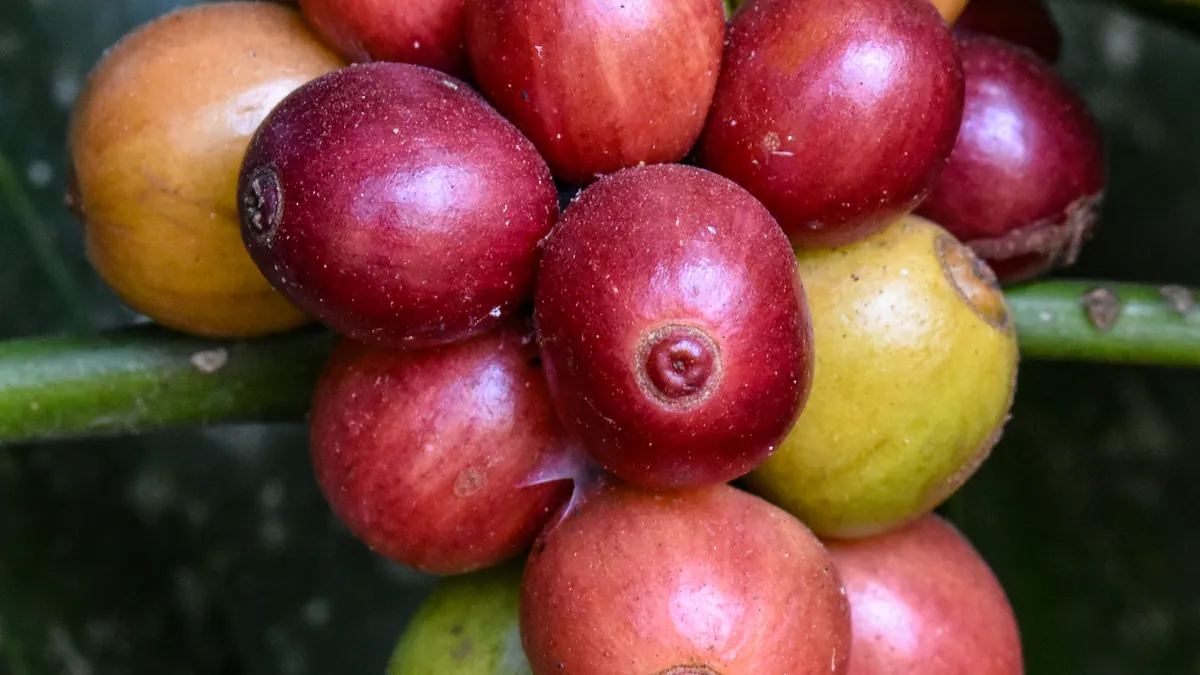
Key takeaways
- Coffee prices in India are benchmarked daily by the Coffee Board of India, reflecting physical farmgate and mandi transactions across Wayanad, Kodagu (Coorg), Chikmagalur, Hassan, and Shevaroys.
- Arabica Parchment (wet-processed washed beans) commands the highest domestic price premium, trading at an indicative ₹17,500 to ₹19,200 per 50 kg bag (₹350 to ₹384 per kg) for top plantation grades.
- Robusta Cherry (dry-processed whole berries), representing the primary cash harvest for over 60,000 smallholders in Wayanad (Kerala), trades at ₹8,100 to ₹9,300 per 50 kg bag (₹162 to ₹186 per kg).
- Farmgate rates closely mirror international futures parity from ICE New York (Arabica C futures in cents/lb) and ICE London (Robusta futures in USD/MT), adjusted for USD-INR currency conversions and local port FOB costs.
- Maintaining strict post-harvest bean drying standards (10.0% to 11.0% moisture content) is mandatory to prevent mold formation, ochratoxin contamination, and severe price cuts at curing works.
For over two lakh coffee growers, estate planters, curing works operators, and commodity traders across India, tracking the coffee price today is fundamental to planning harvest operations, farmgate bean sales, and processing schedules. India stands as the seventh-largest coffee producer in the world, cultivating premium shade-grown coffees that are celebrated internationally for their mild acidity, intense aromatics, and exceptional body. The domestic coffee harvest averages between 3.5 lakh and 3.8 lakh metric tonnes annually, comprising roughly 70% Robusta and 30% Arabica varieties. Estate managers and growers can monitor live daily market quotes via our mandi rates platform and check wholesale commodity benchmarks across the national commodity price tracker.
Geographically, Indian coffee production is concentrated in the ecologically rich Western Ghats belt. Karnataka serves as the heavyweight producer, contributing over 70% of national output across the famed plantation districts of Kodagu (Coorg), Chikmagalur, and Hassan. Kerala ranks as the second-largest coffee-growing state, generating approximately 21% of total production, with the high-plateau district of Wayanad serving as the undisputed Robusta powerhouse of South India. Tamil Nadu accounts for around 8% of production from high-altitude ranges such as the Shevaroy Hills, Nilgiris, and Pulneys, while non-traditional tribal belts in Andhra Pradesh (Araku Valley) and Odisha continue to expand their organic Arabica footprints. Planters evaluating shade crop combinations often review intercropping returns in our avocado price orchard guide, compare cash margins with our rubber price today report, and consult detailed agronomic profiles in our coffee cultivation guide.
Navigating the coffee marketplace requires understanding the critical distinction between wet processing (Parchment coffee) and dry processing (Cherry coffee), alongside moisture grading and curing benchmarks. Physical farmgate transactions are officially recorded and compiled by the Coffee Board of India (functioning under the Ministry of Commerce and Industry) and corroborated through the Directorate of Marketing and Inspection (Agmarknet portal). This authoritative guide provides prevailing Coffee Board price benchmarks, analyzes regional Kerala farmgate trends, decodes Arabica and Robusta pricing dynamics, breaks down wet versus dry processing economics, and details global ICE futures parity.
Official Coffee Board Daily Indicative Price Benchmarks
The Coffee Board of India collects, audits, and publishes indicative spot prices across major plantation centers based on daily physical farmgate trades, estate delivery contracts, and terminal curing factory purchases. In the physical trade, coffee is customarily transacted in 50-kilogram gunny bags (the standard domestic estate unit) or on a per-kilogram clean bean equivalent. The table below outlines prevailing indicative price ranges across prime commercial grades:
| Coffee Variety & Grade | Processing Method | Farmgate Price (₹/50 kg Bag) | Indicative Rate (₹/kg) | Key Production Centers |
|---|---|---|---|---|
| Arabica Parchment (Plantation A / PB) | Wet pulped, fermented & washed | ₹17,500 – ₹19,200 | ₹350 – ₹384 | Kodagu (Coorg), Chikmagalur, Hassan, Shevaroys |
| Arabica Cherry (Estate Naturals) | Sun-dried whole ripe berry | ₹9,200 – ₹10,400 | ₹184 – ₹208 | Chikmagalur, Bababudangiri, Biligirirangana Hills |
| Robusta Parchment (Washed Robusta) | Wet pulped & mechanically washed | ₹14,200 – ₹15,800 | ₹284 – ₹316 | Wayanad, Kodagu, Sakleshpur, Hassan |
| Robusta Cherry (Clean Garbled) | Sun-dried whole ripe cherry | ₹8,100 – ₹9,300 | ₹162 – ₹186 | Wayanad, Coorg, Idukki, Nelliampathy |
| Robusta EP Bulk (Estate Pounded) | Dry-milled ungarbled raw beans | ₹7,600 – ₹8,600 | ₹152 – ₹172 | Sulthan Bathery, Kalpetta, Mananthavady |
| Monsooned Malabar Arabica (AAA) | Specialized monsoon moisture cured | ₹22,000 – ₹24,500 | ₹440 – ₹490 | Coastal Mangalore & Malabar curing works |
| Monsooned Robusta (AA Grade) | Monsooned swollen golden bean | ₹16,500 – ₹18,000 | ₹330 – ₹360 | Kochi & Mangalore export curing facilities |
Reported farmgate prices represent clean, dry coffee meeting statutory moisture specifications (10.0% to 10.5% for Arabica parchment, 10.5% to 11.0% for Robusta cherry). Consignments with excess moisture, high discoloration, or insect damage (berry borer infestation) face mandatory percentage deductions (outturn cuts) when sampled at curing factory weighbridges.
Coffee Price in Kerala: Wayanad, Kalpetta, and Idukki Market Dynamics
Understanding the coffee price in Kerala is essential because the state functions as the Robusta capital of India. More than 67,000 hectares of lush agro-forestry land in Wayanad district alone are dedicated to shade-grown Robusta coffee, cultivated alongside black pepper vines, areca nut, and shade trees such as silver oak and jackfruit. Over 90% of Kerala total coffee harvest originates from Wayanad, supporting tens of thousands of small and marginal plantation families.
The coffee rate in kerala is dictated by daily farmgate purchases conducted by licensed local dealers, commission agents, and primary agricultural cooperative societies headquartered in key mandi centers including Kalpetta, Sulthan Bathery, Mananthavady, Meenangadi, and Pulpally. Smallholders generally harvest Robusta cherries from December through March. Because smallholders often lack expansive drying yards, many sell fresh red cherries directly off the tree (wet cherry) or sun-dry whole cherries on tarpaulins to produce commercial Robusta cherry raw beans.
When assessing the coffee bean price in kerala, traders evaluate the "outturn ratio"—the quantity of clean garbled beans recovered from a 50 kg bag of raw dried cherry. A standard healthy lot yields an outturn between 26 kg and 28 kg of clean beans per 50 kg bag of dried cherry. Lots yielding higher outturns receive an immediate cash premium over the published base price.
| Kerala Mandi / District | Dominant Variety Traded | Farmgate Cherry (₹/kg) | Parchment Rate (₹/kg) | Primary Buyer Channel |
|---|---|---|---|---|
| Wayanad (Sulthan Bathery) | Robusta Cherry & Parchment | ₹164 – ₹186 | ₹286 – ₹314 | Exporters, local curing works & cooperatives |
| Wayanad (Kalpetta & Meenangadi) | Robusta Cherry (Bulk) | ₹162 – ₹184 | ₹284 – ₹312 | Private dealers & instant coffee processors |
| Wayanad (Mananthavady & Pulpally) | Robusta Cherry & Estate EP | ₹163 – ₹185 | ₹285 – ₹310 | Interstate buyers from Mysore & Kushalnagar |
| Idukki (Vandiperiyar & Kattappana) | Robusta & Arabica Intercrop | ₹160 – ₹182 | ₹280 – ₹308 | Regional spice traders & Kochi port terminal |
| Palakkad (Nelliampathy Hills) | Organic Arabica & Robusta | ₹170 – ₹195 | ₹320 – ₹350 | Specialty domestic roasters & export brokers |
The coffee market price today in kerala remains supported by vigorous buying from domestic instant coffee manufacturers—such as Tata Coffee and CCL Products—who continuously procure Kerala Robusta for spray-dried and freeze-dried soluble coffee extraction, alongside steady export consignments dispatched through Cochin Port (Vallarpadam Terminal) to Italy, Germany, and the Russian Federation.
Arabica Coffee Price Today: High-Altitude Estates and Global Parity
The arabica coffee price today commands a substantial premium over Robusta due to Coffea arabica refined sensory characteristics: sweeter cup profiles, complex floral and fruity aromas, crisp acidity, and approximately half the caffeine content of Robusta (1.2% versus 2.4%). Arabica thrives at high elevations between 1,000 meters and 1,500 meters above mean sea level under dense two-tier shade canopies in Chikmagalur (Bababudangiri hills, the historical cradle of Indian coffee), Kodagu (Madikeri and Somwarpet), Hassan (Sakleshpur), and the Shevaroys in Tamil Nadu.
However, Arabica cultivation carries elevated agronomic risks and production costs. The crop is highly sensitive to climate volatility and vulnerable to devastating agricultural pests, notably the Coffee White Stem Borer (Xylotrechus quadripes) and Coffee Leaf Rust (Hemileia vastatrix). Because Arabica demands rigorous shade lopping, manual stem tracing, and specialized selective picking of only fully ripe scarlet berries, farmgate prices must maintain a remunerative margin above ₹350 per kg for washed parchment to ensure estate viability.
- Plantation A: Top commercial Arabica grade, bold flat beans retained on a 6.65 mm sieve (Screen 17) with zero defective or black beans; trades at ₹18,000 to ₹19,200 per 50 kg bag.
- Plantation B: Medium flat beans passing through Screen 17 but retained on a 6.00 mm sieve (Screen 15); trades at an indicative ₹16,800 to ₹17,800 per 50 kg bag.
- Plantation PB (Peaberry): Single oval-shaped beans formed when only one ovule is fertilized inside the cherry; prized by specialty espresso blenders for even heat absorption during roasting; trades at ₹18,200 to ₹19,500 per bag.
- Arabica Cherry (Bulk): Whole cherries sun-dried without pulping; trades between ₹9,200 and ₹10,400 per 50 kg bag; widely utilized in domestic commercial roasting blends.
Robusta Coffee Price Dynamics: Global London ICE Parity and Roaster Demand
The robusta coffee price (Coffea canephora) represents the backbone of commercial coffee commerce in South India. Robusta plants are agronomically resilient, possessing natural resistance to leaf rust and insect pests owing to high intrinsic caffeine and chlorogenic acid concentrations. Cultivated at lower altitudes (500 to 1,000 meters MSL) across Wayanad, Kodagu, and Lower Pulneys, Robusta produces high-density beans that deliver thick crema, full mouthfeel, and bold earthy undertones.
Indian Robusta is widely considered by international coffee connoisseurs and Italian espresso blenders to be the highest quality Robusta globally, particularly the celebrated "Robusta Kaapi Royale" (RKR) grade. In recent trading seasons, structural global supply deficits—caused by persistent severe droughts across the Central Highlands of Vietnam (the world primary Robusta supplier) and erratic rainfall in Brazil Conillon belts—have propelled international Robusta futures on the London ICE exchange to historic multi-decade highs. Consequently, domestic Indian Robusta cherry rates have surged from historical levels of ₹3,500–₹4,200 per 50 kg bag to prevailing heights exceeding ₹8,500 to ₹9,200 per bag, delivering unprecedented cash flows to Kerala and Karnataka smallholders.
Beyond export shipments, domestic Indian roasters rely on Robusta for the authentic South Indian Filter Coffee blend. Commercial blends traditionally combine 70% to 80% dark-roasted Robusta cherry with 20% to 30% roasted chicory, imparting the deep color, intense aroma, and thick body beloved across Tamil Nadu, Karnataka, Kerala, and Andhra Pradesh.
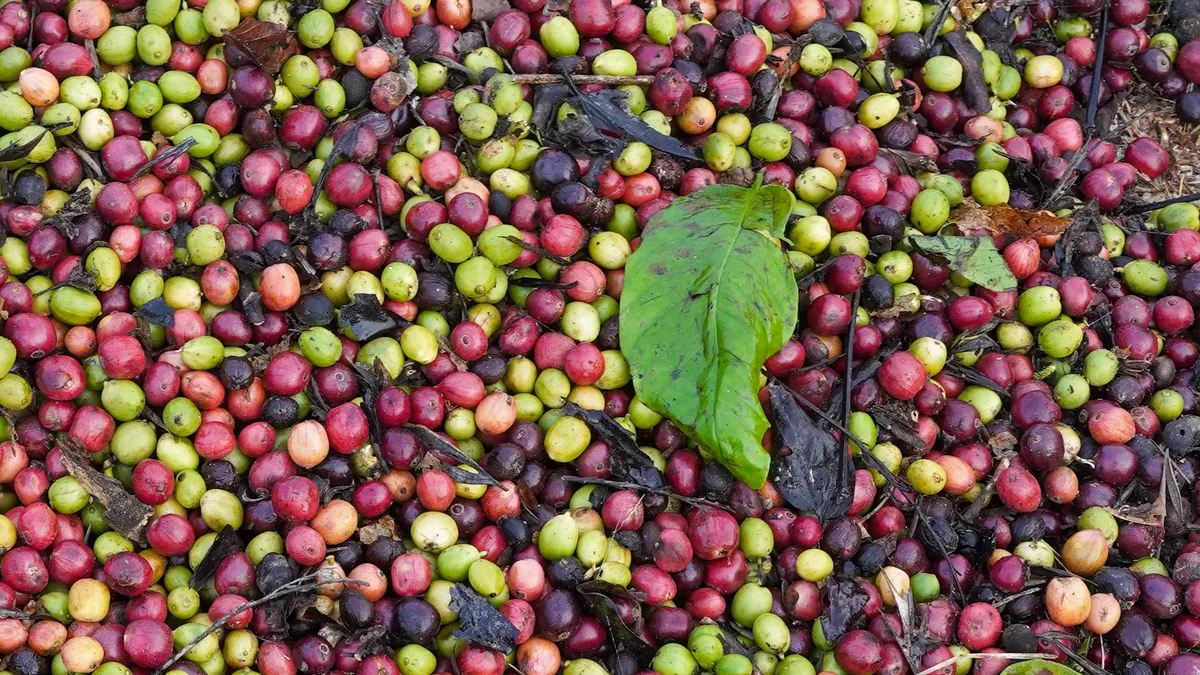
Wet Processing vs Dry Processing: Parchment vs Cherry Economics
A primary determinant of the price a farmer receives at the farmgate is the post-harvest processing method employed on the estate. The Central Coffee Research Institute (CCRI) under the Coffee Board classifies Indian coffee processing into two fundamental pathways:
1. Wet Processing Method (Parchment / Washed Coffee)
Wet processing produces "Plantation" grade in Arabica and "Parchment" in Robusta. The process demands meticulous quality control: only dead-ripe scarlet cherries are harvested. Cherries are fed on the same harvest day into an estate pulper machine to strip away the outer skin and pulp. The mucilage-coated beans undergo natural microbial fermentation in fermentation vats for 24 to 36 hours (Arabica) or 36 to 48 hours (Robusta) to dissolve sticky pectin. The beans are thoroughly washed with fresh mountain stream water and dried on clean tiled or concrete drying yards until the moisture level reaches precisely 10.0% to 10.5%.
Parchment coffee realizes a 45% to 65% price premium over dry cherry. However, it requires substantial capital investment in eco-pulpers, fermentation masonry, continuous fresh water access, and effluent treatment systems (ETPs) to treat acidic pulper wash-water before environmental discharge.
2. Dry Processing Method (Cherry / Natural Coffee)
Dry processing produces "Arabica Cherry" and "Robusta Cherry" (Naturals). This traditional method is straightforward and environmentally benign, requiring zero water for pulping. Whole harvested cherries (including green, semi-ripe, and overripe fruit sorted during harvesting) are spread in thin layers (2 to 3 cm thick) across clean tiled patios, concrete yards, or heavy-duty agricultural HDPE sheets.
The cherries are raked continuously 6 to 8 times daily to promote even drying and prevent surface fermentation or mold development. Drying takes approximately 12 to 15 days under clear sunshine until the outer husk hardens into a dark, brittle shell and the beans inside rattle audibly when shaken. The moisture content must reach exactly 10.5% to 11.0%. It represents the dominant method for smallholders throughout Wayanad.
| Processing Parameter | Washed Method (Parchment) | Dry Method (Cherry / Naturals) | Smallholder Economic Impact |
|---|---|---|---|
| Fresh Cherry Input Needed | 5.5 to 6.0 kg fresh ripe fruit | 4.0 to 4.5 kg fresh ripe fruit | Dry cherry requires less raw fresh fruit per kg finished product |
| Final Dried Product Output | 1 kg dry parchment (with husk) | 1 kg dry cherry (whole dried pod) | Outturn to clean bean: Parchment ~78-80%, Cherry ~50-52% |
| Processing Operational Cost | ₹28 – ₹45 per kg dried product | ₹8 – ₹15 per kg dried product | Parchment requires mechanical pulping, water & effluent handling |
| Current Indicative Price Realized | ₹284 – ₹384 per kg (clean basis) | ₹162 – ₹208 per kg (whole cherry) | Parchment commands higher gross price; cherry minimizes cash outlay |
| Water Requirement per Tonne | 3,000 to 5,000 liters (standard pulper) | 0 liters (Zero water footprint) | Eco-pulpers reduce water usage to 500 liters/tonne |
International Exchange Parity: ICE New York vs ICE London Futures
Domestic coffee prices in India do not exist in isolation; they are tied by an economic umbilical cord to global derivative benchmarks traded on international commodity exchanges. Because India exports over 70% of its annual coffee production, domestic exporters, estate syndicates, and curing houses benchmark their daily farmgate purchase orders against international terminal prices:
- ICE Futures US (New York): The "Coffee C" contract represents the universal price benchmark for physical Arabica coffee. Traded in US cents per pound (c/lb), movements in ICE New York dictate the baseline value for Indian Arabica Plantation coffees. When New York Arabica trades at 240 cents/lb, an Indian exporter calculates farmgate parity by subtracting international shipping freight, marine insurance, curing margins, and terminal port handling at New Mangalore Port.
- ICE Futures Europe (London): The Robusta futures contract traded in London represents the global benchmark for physical Robusta beans, priced in US Dollars per metric tonne ($/MT). With London Robusta futures hovering in elevated ranges ($4,200 to $4,800/MT in recent seasons), domestic Indian Robusta prices have experienced unprecedented bullish momentum.
- Currency Exchange Sensitivity (USD/INR): Because international coffee contracts are settled in US Dollars, every fluctuation in the USD-INR exchange rate impacts domestic farmgate realizations. A weaker Indian Rupee enhances the rupee realization per metric tonne for exporters, encouraging higher farmgate bids across Wayanad and Coorg mandis.
Post-Harvest Storage, Moisture Standards, and Curing Factory Norms
Maximizing returns from coffee sales requires meticulous adherence to post-harvest storage and moisture protocols. Coffee beans are highly hygroscopic, readily absorbing ambient humidity and environmental odors if stored improperly:
- Statutory Moisture Ceiling: The Coffee Board of India enforces strict maximum moisture standards: 10.0% for Arabica Parchment, 10.5% for Robusta Parchment, 10.5% for Arabica Cherry, and 11.0% for Robusta Cherry. Delivering lots with moisture exceeding 11.5% invites severe financial penalties, as wet beans develop mould and synthesize ochratoxin A (OTA), a dangerous mycotoxin strictly regulated by the European Union.
- Jute Bag Storage on Dunnage: Store dried parchment and cherry in clean, odorless, food-grade jute gunny bags. Stack bags inside well-ventilated, dry estate godowns on wooden pallets (dunnage) positioned at least 30 cm away from concrete floors and perimeter walls to prevent moisture seepage.
- Curing Factory Operations: After farmgate purchase, raw coffee lots are transported to specialized curing works located in Mangalore, Kushalnagar, Hassan, Chikmagalur, and Hunsur. Curing involves mechanical hulling to strip the outer parchment or dried cherry husk, polishing to remove silverskin, grading by bean size using vibrating perforated sieves, density grading on gravity separators, and trichromatic optical color sorting to eliminate black and sour defect beans.
Coffee Board Welfare Schemes, Replanting Subsidies, and Farmer Support
To protect smallholders and augment sustainable plantation productivity, the Government of India operates the Integrated Coffee Development Project (ICDP) through the Coffee Board. Key financial assistance and technical schemes available to growers under the Coffee Board of India portal and Ministry of Commerce directives include:
- Replantation Subsidy Scheme: Financial support providing up to ₹50,000 per hectare to uproot moribund, unproductive Arabica and Robusta bushes and replant high-yielding, disease-resistant cultivars developed by CCRI (such as Chandragiri, Selection 9, and Sln 274).
- Water Harvesting & Micro-Irrigation Support: Financial subsidies up to 40% for constructing on-farm rainwater harvesting farm ponds, borewell storage tanks, and installing sprinkler irrigation equipment essential for inducing uniform blossom and backing showers during February and March.
- Eco-Pulper & Drying Yard Grants: Capital subsidies for smallholder farmer groups and self-help collectives to purchase energy-efficient eco-pulpers that reduce water consumption by 80% and construct clean tiled drying yards to improve parchment cleanliness.
- Soil Health & Nutritional Testing: Free and subsidized soil testing services conducted by Coffee Board Regional Research Stations (RRS) in Chettalli, Chundale (Wayanad), and Thandigudi, advising growers on balanced NPK fertilizer dosing using our fertilizer calculator, applying basal nutrition from our DAP fertilizer guide, and conditioning acidic estate soils with our humic acid guide. Planters adopting certified sustainable practices can also consult our organic farming manual.
Estate Mechanization, Financial Planning & Welfare Linkages
Modernizing estate operations with specialized four-wheel-drive machinery—including compact models from the Mahindra tractor range, heavy-duty orchard tractors from the John Deere tractor series, and rugged haulers reviewed in our Swaraj tractor guide—significantly reduces labor overhead during peak berry harvest and transport. Planters managing irrigation can install energy-saving systems through the PM Kusum solar scheme or adopt dedicated units from our solar water pump guide.
Estate owners diversifying into valley crops like rice can explore our paddy cultivation guide, check dairy livestock economics in our dairy farm business guide, and study purebred dairy yields in our Gir cow breed report. Planters can calculate working capital requirements on our Kisan Credit Card loan calculator, project annual returns using our crop income calculator, and track government welfare disbursements via our DBT payment verification guide and farmer e-KYC portal.
Frequently asked questions
- What is the coffee price today in India for Arabica and Robusta?
- The Coffee Board of India indicates prevailing farmgate prices between ₹17,500 and ₹19,200 per 50 kg bag (₹350 to ₹384 per kg) for Arabica Parchment, ₹9,200 to ₹10,400 per bag (₹184 to ₹208 per kg) for Arabica Cherry, ₹14,200 to ₹15,800 per bag (₹284 to ₹316 per kg) for Robusta Parchment, and ₹8,100 to ₹9,300 per bag (₹162 to ₹186 per kg) for Robusta Cherry. You can monitor daily wholesale commodity quotations on our mandi rates platform.
- What is the current coffee price in Kerala across Wayanad mandis?
- In Wayanad (Sulthan Bathery, Kalpetta, and Mananthavady), farmgate Robusta Cherry rates range between ₹162 and ₹186 per kg for dry cherry lots meeting statutory 11% moisture norms. Wet-processed Robusta Parchment trades higher at ₹284 to ₹314 per kg, supported by active off-take from domestic processors and exporters.
- What is the difference between parchment coffee and cherry coffee?
- Parchment coffee (washed) is produced by pulping ripe red berries on the day of harvest, fermenting them to remove mucilage, and washing before sun drying. Cherry coffee (naturals) is made by sun drying whole unpulped berries directly on patios for 12 to 15 days. Parchment earns a substantial price premium but requires machinery and water. Review processing agronomy in our coffee agronomy guide.
- How does the Coffee Board of India determine daily coffee rates?
- The Market Intelligence Unit of the Coffee Board surveys licensed dealers, curing works, grower associations, and export houses across Chikmagalur, Coorg, Hassan, and Wayanad every morning. It compiles physical transaction data and reconciles it with international ICE New York and London terminal futures to release official benchmarks on coffeeboard.gov.in.
- Why are Robusta coffee prices trading at multi-decade highs?
- Robusta prices are at historical highs due to severe global supply deficits. Prolonged droughts and heatwaves in Vietnam (the top Robusta producer) and unpredictable rainfall in Brazil have created a global shortage. This shortage has driven London ICE Robusta futures above $4,500/MT, lifting Indian farmgate prices proportionally.
- What is outturn in raw coffee transactions and how is it calculated?
- Outturn measures the percentage of clean, marketable green coffee beans recovered after hulling dry parchment or cherry. For example, a 50 kg bag of Robusta cherry that yields 26 kg of clean beans has an outturn of 52%. Traders test a 1 kg sample, and lots yielding higher outturns receive an automatic price premium.
- What is the ideal moisture content for drying raw coffee beans?
- The Coffee Board strictly specifies moisture standards between 10.0% and 10.5% for Arabica Parchment, 10.5% to 11.0% for Robusta Parchment and Arabica Cherry, and 10.5% to 11.0% for Robusta Cherry. Exceeding 11.5% causes mold development, ochratoxin contamination, and heavy price penalties at curing factories.
- What is Monsooned Malabar coffee and why does it command a premium?
- Monsooned Malabar is a unique geographical indication (GI) specialty coffee processed in coastal Mangalore and Malabar. Clean cherry beans are exposed to moisture-laden southwest monsoon winds in specialized open warehouses for 12 to 16 weeks. The beans swell, turn golden-yellow, and lose acidity, trading at ₹22,000 to ₹24,500 per 50 kg bag. Learn about parallel plantation crops in our rubber price today guide.
- How do international ICE futures influence Indian coffee rates?
- Because India exports over 70% of its crop, domestic bids derive directly from ICE New York (for Arabica, in cents/lb) and ICE London (for Robusta, in USD/MT). Exporters convert terminal quotes to Indian Rupees per metric tonne using current USD-INR exchange rates and deduct logistics, curing, and sea freight to calculate farmgate rates.
- What government subsidies are available for coffee growers in India?
- Under the Integrated Coffee Development Project (ICDP), the Coffee Board provides replanting subsidies up to ₹50,000/ha for senile bushes, up to 40% capital grants for rainwater harvesting ponds and sprinkler systems, subsidies for eco-pulpers and drying yards, and free soil testing at regional research stations. Growers can explore irrigation subsidies in our solar water pump guide.
- How can smallholders protect coffee berries from Berry Borer damage?
- The Coffee Berry Borer (Hypothenemus hampei) is managed through timely harvest of all ripe berries, clean gleaning of fallen fruit (zero left on ground), deployment of Broca traps with ethanol-methanol lures (20 per acre), and biological application of the entomopathogenic fungus Beauveria bassiana.
- Can smallholders sell coffee directly to curing factories or exporters?
- Yes, growers can sell directly to curing works in Kushalnagar, Hassan, Mangalore, or Wayanad cooperatives if they have bulk lots (typically minimum 20 to 50 bags). Smaller growers with few bags pool their harvest through local village primary marketing societies to minimize freight. Planters can model operating finance using our Kisan Credit Card loan calculator.
This article is for general information only and is not financial advice. Loan and scheme eligibility depends on partner and government criteria.