Cardamom Price Today: Kerala Mandi Bhav & Auction Guide 2026
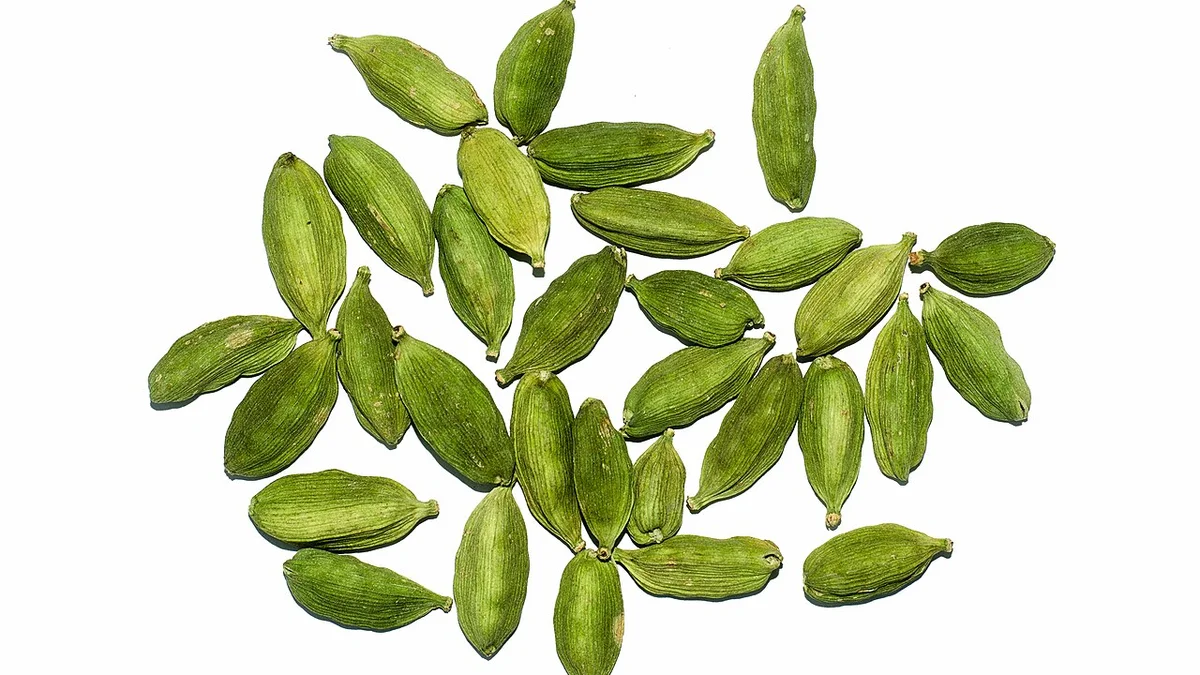
Key takeaways
- Kerala produces roughly 75% to 80% of India’s total small green cardamom output, centered in the cloud forests of the Cardamom Hills in Idukki and the high plateaus of Wayanad.
- Wholesale cardamom price today benchmarks are established through mandatory daily electronic auctions regulated by the Spices Board of India at Puttady (Idukki) and Bodinayakanur (Theni border).
- Indicative wholesale auction averages range from ₹2,180 to ₹2,480 per kg as of November 2026, while farm-gate fresh green capsule prices range from ₹380 to ₹450 per kg (roughly 5kg of green capsules yields 1kg of cured dried cardamom).
- Grade spreads remain substantial: premium 8mm+ Extra Bold (AGEB) pods command ₹2,750 to ₹3,150 per kg for Middle Eastern export, compared to ₹1,450 to ₹1,700 per kg for unassorted open splits.
- Planters can monitor official daily auction bulletins on the Spices Board portal and optimize returns by using modern energy-efficient flue curing systems that retain 90%+ green color saturation.
Small green cardamom (Elettaria cardamomum, widely searched by plantation owners, spice traders, and consumers as cardamom price today, cardamom price in kerala today, or elaichi rate in kerala) is the reigning monarch of high-value plantation cash crops. Concentrated predominantly within the high-elevation montane evergreen forests of the Western Ghats in Kerala, green cardamom represents both an essential livelihood for tens of thousands of highland farming families and an indispensable export earner in India’s agricultural balance of trade as of 23 November 2026.
Because green cardamom is an exceptionally climate-sensitive perennial that requires consistent sub-canopy shade, steady 1,500 to 2,500 mm annual rainfall, and intensive labor for staggered harvesting rounds, market supply fluctuates from week to week. Planters and spice buyers continuously monitor cardamom price today live auction bulletins released by the Spices Board of India to gauge whether to release cured stocks or hold inventory in climate-controlled storage. Whether you are tracking cardamom price in kerala across local primary markets like Kattappana, Nedumkandam, and Kumily, evaluating raw farm-gate capsule rates against cured dry pods, or checking consumer retail elaichi rates, this definitive guide provides a thorough market analysis of auction rates, curing recovery ratios, seasonal arrival cycles, and export trade fundamentals.
Kerala cardamom auction hubs: Puttady, Vandanmettu & Bodinayakanur
In India, commercial wholesale trade of small green cardamom is legally centralized through transparent electronic auctions licensed and supervised by the Spices Board (Ministry of Commerce and Industry). Bidding takes place across three core institutional nodes:
- Puttady Spices Park (Idukki District, Kerala): The primary e-auction complex in the High Ranges. It features multi-terminal electronic bidding rooms where licensed auctioneers (such as the Cardamom Planters Association, Header Systems, and South Indian Green Cardamom Company) host daily rotational auctions from Monday through Saturday.
- Vandanmettu Terminal (Idukki District, Kerala): The traditional historic center of cardamom growers. It acts as a primary aggregation and curing hub where local smallholders pool fresh harvests for laboratory moisture and density testing.
- Bodinayakanur (Theni District, Tamil Nadu): Situated right at the foot of the Bodimettu Ghat road descending from Idukki, "Bodi" is India’s major cardamom trading, grading, polishing, and export clearing center, handling over 70% of physical outward logistics.
Cardamom price today in Kerala: indicative rates & grade breakdown
The price realized for a lot depends upon capsule diameter (measured in millimetres), color retention (deep parrot green commands maximum premiums), bulk density (weight per litre), and percentage of splits. Below are the current indicative wholesale and retail rate ranges recorded across Kerala trade channels as of November 2026:
| Trade Category / Grade | Physical Sieve Specification | Indicative Price Range (₹/kg) | Primary Market Hub / Sales Channel |
|---|---|---|---|
| Composite E-Auction Average | Unassorted cured bulk lot | ₹2,180 – ₹2,480 / kg | Spices Board Puttady / Bodinayakanur |
| 8mm+ Extra Bold (AGEB Grade) | Uniform 8.0mm+ whole green pods | ₹2,750 – ₹3,150 / kg | Export consignment clearing (Gulf & EU) |
| 7-8mm Bold (AGB Grade) | 7.0mm to 8.0mm sound pods | ₹2,250 – ₹2,580 / kg | Domestic wholesale spice mandis (Kochi, Delhi) |
| 6-7mm Medium / Commercial (AGS) | 6.0mm to 7.0mm pale/green pods | ₹1,850 – ₹2,150 / kg | Commercial confectionery & culinary buyers |
| Open Pods / Splits (Panbar) | Mixed size split capsules | ₹1,450 – ₹1,700 / kg | Masala extraction & spice grinding mills |
| Farm-gate Fresh Green Capsules | Raw uncured fresh harvest | ₹380 – ₹450 / kg | Direct field sale from smallholders to kilns |
| Retail Branded Consumer Pack | Sealed pouch (100 Grams) | ₹250 – ₹310 / pack | Kerala spice bazaars & national supermarkets |
Source: Indicative ranges, November 2026. Sourced from Spices Board of India daily auction market bulletins, Cardamom Growers Association weekly circulars, and wholesale APMC spices market records. Realized rates fluctuate daily with each auction session based on arrival volumes and exporter bids.
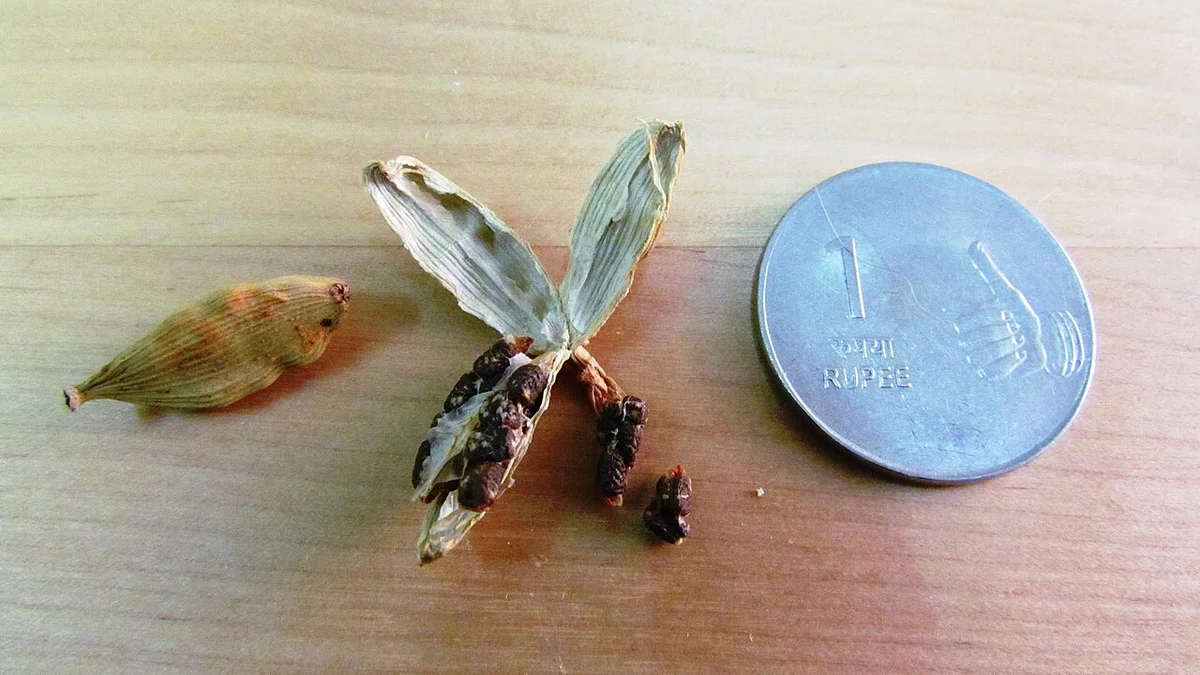
Fresh green vs dry cured cardamom: the 5:1 weight recovery ratio
A critical commercial reality that every cardamom farmer understands is the severe weight reduction that occurs during the post-harvest curing process. When fresh green cardamom capsules are harvested from plantation panicles, they contain approximately 78% to 82% water content by weight:
- Recovery Mathematics: It requires approximately 4.5 to 5.2 kilograms of freshly harvested raw green capsules to produce exactly 1.0 kilogram of cured, dry commercial cardamom.
- Economic Parity: A farm-gate raw green purchase price of ₹400 per kg corresponds to a baseline raw material cost of ₹2,000 per kg of cured cardamom (5 kg x ₹400 = ₹2,000), excluding curing fuel, labor, grading, and transportation expenses.
- Curing Chamber Operations: Curing must commence within 24 to 36 hours of harvest. Modern curing chambers use indirect wood-fired or thermic-fluid radiator heat maintaining 45°C to 52°C for 20 to 24 hours with controlled ventilation, bringing final moisture down to a safe 9% to 11%.
- Bleaching Prevention: Over-drying or direct smoke exposure turns green capsules brown or straw-yellow, causing severe price discounts at auction.
Seasonal price cycles: when do Kerala cardamom rates peak?
Cardamom price movements follow a distinct seasonal cycle influenced by monsoon flowering and harvesting schedules across the high ranges:
- Peak Harvest (August to December): Following successful pre-monsoon flowering, regular harvesting rounds occur every 20 to 25 days. Heavy auction arrivals of 60,000 to 100,000 kg per day typically moderate prices, offering favorable procurement opportunities for wholesale aggregators.
- Lean Season (February to June): Harvesting concludes by late January or early February. As arrivals taper off to under 20,000 kg per day, wholesale auction rates consistently strengthen, reaching annual peaks between April and June.
- Monsoon Anxiety (June to July): The onset of the southwest monsoon triggers intense market speculation. Inadequate rainfall or excessive cloudbursts that cause fungal capsule rot (Azhukal disease) immediately send auction prices surging.
Wayanad vs Idukki: regional microclimates & quality spreads
While Idukki district dominates aggregate volume statistics, Wayanad district in northern Kerala produces distinctive cardamom varieties with unique aromatic and essential oil profiles. The elevation in Idukki ranges from 900 to 1,400 meters above sea level across the Cardamom Settlement Reserve (CSR), characterized by steep slopes, loamy soils rich in organic humus, and dense silver oak and jungle canopy trees. This high altitude promotes slow capsule maturation, creating dense, deep-green, thick-skinned pods that hold up well during international sea freight.
In contrast, Wayanad cardamom plantations operate at moderate elevations of 750 to 1,050 meters, often intercropped with Robusta coffee and black pepper. Grains from Wayanad tend to mature 2 to 3 weeks earlier in the season, allowing local planters to capture initial pre-season market premiums before massive Idukki volumes flood the auction floors. Furthermore, Wayanad cardamom is renowned for higher terpinyl acetate and cineole ratios, imparting a sweeter, floral top-note highly favored by luxury Scandinavian confectionery and European bakery ingredient houses.
How to read the Spices Board daily electronic auction report
Every evening following the conclusion of trading at Puttady or Bodinayakanur, the Spices Board of India issues an official statutory Electronic Auction Summary Bulletin. Understanding these metrics enables growers to evaluate current demand and decide whether to sell their pooled produce:
- Quantity Arrived vs Quantity Sold: The total volume (in kilograms) pooled by farmers compared to the volume actually cleared by bidders. A clearance ratio above 90% indicates aggressive buyer demand and firm pricing sentiment; a clearance ratio below 70% suggests buyers are resisting current asking rates.
- Maximum Price Realized (₹/kg): The highest single bid placed for an exceptional, hand-sorted 8.5mm+ AGEB gourmet lot. While frequently highlighted in local news headlines, maximum prices apply only to small boutique lots and do not reflect overall market returns.
- Overall Weighted Average Price (₹/kg): The most critical benchmark for commercial growers. Calculated by dividing total gross sales turnover by total kilograms sold across all grades. When the weighted average price climbs by ₹50 to ₹100 over consecutive auction days, market sentiment is strongly bullish.
- Number of Bidders & Registered Lots: Reflects active participation from export consortia and domestic terminal buyers. Active auctions feature between 45 and 75 licensed bidding entities competing across 150 to 300 individual grower lots.
For detailed AGMARK grade definitions, export sieving parameters, and comprehensive technical standards, read our foundational guide on cardamom price.
Official regulatory portals and spice trade resources
Planters, spice traders, and exporters can access official daily e-auction circulars, lot summaries, and price bulletins directly through verified government bodies. Daily auction averages and grade breakdowns are posted on the Spices Board of India portal, while botanical research, high-yielding selections, and disease management protocols are developed by the ICAR - Indian Institute of Spices Research (IISR Kozhikode). Broader national commodity benchmarks are tracked on Agmarknet, operating under trade regulations established by the Ministry of Commerce & Industry.
To evaluate broader plantation crops and agricultural commodity markets, explore KisanPe guides including our foundational analysis on cardamom price and grade parameters, coffee price today, and rubber price today in Kottayam. For high-value horticultural commodities, review our guides on almond 1kg price benchmarks, wholesale dried fig rates, and cashew nut grade pricing. Planters looking for farm equipment and field inputs can consult our guides on tractors in India, disease control with Saaf fungicide, and organic plantation fertility using cow dung fertilizer.
Frequently asked questions
- What is the cardamom price today in Kerala per kg?
- As of November 2026, indicative composite e-auction prices in Idukki, Kerala average between ₹2,180 and ₹2,480 per kg. Top-grade 8mm Extra Bold pods trade at ₹2,750 to ₹3,150 per kg, while fresh uncured green capsules fetch ₹380 to ₹450 per kg. For comprehensive grade classifications, consult our dedicated cardamom price and quality guide.
- Where are the main cardamom trading markets located in Kerala?
- The primary wholesale cardamom markets in Kerala are in Idukki district, notably the Spices Board e-auction facility at Puttady, alongside trading centers in Vandanmettu, Kattappana, Nedumkandam, Kumily, and Kalpetta. Planters can compare regional plantation trends with our coffee price today analysis.
- Why is there a huge difference between green fresh cardamom and dry cured cardamom prices?
- Fresh green cardamom contains about 80% water. It takes roughly 5 kilograms of fresh green capsules to yield 1 kilogram of cured dry cardamom after 24 hours of controlled kiln dehydration, explaining the roughly 5:1 price differential.
- How can buyers check live cardamom auction rates daily?
- The Spices Board of India publishes daily electronic auction results, including total lots arrived, quantity sold, maximum price, minimum price, and average price per kg on their official portal at indianspices.com after each session. Planters can also check real-time commodity movements on the KisanPe live mandi rates platform.
- What makes 8mm extra bold cardamom so expensive in export trade?
- 8mm+ pods represent only 10% to 15% of total harvest volume. They have fully matured dark seeds packed with volatile aromatic oils and retain vibrant green color, making them the preferred luxury choice for Saudi Arabian and Gulf gahwa coffee.
- Which months offer the highest prices for Kerala cardamom growers?
- Cardamom prices typically peak between March and June during the post-harvest lean season, when fresh plantation arrivals dry up and exporters compete aggressively for cured warehouse stocks.
- What is the retail price of 100 grams of green elaichi in Kerala?
- In local spice bazaars and retail grocery outlets across Kerala, a 100-gram sealed pouch of bold green cardamom currently retails between ₹250 and ₹310, depending on capsule size and brand packaging.
- What causes the green color of cardamom to fade during storage?
- Exposure to direct light, excessive heat above 25°C, and ambient humidity degrade chlorophyll pigments. To maintain vibrant green color, cured cardamom must be stored in black opaque poly-lined bags inside sealed master cartons.
- How many times per year is cardamom harvested in Kerala?
- Cardamom harvest spans roughly 5 to 7 rounds between August and January, with pickers visiting each plantation block every 20 to 25 days to harvest only fully mature green capsules.
- What is the role of the Spices Board in regulating cardamom prices?
- The Spices Board licenses auctioneers, enforces transparent electronic bidding, verifies weighing accuracy, ensures timely payment settlements, and establishes statutory quality grading standards. For crop disease management protocols, planters can consult research from the ICAR - Indian Institute of Spices Research.
- What are cardamom "splits" and what is their market value?
- Splits are capsules that have naturally burst open during over-ripening or rapid drying. Because their exposed seeds can lose volatile essential oils, they sell at a discount, trading around ₹1,450 to ₹1,700 per kg for spice grinding.
- Can smallholder planters sell directly at Spices Board e-auctions?
- Yes. Any farmer with registered revenue land records or an official planter registration card from the Spices Board can pool their cured lot through licensed auctioneers at Puttady or Bodinayakanur. Daily market quotes can also be verified on the central Agmarknet portal.
This article is for general information only and is not financial advice. Loan and scheme eligibility depends on partner and government criteria.