Flower Seeds India: Commercial Floriculture & Varieties
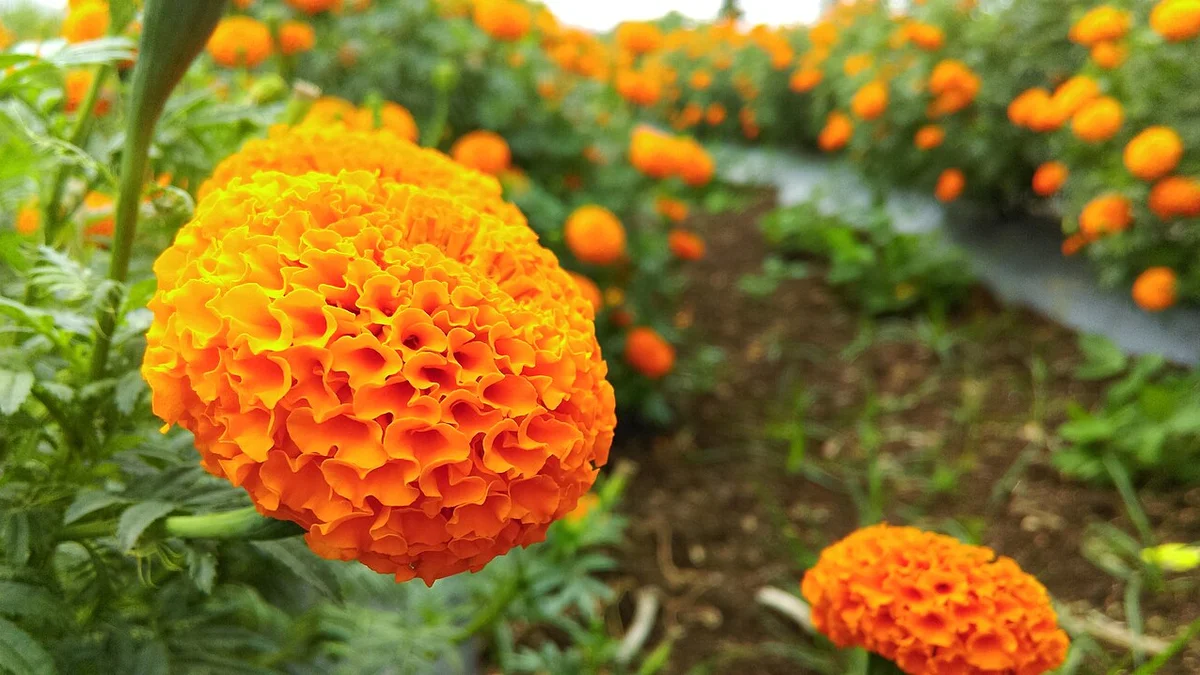
Commercial floriculture represents one of the most lucrative and rapidly expanding high-value diversification opportunities in Indian horticulture. Driven by year-round religious offerings, wedding extravaganzas, festival garlands, corporate aesthetics, and international essential oil extraction, domestic flower consumption exceeds thousands of tonnes daily. At the foundation of this thriving multi-crore agribusiness lies the selection of certified, high-germination flower seeds engineered for uniform blossom size, intense petal coloration, extended vase life, and robust disease tolerance.
Governed by certified seed testing standards administered through the National Seeds Corporation (Seednet India Portal) and supported by extensive capital subsidies under the National Horticulture Board (NHB Official Portal) and the Department of Agriculture and Farmers Welfare (DA&FW Horticulture Division), commercial floriculture spans both open-field loose flowers (marigold, aster, gaillardia) and precision greenhouse cut flowers (gerbera, carnation, Dutch roses). In collaboration with research frameworks from the Indian Council of Agricultural Research (ICAR Directorate of Floricultural Research), this definitive horticultural guide details popular flower seed varieties, nursery germination protocols, seasonal cropping calendars, wholesale APMC flower mandi dynamics, and e-commerce cash on delivery sourcing.
1. Major Commercial Flower Seed Varieties in India: Loose vs Cut Flowers
Indian flower farming is divided into two distinct commercial sectors: Loose Flowers (plucked without stems, sold by weight for religious worship, festive garlands, and industrial xanthophyll dye extraction) and Cut Flowers (harvested with long straight stems for floral bouquets and hotel decoration):
| Commercial Flower Crop | Popular Hybrid Seed / Cultivar | Seed Requirement per Acre | Crop Lifecycle / Bloom Window | Market Format & Yield Potential |
|---|---|---|---|---|
| African Marigold (Genda) | Syngenta Maxima Yellow, Pusa Narangi, Indus Orange | 200 – 250 Grams / Acre | 90 – 120 Days (Peak Dussehra / Diwali) | Loose Flower: 8 – 12 Tonnes / Acre |
| French Marigold (Jafri) | Pusa Arpita, Bonanza Mixed, Petite Yellow | 250 – 300 Grams / Acre | 75 – 90 Days (Winter Landscape & Borders) | Loose Flower: 5 – 7 Tonnes / Acre |
| China Aster (Gulchandi) | Kamini, Poornima, Phule Ganesh Violet | 500 – 600 Grams / Acre | 110 – 130 Days (Winter Festive Season) | Loose & Cut: 6 – 8 Tonnes / Acre |
| Gladiolus (Cut Spike) | American Beauty, White Prosperity, Jester | 40,000 – 50,000 Corms / Acre | 80 – 100 Days (Winter / Spring Harvest) | Cut Flower: 40,000 – 48,000 Spikes / Acre |
| Gaillardia (Blanket Flower) | Lorenziana, DGS-1, Local Yellow Double | 400 – 500 Grams / Acre | Year-Round Perennial (Multiple flushes) | Loose Flower: 6 – 9 Tonnes / Acre annually |
| Chrysanthemum (Sevanti) | Pusa Anmol, Baggi, Shanti, Ratlam Selection | Nursery Cuttings / Seeds (200g) | 120 – 140 Days (Winter Festival Peak) | Loose Flower: 7 – 10 Tonnes / Acre |
Source: ICAR Directorate of Floricultural Research (ICAR-DFR Pune) and National Horticulture Board Crop Compendium, November 2026.
2. Nursery Sowing, Pro-Tray Raising & Germination Protocols
Because hybrid flower seeds are minute and expensive (often costing ₹2,500 to ₹4,500 for a 10-gram canister of certified F1 hybrid marigold), broadcasting seeds directly into the field leads to uneven plant stands and massive seed mortality. Progressive growers raise seedlings in protected nurseries using cellular plastic pro-trays:
- Sterilized Cocopeat Medium: Fill 98-cell or 104-cell plastic pro-trays with an aerated potting mixture of sterilized washed cocopeat (70%), vermicompost (20%), and perlite (10%) enriched with Trichoderma harzianum bio-fungicide to prevent damping-off.
- Precision Single-Seed Sowing: Place exactly one seed per cell at a depth of 0.5 cm. Cover lightly with a thin layer of fine cocopeat and mist gently using a fine-rose hand sprayer.
- Moisture & Darkness for Germination: Stack seeded pro-trays together, cover with black polyethylene film, and maintain at 24°C to 28°C for 3 to 4 days until white radicles emerge.
- Hardening Off: Shift sprouted trays to a 50% green agro-shade net nursery. Drench seedlings with water-soluble 19:19:19 fertilizer (1.5 g/L) at 12 days. Seedlings achieve robust pencil-thick root balls ready for field transplanting in 22 to 25 days.
3. Seasonal Floriculture Cropping Calendar & Festival Sowing Windows
Flower pricing in wholesale mandis is intensely cyclical, surging by 300% to 500% during auspicious religious festivals (Ganesh Chaturthi, Navratri, Dussehra, Diwali) and wedding seasons (November-December and February-March). Farmers must reverse-calculate their sowing dates to hit peak market windows:
| Target Festival / Market Window | Recommended Sowing Period | Field Transplanting Window | Peak Harvesting Date | Indicative Wholesale Rate (₹ / Kg) |
|---|---|---|---|---|
| Ganesh Chaturthi (Sept) | Late May / Early June (Nursery) | Late June / Early July | Late August – September | ₹60 – ₹110 / kg (Marigold) |
| Navratri & Dussehra (Oct) | Late June / Mid July (Nursery) | Early August | October Festive Week | ₹80 – ₹150 / kg (Peak Garlic / Marigold) |
| Diwali / Laxmi Pujan (Nov) | Late July / Early August (Nursery) | Late August / Early Sept | Late October – November | ₹100 – ₹180 / kg (Highest Annual Peak) |
| Winter Wedding Season (Dec-Jan) | September (Nursery) | October | December – January | ₹50 – ₹90 / kg (Steady Bulk Demand) |
| Summer Loose Flowers (March-May) | December / January (Nursery) | February | April – May | ₹40 – ₹70 / kg (Regular Temple Worship) |
Source: APMC Ghazipur Flower Market (Delhi) and Bengaluru International Flower Auction Centre (IFAB) Price Records, November 2026.
4. Flower Harvesting, Post-Harvest Packaging & Wholesale Mandi Channels
Loose flowers must be plucked during cool early morning hours (between 5:00 AM and 8:00 AM) or late evenings after field heat dissipates. Harvest fully opened blooms with dry petals; moisture trapped inside closed bags causes rapid bacterial heating and petal rotting.
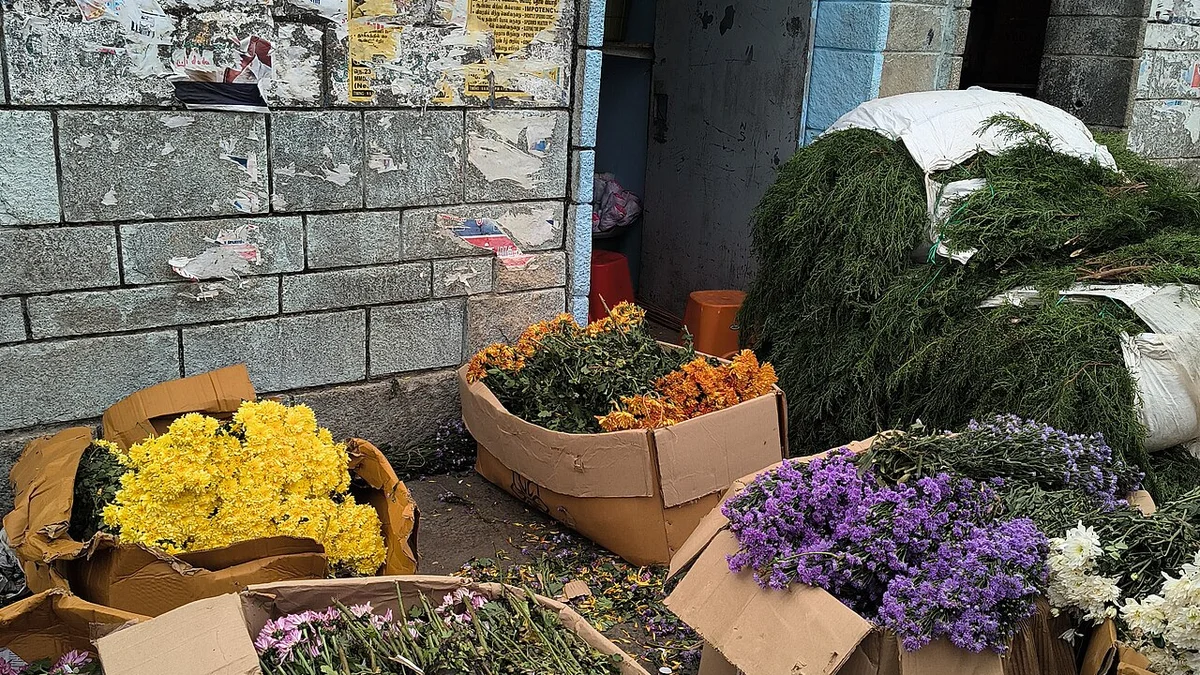
- Packaging Loose Flowers: Pack harvested marigold or aster blooms in porous jute sacks, perforated polyethylene bags, or bamboo baskets holding 20 kg to 25 kg. Transport overnight via express bus or freight trucks to arrive at metropolitan flower mandis before 4:00 AM wholesale auctions.
- Major Wholesale Flower Mandis in India: Key price-setting terminal markets include Ghazipur Flower Mandi (New Delhi), Dadar Flower Market (Mumbai), KR Market (Bengaluru), Koyambedu (Chennai), and Howrah Flower Market (Kolkata).
- Online Seeds Cash on Delivery (COD): Modern horticulture platforms (such as BigHaat, AgroStar, and KisanPe) enable smallholders to purchase certified F1 hybrid flower seeds with doorstep cash-on-delivery, eliminating dealer counterfeiting and retail markups.
5. Economics & Government Subsidies under Mission for Integrated Development of Horticulture (MIDH)
Under the Mission for Integrated Development of Horticulture (MIDH) and National Horticulture Board (NHB) schemes, cultivating farmers receive generous financial support: 40% capital subsidies for open-field loose flower cultivation (up to ₹16,000 per hectare for hybrid seeds and inputs), 50% capital subsidies for commercial shade net and polyhouse erection (up to ₹7 lakh to ₹14 lakh per unit), and 35% subsidies for refrigerated transport vans and rural pack houses.
7. Commercial Floriculture Economics, Protected Cultivation & Spices
Commercial floriculture represents one of the highest grossing segments per hectare in Indian horticulture, driven by year-round demand for religious offerings, festive celebrations, weddings, and industrial essential oil extraction. Commercial flower growers frequently benchmark returns against other high-value horticultural crops—such as commercial dragon fruit farming, specialty grains like rajgira amaranth seeds, wholesale cashew kernel price benchmarks, raw cashew nut farm-gate pricing, the daily Shivamogga adike rate today, and all-India arecanut price today.
Diversified farmers also follow conventional cash crop benchmarks including spot mustard seed market prices, regional sarso mandi bhav, daily onion rate today trends, and wholesale mill prices for chini ka rate today alongside sugar today rate benchmarks. For direct wholesale marketing without intermediary deductions, growers leverage Kisan Mandi direct trading platforms and major regional exchanges like Muhana Mandi Jaipur flower auctions.
8. Agri-Logistics, Farm Mechanization, Credit & Crop Protection
Because fresh commercial flowers are highly perishable, maintaining quality requires rapid post-harvest logistics. Farmers utilize smooth-suspension commercial vehicles such as the Mahindra Supro commercial vehicle or invest in clean commercial transport supported by the PM E-DRIVE electric vehicle subsidy. High-value flower seed purchases, shade net infrastructure, and fertigation systems can be financed through concessional institutional working capital via the Kisan Credit Card (KCC) scheme.
Cultivators protect against market volatility and weather disruptions through PMFBY crop insurance tracking, backed by direct welfare support via PM Kisan beneficiary status verification, regional welfare through CM Kisan Odisha DBT, and social security registration on UPLMIS shramik labour card. Balanced soil fertility for vigorous flowering is guided by Soil Health Card soil testing, combined with automated drip and fogger systems under the PM Krishi Sinchayee Yojana.
Managing sucking pests like thrips, aphids, and whiteflies that damage flower buds is achieved with targeted systemic insecticides including imidacloprid insecticide dosage, while fungal petal blight and root rot are managed with certified chemistries from our broad spectrum fungicide guide and Roko fungicide treatments. Land preparation can be mechanized using tractors like the Swaraj 744 FE tractor, the Mahindra 575 DI, the Eicher 380, and modern John Deere tractors, subsidized under the PM Kisan tractor subsidy program and combine harvester price benchmarks. Tools, equipment, and market intelligence can be explored on Farm Search, while allied enterprises like Gir cow dairy units, Murrah buffalo farming, commercial goat farming, daily NECC egg production, and the Barwala poultry market ensure sustained year-round farm cash flow.
Official floriculture scheme subsidies, seed certification guidelines, and export standards are published by the National Horticulture Board (NHB), APEDA Floriculture Export Division, the ICAR-Directorate of Floricultural Research, and the Ministry of Agriculture & Farmers Welfare.
Frequently asked questions
- Which commercial flower varieties yield the highest profit per acre in India?
- Marigold (African and French varieties), Gladiolus, Tuberose (Rajnigandha), Rose, Chrysanthemum (Guldaudi), and Jasmine offer superior profitability, yielding ₹1.5 lakh to ₹3.5 lakh net profit per acre under scientific cultivation and festive market timing as guided by the National Horticulture Board (NHB).
- What is the seed rate for African marigold farming per acre?
- For open-pollinated marigold varieties, the seed rate is approximately 800 to 1,000 grams per acre. For high-yielding F1 hybrids, 150 to 200 grams of seed per acre is sufficient when raised in nursery protrays.
- What government subsidies are available for commercial floriculture in India?
- Under the Mission for Integrated Development of Horticulture (MIDH) and National Horticulture Board (NHB), farmers can access 40% to 50% capital subsidies for shade net houses, polyhouses, planting material, and cold rooms.
- How are commercial flower seeds germinated successfully in nurseries?
- Sow seeds in seedling protrays filled with sterilized cocopeat, vermicompost, and perlite mixture. Maintain light moisture and 22°C to 26°C temperature; seeds germinate within 4 to 7 days, ready for transplanting at 25 to 30 days.
- Which sucking pests damage commercial flower crops and how are they managed?
- Thrips, aphids, red spider mites, and whiteflies deform flower buds and discolor petals. Spray systemic insecticides like imidacloprid insecticide rotated with neem-based bio-pesticides.
- Can floriculture farmers access subsidized working capital through KCC?
- Yes, commercial flower farmers are eligible for crop loans and working capital assistance through the Kisan Credit Card (KCC) scheme at 4% effective interest with prompt repayment.
- How does drip irrigation improve flower yield and quality?
- Drip fertigation delivers calibrated moisture and water-soluble fertilizers directly to root zones, reducing weed emergence, preventing foliar fungal diseases, and saving up to 50% water as supported by the PM Krishi Sinchayee Yojana.
- What is the best harvesting time for commercial cut flowers and loose flowers?
- Harvest loose flowers (marigold, jasmine) during cool early morning or late afternoon hours when flowers are fully open. Harvest cut flowers (roses, gladiolus, carnations) at the tight-bud or paintbrush stage for maximum vase life.
- How can flower growers transport blooms to distant wholesale mandis without wilting?
- Pack loose flowers in ventilated bamboo baskets or crates lined with damp cloth, and transport cut flowers upright in water buckets inside insulated vehicles like the Mahindra Supro commercial vehicle.
- Which fungal diseases attack marigold and gladiolus and how are they treated?
- Alternaria leaf spot and Botrytis flower blight are common threats. Apply systemic fungicides from our broad spectrum fungicide guide or Roko fungicide upon initial symptom emergence.
- Where can farmers find comprehensive tools for equipment and mandi search?
- Cultivators can utilize our dedicated Farm Search equipment and mandi tool to evaluate local market trends, transport options, and implement specifications.
- What export quality standards must Indian cut flowers meet for international markets?
- Export flowers must meet APEDA export standards, featuring uniform stem length, disease-free foliage, tight bud stages, zero pesticide residues above MRLs, and phytosanitary certification.
This article is for general information only and is not financial advice. Loan and scheme eligibility depends on partner and government criteria.