Onion Rate Today: Mandi Bhav, 1 Kg Price & Market Trends
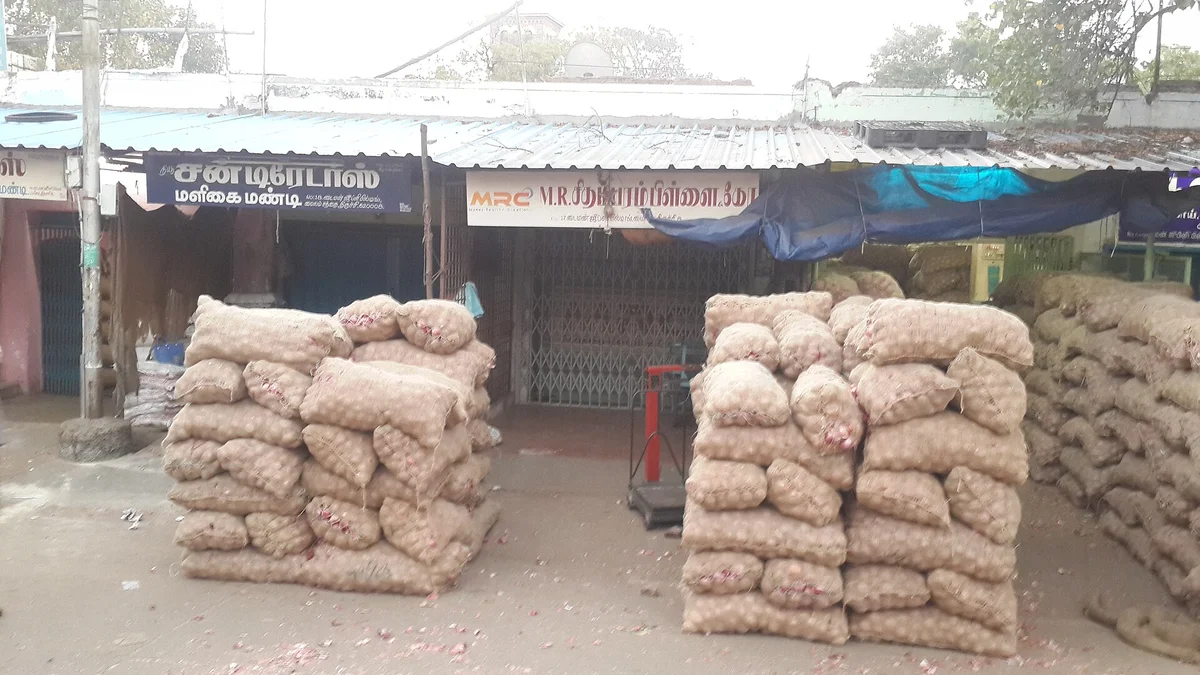
Onion (Allium cepa) is an indispensable staple in the Indian household diet and a vital economic driver across the nation’s agricultural supply chains. Cultivated across an estimated 16 to 19 lakh hectares with annual output oscillating between 25 and 31 million metric tonnes, India ranks as the world’s second-largest onion producer after China. Yet, onion is notorious for dramatic price volatility. Because it is a semi-perishable crop subject to distinct harvesting windows, seasonal monsoonal disruptions, and storage limitations, tracking onion rate today is essential for farmers, wholesale traders, commission agents, food processors, and daily consumers alike.
Wholesale mandi transactions recorded across premier agricultural produce market committees (APMCs)—such as Asia’s largest onion trading hub at Lasalgaon (Nashik, Maharashtra), Azadpur Mandi in Delhi, Pimpalgaon, Neemuch, and Hubli—serve as national price bellwethers. Whether you are monitoring the wholesale quintal price (per 100 kg) or evaluating the retail 1 kg onion price in major urban centers, staying informed with official Agmarknet data (Agmarknet Agricultural Marketing Information Network), the National Horticulture Board (NHB Portal), and the Department of Consumer Affairs (Department of Consumer Affairs Price Monitoring Division) ensures transparent commercial decisions. This in-depth market report explores wholesale APMC price benchmarks, the economics behind retail markups, seasonal harvest dynamics, grading classifications, and post-harvest storage management.
1. Wholesale Onion Rate Today: Major Mandi Bhav Across India
In Indian mandis, onion is traded per quintal (100 kg) based on variety, bulb diameter, pungency, moisture content, skin retention, and color. Prices vary substantially depending on geographic proximity to major production belts in Maharashtra, Madhya Pradesh, Karnataka, Gujarat, and Rajasthan. Below is an indicative overview of prevailing wholesale modal, minimum, and maximum rates across prominent trading hubs.
| State | Mandi / APMC Market | Dominant Variety / Grade | Min Rate (₹/Qtl) | Max Rate (₹/Qtl) | Modal Rate (₹/Qtl) | Indicative Rate (₹/kg) |
|---|---|---|---|---|---|---|
| Maharashtra | Lasalgaon (Nashik) | Red Onion (Grade A, 55mm+) | 1,800 | 2,850 | 2,400 | ₹24.00 |
| Maharashtra | Pimpalgaon Baswant | Garva / Rabi Onion | 1,750 | 2,900 | 2,450 | ₹24.50 |
| Maharashtra | Vashi (Navi Mumbai) | Nasik Quality Super | 2,100 | 3,200 | 2,750 | ₹27.50 |
| Maharashtra | Pune (Gultekdi) | Local Red Medium | 1,700 | 2,700 | 2,300 | ₹23.00 |
| Delhi NCR | Azadpur Mandi | Nashik / MP Commercial Grade | 2,200 | 3,400 | 2,850 | ₹28.50 |
| Madhya Pradesh | Neemuch Mandi | Garlic-Belt Red Onion | 1,650 | 2,600 | 2,250 | ₹22.50 |
| Madhya Pradesh | Mandsaur APMC | Local Pink / Red | 1,600 | 2,550 | 2,200 | ₹22.00 |
| Karnataka | Hubballi (Hubli) | Bellary Red Special | 1,700 | 2,650 | 2,300 | ₹23.00 |
| Karnataka | Yeshwanthpur (Bengaluru) | Karnataka & Maharashtrian Mix | 2,000 | 3,100 | 2,700 | ₹27.00 |
| Gujarat | Mahuva Mandi | White & Red Dehydration Grade | 1,500 | 2,500 | 2,100 | ₹21.00 |
| Rajasthan | Alwar APMC | Kharif Red Onion | 1,850 | 2,750 | 2,400 | ₹24.00 |
| Uttar Pradesh | Sahibabad / Ghaziabad | Desi Red Commercial | 2,150 | 3,250 | 2,800 | ₹28.00 |
Source: Agmarknet (agmarknet.gov.in), Directorate of Marketing & Inspection (DMI), and Department of Consumer Affairs. Indicative wholesale mandi rates across major APMC markets (November 2026). Actual spot prices fluctuate daily based on morning arrivals, moisture levels, and transit logistics.
2. Retail 1 Kg Onion Price: Farm-Gate to Kitchen Economics
Consumers purchasing vegetables in local retail bazaars, modern supermarkets, or quick-commerce mobile apps frequently notice a substantial difference between the wholesale onion rate reported in agricultural news and the 1 kg onion price charged at the counter. When the farm-gate or Lasalgaon wholesale rate stands at ₹24 per kg (₹2,400 per quintal), the retail consumer in Delhi, Mumbai, or Bengaluru typically pays between ₹35 and ₹50 per kg.
Understanding this spread requires dissecting the complete multi-tier supply chain:
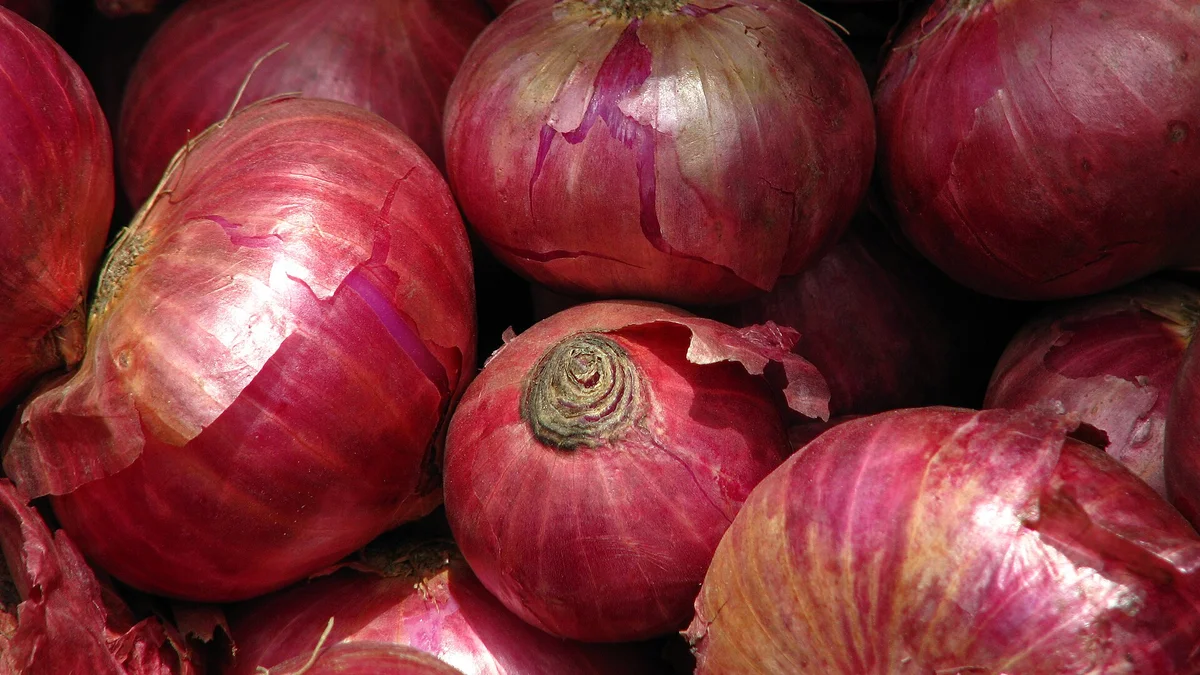
- Farm-Gate Realization (₹20 – ₹24/kg): The net realization earned by the farmer after deducting on-farm harvesting, field bagging, and tractor haulage to the local APMC yard.
- Mandi Charges, Labor & Handling (₹1.50 – ₹2.50/kg): While agricultural reforms have largely abolished farmer commissions, buyer commissions, weighing fees (tulaai), loading/unloading (hamali), and mandi cess account for 4% to 7% of wholesale transaction value.
- Long-Haul Inter-State Freight (₹3.00 – ₹5.50/kg): Transporting onions from Nashik or Neemuch to consumption hubs like Delhi, Kolkata, Chennai, or Guwahati by diesel truck trailers involves fuel costs, toll charges, and interstate transit time.
- Transit Desiccation & Sorting Losses (₹2.50 – ₹4.00/kg): Onions naturally lose moisture during travel (weight loss of 3% to 6%). Upon unbagging, damaged, bruised, or sprouted bulbs must be culled out (4% to 8% sorting loss), which elevates the effective per-kilo cost of marketable stock.
- Secondary Wholesale & Wholesaler Margin (₹2.00 – ₹3.50/kg): Primary terminal market buyers (e.g., Azadpur or Vashi) sell to secondary semi-wholesalers and neighborhood sub-distributors who cover local warehouse rent, unloading, and short-term credit risk.
- Retail Vendor / Quick-Commerce Margin (₹6.00 – ₹12.00/kg): The neighborhood vegetable cart vendor (thela-wala) or modern dark store bears the ultimate retail risk. Because unsold onions deteriorate quickly in hot or humid weather, retail margins compensate for spoilage, shelf-life depreciation, delivery packaging, and labor.
Note on Consumer Price Index (CPI) Sensitivity: Onion carries a disproportionate weight in India's Consumer Price Index (CPI) food basket. Even modest shifts in wholesale supplies can trigger noticeable headline inflation. Consequently, the Ministry of Consumer Affairs monitors daily retail prices across 550+ reporting centers nationwide to initiate price stabilization measures whenever retail rates exceed benchmark thresholds.
3. Seasonal Crop Calendar: Kharif, Late Kharif, and Rabi Cycles
India’s onion economy operates across three distinct agricultural cropping seasons, each playing a radically different role in market supply stability and cold storage viability:
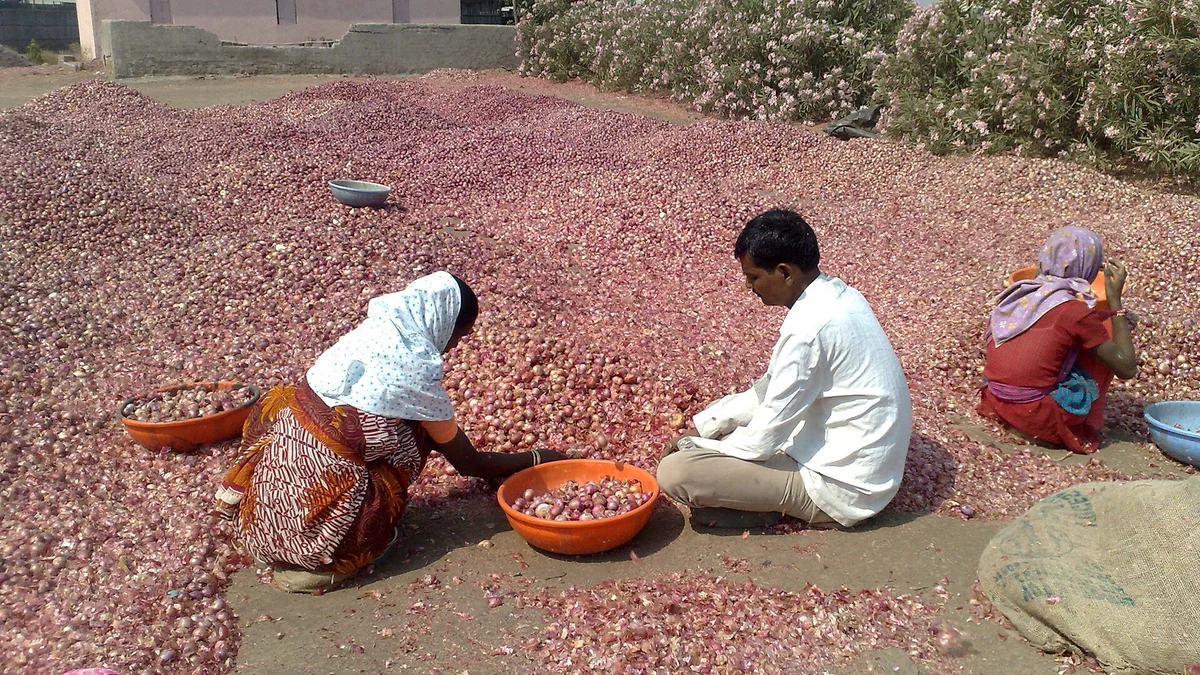
A. Rabi Crop (Spring-Summer Harvest: March to May)
The Rabi onion crop accounts for approximately 65% to 70% of India’s total annual production. Sown between October and November and harvested between late March and May, Rabi onions possess high dry matter content (12% to 14%), dense outer papery skins, and low initial moisture. These physiological characteristics give Rabi onions exceptional shelf life, making them suitable for long-term storage (up to 5 to 6 months) in naturally ventilated farm structures called Kanda Chawls. The Rabi harvest feeds the entire nation from June through October until fresh monsoon crops arrive.
B. Kharif Crop (Monsoon Harvest: October to December)
Accounting for about 15% to 20% of annual production, Kharif onions are nursery-sown in June-July and harvested from October to December. Cultivated predominantly in Karnataka, Maharashtra, and Andhra Pradesh, Kharif onions have high moisture content, loose skin, and very poor keeping quality (barely 2 to 3 weeks). They cannot be stored in bulk and must be moved directly from field to retail market. Any delay or unseasonal deluge during the September-October monsoon damages the standing Kharif crop, causing sharp price spikes in urban markets.
C. Late Kharif / Rangda Crop (Winter Harvest: January to March)
Accounting for the remaining 15% of national output, the Late Kharif crop (locally termed Rangda in Maharashtra) is planted in August-September and harvested in January and February. It acts as an indispensable economic bridge, replenishing depleted Rabi storage buffers before the main Rabi crop matures.
4. Commercial Quality Grading & Size Classifications in Mandis
When farmers bring onion loads to APMC auction floors, buyers grade lots visually and by size calipers. The onion market classifies commodities into standard commercial categories:
- Super / Special Bold (55mm to 80mm+ diameter): Large, uniform, round bulbs with tight outer skins and vibrant purple-red pigmentation. Commands the highest wholesale premium (15% to 25% above average) and is favored by export consignments to Gulf nations and premium urban supermarkets.
- Medium / Commercial Quality (40mm to 55mm diameter): The standard household utility grade representing the bulk of domestic sales. Balanced size ensures minimal culinary peeling waste and uniform cooking.
- Golta / Small Bulb (30mm to 40mm diameter): Smaller, firm round onions. Sells at a 20% to 30% discount to Super grade. Widely purchased by restaurants, caterers, and budget-conscious consumers.
- Golti / Cullings (Under 30mm diameter): Undersized bulbs, deformed "twin" or "doubles," thick-neck onions, or sunburned bulbs. Sold at substantial discounts for pickling, industrial onion paste manufacturing, or dehydration flake processing.
- White Dehydration Onions: Specific white cultivars (such as Agrifound White, Phule Safed) grown under contract in Bhavnagar, Mahuva, and Junagadh in Gujarat for industrial dehydration into powder and flakes for global food export.
5. Government Interventions: Buffer Stocks, PSF, and Export Policies
Because onion prices can swing from farmer distress levels (₹6 to ₹10/kg during bumper Rabi gluts) to consumer distress (₹80 to ₹100/kg during post-monsoon Kharif shortfalls), central and state authorities deploy targeted regulatory mechanisms:
- Price Stabilisation Fund (PSF) Buffer Stock: The Government of India, through nodal procurement agencies like NAFED (National Agricultural Cooperative Marketing Federation of India) and NCCF, procures 3 to 5 lakh metric tonnes of Rabi onions directly from farmers and FPOs between April and June. This buffer is gradually released into high-consumption urban wholesale and retail markets from August to November to curb speculative price surges.
- Subsidized Retail Distribution (Bharat Onion): NAFED and NCCF dispatch mobile retail vans and partner with major retail chains and e-commerce platforms to distribute packaged onions at capped rates (e.g., ₹25 or ₹35 per kg) directly to urban consumers during price spikes.
- Trade & Export Duty Calibration: To maintain domestic availability, the Directorate General of Foreign Trade (DGFT) adjusts Minimum Export Price (MEP) thresholds, levies temporary export duties (e.g., 20% or 40%), or permits calibrated exports under quota allocations to friendly neighboring countries.
- Credit Infrastructure & Subsidies for Kanda Chawl: Under the Mission for Integrated Development of Horticulture (MIDH) and State Horticulture Missions, farmers receive capital subsidies of 40% to 50% for constructing modern, naturally ventilated on-farm storage sheds (25 MT to 50 MT capacity Kanda Chawl) to empower them to hold stock rather than engaging in distress selling at harvest.
6. Post-Harvest Storage Management: Reducing Losses in Kanda Chawls
Traditional post-harvest storage losses in onion can run as high as 30% to 40% due to physiological weight loss (desiccation), rotting caused by fungal pathogens (Aspergillus niger black mold, Botrytis neck rot, and Fusarium basal rot), and premature sprouting. Progressive farmers adopt scientific protocols developed by the ICAR-Directorate of Onion and Garlic Research (DOGR), Rajgurunagar, Pune:
- Curing Protocol: Onions must undergo shade curing for 10 to 15 days after harvesting to allow outer skins to dry completely and necks to seal tightly. Proper curing forms a biological barrier against pathogen ingress.
- Storage Structure Design: Kanda Chawls should be elevated 1.5 to 2 feet above ground level, oriented east-to-west to avoid direct harsh sunlight, equipped with slatted bamboo or mesh flooring, and topped with asbestos or insulated roofing that permits natural upward convective airflow.
- Storage Layer Depth: Bulbs should not be piled deeper than 3 to 4 feet (approx. 1 meter). Excessive piling creates heat and moisture pockets that accelerate rotting and sprouting.
- Sprout Inhibition Techniques: Spraying Maleic Hydrazide (MH) at 2,000 to 2,500 ppm 15 to 20 days prior to harvest inhibits post-harvest cell division and prevents sprouting during long-term storage.
- Cold Storage & Gamma Irradiation: Controlled atmosphere storage (0°C to 2°C with 65% to 70% relative humidity) and BARC-standardized gamma radiation (low-dose 60 to 90 Gray irradiation) suppress sprout emergence for commercial export consignments.
7. How to Check Real-Time Onion Mandi Rates
Farmers and commodity traders can verify real-time mandi prices and daily arrival volumes through multiple verified channels:
- Agmarknet Portal (agmarknet.gov.in): Operated by the Ministry of Agriculture, this portal updates daily arrival figures, minimum, maximum, and modal wholesale rates across 3,000+ registered APMC mandis.
- e-NAM Digital Marketplace (National Agriculture Market e-NAM): Farmers registered on e-NAM can participate in transparent online inter-mandi auctions and review live trading bids directly on their smartphones.
- KisanPe Mandi Rates Tracker: Browse comprehensive commodity rate dashboards, historical price trends, and state-wise comparisons for red, pink, and white onion varieties across key agricultural markets.
8. Comparing Onion Mandi Bhav Across Terminal Consumption Hubs
Onion wholesale prices in terminal consumer markets like Delhi Azadpur, Mumbai Vashi, Bengaluru Yeshwanthpur, and Kolkata Posta reflect origin farm-gate rates plus long-distance transportation costs, grading charges, and APMC market cess. In northern and western India, major multi-commodity yards including Muhana Mandi Jaipur, Neemuch Mandi, and Kisan Mandi Direct Bazars maintain high seasonal onion transactions.
Growers managing crop diversification can track our daily wholesale price trackings for Mustard Rate Today, Sarso Rate Today, Chini Ka Rate Today, and Gehu Rate Today. Farm transit logistics powered by vehicles such as the Mahindra Supro Commercial Truck or multi-purpose tractors like the Swaraj 744 FE help producers reduce post-harvest handling losses and capture better farm-gate realizations.
Statutory market arrivals, minimum support prices, and buffer stock procurement directives are monitored through the Agmarknet Marketing Information Network, the e-NAM National Agriculture Market, NAFED, the National Horticulture Board (NHB), and the Department of Consumer Affairs Price Monitoring Division.
Frequently asked questions
- What is the current average wholesale onion rate today across Indian mandis?
- Indicative wholesale onion rates across primary APMC markets generally fluctuate between ₹1,600 and ₹3,200 per quintal (₹16 to ₹32 per kg) depending on variety, grade, bulb size, and season. Modal prices at premier hubs like Lasalgaon typically hover around ₹2,200 to ₹2,500 per quintal for commercial bold red onions; track daily auctions on our APMC Mandi Rates Directory.
- Why is there a big difference between mandi rates and the retail 1 kg onion price?
- The gap between wholesale mandi rates and retail 1 kg onion price stems from essential supply chain costs: APMC commission fees, labor, long-distance interstate freight, transit weight desiccation (3% to 6%), post-arrival sorting losses (4% to 8% spoiled bulbs culled), secondary wholesaler margins, and neighborhood vendor spoilage markups.
- Which APMC market sets the national price benchmark for onion in India?
- The Lasalgaon Agricultural Produce Market Committee (APMC) in Nashik district, Maharashtra, is Asia’s largest onion trading market. Daily morning auction prices at Lasalgaon directly influence wholesale prices across Delhi, Mumbai, Kolkata, Chennai, and other consumption metros.
- What is the difference between Kharif and Rabi onion crops?
- Rabi onions (harvested March to May) account for 65% to 70% of national production, have low moisture content, high dry matter, and can be safely stored for 5 to 6 months in ventilated Kanda Chawls. Kharif onions (harvested October to December) have high moisture, poor keeping quality (2 to 3 weeks), and must be consumed immediately.
- How do onion grades like Super, Medium, and Golta affect prices?
- Super grade onions (55mm+ diameter, intact skin, deep color) command a 15% to 25% premium and are preferred for export and supermarkets. Medium grade (40-55mm) represents standard household consumption. Golta (30-40mm) and Golti (under 30mm) sell at 20% to 40% discounts for catering and commercial food processing.
- What role does NAFED play in managing onion price volatility?
- The National Agricultural Cooperative Marketing Federation of India (NAFED) procures 3 to 5 lakh metric tonnes of Rabi onions under the central Price Stabilisation Fund (PSF). This buffer stock is released into wholesale and retail markets between August and November to prevent artificial hoarding and soften speculative price spikes.
- Can farmers store onions long-term to get higher prices later?
- Yes, but only Rabi onions. By utilizing well-designed on-farm ventilated Kanda Chawls with elevated slatted flooring and proper curing, farmers can safely store Rabi onions for 4 to 6 months to avoid harvest-time gluts and sell during peak demand months.
- Where can farmers find daily official Agmarknet onion prices?
- Farmers can access verified daily wholesale rates and arrival volumes directly through the Ministry of Agriculture’s official Agmarknet Portal, e-NAM digital mandis, or dedicated direct sales platforms like Kisan Mandi.
- What is the Bharat Onion initiative by the government?
- The Bharat Onion initiative is a market intervention where central agencies like NCCF and NAFED sell quality buffer onions at subsidized flat retail prices (such as ₹25 to ₹35/kg) through retail mobile vans, Kendriya Bhandars, and e-commerce apps during market shortages.
- What causes sudden spikes in onion prices during September and October?
- The September-November period coincides with the depletion of stored Rabi stocks. If heavy monsoon rains delay or damage the incoming Kharif harvest in Karnataka or Maharashtra, a temporary supply shortfall occurs, tracked actively by the Department of Consumer Affairs Price Monitoring Division.
- What government subsidies are available for building onion storage structures?
- Under the Mission for Integrated Development of Horticulture (MIDH) and guidelines from the National Horticulture Board (NHB), eligible farmers can receive 40% to 50% capital subsidies for constructing standard 25 MT or 50 MT low-cost ventilated onion storage structures (Kanda Chawl); see our crop insurance guide on PMFBY Status for risk protection.
- How does moisture content affect the weight and price of onions in mandis?
- High moisture onions (such as fresh Kharif arrivals) are susceptible to rapid rotting and transit weight shrinkage. Buyers discount high-moisture lots by ₹200 to ₹500 per quintal compared to well-cured, dry-necked bulbs.
This article is for general information only and is not financial advice. Loan and scheme eligibility depends on partner and government criteria.