PMFBY Status Check: Crop Insurance Application & Claims
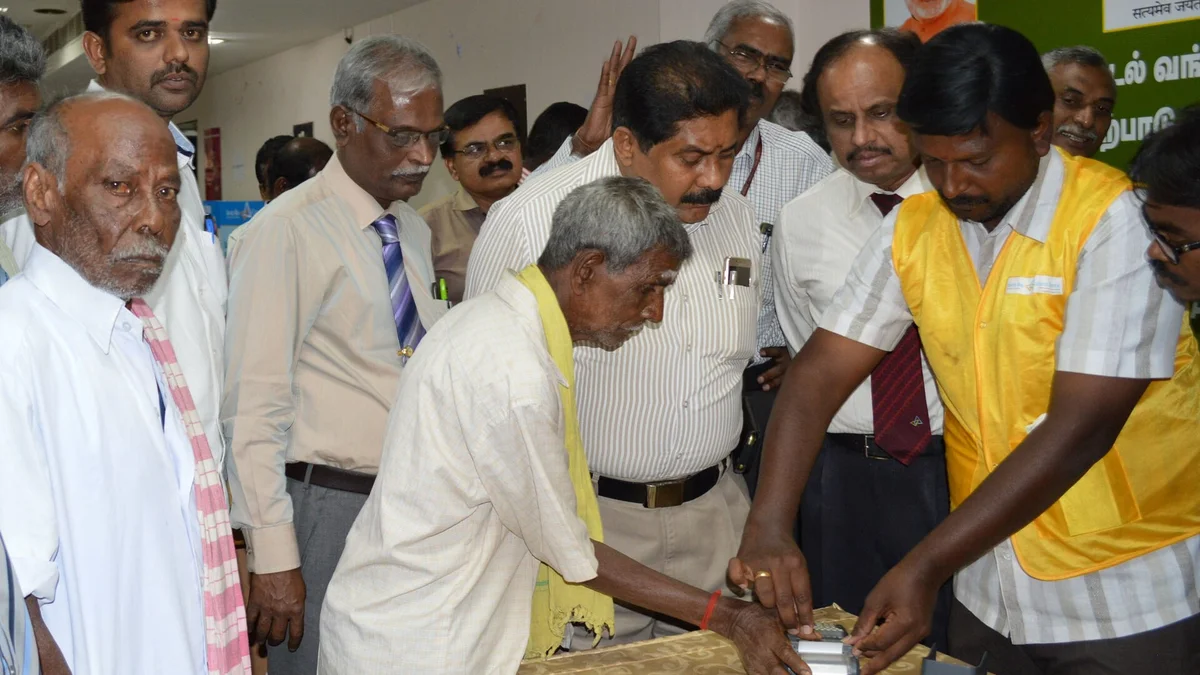
Agricultural production across India is inherently exposed to non-preventable natural risks—including severe meteorological droughts, unseasonal cyclonic rainfall, catastrophic hailstorms, localized inundation, pest epidemics, and post-harvest drying losses. To provide complete financial risk mitigation and stabilize farm incomes, the Government of India administers the Pradhan Mantri Fasal Bima Yojana (PMFBY), the world’s third-largest crop insurance scheme in terms of premium volume and the single largest by farmer enrollment. Over 5.5 crore (55 million) farmer applications are processed annually across 27 participating states and Union Territories.
Governed by the Ministry of Agriculture and Farmers Welfare (Department of Agriculture & Farmers Welfare) and implemented through the National Crop Insurance Portal (PMFBY Official Portal), checking your PMFBY status (application verification, policy issuance, claim assessment, and DBT bank account settlement) has been completely digitized. Farmers no longer need to make repeated visits to local tehsildar offices, bank branches, or insurance company desks. By leveraging your unique Application Number, Aadhaar Number, registered mobile phone number, or Bank Account credentials, you can track the real-time status of your crop insurance coverage from sowing to compensation payout. This comprehensive operational guide details every method of checking PMFBY status, outlines statutory farmer premium rates, explains localized calamity claim filing protocols (the mandatory 72-hour window), and provides step-by-step resolution paths for rejected claims.
1. What Is PMFBY and Why Is Status Tracking Important?
Launched in 2016 to replace legacy programs like NAIS and MNAIS, PMFBY operates on an "Area Approach" principle where defined notified insurance units (typically a Gram Panchayat or Village Circle) serve as the benchmark for assessing widespread crop yield losses, while providing localized individual farm assessment for specific peril events (hailstorm, landslide, cloudburst, inundation, and post-harvest cyclone damage).
Tracking your PMFBY status online is vital for three crucial reasons:
- Verifying Enrollment & Premium Remittance: Loanee farmers who obtain seasonal crop loans through Kisan Credit Cards (KCC) have insurance premiums deducted automatically by lending banks. Tracking application status confirms whether your bank successfully uploaded your survey numbers and remitted the premium to the designated insurance company before the statutory cutoff date.
- Monitoring Claim Settlement & UTR Reference Numbers: Following widespread crop damage assessed through Crop Cutting Experiments (CCEs) or satellite remote sensing (YES-TECH), tracking your status reveals the exact claim compensation amount approved, the transaction UTR number, and the credited bank account.
- Rectifying Discrepancies Before Rejection: Incomplete Aadhaar e-KYC, incorrect land survey numbers (Khasra/Khatauni), or mismatched bank IFSC codes lead to automated claim processing holds. Early status tracking allows farmers to file corrections before the insurance window closes.
To explore core scheme framework parameters, review our dedicated hub guide on PMFBY Crop Insurance Scheme Overview and learn how credit limits are calculated in our Kisan Credit Card (KCC) Calculator.
2. Step-by-Step: How to Check PMFBY Application Status Online
Farmers can check their crop insurance application status directly through the National Crop Insurance Portal without logging into restricted administrative accounts. Follow this verified procedure:
- Step 1 - Access the Official Portal: Open your web browser and navigate to
pmfby.gov.in. - Step 2 - Select "Application Status": On the main homepage menu bar, click on the highlighted tab titled Application Status / Track Application.
- Step 3 - Enter Your Application Receipt Number: Type your unique 15 to 20-digit Application Number (generated during CSC online application submission or printed on your bank’s premium deduction slip).
- Step 4 - Solve Captcha & Submit: Enter the security captcha letters displayed on the screen and click Check Status.
- Step 5 - Review Live Policy Status: The portal displays your full application trajectory: "Application Submitted" > "Bank Verification Approved" > "Premium Received by Insurer" > "Policy Generated" > "Claim Under Process / Disbursed".
3. Alternative Tracking Methods: Mobile App, Aadhaar & Toll-Free Helpline
If you misplaced your application receipt number or do not have access to a desktop computer, the Ministry of Agriculture provides three alternative tracking channels:
| Tracking Channel | Required Input Credential | Access Method | Key Advantage / Output |
|---|---|---|---|
| Crop Insurance Mobile App | Aadhaar / Registered Mobile Number | Download "Crop Insurance" app from Google Play Store | Instant push notifications on policy approval and geo-tagged damage claim filing |
| Aadhaar / Farmer Login (pmfby.gov.in) | 12-Digit Aadhaar & OTP | Click "Farmer Corner" > Login with Mobile OTP | View all historical insured crops across previous Kharif and Rabi seasons |
| Kisan Call Center / PMFBY Helpline | Aadhaar Number or Bank Passbook | Dial Toll-Free: 14447 or 1800-180-1551 | Direct verbal assistance from agriculture support executives in regional languages |
| Common Service Centre (CSC / VLE) | Land RoR & Bank Passbook | Visit nearest village CSC / Mo Seva Kendra | Physical printout of insurance certificate and grievance lodging assistance |
Source: Ministry of Agriculture & Farmers Welfare Operational Guidelines for PMFBY (2026).
For related state welfare databases and beneficiary verification portals, explore our guides to PM-Kisan Status Check Name List, CM Kisan Odisha Scheme, and Farm Search Portals.
4. Farmer Premium Rates and Government Subsidies
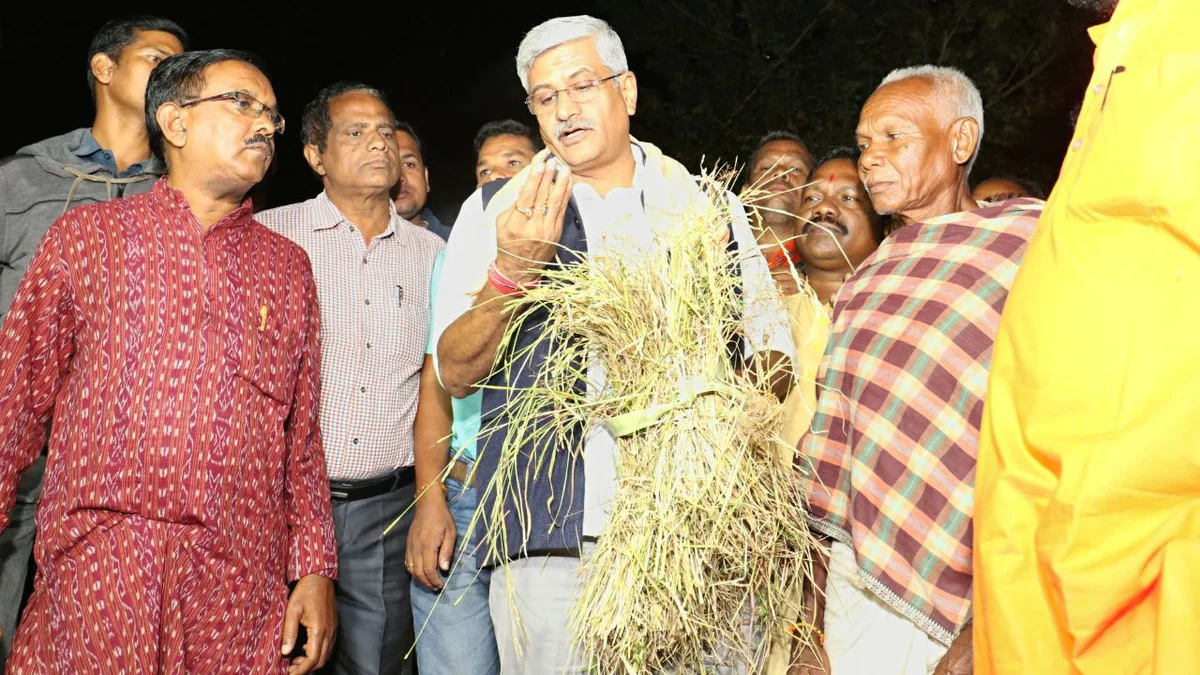
One of the defining features of PMFBY is its ultra-low, highly subsidized farmer premium rate structure. The actuarial premium charged by private and public insurance companies often ranges from 8% to 25% of the total Sum Insured. However, the farmer pays only a small statutory fraction, with the entire remaining balance shared equally (50:50) by the Central and State Governments (90:10 in North-Eastern states).
| Crop Category / Season | Typical Crops Covered | Maximum Farmer Share of Premium | Government Subsidy Share | Basis of Sum Insured Calculation |
|---|---|---|---|---|
| Kharif Season (Food & Oilseeds) | Paddy, Maize, Bajra, Jowar, Soybean, Groundnut, Cotton | 2.0% of Sum Insured | All remaining actuarial premium paid by Govt (up to 90%+) | District Scale of Finance (SOF) fixed by DLTC |
| Rabi Season (Food & Oilseeds) | Wheat, Barley, Gram (Chana), Mustard (Sarso), Lentil | 1.5% of Sum Insured | All remaining actuarial premium paid by Govt | District Scale of Finance (SOF) fixed by DLTC |
| Annual Commercial & Horticultural Crops | Sugarcane, Cotton (commercial rate), Potato, Onion, Mango, Ginger, Chili | 5.0% of Sum Insured | All remaining actuarial premium paid by Govt | Comprehensive average cost of production per hectare |
Source: Department of Agriculture & Farmers Welfare Crop Insurance Guidelines (2026).
To review specific crop agronomy and input management for major covered crops, consult our dedicated guides on Paddy Cultivation, Gehu / Wheat Mandi Rates, Mustard Rate Today, Sarso Rate Today, and Mango Varieties.
5. Localized Calamity Claims: The Mandatory 72-Hour Reporting Rule
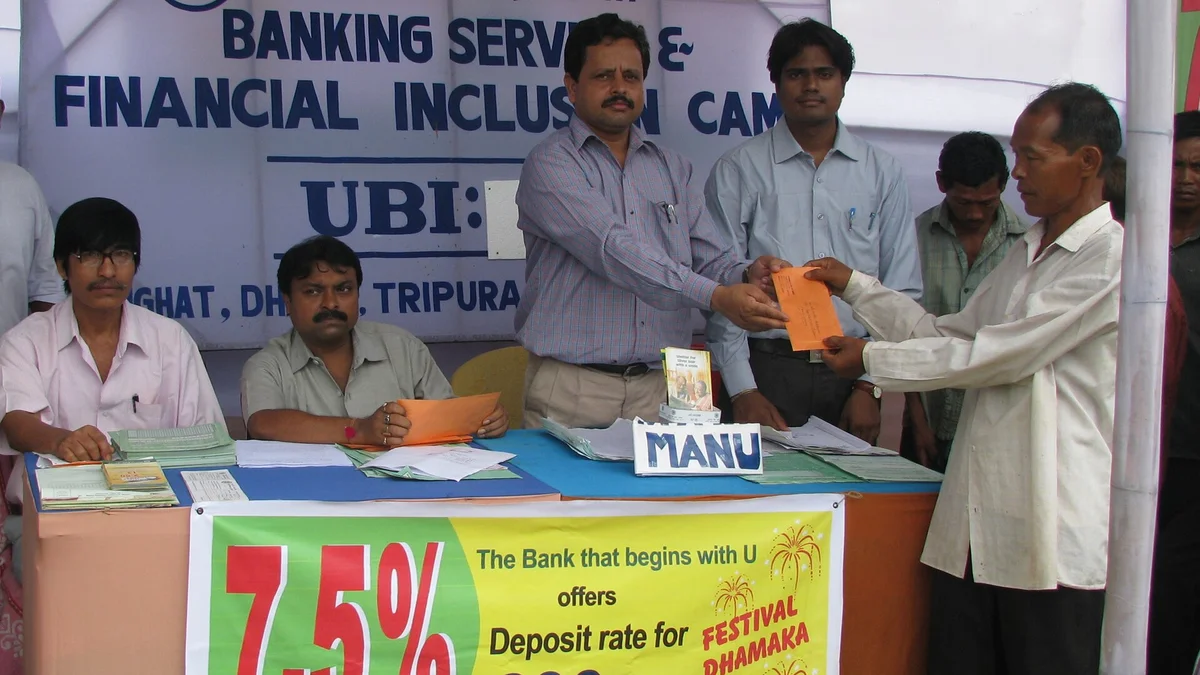
While widespread yield losses (such as seasonal drought or regional flood) are assessed automatically at the end of the cropping cycle via Crop Cutting Experiments (CCEs), localized calamities (hailstorm, landslide, cloudburst, localized waterlogging / inundation) and post-harvest losses require immediate individual intimation by the farmer.
- Strict 72-Hour Deadline: The farmer or local village representative must report the crop loss within 72 hours of the peril event. Reports filed beyond 72 hours are automatically rejected by insurance company audit systems.
- Reporting Channels: Loss intimations can be registered through: (1) The "Crop Insurance" mobile app using geo-tagged photo uploads, (2) Dialing the National Toll-Free Helpline at 14447, (3) Submitting a written intimation to the local Block Agriculture Officer (BAO) or bank branch, or (4) Contacting the designated district representative of the insurance company.
- Joint Field Survey: Within 48 hours of loss intimation, a Joint Loss Assessment Committee—comprising the loss assessor appointed by the insurance company, the local Agriculture Department official, and the affected farmer—visits the field to conduct a transparent physical damage survey.
- Direct Compensation Disbursement: Following survey sign-off, eligible compensation is calculated as a percentage of the Sum Insured based on verified loss severity, and funds are disbursed directly to the farmer’s bank account within 30 days.
6. Diagnosing and Resolving Common PMFBY Rejection Errors
If your PMFBY status displays "Rejected", "Policy Inactive", or "Payment Failed", it is usually caused by one of the following four administrative discrepancies:
- 1. Bank Account Not Seeded with NPCI (DBT Failure): The insurance payout was generated by the insurer via the Public Financial Management System (PFMS), but your commercial bank account is not mapped to the NPCI Aadhaar mapper. Visit your home bank branch immediately and submit an Aadhaar NPCI Seeding Mandate form.
- 2. Land Survey / Khasra Number Mismatch: The land parcel number entered during CSC registration does not match state digital land records. Verify your land records on state Bhulekh portals and update your profile through the "Farmer Corner" on pmfby.gov.in.
- 3. Incomplete Crop Cutting Experiment (CCE) Yield Loss: If the actual measured crop yield in your notified insurance unit did not fall below the calculated Threshold Yield (TY), no indemnity claim is triggered under the area approach rules.
- 4. Duplicate Insurance Policies: When a farmer applies through both a bank KCC loan and an external CSC center for the same survey plot, the algorithm flags the duplicate entry and suspends both records pending manual district verification.
For related farmer welfare programs and credit insurance, explore our guides on Pradhan Mantri Suraksha Bima Yojana, Kisan Mandi Guide, and Chini Ka Rate Today.
7. Integrating Crop Insurance with Farmer Credit and Agricultural Schemes
Comprehensive risk management in modern Indian agriculture links crop insurance directly to institutional farm credit and seasonal financial assistance. Farmers with active Kisan Credit Cards can estimate their seasonal borrowing limits using our Kisan Credit Card (KCC) Loan Calculator, ensuring adequate liquidity for purchasing certified seeds, farm machinery like the Swaraj 744 FE tractor, and fertilizers planned via the Fertilizer Dosage Calculator.
Crop insurance operates alongside central and state direct income support schemes. Farmers tracking pending government payouts can consult our dedicated verification guides on PM-Kisan Status Check Name List and CM Kisan Odisha Scheme. For protecting farm family livelihoods beyond field losses, review the micro-insurance benefits under the Pradhan Mantri Suraksha Bima Yojana.
All official policy notifications, claims status portals, and bank guidelines are administered jointly by the National Crop Insurance Portal (PMFBY), the Department of Agriculture & Farmers Welfare, and the Department of Financial Services, with commodity marketing links supported via the e-NAM Network.
Frequently asked questions
- How can I check my PMFBY application status online?
- Visit the official portal at National Crop Insurance Portal (pmfby.gov.in), click on "Application Status", enter your 15-20 digit Application Receipt Number, complete the captcha, and click "Check Status" to see your real-time policy and claim verification details.
- Can I check my PMFBY status using my Aadhaar number or mobile number?
- Yes. On pmfby.gov.in, navigate to the "Farmer Corner", click on "Login for Farmer", enter your registered mobile number to receive an OTP, and authenticate to view all active and past crop insurance policies linked to your Aadhaar.
- What is the farmer premium rate for Kharif and Rabi crops under PMFBY?
- Farmers pay a maximum subsidized premium of 2.0% of the Sum Insured for Kharif food and oilseed crops, 1.5% for Rabi crops, and 5.0% for annual commercial and horticultural crops, with all remaining actuarial premium paid by the central and state governments; see our PMFBY Crop Insurance Scheme Master Overview.
- What is the 72-hour reporting rule for localized crop loss under PMFBY?
- For localized calamities (such as hailstorms, cloudbursts, landslides, or localized waterlogging) and post-harvest cyclone damage, farmers must report the loss within 72 hours through the Crop Insurance app, toll-free helpline 14447, or local agriculture office.
- What should I do if my PMFBY status shows "Bank Verification Pending"?
- If bank verification is pending, contact the commercial or cooperative bank branch where you maintain your KCC loan account and request them to verify your land survey details on the National Crop Insurance Portal; verify your borrowing parameters with our KCC Loan Calculator.
- Why was my PMFBY crop insurance claim rejected?
- Claims are commonly rejected due to mismatched land Khasra numbers, bank accounts not being mapped to NPCI for DBT payouts, reporting localized damage after the 72-hour cutoff, or actual village yield not falling below the calculated Threshold Yield.
- Is PMFBY mandatory or voluntary for loanee farmers?
- PMFBY is 100% voluntary for all farmers, including loanee farmers holding Kisan Credit Cards (KCC). Farmers who do not wish to be insured can submit a formal opt-out declaration to their lending bank at least 7 days before the seasonal enrollment cutoff date, as mandated by the Department of Financial Services.
- How are widespread crop yield losses calculated under PMFBY?
- Widespread losses are calculated at the Notified Insurance Unit (Gram Panchayat or Village) level by conducting multiple scientific Crop Cutting Experiments (CCEs). If the Actual Yield (AY) falls below the Threshold Yield (TY), an indemnity claim is automatically paid to all insured farmers in that unit.
- What is the toll-free helpline number for PMFBY inquiries?
- Farmers can call the national crop insurance helpline at 14447 or the Kisan Call Center at 1800-180-1551 for assistance in tracking applications, registering complaints, or reporting localized crop damage.
- How are PMFBY claim compensation funds transferred to farmers?
- Approved claim compensation is disbursed electronically through the Public Financial Management System (PFMS) directly into the farmer’s Aadhaar-seeded bank account via Direct Benefit Transfer (DBT); see our troubleshooting guide on DBT Beneficiary Status Verification.
- Can tenant and sharecropper farmers enroll in PMFBY?
- Yes. Non-loanee tenant farmers, sharecroppers, and oral lessees can enroll in PMFBY through village Common Service Centers (CSC) by providing an Aadhaar card, bank passbook, and a tenant farmer declaration certified by the local revenue authority or village panchayat.
- What mobile app is used to track PMFBY policy and report crop damage?
- The official "Crop Insurance" mobile app (developed by the Ministry of Agriculture and available on the Google Play Store) allows farmers to check policy status, calculate premiums, and report localized crop damage with geo-tagged photos.
This article is for general information only and is not financial advice. Loan and scheme eligibility depends on partner and government criteria.