Gehu Rate Today: Wheat Mandi Bhav, MSP & UP Price Guide 2026
Key takeaways
- Wheat (Triticum aestivum, known throughout North and Central India as gehu) is India’s foremost Rabi cereal crop, cultivated across roughly 31 million hectares with annual national harvests exceeding 112 million metric tonnes.
- The Cabinet Committee on Economic Affairs (CCEA) approved the Minimum Support Price (MSP) for Wheat at ₹2,425 per quintal for the Rabi Marketing Season (RMS 2026-27), establishing the legally protected floor price for government procurement.
- Open-market wholesale gehu ka rate levels in major APMC mandis currently hover between ₹2,460 and ₹2,680 per quintal for standard mill-quality wheat, while premium Sharbati wheat from Madhya Pradesh commands ₹3,200 to ₹4,100 per quintal.
- Under the statutory Uniform Specifications issued by the Department of Food and Public Distribution (DFPD), wheat offered for FCI procurement must maintain a moisture content below 12%, foreign matter below 0.75%, and slightly damaged grains below 2.0%.
- Farmers can track real-time electronic modal auctions on the e-NAM portal and Agmarknet, ensuring zero deduction of commission fees (arhatiya charges) under statutory state APMC farmer protection mandates.
Wheat (widely searched across rural and urban markets as gehu, gehu rate today, or wheat rate) is the nutritional and economic backbone of agricultural India. Cultivated during the cool winter months across the vast fertile alluvial plains of Uttar Pradesh, Punjab, Haryana, Madhya Pradesh, and Rajasthan, wheat supplies over 50% of the caloric intake for hundreds of millions of Indian households. For grain cultivators, flour millers, commission agents (arhatiyas), and retail consumers, closely following daily gehu ka rate shifts is essential to making timely harvest sales and managing food budgets.
With the arrival of the 2026-27 agricultural marketing cycle, wheat markets are navigating a dynamic equilibrium between government minimum support price (MSP) procurement targets, flour mill inventory restocking, and Open Market Sale Scheme (OMSS) interventions by the Food Corporation of India (FCI). Whether you are monitoring wheat price in up across wholesale grain hubs like Kanpur, Aligarh, and Bareilly, checking wheat price today in high-grade Malwa trading centers like Indore and Sehore, or analyzing the price premium of heirloom Sharbati gehu, this master guide provides an exhaustive analysis of mandi rates, quality grading standards, procurement protocols, and storage economics.
Wheat MSP 2026-27 & government procurement mechanism
The Government of India fixes the Minimum Support Price (MSP) for wheat based on comprehensive cost-of-cultivation recommendations provided by the Commission for Agricultural Costs and Prices (CACP). For the Rabi Marketing Season (RMS 2026-27), the central government fixed the Wheat MSP at ₹2,425 per quintal, representing a substantial remunerative return of over 100% over the baseline cost of production (A2+FL).
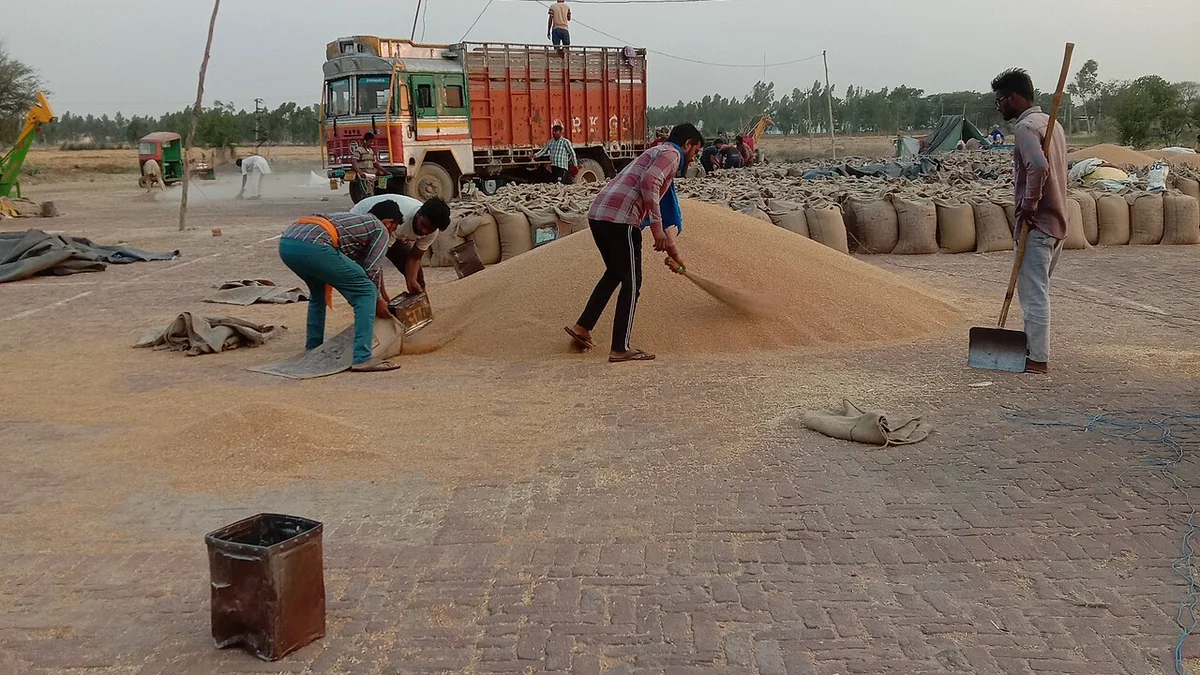
Government procurement is executed through an extensive network of thousands of purchase centers operated by the Food Corporation of India (FCI) and designated state agencies (such as UP SFC and PCF in Uttar Pradesh, Markfed and Pungrain in Punjab, and HAFED in Haryana). Crucial highlights of the procurement framework include:
- Mandatory Farmer Portal Registration: Before bringing produce to purchase centers, farmers must register on their state’s dedicated procurement portal (such as e-Uparjan in MP or fcs.up.gov.in in UP) to link their land revenue Khasra records, bank account, and Aadhaar number.
- Token Generation & Slot Booking: To prevent mandi congestion and long queues, farmers book digital time slots through SMS alerts, specifying the date and approximate quantity of wheat they intend to deliver.
- Direct Benefit Transfer (DBT) Payouts: In compliance with central PFMS mandates, 100% of MSP sale proceeds are disbursed directly into the farmer’s Aadhaar-linked bank account within 48 to 72 hours of weighment and digital receipt generation.
- Zero Mandi Deductions: Government procurement centers strictly prohibit any deduction for labor handling, unloading, cleaning, or commission from the farmer’s account. All handling expenses are borne directly by the purchasing agency.
State-wise wheat mandi bhav: UP, MP, Punjab, Haryana & Rajasthan
While the MSP establishes a guaranteed price floor, open-market wholesale prices fluctuate according to local supply arrivals, flour miller demand, and grain quality. Below are the current indicative wholesale price ranges recorded across primary state mandis as of November 2026:
| State / Production Region | Key Mandi Centers | Indicative Gehu Rate Range (₹/Quintal) | Dominant Wheat Variety / Quality |
|---|---|---|---|
| Uttar Pradesh (UP) | Kanpur, Aligarh, Hardoi, Mathura, Bareilly | ₹2,460 – ₹2,650 | HD-2967, PBW-343, DBW-187 (High yielding mill quality) |
| Madhya Pradesh (MP) | Indore, Ujjain, Dewas, Vidisha, Mandsaur | ₹2,500 – ₹2,780 | Lokwan, GW-322, Malav Kirti (Semi-hard golden grain) |
| Madhya Pradesh (Specialty) | Sehore, Ashta, Bhopal Rural | ₹3,200 – ₹4,100 | Certified Sharbati Gehu (GI Tagged, lustrous bold grain) |
| Punjab & Haryana | Khanna, Rajpura, Karnal, Sirsa, Kurukshetra | ₹2,440 – ₹2,620 | DBW-222, PBW-550, Unnat PBW-343 (Heavy milling wheat) |
| Rajasthan | Kota, Baran, Sri Ganganagar, Alwar | ₹2,480 – ₹2,680 | Raj-4037, Raj-3077 (High protein, drought-tolerant grain) |
| Gujarat & Maharashtra | Rajkot, Gondal, Latur, Jalgaon | ₹2,650 – ₹3,050 | Tukdi, Lokwan-1 (Preferred for rotis & domestic flour blending) |
Source: Indicative ranges, November 2026. Sourced from Agmarknet daily arrivals, state agricultural marketing boards, and regional APMC auction registers. Prices reflect cleaned, graded lots arriving in standard 50kg jute or HDPE packaging.
Quality grading: why Sharbati gehu commands a ₹1,000+ premium
Not all wheat grains are valued equally. In Indian wholesale grain markets, wheat is categorized into distinct agronomic and commercial grades based on gluten strength, grain hardness, lustre, and dough water absorption:
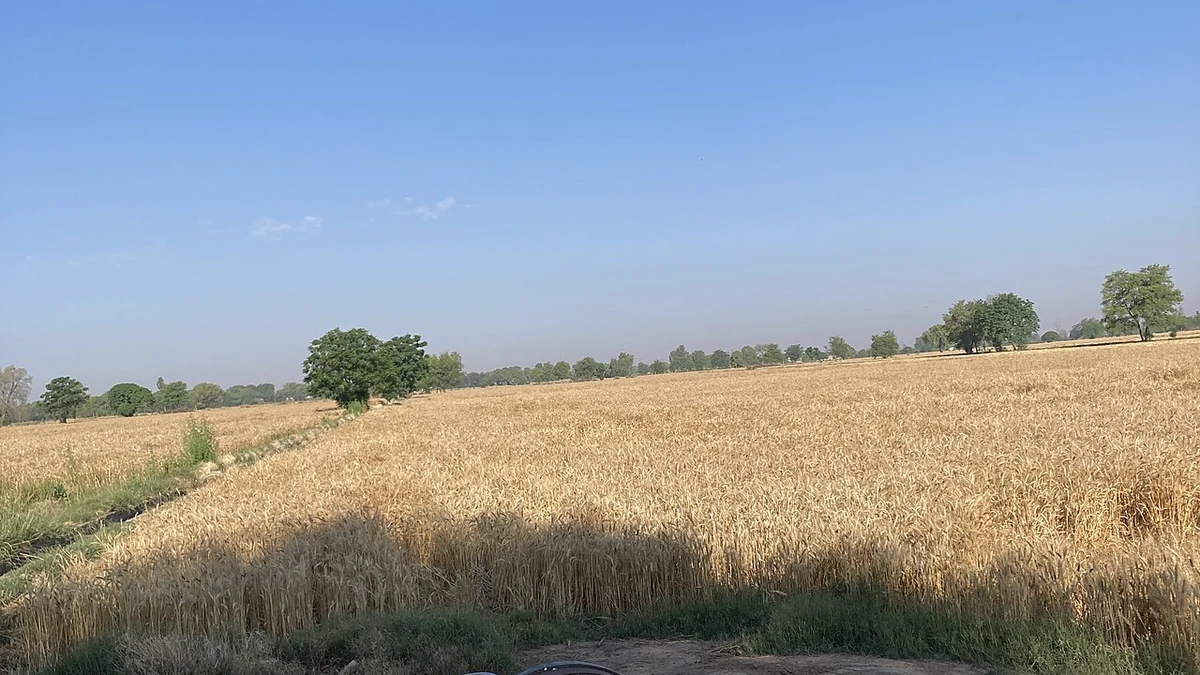
- Sharbati Wheat (The Golden Grain): Cultivated primarily in the rainfed black cotton soils of Sehore, Vidisha, and Hoshangabad in Madhya Pradesh, Sharbati is considered the finest wheat variety in the world. Its grains are exceptionally heavy, uniform, golden-amber in color, and naturally sweet. Because it requires zero synthetic irrigation and absorbs morning dew during maturity, Sharbati atta produces remarkably soft, pliable chapatis that stay moist for 12+ hours, allowing it to command market rates between ₹3,200 and ₹4,100 per quintal.
- Durum Wheat (Kathia / Malvi Gehu): Characterized by very hard amber kernels with high carotenoid pigment content and elevated protein (13-14%). Durum wheat is in heavy demand from commercial pasta, semolina (suji/rawa), and macaroni processors, trading at ₹2,700 to ₹3,100 per quintal.
- Common Bread Wheat (Mill Quality / Aestivum): High-yielding varieties like HD-2967, HD-3086, and DBW-187 cultivated under irrigated conditions across the Indo-Gangetic belt. Valued by industrial roller flour mills (RFMs) for standard maida and biscuit manufacturing, trading around ₹2,450 to ₹2,650 per quintal.
FCI Fair Average Quality (FAQ) parameters for wheat procurement
Farmers selling wheat to government agencies must ensure their produce adheres to the official Fair Average Quality (FAQ) standards prescribed by the Ministry of Consumer Affairs, Food and Public Distribution. Lots failing FAQ criteria face price deductions or outright rejection:
| Quality Characteristic | Maximum Permissible Limit (%) | Rejection Threshold / Action Required |
|---|---|---|
| Moisture Content | 12.0% Maximum | Lots above 14% rejected; 12-14% face value cut |
| Foreign Matter (Inorganic/Organic) | 0.75% Maximum | Must be cleaned through vibratory seed cleaners |
| Other Food Grains (Gram, Barley) | 2.0% Maximum | Excess mixture downgraded to industrial feed |
| Damaged / Discolored Grains | 2.0% Maximum | Rain-damaged or black-pointed grains penalized |
| Slightly Damaged / Shrivelled | 4.0% Maximum | Caused by terminal heat stress; permitted up to 6% with cut |
| Weevilled / Insect Bored Grains | 1.0% Maximum | Pest-infested grain strictly rejected from central warehouses |
Market price drivers & FCI Open Market Sale Scheme (OMSS)
Beyond seasonal production figures, several macroeconomic factors exert direct influence on domestic wheat rates throughout the marketing year:
- FCI OMSS-D E-Auctions: When festive flour demand escalates between October and January, the Food Corporation of India offloads surplus buffer stock through weekly electronic auctions to private flour millers at predetermined reserve prices (around ₹2,300 to ₹2,350/Qtl). This mechanism effectively caps speculative price spikes in private wholesale mandis.
- Bharat Atta Subsidized Distribution: Under the central price stabilization framework, the government supplies subsidized wheat to NAFED, NCCF, and Kendriya Bhandar to retail branded "Bharat Atta" at ₹27.50 to ₹30.00 per kg through mobile vans and fair price shops, protecting urban consumers from inflation.
- Export Restrictions & Global Geopolitics: To maintain comfortable domestic food security and buffer stocks, the Directorate General of Foreign Trade (DGFT) continues calibrated regulation of commercial wheat exports, insulating Indian domestic mandis from volatile Chicago Board of Trade (CBOT) global grain price surges.
- Modern Farm Equipment & Post-Harvest Storage: Planters utilizing modern rotavators for seedbed preparation, laser levellers for moisture uniformity, and hermetic storage bags reduce post-harvest losses from 8% down to under 1.5%, allowing them to hold grain until post-monsoon peak pricing.
Official regulatory portals and grain procurement resources
Farmers, flour millers, and grain aggregators can monitor official daily arrival volumes, modal prices, and procurement schedules through verified central and state regulatory platforms. Real-time commodity data is cataloged on the Agmarknet portal by the Directorate of Marketing & Inspection, while central buffer stocking operations and Open Market Sale Scheme (OMSS) auctions are administered by the Food Corporation of India (FCI). Statutory procurement guidelines, quality specifications, and consumer price interventions like Bharat Atta are formulated by the Department of Food & Public Distribution (DFPD) in close coordination with the Department of Agriculture & Farmers Welfare.
To benchmark harvest returns and plan mechanization investments, farmers can utilize KisanPe analytical tools and guides. Check daily wholesale price shifts across grains and cash crops in our anaj mandi directory, paddy cultivation guide, and cotton market rate analysis. For soil preparation, nutrient application, and machinery selection, consult our comprehensive manuals on rotavator implement prices, DAP fertilizer application, tractor models and HP guide, Mahindra tractor price list, and Sonalika tractor specifications. Crop protection advice against seasonal fungal diseases is available in our Saaf fungicide guide, alongside organic manure practices in the cow dung fertilizer guide and mobile agricultural advisory via the Kisan super app.
Frequently asked questions
- What is the current gehu rate today across major Indian mandis?
- As of November 2026, standard mill-quality wheat rates across Uttar Pradesh, Madhya Pradesh, and Rajasthan range from ₹2,460 to ₹2,680 per quintal. Premium Sharbati gehu in MP trades between ₹3,200 and ₹4,100 per quintal, while the government MSP is ₹2,425 per quintal. Cultivators can monitor real-time grain arrivals in our anaj mandi directory.
- What is the official Minimum Support Price (MSP) for wheat in 2026-27?
- The central government has approved the Minimum Support Price (MSP) for Wheat at ₹2,425 per quintal for the Rabi Marketing Season (RMS 2026-27), ensuring guaranteed remunerative floor pricing for registered farmers selling at official purchase centers. Learn more about government welfare programs on our agricultural schemes portal.
- Why does Sharbati wheat command a higher price than ordinary gehu?
- Sharbati wheat is cultivated in the mineral-rich black soils of Madhya Pradesh under rainfed conditions. Its grains are lustrous golden, heavier, and naturally sweeter, producing exceptionally soft chapatis with superior dough elasticity, commanding a ₹700 to ₹1,400/Qtl premium.
- What is the maximum permissible moisture limit for wheat at government FCI centers?
- Under FCI Fair Average Quality (FAQ) guidelines, the maximum permissible moisture limit is 12.0%. Wheat with moisture up to 14.0% may be accepted with a value cut, while grain exceeding 14.0% is rejected to prevent mould during warehouse storage.
- What is the price of a 10kg pack of wheat flour (atta) in retail stores?
- Standard commercial branded wheat flour (such as Aashirvaad or Fortune) retails between ₹360 and ₹440 per 10kg pack, while premium 100% Sharbati whole wheat atta ranges from ₹520 to ₹640 per 10kg pack.
- What is the government "Bharat Atta" scheme and what is its rate?
- Bharat Atta is a central market intervention initiative providing pure subsidized wheat flour to consumers through NAFED, NCCF, and mobile outlets at a fixed maximum retail price of ₹27.50 to ₹30.00 per kg to curb retail food inflation under the Department of Food & Public Distribution guidelines.
- How can farmers register to sell wheat at official MSP purchase centers?
- Farmers must register on their state civil supplies procurement portal (e.g., e-Uparjan in MP or fcs.up.gov.in in UP) using their Aadhaar card, revenue land records (Khasra/Khatauni), and bank account details linked to PFMS before booking a delivery token. You can also explore digital farmer profiling via our farmer ID registration guide.
- How long does it take to receive payment after selling wheat at government mandis?
- Under standard direct benefit transfer (DBT) guidelines, procurement sale proceeds are credited directly into the farmer’s Aadhaar-seeded bank account within 48 to 72 hours of computerized weighment and receipt generation.
- Are commission agent (arhatiya) fees deducted from farmers when selling wheat?
- No. Under state APMC acts and central procurement rules, zero commission fees or handling charges may be deducted from the farmer. Mandi fees and statutory charges are paid by the purchasing agency or grain buyer.
- What are the best high-yield wheat varieties for North India?
- Popular high-yielding varieties developed by ICAR-IARI and agricultural universities include DBW-187 (Karan Vandana), DBW-222 (Karan Narendra), HD-3086 (Pusa Gautami), and HD-3226 (Pusa Yashasvi), yielding 55 to 65 quintals per hectare. For certified seed procurement standards, check our certified seeds in India guide.
- What causes wheat prices to rise during the winter months?
- Wheat prices typically strengthen between November and February as harvest arrivals from the preceding spring deplete, commercial flour mills operate at peak festive capacity, and market participants await the arrival of the new Rabi harvest.
- Where can farmers verify live daily wheat mandi prices across all districts?
- Farmers can check live modal mandi prices, daily arrival quantities, and quality grade reports on the official Agmarknet portal and the KisanPe daily mandi rates dashboard.
This article is for general information only and is not financial advice. Loan and scheme eligibility depends on partner and government criteria.