Neemuch Mandi Bhav: Posta, Garlic, Soyabean & Rates Guide
Key takeaways
- Krishi Upaj Mandi Samiti Neemuch in Madhya Pradesh is internationally recognized as Asia’s supreme wholesale aggregation terminal for Posta Dana (poppy seeds), medicinal herbs, and premium Malwa garlic.
- Indicative auction rates in November 2026 range from ₹1,15,000 to ₹1,85,000 per quintal for Posta Dana across semi-clean, clean, and superior white-dotted quality grades.
- Garlic (Lahsun) daily arrivals average 10,000 to 20,000 bags, trading at indicative rates of ₹8,000 to ₹22,000 per quintal across Chhad, Medium, Mota, and Laddu quality sorts.
- Under the Madhya Pradesh Krishi Upaj Mandi Act, 1972, farmers enjoy a statutory 0% commission guarantee; all mandi fees (1.5%) and trader brokerages are borne strictly by licensed buyers.
- Gate entry and digital vehicle weighbridge pass issuance operate from 06:00 AM to 09:30 AM daily Monday through Saturday, with open outcry and e-NAM auctions running from 10:00 AM to 03:00 PM.
- Same-day electronic settlement via RTGS/NEFT transfers auction sale proceeds directly into farmer bank accounts, eliminating cash handling risks and arbitrary commission discounts.
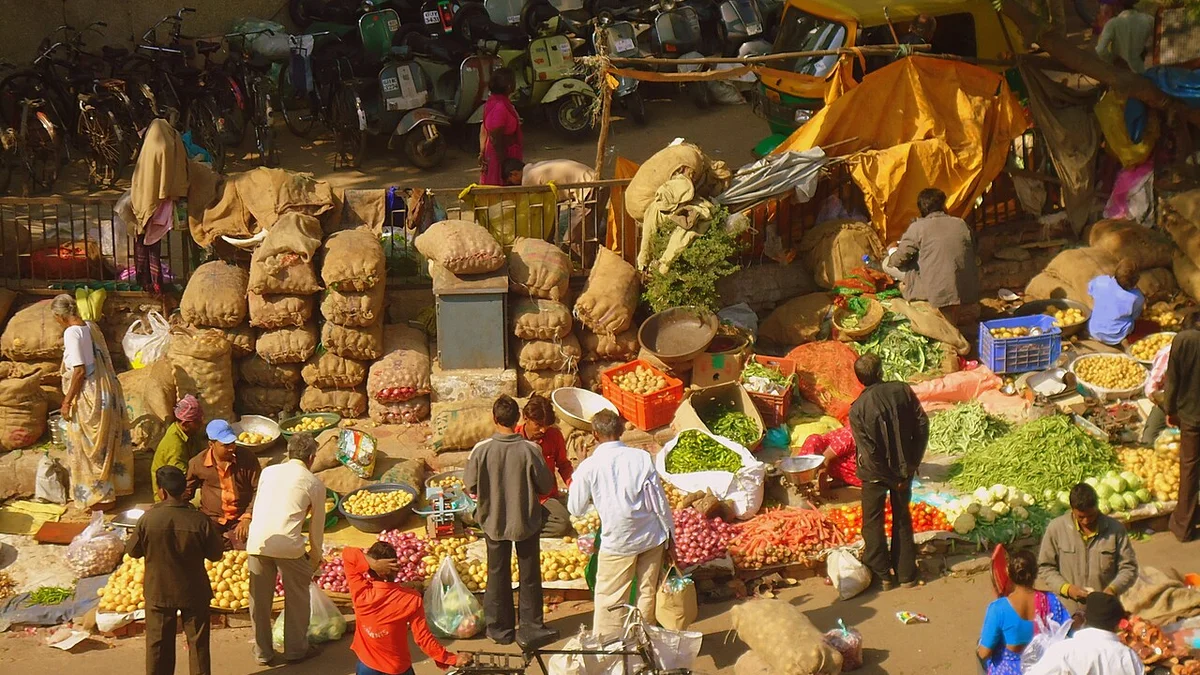
Krishi Upaj Mandi Samiti Neemuch, situated in the northwestern corner of the fertile Malwa plateau in Madhya Pradesh, is internationally celebrated across agricultural commodity markets as Asia’s premier wholesale marketplace for Posta Dana (poppy seeds), medicinal crops, exotic spices, and high-oil commercial pulses. As of 23 November 2026, Neemuch Mandi serves as the definitive national price discovery terminal for high-value agricultural commodities, attracting growers, stockists, spice exporters, and pharmaceutical procurement houses from Madhya Pradesh, Rajasthan, Gujarat, and Maharashtra. Operating under the administrative oversight of the Madhya Pradesh State Agricultural Marketing Board (MP Mandi Board), the yard processes thousands of metric tonnes of agricultural arrivals daily across dedicated trading yards.
What distinguishes Neemuch Mandi from conventional regional mandis is its unmatched commercial diversity. While the yard handles massive seasonal volumes of mainstream staples—including yellow soybean, black mustard seed (Sarson), premium Lokwan and Sharbati wheat, and Bengal gram (Chana)—it is world-renowned for monopolizing trade in rare, high-value specialty crops. Neemuch is the undisputed commercial capital for Posta Dana (poppy seeds derived from legally licensed opium cultivation under Central Bureau of Narcotics regulation), high-grade Ashwagandha roots (Withania somnifera), Isabgol (Psyllium husk), Kalonji (Nigella sativa), Methi (Fenugreek), Chia seeds, Alsi (Flaxseed), and winter garlic (Lahsun). This comprehensive guide delivers a detailed analysis of prevailing commodity price benchmarks, quality grading standards, daily auction schedules, e-NAM electronic bidding mechanisms, statutory 0% farmer commission protections, and grower best practices for maximizing terminal market realization.
Neemuch Mandi commodity price list 2026: indicative price matrix and commercial grades
Price determination in Neemuch Mandi is driven by rigorous open outcry bidding and digital e-NAM lot evaluations based on essential physical parameters: moisture content, kernel size, seed color uniformity, foreign matter admixture, and volatile oil concentrations. The table below outlines prevailing indicative price ranges across primary commercial commodities traded at Krishi Upaj Mandi Neemuch as of November 2026.
All prices reflect wholesale commercial auction benchmarks per quintal (100 kg) on an ex-mandi yard basis. Prices fluctuate daily based on interstate export demand, arrival volumes from surrounding districts (Mandsaur, Ratlam, Chittorgarh, and Pratapgarh), and national port parity.
| Commodity Name (फसल) | Arrival Grade / Quality Sort | Min Auction Rate (INR / Qtl) | Modal Auction Rate (INR / Qtl) | Max Auction Rate (INR / Qtl) | Peak Trading Season |
|---|---|---|---|---|---|
| Posta Dana (Poppy Seed) | Semi-Clean / Dotted Grade | ₹1,15,000 | ₹1,32,000 | ₹1,48,000 | March to August |
| Posta Dana (Super White) | Clean / Tinch Superior Special | ₹1,50,000 | ₹1,68,000 | ₹1,85,000 | March to August |
| Garlic / Lahsun (लहसुन) | Medium / Laddu / Extra White | ₹8,000 | ₹14,500 | ₹22,000 | December to May |
| Garlic / Lahsun (Chhad / Average) | Field Run / Light Moisture Grade | ₹4,500 | ₹6,800 | ₹8,500 | December to May |
| Ashwagandha (अश्वगंधा) | White Root / Asgandh Special | ₹18,000 | ₹26,500 | ₹38,000 | January to June |
| Isabgol / Psyllium (इसबगोल) | Export Machine Clean / 98% Purity | ₹12,500 | ₹14,800 | ₹17,200 | February to May |
| Kalonji / Nigella (कलौंजी) | Deep Black / Premium Bold Seed | ₹13,000 | ₹15,200 | ₹17,800 | March to July |
| Methi / Fenugreek (मेथी दाना) | Barik / Bold Greenish Yellow | ₹5,200 | ₹6,100 | ₹7,400 | February to May |
| Yellow Soyabean (सोयाबीन) | Fair Average Quality (FAQ) 10% Moist | ₹4,100 | ₹4,380 | ₹4,650 | October to February |
| Black Mustard / Sarson (सरसों) | 42% Oil Content Bold Seed | ₹5,100 | ₹5,450 | ₹5,850 | February to June |
| Bengal Gram / Chana (चना) | Desi / Vishal / Dollar Chana | ₹5,400 | ₹6,200 | ₹7,800 | March to July |
| Wheat / Gehu (गेहूं) | Mill Quality / Sharbati Superior | ₹2,650 | ₹2,950 | ₹3,450 | March to July |
Farmers seeking to optimize their crop revenue can benchmark these figures against regional APMC trading centers in adjacent corridors, including coriander rates at Ramganj Mandi Kota, citrus and pulse dynamics at Bhawani Mandi Rajasthan, and national grain price trends at Anaj Mandi hubs.
Posta Dana (Poppy Seed) trade: why Neemuch is Asia’s undisputed commercial capital
Posta Dana (खसखस / White Poppy Seed) is the crown jewel of Neemuch’s agricultural economy. The Malwa-Mewar tract—straddling Neemuch and Mandsaur districts in Madhya Pradesh alongside Chittorgarh, Pratapgarh, and Jhalawar in Rajasthan—is the only officially designated and strictly licensed opium poppy (Papaver somniferum) cultivation belt in the Republic of India. Cultivation is administered under stringent surveillance by the Central Bureau of Narcotics (CBN), headquartered in Gwalior with a vital divisional commissioner office located directly in Neemuch.
While raw opium latex is harvested and handed over exclusively to the Government Opium and Alkaloid Works factory situated in Neemuch for pharmaceutical opioid extraction, the dried seeds contained within the harvested capsules—known commercially as Posta Dana—contain zero narcotic alkaloids. These nutritious, oil-rich white seeds are released entirely to licensed cultivators for open commercial sale.
Neemuch Mandi operates a specialized, secure Posta Dana auction enclosure equipped with dedicated electronic weighing scales and round-the-clock CCTV surveillance. Trading lots are categorized into distinct commercial grades based on cleaning quality and seed color:
1. Semi-Clean / Field-Run Posta: Contains natural seed dust, broken capsule fragments, and minor brownish grains; trades between ₹1,15,000 and ₹1,32,000 per quintal; purchased primarily by domestic cleaning and sorting mills.
2. Machine Clean Posta: Mechanically destoned, air-sifted, and gravity-separated to eliminate impurities; trades between ₹1,35,000 and ₹1,55,000 per quintal; widely distributed to confectionery bakers and spice wholesalers across Mumbai, Delhi, Kolkata, and Hyderabad.
3. Tinch / Super White Special Posta: Color-sorted using advanced optical sorters to achieve an ultra-pure, uniform ivory-white appearance; commands top-tier auction bids between ₹1,60,000 and ₹1,85,000 per quintal; exported extensively to premium culinary markets across the Middle East, Europe, and North America.
Garlic (Lahsun) wholesale market: grading standards and seasonal volume dynamics
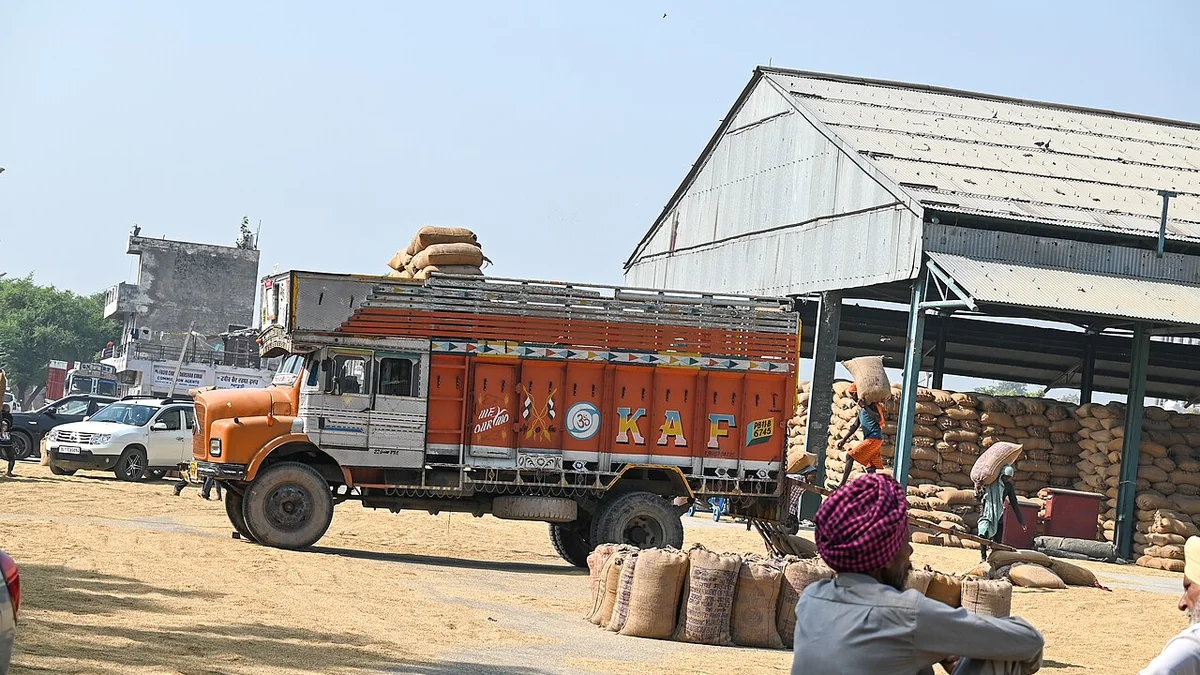
Alongside neighboring Mandsaur, Neemuch constitutes the largest garlic aggregation and trading basin in Central India. During the peak harvesting and marketing window extending from December through May, daily garlic arrivals at Neemuch Mandi routinely exceed 15,000 to 25,000 bags (each bag weighing approximately 45 to 50 kg). The intense concentration of garlic trade in Neemuch is driven by the region’s specialized agro-climatic conditions: winter temperatures dropping to 6°C combined with well-drained loamy soils foster exceptional clove plumpness, pungent sulfur aroma (allicin concentration exceeding 0.45%), and firm paper-white skin.
Garlic arrivals in the Neemuch yard are rigorously segregated into five standardized commercial categories:
1. Super White / Box Pack Grade: Extra-large bulbs with bulb diameters exceeding 55 mm to 65 mm; immaculate white skin, completely dry, and free from purple streaking; trades between ₹18,000 and ₹22,000 per quintal; destined for luxury export packaging and high-end hotel chains.
2. Mota / Laddu Grade: Large single bulbs measuring 45 mm to 55 mm in diameter; firm clove adherence with excellent shelf life; trades between ₹13,000 and ₹17,500 per quintal; the most heavily demanded commercial grade for interstate wholesale markets in Maharashtra, Gujarat, and South India.
3. Medium / Semi-Bold Grade: Uniform bulbs measuring 35 mm to 45 mm; ideal for retail supermarket packs and domestic kitchen consumption; trades between ₹9,500 and ₹12,800 per quintal.
4. Chhad / Small Grade: Compact bulbs measuring 25 mm to 35 mm; purchased extensively by industrial garlic paste manufacturers, dehydration plants, and spice powder processors; trades between ₹6,500 and ₹9,000 per quintal.
5. Gulla / Field Waste: Unsorted, broken, or lightweight bulbs; trades between ₹3,500 and ₹5,800 per quintal.
Growers are strongly advised to cure their harvested garlic thoroughly under dry, well-ventilated shade for 7 to 10 days before bringing lots to Neemuch. Bringing wet or freshly uprooted bulbs leads to severe bidding penalties (known locally as "Moisture Kata") of 5% to 15% due to rapid rot risks in storage.
Medicinal herbs hub: Ashwagandha, Isabgol, Kalonji and Fenugreek marketing
Neemuch is recognized across the world as India’s foremost spot trading terminal for certified Ayurvedic and botanical medicinal plants. The surrounding dryland farming villages across Neemuch, Manasa, and Jawad tehsils specialize in cultivating medicinal crops that thrive under low-irrigation conditions.
Ashwagandha Roots (Withania somnifera): Locally known as Asgandh (अजगंध), Neemuch Mandi handles the highest wholesale volume of authentic dry Ashwagandha roots in the country. Quality grading is strictly determined by root diameter, starch content, and whiteness. Top-grade "A-1 Super White" roots—which are brittle, chalk-white on snapping, and free from fibrous pith—command extraordinary rates from ₹28,000 to ₹38,000 per quintal from major Ayurvedic pharmaceutical giants (such as Dabur, Baidyanath, Patanjali, and Himalaya). Commercial field-run roots trade between ₹18,000 and ₹25,000 per quintal.
Isabgol (Psyllium / Plantago ovata): Seed arrivals from the semi-arid borders of Rajasthan and Neemuch are prized for high mucilage yield. Whole seeds trade between ₹12,500 and ₹17,200 per quintal, which are promptly processed at local satellite dehulling and hydrocolloid factories for pharmaceutical laxative and fiber dietary export.
Kalonji (Black Cumin / Nigella sativa): Sourced from winter rabi sowings, premium deep-black Kalonji seeds with minimum 1.2% essential oil content trade at ₹13,000 to ₹17,800 per quintal, experiencing heavy procurement from Gulf and Middle Eastern spice trading houses.
Statutory 0% farmer commission and legal seller protections under MP Mandi Act
One of the most vital financial safeguards for cultivators marketing their produce at Krishi Upaj Mandi Neemuch is the statutory 0% farmer commission guarantee mandated under the Madhya Pradesh Krishi Upaj Mandi Adhiniyam, 1972 (as amended).
Under clear state marketing regulations, no commission agent (Aadhatiya / कच्चा आढ़तिया), broker, or trader is legally permitted to deduct any commission fee, brokerage charge, or trade discount from the gross sale amount payable to the farmer. The entire cost of marketing—including the 1.5% statutory Mandi Shulk (mandi development cess), 0.5% Nirashrit Shulk, and the commission agent’s service fee (typically 2% to 2.5%)—is borne strictly and exclusively by the licensed buyer (Pakka Vyapari / Trader).
The only permissible standard deductions from a farmer’s settlement slip are the regulated weighment charges (Tulawati) authorized by the Mandi Samiti, which are fixed at nominal government rates (typically ₹4.50 to ₹6.00 per bag/quintal). Any attempt by traders to deduct arbitrary "Dhalta" (moisture cut without formal agreement), "Kada" (sample discounts), or cash deductions constitutes a non-bailable offense under state market legislation, punishable by immediate suspension of trading licenses and criminal prosecution.
Farmers encountering unauthorized deductions or coerced price cuts are advised to immediately lodge a formal complaint at the Mandi Samiti Secretary Office or contact the MP Mandi Board Vigilance Cell.
Neemuch Mandi trading operations: gate timings, weighbridges, and e-NAM auctions
To navigate Neemuch Mandi smoothly and avoid unnecessary overnight vehicle detention, farmers must follow the established daily operational schedule and gate procedures:
Gate Entry & Weighment (06:00 AM – 09:30 AM): Loaded tractor-trolleys, pickup trucks, and commercial tempos enter through the main Mandi Gate on Sanwariya Road. Vehicles pass over computerized electronic weighbridges to record gross vehicular weight. The gate operator enters the farmer’s name, mobile number, village, and declared commodity into the digital mandi software, issuing an official computerized Inward Gate Pass (आवक पर्ची) featuring a unique Lot Number.
Yard Allocation: Vehicles proceed to their designated commodity sheds: Shed 1 for Posta Dana and exotic spices, Shed 2 for Garlic and onion bulk lots, Shed 3 for Soyabean and oilseeds, and Shed 4 for Wheat and pulses. Produce is unloaded into neat rectangular heaps (Dheri) for physical inspection by registered buyers.
Open Outcry & e-NAM Bidding (10:00 AM – 03:00 PM): Official auctioneers accompanied by the licensed commission agent and registered buyers move systematically from lot to lot. Bidding commences with an opening quotation and proceeds upward through rapid competitive open outcry. In parallel, digitized lots are entered into the e-NAM portal where inter-state traders submit remote electronic bids. Once the auctioneer declares the highest bid, the farmer is asked for consent. If satisfied, the farmer gives agreement; if the offer is deemed unsatisfactory, the farmer has the undisputed legal right to reject the bid and retain the produce.
Final Weighment & Digital Settlement (02:00 PM – 06:00 PM): Accepted lots are re-weighed on calibrated electronic scales under Mandi Samiti supervision. An official electronic Sauda Patrak (Sale Agreement Slip) is generated. Under MP Mandi Board guidelines, buyers must disburse the net payable proceeds into the farmer’s verified bank account via RTGS/NEFT on the same business day, or hand over an account-payee cheque.
Best practices for farmers marketing produce at Neemuch Mandi
To ensure maximum auction realization and prevent common trade disputes, experienced growers adhere to these five fundamental field marketing recommendations:
1. Single-Grade Lot Uniformity: Never mix high-grade bold garlic or superior posta with bottom-grade field sweeps or damp residue. Discerning buyers price entire blended heaps based on the lowest quality noticed in the heap, causing severe financial loss.
2. Optimal Sun Curing and Moisture Control: Ensure grain and oilseed moisture levels remain below 10% to 12% (and garlic moisture below 15%). Sun-cure garlic stalks thoroughly for 8 to 10 days until outer skins rustle like dry paper.
3. Digital Banking Credentials: Carry an active bank passbook, Aadhaar card, and Voter ID. Same-day electronic RTGS payments require an operational bank account with correct IFSC codes.
4. Early Morning Arrival: Arriving before 07:30 AM guarantees prime position in covered sheds, safeguarding crops against unexpected afternoon rain and avoiding chaotic vehicle queues.
5. Retain Official Documents: Preserve your Inward Gate Pass, Sauda Patrak, and weighment slips until the final transaction funds are credited and confirmed via SMS in your bank account.
Growers looking to finance farm mechanization, tractor equipment, or post-harvest storage can also explore our digital advisory tools including the farm machinery EMI calculator, credit evaluations via the KCC loan calculator, agricultural credit options under farmer loans, and central subsidy initiatives in government schemes. Cultivators can also check our daily mandi rates portal for real-time market movements.
Official government resources and agricultural marketing portals
Access authentic daily mandi arrival volumes, price reports, e-NAM portal trading, and regulatory rules from official verified government portals:
Cultivators and agribusiness operators can monitor verified daily arrival volumes, modal price trends, and digital auction statistics through official government portals. The Agmarknet Directorate of Marketing and Inspection provides daily state-level market bulletins, while the e-NAM National Agriculture Market facilitates online inter-state bidding and unified lot tracking. In Madhya Pradesh, the MP Mandi Board publishes regular notification updates and regulatory compliance notices for all APMC yards. Producers handling specialized poppy crops can cross-reference licensing regulations with the Central Bureau of Narcotics, while broader subsidy schemes are monitored via the DBT Bharat Agriculture Portal.
For comprehensive price benchmarking across neighboring agricultural hubs, explore our regional market intelligence guides on Ramganj Mandi coriander trade, Bhawani Mandi citrus and grain arrivals, and Gazipur Sabji Mandi wholesale vegetable distributions. Growers can also compare cash-crop pricing through our detailed analyses of mustard oil market trends, wholesale onion price dynamics, and national cotton market rates.
Frequently asked questions about Neemuch Mandi bhav and trading
Frequently asked questions
- What is Neemuch Mandi most famous for in India?
- Neemuch Mandi in Madhya Pradesh is world-famous as Asia’s largest spot trading terminal for Posta Dana (poppy seeds), high-potency Ashwagandha medicinal roots, and Malwa garlic (Lahsun). It also processes massive wholesale volumes of yellow soyabean, black mustard seed, isabgol, kalonji, and wheat. Cultivators tracking broader oilseed markets can explore our mustard oil processing and rate guide.
- What is the current price range of Posta Dana in Neemuch Mandi?
- Indicative auction prices for Posta Dana in November 2026 range from ₹1,15,000 to ₹1,48,000 per quintal for semi-clean and dotted grades, and between ₹1,50,000 and ₹1,85,000 per quintal for superior clean and Tinch white-sorted export grades. Farmers can monitor regional spot rates alongside our Ramganj Mandi commodity analysis.
- What are the garlic (lahsun) auction rates in Neemuch Mandi?
- Garlic auction rates range from ₹8,000 to ₹22,000 per quintal depending on bulb size and quality grade. Super White Box pack and Mota Laddu grades command ₹13,000 to ₹22,000 per quintal, while Medium and Chhad varieties trade between ₹4,500 and ₹12,800 per quintal. Compare these with perishable vegetable movements in our wholesale onion price report.
- Does a farmer have to pay any commission fee at Neemuch Mandi?
- No. Under the Madhya Pradesh Krishi Upaj Mandi Act, 1972, there is a statutory 0% commission deduction for farmers. All mandi fees (1.5%) and commission agent brokerages are legally paid by the licensed buyer (trader). Farmers only pay nominal authorized weighment fees.
- What are the gate entry and auction timings at Neemuch Mandi?
- Gate entry and weighbridge pass issuance run from 06:00 AM to 09:30 AM daily Monday through Saturday. Open outcry and digital e-NAM auctions take place from 10:00 AM to 03:00 PM across dedicated commodity sheds.
- Is Neemuch Mandi open for trading on Saturdays and Sundays?
- Neemuch Mandi operates full trading auctions Monday through Saturday. The mandi yard is closed on Sundays and gazetted public holidays for routine cleaning, sanitization, and administrative bookkeeping.
- How can farmers check Neemuch Mandi bhav online daily?
- Farmers can check official auction rates on the central Agmarknet portal by selecting State: Madhya Pradesh, District: Neemuch, Market: Neemuch. Rates are also published daily on the MP Mandi Board portal and the national e-NAM portal.
- Can farmers from Rajasthan or other states sell produce at Neemuch Mandi?
- Yes. Neemuch Mandi is an interstate open trading terminal. Farmers from bordering districts of Rajasthan (such as Chittorgarh, Pratapgarh, and Jhalawar) regularly bring their garlic, posta, and oilseeds to Neemuch to take advantage of superior price realization, often coordinating arrivals with the Bhawani Mandi trading hub.
- How fast do farmers receive payment after their lot is auctioned?
- Under MP Mandi Board regulations, buyers must disburse auction proceeds to the farmer’s verified bank account via RTGS/NEFT on the same day of the transaction, or provide an account-payee cheque before removing produce from the yard.
- What happens if a farmer is not satisfied with the final auction bid?
- The farmer holds the absolute legal right to reject the final auction bid. If the farmer considers the offered price too low, they can decline the transaction, retain their produce, and either re-auction the lot on the following business day or take it back home.
- What is the trading price of Ashwagandha roots in Neemuch Mandi?
- High-quality dry Ashwagandha roots trade between ₹18,000 and ₹38,000 per quintal. Premium A-1 Super White roots that snap crisply with chalk-white starch cores command the highest prices from Ayurvedic pharmaceutical manufacturers.
- What documents should a farmer carry when visiting Neemuch Mandi?
- Farmers should carry a valid photo identity proof (Aadhaar Card or Voter ID), active bank savings account passbook showing account number and IFSC code for electronic payment, and the vehicle registration details for the Inward Gate Pass.
This article is for general information only and is not financial advice. Loan and scheme eligibility depends on partner and government criteria.