Gazipur Sabji Mandi: Daily Bhav, Timings & APMC Guide
Key takeaways
- Gazipur Sabji Mandi (officially Ghazipur APMC Fruit & Vegetable Market) is Delhi NCR’s premier eastern wholesale aggregation terminal, handling over 3,000 to 5,000 metric tonnes of fresh perishables daily across East Delhi, Noida, and Ghaziabad.
- Under the Delhi Agricultural Produce Marketing (Regulation) Act, 1998, farmers visiting Gazipur Mandi enjoy a statutory 0% commission guarantee; commission agent charges (aadat) and statutory development levies are borne entirely by registered wholesale buyers.
- Wholesale gate entry and electronic weighbridge registration run from 02:00 AM to 05:00 AM, with open outcry wholesale auctions operating from 04:30 AM to 09:30 AM, followed by semi-wholesale and retail loading until noon.
- Direct vehicular access is facilitated via the Delhi-Meerut Expressway (NH-9) and Gazipur roundabout, connecting agricultural supply corridors across Western Uttar Pradesh, Haryana, Punjab, Rajasthan, and Madhya Pradesh.
- Official commodity price intelligence is verified through the Directorate of Marketing & Inspection (agmarknet.gov.in) and Delhi Agricultural Marketing Board (delhi.gov.in), ensuring transparent price benchmarking for growers and bulk traders.
Gazipur Sabji Mandi, administered by the Agricultural Produce Market Committee (APMC) Ghazipur under the Delhi Agricultural Marketing Board (delhi.gov.in), serves as the vital eastern gateway for horticultural trade across the National Capital Region (NCR). Strategically situated along the National Highway 9 (Delhi-Meerut Expressway corridor) right at the border of East Delhi and Ghaziabad, Uttar Pradesh, this massive terminal market fulfills the daily nutritional requirements of millions of urban consumers across Delhi, Noida, Greater Noida, and Sahibabad.
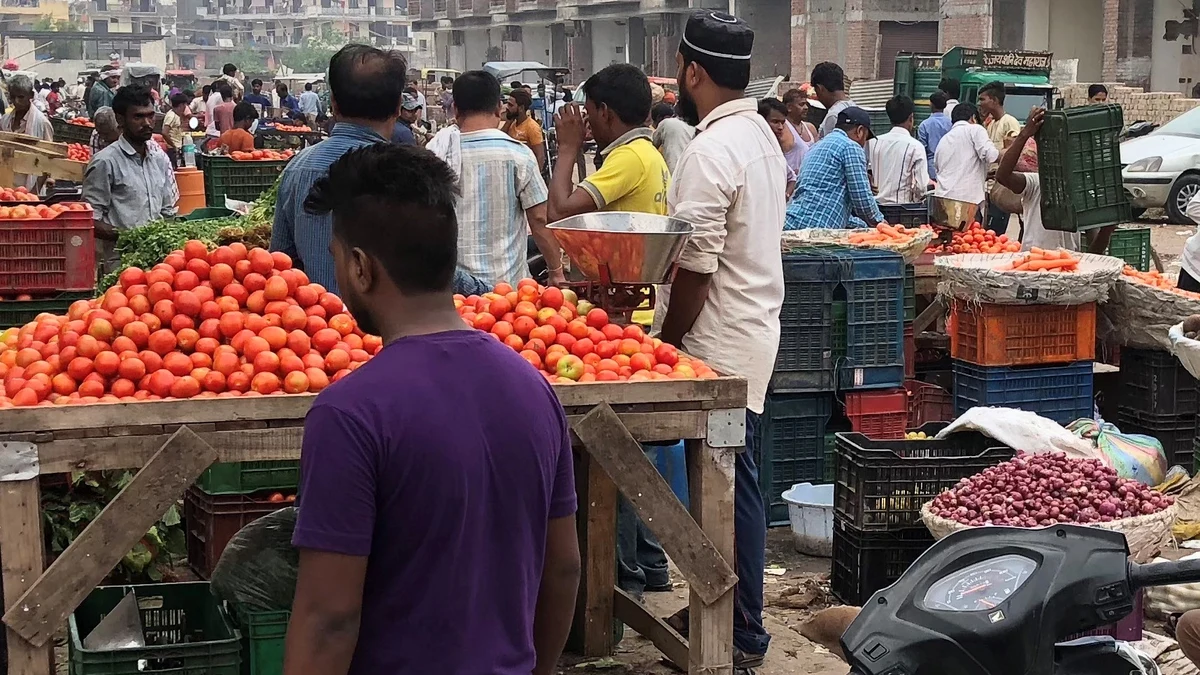
Every night as the metropolitan capital sleeps, Gazipur transforms into a bustling commercial engine. Between 02:00 AM and sunrise, hundreds of commercial trucks, multi-axle freight carriers, and farmer tractor-trolleys powered by dependable workhorses like Mahindra tractors and heavy-duty Swaraj 744 FE models arrive from fertile hinterlands across Uttar Pradesh, Haryana, Punjab, Rajasthan, Himachal Pradesh, and Madhya Pradesh. Whether it is truckloads of Nashik onions, Agra cold-storage potatoes, Kolar tomatoes, or freshly harvested leafy greens from Meerut and Hapur, Ghazipur’s auction sheds facilitate rapid price discovery, quality segregation, and distribution to local retail markets, supermarkets, and hotel conglomerates.
For cultivators, commission agents (arhtiyas), institutional buyers, and retail vendors, understanding daily bhav trends, operational gate entry protocols, commission statutory regulations, and transport access routes is indispensable. This authoritative terminal guide provides actionable intelligence on Gazipur sabji mandi operations, wholesale commodity price benchmarks, legal farmer protections, and logistical best practices.
Strategic Commercial Importance of Ghazipur APMC Terminal Market
While Azadpur Mandi in North Delhi ranks as Asia’s largest wholesale agricultural market, Gazipur Sabji Mandi plays an equally pivotal role by decentralizing NCR’s perishable goods logistics. Prior to Ghazipur’s development, commercial freight vehicles entering Delhi from Western UP and eastern transit routes were forced to navigate congested central city corridors to reach Azadpur or Okhla. The establishment of Ghazipur APMC provided a dedicated aggregation terminal on the eastern flank, drastically reducing transit times, post-harvest spoilage, and diesel haulage emissions.
Covering an expansive layout adjacent to Anand Vihar Inter-State Bus Terminus (ISBT) and Anand Vihar Railway Station, the Ghazipur market complex is bifurcated into specialized trading yards: the Ghazipur Fruit and Vegetable Market (Sabji and Phal Mandi), the modernized Ghazipur Flower Market (Phool Mandi), and the adjacent Ghazipur Livestock and Poultry Market. The Fruit and Vegetable terminal encompasses covered auction sheds, high-capacity computerized weighbridges, cold storage chambers, administrative offices, banking branches, and dedicated loading/unloading bays capable of handling heavy logistics simultaneously. Farmers planning heavy crop transport can also compare robust hauling machinery like Sonalika tractors and premium high-torque John Deere tractors alongside attractive state incentives under the tractor subsidy scheme.
The market serves as the primary price-setting aggregation hub for agricultural produce arriving from key agro-climatic clusters: Western UP belts (Meerut, Hapur, Bulandshahr, Sambhal, Amroha, Moradabad), Haryana vegetables (Sonipat, Panipat, Faridabad), potato belts (Agra, Aligarh, Farrukhabad), and long-distance transshipments of onions from Maharashtra (Nashik, Ahmednagar) and Madhya Pradesh (Khandwa, Indore). Official daily market benchmarks are tracked through the Directorate of Marketing & Inspection on Agmarknet (agmarknet.gov.in).
Key Commodities Traded at Gazipur Sabji Mandi: Quality & Packaging Standards
Trading at Gazipur Sabji Mandi encompasses a wide spectrum of staple vegetables, seasonal horticultural crops, exotic leafy produce, and bulk fruits. Understanding commercial grading standards, standard packaging units, and moisture thresholds allows growers to command top modal prices during morning auctions.
1. Onion (Nashik Garwa, MP, and Alwar Kharif Varieties)
Onions represent one of the highest volume and most price-sensitive commodities auctioned at Gazipur. Arrivals are categorized by production pocket and biological season. Ranging from Maharashtra’s famed Nashik and Pimpalgaon Rabi Garwa onions (characterized by thick outer skin, high pungency, and exceptional shelf life of 4 to 6 months) to Madhya Pradesh red onions and Rajasthan’s Alwar Kharif flush, lots are sorted into distinct grades. Grade A (55 mm+ bulb diameter with intact reddish skin), Grade B (40–55 mm medium commercial bulbs), and Grade C (sub-40 mm or "Golta/Golti" sizes). Packaging is standardized in 40 kg to 50 kg red nylon mesh bags (jali bora) to maintain air circulation and prevent fungal rot.
2. Potato (Agra, Aligarh, Farrukhabad & Punjab Seed Stocks)
Ghazipur is the chief receiving terminal for Uttar Pradesh’s massive potato harvest, originating from Agra, Hathras, Mathura, Aligarh, and Sambhal. Key commercial varieties include Kufri Jyoti (versatile table potato), Kufri Bahar (popular 3797 table grade), Kufri Pukhraj (early harvest variety), and specialized processing varieties like Chipsona-1 and Chipsona-3 favored by snack manufacturers. Potatoes arrive either fresh-harvested during the winter flush (November to March) or from regional cold storages during summer and monsoon (April to October). Standard packaging consists of 50 kg jute gunny sacks (kata). Lot grading emphasizes uniform oval shape, shallow eye depth, and zero green skin discoloration caused by solanine exposure.
3. Tomato (Hybrid & Desi Varieties from Kolar, Nashik, and Regional UP)
Tomato supplies at Gazipur experience dynamic seasonal shifts. During winter, local arrivals from Western UP (Meerut, Hapur, Baghpat) and Haryana dominate the market. As regional supplies dwindle in summer, heavy transshipments arrive from southern consolidation hubs like Kolar and Madanapalle in Karnataka and Andhra Pradesh, as well as Nashik and Sangamner in Maharashtra, and Solan/Shimla in Himachal Pradesh during the monsoon. Tomatoes are traded exclusively in standardized 25 kg rigid plastic crates. Lots are graded as "Firm Ripe" (semi-green with pink blush, ideal for multi-day storage) and "Full Ripe" (deep red color, traded for immediate consumption by catering firms and street vendors).
4. Green Chillies, Ginger, Garlic & Seasonal Vegetables
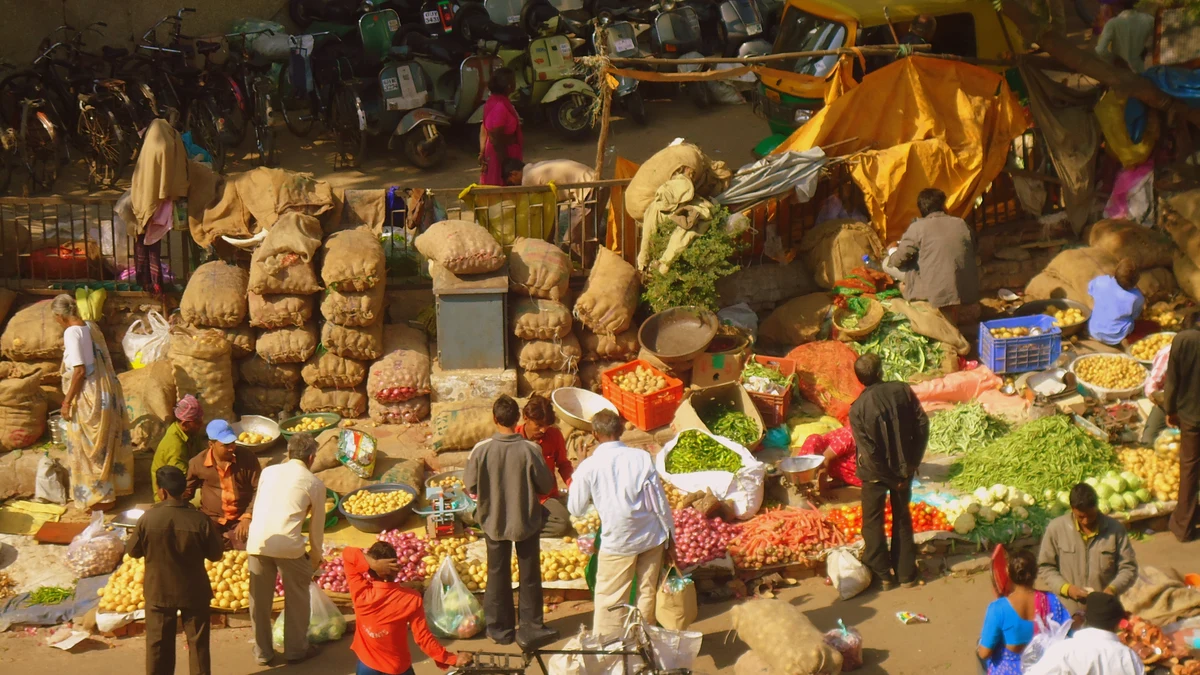
Beyond staples, Gazipur is a major northern center for pungent spices and culinary basics. Green chillies arrive in 20–30 kg gunny bags from Guntur (Andhra Pradesh), Belgaum (Karnataka), and regional UP plots. Garlic arrives in 25–40 kg ventilated net bags from Neemuch and Mandsaur in Madhya Pradesh, while fresh ginger is transported from Wayanad (Kerala), Shimoga (Karnataka), and Himachal Pradesh. Seasonal vegetables including cauliflower, cabbage, bottle gourd (lauki), ridge gourd (torai), okra (bhindi), green peas (matar), and carrots (gajar) from Delhi’s Yamuna floodplains and Western UP arrive daily in morning tempos and tractor-trolleys equipped with modern farm equipment.
Daily Wholesale Bhav & Indicative Price Ranges at Gazipur Mandi
Wholesale prices at Gazipur Sabji Mandi fluctuate on a daily basis depending on overnight arrival volumes, interstate freight logistics, weather disruptions, and retail consumer demand across Delhi NCR. Below is an indicative benchmark of commercial wholesale rate ranges for key horticultural commodities recorded at Gazipur APMC.
| Commodity | Variety / Commercial Grade | Packaging Unit | Indicative Modal Bhav (Rs/Qtl) | Primary Arrival Source |
|---|---|---|---|---|
| Onion (Garwa) | Grade A (55mm+ Bold Red) | 50 kg Mesh Bag | Rs 2,400 - Rs 3,200 | Nashik, Ahmednagar (MH) |
| Onion (Medium) | Grade B (40-55mm Regular) | 50 kg Mesh Bag | Rs 1,800 - Rs 2,300 | Khandwa (MP), Alwar (RJ) |
| Potato (Table) | Kufri Bahar / 3797 Fresh | 50 kg Jute Bag | Rs 1,100 - Rs 1,450 | Agra, Hathras, Aligarh (UP) |
| Potato (Storage) | Cold Storage Graded Chips | 50 kg Jute Bag | Rs 1,500 - Rs 1,900 | Farrukhabad, Sambhal (UP) |
| Tomato (Hybrid) | Firm Ripe 25 kg Crate | 25 kg Crate (Rs 350-550) | Rs 1,400 - Rs 2,200 | Kolar (KA), Nashik (MH) |
| Tomato (Desi Local) | Field Run UP Winter Flush | 25 kg Crate (Rs 250-400) | Rs 1,000 - Rs 1,600 | Meerut, Hapur, Sonipat |
| Green Chillies | Teja / Guntur Hot Grade | 30 kg Gunny Sack | Rs 3,800 - Rs 5,200 | Guntur (AP), Karnataka |
| Garlic | Mandsaur Bold White Medium | 40 kg Net Sack | Rs 9,500 - Rs 14,000 | Neemuch, Mandsaur (MP) |
| Ginger (Adrak) | Wayanad / Regional Fresh | 50 kg Gunny Bag | Rs 5,500 - Rs 7,200 | Kerala, Karnataka, HP |
| Green Peas (Matar) | Early Sweet Pods Graded | 40 kg Jute Sack | Rs 2,800 - Rs 4,500 | Punjab, Western UP, MP |
| Cauliflower (Gobi) | Snowball Pure White Curd | Loose / Per 100 Heads | Rs 1,200 - Rs 2,000 | Delhi Belt, Sonipat (HR) |
| Cabbage (Patta Gobi) | Compact Round Green Heads | 50 kg Gunny Bag | Rs 800 - Rs 1,300 | Meerut, Bulandshahr (UP) |
Operational Schedule: Auction Timings, Gate Entry & Weighbridge Protocols
To capitalize on peak auction attendance and secure maximum bids, farmers and transport operators must adhere strictly to Gazipur APMC’s operational timeline. The wholesale cycle operates on rigorous schedules designed to ensure rapid evacuation before city daytime traffic restrictions commence.
1. Inward Gate Entry & Electronic Weighment (01:30 AM to 05:00 AM)
Loaded trucks, mini-trucks (Tata 407, Bolero Pik-Up), and tractor-trolleys enter the Gazipur APMC yard through Gate No. 1 and Gate No. 2 off the service lane of NH-9. At entry, APMC security personnel and automated boom barriers log the vehicle registration number, driver contact details, commodity type, and point of origin. Vehicles proceed to computerized weighbridges to record gross vehicle weight (GVW). Tare weight (empty vehicle weight) is recorded upon exit to compute exact net arrival weight, eliminating traditional manual estimation disputes.
2. Lot Unloading & Sample Display (03:00 AM to 05:30 AM)
Produce is unloaded at the designated auction platforms (phad) assigned to licensed commission agents (arhtiyas). Gunny sacks and crates are arranged in identifiable lots. A representative sample (typically 2 to 3 crates or sacks per 50-quintal lot) is opened for physical inspection by prospective buyers. Buyers examine produce attributes including uniform color, firmness, moisture level, skin blemishes, insect damage, and pest marks.
3. Open Outcry Wholesale Auctions (04:30 AM to 09:30 AM)
The core commercial transaction occurs during open outcry auctions (khuli boli) conducted by licensed commission agents under the oversight of APMC market supervisors. Wholesalers, institutional food caterers, export procurement agents, and major supermarket aggregators assemble around the lots. The auctioneer starts bidding from a base rate reflective of overnight arrivals and prevailing terminal demand. Once the highest bid is confirmed and accepted by the farmer, the rate per quintal or per crate is officially entered into the auction register and e-NAM software terminal.
4. Semi-Wholesale & Local Retail Dispatch (08:30 AM to 01:00 PM)
Following the wholesale auctions, smaller lots are purchased by local sabji mandi retailers, neighborhood vendor associations (rehriwalas), and e-commerce dark store aggregators. Retail delivery vehicles (three-wheelers, small cargo vans) load commodities and exit before midday, allowing municipal sanitation staff to sweep and wash the market platforms in preparation for the subsequent night cycle.
Farmer Rights & APMC Delhi Statutory Protection: 0% Commission Rule
One of the most crucial statutory advantages for agricultural producers selling at Gazipur Sabji Mandi is Delhi’s progressive regulatory framework protecting growers against unfair commission deductions. Cultivators should be fully aware of these legal entitlements:
Under the Delhi Agricultural Produce Marketing (Regulation) Act, 1998, farmers pay zero percent (0%) commission on agricultural produce sold within APMC yards. The statutory commission agent fee (aadat), fixed at 6% for fruits and vegetables, must legally be paid by the purchasing wholesale buyer, NOT deducted from the farmer’s sale proceeds. Any commission agent who attempts to deduct commission from a farmer’s payment violates APMC rules and is subject to immediate license suspension and statutory penalties.
Growers are only liable for standard loading and unloading labor charges (palledari or hamali) fixed by the APMC rate chart (typically Rs 4 to Rs 7 per gunny bag or Rs 2 to Rs 4 per crate). Weighbridge fee is capped at a nominal statutory fee (Rs 30 to Rs 50 per vehicle). Furthermore, farmers have the absolute legal prerogative to refuse any auction bid that falls below their cost of production. Produce cannot be forcibly auctioned or sold without the farmer’s explicit consent.
Growers should ensure that the commission agent issues a standardized APMC Form J (sale slip) detailing the gross weight, tare weight, net commodity weight, agreed auction rate per quintal, legitimate labor deductions, and final payable amount. Payment must be disbursed on the same day in cash up to statutory limits, or via direct bank transfer (RTGS / NEFT / UPI) within 24 hours. Many cultivators invest these proceeds into improving farm productivity through modern PM KUSUM solar irrigation pumps or securing low-cost institutional working capital via a Kisan Credit Card (KCC).
Logistical Connectivity: Reaching Gazipur Mandi from Key Production Hubs
Ghazipur’s strategic geographical position on the eastern border of Delhi makes it the most accessible terminal market for vehicles traveling from Northern and Central India without crossing complex urban congestion zones. Key vehicular access corridors include:
From Western Uttar Pradesh (Meerut, Hapur, Moradabad, Bareilly): Vehicles utilize the 14-lane Delhi-Meerut Expressway (NH-9), taking the Ghazipur exit ramp directly into the APMC perimeter. This dedicated expressway has reduced transit times from Meerut to under 45 minutes.
From Southern UP & Rajasthan (Agra, Aligarh, Mathura, Bharatpur): Commercial carriers travel along the Yamuna Expressway up to Greater Noida, transit via the Noida-Greater Noida Expressway, and connect via Sector 62 / NH-9 underpass into Ghazipur Mandi.
From Haryana & Punjab (Sonipat, Panipat, Karnal): Trucks utilize the Eastern Peripheral Expressway (EPE) or Western Peripheral Expressway (KMP) to bypass central Delhi, joining NH-9 at Dasna to enter Ghazipur effortlessly.
Expanding Farm Enterprise: Agricultural Intelligence & Allied Schemes
Navigating terminal produce markets like Gazipur requires sound financial planning and continuous monitoring of input costs and allied agricultural opportunities. Cultivators who balance vegetable farming with diversified enterprises like high-yield dairy husbandry, such as maintaining indigenous Gir cow dairy farms backed by dairy farming loans and NABARD subsidies, achieve year-round cash flow stability.
Similarly, commercial poultry farmers tracking daily northern protein markets can cross-examine regional price movements using our dedicated benchmarks on today egg rates, Barwala egg rates, and official NECC egg rates. Cultivators in specialized agricultural commodities can evaluate spice processing benchmarks like coriander seeds cultivation, wholesale auctions at Ramganj Mandi and Bhawani Mandi Rajasthan, commercial mentha oil spot rates, or long-term cash crops like rubber price benchmarks and exotic avocado cultivation economics.
To safeguard household financial stability, every agricultural family should monitor central welfare disbursements, including their PM Kisan status check, completing mandatory PM Kisan eKYC biometric verification, tracking electronic fund release via PM Kisan payment status, and managing seasonal input expenses with accurate DAP fertilizer price benchmarks and comprehensive crop insurance premium calculators.
Frequently asked questions
- Where is Gazipur Sabji Mandi located and what are its main access routes?
- Gazipur Sabji Mandi (Ghazipur APMC Fruit and Vegetable Market) is situated in East Delhi near Anand Vihar ISBT (Delhi 110096) along the Delhi-Meerut Expressway (NH-9). Farmers from Western UP, Haryana, and Rajasthan can easily access the yard without entering central Delhi congestion. You can also monitor regional market links like Bhawani Mandi Rajasthan to benchmark multi-state logistics.
- What are the daily wholesale auction timings at Gazipur Sabji Mandi?
- Wholesale gate entry and computerized weighbridge unloading run from 01:30 AM to 05:00 AM. Primary open outcry wholesale auctions operate from 04:30 AM to 09:30 AM, followed by retail distribution till noon. Growers hauling large crop volumes often rely on durable haulage tractors like Swaraj tractors or Mahindra tractors to ensure timely arrival before morning bidding begins.
- Do farmers have to pay commission (arhatiya aadat) at Gazipur Mandi?
- No. Under the Delhi Agricultural Produce Marketing (Regulation) Act, 1998, farmers pay a statutory 0% commission. The 6% commission agent fee is paid strictly by the wholesale buyer. Farmers only cover standard loading labor charges and nominal weighbridge fees, preserving farm margins calculated through our crop income calculator.
- What are the major commodities traded in bulk at Gazipur Sabji Mandi?
- The highest volume commodities traded at Ghazipur include onions (Nashik, MP, Alwar varieties), potatoes (Agra, Aligarh, Farrukhabad cold storage), tomatoes (Kolar, Nashik, Western UP), green chillies, cauliflower, cabbage, green peas, and seasonal garlic. Growers also cross-reference spice market trends like Ramganj Mandi coriander trading.
- How can farmers check official daily vegetable and onion bhav for Gazipur Mandi?
- Cultivators can verify official daily modal prices, arrivals, and price ranges on the Directorate of Marketing & Inspection portal at agmarknet.gov.in and the Delhi Agricultural Marketing Board at delhi.gov.in, as well as real-time updates on KisanPe.
- Can farmers reject a low auction bid at Gazipur Sabji Mandi?
- Yes. Agricultural producers hold the unconditional legal right to reject any auction bid that falls below their expectation. The produce cannot be forcibly unloaded or sold without the farmer’s explicit consent, safeguarding working capital supported by schemes like Kisan Credit Card (KCC).
- Are cold storage facilities available near Gazipur Sabji Mandi for unsold produce?
- Yes, both privately operated and government-licensed multi-commodity cold stores operate along the Gazipur-Ghaziabad Sahibabad industrial corridor. Farmers experiencing temporary gluts can store perishable commodities like potatoes and apples rather than making distress sales.
- How does electronic weighing work at Gazipur Mandi to prevent weighing malpractices?
- Gazipur APMC operates computerized electronic weighbridges at ingress and egress gates. The vehicle is weighed with the load, and re-weighed after unloading. The computerized slip automatically calculates the net produce weight, eliminating manual scale errors.
- How can smallholder vegetable growers connect with institutional buyers at Ghazipur?
- Farmer Producer Organizations (FPOs) and cooperative societies can register directly with the APMC Ghazipur marketing division or trade through e-NAM to sell directly to retail chains and institutional processors without intermediaries.
- What documents should a farmer bring to receive prompt payment at Gazipur Mandi?
- Farmers should carry their Aadhaar card, a bank passbook or cancelled cheque (with clear bank account number and IFSC code for RTGS/NEFT transfers), and vehicle registration documents for automated gate pass entry. Cultivators should verify that their bank account matches their government DBT records used for PM Kisan status check.
This article is for general information only and is not financial advice. Loan and scheme eligibility depends on partner and government criteria.