Daily Egg Rate Today: NECC Wholesale & Kerala Price
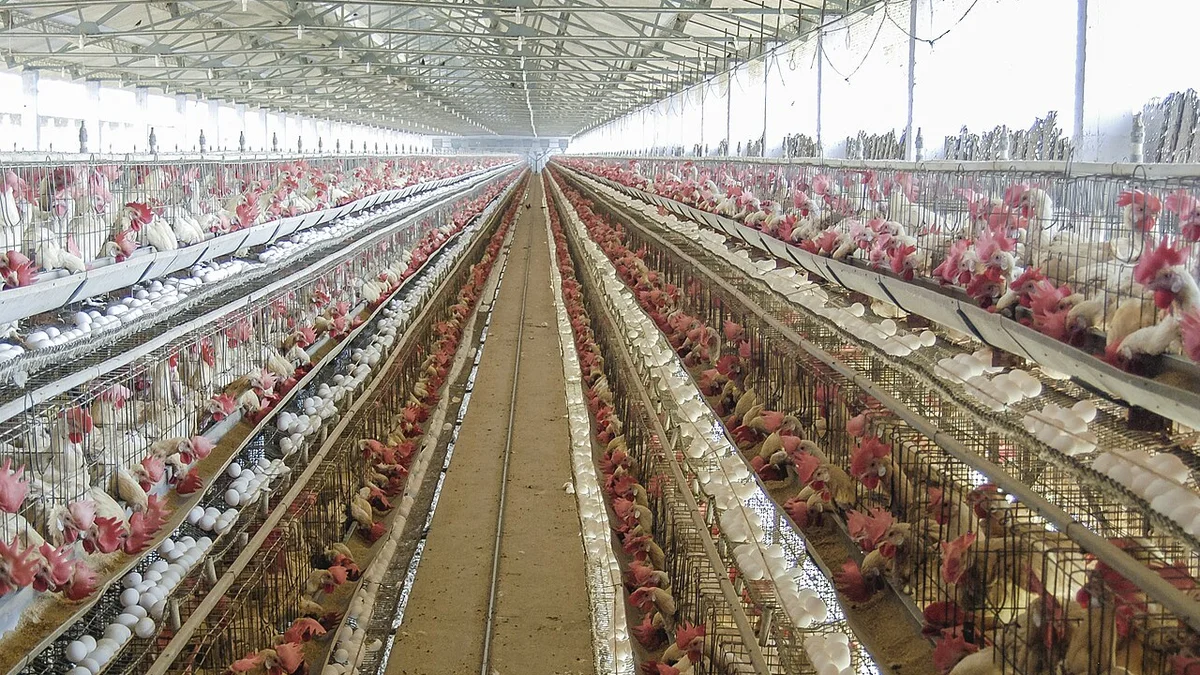
The commercial poultry sector in India represents one of the fastest-growing livestock agribusiness segments, producing over 13,000 crore table eggs annually and positioning the nation as the second-largest egg producer on the planet. Daily pricing in the poultry industry operates under a unique institutional framework orchestrated by the National Egg Coordination Committee (NECC) alongside regional poultry farmer associations. For commercial layer farmers, feed compounders, wholesale traders, and retail consumers, tracking an accurate daily egg rate benchmark is essential to navigate volatile wholesale spreads and safeguard farm gate profitability.
Egg prices fluctuate on a 24-hour cycle dictated by consumer seasonal demand, winter protein consumption spikes, festival fasting lulls, regional transportation logistics, and raw feed input volatility (principally maize and de-oiled soybean meal). Under guidelines monitored by the Department of Animal Husbandry and Dairying (DAHD Central Portal) and poultry research protocols from the Indian Council of Agricultural Research (ICAR Poultry Directorate), the NECC publishes official paper rates across leading production and consumption zones. Concurrently, regional deficit markets—most notably Kerala, which imports over 75% of its daily egg consumption from neighboring Tamil Nadu production clusters—exhibit distinctive wholesale and retail pricing dynamics recorded on the central market portals (NECC Official Portal).
1. Daily Egg Rate Benchmarks: NECC Zones & Indicative Wholesale Ranges
In the Indian poultry trade, the "paper rate" established by the NECC serves as the statutory reference price for commercial transactions between layer farmers and wholesale aggregators. Below is an indicative market benchmark across major poultry production zones and consumer metropolises.
| Production / Consumer Zone | Indicative Rate per 100 Eggs (₹) | Indicative Piece Rate (₹) | Tray Rate (30 Eggs) (₹) | Key Production / Consuming Hub |
|---|---|---|---|---|
| Namakkal (Tamil Nadu) | ₹480 – ₹530 | ₹4.80 – ₹5.30 | ₹144 – ₹159 | Primary Southern Production & Export Hub |
| Kerala (Kochi / Calicut) | ₹540 – ₹610 | ₹5.40 – ₹6.10 | ₹162 – ₹183 | High-Consumption Deficit Consumer Market |
| Barwala (Haryana) | ₹490 – ₹545 | ₹4.90 – ₹5.45 | ₹147 – ₹163 | Northern India Layer Capital & NCR Supplier |
| Hyderabad (Telangana) | ₹475 – ₹520 | ₹4.75 – ₹5.20 | ₹142 – ₹156 | Major Layer Belt & Central Sourcing Zone |
| Mumbai (Maharashtra) | ₹535 – ₹590 | ₹5.35 – ₹5.90 | ₹160 – ₹177 | High-Volume Financial Capital Terminal Market |
| Delhi / NCR | ₹520 – ₹575 | ₹5.20 – ₹5.75 | ₹156 – ₹172 | Northern Terminal Wholesale Mandi Hub |
| Bengaluru (Karnataka) | ₹505 – ₹555 | ₹5.05 – ₹5.55 | ₹151 – ₹166 | Metropolitan Sourcing & Hosur Corridor |
Source: NECC Daily Price Bulletins and State Poultry Farmers Association Trade Dispatches, November 2026. Indicative ranges reflect standard grade white commercial table eggs; brown and organic free-range eggs command a 40% to 60% retail premium.
2. Kerala Egg Price Dynamics: Understanding Regional Supply Deficits
Kerala represents one of the highest per-capita egg consuming states in India, requiring over 1.25 crore table eggs daily to feed its population, tourism hospitality sector, and bakery confectionery industries. However, domestic egg production within Kerala accounts for less than 25% of local demand due to high land costs, stringent humid tropical poultry housing requirements, and limited local cereal feed cultivation.
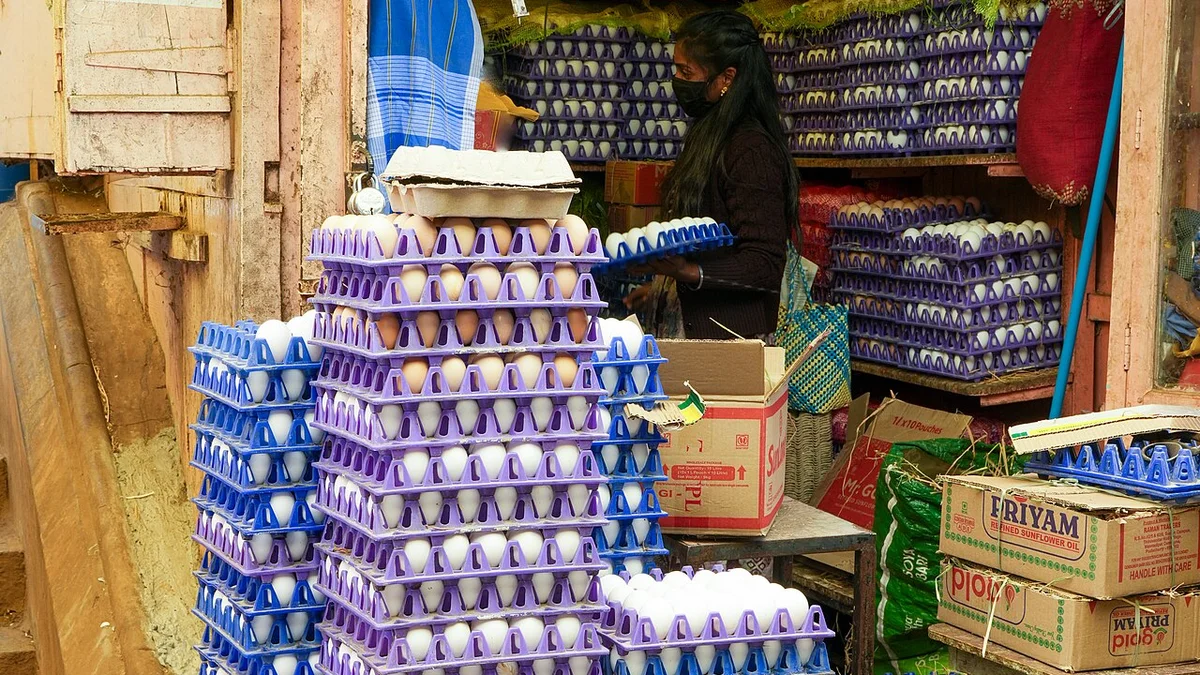
- The Namakkal Supply Lifeline: Over 80% of imported eggs entering Kerala originate from the intensive commercial poultry belt of Namakkal and Erode in western Tamil Nadu. Inter-state trucks travel daily through Walayar and Palakkad border checkposts to distribute crates to Ernakulam, Kozhikode, and Thiruvananthapuram wholesale depots.
- Transport & Breakage Margins: Freight charges, interstate toll charges, handling labor, and transit shell breakage (typically 1.5% to 2.5%) add ₹0.40 to ₹0.65 per egg to the landed cost in Kerala over the base Namakkal paper rate.
- Retail Price Spreads: While the farm-gate rate in Namakkal may stand around ₹5.00, retail consumers in Kerala grocery stores typically pay ₹6.00 to ₹7.00 per egg, reflecting distribution margins, refrigerated display expenses, and retail shop markups.
3. Layer Poultry Farming Economics: Feed Costs vs Farm-Gate Realization
The financial viability of a modern layer poultry farm hinges almost entirely on the Feed Conversion Ratio (FCR) and the prevailing cost of compounded mash or crumble feed. Feed expenses constitute 70% to 75% of total variable operating expenditures on a poultry farm.
| Cost Component | Expenditure Metric (₹ / Layer Bird) | Per Egg Cost Allocation (₹) | Cost Management Strategy |
|---|---|---|---|
| Poultry Feed (Maize + Soya) | 110 – 115 grams daily @ ₹32 – ₹36/kg | ₹3.60 – ₹4.00 per egg | Bulk procurement of maize during harvest glut |
| Chicks & Pullet Rearing (0-18 Weeks) | ₹220 – ₹250 per point-of-lay pullet | ₹0.70 – ₹0.80 per egg | Optimal brooding vaccination & biosecurity |
| Vaccines, Medicines & Electrolytes | ₹15 – ₹20 per bird annually | ₹0.05 – ₹0.07 per egg | Strict Newcastle (Ranikhet) & IBD prophylaxis |
| Electricity, Water & Litter Management | ₹18 – ₹25 per bird annually | ₹0.06 – ₹0.08 per egg | Solar rooftop arrays & automated water drippers |
| Labor, Farm Overhead & Depreciation | ₹25 – ₹35 per bird annually | ₹0.08 – ₹0.12 per egg | Semi-automated manure scraper systems |
| Total Net Cost of Production | Comprehensive Farm Operating Base | ₹4.50 – ₹5.05 per egg | Breakeven threshold requiring ₹5.20+ paper rate |
Source: Central Poultry Development Organisation (CPDO) Southern Region & ICAR Directorate of Poultry Research Operational Benchmarks, November 2026.
4. Understanding Paper Rate vs Farm-Gate Minus (Trading Discounts)
A common source of confusion among new poultry entrepreneurs is the divergence between the declared NECC "Paper Rate" and the actual cash realization received by the farmer, known in poultry parlance as "Minus" or trader discount:
- The Concept of "Minus": During periods of high summer heat or festival fasting (such as Shravan, Navratri, or Sabarimala pilgrimage seasons), consumer egg demand drops. Wholesalers demand a discount below the paper rate—often ranging from ₹0.20 to ₹0.60 per egg ("Namakkal Minus 30 paise")—which the farmer must absorb.
- The Concept of "Plus" (Premium): Conversely, during intense winter cold snaps across North India or holiday baking surges in December, eggs trade at a "Plus" (e.g., "Barwala Plus 15 paise") above the declared paper rate due to acute supply deficits.
- Egg Board Intervention: The NECC price fixation committee meets daily at 1:00 PM via teleconference across all major production zones, reviewing unlifted farm stocks, truck availability, and cold storage capacity to announce the official benchmark.
5. Quality Grading, Egg Freshness & Commercial Storage Protocols
To command top-tier wholesale rates, commercial eggs must satisfy rigorous grading parameters governed by AGMARK and the Food Safety and Standards Authority of India (FSSAI). Standard commercial eggs are classified into Weight Grades: Extra Large (>60g), Large (53-59g), Medium (45-52g), and Small (<44g). Clean, crack-free eggs stored at 15°C to 18°C with 75% relative humidity maintain freshness for up to 30 days without degradation in Haugh unit (albumen quality) or yolk index.
6. Poultry Belt Feed Sourcing, Mandi Linkages & Allied Livestock
Egg farm profitability depends critically on monitoring daily input costs against wholesale farm-gate realizations. Layer farmers cross-reference daily egg prices across premier poultry zones—including local production benchmarks from the Barwala egg rate directory alongside national NECC egg rate today indices. Because feed represents 70% to 75% of total layer production expenditure, poultry producers track oilseed and grain feed ingredients such as APMC mustard seed prices, regional sarso mandi rates for mustard de-oiled cake (DOC), and alternative high-protein feeds like amaranth seed grain.
Poultry enterprise owners also track broader wholesale commodity indices, including daily onion mandi rates and sugar mill byproducts like wholesale chini prices for poultry electrolyte formulation. For direct marketing to institutional bulk buyers and commercial catering chains, farmers leverage Kisan Mandi direct trading platforms and regional trade terminals like Muhana Mandi Jaipur. In diversified agriculture, farmers compare returns with commercial plantation crops such as the Shivamogga adike rate today, arecanut price today, wholesale cashew kernel price benchmarks, raw cashew nut farm-gate rates, and dragon fruit cultivation profits.
7. Poultry Financing, Rural Logistics & Government Schemes
Managing commercial layer farms requires structured operational credit. Farmers can access subsidized working capital through the Kisan Credit Card (KCC) scheme under the Pashu KCC animal husbandry credit line at 4% effective interest. Flock insurance and risk mitigation are supported by PMFBY crop and livestock insurance tracking, direct income transfers via PM Kisan beneficiary verification, state-level assistance from CM Kisan Odisha DBT, and labour registration on UPLMIS shramik labour card.
Logistics and cold-chain distribution for egg crates are optimized using reliable rural carriers like the Mahindra Supro mini truck or clean delivery vehicles subsidized under the PM E-DRIVE electric vehicle subsidy. For on-farm manure handling, feed mixing, and general haulage, poultry farmers deploy utility tractors like the Swaraj 744 FE tractor, the Mahindra 575 DI, the Eicher 380, and modern John Deere tractors, eligible for capital subsidies under the PM Kisan tractor subsidy program and combine harvester price benchmarks.
Poultry manure can be converted into organic fertilizer guided by Soil Health Card recommendations and applied to feed fodder grown under PM Krishi Sinchayee Yojana micro-irrigation. Fly and beetle infestations in layer sheds are controlled using imidacloprid pest control formulations alongside broad spectrum disinfectant fungicides, evaluated through Farm Search. In integrated livestock models, farmers complement layer poultry with indigenous Gir cow dairy units, Murrah buffalo milk production, and commercial goat farming.
Official daily wholesale egg rates, feed price advisories, and layer management standards are published by the National Egg Coordination Committee (NECC), the Department of Animal Husbandry and Dairying (DAHD), NABARD Poultry Venture Capital Fund, and the Food Safety and Standards Authority of India (FSSAI).
Frequently asked questions
- How does NECC determine the daily egg rate across India?
- The National Egg Coordination Committee (NECC) meets daily across 30+ regional production and consumption zones, evaluating cold storage holdings, layer feed costs (maize and soybean meal), seasonal consumer demand, and interstate egg truck shipments to publish benchmark wholesale prices.
- What is the difference between paper rate and farm-gate minus in egg trading?
- The paper rate is the official benchmark wholesale rate published daily by NECC. In practice, traders deduct a regional discount known as "farm-gate minus" (typically ₹0.20 to ₹0.40 per egg) to account for transport, breakage, and local handling expenses.
- Why are Barwala egg rates so important for northern Indian poultry markets?
- Barwala in Haryana represents Asia's largest poultry production belt, housing over 1.5 crore commercial layer birds. As tracked in our Barwala egg rate guide, its daily output dictates price trends across Delhi-NCR, Punjab, Uttar Pradesh, and Rajasthan.
- How do rising poultry feed prices impact farmer egg profit margins?
- Poultry feed accounts for over 70% of total egg production costs. Sharp increases in maize or soybean meal prices, along with rising mustard seed de-oiled cake prices, raise the cost of producing an egg above ₹4.20, squeezing farm operating margins.
- Why does Kerala consistently have the highest egg prices in India?
- Kerala produces less than 25% of its daily commercial egg requirement and imports over 1.2 to 1.5 crore eggs daily from Tamil Nadu's Namakkal belt. Long-distance refrigerated transport, high state fuel taxes, and interstate toll charges widen retail price spreads.
- Can layer poultry farmers get subsidized working capital loans through KCC?
- Yes, commercial poultry farmers are eligible for Pashu Kisan Credit Card loans up to ₹2.0 lakh without collateral (and up to ₹3.0 lakh with standard collateral) at a subsidized 4% interest rate under the Kisan Credit Card (KCC) scheme and NABARD refinance schemes.
- What is the standard weight and grading criteria for commercial table eggs?
- Commercial table eggs are graded into Large (55g to 60g), Medium (45g to 54g), and Small (below 45g). Premium institutional buyers and supermarkets pay a 5% to 10% premium for uniform, clean Grade-A Large eggs.
- How can poultry farmers reduce transport egg breakage during mandi delivery?
- Farmers utilize pulp paper trays stacked in sturdy plastic crates transported in smooth-suspension commercial vehicles like the Mahindra Supro commercial vehicle, reducing transit breakage below 0.5% compared to open tractor trailers.
- What is the shelf life of fresh table eggs under room temperature and cold storage?
- Fresh table eggs retain optimum quality for 10 to 14 days at room temperature (20°C to 25°C) and can be preserved for up to 5 to 6 months in commercial cold storage maintained at 1°C to 4°C with 75% to 80% relative humidity.
- What food safety certifications must commercial poultry farms maintain?
- Commercial poultry operations supplying retail chains must comply with FSSAI food safety regulations, ensuring zero antibiotic residue, absence of Salmonella contamination, and routine water quality testing.
- How many eggs does an improved commercial layer bird produce in a year?
- Modern commercial layer strains (such as BV-300, Hy-Line, and Bovans White) produce approximately 310 to 330 marketable eggs during a 72-week commercial laying cycle under scientific feed and biosecurity protocols.
- What are the main seasonal fluctuations observed in Indian egg consumption?
- Egg consumption surges by 25% to 35% during winter months (November to February) due to higher nutritional demand and school programs, while dipping during summer months and religious festivals like Shravan and Navratri.
This article is for general information only and is not financial advice. Loan and scheme eligibility depends on partner and government criteria.