Walnut Price in India 2026: 1kg Akhrot Rate & Wholesale
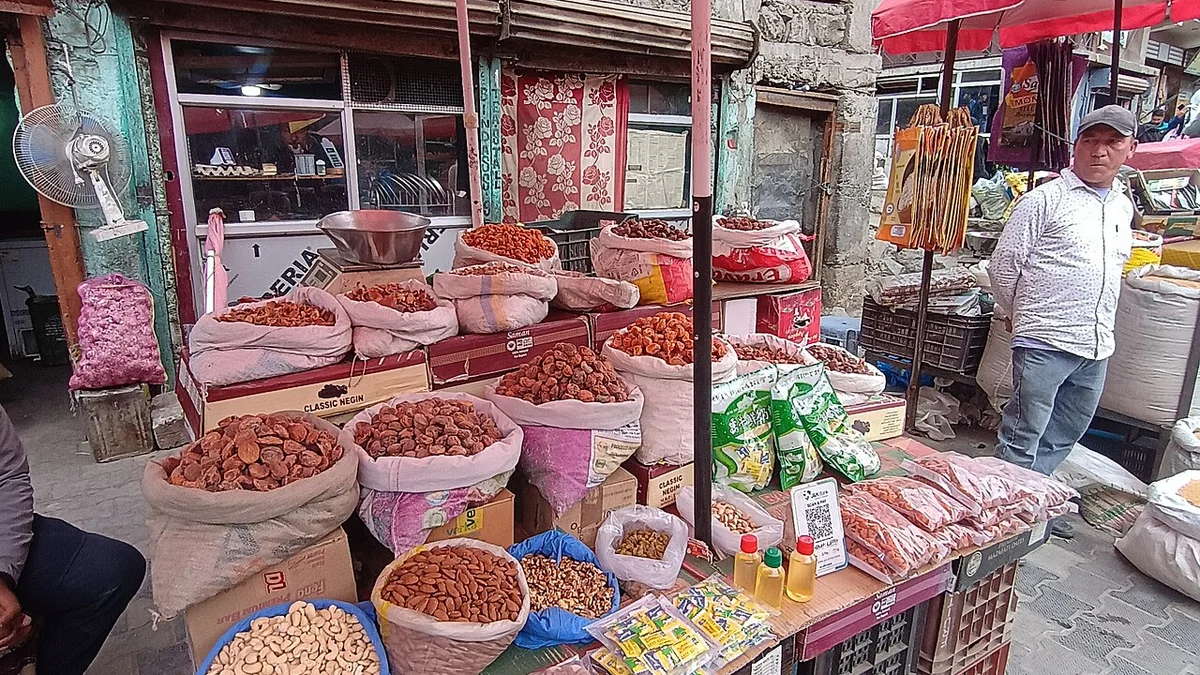
Walnut (akhrot), botanically classified as Juglans regia (Persian or English walnut), is widely regarded as the crowning jewel among dry fruits and tree nuts. India produces between 36,000 to 42,000 metric tonnes of in-shell walnuts annually, with the Union Territory of Jammu & Kashmir accounting for more than 90% of total national output, followed by high-altitude pockets in Himachal Pradesh, Uttarakhand, and Arunachal Pradesh according to official data from the National Horticulture Board (NHB) and APEDA. Indicative wholesale farmgate rates in 2026 range from ₹18,000 to ₹42,000 per quintal (₹180 to ₹420/kg) for in-shell raw nuts, while premium vacuum-packed Kashmiri extra-light walnut kernels (akhrot giri) retail between ₹1,100 and ₹1,850 per kg as of November 2026.
Consumer and industrial demand for walnuts has surged significantly across urban centers due to heightened medical awareness of their unmatched nutritional profile—specifically their rich concentration of plant-based Omega-3 alpha-linolenic acid (ALA), neuro-protective polyphenols, and cardioprotective antioxidants. However, navigating the walnut market requires a clear understanding of the steep price divergence between in-shell nuts (sabut akhrot) and extracted kernels (giri), regional origin benchmarks, physical shell thickness categories (Kagzi vs Burzil vs Wonth), kernel color gradations (extra light ivory vs light amber), and post-harvest moisture standards.
Walnut Price in India 2026: Current 1kg Retail & Wholesale Price Spectrum
Walnut pricing in Indian dry fruit mandis is governed primarily by shell hardness, kernel recovery ratio (percentage of edible meat inside the shell), kernel color brightness, whole half integrity, and harvest freshness. The table below outlines the prevailing indicative price spectrum across major commercial grades in both retail and bulk wholesale markets:
| Walnut Product / Grade | Physical Characteristics | Kernel Recovery | Wholesale Rate (₹/Qtl) | Retail Rate (₹/kg) |
|---|---|---|---|---|
| In-Shell Kagzi Akhrot (J&K) | Paper-thin shell, hand-crackable, ivory kernel | 50% – 55% | ₹32,000 – ₹42,000 | ₹420 – ₹580 |
| In-Shell Burzil Akhrot (Medium) | Medium shell, requires light nutcracker, golden kernel | 42% – 48% | ₹22,000 – ₹30,000 | ₹280 – ₹400 |
| In-Shell Wonth Akhrot (Hard) | Thick hard stone shell, extraction hammer required | 30% – 36% | ₹14,000 – ₹19,000 | ₹170 – ₹240 |
| Imported In-Shell (California/Chile) | Uniform bleached shell, machine calibrated jumbo size | 48% – 52% | ₹34,000 – ₹45,000 | ₹450 – ₹620 |
| Akhrot Giri Extra Light Halves | Intact whole halves (2-piece), snow-white ivory color | 100% Kernel | ₹1,05,000 – ₹1,45,000 | ₹1,250 – ₹1,850 |
| Akhrot Giri Light Halves | Intact whole halves, pale cream golden hue | 100% Kernel | ₹88,000 – ₹1,12,000 | ₹1,050 – ₹1,350 |
| Akhrot Giri Light Quarters (4-piece) | Broken quarter pieces, pale cream, culinary use | 100% Kernel | ₹70,000 – ₹88,000 | ₹820 – ₹1,050 |
| Akhrot Giri Amber Broken Pieces | Small broken pieces, dark golden tan, bakery grade | 100% Kernel | ₹50,000 – ₹65,000 | ₹600 – ₹780 |
| Organic Wild Himalayan Akhrot | Hand-foraged wild forest nuts, high natural oil | 40% – 46% | ₹26,000 – ₹36,000 | ₹380 – ₹520 |
Source: Directorate of Horticulture J&K, National Horticulture Board (NHB) & APEDA agri-exchange market reports. Indicative farmgate, wholesale and retail price ranges, November 2026. Spot prices vary based on packaging freshness, vacuum sealing, moisture assaying, and consignment volume.
In-Shell Walnuts vs Shelled Kernels (Akhrot Giri): Economics & Recovery
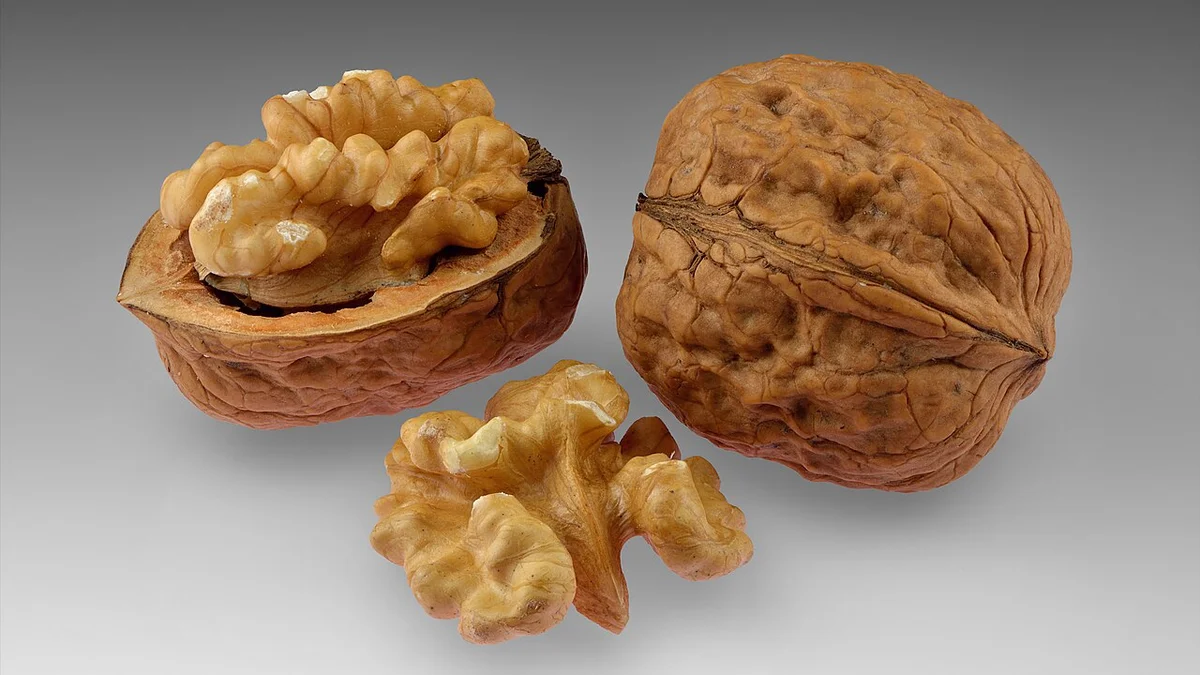
One of the most frequent dilemmas for retail consumers and commercial confectioners is whether to purchase in-shell walnuts or pre-cracked walnut kernels (giri). Analyzing the extraction economics explains why a 1kg pack of shelled walnut kernels costs roughly 2.5 to 3.5 times more than 1kg of in-shell nuts:
- Kernel Extraction Ratio (Recovery Percentage): On average, 100 kg of good-quality in-shell Kashmiri Kagzi walnuts yields approximately 48 to 52 kg of edible kernels and 48 to 52 kg of woody shell and interior septa waste. In lower-grade Burzil or Wonth nuts, kernel recovery drops to barely 32% to 42%, requiring over 2.8 to 3.1 kg of in-shell nuts to produce just 1 kg of clean edible meat.
- Manual De-Shelling & Hand Sorting Labor: In Kashmir’s walnut belts (Anantnag, Kupwara, Shopian), cracking is predominantly performed by skilled rural women who carefully crack the shells without pulverizing the delicate kernel halves. Intact "extra light halves" command the highest market premiums; broken quarters or crumbs lose 30% to 50% of their commercial value.
- Weight Loss from Moisture Desiccation: Freshly harvested autumn walnuts contain 20% to 28% moisture in their green outer hulls. After hulling, the in-shell nuts must be sun-dried or tunnel-dried to below 8% moisture. For long-term vacuum-packed kernel storage, moisture must be reduced below 4.5% to 6.0% to prevent enzymatic lipid rancidity.
- Oxidative Shelf Life & Nitrogen Packaging: While in-shell walnuts possess nature’s own protective barrier against oxygen and ambient humidity (preserving freshness for 9 to 12 months in a cool cellar), exposed kernels contain up to 65% polyunsaturated fatty acids that oxidize rapidly upon contact with air. Preserving kernels requires oxygen-barrier nitrogen-flushed foil pouches or hermetic vacuum bricks.
Physical Shell Grading Standards: Kagzi, Burzil & Wonth Cultivars
Indigenous Himalayan walnuts harvested across Jammu & Kashmir and Himachal Pradesh are classified into three traditional commercial grades based on shell thickness and crackability:
1. Kagzi Akhrot (Paper-Shell Walnut)
Kagzi is the most prized table walnut cultivar in India. The outer shell is paper-thin, uniformly light brown, and can be effortlessly cracked open by pressing two nuts together in the palm of one’s hand without any tools. The interior kernel is large, ivory-white, plump, and easily separates in two intact halves without breaking. Kagzi trees represent less than 20% of mature seedling orchards in Kashmir, making them scarce and commanding a 30% to 45% price premium over standard nuts.
2. Burzil Akhrot (Medium-Hard Shell Walnut)
Burzil walnuts have a moderately thick shell that requires a light tap with a household nutcracker or small wooden mallet. The kernel quality is excellent, with a golden-yellow hue and a rich, sweet, buttery flavor. With kernel recovery hovering between 42% and 48%, Burzil constitutes the bulk of commercial dry fruit retail packs and festive gift assortments sold across northern and western India.
3. Wonth Akhrot (Hard-Shell Stone Walnut)
Wonth walnuts are characterized by extremely thick, woody, corrugated shells that are very difficult to crack even with heavy tools. The kernel is tightly embedded in the inner shell convolutions, making it nearly impossible to extract whole halves. Wonth nuts yield only 30% to 35% broken kernel pieces, which are primarily routed to industrial oil-expelling mills for pharmaceutical and cosmetic walnut oil extraction, or crushed for traditional Ayurvedic formulations.
Top Wholesale Mandis for Walnuts in India & Trade Flow
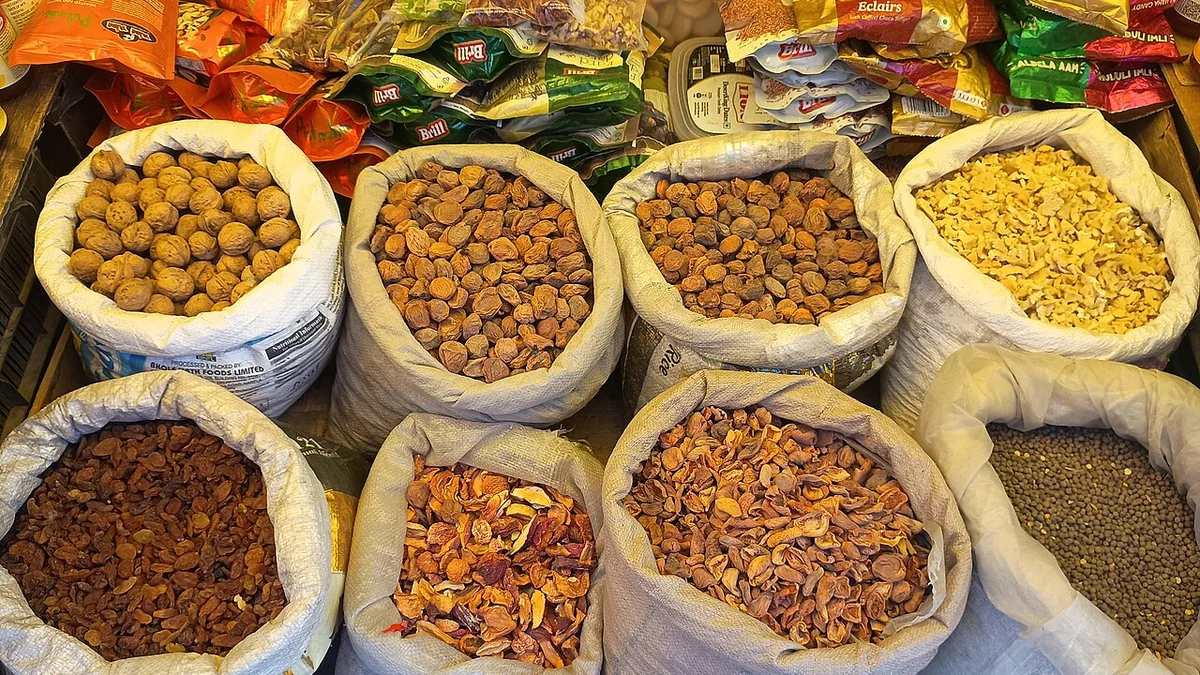
The commercial walnut trade in India follows a structured geographical pipeline from high-altitude Himalayan orchards to major metro wholesale distribution centers:
- Srinagar (Parimpora Fruit & Vegetable Market, J&K): The epicenter of raw farmgate arrivals. Between September and November, grower consignments from Kupwara, Baramulla, Budgam, Pulwama, and Shopian arrive in 50 kg gunny bags. Mandi commission agents conduct primary grading, washing, sun-drying, and sizing before dispatching bulk trucks to Jammu and Delhi.
- Jammu (Narwal Mandi): The key transit railhead and primary processing hub. Narwal houses numerous mechanical de-shelling, grading, optical color sorting, and vacuum-packing units that convert raw in-shell nuts into export-grade kernel cartons.
- Delhi (Khari Baoli / Gadodia Market): Asia’s largest dry fruit and spice market. Khari Baoli sets daily benchmark wholesale prices for north India. Hundreds of dry fruit wholesalers, corporate retail suppliers, and confectionery manufacturers source bulk pallet consignments directly from Jammu and California importers.
- Mumbai (APMC Vashi Dry Fruit Market, Navi Mumbai): The commercial epicenter for western and southern India. Vashi handles heavy volumes of domestic Kashmiri kernels alongside imported Chilean and Californian containerized in-shell walnuts arriving via Jawaharlal Nehru Port (JNPT).
Nutritional Biochemistry: Why Walnuts Command a Premium Price
Walnuts are distinct among tree nuts due to their exceptional lipid architecture. While almonds and cashews are dominated by monounsaturated fats (oleic acid), walnuts are primarily comprised of polyunsaturated fatty acids (PUFAs):
- Plant-Based Omega-3 Alpha-Linolenic Acid (ALA): Walnuts are the only tree nut that provides significant amounts of ALA, delivering an astounding 9.08 grams per 100 grams. ALA contributes to reducing arterial vascular inflammation, preventing platelet aggregation, and lowering risk of coronary heart disease.
- Cognitive & Neurological Protection: Rich concentrations of ellagitannins (pedunculagin), melatonin, folate, and vitamin E isomers neutralize reactive oxygen species in neural tissues, supporting memory retention and delaying neurodegenerative cognitive decline.
- Gut Microbiome Modulation: Clinical trials demonstrate that daily consumption of 30g to 45g of walnuts enriches beneficial butyrate-producing gut bacteria (Ruminococcaceae and Coprococcus), strengthening gut barrier integrity and metabolic health.
- Natural Mineral Powerhouse: A 100g serving of raw walnut kernels supplies 158 mg Magnesium, 346 mg Phosphorus, 441 mg Potassium, and 3.09 mg Zinc, essential for bone density and muscle electrophysiology.
Government Schemes & Subsidies for Walnut Cultivation
To reverse the historic stagnation of aging seedling walnut trees and compete against imported nuts, the Ministry of Agriculture and Farmers Welfare along with the J&K Horticulture Department have rolled out aggressive incentive schemes:
- High-Density Walnut Plantation Scheme: Financial assistance covering 50% of the capital cost (up to ₹2.50 lakh to ₹4.0 lakh per hectare) for planting precocious lateral-bearing grafted varieties (such as Chandler, Howard, Serr, and elite ICAR-CITH selections) spaced at 5m x 5m, which yield commercial crops within 4 years versus 12–15 years for traditional seedling trees.
- Mission for Integrated Development of Horticulture (MIDH): Back-ended capital investment subsidies for installing drip irrigation, farm ponds, vermicompost units, and anti-hail net canopies in walnut orchards.
- PM Formalisation of Micro food processing Enterprises (PMFME Scheme): Provides a 35% credit-linked capital subsidy (up to ₹10 lakh) for individual orchardists, self-help groups (SHGs), and farmer-producer organizations (FPOs) establishing solar walnut dryers, mechanical de-shellers, and nitrogen-flush vacuum packaging machines.
- Kisan Credit Card (KCC) for Horticulture: Concessional working capital loans up to ₹3 lakh at an effective interest rate of 4% per annum for orchard maintenance, pest control spraying, and harvesting labor upon timely repayment.
Official regulatory portals and verified dry fruit references
Growers, traders, and institutional food buyers can verify official quality grades, export standards, and development subsidies through apex public bodies. The APEDA Agri-Exchange Walnut & Dry Fruit Export Profile documents export clearances, phytosanitary requirements, and overseas shipping metrics. State-level orchard establishment, nursery accreditation, and high-density planting subsidies are administered by the Directorate of Horticulture Jammu & Kashmir Official Portal. Commercial plantation assistance is provided under National Horticulture Board (NHB) Commercial Schemes, while scientific temperate nursery practices and clonal rootstock trials are spearheaded by the ICAR - Central Institute of Temperate Horticulture (CITH) in Srinagar.
Related dry fruit guides, mandi rates, and farm tools on KisanPe
Cultivators and agribusinesses tracking commercial horticultural prices can evaluate adjacent high-value tree crop and spice guides, including the almond 1kg price guide, cardamom price today, cardamom wholesale market trends, and commercial orchard yields in the mango varieties guide. Stay informed on regional grain and oilseed wholesale auctions through reviews of Bhattu mandi bhav today, Betul mandi bhav today, Neemuch mandi bhav, Bhawani Mandi Rajasthan daily rates, gehu rate today, and sarso ka bhav.
Orchard management requires precise inputs and specialized mechanization. Access our fertilizer calculator & NPK nutrient planner, assess seasonal bag rates in our DAP fertilizer subsidy guide, review seasonal tasks on the crop calendar & sowing seasons directory, and explore certified seed and planting material standards in the seeds certification guide. For fungal prevention and canopy pest control, review the Saaf fungicide application guide and high-pressure orchard equipment in the agricultural spray machine price list.
Modern orchard inter-row tilling and farm mobility can be optimized using modern implements and compact tractors. Examine models in the mini tractor price guide, rotavator price & subsidy guide, reliable field prime movers in the Swaraj 855 FE tractor specs & price guide, and specialized equipment in the sugarcane juice machine price list and Kubota harvester price guide. Explore integrated diversification through mushroom farming setup cost, Indian cow breeds guide, poultry farm setup cost, and commercial dairy farm business plans.
Growers can also protect farm investments and cash flow with the Kisan Credit Card (KCC) limit & interest rates guide, solar pumping grants under PM Kusum solar pump subsidy scheme, accidental insurance via Pradhan Mantri Suraksha Bima Yojana, and live price monitoring on our live mandi rates & APMC price checker.
Frequently asked questions
- What is the current walnut price per kg in India?
- In 2026, raw in-shell walnuts (sabut akhrot) retail between ₹280 and ₹550 per kg depending on shell grade (Kagzi vs Burzil). Consumers comparing premium dried nut costs can also cross-examine our almond 1kg price guide. Shelled walnut kernels (akhrot giri) range from ₹800 to ₹1,150 per kg for light quarters/halves to ₹1,250 to ₹1,850 per kg for premium Kashmiri extra-light whole halves.
- Why are Kashmiri walnuts considered superior to imported walnuts?
- Kashmiri walnuts are cultivated naturally in temperate high-altitude Himalayan valleys without synthetic chemical bleaching. They feature a significantly higher natural oil content (up to 65–68%), yielding a richer, creamier, and more aromatic buttery taste compared to artificially bleached California nuts.
- What is the difference between Kagzi, Burzil, and Wonth walnuts?
- Kagzi has a paper-thin shell that cracks easily between two fingers and delivers over 50% kernel recovery. Burzil has a medium-thick shell requiring a light nutcracker and yields 42–48% kernel. Wonth has a stony, hard shell that requires heavy tools and yields only 30–35% kernel, mainly used for oil extraction.
- How many kilograms of in-shell walnuts are required to produce 1 kg of kernels?
- For high-quality Kagzi walnuts with ~50% kernel recovery, roughly 2.0 to 2.2 kg of in-shell nuts produce 1 kg of clean kernels. For medium Burzil or Wonth nuts with lower recovery (32–42%), between 2.4 and 3.1 kg of in-shell nuts are required.
- What is the wholesale walnut price in major Indian mandis?
- Wholesale in-shell walnut prices span from ₹18,000 to ₹42,000 per quintal (₹180–₹420/kg) in Srinagar and Narwal (Jammu) mandis as monitored on our live mandi rates portal. Commercial international trade benchmarks are documented by APEDA Agri-Exchange. Shelled walnut kernels trade in bulk wholesale cartons at ₹70,000 to ₹1,45,000 per quintal (₹700–₹1,450/kg) at Khari Baoli, Delhi and APMC Vashi, Navi Mumbai.
- How should walnut kernels be stored to prevent them from becoming bitter or rancid?
- Walnut kernels contain delicate polyunsaturated fatty acids that oxidize rapidly when exposed to heat, light, and air. To preserve freshness, store kernels in airtight glass jars or vacuum containers inside the refrigerator (shelf life 6 months) or freezer (shelf life up to 12 months).
- What health benefits justify the premium price of walnuts?
- Walnuts contain the highest concentration of plant-based Omega-3 alpha-linolenic acid (ALA, 9g/100g) among all nuts. Regular consumption improves cardiovascular endothelial function, lowers LDL cholesterol, supports neuro-cognitive brain health, and nurtures beneficial probiotic gut flora.
- Which state in India produces the most walnuts?
- The Union Territory of Jammu & Kashmir produces over 90% of India’s total walnut harvest as certified by the Directorate of Horticulture Jammu & Kashmir, led by districts such as Kupwara, Anantnag, Baramulla, Shopian, Pulwama, and Kulgam. Minor commercial quantities are grown in Himachal Pradesh and Uttarakhand.
- How can a consumer identify bleached walnuts from natural walnuts?
- Bleached walnuts (common in industrial imports) feature an unnatural, bright white, chalky outer shell with no natural brown markings and a dried-out, bland interior. Natural Himalayan walnuts have an earthy, mottled golden-brown shell with deep crevices and an intensely fragrant, oily kernel.
- What are the main commercial color grades of walnut kernels (giri)?
- Walnut kernels are graded into four primary color classes: Extra Light (ivory white, highest price premium), Light (pale golden cream, standard premium), Amber (dark golden tan, commercial bakery grade), and Dark Amber / Brown (used in confectioneries, confectionery pastes, and walnut oil).
- Does the government provide subsidies for establishing high-density walnut orchards?
- Yes. Under the J&K High-Density Horticulture Scheme and commercial schemes backed by the National Horticulture Board (NHB) and ICAR - CITH, farmers receive 50% capital subsidies (up to ₹2.5 to ₹4 lakh per hectare) for planting grafted lateral-bearing varieties like Chandler on clonal rootstocks, complete with micro-drip fertigation systems.
- When is the fresh walnut harvest season in India?
- The Himalayan walnut harvest commences in late August and extends through October. Freshly harvested in-shell nuts arrive in dry fruit mandis starting in September, with newly extracted and vacuum-packed kernels flooding domestic markets from October through the Diwali festive season.
This article is for general information only and is not financial advice. Loan and scheme eligibility depends on partner and government criteria.