Indian Cow Breeds 2026: Top Indigenous Dairy Cattle Guide
Key takeaways
- India possesses a rich genetic heritage of 53 officially recognized indigenous cattle breeds (Bos indicus), celebrated globally for extraordinary heat tolerance, disease resistance, and natural A2 beta-casein milk.
- Sahiwal is India’s highest-yielding indigenous milch breed, producing 2,500 to 4,000 litres per lactation with a rich butterfat content of 4.5% to 5.2%.
- Gir cow from the Gir hills of Saurashtra, Gujarat, yields 2,000 to 3,500 litres per lactation, serving as the genetic foundation for major tropical dairy herds worldwide (notably the Brazilian Gir Leiteiro).
- Indigenous Bos indicus cattle produce 100% genuine A2 milk containing Proline at amino acid position 67, preventing the enzymatic release of inflammatory BCM-7 peptides associated with European A1 milk.
- Under the Rashtriya Gokul Mission (RGM), the Department of Animal Husbandry and Dairying (DAHD) offers 50% capital subsidies (up to ₹2.0 Crore) for establishing private Breed Multiplication Farms.
- Dairy farmers can access collateral-free working capital credit up to ₹1.60 Lakh under the Pashu Kisan Credit Card (PKCC) at an effective 4% annual interest rate with prompt repayment.
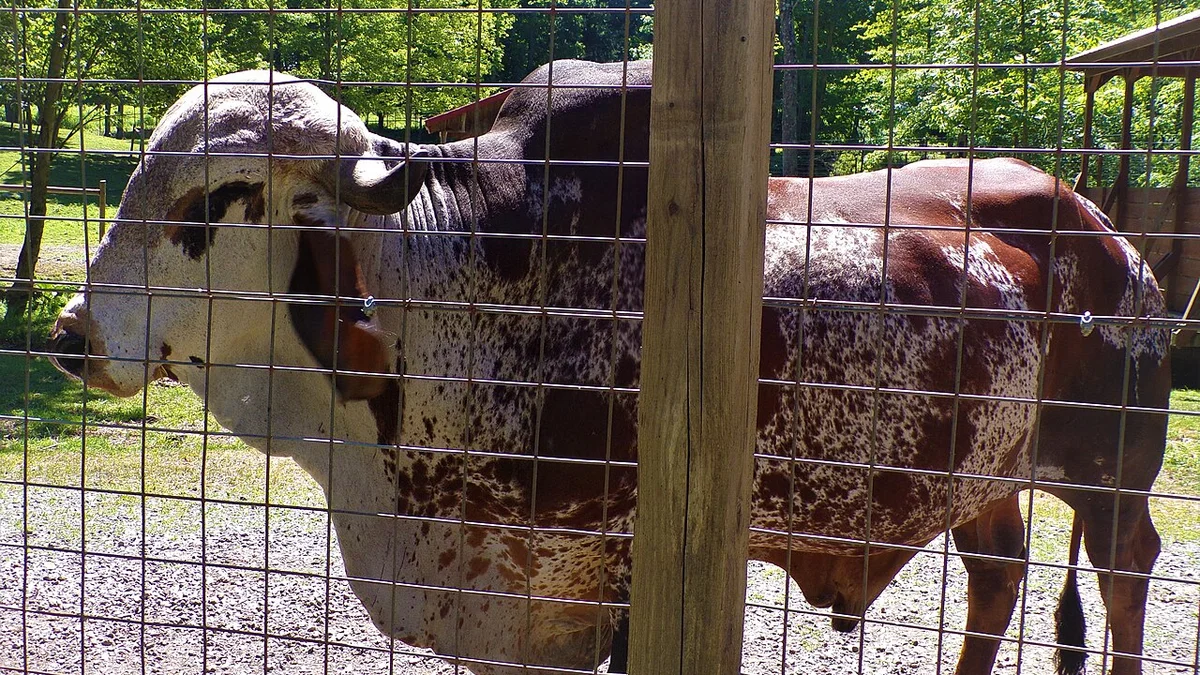
The indigenous Indian cow (देसी गाय / भारतीय गोवंश), scientifically classified as Bos indicus, forms the cultural, ecological, and economic bedrock of rural India. As of 23 November 2026, the National Bureau of Animal Genetic Resources (ICAR-NBAGR) in Karnal has officially registered 53 distinct indigenous cattle breeds across India. Unlike humpless European exotic breeds (Bos taurus such as Holstein Friesian and Jersey) which struggle under tropical climates and suffer frequent metabolic illnesses, the humped Indian cow has evolved over millennia to withstand scorching summer temperatures exceeding 45°C, resist tick-borne hemoprotozoan diseases, convert coarse dry crop residues into nutrient-dense milk, and deliver premium A2 beta-casein dairy nutrition.
Driven by surging consumer awareness regarding the health benefits of authentic A2 milk, traditional Vedic bilona ghee, and organic natural farming formulations (Jeevamrut and Ghanjeevamrut utilizing cow dung and urine), commercial demand for purebred indigenous cattle has experienced a historic resurgence. Supported by massive central incentives under the Rashtriya Gokul Mission (RGM)—including 50% capital subsidies for breed multiplication farms and subsidized sex-sorted semen straws—dairy farmers across India are successfully replacing delicate crossbred herds with hardy native cows. This comprehensive guide provides an exhaustive review of India’s top indigenous cattle breeds, comparative lactation yields, A2 milk nutritional biochemistry, feed and green fodder management, calf rearing protocols, project economics, and institutional dairy financing under the Pashu Kisan Credit Card scheme.
Classification of Indian cattle breeds: milch, dual-purpose, and draft categories
Indigenous cattle in India are functionally classified into three primary categories based on their traditional agricultural utility: Milch Breeds (specialized dairy producers), Dual-Purpose Breeds (combining moderate milk yield with strong field work capability), and Draft Breeds (specialized agricultural draft animals):
| Cattle Breed Name (नस्ल) | Breed Category & Function | Native Breeding Tract / State | Average Lactation Yield (Litres) | Butterfat Content (%) | Key Morphological Identifying Features |
|---|---|---|---|---|---|
| Sahiwal (साहीवाल) | Milch (Specialized Dairy) | Punjab, Haryana, Western UP | 2,500 – 4,000 L / 305 Days | 4.5% – 5.2% Fat | Reddish-brown coat, loose skin (Lola), voluminous dewlap |
| Gir (ગીર / गीर गाय) | Milch (Specialized Dairy) | Saurashtra, Kathiawar, Gujarat | 2,000 – 3,500 L / 305 Days | 4.6% – 5.5% Fat | Convex domed forehead, long pendulous folded ears, red/speckled |
| Red Sindhi (लाल सिंधी) | Milch (Specialized Dairy) | Breeding herds in Punjab/Odisha | 2,000 – 3,200 L / 305 Days | 4.5% – 5.0% Fat | Deep dark red coat, compact body, sturdy hump and udder |
| Rathi (राठी गाय) | Milch / Dual-Purpose | Bikaner, Ganganagar, Rajasthan | 1,800 – 2,800 L / 305 Days | 4.2% – 4.8% Fat | Brown coat with white patches, medium build, desert-hardy |
| Tharparkar (थारपारकर) | Dual-Purpose (Dairy + Draft) | Jodhpur, Jaisalmer, Kutch | 1,800 – 2,600 L / 305 Days | 4.4% – 4.9% Fat | Lyre-shaped horns, pure white/light grey coat, heat-tolerant |
| Kankrej (कांकरेज) | Dual-Purpose (Dairy + Draft) | Banaskantha, Kutch, Gujarat | 1,500 – 2,400 L / 305 Days | 4.5% – 5.0% Fat | Majestic crescent horns, silver-grey coat, famous Sawai Chal walk |
| Hariana (हरियाणा) | Dual-Purpose (Dairy + Draft) | Rohtak, Jind, Haryana, Western UP | 1,400 – 2,200 L / 305 Days | 4.2% – 4.6% Fat | Light grey coat, coffin-shaped narrow face, energetic bullocks |
| Ongole (ओंगोल) | Dual-Purpose / World Draft | Prakasam, Guntur, Andhra Pradesh | 1,200 – 1,800 L / 305 Days | 4.0% – 4.5% Fat | Massive frame, muscular hump, white coat, global Nelore ancestor |
| Deoni (देवणी) | Dual-Purpose (Dairy + Draft) | Marathwada, Bidar, Maharashtra | 1,200 – 1,800 L / 305 Days | 4.3% – 4.7% Fat | Spotted black and white coat, prominent forehead, docile nature |
| Hallikar (ಹಳ್ಳಿಕಾರ್) | Specialized Draft Breed | Hassan, Mandya, Mysuru, Karnataka | 600 – 1,000 L / 305 Days | 4.0% – 4.4% Fat | Long pointed horns backward slanting, swift agile plow bullocks |
For commercial dairy entrepreneurs, Sahiwal and Gir stand out as the twin pillars of Indian indigenous milk production. A high-pedigree Sahiwal or Gir cow can deliver peak daily yields of 16 to 22 litres of milk under balanced scientific feeding, maintaining sustained lactation across 280 to 305 days. Prospective dairy farmers can explore comprehensive project setup steps in our dedicated dairy farm business guide and model initial herd purchase finances through the loan eligibility checker.
Top milch breeds in detail: Gir, Sahiwal, Red Sindhi, and Rathi
To make an informed livestock acquisition decision, dairy owners must understand the distinct physiological and productive strengths of India’s premier milch breeds:
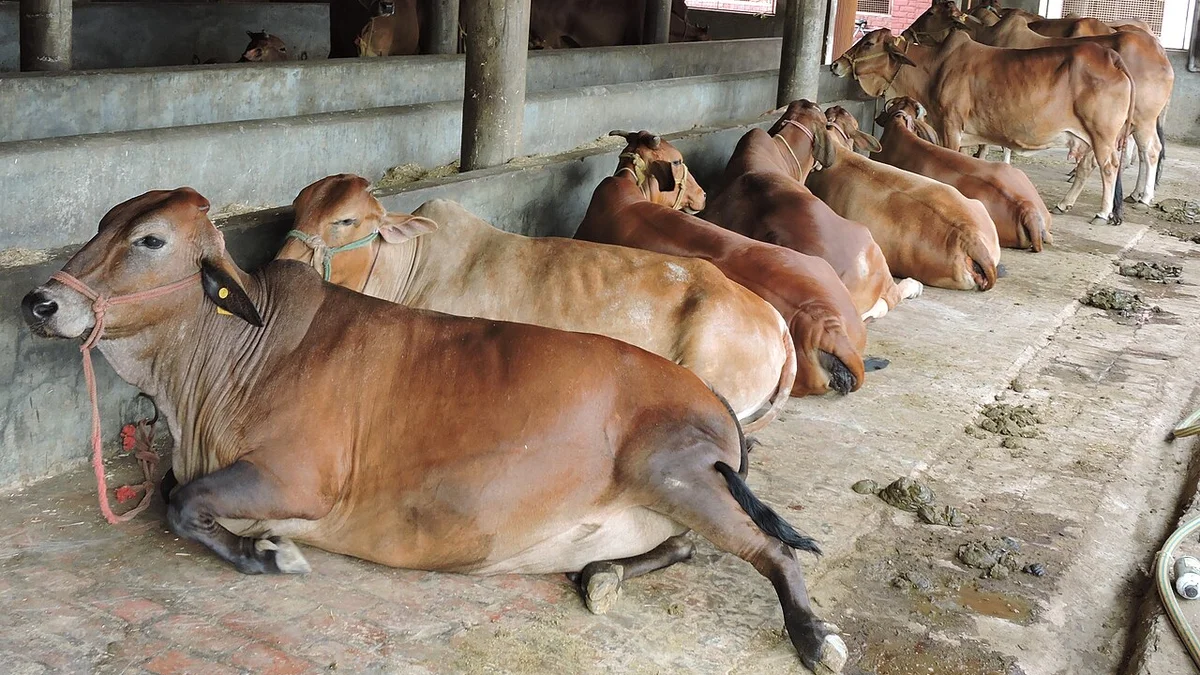
1. Sahiwal (The Dairy Pride of Northern India): Originating in the Montgomery district of the undivided Punjab plains, Sahiwal is indisputably the highest milk-producing indigenous cattle breed in South Asia. Sahiwals exhibit a pale red, reddish-brown, or occasionally dun coat. Their loose skin has earned them the colloquial title of "Lola" in rural Punjab and Haryana. The breed possesses a well-developed, symmetrical udder with pliable teats and prominent milk veins. Sahiwal cows are exceptionally docile, thrive in stall-fed dairy environments, and exhibit high tolerance to heat and humidity. Average lactation yield ranges between 2,500 and 3,500 litres, with elite championship farm animals recording yields over 4,500 litres.
2. Gir (The Global Ambassador of Indian Bovines): Hailing from the Gir forest hills of Kathiawar in Gujarat, the Gir cow is the most globally celebrated Indian cattle breed. In the early 20th century, Brazil imported purebred Gir cattle from Gujarat and systematically developed the high-yielding "Gir Leiteiro" strain, which now produces over 6,000 to 8,000 litres of milk per lactation in Latin America. Morphologically, Gir is unmistakable: a heavily convex, bulging forehead (acting as a thermal shield for the brain), long pendulous ears that curl inward at the tip like a folded leaf, and sweeping backward-curving horns. Gir cows are affectionate, maternal, and produce rich milk averaging 4.8% to 5.5% fat, loaded with beta-carotene that gives Gir butter and ghee its characteristic golden hue.
3. Red Sindhi: Closely related to Sahiwal, Red Sindhi features a deep dark red or mahogany coat with a compact, well-proportioned frame. Highly resistant to tropical diseases and ticks, Red Sindhi is widely utilized in crossbreeding programs across South India, Odisha, and northeastern states to introduce heat hardiness and disease immunity into local non-descript cattle populations.
4. Rathi (The Drought-Hardy Workhorse of the Thar Desert): Originating in the arid zones of Bikaner, Churu, and Sri Ganganagar in Rajasthan, Rathi is an exceptional dual-purpose and milch breed developed through centuries of selective breeding by nomadic pastoralists (Raths). Rathi cattle feature brown and white or black and white speckled coats. They exhibit astonishing grazing efficiency on coarse desert shrubs, dry grass, and sparse pastures, yielding 1,800 to 2,800 litres of rich milk even under harsh drought conditions.
A2 beta-casein science: why indigenous Indian cow milk commands a premium
The explosive market demand for Indian cow milk is anchored in molecular genetics and human nutritional biochemistry. Milk protein consists primarily of caseins, of which beta-casein constitutes approximately 30%. In bovine genetics, beta-casein exists primarily in two variant forms: A1 beta-casein and A2 beta-casein:
The Genetic Divergence: Thousands of years ago, a point mutation occurred in European cattle (Bos taurus such as Holstein Friesian and Ayrshire), causing the 67th amino acid in the 209-amino-acid beta-casein chain to switch from Proline to Histidine. This mutated protein variant is known as A1 beta-casein. In sharp contrast, all purebred indigenous Indian cattle (Bos indicus), as well as zebu cattle, buffaloes, goats, and human breast milk, retain the ancestral A2 beta-casein allele containing Proline at position 67.
The BCM-7 Digestion Mechanism: During human digestion, gastrointestinal enzymes cleave the weak bond adjacent to Histidine in A1 beta-casein, liberating an active 7-amino-acid opioid peptide known as Beta-Casomorphin-7 (BCM-7). Peer-reviewed medical and clinical research demonstrates that BCM-7 can trigger gut inflammation, abdominal bloating, lactose intolerance-like discomfort, and leaky gut symptoms in sensitive individuals. Conversely, because Proline in Indian cow A2 milk forms an exceptionally strong covalent bond with neighboring amino acids, digestive enzymes cannot cleave the peptide chain at that site. As a result, BCM-7 is never released, allowing smooth, effortless digestion and optimal nutrient absorption.
Market Realization: Because health-conscious urban consumers actively seek verified A2 dairy products, raw A2 milk commands retail prices of ₹70 to ₹110 per litre in tier-1 and tier-2 Indian metros (compared to ₹35 to ₹50 per litre for conventional mixed milk). Traditional bilona ghee crafted from Gir or Sahiwal milk commands extraordinary market prices ranging from ₹1,800 to ₹3,500 per kilogram, providing indigenous dairy farmers with 2.5 to 3.5 times higher gross profit margins.
Nutritional feeding, green fodder management, and dry matter balance
To realize the genetic milk potential of an indigenous cow while maintaining high reproductive fertility, a balanced scientific feeding regimen is mandatory. An adult indigenous dairy cow weighing 400 kg requires daily dry matter (DM) intake equivalent to 2.5% to 3.0% of its body weight (roughly 10 to 12 kg of dry matter daily):
Daily Feeding Formula for an Adult Indigenous Cow in Active Lactation:
1. Dry Roughage (2 to 3 kg DM): Good-quality wheat straw (toodi), paddy straw, or sorghum stover. Straw provides long digestible fiber essential for rumination and rumen pH buffering.
2. Succulent Green Fodder (20 to 25 kg Fresh Weight / 4 to 5 kg DM): A 2:1 blend of leguminous and cereal fodders. Legume green fodders (Lucerne, Berseem, Cowpea) provide 18% to 22% crude protein, while cereal grasses (Super Napier / Hybrid CO-5, Maize, Sorghum, Oats) provide digestible energy and moisture.
3. Balanced Concentrate Mash (3.5 to 5.0 kg Daily): A customized concentrate formulation consisting of: Crushed maize/barley grain 35%; De-oiled mustard/cottonseed cake 30%; Wheat bran/rice polish 32%; Mineral mixture 2%; and Common salt 1%. As a general thumb rule, provide 1.5 kg concentrate for body maintenance, plus 400 grams of concentrate for every litre of milk produced daily.
4. Clean Water & Mineral Supplementation: An adult milch cow drinks 60 to 80 litres of clean, fresh drinking water daily (up to 100 litres in peak summer). Add 50 grams of chelated mineral mixture containing zinc, copper, cobalt, and selenium daily to ensure regular estrus cycling and prevent repeat breeding.
Dairy project economics: 10-cow purebred Gir/Sahiwal commercial dairy unit
Establishing a boutique commercial dairy farm with 10 purebred indigenous cows represents a highly sustainable micro-enterprise for progressive farmers and rural entrepreneurs. The table below presents a realistic financial projection based on prevailing livestock procurement costs, operating feeds, and A2 retail realizations as of November 2026.
| Cost / Revenue Component | Physical Basis / Quantity | Unit Rate (INR) | Total Outlay / Revenue (INR) | Operational Notes |
|---|---|---|---|---|
| Purebred Indigenous Cows (Gir/Sahiwal) | 10 Pregnant Cows (2nd/3rd Calving) | ₹65,000 – ₹75,000 / Cow | ₹7,00,000 | Procured from verified breeding farms in Gujarat/Punjab |
| Cattle Shed Construction (2,000 sq ft) | Loose housing with covered mangers | ₹200 per sq ft | ₹4,00,000 | Ventilated steel truss with feeding alley & water troughs |
| Milking Machine & Farm Equipment | Double-bucket trolley milking unit + chiller | Lump sum setup | ₹1,50,000 | Ensures hygienic, touch-free A2 milk extraction |
| Total Initial Capital Investment | Full fixed capital infrastructure | - | ₹12,50,000 | Eligible for 50% capital subsidy under RGM / NABARD |
| Monthly Green & Dry Fodder Cost | Fodder for 10 cows + calves | ₹1,800 / cow / month | ₹18,000 / Month | Grown on 2 acres of own irrigated agricultural land |
| Monthly Concentrate Cattle Feed | 35 quintals balanced feed mix | ₹2,600 / quintal | ₹91,000 / Month | High-protein grain and oilcake mash |
| Monthly Labor & Veterinary Expenses | 1 full-time worker + routine vet care | Wages + vaccination | ₹22,000 / Month | Routine deworming, vaccines, and mastitis checks |
| Total Monthly Operational Expenses | Complete recurring operating cost | - | ₹1,31,000 / Month | Working capital covered via Pashu KCC |
| Monthly Milk Production (70% in milk) | 7 cows in milk @ 12 L/day = 2,520 L/month | ₹75 per Litre (A2 Direct Retail) | ₹1,89,000 / Month | Delivered in glass bottles to urban households |
| Monthly Secondary Income (Cow Dung & Ghee) | 100 kg cow dung cakes + 15 kg Vedic ghee | Premium organic value | ₹35,000 / Month | Bilona ghee @ ₹2,200/kg + organic compost |
| Net Monthly Operating Profit | Gross Revenue minus Operating Costs | - | ₹93,000 / Month | Net annual earnings exceeding ₹11.1 Lakh |
As detailed in the financial model above, a 10-cow purebred indigenous dairy unit generating direct retail A2 milk and Vedic bilona ghee delivers over ₹93,000 in monthly net profit. With initial capital subsidized under the Rashtriya Gokul Mission, the entire capital outlay is recovered within 16 to 22 operating months.
Dairy entrepreneurs can combine milk production with organic cropping inputs like cow dung manure in our organic fertilizer guide, review agricultural implements in the rotavator guide, and evaluate compact tractors in the mini tractor guide.
Government subsidies: Rashtriya Gokul Mission and Pashu Kisan Credit Card
To revive native bovine germplasm, the Department of Animal Husbandry and Dairying (DAHD), Government of India, implements two transformative flagship programs:
Rashtriya Gokul Mission (RGM) Breed Multiplication Farms: Under this visionary component, private entrepreneurs, dairy cooperatives, FPOs, and SHGs establishing bovine breeding farms of indigenous cows (minimum 200 indigenous cows/buffaloes) receive a 50% capital investment subsidy up to ₹2.00 Crore. The subsidy covers cattle shed construction, procurement of high-genetic-merit cows, milking parlors, silage pits, and biogas slurry digesters. Applications are submitted online directly through the DAHD National Portal.
Sex-Sorted Semen Straws under RGM: Under the national artificial insemination (AI) drive, the government subsidizes sex-sorted semen straws (providing up to ₹250 to ₹300 subsidy per dose), ensuring that 90% of calf births result in female heifer calves. This completely eliminates the economic burden of unwanted male calves and accelerates dairy herd expansion.
Pashu Kisan Credit Card (PKCC): The central government extended Kisan Credit Card benefits to animal husbandry and dairy farmers. Dairy owners can obtain collateral-free working capital loans up to ₹1.60 Lakh (and up to ₹3.00 Lakh with hypothecation of cattle) from nationalized commercial banks at a subsidized annual interest rate of 7%, which reduces to an effective 4% per annum upon prompt repayment. Working capital covers cattle feed, medicines, fodder seeds, and veterinary costs.
Official government resources and dairy research institutes
Accessing authentic breed registration records, pedigree databases, and dairy development subsidies is essential for sustainable livestock entrepreneurship. Policy guidelines, national livestock missions, and dairy infrastructure funds are administered by the Department of Animal Husbandry and Dairying (DAHD). Scientific breed characterization and genetic cataloging are conducted by the ICAR-National Bureau of Animal Genetic Resources (NBAGR Karnal), cooperative dairy processing is spearheaded by the National Dairy Development Board (NDDB), and advanced dairy management research is led by the ICAR-National Dairy Research Institute (NDRI Karnal). For capital subsidies on breed multiplication farms, review the Rashtriya Gokul Mission guidelines.
To develop a profitable commercial dairy enterprise, explore KisanPe tools and livestock resources including our dairy farm setup and business plan guide, the Pashu KCC credit calculator, and the farmer livestock loans advisory. Balance dairy herd nutrition with our jowar grass fodder management guide and utilize organic bovine byproducts with our cow dung fertilizer guide. For mechanization on dairy fodder plots, consult our manuals on the farm machinery EMI calculator, rotavator implement guide, and power tiller specifications. Additional commodity and state welfare insights are available in our guides on certified seeds in India, Kottur mandi rates, and government agricultural schemes.
Frequently asked questions about Indian cow breeds and A2 dairy farming
Frequently asked questions
- Which is the best indigenous cow breed for commercial dairy farming in India?
- Sahiwal and Gir are widely recognized as the two best indigenous milch breeds for commercial dairy farming. Sahiwal is ideal for northern and central plains, yielding 2,500 to 4,000 litres of milk per lactation. Gir is well-suited for western, central, and southern India, yielding 2,000 to 3,500 litres of high-butterfat A2 milk with exceptional docility.
- What is A2 milk and why is it superior to exotic A1 cow milk?
- A2 milk contains the ancestral A2 beta-casein protein variant featuring Proline at amino acid position 67. During digestion, the bond remains intact and does not release the inflammatory peptide BCM-7 (Beta-Casomorphin-7), which is produced during the digestion of European A1 cow milk. A2 milk is easier to digest, reduces gut inflammation, and supports metabolic health.
- How much milk does a purebred Gir cow give per day?
- A healthy, well-nourished purebred Gir cow gives an average of 12 to 16 litres of milk per day in peak lactation, with elite genetic cows producing up to 18 to 22 litres daily. Across a standard 305-day lactation cycle, total milk yield ranges from 2,000 to 3,500 litres.
- What is the current market price of a purebred Gir or Sahiwal cow in India?
- Indicative prices in November 2026 range from ₹55,000 to ₹75,000 for a quality first-to-second lactation Gir or Sahiwal cow yielding 10 to 14 litres daily. High-pedigree show cows and elite certified cows with proven 16+ litre daily yields can cost between ₹85,000 and ₹1,40,000. Planters financing livestock purchases can review our farmer livestock loans advisory.
- What are the main advantages of indigenous Indian cows over Jersey or HF cows?
- Indian cows (Bos indicus) have superior heat tolerance (functional sweat glands and loose dewlap), 30% to 40% lower veterinary expenses, high natural resistance to tick-borne fever and mastitis, higher reproductive longevity (regular calving across 10 to 14 cycles), and produce 100% genuine A2 milk that commands double the market price of crossbred milk.
- How much subsidy is available under the Rashtriya Gokul Mission for dairy farms?
- Under the Rashtriya Gokul Mission, private dairy entrepreneurs and cooperatives establishing Breed Multiplication Farms of indigenous bovines (minimum 200 indigenous animals) receive a 50% capital subsidy up to ₹2.00 Crore. Subsidies are also provided for sex-sorted semen straws (up to ₹250 to ₹300 per straw). Discover additional dairy incentives on our government agricultural schemes portal.
- What is the loan limit under the Pashu Kisan Credit Card (PKCC) for dairy?
- Under the Pashu Kisan Credit Card scheme, dairy farmers can avail collateral-free working capital loans up to ₹1.60 Lakh (and up to ₹3.00 Lakh with hypothecation) at an effective 4% annual interest rate after central interest subvention and prompt repayment incentives. Calculate your credit scale using our KCC scale of finance calculator.
- What green fodder is best for increasing milk yield in Indian cows?
- The best fodder combination is a 2:1 mix of leguminous fodders (Lucerne / Berseem containing 18% to 20% crude protein) and high-energy cereal grasses (Super Napier / Hybrid CO-5, Maize, or Sorghum). Feeding 20 to 25 kg of succulent green fodder daily maintains high rumen microbial activity. For green fodder agronomy tips, consult our jowar grass fodder management guide.
- What is the gestation period and calving interval of an Indian cow?
- The gestation period of an indigenous Indian cow is approximately 280 to 285 days (around 9 months and 9 days). Under balanced nutrition and prompt artificial insemination, the optimal calving interval is 13 to 15 months.
- Can Indian cows thrive on dry straw and coarse crop residues?
- Yes. The rumen microflora of Bos indicus cattle have evolved over centuries to digest fibrous lignocellulose in dry wheat and paddy straw much more efficiently than European exotic breeds, allowing them to maintain health on coarse roughages supplemented with modest concentrate feed.
- Why does ghee made from Indian cow milk have a natural yellow color?
- Indian cow milk contains high concentrations of natural carotenoids (Beta-Carotene) transferred directly from green fodder into the butterfat globules. Beta-Carotene is a powerful natural antioxidant and precursor to Vitamin A, imparting a distinctive golden yellow color and pleasant aroma to Vedic bilona ghee.
- How many officially registered indigenous cattle breeds are there in India?
- As of November 2026, the ICAR-National Bureau of Animal Genetic Resources (NBAGR Karnal) has officially cataloged and registered 53 distinct indigenous cattle breeds across India. Dairy farmers utilizing organic manure can also read our cow dung fertilizer guide.
This article is for general information only and is not financial advice. Loan and scheme eligibility depends on partner and government criteria.