Sugarcane Juice Machine Price: Electric & Commercial Guide
Key takeaways
- Indicative sugarcane juice machine price in India (November 2026) ranges from ₹35,000 for compact 1.5 HP electric tabletop units to ₹1,35,000 for heavy 5 HP diesel mobile carts.
- Advanced SS304 food-grade diamond-knurled rollers deliver single-pass 92% to 96% juice extraction efficiency, eliminating traditional dangerous multi-pass hand feeding.
- Single-phase 1.5 HP to 2 HP electric motors operate seamlessly on standard 220V domestic power connections, drawing only 1.1 to 1.5 kWh per operating hour.
- Mobile battery and solar inverter models equipped with 48V BLDC motors provide 8 to 10 hours of uninterrupted field operation, freeing street vendors from grid constraints.
- A realistic commercial operation crushing 100 kg cane daily yields 250 to 300 glasses of juice, delivering ₹95,000 to ₹1,40,000 net monthly profit and capital payback within 30 to 45 days.
- Eligible for 15% to 35% capital subsidies under the Prime Minister Employment Generation Programme (PMEGP) and collateral-free financing under the PM Mudra Shishu loan scheme.
A commercial sugarcane juice machine (गन्ना जूस मशीन / गन्ना कोल्हू) is one of the highest-return micro-enterprise investments available to rural youth, agri-entrepreneurs, and retail beverage vendors across India. As of 23 November 2026, indicative market prices for modern automatic crushers range from ₹35,000 to ₹55,000 for compact 1.5 HP electric tabletop units, ₹60,000 to ₹95,000 for heavy-duty commercial 2 HP to 3 HP standing models, ₹75,000 to ₹1,15,000 for battery and solar-operated mobile carts, and ₹85,000 to ₹1,35,000 for 5 HP diesel-powered highway crushers. Unlike legacy open-gear cast-iron crushers that required repeatedly folding sticky cane stalks by hand, modern food-grade machines feature precision-machined SS304 stainless steel rollers that extract 92% to 96% of juice in a single pass while completely protecting operator hands.
Across major sugarcane producing states such as Uttar Pradesh, Maharashtra, Karnataka, Tamil Nadu, Bihar, Gujarat, and Punjab, value addition through local juice retail offers farmers 4 to 6 times the cash realization achieved by selling whole cane stalks to industrial sugar mills. Supported by 15% to 35% capital subsidies under the Prime Minister’s Employment Generation Programme (PMEGP) and collateral-free microloans through the PM Mudra Yojana, a commercial sugarcane juice enterprise processing just 100 kg of fresh cane per day delivers an average net monthly income between ₹95,000 and ₹1,40,000. This comprehensive guide details technical specifications, 2026 price lists across all machinery categories, single-pass roller engineering, hygiene standards mandated by the Food Safety and Standards Authority of India (FSSAI), operational power requirements, and complete business profitability calculations.
Sugarcane juice machine price list 2026: commercial categories and technical specifications
When selecting a sugarcane juice machine, prospective owners must evaluate motor capacity, daily footfall expectations, mobility needs, and power availability. Machinery manufacturers segment commercial crushers into four distinct operating categories: tabletop electric units, heavy-duty floor-standing models, battery-powered mobile carts, and high-capacity diesel crushers.
The table below details indicative ex-factory prices, motor ratings, crushing capacities, and ideal deployment locations across primary commercial categories in India for November 2026. Actual dealer prices vary slightly based on raw stainless steel market fluctuations, shipping distances, and optional accessories such as digital reverse controllers or built-in refrigeration chillers.
| Machine Category | Motor Power & Phase | Crushing Speed (kg/hr) | Roller Material & Quantity | Indicative Ex-Factory Price (INR) | Primary Operating Environment |
|---|---|---|---|---|---|
| Compact Tabletop Electric | 1.5 HP Single-Phase (220V) | 150 – 200 kg/hr | SS304 Food-Grade (3 Rollers) | ₹35,000 – ₹55,000 | Cafes, Bakeries, Food Courts & Kiosks |
| Commercial Heavy Standing | 2.0 HP – 3.0 HP Single-Phase | 250 – 350 kg/hr | SS304 Food-Grade (3 Rollers) | ₹60,000 – ₹95,000 | Railway Stations, Bus Stands & Markets |
| Mobile Battery / Solar Cart | 48V / 60V BLDC Motor | 200 – 300 kg/hr | SS304 Food-Grade (3 Rollers) | ₹75,000 – ₹1,15,000 | Street Vendors, Parks, Weekly Haats |
| Heavy Diesel Engine Crusher | 5.0 HP Air-Cooled Diesel | 400 – 500 kg/hr | High-Tensile SS/Alloy (3 Rollers) | ₹85,000 – ₹1,35,000 | Highway Dhabas, Rural Melas & Jaggery Units |
| Instant Chiller Dispenser Unit | 2.5 HP Motor + 1 TR Compressor | 200 – 280 kg/hr | SS304 Food-Grade (3 Rollers) | ₹1,10,000 – ₹1,65,000 | Air-Conditioned Malls & Premium Juice Bars |
To finance equipment purchases, rural entrepreneurs frequently utilize institutional credit programs. You can model your monthly repayment schedules using our handy agricultural financial tools, including the loan eligibility checker and the farm machinery EMI calculator.
Single-pass crushing technology: mechanical engineering and extraction efficiency
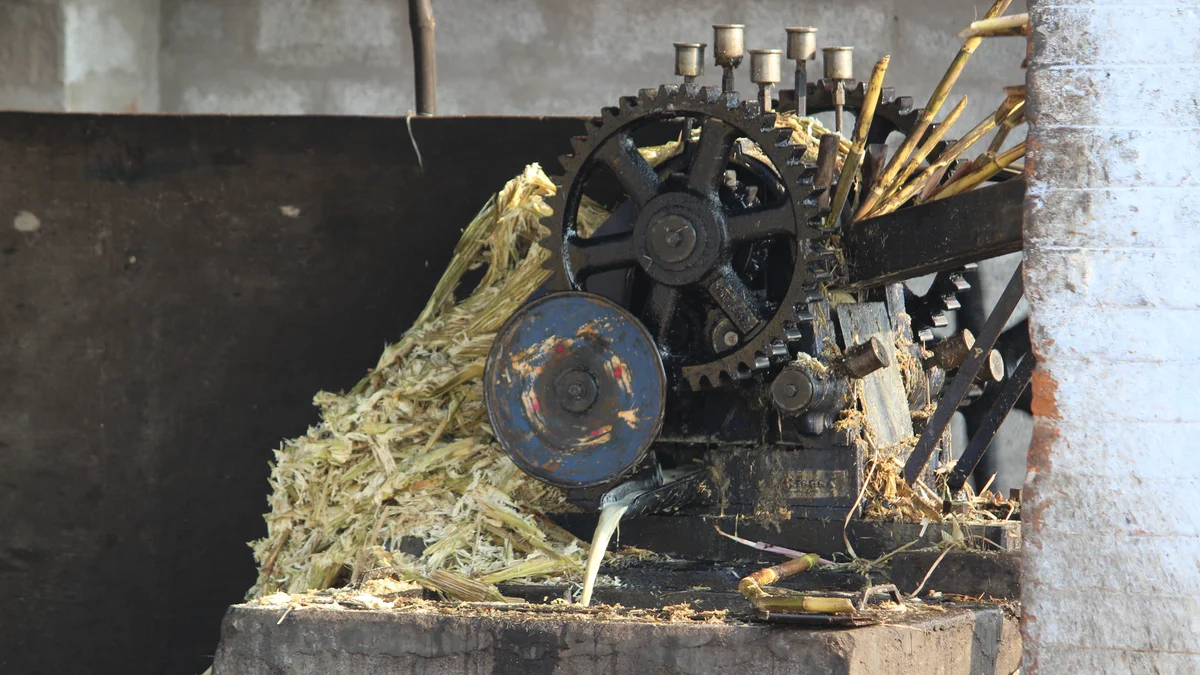
The fundamental engineering breakthrough that distinguishes contemporary sugarcane juice machines from vintage apparatus is single-pass extraction technology. Traditional three-roller cast-iron crushers required an operator to feed a bundle of sugarcane stalks, catch the half-crushed canes at the back, twist them into an elongated braid, and pass them through the rollers 4 to 6 times. This repetitive manual process exposed workers to horrific limb-entanglement hazards, generated high frictional heat that degraded juice flavor, and left significant residual juice locked within the damp bagasse.
Modern single-pass machines utilize three synchronized, high-torque rollers constructed from solid food-grade SS304 stainless steel. The rollers are arranged in an asymmetrical triangular geometry driven by precision-machined planetary or helical gear reductions running inside an oil bath. The front two rollers serve as primary feeding and fracture rollers, breaking the hard outer rind and vascular bundles of the cane stalk, while the rear pinching roller applies extreme mechanical compression under heavy-duty spring-loaded tension blocks.
Because the diamond-knurled teeth grip the cane stalk firmly, the machine draws the cane through at a constant linear speed of 0.25 to 0.35 meters per second. In this single continuous pass, the mechanism extracts between 92% and 96% of the available juice content. The discharged bagasse emerges completely crushed, flat, and dry to the touch, ready to be utilized directly as organic compost, boiler biofuel, or paper-making biomass. Eliminating repetitive re-crushing not only triples customer throughput during peak afternoon hours but also ensures the freshest possible taste by minimizing enzymatic browning and oxidation.
Food-grade SS304 rollers versus cast iron: FSSAI hygiene and health compliance
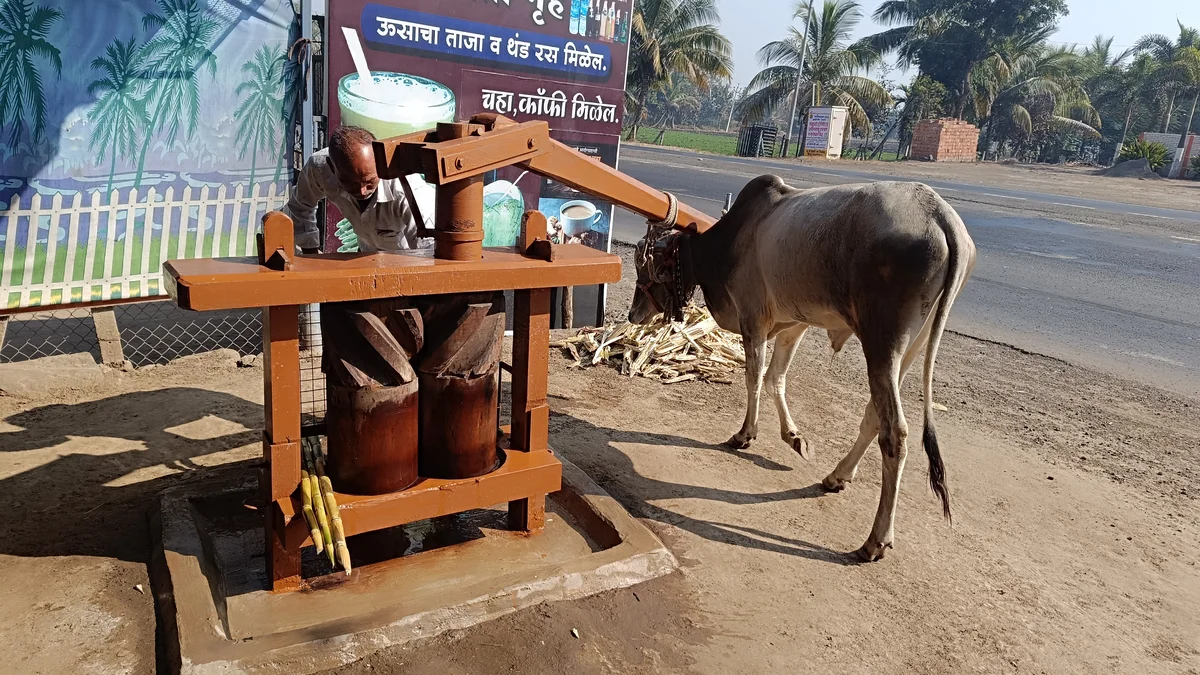
Hygiene and food safety are paramount when operating a commercial beverage enterprise. The Food Safety and Standards Authority of India (FSSAI) has instituted stringent sanitation guidelines governing street-vended and kiosk-served fresh fruit juices. Traditional open crushers fabricated from cast iron or galvanized carbon steel are highly susceptible to atmospheric oxidation and acid corrosion. Sugarcane juice has a naturally mild acidic pH ranging from 5.0 to 5.5, which aggressively reacts with bare iron surfaces, leaching iron oxide particles and metallic tannins into the beverage. This chemical reaction turns the juice a muddy brownish-black color within minutes and imparts a harsh metallic aftertaste that repels health-conscious consumers.
In sharp contrast, premium sugarcane juice machines utilize non-magnetic SS304 austenitic stainless steel for every component that comes into contact with the cane or juice. SS304 contains a minimum of 18% chromium and 8% nickel, creating an invisible, self-healing chromium oxide passive film that provides total immunity against fruit acid corrosion and rust. The resulting juice retains its pristine lime-green hue, delicate floral sweetness, and natural enzymatic integrity.
Furthermore, modern machines feature totally enclosed crushing chambers protected by heavy-gauge transparent acrylic or toughened safety glass windows. This physical barrier prevents airborne road dust, vehicular emissions, and swarming insects from contaminating the extraction area. Internal stainless steel scrapers continuously comb the roller grooves to prevent pulp accumulation, while an integrated multi-stage mesh strainer traps coarse bagasse fibers, delivering sparkling clear juice directly into the dispensing container. For kiosk operators seeking FSSAI registration or municipal health department licenses, operating a certified SS304 enclosed machine is virtually mandatory.
Mobile battery and solar sugarcane juice carts: operating without electric grid limits
One of the most rapidly growing segments in the Indian beverage machinery sector is the mobile battery-operated and solar-hybrid sugarcane juice cart. In many bustling market locations—such as public beaches, rural weekly haats, pilgrimage centers, highway intersections, and city park entrances—commercial electrical power connections are either unavailable, erratic, or exorbitantly expensive to secure legally.
Historically, mobile vendors solved this issue by mounting small 3 to 5 HP stationary diesel engines onto pushcarts. However, diesel engines create severe operational drawbacks: deafening engine clatter (often exceeding 85 to 90 dB), thick black exhaust soot that settles on food items, violent structural vibrations that shake the cart, and substantial operating expenses (₹250 to ₹350 per day in diesel fuel). Municipal authorities in many tier-1 and tier-2 cities have banned diesel crushers in public pedestrian zones due to environmental and noise pollution.
Battery-operated sugarcane juice machines solve every one of these problems. These advanced units employ a high-efficiency 48-volt or 60-volt Brushless DC (BLDC) motor coupled to a planetary reduction gearbox. Operating at over 88% electrical efficiency, the BLDC motor provides tremendous starting torque to easily crush thick 40 mm cane stalks while consuming only 350 to 500 watts of electrical power. The motor is virtually silent, generating operating noise levels below 60 dB—quieter than a standard conversation.
The electrical system is energized by a bank of four 12V 100Ah deep-cycle lead-acid tubular batteries or a compact, lightweight lithium-iron-phosphate (LiFePO4) battery pack housed in the cart chassis. A full overnight recharge from a standard 5A domestic wall socket costs only ₹15 to ₹22 in electricity and provides 8 to 10 hours of continuous crushing capacity—ample power to extract 400 to 500 glasses of juice throughout the workday. Many progressive vendors install a 300W to 400W monocrystalline solar panel on the cart canopy, which trickle-charges the batteries during peak sunny afternoon hours, effectively extending operating runtime indefinitely.
Business profitability and daily ROI model: economics of a 300-glass daily stall
The commercial viability of a sugarcane juice machine micro-enterprise is exceptionally strong due to wide gross profit margins and rapid capital turnover. Raw sugarcane is a low-cost, readily available bulk commodity in rural and peri-urban mandis, whereas chilled fresh juice commands premium retail pricing from thirsty consumers. To evaluate realistic financial returns, let us examine an operating model based on processing 100 kg of fresh sugarcane per day—equivalent to serving roughly 250 to 300 glasses (200 ml to 250 ml each) at a modest price of ₹15 per glass in a busy semi-urban market.
| Cost / Revenue Component | Daily Quantity / Basis | Unit Rate (INR) | Total Daily Cost / Revenue (INR) | Monthly Cost / Revenue (30 Days) |
|---|---|---|---|---|
| Raw Sugarcane Stalks | 100 kg per day | ₹5.00 per kg | ₹500 | ₹15,000 |
| Fresh Lemons & Ginger | 1.0 kg lemons + 250g ginger | Market benchmark | ₹110 | ₹3,300 |
| Fresh Mint Leaves & Rock Salt | Daily seasoning bundle | Lump sum | ₹40 | ₹1,200 |
| Disposable Paper Cups (250 ml) | 300 biodegradable cups | ₹0.60 per cup | ₹180 | ₹5,400 |
| Electricity / Battery Recharging | 3.5 kWh domestic power | ₹8.00 per unit | ₹28 | ₹840 |
| Stall Rental / Municipal Teh-Bazari | Daily equivalent charge | Fixed monthly avg | ₹100 | ₹3,000 |
| Total Daily Operating Expenses | Full operational cost base | - | ₹958 | ₹28,740 |
| Gross Daily Juice Revenue | 300 glasses @ ₹15/glass | ₹15.00 per glass | ₹4,500 | ₹1,35,000 |
| Net Operating Profit (Daily / Monthly) | Gross Revenue minus Expenses | - | ₹3,542 | ₹1,06,260 |
As demonstrated by the financial matrix above, a well-sited sugarcane juice stall generating 300 glasses of daily sales produces a net monthly profit of over ₹1,06,000. Even after allocating ₹15,000 to ₹18,000 per month for helper wages or premium retail kiosk rentals in high-density locations, the proprietor earns a dependable net income exceeding ₹88,000 to ₹95,000 per month. With total initial capital equipment investment standing between ₹50,000 and ₹85,000, the machine fully recovers its purchase cost within 30 to 45 operating days.
Entrepreneurs looking to diversify into other high-margin agro-processing and rural retail micro-enterprises can explore our analytical guides on mustard oil processing at sarson ka tel price trends, commercial staple commodities like onion price updates, and crop sweetener dynamics on sugar price and sugar price today.
Government subsidies and financing: PMEGP and PM Mudra loan schemes
To accelerate rural self-employment and micro-enterprise growth, the Government of India provides substantial capital subsidies and low-interest institutional loans for food processing and agro-machinery investments. Aspiring sugarcane juice entrepreneurs can access funding through two premier national credit initiatives: the Prime Minister’s Employment Generation Programme (PMEGP) and the Pradhan Mantri MUDRA Yojana.
Administered by the Ministry of Micro, Small and Medium Enterprises (MSME) through the Khadi and Village Industries Commission (KVIC), the PMEGP scheme provides credit-linked capital subsidies for manufacturing and service micro-enterprises. For service and agro-retail ventures costing up to ₹20 Lakh (which encompasses commercial sugarcane juice setups, cart fabrication, refrigeration assets, and initial working capital), general category applicants in rural areas receive a 25% capital subsidy, while special category beneficiaries (including SC, ST, OBC, women, minorities, and ex-servicemen) receive a 35% capital subsidy. In urban areas, the subsidy is 15% for general category and 25% for special categories.
Under PMEGP, the entrepreneur only needs to contribute 5% (for special categories) to 10% (for general category) of the project cost as margin money, while nationalized commercial banks or regional rural banks finance the remaining balance as a composite term loan. The government subsidy is held in a back-ended subsidy reserve fund for three years, after which it is adjusted directly against the loan principal, drastically reducing interest burdens.
For smaller, single-machine setups where the total investment is under ₹50,000 to ₹1,00,000, the Pradhan Mantri MUDRA Yojana (PMMY) provides seamless financing under the "Shishu" category (loans up to ₹50,000) and "Kishore" category (loans from ₹50,000 to ₹5,00,000). MUDRA loans require zero collateral, feature low processing charges, and carry competitive annual interest rates ranging between 8.5% and 11.5% with flexible repayment tenures of 36 to 60 months. Farmers holding active Kisan Credit Cards can also explore their credit limits via our KCC calculator and evaluate credit opportunities in government schemes.
Maintenance, sanitation, and winter off-season equipment care
To ensure a commercial sugarcane juice machine delivers trouble-free performance across 8 to 10 years of heavy service, following a disciplined daily and periodic maintenance schedule is essential. Because sugarcane juice contains 14% to 18% fermentable sucrose along with sticky organic acids, neglecting routine sanitation causes bacterial biofilm formation, foul sour odors, and premature bearing corrosion.
Daily Sanitation Protocol: At the conclusion of each operating day, the operator must remove the front acrylic safety shield and juice collection tray. Wash the SS304 rollers thoroughly using hot water (60°C to 70°C) and food-grade detergent, using a stiff nylon bristle brush to scour the knurled roller grooves. Never use steel wool or carbon-steel wire brushes, as microscopic steel particles can embed in the stainless steel surface and create unsightly rust spots. After washing, rinse with clean drinking water and run the rollers in reverse for 30 seconds to spin off excess moisture. Spraying a mild 100 ppm food-grade chlorine sanitizer or hydrogen peroxide solution ensures complete microbial sterilization.
Mechanical Lubrication & Gearbox Care: Commercial machines feature heavy-duty reduction gearboxes running in oil baths. Operators should check the oil sight glass weekly and replace the gearbox oil (typically SAE 90 or SAE 140 industrial gear oil) every 6 months or after 1,000 crushing hours. Roller shaft bearings are sealed with food-grade silicone O-rings to prevent juice ingress; lubricate grease nipples monthly using NSF H1 food-grade grease.
Winter Off-Season Storage: In northern states where sugarcane juice consumption slows dramatically during cold winter months (November to January), prepare the machine for seasonal storage. Perform a deep chemical wash of all components, wipe all surfaces dry, apply a light coat of food-grade mineral oil across the SS304 rollers to repel atmospheric moisture, and store the machine under a breathable canvas cover in a dry, rodent-free storeroom. If operating a battery cart, maintain the battery pack on a smart float charger to prevent deep sulfation and maintain cell capacity.
Key factors to consider before buying a sugarcane juice machine
Before finalizing a machine purchase from agricultural equipment dealers or online portals, evaluate these crucial technical checklist items:
1. Motor Metallurgy and Copper Winding: Insist on a 100% pure copper-wound electric motor with Class F insulation. Many low-cost unbranded machines cut corners by using aluminum wire motors that overheat rapidly under continuous afternoon loads, leading to frequent coil burnouts.
2. Reverse Rotation Functionality: Never buy a machine lacking a reverse gear switch. If a thick, fibrous cane knot jams the roller assembly, an automatic reverse switch rotates the rollers backward instantly, releasing the jammed stalk in 2 seconds without requiring dangerous manual prying.
3. Roller Hardness and Metallurgy Certification: Verify that the manufacturer provides a material test certificate confirming genuine SS304 alloy for all rollers and juice troughs rather than magnetic SS202 or electroplated mild steel.
4. Warranty and Local Spare Parts Availability: Confirm that the manufacturer or regional distributor provides a minimum 1-year comprehensive warranty covering the motor and gearbox, along with readily available replacement scraper combs, roller bearings, and silicone seal kits.
Entrepreneurs exploring farm mechanization equipment can also review our extensive machinery buyer guides covering power tiller models, tractor attachments in the rotavator guide, tractor models in the mini tractor guide, and brand pricing in the Mahindra tractor price overview.
Official government resources and agricultural machinery portals
Access authentic official information, project subsidies, and machinery safety certifications from verified government portals below:
- Ministry of Micro, Small & Medium Enterprises (MSME Official Portal)
- Sub-Mission on Agricultural Mechanization (Farmech Agri Machinery Portal)
- Food Safety and Standards Authority of India (FSSAI Hygiene Standards)
- Pradhan Mantri MUDRA Yojana (Micro-Enterprise Loan Portal)
- PMEGP e-Portal (Khadi & Village Industries Commission)
- KisanPe Farm Machinery EMI Calculator
- KisanPe KCC Scale of Finance & Loan Calculator
- KisanPe Loan Eligibility Checker & Criteria
- KisanPe Farmer Loans & Agricultural Credit Advisory
- KisanPe Mandi Rates & Daily Agricultural Commodity Prices
- KisanPe Government Schemes & Subsidy Advisory
- KisanPe Financial Literacy & Credit Guidance
- KisanPe FPO Solutions & Farmer Producer Groups
- Mini Tractor Price & Models Buyer Guide
- Mahindra Tractor Price List & Specifications
- Mustard Oil Processing & Sarson Ka Tel Rates
- Onion Price Mandi Trends & Market Insights
- Sugar Price Today & Mill Rate Analysis
- Sugar Rate Mandi Commercial Price Dynamics
- Kisan App for Farmer Schemes & Mandi Intelligence
- PM Kusum Yojana Solar Agricultural Scheme Guide
- Rotavator Agricultural Implement Guide
- Power Tiller Farm Machinery Specifications
Frequently asked questions about sugarcane juice machines
Frequently asked questions
- What is the starting price of a sugarcane juice machine in India in 2026?
- The starting price of a commercial automatic sugarcane juice machine is approximately ₹35,000 to ₹42,000 for a compact 1.5 HP electric tabletop unit. Heavy-duty commercial standing models start at ₹60,000, while mobile battery and solar-powered carts range from ₹75,000 to ₹1,15,000 depending on battery chemistry and capacity. Entrepreneurs can plan equipment payback using our farm machinery EMI calculator.
- How much juice can a single-pass sugarcane machine extract from 1 kg of cane?
- A high-efficiency single-pass SS304 roller machine extracts between 550 ml and 620 ml of juice per kilogram of fresh, high-quality sugarcane. This corresponds to an extraction yield of 92% to 96% of total fluid content in a single stroke, leaving dry, pulverized bagasse.
- Can a commercial electric sugarcane juice machine run on domestic household power?
- Yes. Most commercial tabletop and standing models equipped with 1.5 HP to 2.0 HP single-phase motors run seamlessly on standard 220V–240V single-phase domestic electrical connections. They consume only 1.1 to 1.5 units (kWh) of electricity per hour of continuous operation.
- How long does a battery-operated sugarcane juice machine run on a single charge?
- A 48V battery-powered sugarcane cart equipped with four 12V 100Ah deep-cycle batteries provides 8 to 10 hours of continuous crushing operation on a full charge. This capacity is sufficient to crush 200 kg to 250 kg of cane and dispense 500 to 600 glasses of juice throughout the business day, often paired with solar charging systems detailed in our PM Kusum guide.
- Why are SS304 stainless steel rollers necessary for sugarcane juice machines?
- SS304 food-grade stainless steel is non-magnetic and highly resistant to fruit acid corrosion. Unlike traditional cast-iron rollers that rust and leach iron particles—turning juice black and bitter—SS304 rollers prevent chemical contamination and comply strictly with FSSAI beverage hygiene standards.
- How much daily profit does a commercial sugarcane juice stall generate in India?
- A commercial stall processing 100 kg of cane daily to sell 250 to 300 glasses at ₹15 per glass generates approximately ₹4,500 in daily gross revenue. After deducting ₹950 for cane stalks, lemons, ginger, cups, ice, and power, the net daily profit is around ₹3,550, translating to over ₹1,05,000 per month. Operators can track raw cane and sweetening input prices on our daily mandi rates portal.
- What government subsidies are available for purchasing a sugarcane juice machine?
- Under the Prime Minister’s Employment Generation Programme (PMEGP), eligible entrepreneurs receive a 25% to 35% capital subsidy in rural areas and 15% to 25% in urban areas. Additionally, collateral-free loans up to ₹50,000 are available under the PM Mudra Shishu scheme at nationalized banks, which can be evaluated through our loan eligibility checker.
- What is the purpose of the reverse rotation switch on modern cane crushers?
- The reverse rotation switch is a vital safety and operational feature. If an oversized cane stalk, thick knot, or foreign object jams between the rollers, engaging the momentary reverse switch rotates the rollers backward to safely eject the obstruction in two seconds without risking hand injuries. Similar industrial safety mechanisms on farm implements are discussed in our power tiller machinery guide.
- How much space is needed to install a commercial tabletop sugarcane juice machine?
- A compact tabletop electric machine requires just 4 to 6 square feet of sturdy counter space (typically measuring 24 inches long by 18 inches wide by 26 inches high). Complete mobile cart units occupy approximately 15 to 20 square feet of floor area.
- Can a sugarcane juice machine also crush ginger, lemons, and mint with the cane?
- Yes. Operators commonly insert fresh mint leaves, sliced lemons, and peeled ginger directly alongside the sugarcane stalk into the roller chute. The single-pass mechanism crushes them together, infusing natural zest and flavor evenly into the extracted juice.
- What daily cleaning routine is required to maintain hygiene and prevent odors?
- At the end of each day, wash the SS304 rollers and juice tray with warm water and food-grade detergent using a nylon brush. Rinse thoroughly with clean drinking water and run the rollers in reverse for 30 seconds to dry. Never use harsh abrasive steel wire brushes on stainless steel.
- What is the expected lifespan of a commercial sugarcane juice machine?
- A high-grade commercial sugarcane juice machine built with solid SS304 rollers and an oil-bathed helical gearbox has an operational lifespan of 8 to 12 years with routine lubrication, periodic oil changes every 6 months, and proper daily sanitation.
This article is for general information only and is not financial advice. Loan and scheme eligibility depends on partner and government criteria.