Namakkal Egg Rate: NECC Daily Price & Chennai Market
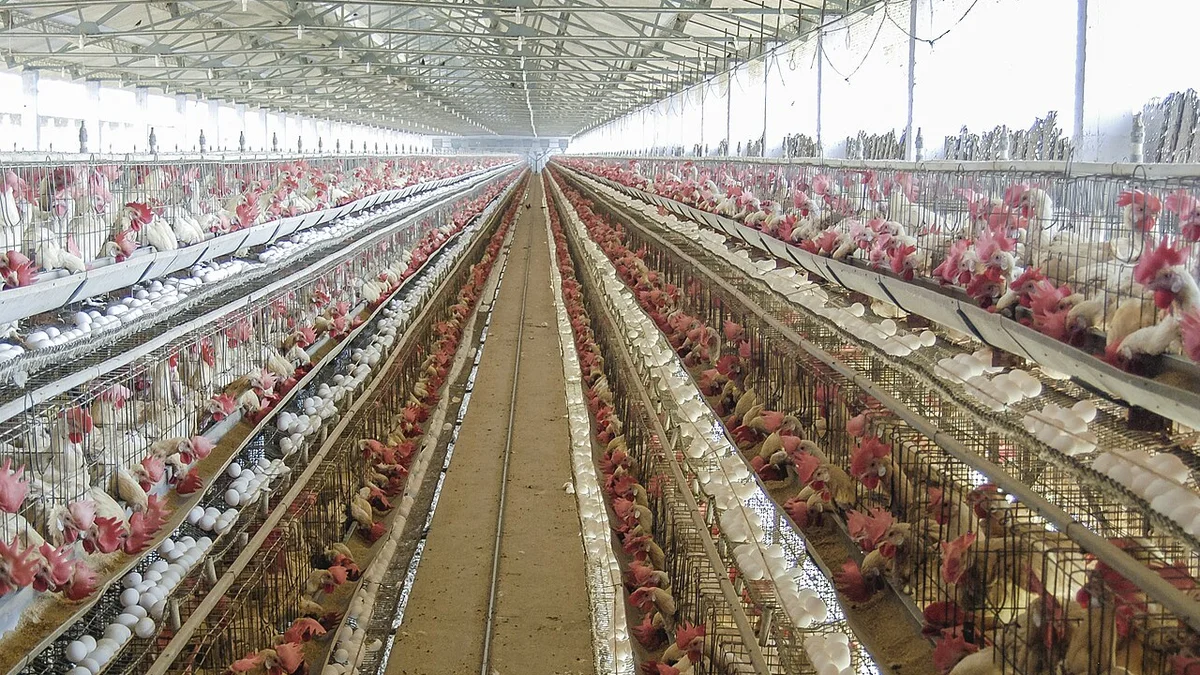
Nestled in the western agro-climatic corridor of Tamil Nadu, the town of Namakkal is universally celebrated as the "Poultry City" and egg basket of India. Housing over 5 crore commercial layer birds producing approximately 4.5 crore table eggs every single day, the Namakkal poultry cluster functions as the primary price-setting capital for southern and peninsular India. For layer poultry farmers, egg exporters, wholesale traders, and distribution logistics networks supplying metropolises like Chennai, Bengaluru, Kochi, and international markets in the Middle East, tracking the Namakkal egg rate is the single most decisive commercial benchmark.
Every afternoon at 1:00 PM, the price fixation committee of the National Egg Coordination Committee (NECC Namakkal Zone) meets to evaluate national inventory stocks, rail and truck dispatches, feed price trends, and holiday fasting patterns to declare the statutory NECC paper rate. Supervised by the Department of Animal Husbandry and Dairying (DAHD Central Portal) and monitored by the Department of Consumer Affairs (Price Monitoring Division) and the Indian Council of Agricultural Research (ICAR Poultry Directorate), this comprehensive poultry trade guide explores Namakkal’s daily price discovery mechanism, details transport logistics and wholesale margins supplying Chennai, analyzes feed conversion costs, and explains how trading discounts (minus) operate.
1. Namakkal vs Chennai Daily Egg Rate Benchmark: Price Discovery
In Tamil Nadu poultry trade economics, the Namakkal paper rate represents the baseline production-point price. When table eggs are dispatched northeastward to the metropolitan consumption terminal of Chennai (380 km via NH-44 and NH-79), freight transit costs, transit handling, and wholesale distribution margins establish the Chennai egg rate:
| Poultry Commercial Market | Indicative 100 Eggs Price (₹) | Piece Equivalent (₹) | Tray Rate (30 Eggs) (₹) | Market Supply Function |
|---|---|---|---|---|
| Namakkal Farm-Gate (NECC Base) | ₹480 – ₹530 | ₹4.80 – ₹5.30 | ₹144 – ₹159 | Primary Production Point & South India Benchmark |
| Chennai Wholesale (Koyambedu Depots) | ₹515 – ₹565 | ₹5.15 – ₹5.65 | ₹154 – ₹170 | Metropolitan Wholesale Hub & Distribution Depots |
| Chennai Retail Consumer Price | ₹600 – ₹660 | ₹6.00 – ₹6.60 | ₹180 – ₹198 | Neighborhood Grocery & Supermarket Shelves |
| Coimbatore Wholesale Market | ₹495 – ₹545 | ₹4.95 – ₹5.45 | ₹148 – ₹164 | Western Industrial Consumption Corridor |
| Madurai Wholesale Market | ₹500 – ₹550 | ₹5.00 – ₹5.50 | ₹150 – ₹165 | Southern Regional Sourcing & Bakery Demand |
Source: NECC Daily Price Bulletins and Tamil Nadu Poultry Farmers Association (TNPFA) Market Bulletins, November 2026. Retail prices include packaging and refrigerated retail distribution markups.
2. The Supply Pipeline: Logistics from Namakkal to Chennai & Kerala
Namakkal’s daily production of 4.5 crore eggs is evacuated within hours through an intricate logistics corridor designed to maintain shell integrity and egg freshness:
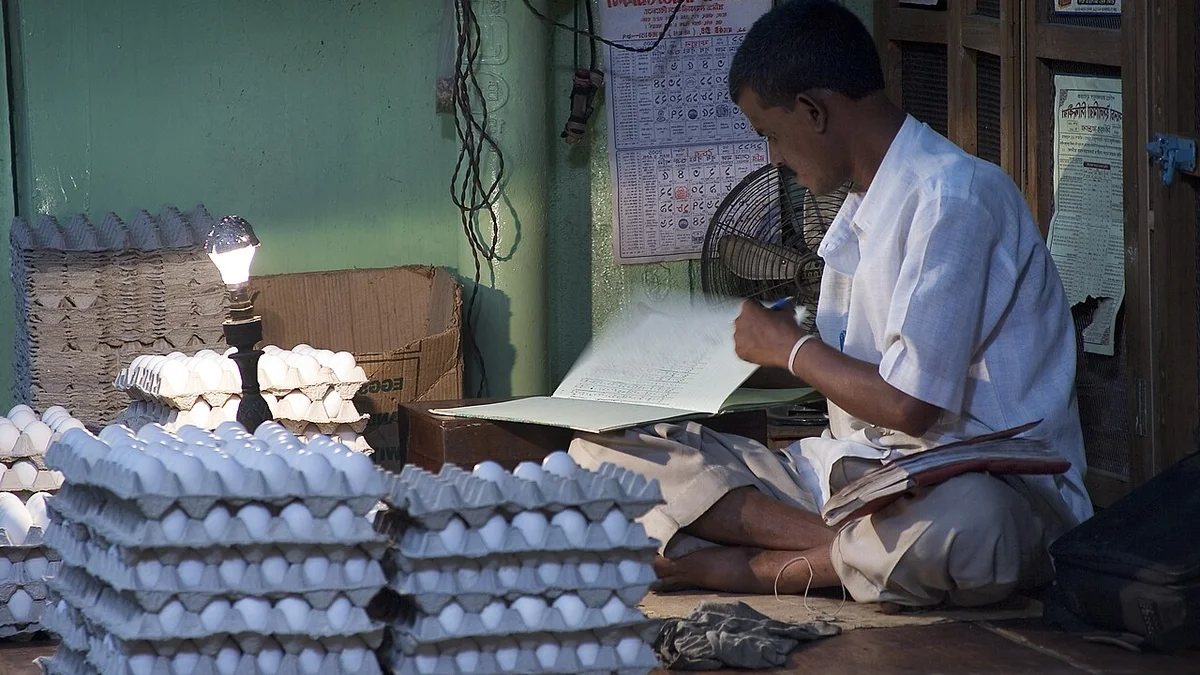
- The Chennai Route (380 km): Over 75 lakh eggs are trucked overnight to Chennai daily. Trucks depart Namakkal by 7:00 PM, arriving at wholesale distribution hubs in Koyambedu, Madhavaram, and Tambaram by 3:00 AM for early morning market auctions.
- The Kerala Corridor (Walayar Border): Over 1.2 crore eggs move westward across the Palakkad gap into Kerala daily, supplying Kochi, Kozhikode, and Thiruvananthapuram wholesale depots.
- Export Corridors (Tuticorin Port): Namakkal is India’s largest table egg exporter. Specialized reefers transport ocean export containers to V.O. Chidambaranar Port (Tuticorin), shipping eggs to Oman, Qatar, UAE, and the Maldives.
- Shell Breakage & Transit Margins: Highway transportation typically incurs a 1.0% to 1.5% shell cracking rate. Freight expenses (approximately 25 to 30 paise per egg) and wholesaler handling charges account for the typical 35-paise spread between Namakkal and Chennai.
3. Layer Farming Economics in the Namakkal Cluster: Feed & Breakeven
Namakkal’s global cost competitiveness stems from concentrated supply chain integration. The cluster houses dedicated feed mixing mills, automated cage manufacturing plants, veterinary diagnostic laboratories, and carton factories within a 20 km radius.
| Cost Component | Cost Allocation per Layer Bird (Annual) | Per Egg Production Cost | Namakkal Cluster Advantage |
|---|---|---|---|
| Poultry Mash Feed (Maize + Soya) | 41 kg / year @ ₹33 / kg = ₹1,353 | ₹4.36 per egg | Bulk train rake grain procurement direct from MP & Karnataka |
| Pullet Rearing (Day 1 to 18 Weeks) | ₹230 per point-of-lay pullet | ₹0.74 per egg | World-class biosecurity and genetic selection |
| Veterinary Vaccines & Supplements | ₹18 per bird annually | ₹0.06 per egg | Local TANUVAS veterinary college diagnostic support |
| Labor, Electricity & Litter Handling | ₹30 per bird annually | ₹0.10 per egg | Automated manure scrapers and solar rooftop energy |
| Depreciation on Shed & Cages | ₹25 per bird annually | ₹0.08 per egg | Durable galvanized cage systems lasting 15+ years |
| Net Commercial Cost of Production | Comprehensive Base Metric | ₹4.60 – ₹4.85 per egg | Requires ₹5.00+ NECC paper rate for sustainable profit |
Source: Tamil Nadu Veterinary and Animal Sciences University (TANUVAS) Poultry Research Station & TNPFA Commercial Survey, November 2026.
4. The Concept of "Minus": How Namakkal Trader Discounts Work
In the Namakkal egg trade, the actual cash payment received by a layer farmer often deviates from the published NECC paper rate. This differential is known as the "Trading Minus":
- Trading Discount (Minus): During monsoon months or religious fasting periods (such as Purattasi in Tamil Nadu or Sabarimala in Kerala), wholesale buying contracts demand a deduction—often 30 to 50 paise below the paper rate (e.g., "Namakkal Minus 40 paise").
- Cash Flow & Unlifted Stocks: Because fresh table eggs are perishable and farm cold storage capacity is limited, farmers accept the "minus" discount to ensure that aggregators evacuate farm sheds daily without accumulation.
- Market Tightening (Plus / Net Rate): During deep winter or high export demand, eggs trade at "Net Rate" or even a slight premium ("Plus") above the paper rate as competing buyers bid aggressively for supply.
5. Quality Standards: AGMARK Weight Grading & Export Parameters
Eggs produced in Namakkal adhere to strict AGMARK grading standards: Grade A (clean, intact shell with air cell depth < 4 mm) and Weight Classes (Extra Large >60g, Large 53-59g, Medium 45-52g). Export consignments to GCC nations undergo mandatory testing for Salmonella, Newcastle disease virus, and antibiotic residues certified by the Export Inspection Council (EIC).
Biosecurity and raw material risk management represent the twin pillars of commercial solvency for Namakkal poultry farmers. With maize and de-oiled soybean meal (DOC) constituting over 75% of layer bird feeding expenditure, commercial producer associations frequently pool grain procurement orders directly from Madhya Pradesh and Karnataka crop markets to negotiate wholesale volume discounts. Furthermore, automated nipple drinking lines, closed-ventilation tunnel sheds, strict vehicular wheel disinfection dips, and routine vaccination regimens against Infectious Bursal Disease (IBD) and Marek’s disease ensure mortality rates remain consistently below 4% throughout the commercial egg-laying cycle.
7. Layer Poultry Belt Feed Sourcing, Mandi Linkages & Allied Livestock
Namakkal in Tamil Nadu stands as India's premier poultry production cluster, producing over 3.5 crore eggs daily. Egg farm profitability depends critically on monitoring daily feed input costs against wholesale farm-gate realizations. Layer farmers cross-reference daily egg prices across premier poultry zones—including local production benchmarks from the Barwala egg rate directory, the daily egg rate NECC guide, and national NECC wholesale egg directory. Because feed represents 70% to 75% of total layer production expenditure, poultry producers track oilseed and grain feed ingredients such as APMC mustard seed prices, regional sarso mandi rates for mustard de-oiled cake (DOC), and alternative high-protein feeds like amaranth seed grain.
Poultry enterprise owners also track broader wholesale commodity indices, including daily onion mandi rates and sugar mill byproducts like wholesale chini prices and sugar today rate benchmarks for poultry electrolyte formulation. For direct marketing to institutional bulk buyers, farmers leverage Kisan Mandi direct trading platforms and regional trade terminals like Muhana Mandi Jaipur. In diversified agriculture, farmers compare returns with commercial plantation crops such as the Shivamogga adike rate today, arecanut price today, wholesale cashew kernel price benchmarks, raw cashew nut farm-gate rates, and dragon fruit cultivation profits.
8. Poultry Financing, Rural Logistics & Government Schemes
Managing commercial layer farms requires structured operational credit. Farmers can access subsidized working capital through the Kisan Credit Card (KCC) scheme under the Pashu KCC animal husbandry credit line at 4% effective interest. Flock insurance and risk mitigation are supported by PMFBY crop and livestock insurance tracking, direct income transfers via PM Kisan beneficiary verification, state-level assistance from CM Kisan Odisha DBT, and labour registration on UPLMIS shramik labour card.
Logistics and cold-chain distribution for egg crates from Namakkal to Kerala and Chennai are optimized using reliable rural carriers like the Mahindra Supro mini truck or clean delivery vehicles subsidized under the PM E-DRIVE electric vehicle subsidy. For on-farm manure handling, feed mixing, and general haulage, poultry farmers deploy utility tractors like the Swaraj 744 FE tractor, the Mahindra 575 DI, the Eicher 380, and modern John Deere tractors, eligible for capital subsidies under the PM Kisan tractor subsidy program and combine harvester price benchmarks.
Poultry manure can be converted into organic fertilizer guided by Soil Health Card recommendations and applied to feed fodder grown under PM Krishi Sinchayee Yojana micro-irrigation. Fly and beetle infestations in layer sheds are controlled using imidacloprid pest control formulations alongside broad spectrum disinfectant fungicides and Roko fungicide, evaluated through Farm Search. In integrated livestock models, farmers complement layer poultry with indigenous Gir cow dairy units, Murrah buffalo milk production, and commercial goat farming.
Official daily wholesale egg rates, feed price advisories, and layer management standards are published by the National Egg Coordination Committee (NECC), the Department of Animal Husbandry and Dairying (DAHD), NABARD Poultry Venture Capital Fund, and the Food Safety and Standards Authority of India (FSSAI).
Frequently asked questions
- How does NECC Namakkal determine the daily wholesale egg rate?
- The National Egg Coordination Committee (NECC) Namakkal Zone meets daily with local poultry producers and cold storage operators, analyzing daily layer production volumes, interstate truck despatches to Kerala and Chennai, and prevailing poultry feed costs to announce benchmark wholesale rates.
- What is the role of Namakkal in supplying table eggs to Kerala?
- Namakkal supplies over 1.2 to 1.5 crore eggs daily to Kerala, meeting over 80% of Kerala's table egg consumption. Transit logistics and freight rates directly determine consumer prices in Thiruvananthapuram, Kochi, and Kozhikode.
- What is the difference between paper rate and farm-gate realization in Namakkal?
- The NECC paper rate is the published wholesale benchmark. In commercial transactions, traders deduct an agreed trade discount (typically ₹0.20 to ₹0.35 per egg) to account for transit breakages, crate packing, and handling costs.
- How do rising poultry feed prices impact Namakkal layer farm profit margins?
- Feed accounts for over 70% of egg production expenses. Sharp increases in maize or soybean meal prices, along with rising mustard seed de-oiled cake prices, push the production cost per egg above ₹4.20, squeezing farm margins.
- How does Namakkal egg rate compare to the Barwala egg rate in Haryana?
- Namakkal and Barwala represent India's two largest commercial poultry hubs. As analyzed in our Barwala egg rate guide, Barwala dictates northern Indian prices while Namakkal sets the benchmark for southern states.
- Can layer poultry farmers get subsidized working capital loans through KCC?
- Yes, commercial poultry farmers are eligible for Pashu Kisan Credit Card loans up to ₹2.0 lakh without collateral (and up to ₹3.0 lakh with standard collateral) at a subsidized 4% interest rate under the Kisan Credit Card (KCC) scheme and NABARD refinance schemes.
- What is the standard weight and grading criteria for commercial table eggs in Namakkal?
- Eggs are graded into Large (55g to 60g), Medium (45g to 54g), and Small (below 45g). Export consignments and premium institutional buyers require uniform, clean Grade-A Large eggs.
- How can poultry farmers reduce transport egg breakage during interstate transit?
- Farmers utilize pulp paper trays stacked in sturdy plastic crates transported in smooth-suspension commercial vehicles like the Mahindra Supro commercial vehicle, reducing transit breakage below 0.5% compared to open tractor trailers.
- What is the shelf life of fresh table eggs under room temperature and cold storage?
- Fresh table eggs retain optimum quality for 10 to 14 days at room temperature (20°C to 25°C) and can be preserved for up to 5 to 6 months in commercial cold storage maintained at 1°C to 4°C with 75% to 80% relative humidity.
- What food safety certifications must commercial poultry farms maintain?
- Commercial poultry operations supplying retail chains must comply with FSSAI food safety regulations, ensuring zero antibiotic residue, absence of Salmonella contamination, and routine water quality testing.
- How many eggs does an improved commercial layer bird produce in a year?
- Modern commercial layer strains (such as BV-300, Hy-Line, and Bovans White) produce approximately 310 to 330 marketable eggs during a 72-week commercial laying cycle under scientific feed and biosecurity protocols.
- What are the main seasonal fluctuations observed in southern Indian egg consumption?
- Egg consumption surges during cooler winter months and school nutrition feeding programs, while experiencing temporary dips during religious fasting periods like Sabarimala season and Purattasi.
This article is for general information only and is not financial advice. Loan and scheme eligibility depends on partner and government criteria.