KCC Loan Scheme: Kisan Rin Portal & 4% Credit Guide
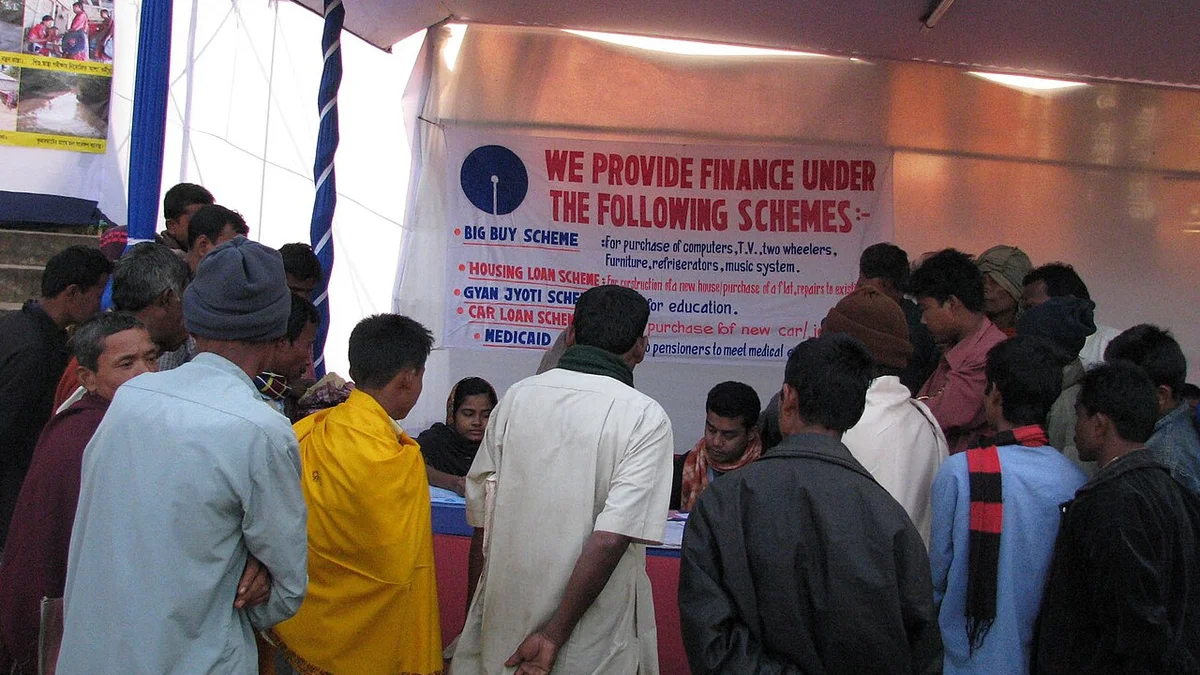
Institutional credit serves as the lifeblood of agricultural productivity, liberating Indian cultivating farmers from the usurious grip of informal moneylenders and commission agents who historically charged interest rates exceeding 24% to 36% per annum. Introduced by the Government of India, the Reserve Bank of India (RBI), and NABARD, the Kisan Credit Card (KCC) scheme represents the cornerstone of rural production lending. Providing flexible, revolving short-term working capital credit linked directly to operational landholdings and cropping patterns, the KCC loan empowers millions of farmers to purchase certified seeds, chemical fertilizers, crop protection sprays, and machinery fuel ahead of sowing cycles.
To eliminate bureaucratic paperwork and accelerate digital loan sanctions, the central government has integrated KCC operations under the unified Kisan Rin Portal (KRP) (Kisan Rin Portal Official) in collaboration with the Department of Agriculture and Farmers Welfare (DA&FW Agri Credit Portal), the National Bank for Agriculture and Rural Development (NABARD Official Portal), and the Reserve Bank of India (RBI Priority Sector Lending). Through the Modified Interest Subvention Scheme (MISS), farmers who make timely loan repayments enjoy an effective borrowing rate of just 4% per annum. This comprehensive banking guide covers eligibility, the district Scale of Finance, online Kisan Rin Portal applications, collateral-free credit limits, and specialized Pashu & Fisheries KCC cards.
1. KCC Interest Rate Structure: Modified Interest Subvention Scheme (MISS)
The financial hallmark of the KCC loan scheme is its highly subsidized interest framework. Standard commercial agricultural loans are priced at baseline benchmark lending rates (typically 9% to 10% per annum). However, the central government intervenes through the Modified Interest Subvention Scheme (MISS) to make credit affordable:
| Interest Component | Official Government Rate | Eligibility & Conditionality | Net Impact on Borrower |
|---|---|---|---|
| Base Agricultural Lending Rate | 7.00% per annum (Capped by RBI) | Applicable on short-term crop loans up to ₹3.00 Lakh | Government provides 1.5% subvention to lending banks |
| Prompt Repayment Incentive (PRI) | 3.00% Additional Rebate | Awarded to farmers who repay loan within 12 months / harvest | Direct cash reward for fiscal discipline |
| Effective Net Interest Rate | 4.00% per annum Net | Achieved when prompt repayment incentive is fully applied | Lowest interest borrowing available in India |
| Post-Harvest Storage Credit | 7.00% per annum (Up to 6 Months) | Available against Negotiable Warehouse Receipts (e-NWR) | Prevents distress selling during post-harvest price dips |
| Default / Overdue Penal Rate | 9.00% – 12.00% per annum | Applied if loan is not renewed or serviced within 1 year | Loss of 3% PRI rebate and interest compounding |
Source: Reserve Bank of India (RBI Master Circular on KCC) and Ministry of Agriculture & Farmers Welfare Notifications, November 2026.
2. Credit Limit Calculation: The District Scale of Finance
KCC loan limits are not arbitrary; they are determined scientifically based on the District Level Technical Committee (DLTC) "Scale of Finance" notified for each crop in every district across India. The total card limit covers crop cultivation expenses plus post-harvest household consumption and farm asset maintenance.
- Crop Cost of Cultivation (A): District Scale of Finance per acre multiplied by the cultivated acreage (e.g., ₹28,000/acre for wheat, ₹35,000/acre for paddy, ₹45,000/acre for sugarcane).
- Household Consumption Needs (B): An additional 10% of the crop cultivation cost is added to cover family living and post-harvest household maintenance.
- Farm Asset Maintenance & Insurance (C): An additional 20% of crop cost is added to cover tractor fuel, implement repairs, pump servicing, and PMFBY crop insurance premiums.
- First Year Maximum Limit: A + B + C (Totaling 130% of base Scale of Finance).
- Five-Year Revolving Limit: The KCC is sanctioned for 5 years. For subsequent years (Years 2 to 5), an automatic 10% compound increment is built into the sanctioned limit to absorb input inflation without requiring fresh loan processing.
3. Kisan Rin Portal (KRP): Digital Loan Application & Verification
The launch of the Kisan Rin Portal (krp.gov.in) has revolutionized KCC administration by creating an integrated digital interface connecting banks, state land registries (Bhulekh), PM-KISAN beneficiary databases, and the central agriculture ministry:
- Single-Window Digital Verification: The portal pulls digitized land ownership records (Khatauni / RoR) directly from state revenue databases, eliminating the need to obtain physical patwari land certificates.
- Aadhaar e-KYC Integration: Farmers complete instant biometric or OTP-based identity authentication, verifying their active PM-KISAN beneficiary status.
- Zero Collateral up to ₹1.60 Lakh: Under RBI guidelines, short-term crop loans up to ₹1.60 lakh are sanctioned without requiring land mortgage or third-party collateral guarantee. For banks with tie-up arrangements, this limit extends up to ₹3.00 lakh.
- Processing Fee Exemption: Public sector banks are strictly prohibited from charging loan processing fees, inspection charges, ledger folio charges, or documentation fees on KCC limits up to ₹3.00 lakh.
4. Pashu KCC & Fisheries KCC: Animal Husbandry Working Capital
Recognizing that smallholder rural households derive substantial income from livestock rearing, the central government extended KCC facilities to animal husbandry, dairy farming, poultry, and inland aquaculture:
| Livestock / Enterprise | Scale of Finance / Animal Unit (₹) | Eligible Expenses Covered | Collateral-Free Limit |
|---|---|---|---|
| Dairy Cow (Milch Indigenous / CB) | ₹40,000 – ₹45,000 per cow | Green fodder, concentrate cattle feed, vet care & vaccine | Up to ₹1.60 Lakh without land hypothecation |
| Dairy Buffalo (Murrah / Mehsana) | ₹60,000 – ₹65,000 per buffalo | Concentrates, mineral mixture, artificial insemination | Up to ₹1.60 Lakh collateral-free |
| Goat / Sheep Rearing (10+1 Unit) | ₹50,000 – ₹60,000 per flock unit | Deworming medicines, supplemental feed, breeding feed | Up to ₹1.60 Lakh collateral-free |
| Broiler Poultry (1,000 Birds) | ₹75,000 – ₹90,000 per batch | Day-old chicks, commercial starter / finisher feed, vaccines | Up to ₹1.60 Lakh collateral-free |
| Inland Aquaculture (1 Hectare Pond) | ₹1,50,000 – ₹2,00,000 per hectare | Fingerling fish seed, floating feed, electricity aeration | Up to ₹1.60 Lakh without mortgage |
Source: NABARD Model Bankable Projects for Animal Husbandry & State Level Bankers Committee (SLBC) Scale of Finance, November 2026.
5. Mandatory Documentation & Step-by-Step Application Workflow
Farmers seeking a new KCC or renewal of existing credit limits can submit applications through their local commercial bank, Regional Rural Bank (RRB), Primary Agricultural Credit Society (PACS), or online via the Kisan Rin Portal. Required documents include: (1) Completed one-page KCC application form; (2) Identity proof (Aadhaar Card, Voter ID); (3) Address proof; (4) Verified land ownership documents (Khatauni / 7/12 extract) or registered sharecropper / tenant cultivation agreement; and (5) Declaration of existing loans across other financial institutions.
6. Agricultural Mechanization, Irrigation & Capital Investment Financing
While the short-term crop loan component of the Kisan Credit Card satisfies recurring seasonal input requirements, farmers can link their KCC credit structure with medium- and long-term capital investment schemes. Farmers investing in modern farm machinery can combine KCC term loan facilities with capital grants under the PM Kisan tractor subsidy program and combine harvester price benchmarks. Essential farm tractors such as the Swaraj 744 FE tractor, the Mahindra 575 DI, the Eicher 380, and heavy-duty John Deere tractors can be financed through integrated bank credit.
For farm-to-mandi cargo transportation, farmers can finance utility vehicles like the Mahindra Supro commercial vehicle or access green mobility incentives under the PM E-DRIVE electric vehicle subsidy. On-farm productivity can be further elevated by integrating pressurized drip systems funded under the PM Krishi Sinchayee Yojana, guided by soil analysis through Soil Health Card recommendations. Cultivators can discover tools and machinery via our Farm Search portal, and protect crops with imidacloprid insecticide dosage and broad spectrum fungicides.
7. Allied Enterprises, Mandi Realization & Government Welfare Integration
The flexibility of the KCC framework allows credit limits to scale across diversified farming enterprises. Livestock owners can finance working capital for indigenous Gir cow dairy units, commercial Murrah buffalo milk production, and profitable goat farming enterprises under the Pashu KCC scheme. In poultry and specialty agriculture, working capital supports layer flocks tracking NECC wholesale egg rates, the Barwala egg market, high-value dragon fruit cultivation, and amaranth seed production.
KCC loans are protected against crop failure through mandatory PMFBY crop insurance tracking, ensuring automatic premium deduction and seamless claim settlement. Smallholders can also leverage direct income support through PM Kisan beneficiary verification, state-level assistance from CM Kisan Odisha DBT, and labour social security registration via UPLMIS shramik labour card.
To ensure timely loan repayment and avoid default penalties, farmers maximize revenue by tracking daily APMC commodity benchmarks—including onion rate today APMC prices, spot mustard seed rates, regional sarso mandi bhav, and wholesale sugar mill prices. In southern commercial plantation belts, growers follow the Shivamogga adike rate today, arecanut price today, wholesale cashew kernel price grades, and raw cashew nut farm-gate rates, leveraging direct trading networks like Kisan Mandi and regional hubs like Muhana Mandi Jaipur.
Official KCC interest subvention directives, scale of finance schedules, and digital application workflows are published by the Kisan Rin Portal (KRP), the Reserve Bank of India (RBI), NABARD, and the PM-KISAN Samman Nidhi Portal.
Frequently asked questions
- What is the effective interest rate on a Kisan Credit Card (KCC) loan in 2026?
- The baseline interest rate on KCC crop loans up to ₹3.0 lakh is 7% per annum. Under the central Modified Interest Subvention Scheme (MISS) governed by the Reserve Bank of India (RBI), farmers who repay promptly receive an additional 3% prompt repayment incentive, reducing the effective interest rate to just 4% per annum.
- What is the Kisan Rin Portal (KRP) and how does it simplify loan disbursement?
- The Kisan Rin Portal (KRP) is a unified digital platform developed by the Ministry of Finance and Agriculture that integrates land records, PM-KISAN beneficiary data, and bank servers for end-to-end digital processing and instant interest subvention claims.
- What is the collateral-free loan limit under the Kisan Credit Card scheme?
- Under RBI guidelines, the collateral-free agricultural loan limit is ₹1.60 lakh for standard crop loans and up to ₹2.0 lakh for milk and poultry farmers holding tie-up agreements with registered dairy or poultry cooperatives.
- How is the KCC credit limit calculated for a farmer?
- The KCC credit limit is determined based on the District Scale of Finance (fixed by NABARD and District Level Technical Committees) multiplied by crop acreage, plus 10% for post-harvest household expenses and 20% for farm maintenance, with an automatic 10% annual limit escalation for 5 years.
- Can tenant farmers and oral lessees apply for a KCC loan?
- Yes. Tenant farmers, sharecroppers, and oral lessees can access KCC credit limits up to ₹50,000 to ₹1,00,000 individually through Joint Liability Groups (JLGs) without requiring land ownership deeds.
- Is crop insurance mandatory for Kisan Credit Card holders?
- While Pradhan Mantri Fasal Bima Yojana (PMFBY) was historically compulsory, it is now voluntary. However, farmers must explicitly opt out in writing at their bank branch; otherwise, insurance coverage is automatically renewed as tracked via our PMFBY crop insurance guide.
- Can animal husbandry and dairy farmers get KCC loans without owning farm land?
- Yes. Under the Pashu KCC scheme, landless dairy, sheep, and goat farmers can access working capital loans up to ₹2.0 lakh without collateral to finance feed, veterinary care, and operational expenses in Murrah buffalo dairy farming and goat farming enterprises.
- What is the validity period of a Kisan Credit Card?
- A Kisan Credit Card account is valid for 5 years, subject to an annual review by the issuing bank. The credit limit automatically scales up by 10% each year up to the fifth year upon timely annual renewals.
- How does PM-KISAN data linkage help in obtaining a KCC loan?
- Beneficiaries verified on the PM Kisan portal or state portals like CM Kisan Odisha can apply for a KCC with a single-page simplified application form, as their land ownership and Aadhaar e-KYC credentials are already validated.
- What documents are required to apply for a fresh Kisan Credit Card?
- Applicants need an identity proof (Aadhaar/Voter ID), address proof, certified land ownership title (Khatauni / RoR), crop cultivation declaration, and two passport-size photographs.
- What happens if a farmer fails to repay the KCC loan within the 12-month cycle?
- If the loan is not renewed or repaid within 12 months, the farmer forfeits the 3% prompt repayment incentive, interest rates revert to the normal commercial rate (9% to 12%), and the account risks turning into a Non-Performing Asset (NPA).
- Can KCC funds be withdrawn using standard RuPay ATM cards?
- Yes. Modern KCC accounts are issued with RuPay Kisan Credit Cards, enabling farmers to withdraw cash at any commercial bank ATM, make point-of-sale (PoS) purchases at fertilizer retail shops, and make online transactions.
This article is for general information only and is not financial advice. Loan and scheme eligibility depends on partner and government criteria.