Wheat Rate Today: Gehu Mandi Bhav, MSP & Price Forecast
Key takeaways
- Under CACP cost policy, the official Government Minimum Support Price (MSP) for Fair Average Quality (FAQ) milling wheat stands at ₹2,425 per quintal across Punjab, Haryana, MP, and UP procurement centers.
- While FAQ milling wheat clears near ₹2,425–₹2,680/quintal in open APMC trade, premium rainfed Sehore Sharbati commands ₹3,150–₹3,680+/quintal and Indore Lokwan trades at ₹2,680–₹2,950/quintal.
- FCI procurement accepts lots at 100% MSP up to 12.0% moisture, <=0.75% foreign matter, and <=2.0% damaged kernels, transferring DBT payments directly via PFMS within 48–72 hours.
- Holding dry (<12% moisture) grain inside WDRA-accredited warehouses generates electronic e-NWR receipts eligible for 7% bank pledge credit to capture off-season price gains.
- Farmers compare daily APMC auction bids officially via Agmarknet and list cleaned lots on e-NAM electronic auctions to unlock interstate flour mill demand.
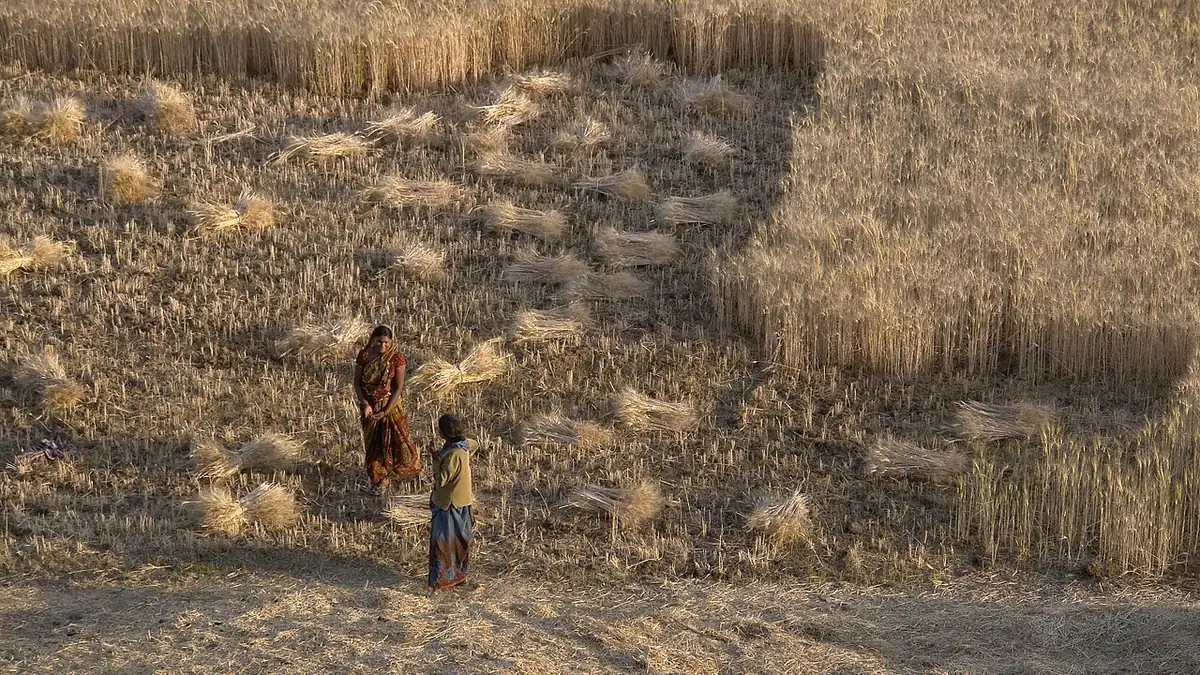
Tracking the daily wheat rate and regional gehu ka bhav across regulated APMC mandis is an indispensable daily requirement for Indian grain farmers, flour millers, commercial aggregators, and agri-commodity traders in 2026. As the world's second-largest wheat producer harvesting over 112 million metric tonnes annually, India's domestic wheat economy hinges upon the intersection of statutory procurement benchmarks fixed by the Commission for Agricultural Costs and Prices (CACP), physical arrivals reported on the Agmarknet APMC Portal, and state purchase tenders managed by the Food Corporation of India (FCI) under the aegis of the Ministry of Consumer Affairs Food & Public Distribution. Whether liquidating harvest volumes at peak post-threshing arrivals, securing MSP floor prices, or timing off-season sales to commercial biscuit and maida processors, possessing verified market data guarantees maximum revenue per quintal. Verify related KisanPe comparisons and official portal references via Khanna & regional wheat markets, Ghazipur Mandi.
1. National Wheat Pricing Dynamics: CACP MSP Benchmarks & Market Parity
For the 2025–26 and 2026–27 rabi marketing seasons, the Cabinet Committee on Economic Affairs (CCEA) approved a statutory Minimum Support Price (MSP) of ₹2,425 per quintal for Fair Average Quality (FAQ) milling wheat. This price represents a robust return of over 102% over the national weighted average cost of production (measured under the comprehensive A2+FL formula). In states with extensive open-ended public procurement infrastructure like Punjab and Haryana, the vast majority of marketable surplus is purchased directly at the MSP floor rate via e-Procurement portals. Farmers receive direct Aadhaar-enabled bank deposits within 48 to 72 hours of weighing and dispatch.
The statutory MSP benchmark fixed by the Central Government is calculated following nationwide cost studies conducted across major agricultural research centers. The cost of production encompasses paid-out input expenses such as high-yielding seeds, chemical fertilizers, crop protection agrochemicals, hired tractor and machinery labor, canal and tube-well irrigation electricity tariffs, and the imputed economic value of family agricultural labor. By guaranteeing a baseline realization of ₹2,425 per quintal, the procurement framework shields smallholders against seasonal harvest gluts where localized mandi prices could otherwise plunge during peak April arrival surges.
Conversely, across major growing pockets of Madhya Pradesh, Rajasthan, Gujarat, and Uttar Pradesh, open-market wholesale prices frequently trade at a substantial premium above the government MSP. In particular, premium quality durum and semi-hard aestivum varieties such as Sehore Sharbati, Lokwan, and Malwa Gold command between ₹2,800 and ₹3,650 per quintal from commercial atta millers due to their high hectolitre weight, vitreous amber luster, and high wet gluten content (above 28% to 32%). Farmers monitoring seasonal crop income can evaluate their earnings using our KisanPe Mandi Intelligence Dashboard or compare grain prices against other rabi commodities like sarso ka bhav today and spices via black pepper wholesale rates.
The price spread between ordinary milling grain and premium processing varieties reflects stringent commercial flour milling specifications. Industrial biscuit manufacturers and packaged flour brands require specific dough elasticity and falling number ratings (optimally 350 to 450 seconds), rewarding growers with direct purchase premiums of ₹300 to ₹700 per quintal above base mandi rates. Understanding this commercial grading hierarchy allows growers to select high-demand varieties like DBW 187 (Karan Vandana), DBW 222 (Karan Narendra), or HD 3086 & HD 2967 during seasonal sowing.
2. Major APMC Mandi Rates Today: State-by-State Wholesale Benchmarks
Physical wholesale prices vary significantly based on geographic logistics, local flour mill demand, railhead connectivity, and harvest arrival pressure. The following data table provides verified modal prices and daily arrival trends recorded across major agricultural marketing hubs.
| APMC Mandi Hub | State | Dominant Wheat Grade | Modal Wholesale Rate (₹/Qtl) | Daily Arrival Volume (MT) | Market Trend & Buyer Activity |
|---|---|---|---|---|---|
| Khanna & regional wheat markets | Punjab | Standard FAQ Milling (PBW 550 / HD 2967) | ₹2,425 - ₹2,460 | 3,800 MT | Heavy FCI & Markfed procurement; steady |
| Karnal Mandi | Haryana | FAQ Grade-I (DBW 187 / DBW 222) | ₹2,430 - ₹2,480 | 2,400 MT | Direct procurement active; firm undertone |
| Sehore Mandi | Madhya Pradesh | Premium Sharbati Grade-A (Vitreous) | ₹3,150 - ₹3,680 | 1,200 MT | Strong corporate roller flour mill buying; rising |
| Indore Mandi | Madhya Pradesh | Lokwan / Malavraj Durum | ₹2,680 - ₹2,950 | 2,800 MT | Robust export & processing demand; bullish |
| Aligarh Mandi | Uttar Pradesh | Desi Gehu Milling Grade | ₹2,450 - ₹2,530 | 1,900 MT | Private stockist and local mill trade; steady |
| Kota Mandi | Rajasthan | Raj 4037 / Lok-1 Semi-Hard | ₹2,520 - ₹2,740 | 2,100 MT | High trade velocity; quality lots firm |
| Ghazipur Mandi | Delhi (APMC) | Dara / Mill Quality Consignment | ₹2,580 - ₹2,720 | 1,450 MT | Urban consumption demand strong; steady |
| Ahmedabad Mandi | Gujarat | Tukdi / Sharbati Premium | ₹2,850 - ₹3,350 | 950 MT | High local confectionery demand; firm |
Source: Agmarknet Mandi Network (agmarknet.gov.in) and Directorate of Economics and Statistics (DES).
3. FCI Procurement Fair Average Quality (FAQ) Specifications & Deductions
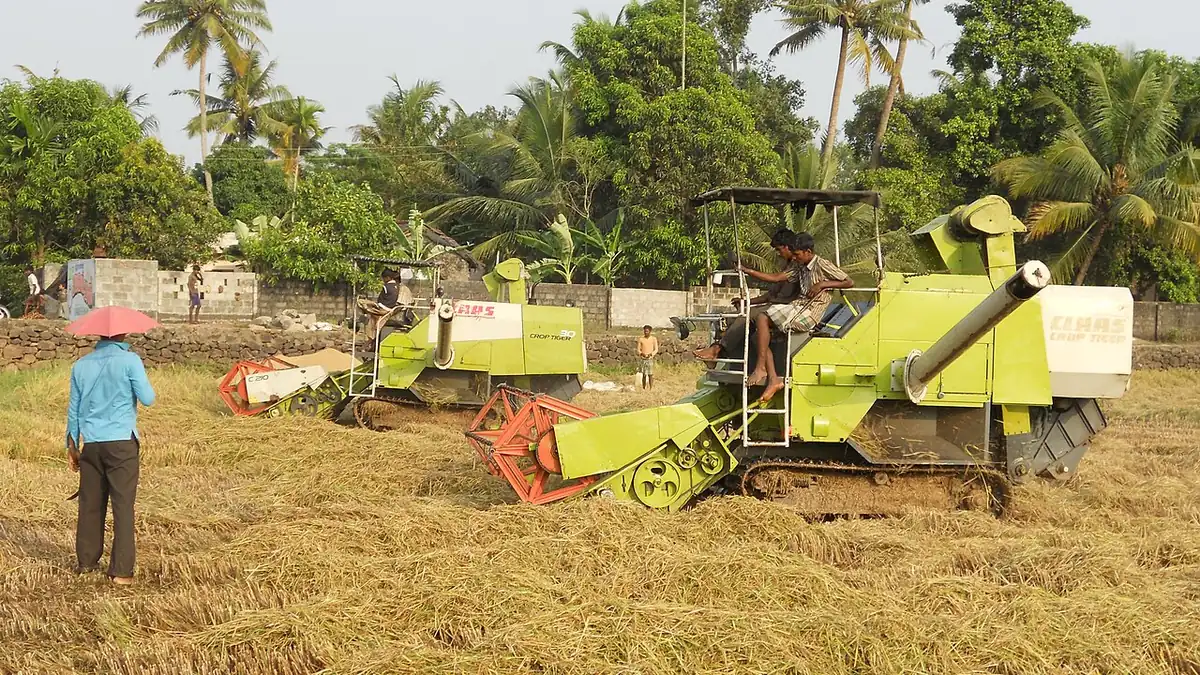
To prevent arbitrary price deductions by grain commission agents (arhtiyas) and ensure complete price realization, farmers must understand the exact physical quality specifications enforced by the Food Corporation of India and state procurement agencies. Grains complying with FAQ parameters qualify for 100% of the statutory MSP without discount.
| Quality Parameter | Permissible FAQ Limit (%) | Price Deduction Schedule | Rejection Threshold (%) |
|---|---|---|---|
| Moisture Content | 12.0% Maximum | Pro-rata price cut up to 14.0% moisture | Above 14.0% strictly rejected |
| Foreign Matter (Organic / Inorganic) | 0.75% Maximum | Value deduction above 0.75% up to 1.5% | Above 2.0% non-negotiable rejection |
| Other Foodgrains (Admixture) | 2.0% Maximum | Value cut equivalent to inferior grain ratio | Above 3.0% rejected |
| Damaged Grains (Fungal/Rot/Weevil) | 2.0% Maximum | Full value deduction above 2.0% | Above 4.0% rejected as unfit for PDS |
| Slightly Damaged / Discolored | 4.0% Maximum | Marginal deduction above 4.0% up to 6.0% | Above 8.0% rejected |
| Shrivelled & Broken Kernels | 6.0% Maximum | Pro-rata deduction on weight above 6.0% | Above 10.0% rejected |
Source: Food Corporation of India (fci.gov.in) Fair Average Quality Standards for Rabi Procurement.
4. Post-Harvest Threshing, Handling & Moisture Management
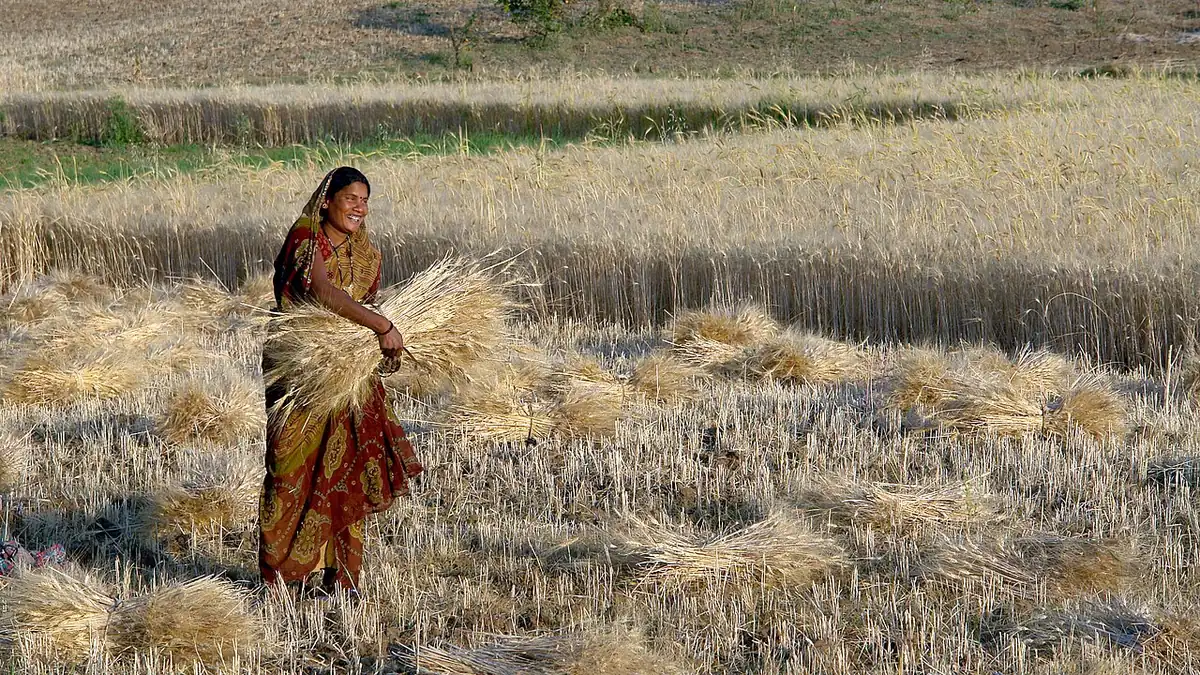
Maximizing wheat mandi realizations starts at harvest. Modern mechanized harvesting using combine harvesters or tractor-operated multi-crop threshers driven by reliable tractors like the Swaraj 735 FE (40 HP) or the high-output Mahindra 575 DI (45 HP) must be executed only when standing crops have attained physiological maturity.
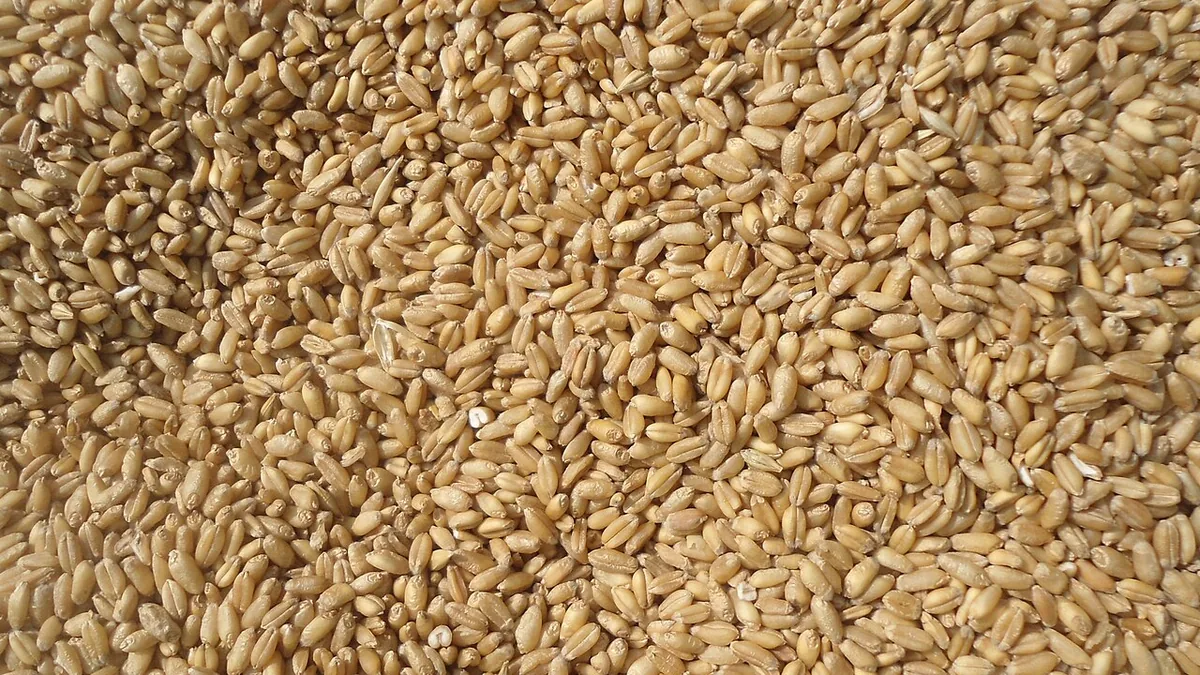
Harvesting prematurely when grain moisture exceeds 14% to 16% leads to severe kernel bruising, fractured pericarp during threshing, and automatic rejection at government procurement counters. If harvesting during damp morning hours or following unseasonal pre-harvest showers, spread the grain on clean tarpaulins under direct sunlight for 6 to 8 hours until digital grain moisture meters register below 12%. Storing grain in scientific hermetic bags or galvanised metal bins treated with Aluminium Phosphide prevents devastating post-harvest losses from the lesser grain borer (Rhyzopertha dominica) and rice weevil (Sitophilus oryzae).
Scientific warehousing under the Warehousing Development and Regulatory Authority (WDRA) provides an additional liquidity mechanism. By depositing cleaned, bagged wheat into registered WDRA accredited godowns, farmers receive electronic Negotiable Warehouse Receipts (e-NWRs). Commercial banks provide low-interest pledge loans against these e-NWRs at 7% interest subvention rates, providing growers with immediate post-harvest liquidity without forcing distress sales during seasonal price troughs.
5. Strategic Marketing: e-NAM Electronic Auction vs Open Market Sale Scheme (OMSS)
In 2026, progressive farmers no longer restrict themselves to local village middlemen. By registering through the National Agriculture Market (e-NAM) portal using their verified Kisan Identity Card (Farmer ID), growers can upload assaying certificates and receive competitive electronic bids from licensed buyers and millers across distant states.
The e-NAM framework eliminates physical intermediaries by standardizing electronic gate entry, computerized sample assaying, online bidding, and direct bank settlement. A wheat farmer in Sehore or Kota can showcase laboratory parameters (moisture, gluten, foreign matter) to flour millers in Mumbai, Bengaluru, or Delhi, receiving digital bids that bypass local mandi cartels and deliver ₹75 to ₹150 more per quintal.
Concurrently, farmers must track the Central Government's Open Market Sale Scheme (OMSS) releases. When consumer wheat inflation accelerates, FCI releases reserve grain from national buffer stocks via weekly electronic auctions to bulk buyers at reserve prices (typically ₹2,350 to ₹2,450 per quintal). Monitoring OMSS auction quantities prevents farmers from holding commercial grain too long during artificial speculative price bubbles, allowing them to time grain sales at the seasonal price zenith.
6. Farm Mechanization & Financial Management for Wheat Growers
Optimizing production costs is the surest method to widen profit margins regardless of mandi price fluctuations. In rabi wheat cultivation, diesel consumption represents over 30% of variable field expenses. Utilizing fuel-efficient utility machines like the Farmtrac 60 Powermaxx, the heavy-duty New Holland 3630 Special Edition, or the 4WD John Deere 5405 4x4 paired with happy seeders & seed drills lowers tillage costs by up to ₹1,800 per acre while preserving residual soil moisture.
Furthermore, growers should utilize institutional credit mechanisms rather than informal money lenders. By estimating seasonal credit limits with the KCC agricultural credit portal, farmers can finance quality seed inputs, urea, and DAP fertilizers at subsidized interest rates (effective 4% per annum upon prompt repayment). Equipment acquisition loans can be modeled accurately using our Tractor Loan EMI Calculator.
7. Frequently Asked Questions About Wheat Rates & MSP Procurement
Explore verified answers below covering statutory ₹2,425/qtl wheat MSP, Sehore Sharbati vs Lokwan pricing premiums, FCI 12% moisture tolerances, OMSS e-auctions, and e-NAM direct sales.
Frequently asked questions
- What is the official Minimum Support Price (MSP) for wheat in 2026?
- The statutory MSP for wheat for the 2025-26 and 2026-27 rabi marketing seasons is ₹2,425 per quintal for Fair Average Quality (FAQ) grain, fixed by the Central Government on the recommendations of CACP and gehu ka bhav parity.
- Why does MP Sharbati wheat sell at a premium compared to normal wheat?
- Madhya Pradesh Sharbati wheat (grown in Sehore and Vidisha) features high natural protein, heavy hectolitre weight, golden vitreous luster, and high wet gluten content, making it the preferred grain for luxury consumer atta brands and fetching ₹3,100 to ₹3,680/quintal.
- What is the maximum moisture content allowed at FCI procurement centers?
- The maximum permissible moisture limit for wheat under FCI Fair Average Quality (FAQ) norms is 12.0%. Grain with 12.1% to 14.0% moisture is subject to pro-rata weight deduction, while grain exceeding 14.0% is rejected.
- How are wheat procurement payments transferred to farmers?
- Government procurement payments are transferred directly to the farmer's verified bank account via the Public Financial Management System (PFMS) and Aadhaar DBT mapper within 48 to 72 hours of mandi gate weighment.
- What is the difference between Lokwan and Sharbati wheat varieties?
- Lokwan is a high-yielding, semi-hard aestivum variety popular across Maharashtra and MP for general chapati making, trading around ₹2,600-₹2,900/qtl. Sharbati is a premium durum/semi-hard grain commanding ₹3,100-₹3,700/qtl due to its sweeter taste and higher dough elasticity.
- How can farmers sell wheat on the e-NAM electronic trading platform?
- Farmers bring their wheat to an e-NAM enabled APMC mandi, generate an e-gate pass using their Farmer ID, get their grain assayed in the laboratory, and allow licensed pan-India traders to bid electronically, securing the highest transparent price.
- What is the Open Market Sale Scheme (OMSS) for wheat?
- OMSS is a market stabilization mechanism whereby the Food Corporation of India sells surplus wheat from central buffer stocks through weekly e-auctions to flour millers and processors to control retail flour prices.
- How should harvested wheat be stored to prevent weevil and pest infestation?
- Following best post-harvest practices from our wheat cultivation guide, ensure grain moisture is below 12%, clean thoroughly to remove chaff, use multi-layer hermetic bags or clean GI metal bins, and fumigate sealed grain stores with Aluminium Phosphide tablets under expert safety supervision.
- What are the common deductions made by arhtiyas in local mandis?
- Private buyers often deduct for moisture exceeding 12%, presence of damaged or black-point grains exceeding 2%, and excess foreign matter (straw, dust, stones). Farmers should verify deductions against statutory APMC display boards.
- Which states produce the highest volume of wheat in India?
- Uttar Pradesh ranks first in total wheat production, followed by Madhya Pradesh, Punjab, Haryana, and Rajasthan. Punjab and Haryana lead in per-hectare productivity exceeding 4.8 to 5.2 tonnes/hectare.
- What causes black point disease in wheat and does it affect mandi rate?
- Black point is caused by fungal pathogens (alongside stripe/stem wheat rust) triggered by unseasonal pre-harvest rains during grain development. As reflected in wheat rate today trends, mandis discount prices by ₹50 to ₹150 per quintal if discolored grains exceed 4% to 6%.
- Is there any mandi cess or tax deducted from the farmer during procurement?
- In statutory government MSP procurement, the full MSP is paid directly to the farmer without any mandi tax deduction; all market cess, rural development fees, and arhtiya commissions are paid directly by the procurement agency (FCI/State agency).
This article is for general information only and is not financial advice. Loan and scheme eligibility depends on partner and government criteria.