Pepper Price Today: Black Pepper Mandi Auctions & Grades
Key takeaways
- As of November 2026, indicative wholesale black pepper auction ranges stand at ₹66,000–₹72,000 per quintal (₹660–₹720/kg) for Malabar Garbled (MG-1) and Ungarbled (UG-1) lots at Kochi and Wayanad terminals.
- Kerala (Idukki, Wayanad, Kollam) and Karnataka (Kodagu, Hassan, Chikkamagaluru, Shivamogga) account for the core of India's ~50,000–65,000+ tonne annual black pepper pool.
- Export pricing under Spices Board India standards differentiates Malabar Garbled Grade 1 (MG-1), Tellicherry Garbled Extra Bold (TGEB >= 4.25 mm), and Tellicherry Garbled Special Extra Bold (TGSEB >= 4.75 mm, 570–600 g/L bulk density).
- High-altitude Idukki and Pulpally lots maintaining sub-12% moisture and 4.5%–5.5% piperine consistently avoid weight-cut deductions at spice auctions.
- Growers and exporters verify real daily spot bids through the Spices Board India price bulletin and Agmarknet before closing consignments.
Monitoring pepper price today (Kali Mirch / കുരുമുളക് വില) across South India's regulated spice terminals and primary plantation markets helps estate growers, FPO aggregators, and masala processors lock profitable selling windows across domestic and export channels. India's iconic spice—Piper nigrum, known globally as 'Black Gold'—anchors smallholder incomes across the Western Ghats, with Kerala and Karnataka driving domestic supply alongside Tamil Nadu and North-Eastern states. Governed for export quality and trade promotion by the Spices Board of India (Spices Board India) and tracked alongside agricultural commodity markets on Agmarknet, auction quotes fluctuate weekly based on harvest arrivals, carry-over warehouse stocks, and Vietnam or Sri Lanka import parity. Growers comparing daily wholesale per-quintal auction trends with end-user weight breakdowns should also review our per-kg black pepper rate breakdown, browse the KisanPe daily mandi rates portal, and examine intercrop returns in our cardamom market price guide.
1. Indicative Black Pepper Mandi Prices Across Kochi, Wayanad & Karnataka (November 2026)
Unlike open field grain mandis in northern India, domestic black pepper price discovery revolves around Kochi (Mattancherry) in Kerala—India's historical export benchmark—supported by interior plantation auction hubs in Pulpally and Kalpetta (Wayanad), Nedumkandam and Kattappana (Idukki), and Sirsi and Shivamogga in Karnataka. As of November 2026, indicative wholesale ranges span ₹65,000 to ₹69,500 per quintal for clean farm-dried Ungarbled (UG-1) pepper and ₹68,500 to ₹73,500 per quintal for Garbled Malabar (MG-1) and extra-bold Tellicherry lots, while commercial Karnataka lots clear within ₹66,200 to ₹70,500 per quintal depending on bulk density. Farmers timing harvest sales should pair historical mandi price trend charts with agronomic planning from our black pepper cultivation guide and Spices Board subsidy schemes.
| Market / Auction Center | Primary Trade Grade | Indicative Min (₹/Quintal) | Indicative Max (₹/Quintal) | Indicative Modal Equivalent (₹/Kg) |
|---|---|---|---|---|
| Kochi Terminal (Kerala) | Malabar Garbled (MG-1) | ₹68,500 | ₹72,000 | ₹695 - ₹710 / kg |
| Kochi Spot Yard (Kerala) | Ungarbled Commercial (UG-1) | ₹66,000 | ₹69,500 | ₹670 - ₹685 / kg |
| Nedumkandam / Kattappana (Idukki) | High-Altitude Bold Tellicherry | ₹69,000 | ₹73,500 | ₹705 - ₹725 / kg |
| Pulpally Market (Wayanad) | Farmgate Sun-Dried (<=11.5% Moisture) | ₹65,000 | ₹68,200 | ₹660 - ₹675 / kg |
| Sirsi APMC (Uttara Kannada) | Malnad Garbled / Estate Dry | ₹67,000 | ₹70,500 | ₹680 - ₹695 / kg |
| Shivamogga & Kodagu Mandis | Commercial Estate Black Pepper | ₹66,200 | ₹69,800 | ₹672 - ₹688 / kg |
2. Spices Board Export Grades: MG-1 vs TGEB vs TGSEB Specifications
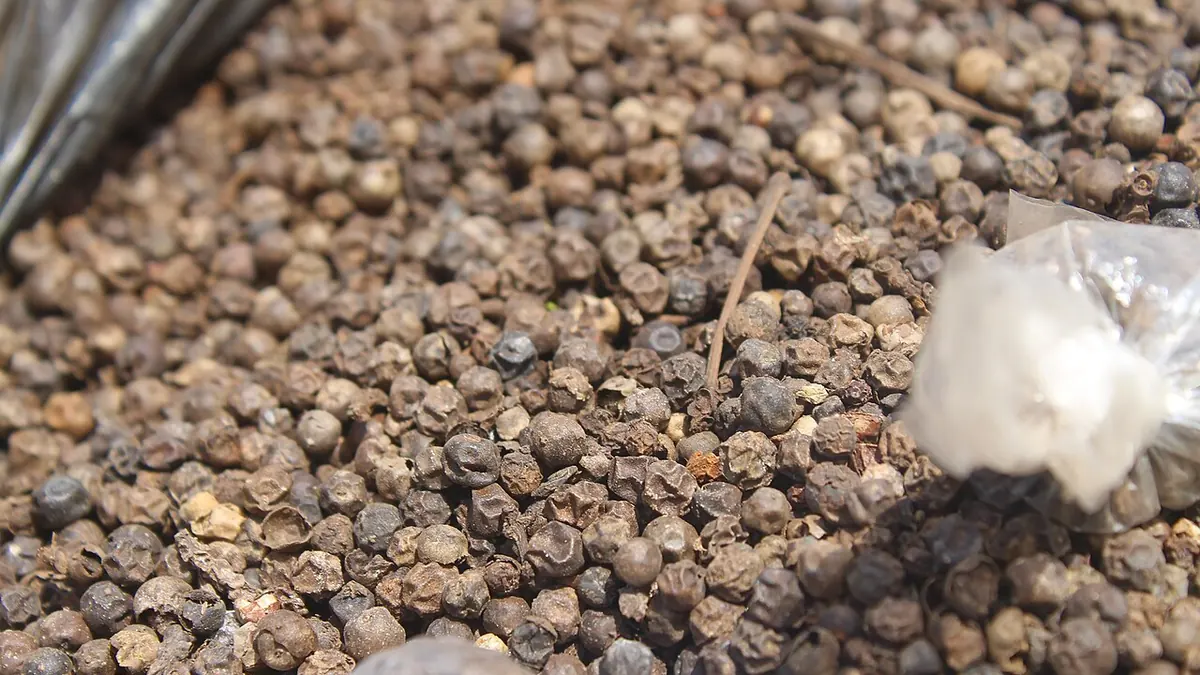
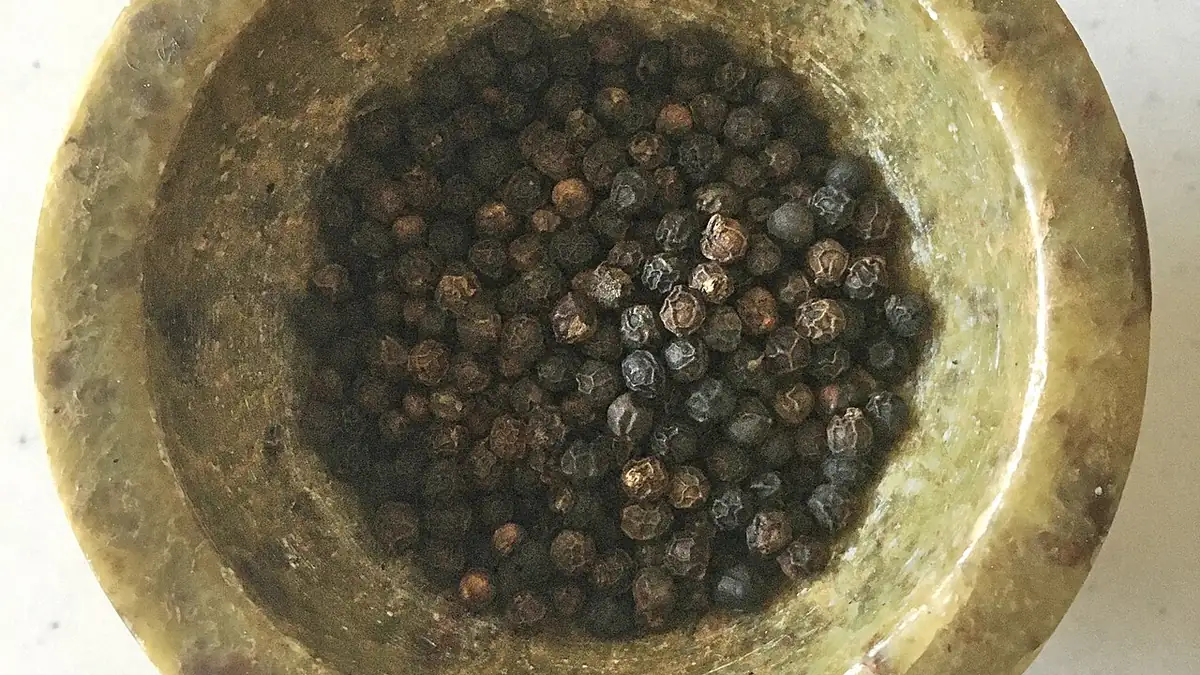
Price spreads of ₹3,000 to ₹6,500 per quintal inside the same mandi stem directly from physical berry diameter, sieve cleaning, and bulk density (grams per liter). Recognized by the Spices Board of India and global spice importers, Indian pepper is destemmed, washed, graded across calibrated stainless mesh screens, and certified via moisture and piperine laboratory Certificates of Analysis (CoA). Whereas MG-1 forms the workhorse industrial grinding grade across domestic masala mills, gourmet export buyers in North America and Europe pay substantial premiums for TGEB (>=4.25 mm sieve) and top-tier TGSEB (>=4.75 mm berries delivering 570–600 g/L bulk density and 4.5%–5.5% piperine). Growers diversifying estate plantations alongside black pepper frequently monitor cardamom grade benchmarks, turmeric grading standards, NCDEX turmeric market trends, and Byadgi chilli colour premiums.
| Spices Board Commercial Grade | Minimum Sieve Size / Profile | Typical Bulk Density (g/L) | Max Export Moisture Limit | Primary End-Use Channel |
|---|---|---|---|---|
| TGSEB (Tellicherry Garbled Special Extra Bold) | >= 4.75 mm Uniform Large Berries | 570 - 600 g/L | 11.5% - 12.0% | Gourmet Whole Peppercorns (US / EU Retail) |
| TGEB (Tellicherry Garbled Extra Bold) | >= 4.25 mm Bold Mature Berries | 550 - 575 g/L | 12.0% Max | Premium Foodservice & Table Grinders |
| MG-1 (Malabar Garbled Grade 1) | Clean Machine-Sorted Standard Size | 550 - 560 g/L | 11.5% - 12.0% | Industrial Spice Blending & Masala Exports |
| UG-1 / UG-2 (Ungarbled Commercial) | Unsorted Clean Farm-Dried Lots | 510 - 540 g/L | 12.5% - 13.0% | Domestic Curry Powder & Oleoresin Extraction |
| Light Berries / Pinheads | Low-Density Immature / Under-Size | < 450 g/L | 13.0% Max | Pepper Oil & Steam-Distilled Extraction |
3. Seasonal Harvest Calendar, Arrivals & Export Import Parity Factors
Indian pepper prices move along a predictable annual harvest curve dictated by South-West and North-East monsoon intensity across Kerala and Karnataka. Fresh berry harvesting accelerates in lower elevations of Kerala from December through February and extends into high-altitude Wayanad, Idukki, and Kodagu estates through March and April, generating peak mandi arrival volume during Q1. From June through November—covering the monsoon lean period and festive cooking demand—supply tightens and well-cured, mould-free MG-1 inventories frequently recover earlier dips. Simultaneously, import policies, Maximum Residue Limit (MRL) inspections, and Minimum Import Price safeguards tracked by the Ministry of Consumer Affairs (DoCA) and Department of Agriculture & Farmers Welfare (Agricoop) insulate domestic planters against under-invoiced third-country imports. Growers planning vineyard expansion or value addition can review Kerala agricultural state schemes, MIDH spice horticulture subsidies, and masala processing unit setup economics.
4. Estate Grading, Drying & Agronomic Practices That Lift Auction Realization
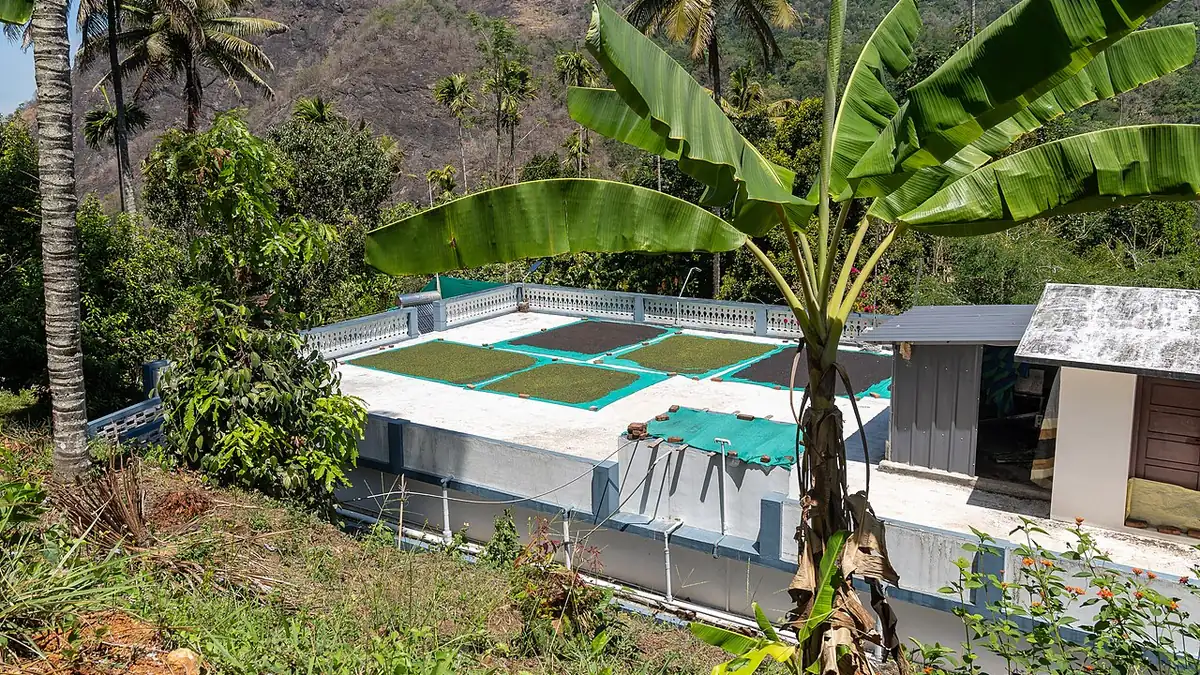
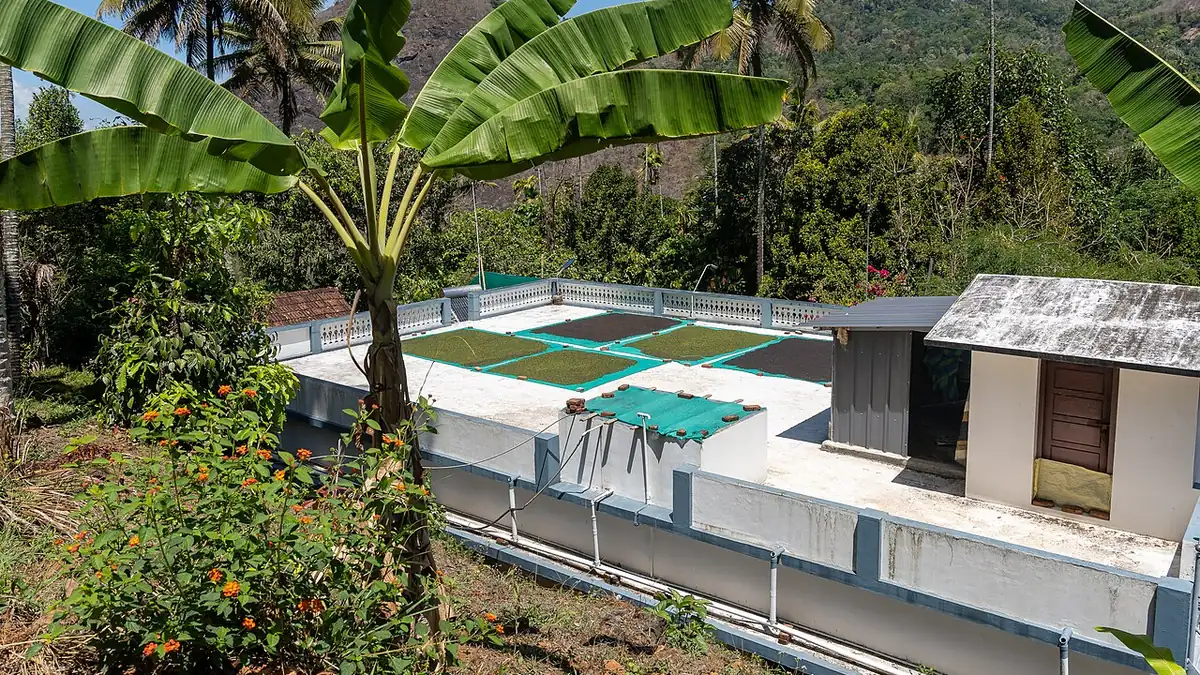
Post-harvest handling inside the estate courtyard often adds ₹2,000 to ₹4,000 per quintal in net grower revenue without changing yield weight. Blanching freshly threshed green peppercorns in boiling water for roughly 60 seconds inside perforated baskets before solar drying accelerates drying by 2 days, eliminates surface microbes, and delivers a uniform deep-black gloss instead of dull greyish-brown skins. Avoiding concrete yard contamination and storing dried grain in double-lined jute or woven poly-lined sacks prevents moisture re-absorption during coastal humidity spikes. In the field, balanced vine nutrition using organic manures and certified high-piperine vine cultivars such as Panniyur-1, Karimunda, and IISR Subhakara, alongside timely phytophthora quick-wilt control, safeguards berry fill and bulk density above 550 g/L. Farmers can calculate plantation nutrient schedules via the KisanPe fertilizer calculator and verify safe crop protection options through long pepper intercropping guides.
5. Step-by-Step Guide to Checking Authentic Terminal Rates & Settling Payment
Before loading cured pepper sacks for market transport, growers and spice FPOs should cross-verify real auction prices across four official benchmarks rather than relying on informal trader quotes. Start by reviewing the Spices Board India daily domestic price table for Kochi MG-1 and Un-Garbled rates, then compare regional Karnataka APMC filings in Sirsi, Siddapur, and Shivamogga via Agmarknet using our mandi bhav verification guide. Estate sellers weighing direct FPO auctions versus local village dealers should examine price transparency rules in our e-NAM electronic auction comparison, track monthly spot spreads via the KisanPe Mandi Intelligence hub and mandi price watch, and access working capital between harvest and lean-season peaks through a Kisan Credit Card farm credit line.
6. Frequently Asked Questions About Black Pepper Price & Auctions
The FAQ section below answers practical farmer and buyer questions covering indicative Kochi auction pricing, MG-1 vs Tellicherry grade standards, moisture deduction thresholds, and official price portals.
Frequently asked questions
- What is the indicative black pepper price today at Kochi and Wayanad markets?
- As of November 2026, indicative wholesale spot ranges at Kochi trade between ₹66,000–₹69,500 per quintal for Ungarbled (UG-1) pepper and ₹68,500–₹72,000 per quintal for Malabar Garbled (MG-1), while high-altitude Pulpally and Idukki bold Tellicherry lots range up to ₹73,500 per quintal. Always verify live daily closing quotes on Spices Board India and the KisanPe mandi rates portal.
- What is the difference between MG-1, TGEB, and TGSEB black pepper grades?
- Under Spices Board grading rules, MG-1 (Malabar Garbled 1) is the standard machine-cleaned commercial pepper (~550–560 g/L bulk density). TGEB (Tellicherry Garbled Extra Bold) screens berries >= 4.25 mm, while TGSEB (Special Extra Bold) represents elite >= 4.75 mm peppercorns with 570–600 g/L bulk density and 4.5%–5.5% piperine. Compare regional 1 kg pricing in our pepper rate per kg buyer guide.
- Which Indian states produce the most black pepper?
- Karnataka (Kodagu, Hassan, Chikkamagaluru, Shivamogga) and Kerala (Idukki, Wayanad, Kollam) together contribute the overwhelming majority of India's ~50,000–65,000+ tonne annual black pepper harvest, alongside smaller belts in Tamil Nadu and North-Eastern India. Plan estate expansion using our black pepper cultivation guide.
- How do moisture percentage and bulk density affect pepper auction prices?
- Exporters require dry moisture at or below 12.0% and bulk density above 550 g/L for MG-1 grading. Every 1% excess moisture or high percentage of hollow pinheads forces commission buyers to apply weight deductions and drying penalties of ₹1,500 to ₹3,500 per quintal.
- Where can farmers check official daily black pepper prices online?
- Growers verify official domestic auction numbers via the Spices Board India website and state APMC filings on Agmarknet. Our mandi bhav guide explains how to filter Kerala and Karnataka yard arrivals step-by-step.
- What subsidies are available for pepper growers and spice dryers?
- Smallholder spice farmers can apply for replanting assistance, shade-net nurseries, and mechanical solar spice dryers under Spices Board India development programs and MIDH horticulture subsidies routed through state agricultural portals.
- Why does blanching berries in hot water improve finished pepper price?
- Submerging freshly harvested green spikes in boiling water for 60 seconds before sun drying ruptures pericarp enzymes, halts fungal greying, accelerates solar drying to 3–4 days, and produces uniform jet-black whole peppercorns favored by premium auction buyers.
- Which months see peak black pepper arrivals and seasonal price shifts?
- Peak fresh berry harvesting runs from December through April across Kerala and Karnataka, creating abundant fresh arrivals and mild Q1 price softening, whereas off-season monsoon demand from July to November typically supports firmer warehouse quotes for dry lots.
- How much does 100 kg of fresh green pepper berries yield after drying?
- Fresh green pepper berries typically contain around 65%–70% moisture at harvest, yielding roughly 32 to 36 kg of clean sun-dried commercial black pepper per 100 kg of fresh de-spiked green berries depending on cultivar and berry maturity.
- Can black pepper be intercropped safely with cardamom, coffee, or arecanut?
- Yes—in Malnad Karnataka and high-range Kerala estates, black pepper climbs silver oak, coconut, or arecanut shade standards efficiently, allowing multi-tier farm revenue alongside cardamom intercropping without competing heavily for canopy sunlight.
- Does piperine content change pricing for oleoresin extraction buyers?
- Yes—spice oil and oleoresin extraction factories across Ernakulam and Thrissur sample batches for volatile oil (>2.0%) and piperine (>4.5%), frequently sourcing lightweight clean pinhead grades at separate industrial rates alongside commercial masala processors.
- How can growers access short-term credit without distress-selling fresh pepper?
- Planters holding properly dried pepper (<11.5% moisture) inside accredited rural godowns can finance harvest labor and post-harvest inputs using an institutional Kisan Credit Card agricultural loan under official Agricoop credit guidelines rather than selling immediately at farmgate discounts.
This article is for general information only and is not financial advice. Loan and scheme eligibility depends on partner and government criteria.