Byadgi Chilli Price Today, APMC Mandi Rates & Varieties
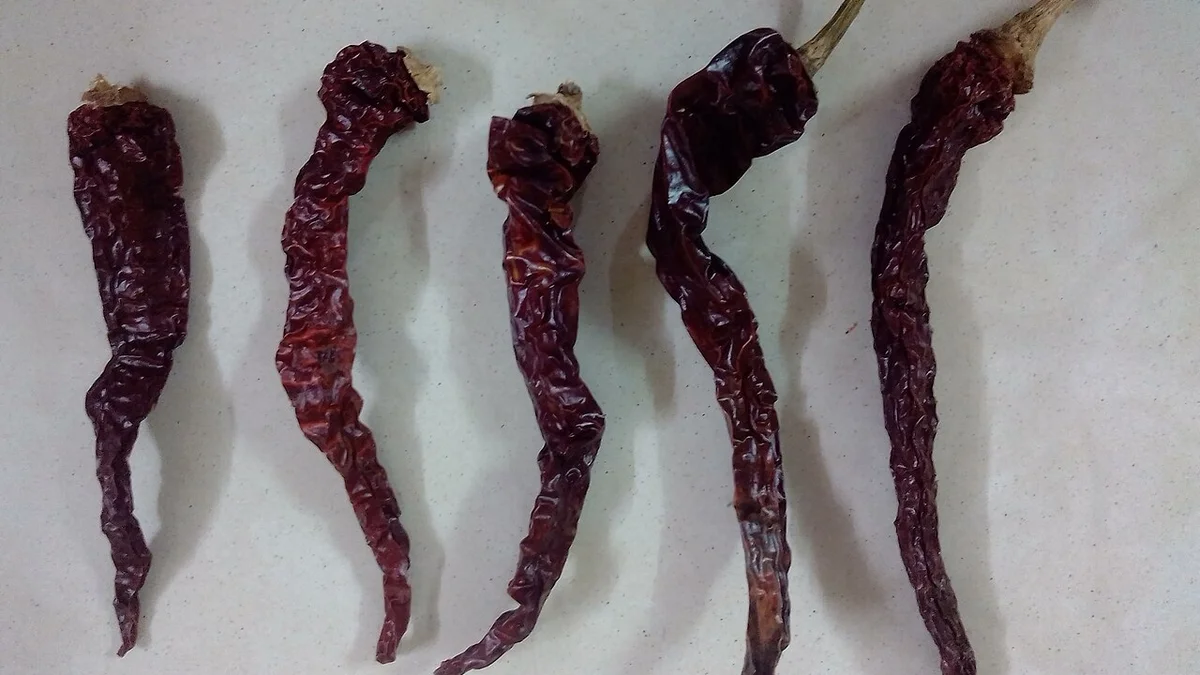
Byadgi chilli (geographically recognized with an official Geographical Indication / GI tag from Haveri district in Karnataka) is internationally revered as the crowning jewel of Indian spices. Famous globally for its characteristic deep wrinkled skin, intense deep-red crimson pigmentation, high ASTA color extractability, and remarkably mild, pleasant pungency, Byadgi chilli commands premium value in culinary markets, spice oleoresin extraction units, and international export consignments. Monitored systematically by the Spices Board of India (Spices Board) under the Ministry of Commerce & Industry and tracked on the daily agricultural market portal (Agmarknet), the Byadgi APMC market yard stands as the second largest chilli trading hub in India after Guntur.
1. Byadgi Chilli Price Today & Karnataka APMC Mandi Market Trends
Wholesale prices for Byadgi chilli fluctuate heavily based on physical dry pod length, wrinkling uniformity, moisture levels (optimal at 10% to 11%), and capsanthin color value. Today, wholesale mandi rates at the primary Byadgi APMC yard in Haveri range from ₹28,000 to ₹58,000 per quintal (₹280 to ₹580 per kilogram) for standard commercial dry grades, with super-premium flawless Dabbi lots reaching up to ₹72,000 per quintal during peak festive demand. Secondary trading hubs including Hubballi, Gadag, Ranebennur, and Bellary witness daily arrivals of over 50,000 to 1,20,000 bags (30 kg each) during the peak post-harvest marketing season running from January through May.
| Variety / Grade | Physical Pod Features | Scoville Heat Units (SHU) | Color Value (ASTA Units) | Wholesale Mandi Bhav (₹/Quintal) |
|---|---|---|---|---|
| Byadgi Dabbi (Grade A - Premium) | Broad, flat, intensely wrinkled, short pod | 10,000 - 18,000 SHU | 150 - 220 ASTA | ₹48,000 - ₹72,000 |
| Byadgi Kaddi (Grade A) | Long, slender, cylindrical, wrinkled pod | 15,000 - 30,000 SHU | 130 - 180 ASTA | ₹32,000 - ₹46,000 |
| Byadgi Semi-Wrinkled (Commercial) | Mixed medium length, slight discoloration | 18,000 - 35,000 SHU | 100 - 130 ASTA | ₹24,000 - ₹31,000 |
| Fatki / Broken Pods (Extract Grade) | Cracked, broken pods, seed-rich lots | 15,000 - 25,000 SHU | 80 - 110 ASTA | ₹14,000 - ₹21,000 |
| Guntur Teja (Comparison - High Pungency) | Short, smooth, thin skinned, fire-hot | 60,000 - 100,000 SHU | 60 - 90 ASTA | ₹16,000 - ₹22,000 |
Source: Official benchmark data compiled from Ministry of Agriculture & Farmers Welfare, ICAR research bulletins, State Agricultural Marketing Boards, and Agmarknet official market records (Updated 2026).
2. Dabbi vs. Kaddi: Agronomic & Commercial Differences
Trade in Byadgi is strictly segmented into two botanically and commercially distinct cultivars: Byadgi Dabbi and Byadgi Kaddi. Dabbi is characterized by broader, flatter, and shorter pods packed with fewer seeds and exceptionally fleshy pod walls containing concentrated natural red pigments (capsanthin and capsorubin). It commands the highest market premiums and is specifically prized by premium culinary brands and cosmetic extraction industries. In contrast, Kaddi produces longer, more slender, gnarled pods with slightly higher pungency (up to 30,000 SHU), making it the universal workhorse for everyday household culinary spice powders, sambar masalas, and commercial restaurant gravies.
3. Oleoresin Extraction Industry & Global Export Demand
Beyond traditional culinary usage, Byadgi chilli is the premier raw material powering India’s multibillion-dollar spice oleoresin industry centered in Kerala (Kochi) and Karnataka. Spice extractors isolate capsanthin, an all-natural lipid-soluble red carotenoid dye widely used globally across Europe, North America, and Japan in food colorants, confectionery, high-end cosmetics, lipstick formulations, and pharmaceutical tablet coatings. Because Western food safety authorities have phased out synthetic coal-tar red food dyes (such as Red No. 40), natural Byadgi oleoresin exports have expanded at an annual compound growth rate exceeding 9%, securing guaranteed off-take for Karnataka spice farmers.
4. Post-Harvest Drying, Moisture Standards & Cold Storage
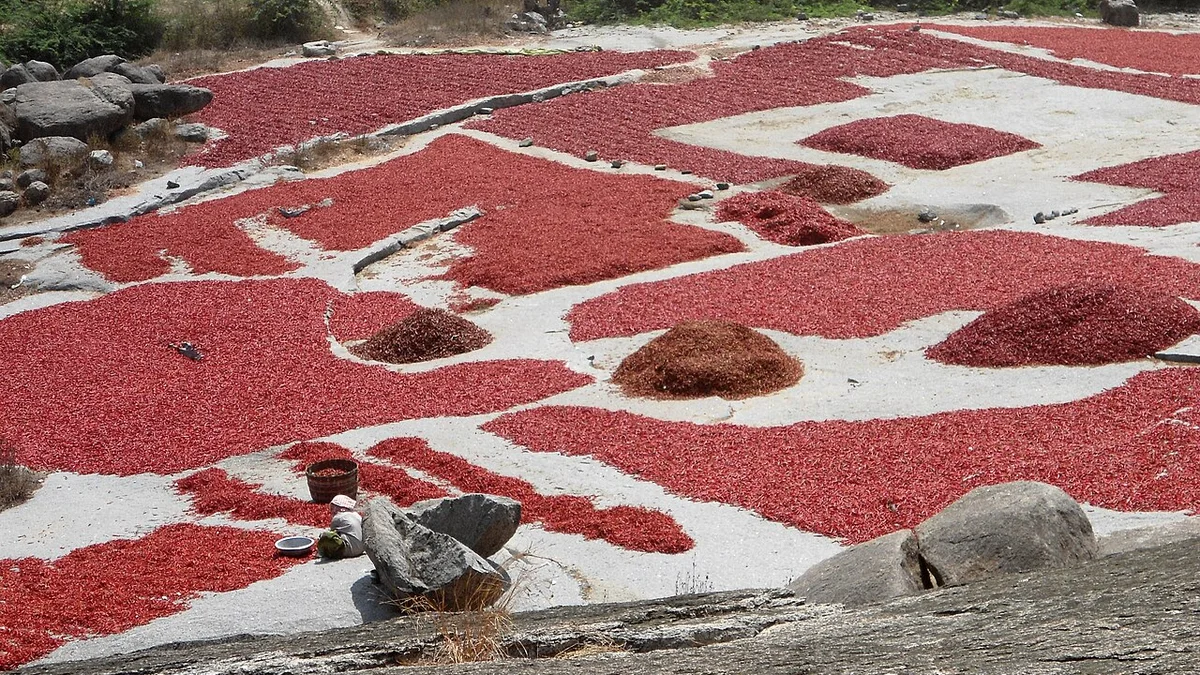
The secret to preserving the vibrant crimson luster and preventing blackening in Byadgi chilli lies in meticulous post-harvest curing. Freshly harvested ripe red pods are spread in thin layers on clean tarpaulins or concrete drying yards under mild winter sunshine for 8 to 12 days until pod moisture content drops below 11%. Over-drying below 8% causes brittle pod breakage, whereas drying above 12% triggers fungal Aspergillus flavus mold growth and aflatoxin contamination. Progressive growers immediately transfer dried bags to controlled-atmosphere cold storages maintained at 4°C to 8°C and 60% relative humidity, enabling them to store stock for up to 10 months and sell during off-season price surges.
| Quality Parameter | Export Grade Standards (Spices Board) | Domestic APMC Grade 1 | Rejection Threshold |
|---|---|---|---|
| Moisture Content (Max) | 10.0% by weight | 11.5% by weight | Above 13.0% (Risk of aflatoxin) |
| Color Value (Min) | 160 ASTA Units | 120 ASTA Units | Below 90 ASTA Units |
| Foreign Matter (Max) | 0.5% by weight | 1.0% by weight | Above 2.0% |
| Broken / Discolored Pods | Under 2.0% | Under 5.0% | Above 10.0% |
| Aflatoxin B1 + Total | Under 5 ppb / 10 ppb | FSSAI Compliant (30 ppb) | Above 30 ppb |
5. Price Outlook & Strategic Selling Guide for Spice Cultivators
Seasonal price cycles in Byadgi chilli follow predictable supply dynamics. Prices generally hit their seasonal lows between late February and early April when new crop arrivals from Haveri, Dharwad, and Ballari flood the market yards. Historically, modal prices appreciate by 25% to 40% between July and November ahead of the Dussehra and Diwali festive peaks. Farmers with access to accredited warehouse receipt financing (e-NWR under WDRA) can pledge their stored produce in APMC-linked cold storages, obtain low-interest 7% agricultural working capital loans from nationalized banks, and liquidate inventory when market quotes peak.
6. Direct Farmer-to-Exporter Marketing & GI Branding Opportunities
With global culinary appreciation for Byadgi chilli reaching unprecedented heights, Karnataka spice farmers are increasingly bypassing multi-layered intermediary broker networks to achieve direct commercial linkages with spice export conglomerates. By forming Farmer Producer Organizations (FPOs) and registering under the Spices Board’s Traceability and GI Certification systems, grower collectives in Byadgi, Ranebennur, and Kundgol are now supplying clean, sort-graded chilli lots directly to domestic oleoresin processors and international buyers in Singapore, the United States, and the European Union.
To capture maximum export margins, FPOs implement Good Agricultural Practices (GAP) that restrict synthetic pesticide applications during the reproductive fruit-setting phase, ensuring finished dry pods meet zero-residue limits for chlorpyrifos and ethion. Packing chillies in nitrogen-flushed, multi-layer hermetic bags preserves bright crimson color for over 14 months without requiring chemical fumigation. These direct-marketing channels reward quality-conscious farmers with prices 15% to 25% higher than local spot auctions, transforming traditional dryland spice farming into a lucrative export enterprise.
7. Agricultural Inputs, Mechanization & Allied Farm Operations
Maximizing farm gate returns in byadgi chilli begins with strong agronomic management, calibrated soil nutrition, clean irrigation, and efficient harvesting machinery. Growers systematically coordinate crop care through Triple Super Phosphate (TSP) root nutrition guide, Bayer Solomon broad-spectrum insect control, cumin seed (jeerige) pricing and grading, Single Super Phosphate (SSP) sulphur and phosphorus nutrition, melon seed (magaz) wholesale market trends, sesame seed (ellu) agronomy and market rates. Modern field execution and transport rely heavily on comparing specs and subsidies across hydraulic tipping and non-tipping tractor trolley prices, Agrimachinery DBT SMAM tractor and implement portal, John Deere 5310 4x4 55 HP CRDi tractor specs, Farmtrac 45 Classic Supermaxx tractor review, Swaraj 855 FE 4x4 heavy-duty 52 HP specs, dual-purpose tractor gadi haulage models, John Deere India tractor lineup and pricing, Swaraj 735 FE 39 HP utility tractor review, full Swaraj tractor HP lineup and pricing. For specialized tillage, haulage, and water distribution, cultivators also evaluate Swaraj 744 FE and XT torque and fuel economy, Mahindra 575 DI 45 HP workhorse mileage guide, Mahindra 575 DI XP Plus 47 HP torque and review, New Holland 3630 TX Plus 4x4 55 HP tractor specs, Powertrac Euro diesel-saver tractor models and prices, VST Shakti and Kubota 12-15 HP power tiller prices, Farmtrac heavy tractor series and diesel saver specs, Solis 4515 E Yanmar-tech tractor specifications, field tractor power testing and safety buying checks, sprinkler irrigation layout and PMKSY subsidy.
8. Regional Mandi Networks, Credit Schemes & Official Data Sources
Across India's regulated market ecosystem, farmers compare live realizations across state trading yards and tap formal welfare and institutional financing. Growers benchmark regional supply arrivals and MSP procurement across Jakhal Mandi Fatehabad grain auction rates, soyabean mandi bhav and MSP rates, Mangoli & Sangli regional fruit mandi bhav, Dhamnod Mandi cotton and soyabean arrivals, Kalapipal Mandi onion and garlic auction rates, wheat (gehu) cultivation varieties and grain nomenclature, moong dal wholesale and split green gram rates, daily Neemuch Krishi Upaj Mandi garlic and herb prices, live APMC Krishi Upaj mandi auction trends, chana dal procurement and wholesale market rates, wheat (gehu) mandi auction and FCI procurement rates, Mandsaur APMC lahsun and soybean market rates. Key grain, oilseed, and pulse realization corridors additionally track Neemuch Mandi medicinal spice and grain rates, Piplia Mandi wholesale garlic auctions, Narela Anaj Mandi paddy and wheat arrivals, daily UP and Maharashtra sugar mill chini bhav, guar seed APMC & NCDEX prices, arhar (tur) dal wholesale and MSP realizations.
Agricultural diversification and specialty value chains spanning spices, plantation crops, dairy, and poultry offer steady cash flow—tracked via Sangli and Nashik golden kismis (raisin) rates, copra milling and coconut oil wholesale rates, Arunachal Pradesh organic kiwi and Azadpur rates, dairy butter fat economics and Amul retail prices, Barabanki mint wholesale mandi and MCX benchmarks, wholesale mushroom prices across urban mandis, NCDEX Turmeric Price Today, Rashi, Bette, and Chali arecanut grade pricing, Bangalore wholesale egg tray prices and retail spreads, all-India NECC egg rate directory. Operational working capital, DBT cash transfers, and subsidized farm solar or e-KYC infrastructure can be accessed via Haryana Meri Fasal Mera Byora MSP procurement registration, Madhya Pradesh e-Uparjan and Kisan Kalyan portal, CSC Aadhaar biometric e-KYC verification workflow. Primary regulatory notifications, technical bulletins, and statutory benchmark portals are published by Ministry of Agriculture & Farmers Welfare, Agmarknet Mandi Price Portal, Ministry of Consumer Affairs, Food & Public Distribution, Central Farm Machinery Training & Testing Institute (CFMTTI), and Spices Board.
Frequently asked questions
- What makes Byadgi chilli unique compared to regular red chillies?
- Byadgi chilli is famous for its intensely wrinkled skin, deep crimson red color, high ASTA values, and remarkably low, pleasant heat (10,000-25,000 SHU). Official regulatory guidelines can also be verified on the Ministry of Agriculture & Farmers Welfare.
- What is the difference between Byadgi Dabbi and Byadgi Kaddi?
- Dabbi is broad, flat, shorter, and less pungent with higher natural color oil, while Kaddi is long, slender, cylindrical, and slightly more pungent. Official regulatory guidelines can also be verified on the Agmarknet Mandi Price Portal.
- What is the wholesale price of Byadgi chilli per quintal today?
- Wholesale rates at Byadgi APMC range between ₹28,000 and ₹58,000 per quintal, with super-grade Dabbi lots fetching up to ₹72,000 per quintal. Explore related mandi benchmarks and farmer support guides in our Haryana Meri Fasal Mera Byora MSP procurement registration.
- Where is the main wholesale market yard for Byadgi chilli located?
- The primary APMC market yard is situated in Byadgi town, Haveri district, Karnataka, serving as the nerve center for international trade. Explore related mandi benchmarks and farmer support guides in our Sangli and Nashik golden kismis (raisin) rates.
- Why is Byadgi chilli in high demand for export?
- Global food and cosmetic industries use Byadgi to extract capsanthin, an all-natural red food colorant replacing synthetic petroleum dyes. Explore related mandi benchmarks and farmer support guides in our Jakhal Mandi Fatehabad grain auction rates.
- What is the Scoville Heat Unit (SHU) rating of Byadgi chilli?
- Byadgi chilli typically registers between 10,000 and 30,000 SHU, making it very mild compared to fiery varieties like Guntur Teja (up to 100,000 SHU).
- Does Byadgi chilli possess a Geographical Indication (GI) tag?
- Yes, Byadgi chilli was granted official GI status in 2011, recognizing its unique agro-climatic origin in Karnataka.
- What is the optimal moisture level for storing Byadgi chilli?
- Sun-dried pods should maintain an optimal moisture level between 10% and 11% to prevent fungal growth while avoiding brittle pod shattering.
- Can Byadgi chilli be stored in cold storage without losing color?
- Yes, storing pods in controlled cold stores at 4°C to 8°C with 60% relative humidity preserves the vibrant red color and oleoresin for over a year.
- What months see peak arrivals in Byadgi APMC mandi?
- Peak harvest arrivals occur between January and May, with over 1,00,000 bags traded on major auction days.
- How is Byadgi chilli traded on e-NAM?
- Byadgi APMC is integrated with the electronic National Agriculture Market (e-NAM), allowing licensed traders across India to bid online.
- What causes Byadgi chilli to turn black during storage?
- Exposure to ambient temperatures above 30°C, direct light, and excessive humidity oxidizes carotenoid pigments, causing gradual blackening.
This article is for general information only and is not financial advice. Loan and scheme eligibility depends on partner and government criteria.