CSC PM Kisan eKYC Guide: Biometric & Status Portal
The Pradhan Mantri Kisan Samman Nidhi (PM-KISAN) represents the world’s largest Direct Benefit Transfer (DBT) agricultural social security scheme, providing an assured annual income support of ₹6,000 to eligible landholding farmer families across India. Administered by the Department of Agriculture & Farmers Welfare (PM-Kisan Official Portal) in close technological coordination with Common Services Centres (CSC Digital Seva), the Public Financial Management System (PFMS DBT Portal), and the Unique Identification Authority of India (UIDAI Aadhaar), completion of biometric or facial eKYC authentication is legally mandatory for beneficiaries to unfreeze and receive their four-monthly ₹2,000 financial tranches directly into their bank accounts.
1. PM Kisan Samman Nidhi & Mandatory CSC Biometric eKYC Directives
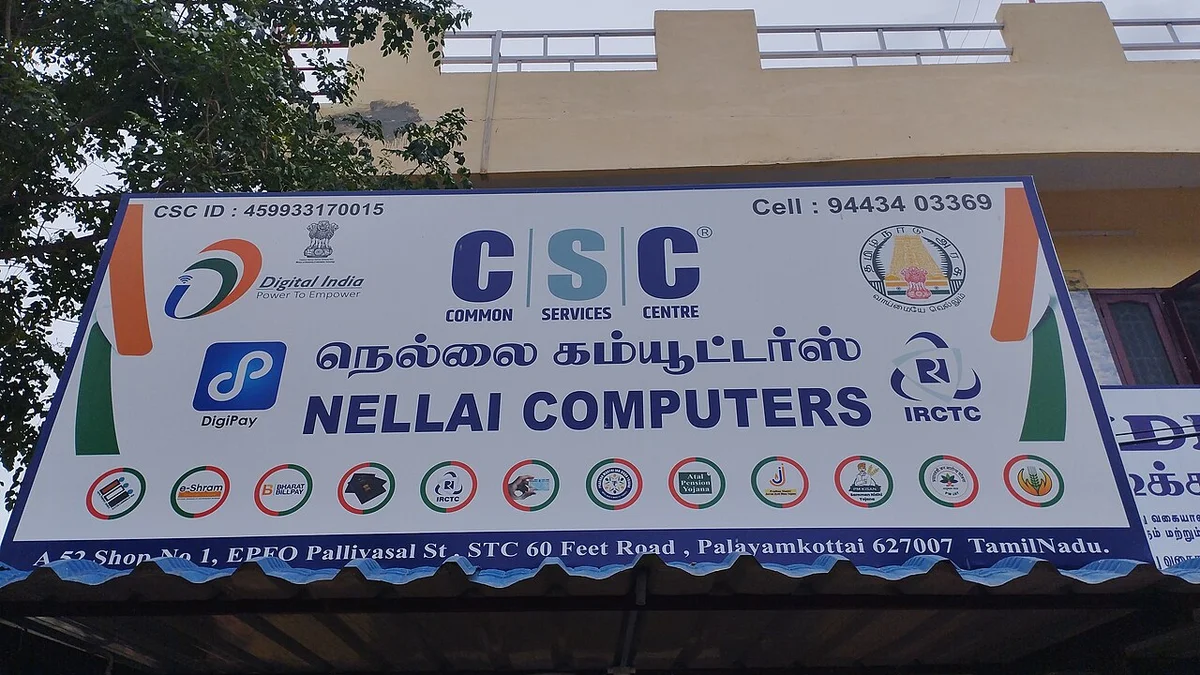
While tech-savvy farmers with Aadhaar-linked active mobile numbers can complete eKYC via OTP on the PM-Kisan portal or through facial recognition on the PM-KISAN mobile app, over 40% of rural beneficiaries face mobile linkage issues, expired SIM cards, or technical authentication errors. For these millions of smallholders, the nationwide network of Village Level Entrepreneurs (VLEs) operating CSC Digital Seva Kendras provides the indispensable biometric lifeline. The official operational fee structures and service benchmarks are outlined below:
| Service Module / Procedure | CSC Portal Channel | Official Prescribed Fee (Rs) | Processing Authentication Mode | Resolution Window |
|---|---|---|---|---|
| Biometric eKYC Authentication | CSC Digital Seva (PM-Kisan) | Rs 15 (Official Statutory Fee) | RD Service Biometric Fingerprint / Iris | Instant (Immediate Portal Confirmation) |
| Fresh Farmer Online Enrollment | Farmer Corner / CSC Portal | Free / Nominal CSC Charge | Land Khatauni + Aadhaar + Bank Passbook | 15 - 30 Days (State Revenue Approval) |
| Aadhaar Name Correction | PM-Kisan Correction Module | Rs 15 (Standard Service Fee) | Aadhaar Demographic Match Form | 24 - 48 Hours Database Synchronization |
| Beneficiary Status Inquiry | Public Access / CSC Assisted | Free / Zero Charge | Registration Number / Mobile Search | Instant Dashboard Screen Verification |
| Land Seeding (Physical Status) | State Revenue Tehsildar Portal | Free (Government Revenue Service) | Physical Verification by Lekhpal/Patwari | 7 - 14 Days Revenue Updation |
| Aadhaar-NPCI Bank Seeding Check | UIDAI Bank Mapping / Bank Branch | Free (Direct Banking Service) | Biometric DBT Enabling at Bank Branch | 24 - 72 Hours NPCI Clearing Update |
2. Step-by-Step CSC VLE Authentication Procedure: RD Service & Device Setup
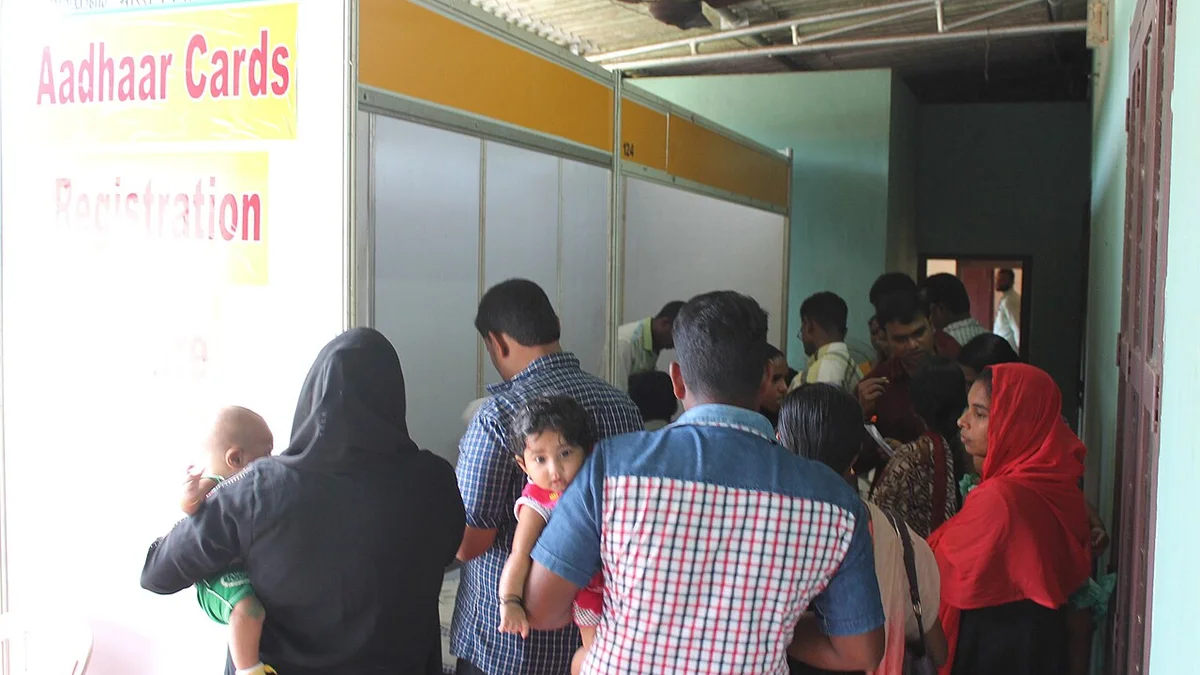
The step-by-step biometric eKYC authentication procedure executed at CSC centres follows a secure, standardized protocol. The CSC VLE logs into the Digital Seva portal (digitalseva.csc.gov.in) using their authenticated credentials and selects the PM-Kisan biometric authentication service. The operator enters the farmer’s 12-digit Aadhaar number and captcha, followed by entering an active mobile number to receive a four-digit system OTP.
Once the OTP is submitted, the VLE initializes the registered biometric device (UIDAI Registered Device / RD Service, such as Mantra MFS100, Morpho MSO 1300 E3, or SecuGen Hamster Pro). The farmer places their index finger or thumb onto the optical glass prism. If fingerprint ridge clarity is poor due to manual farm labor, an iris scanner is utilized. The device captures biometric data, encrypts the payload with 2048-bit PKI encryption, and transmits it directly to UIDAI servers. Upon successful biometric matching, the portal displays ’eKYC is Successfully Submitted’, and the VLE collects the authorized ₹15 fee, issuing a printed transaction acknowledgment slip.
| Payment Stoppage Reason | Portal Status Indicator | Underlying Technical Root Cause | Mandatory Action for Farmer / VLE |
|---|---|---|---|
| eKYC Pending / Incomplete | eKYC: NO / Red Flag | Biometric authentication not completed | Visit nearest CSC centre for instant fingerprint eKYC |
| Land Seeding Flagged as NO | Land Seeding: NO | Revenue record not mapped with Aadhaar | Submit land Khatauni & Khasra to local Patwari/Lekhpal |
| Aadhaar-Bank Linkage Inactive | Aadhaar Bank Seeding: NO | Bank account not DBT-enabled in NPCI | Visit bank branch to submit Aadhaar DBT mandate form |
| PFMS Rejection Status | PFMS Status: Rejected by Bank | Name misspelling or account closed/dormant | Update Aadhaar demographic name on portal or open IPPB account |
| Ineligible Beneficiary Category | Status: Excluded / Ineligible | Institutional landholder, taxpayer or pensioner | File grievance or voluntary surrender of benefits |
3. Diagnosing Payment Failures: Land Seeding, PFMS Rejection & NPCI Mapping
When a farmer reports that their ₹2,000 installment has stopped arriving, the issue typically traces back to one of three critical status flags visible on the ’Know Your Status’ dashboard: Land Seeding, eKYC Status, or Aadhaar Bank Seeding Status. If Land Seeding is displayed as ’NO’, it indicates that the state revenue administration has not electronically linked the farmer’s land parcel (Khasra/Khatauni numbers) with their central PM-Kisan beneficiary profile. To resolve this, the farmer must submit self-attested photocopies of their land title deeds, Aadhaar card, and mobile number to their local circle revenue inspector (Lekhpal/Patwari) for digital portal verification.
If Aadhaar Bank Seeding Status is flagged as ’NO’, funds transferred via the central Public Financial Management System (PFMS) bounce because the farmer’s commercial or cooperative bank account is not mapped on the National Payments Corporation of India (NPCI) Aadhaar Payment Bridge. While farmers can resolve this by visiting their bank branch to submit a physical DBT mandate, the fastest solution is to open a new digital savings account at the local India Post Payments Bank (IPPB) post office, which automatically activates instant NPCI Aadhaar seeding.
4. Correcting Name Discrepancies & Fresh Farmer Enrollment on CSC Portal
CSC VLEs also provide crucial administrative support for correcting misspelled beneficiary names. Frequently, payments fail because a farmer’s name in the state revenue records (e.g., ’Ram Lal’) does not match the exact character string on their Aadhaar card (e.g., ’Ramlal Kumar’). Under the CSC ’Edit Aadhaar Details’ utility, the operator uploads the updated Aadhaar details, initiating an automated database reconciliation that aligns the records within 24 to 48 hours.
For fresh farmer enrollments, CSC centres upload scanned copies of land ownership documents, bank passbook copies, and family identity details onto the state nodal verification queue. State agriculture departments process these applications through district-level screening committees, adding eligible smallholders to the national beneficiary roster.
5. Annual Disbursement Calendar, Voluntary Surrender Rules & Grievance Desks
PM-Kisan disbursements follow a strict four-monthly calendar: Period 1 covers April to July (supporting Kharif sowing inputs), Period 2 covers August to November (assisting mid-season fertilizer and weeding expenses), and Period 3 covers December to March (supporting Rabi winter crops). Each installment disburses ₹2,000 directly to approximately 9.5 to 11.0 crore verified beneficiaries, injecting over ₹20,000 crore directly into rural economies.
Under statutory PM-Kisan guidelines, institutional landholders, individuals holding constitutional posts, serving or retired government employees, income-tax payers, and professionals (doctors, lawyers, engineers) are legally excluded from the scheme. The portal provides an online ’Voluntary Surrender of PM-Kisan Benefits’ facility, enabling ineligible individuals to refund past installments safely without legal penalties. Beneficiaries encountering payment delays can seek redressal through the national toll-free helpline (155261 / 1800-115-526) or through the online automated PM-Kisan AI Chatbot (Kisan e-Mitra).
Comprehensive Directory & Government Resource Links
6. Agricultural Inputs, Mechanization & Allied Farm Operations
Maximizing farm gate returns in csc pm kisan begins with strong agronomic management, calibrated soil nutrition, clean irrigation, and efficient harvesting machinery. Growers systematically coordinate crop care through NPK fertilizer grade selection and NBS pricing, DAP 50 kg bag subsidy and application rates, Saaf systemic and contact fungicide dosage, Roko (Thiophanate Methyl) disease control schedule, Coragen stem borer and caterpillar control, selective and pre-emergent herbicide management, commercial flower seed varieties, certified seeds policy and germination standards, rajgira amaranth seed farming, sesame seed (ellu) agronomy and market rates. Modern field execution and transport rely heavily on comparing specs and subsidies across field tractor power testing and safety buying checks, Solis 4515 E Yanmar-tech tractor specifications, Swaraj 744 FE and XT torque and fuel economy, Swaraj 735 FE 39 HP utility tractor review, full Swaraj tractor HP lineup and pricing, Mahindra 575 DI 45 HP workhorse mileage guide, Mahindra 575 DI XP Plus 47 HP torque and review, New Holland 3630 TX Plus 4x4 55 HP tractor specs, Powertrac Euro diesel-saver tractor models and prices. For specialized tillage, haulage, and water distribution, cultivators also evaluate VST Shakti and Kubota 12-15 HP power tiller prices, Farmtrac heavy tractor series and diesel saver specs, sprinkler irrigation layout and PMKSY subsidy.
7. Regional Mandi Networks, Credit Schemes & Official Data Sources
Across India's regulated market ecosystem, farmers compare live realizations across state trading yards and tap formal welfare and institutional financing. Growers benchmark regional supply arrivals and MSP procurement across Narela Anaj Mandi paddy and wheat arrivals, Neemuch Mandi medicinal spice and grain rates, Piplia Mandi wholesale garlic auctions, Mandsaur APMC lahsun and soybean market rates, all-India APMC mandi bhav directory, Maharashtra sugar mill ex-factory and APMC rates, domestic S-30 and M-30 sugar mill pricing, sugar release quota and FRP economics, ethanol blending and sugar wholesale trends, retail and wholesale chini rate benchmarks, daily UP and Maharashtra sugar mill chini bhav, arhar (tur) dal wholesale and MSP realizations. Key grain, oilseed, and pulse realization corridors additionally track guar seed APMC & NCDEX prices, castor seed GCH hybrid prices, cotton market CCI MSP rates, cold-pressed mustard oil economics, onion storage life and wholesale arrivals, Lasalgaon and metro onion mandi quotations, water-soluble NPK 19-19-19 foliar spray dosage. Agricultural diversification and specialty value chains spanning spices, plantation crops, dairy, and poultry offer steady cash flow—tracked via Shivalik mentha oil MCX and distillation yields, daily crude mentha oil spot rates, mentha herb agronomic cultivation and boiler distillation, Barabanki mint wholesale mandi and MCX benchmarks, Spices Board cardamom auction prices, small green cardamom e-auction grades, Kashmiri Mongra saffron prices and GI purity, raw cashew nut (RCN) processing realizations, processed cashew kernel export grades, W180 and W240 cashew wholesale pricing, California and Mamra almond wholesale rates, Kashmiri walnut giri and shell-out grades.
Other specialized horticulture and livestock enterprises include dried fig (anjeer) cultivation and mandi prices, Hass avocado commercial orchard economics, red and white dragon fruit per-kg realizations, Karnataka supari and arecanut auction prices, Rashi, Bette, and Chali arecanut grade pricing, Shivamogga and TUMCOS adike mandi rates, NCDEX Turmeric Price Today, daily NECC wholesale egg price movements, all-India NECC egg rate directory, Namakkal poultry belt NECC dispatch rates, Barwala layer farm paper rates and margins, Bangalore wholesale egg tray prices and retail spreads, commercial button and oyster mushroom cultivation, wholesale mushroom prices across urban mandis. Operational working capital, DBT cash transfers, and subsidized farm solar or e-KYC infrastructure can be accessed via Kisan Credit Card 4% subvention loan and KRP application, PM-KISAN installment status and PFMS verification, PM-KUSUM solar irrigation pump capital subsidy. Primary regulatory notifications, technical bulletins, and statutory benchmark portals are published by PM-Kisan Samman Nidhi Official Portal, CSC e-Governance Services India Limited (Digital Seva), Public Financial Management System (PFMS DBT Portal), and Unique Identification Authority of India (UIDAI Aadhaar).
Frequently asked questions
- What is CSC PM Kisan eKYC and why is it mandatory?
- CSC PM Kisan eKYC is biometric authentication conducted at Common Services Centres using fingerprint or iris scans. It is mandatory to verify beneficiary authenticity and prevent stopped ₹2,000 installment payments.
- What is the official fee for PM Kisan eKYC at a CSC centre?
- The official statutory fee prescribed by the Ministry of Agriculture for completing biometric eKYC at any CSC centre is exactly ₹15. Overcharging is illegal. Official regulatory guidelines can also be verified on the PM-Kisan Samman Nidhi Official Portal.
- What documents are required to complete biometric eKYC at CSC?
- The farmer only needs to carry their 12-digit Aadhaar Card and an active mobile number to receive the four-digit portal verification OTP. Official regulatory guidelines can also be verified on the CSC e-Governance Services India Limited (Digital Seva).
- Can a farmer complete PM Kisan eKYC without going to a CSC centre?
- Yes, farmers whose mobile numbers are linked with Aadhaar can complete OTP-based eKYC free of charge on the pmkisan.gov.in portal or via facial recognition on the PM-KISAN mobile app. Explore related mandi benchmarks and farmer support guides in our Narela Anaj Mandi paddy and wheat arrivals.
- Why did my PM Kisan installment stop coming?
- Installments typically stop due to one of three reasons: pending eKYC authentication, Land Seeding flagged as ‘NO’, or Aadhaar not being seeded with bank account in the NPCI database. Explore related mandi benchmarks and farmer support guides in our Neemuch Mandi medicinal spice and grain rates.
- How can I fix the ‘Land Seeding NO’ issue in PM Kisan?
- Submit self-attested photocopies of your land registry (Khatauni/Khasra), Aadhaar card, and PM-Kisan registration number to your local Patwari, Lekhpal, or District Agriculture Office for portal entry. Explore related mandi benchmarks and farmer support guides in our Piplia Mandi wholesale garlic auctions.
- What does ‘Aadhaar Bank Seeding NO’ mean?
- It means your bank account is not mapped with the NPCI Aadhaar Payment Bridge. Visit your bank branch to submit a DBT mandate form, or open an instant DBT-enabled account at India Post Payments Bank (IPPB).
- What is the annual financial assistance under PM Kisan Samman Nidhi?
- Eligible farmer families receive ₹6,000 per year, disbursed in three equal four-monthly installments of ₹2,000 directly into their Aadhaar-seeded bank accounts.
- How can I check my PM Kisan beneficiary status online?
- Visit pmkisan.gov.in, click on ‘Know Your Status’, enter your PM-Kisan Registration Number or Aadhaar Number, and enter the captcha code to view your real-time payment history and verification status.
- Who is not eligible for PM Kisan benefits?
- Ineligible categories include institutional landholders, government employees, income-tax payers, pensioners receiving over ₹10,000/month, and professionals like doctors, lawyers, and engineers.
- How can farmers correct name spelling errors on the PM Kisan portal?
- Visit a CSC centre or access ‘Farmer Corner’ on pmkisan.gov.in and click ‘Name Correction as per Aadhaar’ to submit the correct spelling matching your Aadhaar card.
- What are the official PM Kisan helpline numbers?
- Beneficiaries can contact the PM-Kisan toll-free national helpline at 155261 or 1800-115-526, or use the online Kisan e-Mitra AI voice chatbot for instant query resolution.
This article is for general information only and is not financial advice. Loan and scheme eligibility depends on partner and government criteria.