Mushroom Price Per Kg: Button, Oyster & Milky Rates
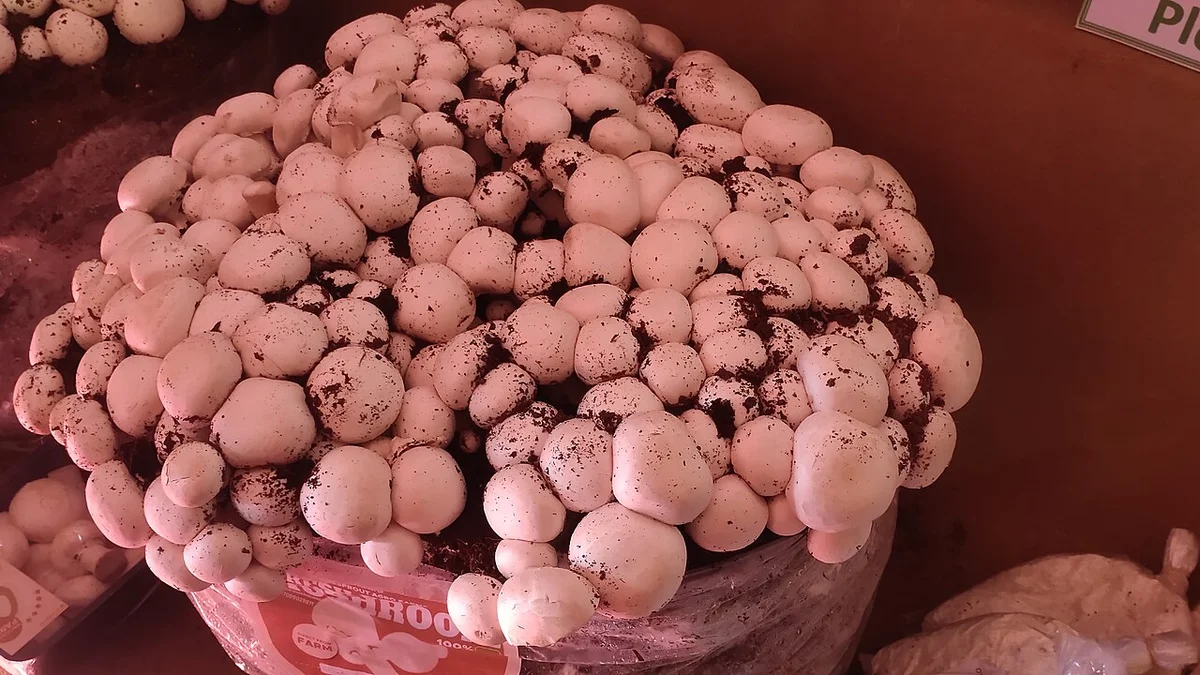
Commercial mushroom cultivation represents one of India’s fastest-growing high-value horticultural agribusiness sectors, transforming agricultural crop residues into nutrient-dense culinary delicacies and potent functional nutraceuticals. Guided by scientific strain development and composting protocols from the ICAR-Directorate of Mushroom Research (ICAR-DMR Solan), incentivized through generous capital investment subsidies under the Mission for Integrated Development of Horticulture (MIDH Scheme) supported by rural project refinancing from NABARD (NABARD Agribusiness) and market arrivals tracked via Agmarknet (Agmarknet Network), wholesale and retail mushroom prices across metropolitan terminal centers reflect shifting consumer dietary preferences, cold-chain infrastructure availability, and indoor climate-controlled production economics.
1. Indicative Mushroom Price Benchmarks Per Kg Across Indian Markets
Commercial mushroom pricing in India varies significantly across biological species, seasonal production waves, and distribution channels. The market is led by White Button mushrooms (Agaricus bisporus) accounting for over 70% of domestic consumption, followed by tropical Oyster mushrooms (Dhingri, Pleurotus spp.), summer-loving Milky mushrooms (Calocybe indica), and high-end medicinal strains such as Shiitake and Cordyceps. The following table outlines indicative modal wholesale benchmarks recorded during recent trading cycles:
| Mushroom Species / Variety | Packaging Format & Grade | Wholesale Rate (Rs/Kg) | Retail Metro Price (Rs/Kg) | Consumer Punnet (200g) | Optimal Cultivation Climate |
|---|---|---|---|---|---|
| White Button Mushroom (Fresh) | 5 Kg Bulk Crate / Loosely Packed | Rs 110 - Rs 140 | Rs 180 - Rs 240 / Kg | Rs 45 - Rs 55 / Pack | Cool Climate (16°C - 18°C) HVAC / Winter |
| White Button (Graded / Washed) | 200g Breathable Anti-Fog Punnets | Rs 125 - Rs 155 | Rs 220 - Rs 280 / Kg | Rs 50 - Rs 65 / Pack | Commercial Year-Round AC Facility |
| Oyster Mushroom (Fresh Dhingri) | Bulk Paper Lined Crates | Rs 120 - Rs 160 | Rs 200 - Rs 260 / Kg | Rs 45 - Rs 60 / Pack | Moderate Humid (22°C - 28°C) Substrate Bags |
| Dry Oyster Mushroom (Dehydrated) | Vacuum Sealed 1 Kg Poly Pack | Rs 450 - Rs 650 | Rs 800 - Rs 1,100 / Kg | Rs 90 - Rs 120 (100g) | Solar / Hot Air Dehydration Units |
| Milky Mushroom (Calocybe indica) | Fresh Graded Stems | Rs 130 - Rs 180 | Rs 220 - Rs 300 / Kg | Rs 55 - Rs 70 / Pack | Tropical Summer Warm (30°C - 35°C) |
| Shiitake Mushroom (Fresh Gourmet) | 100g Gourmet Tray Pack | Rs 600 - Rs 900 | Rs 1,200 - Rs 1,600 / Kg | Rs 140 - Rs 180 (100g) | Specialized Hardwood Sawdust Blocks |
| Cordyceps militaris (Medicinal) | Glass Vials (Dry Fruiting Bodies) | Rs 1,20,000 - Rs 1,80,000 | Rs 2,50,000 / Kg | Rs 350 - Rs 500 (1g) | Sterile Laboratory Cleanrooms |
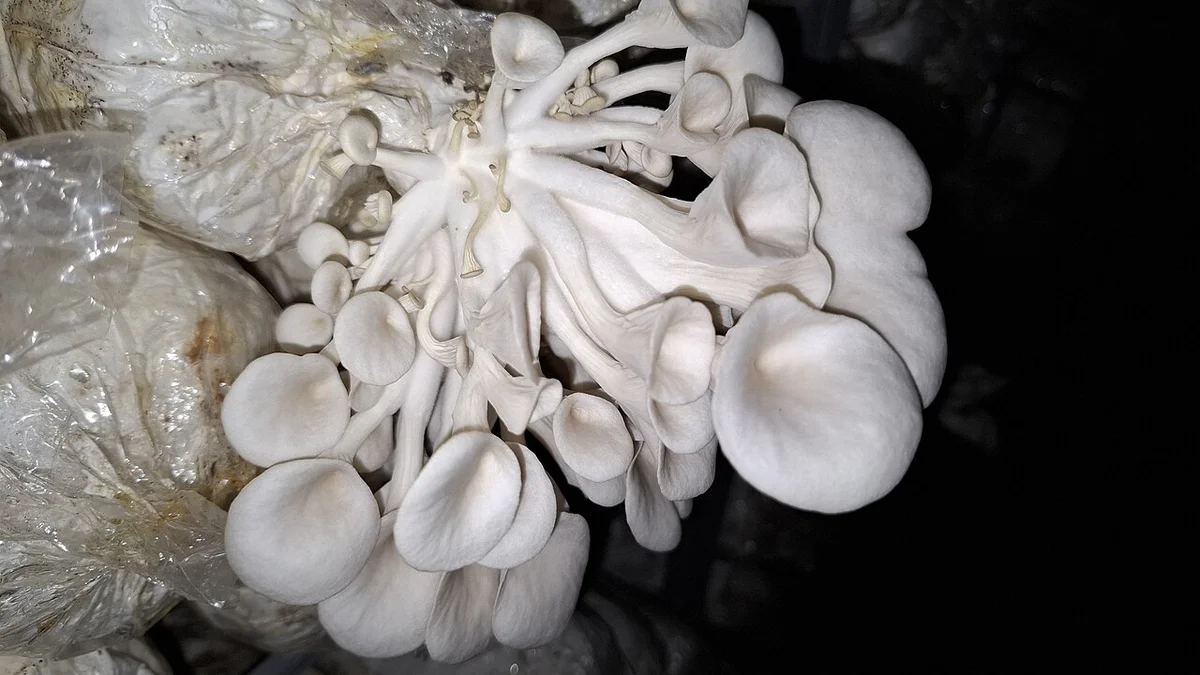
2. Commercial Cultivation Science: Substrates, Grain Spawning & HVAC Controls
Commercial mushroom cultivation is an intensive biotechnology requiring rigorous biochemical and environmental control. For white button mushrooms, production begins with preparing a specialized compost substrate made from pasteurized wheat or paddy straw, poultry manure, gypsum, and urea. In modern short-method composting tunnels, the mixture undergoes aerobic microbial conditioning at 58°C to 60°C to eliminate pest nematodes and competitive weed molds, resulting in a dark-brown, nitrogen-rich substrate containing 2.0% to 2.2% nitrogen.
The cooled compost is inoculated (spawned) with certified laboratory-produced grain spawn (typically grown on sterilized wheat or sorghum grains) at 0.5% to 0.75% by weight. Within 12 to 15 days, white vegetative mycelium colonizes the compost bed. A 3-to-4 centimeter layer of pasteurized casing soil (a blend of coir pith and aged spent compost) is applied over the mycelium. By dropping room temperature to 16°C–18°C and introducing fresh filtered air (reducing CO2 levels below 1,000 ppm), the mycelium is shocked into reproductive fruiting, generating dense flushes of pristine button mushrooms harvested over three sequential weekly cycles.
| Operational Stage | White Button Mushroom (AC Unit) | Oyster Mushroom (Low-Cost Polyhouse) | Milky Mushroom (Summer Season) |
|---|---|---|---|
| Substrate Preparation | Pasteurized Wheat Straw + Poultry Manure | Chopped Wheat / Paddy Straw Boiled | Steam Pasteurized Paddy Straw Blocks |
| Inoculation to First Flush | 32 - 38 Days Total Cycle | 20 - 25 Days Fast Cycle | 40 - 45 Days Tropical Cycle |
| Temperature & Humidity | 16°C - 18°C & 85% - 90% RH | 22°C - 26°C & 80% - 85% RH | 30°C - 35°C & 80% - 85% RH |
| Biological Efficiency (Yield) | 18% - 22% of Fresh Compost Weight | 60% - 80% of Dry Straw Weight | 80% - 100% of Dry Straw Weight |
| Capital Setup Expense | High (Insulated Panels + HVAC Chiller) | Very Low (Bamboo / Net Shed) | Moderate (Brick Shed + Misting Foggers) |
| Target Market Segment | Metro Supermarkets, Hotels & Pizza Chains | Local Retail, Drying & Powder Mills | Regional Markets & Shelf-Life Retail |
3. Post-Harvest Shelf Life: Cold Chain Logistics & Breathable Film Packaging
Post-harvest management is paramount in commercial mushroom economics due to the crop’s extreme perishability. Lacking a protective cuticle and possessing a high respiration rate coupled with 90% water content, freshly harvested button mushrooms deteriorate rapidly at room temperature, turning brown within 24 to 36 hours due to polyphenol oxidase enzyme activity. Professional commercial units immediately transfer harvested mushrooms into pre-cooling chambers maintained at 4°C to arrest respiration.
Packaging in micro-perforated, anti-fog polypropylene film punnets (typically 200g retail trays) maintains an equilibrium atmosphere (10-15% oxygen and 5-8% carbon dioxide), preventing moisture condensation droplets that otherwise cause bacterial soft rot. Maintained in continuous cold-chain logistics between 2°C and 4°C, packaged fresh mushrooms retain crisp texture, closed veil margins, and bright white appearance for 6 to 8 days, ensuring full retail shelf life across modern supermarket distribution networks.
4. Farm Project Economics: Capital Outlay, Cost of Production & Net Profit Margins
Analyzing commercial mushroom project economics demonstrates attractive profit margins for skilled farm entrepreneurs. A medium-scale commercial climate-controlled button mushroom unit—producing approximately 30 metric tons of fresh mushrooms annually—involves a capital investment of ₹20 to ₹25 lakh for insulated puff-panel growing rooms, HVAC chiller compressors, and automated misting and ventilation systems.
Operating production costs (including compost materials, certified grain spawn, electricity, packaging punnets, and skilled labor) average between ₹65 and ₹80 per kilogram. With wholesale institutional and supermarket contract prices clearing between ₹120 and ₹150 per kilogram, the enterprise generates a healthy net profit margin of ₹45 to ₹70 per kilogram. Because mushrooms are grown in vertically stacked tiers across indoor rooms, the land footprint is exceptionally compact, enabling entrepreneurs to generate annual net profits of ₹12 to ₹18 lakh from just 2,500 square feet of built-up area, achieving complete capital payback within 20 to 24 months.
5. Government Financial Schemes: MIDH Subsidies, Bank Loans & FPO Support
Government financial assistance provides a major boost for new commercial mushroom entrepreneurs. Under the Mission for Integrated Development of Horticulture (MIDH) and National Horticulture Board (NHB) schemes, the government offers a capital investment subsidy of 40% of the project cost (up to ₹8.0 to ₹10.0 lakh for general category entrepreneurs, and up to 50% or ₹12.5 lakh for hilly and scheduled tribal areas) for setting up spawn production laboratories and climate-controlled cultivation units.
Commercial and cooperative banks disburse project term loans covering up to 75% of the capital outlay under priority sector agricultural lending, with flexible 5-to-7 year repayment schedules and back-ended capital subsidy credit. In addition, rural self-help groups (SHGs) and smallholders can access low-cost bamboo polyhouse schemes for oyster mushroom farming, empowering rural women and marginal farmers to establish lucrative micro-enterprises with minimal upfront risk.
Comprehensive Directory & Government Resource Links
6. Agricultural Inputs, Mechanization & Allied Farm Operations
Maximizing farm gate returns in mushroom price begins with strong agronomic management, calibrated soil nutrition, clean irrigation, and efficient harvesting machinery. Growers systematically coordinate crop care through NPK fertilizer grade selection and NBS pricing, DAP 50 kg bag subsidy and application rates, Saaf systemic and contact fungicide dosage, Roko (Thiophanate Methyl) disease control schedule, Coragen stem borer and caterpillar control, selective and pre-emergent herbicide management, commercial flower seed varieties, certified seeds policy and germination standards, rajgira amaranth seed farming, sesame seed (ellu) agronomy and market rates. Modern field execution and transport rely heavily on comparing specs and subsidies across field tractor power testing and safety buying checks, Solis 4515 E Yanmar-tech tractor specifications, Swaraj 744 FE and XT torque and fuel economy, Swaraj 735 FE 39 HP utility tractor review, full Swaraj tractor HP lineup and pricing, Mahindra 575 DI 45 HP workhorse mileage guide, Mahindra 575 DI XP Plus 47 HP torque and review, New Holland 3630 TX Plus 4x4 55 HP tractor specs, Powertrac Euro diesel-saver tractor models and prices. For specialized tillage, haulage, and water distribution, cultivators also evaluate VST Shakti and Kubota 12-15 HP power tiller prices, Farmtrac heavy tractor series and diesel saver specs, sprinkler irrigation layout and PMKSY subsidy.
7. Regional Mandi Networks, Credit Schemes & Official Data Sources
Across India's regulated market ecosystem, farmers compare live realizations across state trading yards and tap formal welfare and institutional financing. Growers benchmark regional supply arrivals and MSP procurement across Narela Anaj Mandi paddy and wheat arrivals, Neemuch Mandi medicinal spice and grain rates, Piplia Mandi wholesale garlic auctions, Mandsaur APMC lahsun and soybean market rates, all-India APMC mandi bhav directory, Maharashtra sugar mill ex-factory and APMC rates, domestic S-30 and M-30 sugar mill pricing, sugar release quota and FRP economics, ethanol blending and sugar wholesale trends, retail and wholesale chini rate benchmarks, daily UP and Maharashtra sugar mill chini bhav, arhar (tur) dal wholesale and MSP realizations. Key grain, oilseed, and pulse realization corridors additionally track guar seed APMC & NCDEX prices, castor seed GCH hybrid prices, cotton market CCI MSP rates, cold-pressed mustard oil economics, onion storage life and wholesale arrivals, Lasalgaon and metro onion mandi quotations, water-soluble NPK 19-19-19 foliar spray dosage. Agricultural diversification and specialty value chains spanning spices, plantation crops, dairy, and poultry offer steady cash flow—tracked via Shivalik mentha oil MCX and distillation yields, daily crude mentha oil spot rates, mentha herb agronomic cultivation and boiler distillation, Barabanki mint wholesale mandi and MCX benchmarks, Spices Board cardamom auction prices, small green cardamom e-auction grades, Kashmiri Mongra saffron prices and GI purity, raw cashew nut (RCN) processing realizations, processed cashew kernel export grades, W180 and W240 cashew wholesale pricing, California and Mamra almond wholesale rates, Kashmiri walnut giri and shell-out grades.
Other specialized horticulture and livestock enterprises include dried fig (anjeer) cultivation and mandi prices, Hass avocado commercial orchard economics, red and white dragon fruit per-kg realizations, Karnataka supari and arecanut auction prices, Rashi, Bette, and Chali arecanut grade pricing, Shivamogga and TUMCOS adike mandi rates, NCDEX Turmeric Price Today, daily NECC wholesale egg price movements, all-India NECC egg rate directory, Namakkal poultry belt NECC dispatch rates, Barwala layer farm paper rates and margins, Bangalore wholesale egg tray prices and retail spreads, commercial button and oyster mushroom cultivation. Operational working capital, DBT cash transfers, and subsidized farm solar or e-KYC infrastructure can be accessed via CSC Aadhaar biometric e-KYC verification workflow, Kisan Credit Card 4% subvention loan and KRP application, PM-KISAN installment status and PFMS verification, PM-KUSUM solar irrigation pump capital subsidy. Primary regulatory notifications, technical bulletins, and statutory benchmark portals are published by ICAR-Directorate of Mushroom Research (DMR Solan), Mission for Integrated Development of Horticulture (MIDH), National Bank for Agriculture and Rural Development (NABARD), and Agmarknet Agricultural Marketing Information Network.
Frequently asked questions
- What is the current indicative price of mushrooms per kg in India?
- Wholesale prices for fresh white button mushrooms range from ₹110 to ₹140 per kg, while consumer retail prices in supermarkets range between ₹180 and ₹260 per kg (or ₹45 to ₹65 per 200g punnet). Official regulatory guidelines can also be verified on the ICAR-Directorate of Mushroom Research (DMR Solan).
- What are the most popular mushroom varieties grown commercially in India?
- The most popular commercial varieties are White Button (Agaricus bisporus, >70% market share), Oyster (Pleurotus spp.), and Milky mushroom (Calocybe indica). Official regulatory guidelines can also be verified on the Mission for Integrated Development of Horticulture (MIDH).
- How much does it cost to set up a commercial mushroom farm?
- A small low-cost oyster mushroom unit can be started for ₹50,000 to ₹1.0 Lakh. A commercial climate-controlled button mushroom facility (30-ton annual capacity) requires ₹18 to ₹25 Lakh. Explore related mandi benchmarks and farmer support guides in our Narela Anaj Mandi paddy and wheat arrivals.
- What government subsidies are available for mushroom farming?
- Under MIDH and National Horticulture Board (NHB) schemes, growers receive a 40% capital subsidy (up to ₹8.0 - ₹10.0 Lakh) for commercial cultivation units and spawn laboratories. Explore related mandi benchmarks and farmer support guides in our Neemuch Mandi medicinal spice and grain rates.
- What is the cost of producing 1 kg of button mushrooms?
- The average cost of production (compost, spawn, electricity, packaging, labor) ranges between ₹65 and ₹80 per kg, yielding a net profit margin of ₹45 to ₹70 per kg. Explore related mandi benchmarks and farmer support guides in our Piplia Mandi wholesale garlic auctions.
- Can mushroom farming be done without climate control (AC)?
- Yes, seasonal button mushrooms can be grown during winter months (November to February) in northern India. Oyster and milky mushrooms can be grown in low-cost shaded sheds in moderate and tropical climates.
- What substrate is used to grow oyster mushrooms?
- Oyster mushrooms are cultivated on chopped, pasteurized wheat or paddy straw packed into perforated plastic polybags, requiring no expensive composting.
- How long does fresh mushroom stay fresh after harvest?
- At ambient room temperature, fresh button mushrooms turn brown within 24 to 36 hours. When packaged in breathable punnets and refrigerated at 2-4°C, they stay crisp for 6 to 8 days.
- What is mushroom spawn and where can farmers get it?
- Mushroom spawn is the sterilized grain carrier (wheat/sorghum) colonized by pure mushroom fungal mycelium, purchased from ICAR-DMR Solan, state agricultural universities, or certified private labs.
- Why do milky mushrooms have an advantage in southern India?
- Milky mushrooms (Calocybe indica) thrive in hot summer climates (30°C to 35°C), require minimal cooling, and have an exceptional natural shelf life of 4 to 5 days without refrigeration.
- How much land is required for a commercial mushroom plant?
- Because mushrooms are cultivated vertically on multi-tiered iron racks indoors, a high-producing commercial unit requires only 2,000 to 3,000 square feet of covered building area.
- What value-added products can be made from surplus mushrooms?
- Surplus mushrooms can be processed into dehydrated dry flakes, mushroom soup powders, immune-boosting protein biscuits, pickles, and cosmetic extracts, yielding higher profit margins.
This article is for general information only and is not financial advice. Loan and scheme eligibility depends on partner and government criteria.