Egg Price Today Bangalore: NECC Wholesale & Retail
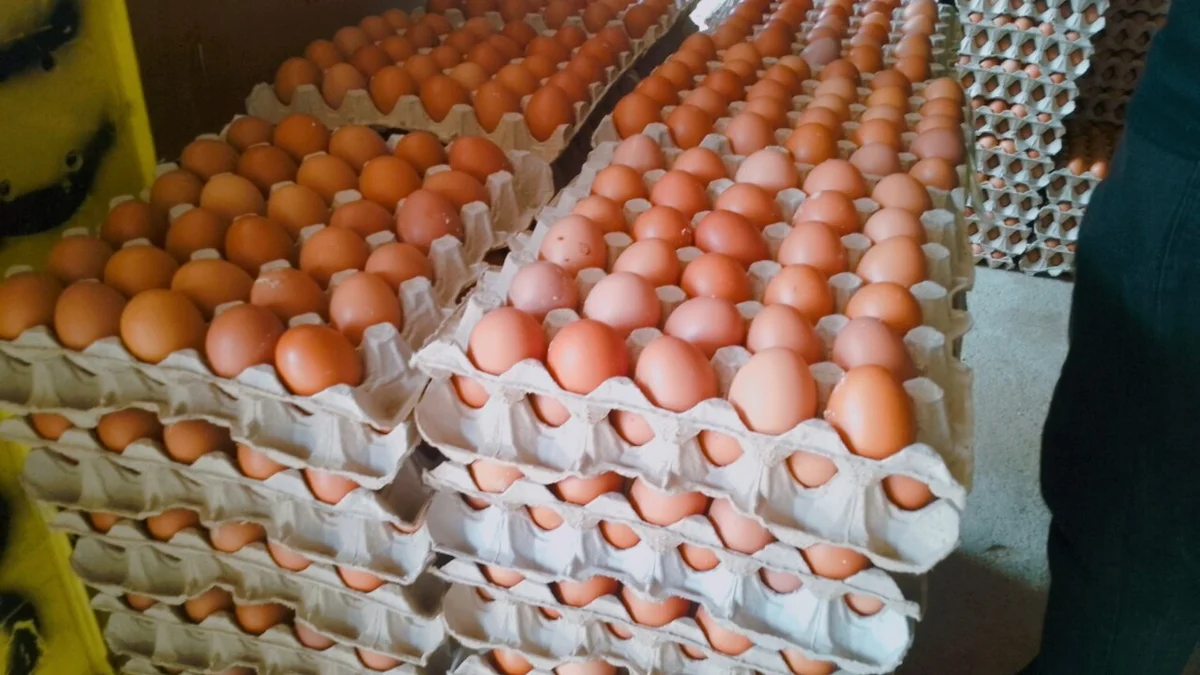
Bangalore (Bengaluru) represents one of southern India’s largest commercial poultry consumption hubs, consuming between 1.15 and 1.25 crore table eggs daily across its rapidly expanding urban sprawl, IT institutional catering kitchens, bakeries, quick-service restaurant chains, and residential households. Daily wholesale and farm-gate egg prices in the Bangalore zone are benchmarked every evening by the National Egg Coordination Committee (NECC Official Portal) under regulatory oversight from the Department of Animal Husbandry and Dairying (DAHD Central Ministry) and the Karnataka Department of Animal Husbandry and Veterinary Services (Karnataka AHVS), integrated with export monitoring from the Agricultural & Processed Food Products Export Development Authority (APEDA Livestock Division). Daily rates dictate commercial trade from Yeshwanthpur and Russell Market wholesale terminals down to neighborhood kirana stores and quick-commerce dark stores.
1. Indicative NECC Egg Price Benchmarks in Bangalore
Wholesale egg quotations in Bangalore are issued by NECC on a per-egg basis, from which standardized wholesale rates for a 100-piece lot, a commercial 30-egg pulp tray, and a 210-egg master carton are calculated. Prices fluctuate dynamically based on regional supply volumes from layer poultry belts in Kolar, Chikkaballapur, Tumkur, and Hosur (Tamil Nadu), balanced against consumer demand surges during winter, festivals, and school midday meal procurement cycles. Indicative price benchmarks are outlined below:
| Trading Unit / Packaging Format | Wholesale Quantity | Min Rate (Rs) | Modal Rate (Rs) | Max Rate (Rs) | Retail Consumer Price Range |
|---|---|---|---|---|---|
| Single Commercial Table Egg | 1 Piece (Grade A) | Rs 5.10 | Rs 5.40 | Rs 5.65 | Rs 6.00 - Rs 7.00 / Piece |
| Standard 100 Eggs Lot | 100 Pieces (Wholesale Base) | Rs 510 | Rs 540 | Rs 565 | Rs 600 - Rs 700 / 100 Pieces |
| Commercial Egg Tray | 30 Eggs Paper Pulp Tray | Rs 153 | Rs 162 | Rs 170 | Rs 180 - Rs 210 / Tray |
| Master Commercial Carton | 210 Eggs (7 Trays Master Box) | Rs 1,071 | Rs 1,134 | Rs 1,186 | Rs 1,260 - Rs 1,470 / Box |
| Brown / Free-Range Country Egg | 1 Piece Graded Organic | Rs 8.50 | Rs 9.50 | Rs 10.50 | Rs 12.00 - Rs 15.00 / Piece |
| Nutri-Enriched (Omega-3 / Selenium) | 6-Piece Branded Retail Pack | Rs 45 | Rs 52 | Rs 58 | Rs 65 - Rs 78 / 6-Pack |
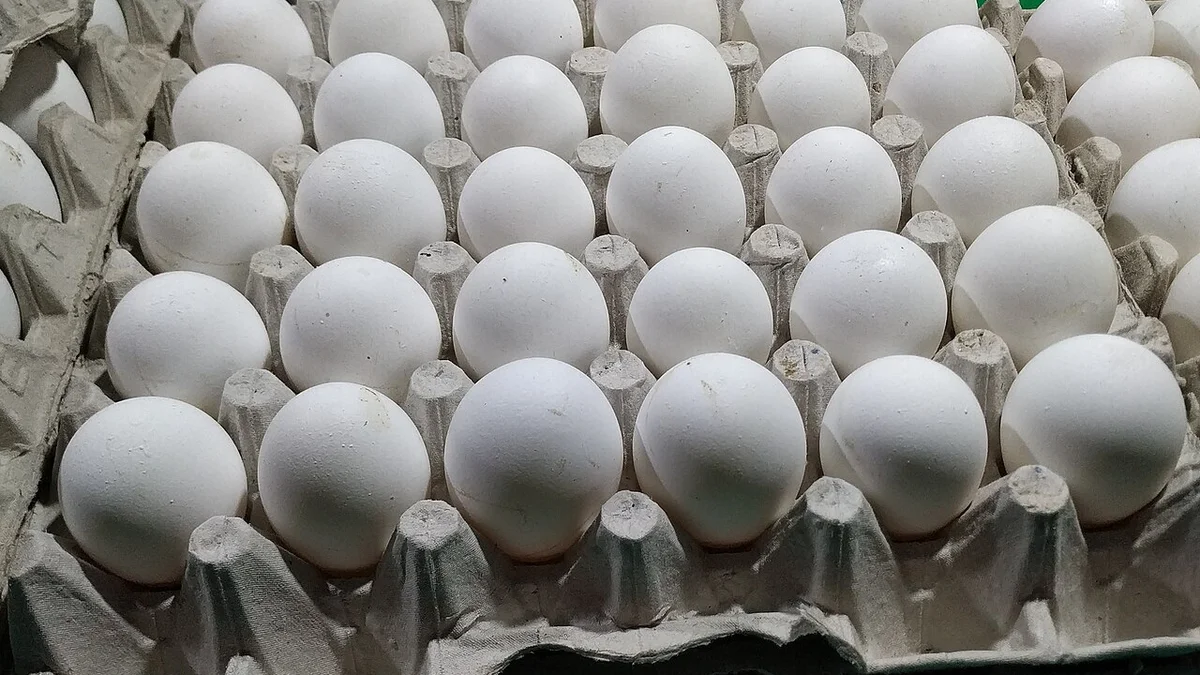
2. Layer Feed Economics: Maize, Soymeal & Production Cost Breakdown
The economic viability of commercial layer poultry farming around Bangalore depends overwhelmingly on the prevailing cost of poultry feed ingredients, which constitute between 70% and 75% of the total recurring cost of producing an egg. A standard commercial layer diet formulated for high-yielding strains—such as BV-300, Hy-Line Brown, and Bovans White—contains approximately 55-60% yellow maize (energy source), 22-25% de-oiled soybean meal or sunflower DOC (crude protein source 46%), and 8-10% feed-grade limestone or dicalcium phosphate (calcium source).
With balanced feed manufacturing costs fluctuating between ₹26 and ₹31 per kilogram depending on domestic maize and soybean meal market prices, the baseline farm production cost per egg in Karnataka currently sits between ₹4.35 and ₹4.65. When NECC wholesale prices drop below ₹4.50 during seasonal monsoon demand lulls or regional poultry gluts, layer farmers face negative cash margins, forcing many smallholders to induce early forced molting or cull older birds (spent hens) to reduce daily feed expenditure.
| Production Cost Component | Cost Contribution (%) | Per Egg Cost Range (Rs) | Key Market Driver / Determinant |
|---|---|---|---|
| Poultry Layer Feed (Maize + Soya) | 72% | Rs 3.15 - Rs 3.35 | Domestic corn harvest volume & international soymeal prices |
| Day-Old Chick Amortization (BV300) | 8% | Rs 0.35 - Rs 0.40 | Breeder hatchery chick costs amortized over 72-week lay cycle |
| Veterinary Vaccines, Biosecurity & Meds | 6% | Rs 0.25 - Rs 0.30 | Ranikhet (ND), Infectious Coryza, and Marek disease control |
| Farm Labor, Electricity & Automation | 7% | Rs 0.30 - Rs 0.35 | Automated egg collection belts, nipple drinkers & climate fans |
| Tray Packaging, Sorting & Transport | 7% | Rs 0.30 - Rs 0.35 | Paper pulp trays, shock cushioning, and metro transport logistics |
| Total Net Cost of Production Per Egg | 100% | Rs 4.35 - Rs 4.65 | Farm break-even threshold determining farmer profitability |
3. Grading Standards, Shell Hygiene & Cold Storage Preservation
Quality grading and shell hygiene play a paramount role in modern egg marketing across Bangalore. Certified table eggs must meet Grade A specifications established by Agmark and FSSAI standards: unbroken sound shells, zero blood or meat spots, clean unsoiled outer surface, an air cell depth under 4 millimeters, and a minimum unit weight of 53 to 60 grams per egg. Automated candling lines utilize high-intensity LED optical sensors to detect micro-cracks and internal defects before automated weight grader arms sort eggs into standard categories.
Preserving internal albumen thickness (measured in Haugh units) is critical in Bangalore’s tropical climate. While eggs retain freshness for up to 14 days at ambient temperatures (20°C to 25°C), high-volume distributors and supermarket cold chains store crates in humidity-controlled cold rooms at 4°C to 7°C with 75-80% relative humidity. Controlled cold storage preserves the thick albumen gel structure and prevents yolk vitelline membrane rupture for up to 45 days, shielding distributors against inventory losses during festive fasting periods.
4. Bangalore Supply Chain Dynamics: Hosur, Kolar & Tumkur Corridor
The supply backbone feeding Bangalore’s massive appetite for eggs is anchored in a highly organized poultry corridor. Over 65% of daily arrivals originate from mechanized layer farms in Kolar, Chikkaballapur, Tumkur, and the adjacent Hosur poultry cluster in Tamil Nadu. The close geographical proximity—ranging from 40 to 80 kilometers from Bangalore’s central distribution terminals—enables rapid farm-to-retail transit within 4 to 6 hours, keeping transport mortality and shell micro-cracking below 0.5%.
NECC’s Bangalore zonal pricing committee convenes daily at 5:00 PM, evaluating nationwide production reports from major competing centers like Namakkal, Hyderabad, and Barwala. Because eggs are a perishable commodity without central MSP price support, the committee adjusts daily wholesale quotations to ensure complete market clearing while preventing excess supplies from adjacent production states from flooding the Bangalore market and collapsing local farm gate realizations.
5. Retail Value Addition, Direct Delivery & Commercial Farm Risk Management
In recent years, the retail egg landscape in Bangalore has witnessed a profound transformation driven by quick-commerce platforms (such as Blinkit, Zepto, and Instamart) and direct-to-consumer (D2C) specialized poultry brands. Cleaned, UV-sanitized, and stamped date-coded eggs packed in tamper-evident paperboard cartons command consumer retail prices of ₹85 to ₹110 per dozen—representing a handsome 25% to 35% value-addition margin over generic loose market eggs.
Forward-thinking poultry entrepreneurs around Bangalore are increasingly diversifying into functional specialty eggs—including vegetarian-fed eggs, omega-3 fortified eggs enriched via flaxseed layer rations, and pastured free-range country eggs. By establishing long-term supply contracts with institutional hotel chains, hospital networks, and fitness centers, commercial layer farms successfully insulate their operating margins from volatile daily spot auction fluctuations.
Comprehensive Directory & Government Resource Links
6. Feed Input Sourcing, Poultry Zones & Allied Enterprises
Long-term profitability for commercial layer and poultry farms tracking egg price today bangalore depends closely on comparing regional production belts and oilseed or grain feed ingredient markets. Growers systematically coordinate crop care through NPK fertilizer grade selection and NBS pricing, DAP 50 kg bag subsidy and application rates, Saaf systemic and contact fungicide dosage, Roko (Thiophanate Methyl) disease control schedule, Coragen stem borer and caterpillar control, selective and pre-emergent herbicide management, commercial flower seed varieties, certified seeds policy and germination standards, rajgira amaranth seed farming, sesame seed (ellu) agronomy and market rates. Modern field execution and transport rely heavily on comparing specs and subsidies across field tractor power testing and safety buying checks, Solis 4515 E Yanmar-tech tractor specifications, Swaraj 744 FE and XT torque and fuel economy, Swaraj 735 FE 39 HP utility tractor review, full Swaraj tractor HP lineup and pricing, Mahindra 575 DI 45 HP workhorse mileage guide, Mahindra 575 DI XP Plus 47 HP torque and review, New Holland 3630 TX Plus 4x4 55 HP tractor specs, Powertrac Euro diesel-saver tractor models and prices. For specialized tillage, haulage, and water distribution, cultivators also evaluate VST Shakti and Kubota 12-15 HP power tiller prices, Farmtrac heavy tractor series and diesel saver specs, sprinkler irrigation layout and PMKSY subsidy.
7. Poultry Credit Schemes, Farm Mechanization & Market Portals
Layer poultry entrepreneurs also scale cold-chain haulage, shed mechanization, and working capital support across rural finance portals. Growers benchmark regional supply arrivals and MSP procurement across Narela Anaj Mandi paddy and wheat arrivals, Neemuch Mandi medicinal spice and grain rates, Piplia Mandi wholesale garlic auctions, Mandsaur APMC lahsun and soybean market rates, all-India APMC mandi bhav directory, Maharashtra sugar mill ex-factory and APMC rates, domestic S-30 and M-30 sugar mill pricing, sugar release quota and FRP economics, ethanol blending and sugar wholesale trends, retail and wholesale chini rate benchmarks, daily UP and Maharashtra sugar mill chini bhav, arhar (tur) dal wholesale and MSP realizations. Key grain, oilseed, and pulse realization corridors additionally track guar seed APMC & NCDEX prices, castor seed GCH hybrid prices, cotton market CCI MSP rates, cold-pressed mustard oil economics, onion storage life and wholesale arrivals, Lasalgaon and metro onion mandi quotations, water-soluble NPK 19-19-19 foliar spray dosage. Agricultural diversification and specialty value chains spanning spices, plantation crops, dairy, and poultry offer steady cash flow—tracked via Shivalik mentha oil MCX and distillation yields, daily crude mentha oil spot rates, mentha herb agronomic cultivation and boiler distillation, Barabanki mint wholesale mandi and MCX benchmarks, Spices Board cardamom auction prices, small green cardamom e-auction grades, Kashmiri Mongra saffron prices and GI purity, raw cashew nut (RCN) processing realizations, processed cashew kernel export grades, W180 and W240 cashew wholesale pricing, California and Mamra almond wholesale rates, Kashmiri walnut giri and shell-out grades.
Other specialized horticulture and livestock enterprises include dried fig (anjeer) cultivation and mandi prices, Hass avocado commercial orchard economics, red and white dragon fruit per-kg realizations, Karnataka supari and arecanut auction prices, Rashi, Bette, and Chali arecanut grade pricing, Shivamogga and TUMCOS adike mandi rates, NCDEX Turmeric Price Today, daily NECC wholesale egg price movements, all-India NECC egg rate directory, Namakkal poultry belt NECC dispatch rates, Barwala layer farm paper rates and margins, commercial button and oyster mushroom cultivation, wholesale mushroom prices across urban mandis. Operational working capital, DBT cash transfers, and subsidized farm solar or e-KYC infrastructure can be accessed via CSC Aadhaar biometric e-KYC verification workflow, Kisan Credit Card 4% subvention loan and KRP application, PM-KISAN installment status and PFMS verification, PM-KUSUM solar irrigation pump capital subsidy. Primary regulatory notifications, technical bulletins, and statutory benchmark portals are published by National Egg Coordination Committee (NECC Official), Department of Animal Husbandry and Dairying (DAHD), Karnataka Department of Animal Husbandry and Veterinary Services, and Agricultural & Processed Food Products Export Development Authority (APEDA).
Frequently asked questions
- What is the current NECC egg price today in Bangalore?
- The indicative NECC wholesale price for commercial table eggs in Bangalore ranges between ₹5.10 and ₹5.65 per egg (₹510 to ₹565 per 100 eggs).
- What is the retail price of eggs in Bangalore grocery stores?
- Standard commercial white eggs retail between ₹6.00 and ₹7.00 per piece (₹180 to ₹210 for a 30-egg tray), while organic brown or free-range eggs retail between ₹12.00 and ₹15.00 per piece. Official regulatory guidelines can also be verified on the National Egg Coordination Committee (NECC Official).
- How many eggs does Bangalore consume every day?
- Greater Bangalore consumes an estimated 1.15 to 1.25 crore table eggs daily, driven by high institutional, commercial bakery, restaurant, and residential demand. Official regulatory guidelines can also be verified on the Department of Animal Husbandry and Dairying (DAHD).
- Who determines the daily egg rate in Bangalore?
- Daily wholesale egg prices are declared every evening by the National Egg Coordination Committee (NECC) Bangalore zonal committee based on supply and demand dynamics. Compare regional poultry pricing and feed trends in our Shivalik mentha oil MCX and distillation yields.
- Where do Bangalore eggs come from?
- Over 65% of Bangalore’s eggs originate from large-scale commercial layer poultry belts in Kolar, Chikkaballapur, Tumkur, and Hosur (Tamil Nadu).
- What is the cost of producing an egg for a poultry farmer in Karnataka?
- With current maize and soybean feed prices, the net cost of production ranges between ₹4.35 and ₹4.65 per egg.
- What feed ingredients are used to feed layer hens?
- A balanced layer diet consists of 55-60% yellow maize, 22-25% de-oiled soybean meal, 8-10% limestone/calcium grit, alongside essential amino acids and vitamin pre-mixes.
- What is a Grade A table egg standard in India?
- According to Agmark and FSSAI guidelines, a Grade A table egg must have a sound clean shell, zero blood spots, weight between 53 and 60 grams, and an air cell depth under 4 mm.
- How long do table eggs stay fresh at room temperature?
- At typical ambient room temperature (20-25°C), eggs maintain optimal culinary freshness for 12 to 14 days. When refrigerated at 4-7°C, freshness extends to 45 days.
- Why do egg prices increase during winter months in Bangalore?
- Winter spurs increased nutritional demand from bakeries, confectionery units, and fitness consumers, while school midday meal distribution peaks, driving prices upward.
- What are the advantages of brown or free-range eggs over white eggs?
- While basic nutritional profiles are similar, free-range brown eggs are prized for richer orange yolk pigmentation, ethical animal welfare, and natural foraging diets.
- How can poultry farmers hedge against sudden feed price spikes?
- Farmers hedge feed risks by entering forward purchase contracts for maize during Kharif harvest, utilizing alternative protein sources (like DDGS), and forming purchasing cooperatives.
This article is for general information only and is not financial advice. Loan and scheme eligibility depends on partner and government criteria.