Sprinkler Irrigation System: Types, Subsidy & Price
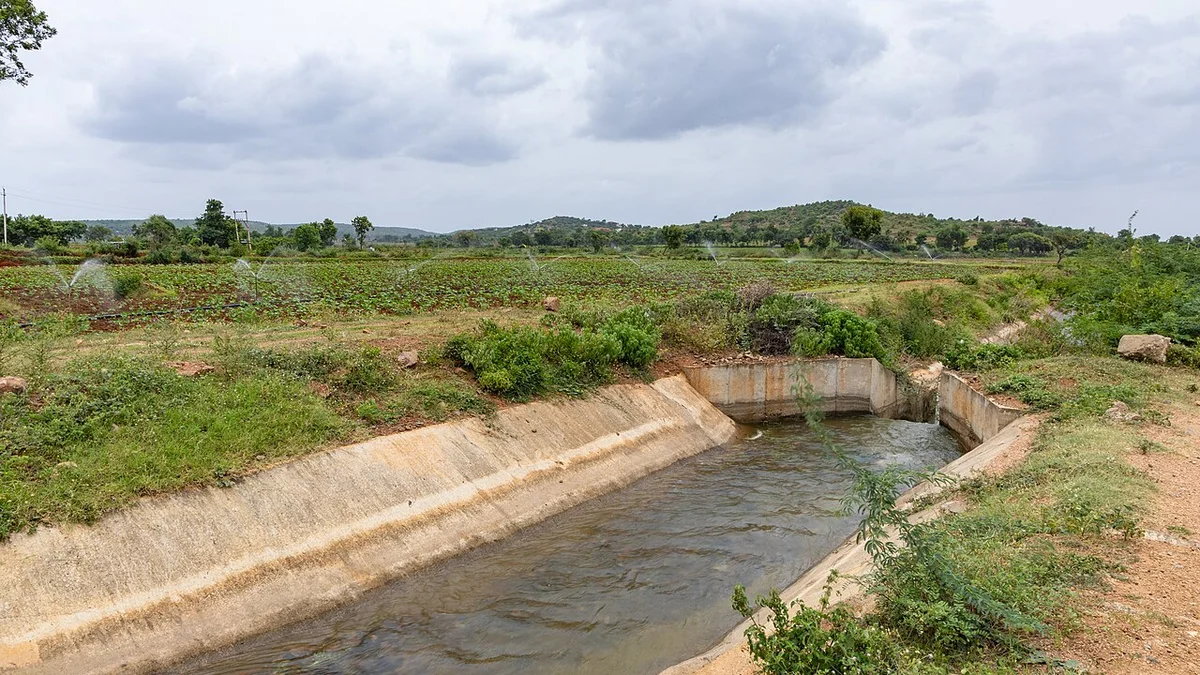
Sprinkler irrigation systems represent a cornerstone of modern micro-irrigation engineering in India, transforming water-stressed agricultural landscapes by delivering up to 35% to 50% water conservation and 15% to 25% higher crop yields compared to archaic flood and furrow irrigation methods. Administered under the flagship Pradhan Mantri Krishi Sinchayee Yojana (PMKSY Official Portal) through the Per Drop More Crop (PDMC) division of the Ministry of Agriculture & Farmers Welfare (Ministry of Agriculture), governed by stringent manufacturing standards established by the Bureau of Indian Standards (BIS Standards) and backed by refinancing credit from NABARD (NABARD Irrigation Finance), sprinkler systems enable smallholders to double their irrigated command area, eliminate soil erosion on undulating slopes, and optimize plant nutrient delivery.
1. Sprinkler Irrigation Overview: Water-Saving Dynamics & Yield Enhancement
Sprinkler irrigation works by pumping pressurized water through an underground or surface pipe network and discharging it into the air through specialized nozzles, creating a uniform artificial rainfall mist. The system is particularly advantageous for close-growing field crops—including wheat, mustard, pulses (chana, moong), groundnut, and fodder grasses—as well as high-density tea and coffee plantations where drip lines are difficult to lay. Indicative system investment costs and government subsidies are summarized below:
| Sprinkler System Configuration | Pipe Material & Diameter | Indicative System Cost (Rs/Acre) | PMKSY Subsidy (Small/Marginal) | Net Farmer Cost (Rs/Acre) | Ideal Crop & Field Scenario |
|---|---|---|---|---|---|
| Portable Quick-Coupled HDPE Set | 63 mm / 75 mm IS:14151 HDPE | Rs 18,000 - Rs 24,000 | 55% Grant (Rs 10,000 - Rs 13,000) | Rs 8,000 - Rs 11,000 | Wheat, Mustard, Gram & Groundnut |
| Semi-Permanent HDPE System | 75 mm Main + 63 mm Lat | Rs 24,000 - Rs 30,000 | 55% Grant (Rs 13,000 - Rs 16,500) | Rs 11,000 - Rs 13,500 | Multi-Crop Undulating Black Soil Fields |
| High-Volume Raingun System | 2.5-Inch Gun / Heavy Trolley | Rs 35,000 - Rs 45,000 | 45% - 50% Subsidy Grant | Rs 18,000 - Rs 24,000 | Sugarcane, Maize & Pasture Grazing |
| Micro-Sprinkler / Mini-Sprinkler | 32 mm Sub-Main + Spin Nozzle | Rs 28,000 - Rs 36,000 | 55% Grant (Rs 15,000 - Rs 19,500) | Rs 13,000 - Rs 16,500 | Vegetable Nurseries, Garlic & Onions |
| Solar Powered Sprinkler Set | 3 HP / 5 HP DC Solar Pump Link | Rs 1,45,000 - Rs 1,95,000 | 60% Combined PM-KUSUM + PDMC | Rs 58,000 - Rs 78,000 | Off-Grid Remote Rainfed Cultivation |
2. Technical Classification: Portable HDPE Sets, Semi-Permanent & Rainguns
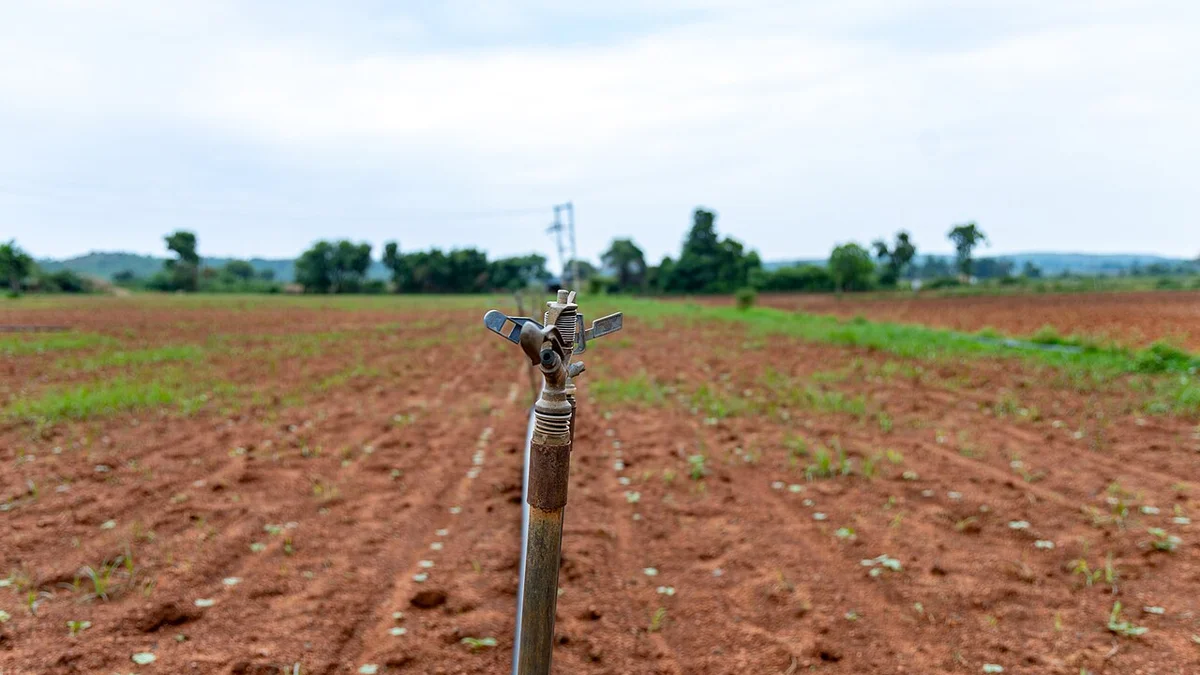
Sprinkler systems are technically classified into distinct operational categories based on operating pressure and discharge radius. The most widely adopted format across India is the Portable Quick-Coupled HDPE system. Manufactured from virgin, high-density polyethylene resin compounded with 2.5% carbon black for UV protection (conforming to BIS IS:14151 Part II), these lightweight pipes come in 6-meter lengths with integrated foot battens and quick-locking latch levers. A single field laborer can uncouple, shift, and reassemble a full one-acre sprinkler line to an adjacent plot in less than 20 minutes.
For tall, dense crops such as sugarcane and fodder maize where moving portable pipes is impractical, High-Impact Giant Rainguns (IS:12232 compliant) are deployed. Operating at higher pressures (3.5 to 5.0 kg/cm²), a single raingun nozzle discharges 15,000 to 30,000 liters of water per hour across a sweeping 30-to-45 meter wetting radius, covering an entire half-acre circle from a single stationary position. Conversely, Micro-Sprinklers operate at low pressures (1.5 to 2.0 kg/cm²), producing fine, gentle mist droplets that protect delicate vegetable seedlings and leafy coriander from physical soil displacement.
| Technical Feature | Portable HDPE Sprinkler | Giant Raingun System | Micro-Sprinkler System | Agricultural Impact |
|---|---|---|---|---|
| Operating Pressure Required | 2.0 - 3.0 Kg/cm² (28 - 42 PSI) | 3.5 - 5.0 Kg/cm² (50 - 70 PSI) | 1.5 - 2.0 Kg/cm² (21 - 28 PSI) | Determines pump horsepower requirement |
| Nozzle Type & Material | Brass Twin-Nozzle Rotating Impact | Heavy Gunmetal / Plastic Jet Gun | Rotary Silicone Spinner / Mist Cap | Brass nozzles resist abrasive silt wear |
| Wetting Radius / Throw | 10 - 14 Meters per Nozzle | 30 - 45 Meters Massive Radius | 2.5 - 4.5 Meters Gentle Radius | dictates spacing along lateral pipelines |
| Water Discharge Volume | 1,200 - 1,800 Liters / Hour | 15,000 - 30,000 Liters / Hour | 150 - 300 Liters / Hour | Precise matching with crop water demand |
| Applicable Crop Matrix | Wheat, Mustard, Pulses, Soybeans | Sugarcane, Maize, Lucerne Grass | Garlic, Onion, Ginger, Seedlings | Prevents crusting and promotes root aeration |
3. Engineering Specifications: Pipe Diameters, Nozzle Discharge & Pressure Rules
Hydraulic design and filtration integrity are crucial to sprinkler performance. Water drawn from open wells, borewells, or farm ponds contains abrasive sand particles, silt, and algae. If introduced directly into the pipeline, suspended solids erode brass nozzle orifices and clog internal rotation drive springs. Therefore, every professionally installed system features a primary Hydrocyclone Sand Separator (for borewell sand) paired with a 120-mesh (130-micron) Disc or Screen Filter.
Furthermore, maintaining uniform hydraulic pressure throughout the pipe network ensures equal water distribution. Pressure relief valves and automated continuous-acting air release valves (installed at the highest elevation points of the main line) expel trapped air pockets during pump startup and prevent vacuum collapse during shutdown, safeguarding thin-wall HDPE pipelines from explosive water-hammer shockwaves.
4. PMKSY Subsidy Guidelines: Per Drop More Crop Financial Grants & DBT Process
Government financial assistance under the PMKSY Per Drop More Crop (PDMC) scheme makes sprinkler irrigation remarkably affordable for Indian farmers. The central and state governments provide structured subsidy grants: Small and Marginal farmers (holding up to 2 hectares or 5 acres) receive a generous 55% capital subsidy, while Other/General category farmers (holding over 5 acres, up to a maximum ceiling of 5 hectares) receive a 45% subsidy grant based on pre-notified benchmark system costs.
To apply for subsidies, farmers submit an online application on their state agriculture or horticulture department portal (such as the UP Parshad Portal, MP Krishi Yantra Portal, or MahaDBT in Maharashtra) along with land record extracts (7/12 or Khasra), Aadhaar authentication, water source proof (active tube well or pond), and soil-water test reports. Upon administrative approval, the farmer selects an empanelled manufacturer (such as Jain Irrigation, Netafim, Finolex, or Premier Irrigation). Following physical field verification by the block agricultural officer, the subsidy amount is disbursed directly via DBT or released to the manufacturer against the farmer’s net contribution.
5. Installation Procedures, Filtration Maintenance & Long-Term Durability
Preventive maintenance and off-season storage determine whether a sprinkler system lasts 3 years or over 12 years. At the conclusion of each irrigation cycle, the sub-main line end caps should be opened to flush out settled silt. In areas with hard, saline, or calcareous groundwater, calcium carbonate scale can constrict brass nozzle orifices; soaking nozzles in a 0.5% dilute citric acid solution easily dissolves mineral scale, restoring the original parabolic spray pattern.
During off-season storage between Rabi harvest and Kharif sowing, HDPE pipes must be unlatched, cleaned, and stacked horizontally on flat wooden battens in a shaded, covered godown. Leaving HDPE pipes lying exposed on dry stubble fields exposes them to field fire risks and gnawing damage from field rodents (rats and bandicoots). Stored properly in shade, BIS-certified UV-stabilized pipes easily maintain structural flexibility and pressure ratings beyond a decade of active farm service.
Comprehensive Directory & Government Resource Links
6. Agricultural Inputs, Mechanization & Allied Farm Operations
Maximizing farm gate returns in sprinkler irrigation begins with strong agronomic management, calibrated soil nutrition, clean irrigation, and efficient harvesting machinery. Growers systematically coordinate crop care through NPK fertilizer grade selection and NBS pricing, DAP 50 kg bag subsidy and application rates, Saaf systemic and contact fungicide dosage, Roko (Thiophanate Methyl) disease control schedule, Coragen stem borer and caterpillar control, selective and pre-emergent herbicide management, commercial flower seed varieties, certified seeds policy and germination standards, rajgira amaranth seed farming, sesame seed (ellu) agronomy and market rates. Modern field execution and transport rely heavily on comparing specs and subsidies across field tractor power testing and safety buying checks, Solis 4515 E Yanmar-tech tractor specifications, Swaraj 744 FE and XT torque and fuel economy, Swaraj 735 FE 39 HP utility tractor review, full Swaraj tractor HP lineup and pricing, Mahindra 575 DI 45 HP workhorse mileage guide, Mahindra 575 DI XP Plus 47 HP torque and review, New Holland 3630 TX Plus 4x4 55 HP tractor specs, Powertrac Euro diesel-saver tractor models and prices. For specialized tillage, haulage, and water distribution, cultivators also evaluate VST Shakti and Kubota 12-15 HP power tiller prices, Farmtrac heavy tractor series and diesel saver specs.
7. Regional Mandi Networks, Credit Schemes & Official Data Sources
Across India's regulated market ecosystem, farmers compare live realizations across state trading yards and tap formal welfare and institutional financing. Growers benchmark regional supply arrivals and MSP procurement across Narela Anaj Mandi paddy and wheat arrivals, Neemuch Mandi medicinal spice and grain rates, Piplia Mandi wholesale garlic auctions, Mandsaur APMC lahsun and soybean market rates, all-India APMC mandi bhav directory, Maharashtra sugar mill ex-factory and APMC rates, domestic S-30 and M-30 sugar mill pricing, sugar release quota and FRP economics, ethanol blending and sugar wholesale trends, retail and wholesale chini rate benchmarks, daily UP and Maharashtra sugar mill chini bhav, arhar (tur) dal wholesale and MSP realizations. Key grain, oilseed, and pulse realization corridors additionally track guar seed APMC & NCDEX prices, castor seed GCH hybrid prices, cotton market CCI MSP rates, cold-pressed mustard oil economics, onion storage life and wholesale arrivals, Lasalgaon and metro onion mandi quotations, water-soluble NPK 19-19-19 foliar spray dosage. Agricultural diversification and specialty value chains spanning spices, plantation crops, dairy, and poultry offer steady cash flow—tracked via Shivalik mentha oil MCX and distillation yields, daily crude mentha oil spot rates, mentha herb agronomic cultivation and boiler distillation, Barabanki mint wholesale mandi and MCX benchmarks, Spices Board cardamom auction prices, small green cardamom e-auction grades, Kashmiri Mongra saffron prices and GI purity, raw cashew nut (RCN) processing realizations, processed cashew kernel export grades, W180 and W240 cashew wholesale pricing, California and Mamra almond wholesale rates, Kashmiri walnut giri and shell-out grades.
Other specialized horticulture and livestock enterprises include dried fig (anjeer) cultivation and mandi prices, Hass avocado commercial orchard economics, red and white dragon fruit per-kg realizations, Karnataka supari and arecanut auction prices, Rashi, Bette, and Chali arecanut grade pricing, Shivamogga and TUMCOS adike mandi rates, NCDEX Turmeric Price Today, daily NECC wholesale egg price movements, all-India NECC egg rate directory, Namakkal poultry belt NECC dispatch rates, Barwala layer farm paper rates and margins, Bangalore wholesale egg tray prices and retail spreads, commercial button and oyster mushroom cultivation, wholesale mushroom prices across urban mandis. Operational working capital, DBT cash transfers, and subsidized farm solar or e-KYC infrastructure can be accessed via CSC Aadhaar biometric e-KYC verification workflow, Kisan Credit Card 4% subvention loan and KRP application, PM-KISAN installment status and PFMS verification, PM-KUSUM solar irrigation pump capital subsidy. Primary regulatory notifications, technical bulletins, and statutory benchmark portals are published by Pradhan Mantri Krishi Sinchayee Yojana (PMKSY Official Portal), Department of Agriculture & Farmers Welfare (Resource Management), Bureau of Indian Standards (BIS Micro-Irrigation Standards), and National Bank for Agriculture and Rural Development (NABARD).
Frequently asked questions
- What is the cost of a sprinkler irrigation system per acre in India?
- The total cost for a standard portable HDPE sprinkler system ranges between ₹18,000 and ₹24,000 per acre. After the 55% PMKSY government subsidy, the net cost to small and marginal farmers is only ₹8,000 to ₹11,000 per acre. Official regulatory guidelines can also be verified on the Pradhan Mantri Krishi Sinchayee Yojana (PMKSY Official Portal).
- How much water does sprinkler irrigation save compared to flood irrigation?
- Sprinkler irrigation saves 35% to 50% water compared to conventional flood irrigation, while simultaneously increasing crop yields by 15% to 25% through uniform droplet distribution. Official regulatory guidelines can also be verified on the Department of Agriculture & Farmers Welfare (Resource Management).
- How much subsidy is provided under the PMKSY Per Drop More Crop scheme?
- Small and marginal farmers receive a 55% capital subsidy, while general category farmers receive a 45% subsidy, covering up to a maximum landholding ceiling of 5 hectares. Explore related mandi benchmarks and farmer support guides in our Narela Anaj Mandi paddy and wheat arrivals.
- Which crops are most suitable for sprinkler irrigation?
- Sprinkler irrigation is ideal for close-growing field crops such as wheat, mustard, chickpea (chana), groundnut, soybean, pearl millet, vegetables, garlic, onion, and tea plantations.
- What is the difference between a portable sprinkler and a raingun?
- A portable sprinkler uses multiple rotating nozzles covering 10-14 meters each at low pressure. A raingun uses a single giant high-pressure nozzle that sprays water across a massive 30-45 meter radius, ideal for tall crops like sugarcane.
- What pipe diameter is used in agricultural sprinkler systems?
- Quick-coupled HDPE pipes typically use outside diameters of 63 mm (2.5 inches) or 75 mm (3.0 inches) with a pressure rating of 2.5 to 3.2 kg/cm² conforming to BIS IS:14151. Explore related mandi benchmarks and farmer support guides in our Neemuch Mandi medicinal spice and grain rates.
- What pump horsepower (HP) is required to run a sprinkler set?
- A standard 1-acre portable sprinkler set (running 6 to 8 nozzles simultaneously) requires a 3 HP to 5 HP centrifugal or submersible pump delivering at least 2.5 kg/cm² operating pressure.
- How do farmers apply for sprinkler subsidy online?
- Farmers apply through their state agriculture/horticulture DBT portal by submitting Aadhaar, land revenue records (7/12 or Khasra), bank passbook details, and tube well water source proof.
- Can sprinkler irrigation be used on undulating, hilly land?
- Yes, one of the greatest advantages of sprinkler systems is their ability to irrigate undulating and sloping terrain uniformly without requiring costly land leveling or causing soil erosion.
- What filtration is necessary for sprinkler irrigation?
- A 120-mesh (130-micron) disc or screen filter is essential to remove suspended silt, algae, and sand debris, preventing nozzle clogging and abrasive wear.
- How are clogged sprinkler nozzles cleaned?
- Nozzles should be cleaned using a soft plastic probe or wire (never steel nails that distort orifice geometry) and soaked in mild dilute acid if encrusted with hard water calcium scale.
- How long do BIS-certified HDPE sprinkler pipes last?
- Virgin-grade HDPE pipes compounded with 2.5% carbon black UV stabilizers last 10 to 12 years or more when stored in shade during off-seasons.
This article is for general information only and is not financial advice. Loan and scheme eligibility depends on partner and government criteria.