Arecanut Price Guide: Rashi, Chali & CAMPCO Mandi Bhav
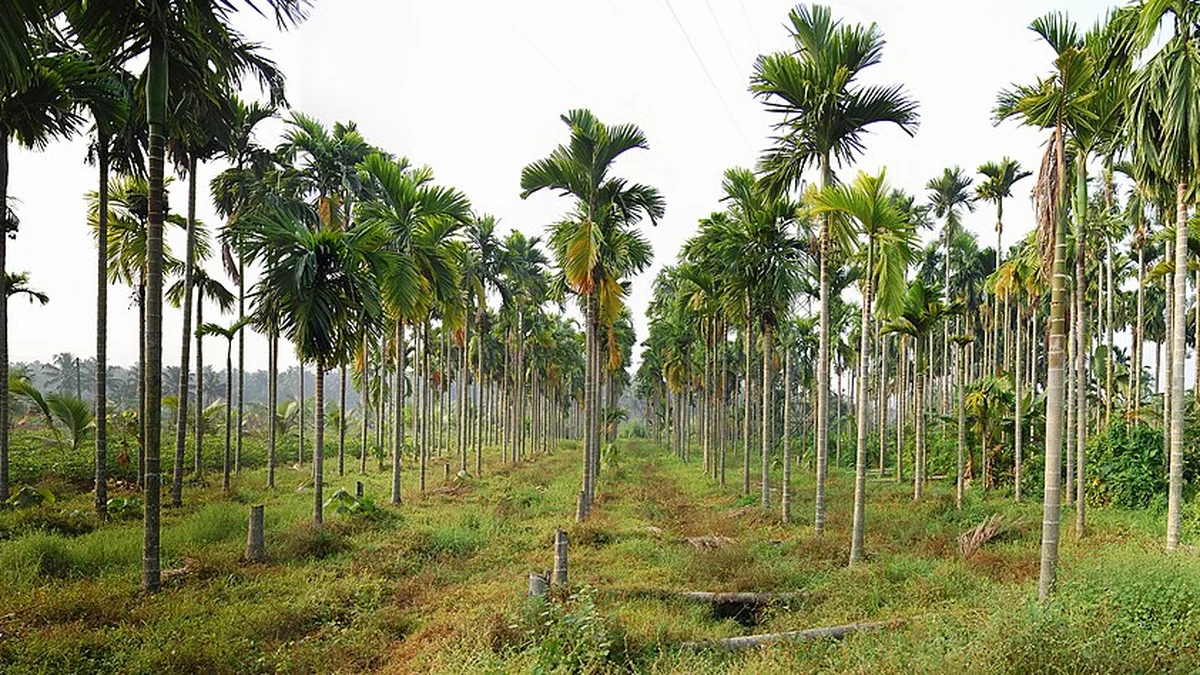
Arecanut (betel nut or supari, Areca catechu) represents one of the most lucrative perennial commercial plantation cash crops in southern and northeastern India, with Karnataka alone accounting for over 70% of total national production. Centered across historic malnad and coastal APMC market yards—including Shivamogga, Sagar, Sirsi, Channagiri, and Mangalore—and marketed transparently through the multi-state cooperative giant The Central Arecanut and Cocoa Marketing and Processing Co-operative Limited (CAMPCO Official Portal), guided by plantation research from the ICAR-Central Plantation Crops Research Institute (ICAR-CPCRI Kasaragod) alongside the Directorate of Arecanut and Spices Development (DASD Calicut) and daily arrival volumes tracked on Agmarknet (Agmarknet Agricultural Network), arecanut prices dictate the rural economic prosperity of hundreds of thousands of smallholder plantation households.
1. Indicative Arecanut Price Benchmarks: Rashi, Chali & By-Grades
Wholesale arecanut prices vary dramatically based on post-harvest processing methods, classifying produce into two major commercial categories: ’Rashi / Red Supari’ (tender nuts harvested immature, dehusked, boiled with tannin extract kali, and sun-dried) and ’Chali / White Supari’ (fully mature nuts harvested ripe and dried whole with the fibrous husk). The following table summarizes indicative modal wholesale benchmarks recorded during recent market sessions across key APMC yards and CAMPCO branches:
| Trading Hub & Processing Grade | Physical Form & Curing | Min Rate (Rs/Kg) | Modal Rate (Rs/Kg) | Max Rate (Rs/Kg) | Primary Industrial Market |
|---|---|---|---|---|---|
| Shivamogga APMC (Rashi Red Supari) | Boiled, Kali Coated, Sun-Dried | Rs 480 | Rs 515 | Rs 545 | Pan Masala, Gutkha & Chewing Blends |
| Channagiri Mandi (Rashi Premium) | Selected Bold Tender Kernels | Rs 495 | Rs 525 | Rs 555 | High-End Domestic Chewing Market |
| Sirsi / Sagar APMC (Chali White) | Ripe Whole Sun-Dried Dehusked | Rs 360 | Rs 395 | Rs 430 | Moti Supari & Scented Supari Mills |
| Mangalore CAMPCO Tender Auction | Grade A Chali Assayed Lots | Rs 375 | Rs 410 | Rs 445 | Pan Flavored Retail Packaging |
| Bette / Gorabal Commercial By-Grade | Split / Irregular Tender Nuts | Rs 320 | Rs 355 | Rs 385 | Commercial Extraction & Low-Tier Blends |
| Export Grade Whole Supari | Sortex Cleaned Uniform Nuts | Rs 560 | Rs 590 | Rs 620 | Middle East & South Asian Diaspora Export |
2. Post-Harvest Processing: Dehusking, Boiling with Kali & Sun Curing
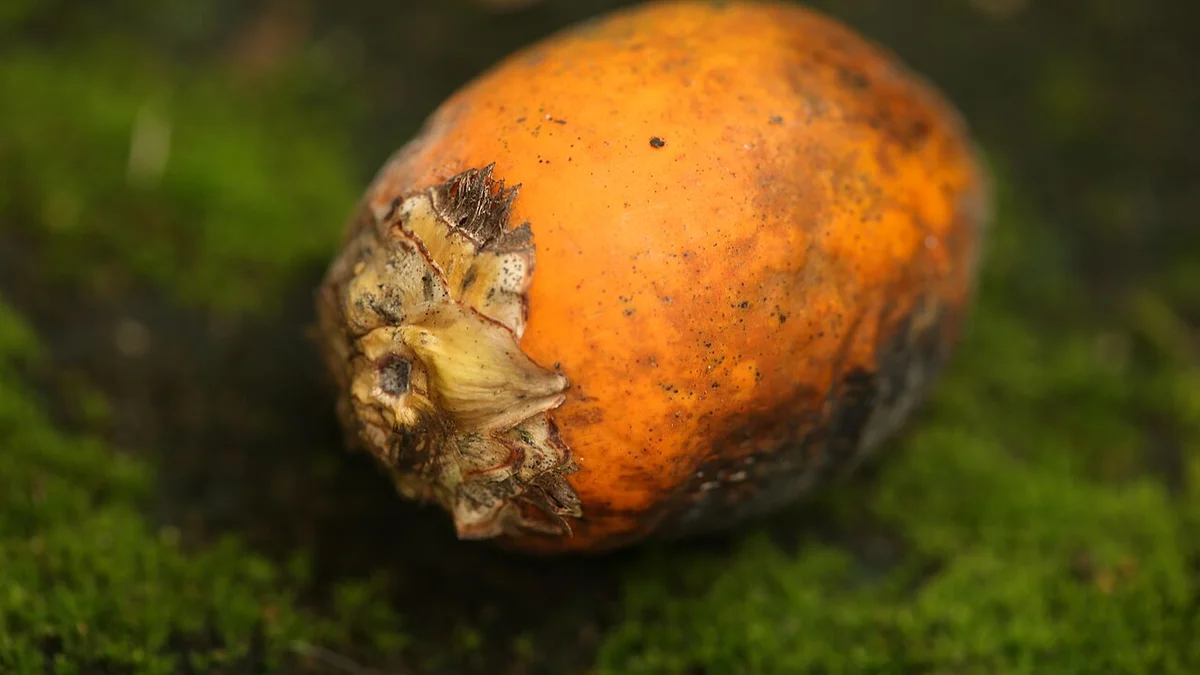
Post-harvest processing represents the single largest determinant of farmer value addition in the arecanut sector. For red arecanut (Rashi, Bette, and Gorabal), bunches are harvested at the tender green stage (6 to 7 months from flowering). Skilled farm workers dehusk the green nuts using specialized curved hand knives or motorized mechanical dehusking machines. The dehusked kernels are transferred immediately into massive copper cauldrons containing water mixed with kali—a concentrated tannin-rich liquor obtained by evaporating previous boiling extracts. The nuts are boiled for 3 to 4 hours until the eye (embryo) detaches, imparting the characteristic deep red hue and astringent taste.
Following boiling, the tender nuts are spread in thin layers across raised wooden battens or cement drying yards, undergoing 7 to 10 days of continuous sun curing. Conversely, white arecanut (Chali) is harvested when nuts are fully golden-ripe (9 to 10 months from flowering). The whole nuts are sun-dried intact on open yards for 40 to 50 days until the dried kernel rattles freely inside the shell. Mechanical rotary dehuskers then crack the outer husk, releasing smooth, marble-like white chali kernels prized for sweet, less astringent chewing preparations.
| Processing Attribute | Rashi / Red Supari (Tender Boiled) | Chali / White Supari (Ripe Whole Dried) | Economic & Value Difference |
|---|---|---|---|
| Harvest Stage | Immature Green Nut (6 - 7 Months) | Fully Ripe Golden Nut (9 - 10 Months) | Rashi harvested early; Chali requires full maturity |
| Processing Steps | Dehusked green, boiled with kali, 8 days sun dry | Dried whole in husk 45 days, then dehusked | Rashi requires high fuel and skilled processing labour |
| Kernel Moisture Limit | Moisture <= 10.0% Standard | Moisture <= 9.5% Standard | Both must be dry to prevent aflatoxin mold growth |
| Wholesale Market Price | Rs 480 - Rs 545 / Kg | Rs 360 - Rs 430 / Kg | Red supari commands 25% to 35% price premium over Chali |
| Primary Cultivation Belts | Shivamogga, Channagiri, Davanagere (Malnad) | Dakshina Kannada, Udupi, Uttara Kannada (Coastal) | Regional tradition dictates processing methodology |
3. CAMPCO Cooperative Marketing, APMC Auctions & Minimum Import Price
Marketing in the arecanut sector is stabilized by CAMPCO—the pioneering farmers’ cooperative founded in 1973 to protect growers from predatory private trading cartels. CAMPCO operates over 160 procurement branches across Karnataka and Kerala, conducting daily tender auctions where registered buyers bid on visually graded, moisture-tested lots. The cooperative announces benchmark daily procurement rates, intervening aggressively in cash markets whenever private merchant quotations fall below fair economic values.
Furthermore, domestic arecanut prices are protected against cheap overseas dumping from Southeast Asian nations (Indonesia, Myanmar, and Sri Lanka) by the central government’s statutory Minimum Import Price (MIP), currently established at ₹351 per kilogram alongside a 108% basic customs duty. This high tariff barrier prevents low-grade foreign supari from flooding the domestic processing industry, ensuring remunerative returns for Indian plantation growers.
4. Plantation Agronomy: Drip Fertigation, Intercropping & Koleroga Shielding
From an agronomic perspective, arecanut palms flourish in deep, well-drained laterite and red loamy soils under tropical humid conditions. While palms require continuous moisture (demanding 15 to 20 liters of water per palm daily during hot summer months), waterlogging must be strictly avoided as it triggers root rot and premature nut drop. Modern growers universally adopt micro-drip irrigation with automated fertigation, saving 40% water while increasing average bunch weight by 20%.
The most critical phytosanitary challenge in arecanut plantations is Koleroga (fruit rot) caused by the devastating fungal pathogen Phytophthora meadii during the South-West monsoon. Growers safeguard bunches by spraying a prophylactic 1% neutral Bordeaux mixture immediately before monsoon onset, followed by covering developing bunches with blue poly-sheet hoods. Intercropping high-value perennial spices—notably black pepper vines trained on areca trunks, cocoa, and cardamom—transforms areca plantations into multi-tiered agroforestry systems, yielding gross annual incomes exceeding ₹4.0 to ₹6.0 lakh per acre.
5. Quality Testing, Long-Term Jute Bag Storage & Pledge Financing
Proper warehouse management is essential to prevent commercial arecanut stocks from deteriorating. Finished kernels must be packed in double-stitched, poly-lined jute gunny bags and stacked on raised wooden dunnage in well-ventilated, pest-free godowns. When stored at relative humidity below 65%, arecanut retains premium culinary quality for 2 to 3 years; in fact, aged Chali supari (stored for 12 months) often commands a price premium in scented supari processing due to reduced moisture and heightened aroma stability.
Growers and FPOs frequently leverage warehouse storage receipts to secure low-interest bank pledge loans from cooperative and rural banks. By borrowing up to 70% of the crop’s current market value, farmers comfortably meet recurring plantation labor and fertilizer expenses without being forced into distress sales during peak harvest troughs.
Comprehensive Directory & Government Resource Links
6. Agricultural Inputs, Mechanization & Allied Farm Operations
Maximizing farm gate returns in arecanut price begins with strong agronomic management, calibrated soil nutrition, clean irrigation, and efficient harvesting machinery. Growers systematically coordinate crop care through NPK fertilizer grade selection and NBS pricing, DAP 50 kg bag subsidy and application rates, Saaf systemic and contact fungicide dosage, Roko (Thiophanate Methyl) disease control schedule, Coragen stem borer and caterpillar control, selective and pre-emergent herbicide management, commercial flower seed varieties, certified seeds policy and germination standards, rajgira amaranth seed farming, sesame seed (ellu) agronomy and market rates. Modern field execution and transport rely heavily on comparing specs and subsidies across field tractor power testing and safety buying checks, Solis 4515 E Yanmar-tech tractor specifications, Swaraj 744 FE and XT torque and fuel economy, Swaraj 735 FE 39 HP utility tractor review, full Swaraj tractor HP lineup and pricing, Mahindra 575 DI 45 HP workhorse mileage guide, Mahindra 575 DI XP Plus 47 HP torque and review, New Holland 3630 TX Plus 4x4 55 HP tractor specs, Powertrac Euro diesel-saver tractor models and prices. For specialized tillage, haulage, and water distribution, cultivators also evaluate VST Shakti and Kubota 12-15 HP power tiller prices, Farmtrac heavy tractor series and diesel saver specs, sprinkler irrigation layout and PMKSY subsidy.
7. Regional Mandi Networks, Credit Schemes & Official Data Sources
Across India's regulated market ecosystem, farmers compare live realizations across state trading yards and tap formal welfare and institutional financing. Growers benchmark regional supply arrivals and MSP procurement across Narela Anaj Mandi paddy and wheat arrivals, Neemuch Mandi medicinal spice and grain rates, Piplia Mandi wholesale garlic auctions, Mandsaur APMC lahsun and soybean market rates, all-India APMC mandi bhav directory, Maharashtra sugar mill ex-factory and APMC rates, domestic S-30 and M-30 sugar mill pricing, sugar release quota and FRP economics, ethanol blending and sugar wholesale trends, retail and wholesale chini rate benchmarks, daily UP and Maharashtra sugar mill chini bhav, arhar (tur) dal wholesale and MSP realizations. Key grain, oilseed, and pulse realization corridors additionally track guar seed APMC & NCDEX prices, castor seed GCH hybrid prices, cotton market CCI MSP rates, cold-pressed mustard oil economics, onion storage life and wholesale arrivals, Lasalgaon and metro onion mandi quotations, water-soluble NPK 19-19-19 foliar spray dosage. Agricultural diversification and specialty value chains spanning spices, plantation crops, dairy, and poultry offer steady cash flow—tracked via Shivalik mentha oil MCX and distillation yields, daily crude mentha oil spot rates, mentha herb agronomic cultivation and boiler distillation, Barabanki mint wholesale mandi and MCX benchmarks, Spices Board cardamom auction prices, small green cardamom e-auction grades, Kashmiri Mongra saffron prices and GI purity, raw cashew nut (RCN) processing realizations, processed cashew kernel export grades, W180 and W240 cashew wholesale pricing, California and Mamra almond wholesale rates, Kashmiri walnut giri and shell-out grades.
Other specialized horticulture and livestock enterprises include dried fig (anjeer) cultivation and mandi prices, Hass avocado commercial orchard economics, red and white dragon fruit per-kg realizations, Karnataka supari and arecanut auction prices, Shivamogga and TUMCOS adike mandi rates, NCDEX Turmeric Price Today, daily NECC wholesale egg price movements, all-India NECC egg rate directory, Namakkal poultry belt NECC dispatch rates, Barwala layer farm paper rates and margins, Bangalore wholesale egg tray prices and retail spreads, commercial button and oyster mushroom cultivation, wholesale mushroom prices across urban mandis. Operational working capital, DBT cash transfers, and subsidized farm solar or e-KYC infrastructure can be accessed via CSC Aadhaar biometric e-KYC verification workflow, Kisan Credit Card 4% subvention loan and KRP application, PM-KISAN installment status and PFMS verification, PM-KUSUM solar irrigation pump capital subsidy. Primary regulatory notifications, technical bulletins, and statutory benchmark portals are published by The Central Arecanut and Cocoa Marketing and Processing Co-operative (CAMPCO), ICAR-Central Plantation Crops Research Institute (CPCRI Kasaragod), Directorate of Arecanut and Spices Development (DASD Calicut), and Agmarknet Agricultural Marketing Information Network.
Frequently asked questions
- What is the current indicative price of arecanut in Karnataka mandis?
- Indicative wholesale rates for Rashi (red boiled supari) range between ₹480 and ₹545 per kg in Shivamogga and Channagiri, while Chali (white ripe dried supari) trades between ₹360 and ₹430 per kg in Mangalore and Sirsi. Official regulatory guidelines can also be verified on the The Central Arecanut and Cocoa Marketing and Processing Co-operative (CAMPCO).
- What is the difference between Rashi supari and Chali supari?
- Rashi supari is made by harvesting tender green nuts, dehusking, boiling with tannin kali, and sun-drying. Chali supari is produced by sun-drying fully ripe whole nuts for 40-50 days before dehusking. Official regulatory guidelines can also be verified on the ICAR-Central Plantation Crops Research Institute (CPCRI Kasaragod).
- What role does CAMPCO play in the arecanut market?
- CAMPCO is a multi-state farmers’ cooperative that provides transparent daily procurement prices, conducts competitive tender auctions, and prevents private trader price exploitation. Explore related mandi benchmarks and farmer support guides in our Narela Anaj Mandi paddy and wheat arrivals.
- What is the Minimum Import Price (MIP) on arecanut in India?
- The Central Government has established a Minimum Import Price (MIP) of ₹351 per kg along with a 108% import duty to prevent cheap foreign imports from depressing domestic prices. Explore related mandi benchmarks and farmer support guides in our Neemuch Mandi medicinal spice and grain rates.
- How much yield does an arecanut palm produce annually?
- A well-maintained mature arecanut palm yields an average of 1.5 to 2.5 kilograms of cured dry arecanut annually, translating to 10 to 15 quintals per acre (at 500 palms/acre). Explore related mandi benchmarks and farmer support guides in our Piplia Mandi wholesale garlic auctions.
- What is Koleroga disease in arecanut and how is it managed?
- Koleroga (fruit rot) is a fungal disease caused by Phytophthora meadii during monsoon rains. It is controlled by prophylactic spraying of 1% Bordeaux mixture and tying poly-sheet hoods over bunches. Explore related mandi benchmarks and farmer support guides in our Mandsaur APMC lahsun and soybean market rates.
- Which companion crops can be intercropped with arecanut?
- High-value companion crops include black pepper (trained on palm trunks), cocoa, banana, cardamom, and betel leaves, which maximize plantation returns.
- How much water does an arecanut palm need daily?
- Under drip irrigation, a mature arecanut palm requires 15 to 20 liters of water daily during peak summer dry months to maintain bunch size and prevent nut cracking.
- Can dried arecanut be stored for multiple years?
- Yes, when stored in dry, well-ventilated warehouses with moisture below 10%, arecanut can be preserved for 2 to 3 years without spoilage or insect damage.
- Where are the biggest arecanut wholesale mandis in India?
- The largest wholesale arecanut trading markets are Shivamogga, Sagar, Channagiri, Sirsi, and Mangalore in Karnataka, along with Kasaragod in Kerala.
- How do farmers obtain pledge loans against arecanut?
- Farmers deposit certified arecanut bags in licensed APMC or cooperative warehouses to receive warehouse receipts, against which commercial banks disburse up to 70% pledge loans.
- Why does Rashi arecanut command a higher price than Chali?
- Rashi requires meticulous labor for green dehusking, boiling with kali, and precise sun curing, and is in high demand by pan masala and premium chewing industries.
This article is for general information only and is not financial advice. Loan and scheme eligibility depends on partner and government criteria.