Chini Ka Bhav Today: Daily Sugar Mandi & Mill Rates
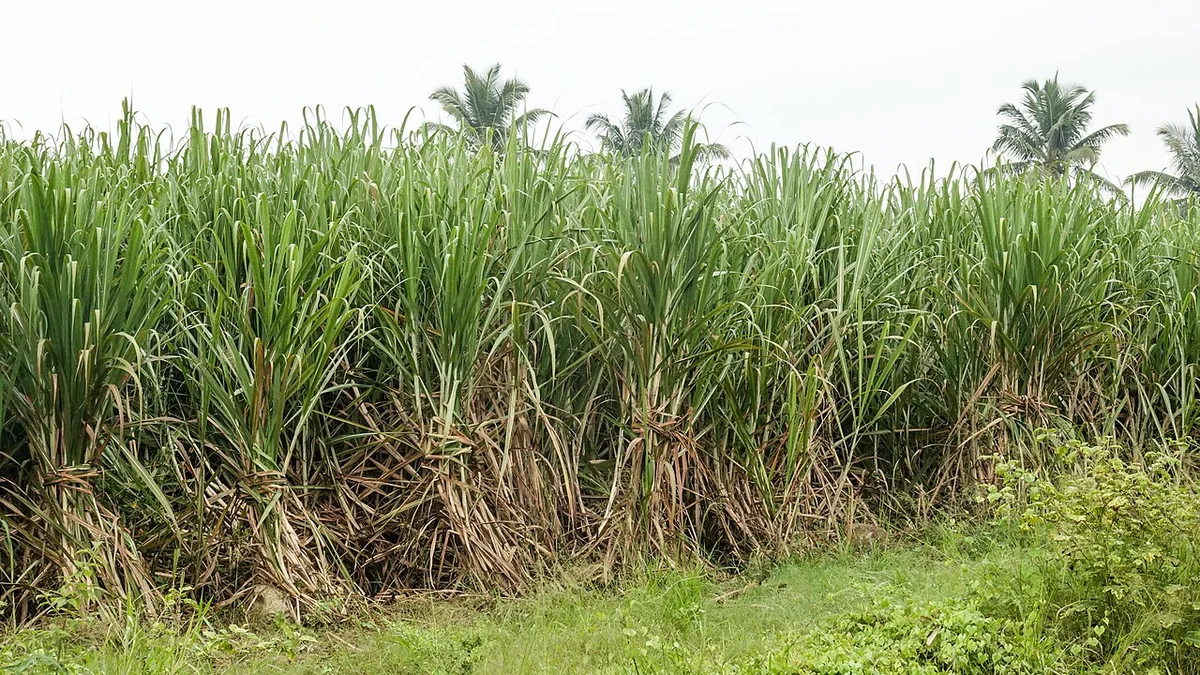
Sugar (chini, refined sucrose) represents one of India’s most strictly monitored and economically significant agro-commodities, with the nation standing as the world’s second-largest sugar producer and its single largest consumer. Regulated under the Essential Commodities Act and overseen by the Department of Food and Public Distribution (DFPD Sugar Division) under the Ministry of Consumer Affairs, Food and Public Distribution, supported by industry data from the National Federation of Cooperative Sugar Factories Limited (NFCSF Portal), governed by food safety standards established by FSSAI (FSSAI Standards) and tracked across daily APMC wholesale auctions on Agmarknet (Agmarknet Network), daily chini ka bhav across major milling hubs in Maharashtra, Uttar Pradesh, and Karnataka dictates commercial transactions from industrial beverage giants to neighborhood kirana stores.
1. Indicative Daily Chini Ka Bhav Benchmarks Across Indian Mandis
Wholesale sugar prices in India are quoted on an ex-mill basis (factory gate price excluding GST and transport) as well as wholesale mandi delivery rates across major consumption terminals such as Vashi (Navi Mumbai), Delhi Naya Bazar, Kolkata, and Kanpur. Quotations distinguish between bold-grain M-30 sugar and small-grain S-30 sugar. The following table summarizes indicative modal wholesale benchmarks recorded during recent market sessions:
| Market Center / Grade Category | Physical Grain Specification | Ex-Mill Rate (Rs/Qtl) | Wholesale Mandi (Rs/Qtl) | Retail Grocery (Rs/Kg) | Primary Buyer / Use |
|---|---|---|---|---|---|
| Maharashtra Ex-Mill (S-30 Grade) | Small Grain / 0.8 - 1.2 mm Crystal | Rs 3,450 - Rs 3,550 | Rs 3,650 - Rs 3,750 | Rs 39 - Rs 43 / Kg | Western & Southern Household Consumption |
| Maharashtra Ex-Mill (M-30 Grade) | Medium Bold / 1.2 - 1.7 mm Crystal | Rs 3,520 - Rs 3,620 | Rs 3,720 - Rs 3,840 | Rs 41 - Rs 45 / Kg | Commercial Sweetmakers & Bakeries |
| Uttar Pradesh Ex-Mill (M-30 Grade) | High Luster Sparkling White Grain | Rs 3,580 - Rs 3,680 | Rs 3,780 - Rs 3,920 | Rs 42 - Rs 46 / Kg | Northern India Wholesale & Halwai Demand |
| Delhi Naya Bazar Terminal Mandi | Commercial Double-Stitched 50 Kg Bags | N/A (Wholesale Mandi) | Rs 3,800 - Rs 3,950 | Rs 42 - Rs 46 / Kg | Institutional Caterers & Metro Distribution |
| Vashi Terminal Market (Navi Mumbai) | Standard FAQ S-30 / M-30 Lots | N/A (Wholesale Mandi) | Rs 3,680 - Rs 3,820 | Rs 40 - Rs 44 / Kg | Port Consolidation & Urban Kirana Supply |
| Packaged Supermarket Refined Sugar | FSSAI Sulphur-Free Sealed 1 Kg Pack | N/A (Retail Packaged) | N/A (Branded Goods) | Rs 46 - Rs 54 / Kg | Gourmet Table & Household Consumption |
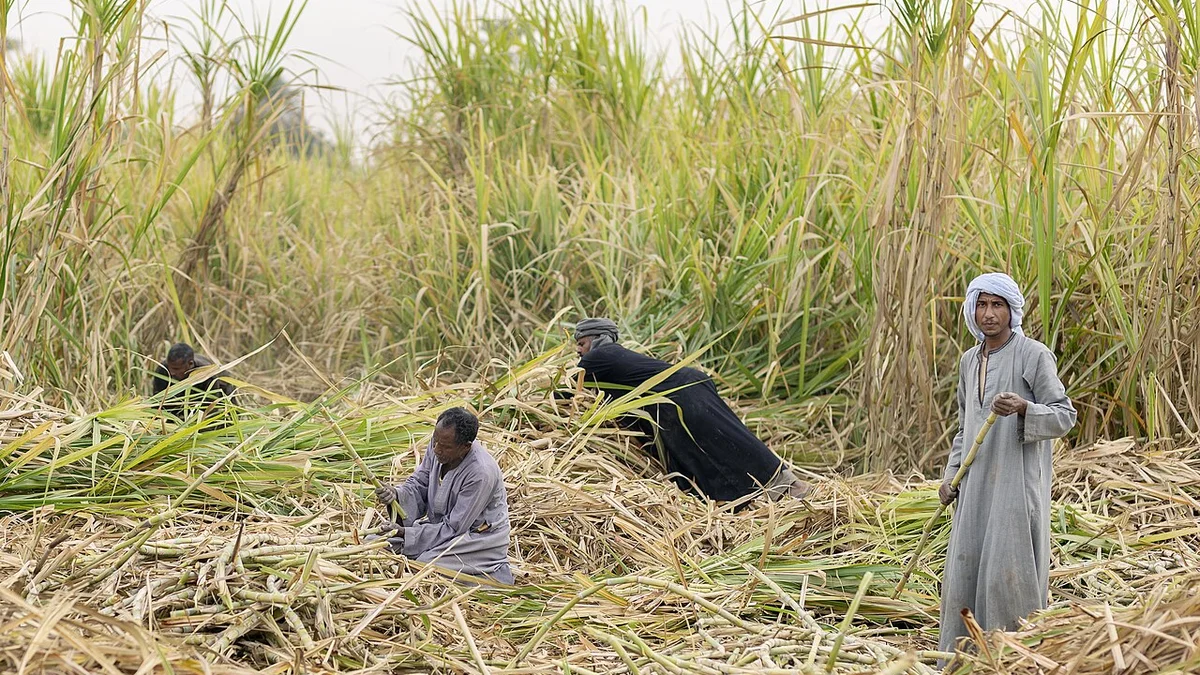
2. Physical Grading Spectrum: M-30 Bold vs S-30 Fine Grain Crystals
Commercial sugar grading in India is regulated under strict Bureau of Indian Standards (BIS) specifications, categorizing white crystal sugar primarily by crystal grain size and color reflectance. The grain size is designated by letter codes: ’L’ (Large, > 1.7 mm diameter), ’M’ (Medium, 1.2 to 1.7 mm diameter), and ’S’ (Small, 0.8 to 1.2 mm diameter). Color is designated by numeric reflectance indices (with 30 representing sparkling brilliant white sugar, and 31 representing standard off-white commercial sugar).
In the domestic market, M-30 is the dominant standard across northern and eastern India, where halwais, sweetmeat manufacturers, and beverage bottlers insist on bold sparkling crystals that impart superior visual texture to traditional mithai. In contrast, S-30 dominates western and southern Indian markets, favored by urban households because smaller crystals dissolve rapidly in daily tea, coffee, and culinary preparations. Both grades must conform to strict FSSAI chemical standards: minimum 99.8% sucrose purity, moisture below 0.05%, and sulfur dioxide residue under 70 parts per million (ppm).
| Quality Parameter | M-30 Commercial Grade | S-30 Commercial Grade | FSSAI Safety Limit / Rule |
|---|---|---|---|
| Crystal Sieve Grain Size | 1.20 mm - 1.70 mm (Medium Bold) | 0.80 mm - 1.20 mm (Fine Uniform) | Determined by mechanical vibration sieves |
| Sucrose Polarization Purity | 99.80% - 99.85% Pure Sucrose | 99.80% - 99.85% Pure Sucrose | Minimum 99.5% statutory threshold |
| Moisture Content by Weight | 0.03% - 0.05% Max Moisture | 0.03% - 0.05% Max Moisture | Maximum 0.05% to prevent fungal caking |
| Sulfur Dioxide (SO2) Residue | 35 - 50 ppm (Double Sulphitation) | 35 - 50 ppm (Double Sulphitation) | Statutory ceiling: Maximum 70 ppm |
| ICUMSA Color Rating Units | Under 100 - 120 ICUMSA Units | Under 100 - 120 ICUMSA Units | Lower value indicates brighter white crystal |
| Regional Market Demand | North & East India (Halwai & Mithai) | West & South India (Household Table) | Universal domestic food processing |
3. Sugar Mill Economics: Cane FRP, MSP Floor Price & Ethanol Blending (E20)
Sugar prices operate within a tightly controlled statutory framework designed to balance farmer remuneration against consumer price affordability. At the foundation of the value chain is the Fair and Remunerative Price (FRP) fixed annually by the central Cabinet Committee on Economic Affairs (CCEA)—currently established at ₹340 per quintal linked to a basic sugar recovery rate of 10.25%. Sugar mills are legally mandated under the Sugarcane (Control) Order to pay this FRP directly to cane farmers within 14 days of delivery, backed by interest penalties.
To ensure that sugar mills generate sufficient liquidity to clear these multi-thousand-crore cane payment liabilities, the government establishes a statutory Minimum Selling Price (MSP) for sugar—currently set at ₹3,100 per quintal ex-mill. Sugar factories are legally prohibited from selling refined sugar below this floor price. Concurrently, the revolutionary Ethanol Blending Programme (E20) has transformed sugar mill economics: by diverting over 40 lakh metric tons of surplus sucrose into B-heavy molasses and direct sugarcane syrup for fuel ethanol production, mills maintain lean domestic inventories, preventing market gluts and stabilizing ex-mill cash realizations.
4. Central Release Quotas: How Government Directives Govern Wholesale Bhav
The most powerful regulatory mechanism governing daily wholesale chini ka bhav is the Monthly Domestic Sugar Release Quota administered by the Directorate of Sugar under the DFPD. Every month, the government calculates estimated domestic consumption (typically 20 to 24 lakh metric tons per month, surging to 28 lakh tons during festive Dussehra and Diwali cycles) and allocates specific sale quotas to each of India’s 500+ operational sugar mills.
Mills are legally prohibited from dispatching even a single quintal beyond their allocated monthly quota. When government quota allocations are tight, wholesale prices firm up; when larger quotas are released, prices soften. This calibrated supply-management mechanism protects urban households from sudden price inflation while guaranteeing millers a steady, predictable cash flow throughout the crushing season.
5. Commercial Storage Protocols: 50 Kg Moisture-Proof Bags & FSSAI Standards
Proper warehouse storage is critical to preserving commercial sugar quality. Sugar is highly hygroscopic: when exposed to ambient relative humidity above 65%, dry sugar crystals absorb atmospheric moisture, causing sticky crystal caking, microbiological inversion into sour reducing sugars, and irreversible discoloration. Modern mills pack sugar in standard 50 kg B-Twill jute bags fitted with inner food-grade poly-liners or heavy multi-ply woven polypropylene bags conforming to BIS IS:14968.
In commercial godowns, bags are stacked on elevated wooden pallets (dunnage) away from damp masonry walls. In the taxation domain, raw and refined white sugar enjoys a favorable zero-rate GST classification when traded in bulk loose format, while a standard 5% GST applies to branded pre-packaged retail consumer pouches. Fast interstate transportation across national highways is facilitated by electronic e-Way bills, connecting sugar factories in western Maharashtra and western UP to wholesale terminal mandis across India within 48 to 72 hours.
Comprehensive Directory & Government Resource Links
6. Agricultural Inputs, Mechanization & Allied Farm Operations
Maximizing farm gate returns in chini ka bhav begins with strong agronomic management, calibrated soil nutrition, clean irrigation, and efficient harvesting machinery. Growers systematically coordinate crop care through NPK fertilizer grade selection and NBS pricing, DAP 50 kg bag subsidy and application rates, Saaf systemic and contact fungicide dosage, Roko (Thiophanate Methyl) disease control schedule, Coragen stem borer and caterpillar control, selective and pre-emergent herbicide management, commercial flower seed varieties, certified seeds policy and germination standards, rajgira amaranth seed farming, sesame seed (ellu) agronomy and market rates. Modern field execution and transport rely heavily on comparing specs and subsidies across field tractor power testing and safety buying checks, Solis 4515 E Yanmar-tech tractor specifications, Swaraj 744 FE and XT torque and fuel economy, Swaraj 735 FE 39 HP utility tractor review, full Swaraj tractor HP lineup and pricing, Mahindra 575 DI 45 HP workhorse mileage guide, Mahindra 575 DI XP Plus 47 HP torque and review, New Holland 3630 TX Plus 4x4 55 HP tractor specs, Powertrac Euro diesel-saver tractor models and prices. For specialized tillage, haulage, and water distribution, cultivators also evaluate VST Shakti and Kubota 12-15 HP power tiller prices, Farmtrac heavy tractor series and diesel saver specs, sprinkler irrigation layout and PMKSY subsidy.
7. Regional Mandi Networks, Credit Schemes & Official Data Sources
Across India's regulated market ecosystem, farmers compare live realizations across state trading yards and tap formal welfare and institutional financing. Growers benchmark regional supply arrivals and MSP procurement across Narela Anaj Mandi paddy and wheat arrivals, Neemuch Mandi medicinal spice and grain rates, Piplia Mandi wholesale garlic auctions, Mandsaur APMC lahsun and soybean market rates, all-India APMC mandi bhav directory, Maharashtra sugar mill ex-factory and APMC rates, domestic S-30 and M-30 sugar mill pricing, sugar release quota and FRP economics, ethanol blending and sugar wholesale trends, retail and wholesale chini rate benchmarks, arhar (tur) dal wholesale and MSP realizations, guar seed APMC & NCDEX prices. Key grain, oilseed, and pulse realization corridors additionally track castor seed GCH hybrid prices, cotton market CCI MSP rates, cold-pressed mustard oil economics, onion storage life and wholesale arrivals, Lasalgaon and metro onion mandi quotations, water-soluble NPK 19-19-19 foliar spray dosage. Agricultural diversification and specialty value chains spanning spices, plantation crops, dairy, and poultry offer steady cash flow—tracked via Shivalik mentha oil MCX and distillation yields, daily crude mentha oil spot rates, mentha herb agronomic cultivation and boiler distillation, Barabanki mint wholesale mandi and MCX benchmarks, Spices Board cardamom auction prices, small green cardamom e-auction grades, Kashmiri Mongra saffron prices and GI purity, raw cashew nut (RCN) processing realizations, processed cashew kernel export grades, W180 and W240 cashew wholesale pricing, California and Mamra almond wholesale rates, Kashmiri walnut giri and shell-out grades.
Other specialized horticulture and livestock enterprises include dried fig (anjeer) cultivation and mandi prices, Hass avocado commercial orchard economics, red and white dragon fruit per-kg realizations, Karnataka supari and arecanut auction prices, Rashi, Bette, and Chali arecanut grade pricing, Shivamogga and TUMCOS adike mandi rates, NCDEX Turmeric Price Today, daily NECC wholesale egg price movements, all-India NECC egg rate directory, Namakkal poultry belt NECC dispatch rates, Barwala layer farm paper rates and margins, Bangalore wholesale egg tray prices and retail spreads, commercial button and oyster mushroom cultivation, wholesale mushroom prices across urban mandis. Operational working capital, DBT cash transfers, and subsidized farm solar or e-KYC infrastructure can be accessed via CSC Aadhaar biometric e-KYC verification workflow, Kisan Credit Card 4% subvention loan and KRP application, PM-KISAN installment status and PFMS verification, PM-KUSUM solar irrigation pump capital subsidy. Primary regulatory notifications, technical bulletins, and statutory benchmark portals are published by Department of Food & Public Distribution (Sugar Division), National Federation of Cooperative Sugar Factories Limited (NFCSF), Food Safety and Standards Authority of India (FSSAI), and Agmarknet Agricultural Marketing Information Network.
Frequently asked questions
- What is the current indicative price of sugar (chini ka bhav) in India?
- Ex-mill sugar prices range between ₹3,450 and ₹3,680 per quintal in Maharashtra and UP, while wholesale mandi prices range from ₹3,700 to ₹3,950 per quintal. Retail grocery prices range between ₹40 and ₹46 per kg.
- What is the difference between M-30 and S-30 sugar grades?
- M-30 has medium-bold crystals (1.2-1.7 mm) preferred in northern India for sweets and beverages. S-30 has fine crystals (0.8-1.2 mm) popular in western and southern India for household daily tea and cooking. Official regulatory guidelines can also be verified on the Department of Food & Public Distribution (Sugar Division).
- What is the government Minimum Selling Price (MSP) for sugar?
- The Central Government has established the MSP of sugar at ₹3,100 per quintal (₹31/kg) ex-mill, meaning sugar factories cannot legally sell sugar below this threshold. Official regulatory guidelines can also be verified on the National Federation of Cooperative Sugar Factories Limited (NFCSF).
- How does the monthly release quota regulate sugar prices?
- The Directorate of Sugar allocates specific monthly sales quotas to each sugar mill to balance supply and demand. Releasing tighter quotas firms up prices, while larger quotas soften wholesale rates. Explore related mandi benchmarks and farmer support guides in our Narela Anaj Mandi paddy and wheat arrivals.
- What is the Fair and Remunerative Price (FRP) for sugarcane?
- The central FRP is set at ₹340 per quintal of sugarcane linked to a basic sugar recovery rate of 10.25%, which mills must pay to farmers within 14 days of delivery.
- How does ethanol blending affect domestic sugar prices?
- Diverting surplus sugarcane juice and B-heavy molasses into ethanol production removes over 40 lakh tons of excess sugar from the market, preventing inventory gluts and stabilizing prices.
- What are the main sugar-producing states in India?
- Maharashtra, Uttar Pradesh, and Karnataka are India’s top three sugar-producing states, together accounting for over 80% of total national output.
- What are FSSAI quality standards for white refined sugar?
- FSSAI mandates minimum 99.8% sucrose purity, maximum 0.05% moisture content, and sulfur dioxide residue strictly under 70 parts per million (ppm).
- Why does sugar cake or become sticky during monsoon months?
- Sugar is hygroscopic and absorbs moisture from humid air (relative humidity > 65%). Storing it in airtight containers or poly-lined bags prevents sticky caking and souring.
- What GST rate applies to sugar in India?
- Bulk loose sugar sold in 50 kg wholesale bags is exempt from GST (0%), while pre-packaged, branded retail containers carry a 5% GST rate.
- Where are the largest wholesale terminal sugar mandis in India?
- The largest wholesale sugar markets are Vashi (Navi Mumbai), Delhi Naya Bazar, Kanpur, Muzaffarnagar, and Kolkata.
- What is sulfur-free sugar and why does it cost more?
- Sulfur-free sugar is refined using advanced carbonation or membrane filtration technology rather than sulfur dioxide bleaching, producing ultra-pure crystals with zero chemical residue.
This article is for general information only and is not financial advice. Loan and scheme eligibility depends on partner and government criteria.