TSP Fertilizer Uses, Composition & 50kg Bag Price 2026
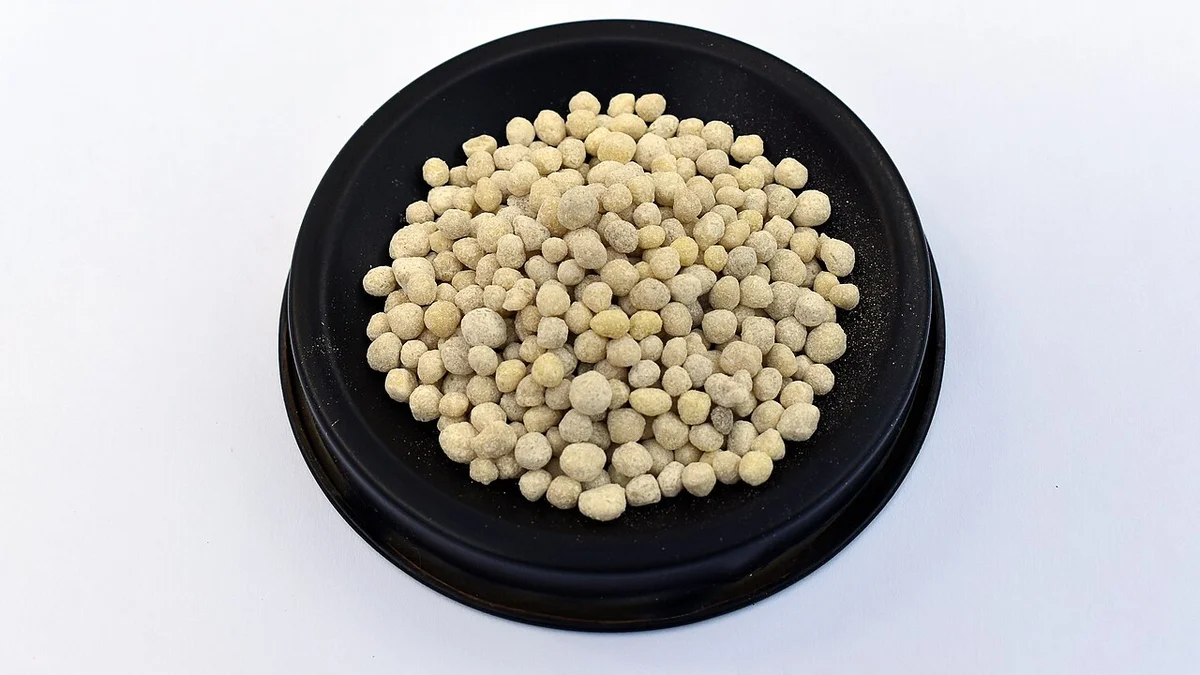
Triple Super Phosphate (TSP), widely recognized among farmers and fertilizer agronomists as high-grade concentrated phosphatic fertilizer (TSP khad), is one of the most effective non-nitrogenous sources of phosphorus for agricultural soils. Manufactured by reacting finely ground rock phosphate with concentrated phosphoric acid, TSP delivers an exceptionally high concentration of 46% available phosphorus pentoxide (P2O5), of which over 85% to 90% is fully water-soluble and immediately bioavailable for plant root uptake. Governed by quality benchmarks defined under the Fertilizer Control Order (FCO 1985) administered by the Department of Fertilizers (DoF) under the Ministry of Chemicals and Fertilizers, TSP plays a decisive role in root elongation, early seedling vigor, tillering in cereals, and nodulation in leguminous pulse crops across India.
1. Chemical Composition & FCO Specifications of Triple Super Phosphate
Under statutory FCO specifications, granular Triple Super Phosphate must contain a minimum of 46.0% total phosphate as P2O5, with at least 42.5% neutral ammonium citrate soluble phosphate and a minimum of 39.5% water-soluble P2O5. Furthermore, free phosphoric acid must remain below 3.0% by weight to prevent corrosive caking, and maximum moisture content cannot exceed 4.0%. Unlike Di-Ammonium Phosphate (DAP 18:46:0), TSP contains zero ammoniacal nitrogen, making it the premier choice for agronomists aiming to supply concentrated phosphorus without forcing unwanted vegetative nitrogen growth during critical flowering or fruit set stages.
| Fertilizer Name | Total Nitrogen (N) | Available Phosphorus (P2O5) | Sulphur (S) | Calcium (Ca) | Standard 50kg Bag Price (Indicative) |
|---|---|---|---|---|---|
| Triple Super Phosphate (TSP) | 0.0% | 46.0% | 1.0% - 1.5% | 13.0% - 15.0% | ₹1,250 - ₹1,450 |
| Di-Ammonium Phosphate (DAP) | 18.0% | 46.0% | 0.0% | 0.0% | ₹1,350 (Subsidized) |
| Single Super Phosphate (SSP) | 0.0% | 16.0% | 11.0% | 19.0% | ₹550 - ₹620 |
| NPK 12:32:16 Complex | 12.0% | 32.0% | 0.0% | 0.0% | ₹1,470 (Subsidized) |
| Muriate of Potash (MOP) | 0.0% | 0.0% | 0.0% | 0.0% (60% K2O) | ₹1,650 (Subsidized) |
Source: Official benchmark data compiled from Ministry of Agriculture & Farmers Welfare, ICAR research bulletins, State Agricultural Marketing Boards, and Agmarknet official market records (Updated 2026).
2. Agronomic Role: Root Establishment, Tillering & Pod Filling
Phosphorus is a fundamental constituent of adenosine triphosphate (ATP), the primary biochemical energy currency powering plant cell division, enzymatic activity, and genetic replication. Applying TSP during basal sowing directly promotes the expansion of primary root radicles and secondary lateral feeder roots, allowing developing crops to exploit deeper soil moisture layers and withstand dry spells. In cereal grains such as wheat, rice, barley, and maize, adequate early phosphorus availability maximizes productive tillering and panicle initiation. In oilseeds and pulses such as mustard, soyabean, gram, and groundnut, phosphorus enhances symbiotic atmospheric nitrogen fixation by strengthening Rhizobium root nodules, resulting in plump seed pods, higher test weights, and increased oil content.
3. Recommended Application Dosage & Scientific Placement Methods
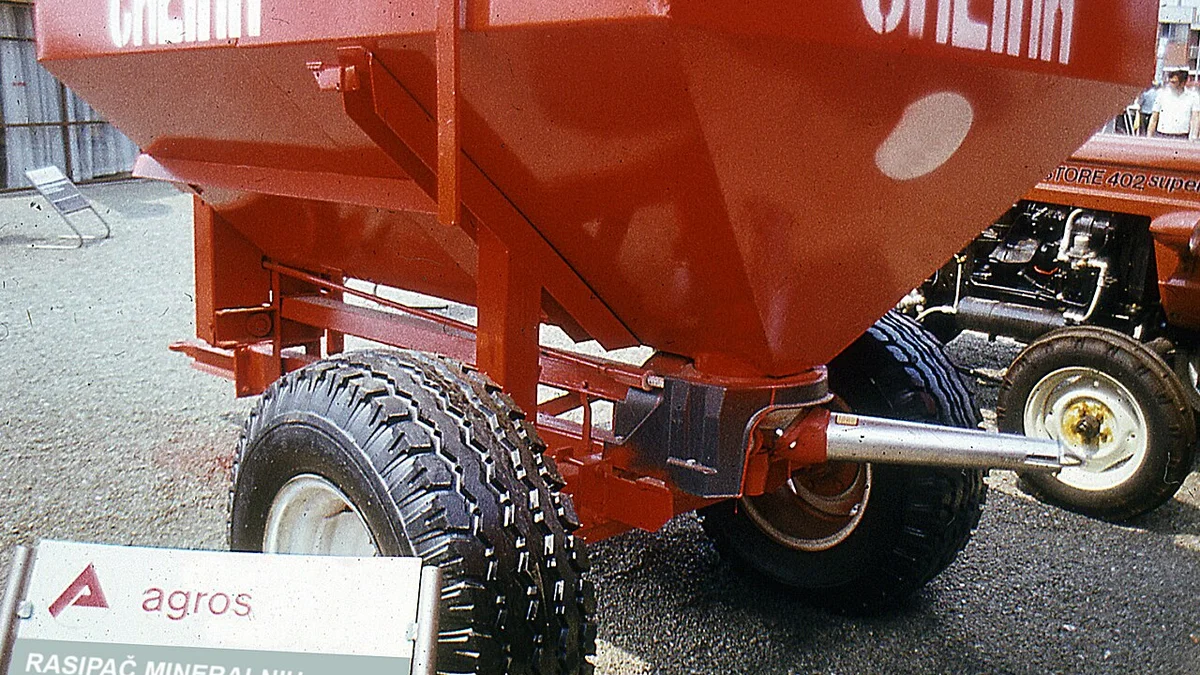
Because phosphorus is chemically immobile in soil and susceptible to fixation by aluminum and iron ions in acidic soils (pH below 6.0) or calcium ions in alkaline calcareous soils (pH above 7.8), broadcast application of TSP without soil incorporation leads to significant nutrient wastage. Agricultural university researchers (ICAR) recommend deep band placement of TSP granules 3 to 5 centimeters below and to the side of the seed line using seed-cum-fertilizer drills during sowing. Typical recommended basal application rates range from 40 to 60 kg of TSP per acre for wheat, maize, and paddy, 35 to 50 kg per acre for chickpea and mustard, and 75 to 100 kg per acre for high-density fruit orchards such as mango, citrus, and pomegranate during post-pruning dormancy.
4. TSP Price per 50kg Bag & Nutrient Based Subsidy (NBS) Policy
Under the Nutrient Based Subsidy (NBS) policy administered by the Government of India via the DBT e-Urvarak portal, non-urea phosphatic fertilizers receive specific per-kilogram fiscal subsidies determined biannually by the Union Cabinet. While DAP prices are historically stabilized under national subsidy umbrellas, imported and domestically granulated TSP bags (50 kg net weight) retail between ₹1,250 and ₹1,450 depending on port logistics and global rock phosphate import parity. Authorized Point of Sale (PoS) retailers verify farmer purchases through biometric Aadhaar authentication to ensure direct delivery of subsidized quantities to verified agricultural landholders.
| Target Crop | Recommended Dose (kg/Acre) | Best Timing of Application | Method of Application | Primary Yield Benefit |
|---|---|---|---|---|
| Wheat (Rabi) | 40 - 55 kg | Basal (At Sowing) | Drill 4 cm below seed | Stimulates early tillering, heavy earheads |
| Paddy / Rice (Kharif) | 45 - 60 kg | Final Puddling / Transplanting | Broadcast & incorporate before water | Profuse rooting, prevents seedling mortality |
| Gram / Chana | 35 - 45 kg | Basal Sowing | Seed-cum-fertilizer drill | Multiplies Rhizobium root nodules, pod set |
| Mustard / Rapeseed | 35 - 50 kg | Basal Placement | Side-band placement | Uniform flowering, higher seed oil content |
| Sugarcane | 70 - 90 kg | Furrow Planting & Earthing Up | Split placement in root zone | Thick cane stalks, elevated sucrose brix |
5. Best Management Practices & Storage Recommendations
To prevent hygroscopic moisture absorption and physical bag lump formation, TSP fertilizer bags should be stored in well-ventilated, moisture-proof warehouses placed on elevated wooden pallets at least 30 centimeters above concrete floor slabs. When applying TSP in acidic soils, combining the fertilizer with agricultural lime or enriched organic compost cushions phosphorus fixation, significantly increasing fertilizer use efficiency (FUE). In drip-irrigated commercial horticulture, water-soluble monoammonium phosphate (MAP 12:61:0) or monopotassium phosphate (MKP 0:52:34) is preferred for fertigation lines, while granular TSP remains the gold standard for extensive broad-acre basal fertilization.
6. Soil Health Dynamics, Mycorrhizal Synergy & Sustainable Phosphorus Use
Modern soil science emphasizes integrating chemical phosphatic fertilizers like Triple Super Phosphate with soil biological systems to maximize nutrient recovery and curb input costs. Applying TSP in conjunction with Vesicular Arbuscular Mycorrhizal (VAM) fungal biofertilizers significantly enhances phosphorus mobility. The microscopic fungal hyphae extend millimeters beyond plant root depletion zones, solubilizing fixed soil phosphates and channeling dissolved orthophosphate ions directly into cortical root cells. This symbiotic bio-chemical association allows farmers to reduce chemical TSP application rates by 20% to 25% without sacrificing grain yield or crop vigor.
Moreover, farmers cultivating in alkaline or calcareous soils (common in western Uttar Pradesh, Haryana, and Rajasthan) should consider co-applying agricultural gypsum or elemental sulfur alongside TSP. The localized acidic micro-environment created by sulfur oxidation minimizes calcium-phosphate precipitation, preserving water-soluble P2O5 in plant-absorbable forms for up to 60 days following basal application. Periodic soil testing every two years through the national Soil Health Card scheme ensures precise nutrient balancing, avoiding over-application while restoring balanced N-P-K stoichiometric ratios across intensive cropping cycles.
7. Crop Nutrition, Mechanized Spraying & Protected Farming Integration
Optimizing yields for growers adopting tsp fertilizer requires aligning balanced crop inputs, timely pest protection, and reliable mechanical application. Growers systematically coordinate crop care through Bayer Solomon broad-spectrum insect control, cumin seed (jeerige) pricing and grading, Single Super Phosphate (SSP) sulphur and phosphorus nutrition, melon seed (magaz) wholesale market trends, sesame seed (ellu) agronomy and market rates. Modern field execution and transport rely heavily on comparing specs and subsidies across hydraulic tipping and non-tipping tractor trolley prices, Agrimachinery DBT SMAM tractor and implement portal, John Deere 5310 4x4 55 HP CRDi tractor specs, Farmtrac 45 Classic Supermaxx tractor review, Swaraj 855 FE 4x4 heavy-duty 52 HP specs, dual-purpose tractor gadi haulage models, John Deere India tractor lineup and pricing, Swaraj 735 FE 39 HP utility tractor review, full Swaraj tractor HP lineup and pricing. For specialized tillage, haulage, and water distribution, cultivators also evaluate Swaraj 744 FE and XT torque and fuel economy, Mahindra 575 DI 45 HP workhorse mileage guide, Mahindra 575 DI XP Plus 47 HP torque and review, New Holland 3630 TX Plus 4x4 55 HP tractor specs, Powertrac Euro diesel-saver tractor models and prices, VST Shakti and Kubota 12-15 HP power tiller prices, Farmtrac heavy tractor series and diesel saver specs, Solis 4515 E Yanmar-tech tractor specifications, field tractor power testing and safety buying checks, sprinkler irrigation layout and PMKSY subsidy.
8. Institutional Credit, APMC Realizations & Allied Commodity Trends
Financing seasonal crop inputs through institutional banking and selling into transparent wholesale markets safeguards per-acre profitability. Growers benchmark regional supply arrivals and MSP procurement across Jakhal Mandi Fatehabad grain auction rates, soyabean mandi bhav and MSP rates, Mangoli & Sangli regional fruit mandi bhav, Dhamnod Mandi cotton and soyabean arrivals, Kalapipal Mandi onion and garlic auction rates, wheat (gehu) cultivation varieties and grain nomenclature, moong dal wholesale and split green gram rates, daily Neemuch Krishi Upaj Mandi garlic and herb prices, live APMC Krishi Upaj mandi auction trends, chana dal procurement and wholesale market rates, wheat (gehu) mandi auction and FCI procurement rates, Mandsaur APMC lahsun and soybean market rates. Key grain, oilseed, and pulse realization corridors additionally track Neemuch Mandi medicinal spice and grain rates, Piplia Mandi wholesale garlic auctions, Narela Anaj Mandi paddy and wheat arrivals, daily UP and Maharashtra sugar mill chini bhav, guar seed APMC & NCDEX prices, arhar (tur) dal wholesale and MSP realizations.
Agricultural diversification and specialty value chains spanning spices, plantation crops, dairy, and poultry offer steady cash flow—tracked via Byadgi red chilli oleoresin grading and APMC rates, Sangli and Nashik golden kismis (raisin) rates, copra milling and coconut oil wholesale rates, Arunachal Pradesh organic kiwi and Azadpur rates, dairy butter fat economics and Amul retail prices, Barabanki mint wholesale mandi and MCX benchmarks, wholesale mushroom prices across urban mandis, NCDEX Turmeric Price Today, Rashi, Bette, and Chali arecanut grade pricing, Bangalore wholesale egg tray prices and retail spreads, all-India NECC egg rate directory. Operational working capital, DBT cash transfers, and subsidized farm solar or e-KYC infrastructure can be accessed via Haryana Meri Fasal Mera Byora MSP procurement registration, Madhya Pradesh e-Uparjan and Kisan Kalyan portal, CSC Aadhaar biometric e-KYC verification workflow. Primary regulatory notifications, technical bulletins, and statutory benchmark portals are published by Ministry of Agriculture & Farmers Welfare, Agmarknet Mandi Price Portal, Ministry of Consumer Affairs, Food & Public Distribution, Central Farm Machinery Training & Testing Institute (CFMTTI), DoF, ICAR, and DBT e-Urvarak portal.
Frequently asked questions
- What is the primary nutrient present in TSP fertilizer?
- TSP (Triple Super Phosphate) contains 46% available phosphorus (P2O5), with over 85-90% in fully water-soluble form for direct plant assimilation.
- Does TSP fertilizer contain any nitrogen like DAP?
- No, TSP contains 0% nitrogen, making it ideal when farmers want to deliver concentrated phosphorus without stimulating unnecessary vegetative foliage growth. Official regulatory guidelines can also be verified on the Ministry of Agriculture & Farmers Welfare.
- What is the average price of a 50kg bag of TSP in India?
- A 50kg bag of Triple Super Phosphate typically retails between ₹1,250 and ₹1,450 depending on state logistics and current NBS subsidy rates. Official regulatory guidelines can also be verified on the Agmarknet Mandi Price Portal.
- Can TSP fertilizer be applied as a top dressing on standing crops?
- No, phosphorus is immobile in soil. TSP should always be placed into the root zone during basal sowing using a seed-cum-fertilizer drill.
- What is the difference between TSP and SSP fertilizer?
- TSP contains 46% P2O5, whereas SSP contains 16% P2O5 but also provides 11% sulphur and 19% calcium, beneficial for oilseeds in sulphur-deficient soils.
- Is TSP fertilizer water soluble?
- Yes, high-grade TSP has 39.5% to 42.5% water-soluble P2O5, enabling rapid dissolved phosphate uptake by young seedling roots.
- Which crops benefit most from Triple Super Phosphate application?
- Cereals (wheat, paddy, maize), pulses (chickpea, pigeon pea, green gram), and oilseeds (mustard, groundnut) exhibit pronounced root and yield responses to TSP.
- Can TSP be mixed with urea prior to sowing?
- TSP can be mixed with urea immediately before sowing, but the mixture should not be stored as urea moisture can cause stickiness and caking.
- How does TSP improve drought tolerance in crops?
- By accelerating vertical taproot and lateral root branching, TSP enables crops to tap deep subsoil moisture reserves during dry spells.
- Is TSP fertilizer subsidized under the DBT scheme in India?
- Yes, TSP is covered under the Nutrient Based Subsidy (NBS) regime, with subsidies credited to manufacturers to maintain affordable retail prices via PoS machines.
- What is the shelf life of stored TSP fertilizer bags?
- When kept dry in original sealed HDPE/PP woven sacks on wooden pallets, TSP maintains full chemical efficacy for over 2 years without deterioration.
- Can TSP be used in organic farming systems?
- No, chemically manufactured Triple Super Phosphate is synthetic; organic standards mandate untreated mined rock phosphate or bonemeal for phosphorus.
This article is for general information only and is not financial advice. Loan and scheme eligibility depends on partner and government criteria.