Pepper Rate Today: Black Pepper Price Per Kg in Kerala
Key takeaways
- As of November 2026, indicative 1 kg black pepper rates across India move from ₹640–₹675/kg at Kerala/Karnataka farmgate to ₹685–₹750/kg at Kochi/Mangalore wholesale terminals and ₹850–₹1,250/kg in packaged 1 kg retail brands.
- Converting fresh green harvest spikes into dry trade-grade black pepper achieves roughly a 33% drying recovery ratio (~3 kg fresh berries per 1 kg clean dry MG-1 pepper).
- Kerala's GI-tagged Malabar pepper, Idukki high-range Tellicherry, and Karnataka's Malnad estate grades attract distinct buyer premiums based on piperine strength (4.5%–5.5%) and bulk density.
- Export food safety compliance under Spices Board India and FSSAI mandates moisture under 12.0%, strict Maximum Residue Limit verification, and clean physical garbling.
- Direct 1 kg kirana and online buyers verify authentic terminal parity via Spices Board India and Agmarknet before comparing farmgate vs branded markup.
Evaluating the pepper rate today (Black Pepper Price Per Kg / 1 kg Rate) requires separating wholesale farmgate trade from value-added retail spice packaging across Kerala, Karnataka, Tamil Nadu, and major metro kirana markets. While bulk auction buyers quote rates per quintal (100 kg), grocery wholesalers, masala units, and D2C spice brands operate on clear 1 kg conversions linking Kerala hill farms to national retail shelves. Overseen by export quality regulators at the Spices Board of India (Spices Board India), national food safety guidelines under the Food Safety and Standards Authority of India (FSSAI), and commodity market records on Agmarknet, per-kg pricing widens progressively across drying shrinkage, pneumatic garbling, moisture testing, and moisture-barrier consumer packing. Readers tracking bulk APMC terminal quintal auctions can cross-check our dedicated Kochi and Pulpally auction price guide, browse KisanPe daily mandi rates, and compare household spice pricing against Indian cardamom per-kg benchmarks.
1. Black Pepper Price Per Kg Across Farmgate, Wholesale & 1 Kg Retail Tiers (November 2026)
As of November 2026, an indicative 1 kg lot of sun-dried commercial black pepper trades between ₹640 and ₹675/kg at smallholder farmgates in Wayanad, Idukki, and Kodagu, rises to ₹685–₹750/kg for clean machine-garbled Malabar (MG-1) and bold Tellicherry berries at Kochi or Mangalore terminals, and reaches ₹850–₹1,250 per 1 kg pouch in branded consumer retail depending on mesh sieve size (>=4.25 mm TGEB or >=4.75 mm TGSEB) and single-origin packaging. Across metro wholesale kirana hubs like Khari Baoli (Delhi), APMC Vashi (Mumbai), and Kolkata Posta, freight, GST, cleaning loss, and distributor margins typically add ₹55 to ₹110 per kg over southern dispatch rates. Traders and agro-processors evaluating per-kg sourcing spreads often compare cardamom per-kg rates, turmeric market prices, Byadgi chilli whole rates, and Kerala coconut oil market pricing.
| Supply Chain Stage (Per 1 Kg) | Standard Commercial Grade (₹/kg) | Bold Tellicherry TGEB / High-Range (₹/kg) | Special Extra Bold TGSEB / Export Clean (₹/kg) | Key Cost Driver Added |
|---|---|---|---|---|
| Farmgate Unsorted Sun-Dried (Kerala / Karnataka) | ₹640 - ₹665 | ₹675 - ₹705 | ₹705 - ₹730 | Threshing, Blanching & Solar Drying Loss |
| Village Aggregator / Primary Cooperative | ₹660 - ₹680 | ₹695 - ₹720 | ₹725 - ₹750 | Weight Aggregation & Local Freight |
| Kochi / Mangalore Wholesale Terminal | ₹685 - ₹705 | ₹720 - ₹745 | ₹750 - ₹780 | Sieve Garbling, Pinhead Removal & Lab Moisture |
| Metro Kirana Wholesale (Delhi / Mumbai / Chennai) | ₹725 - ₹765 | ₹765 - ₹810 | ₹805 - ₹855 | Interstate Transport, Handling & Trade Margin |
| Branded Packaged 1 Kg Consumer Pouch | ₹850 - ₹960 | ₹980 - ₹1,150 | ₹1,120 - ₹1,320 | FSSAI Testing, Zip-Lock Pack & Retail Margin |
2. Green-to-Dry Recovery Math & Processing Shrinkage Per 100 Kg Lot
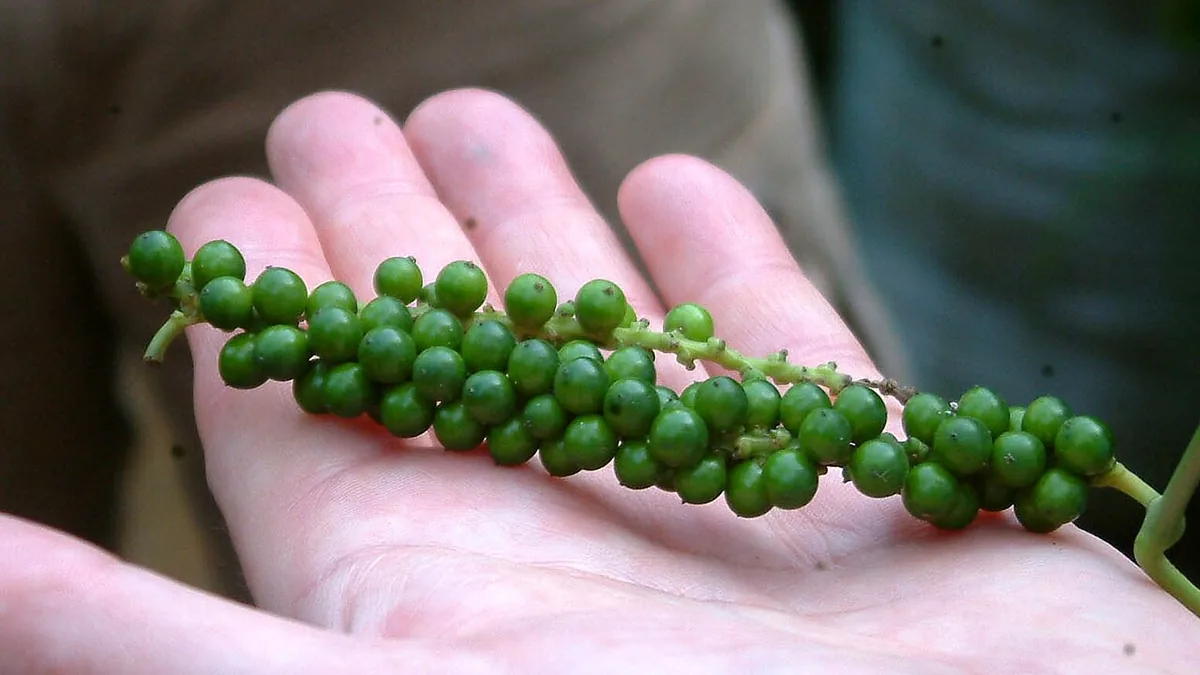
Understanding why dry black pepper price 1kg far exceeds green pepper berry prices starts with field moisture evaporation and commercial cleaning recovery. Fresh green peppercorns stripped off harvested spikes contain roughly 65% to 70% water, meaning 100 kg of fresh green berries dries down to only 32–36 kg of dark wrinkled pepper once cured below the export-safe 11.5%–12.0% moisture level. Thereafter, commercial grading plants pass raw estate lots through multi-deck aspirators, destoners, and spiral gravity separators to purge light pinheads (floaters), empty hulls, stalks, and dust—turning 100 kg of ungarbled estate pepper into roughly 90–94 kg of export-grade whole berries alongside 5–8 kg of low-density by-product sold for steam-distilled pepper oil or extraction. Growers seeking cleaner processing equipment or co-op value addition can review Spices Board processing infrastructure schemes, PM-FME spice enterprise subsidies, and spice processing unit setup math.
| Processing Phase | Starting Input Mass | Typical Clean Output Yield | Shrinkage / By-Product Fraction | Primary Quality Standard |
|---|---|---|---|---|
| De-spiking Fresh Green Clusters | 100 kg Harvested Spikes | 85 - 88 kg Green Berries | 12 - 15 kg Green Stems | Clean Single Berries Only |
| Hot-Water Blanching & Solar Drying | 100 kg Green Berries | 32 - 36 kg Dry Black Pepper | 64 - 68 kg Evaporated Water | Target Final Moisture 11.5% - 12.0% |
| Machine Cleaning & Garbling (UG to MG-1) | 100 kg Farm-Dried Pepper | 91 - 94 kg Garbled Pepper | 6 - 9 kg Light Berries & Dust | Bulk Density >= 550 g/L |
| White Pepper Skin Retting (Value-Add) | 100 kg Ripe Red Berries | 24 - 28 kg White Pepper | Pericarp Removed via Soak | Commands ~30% - 40% Retail Premium |
3. Pepper Price in Kerala vs Karnataka: Regional Quality & GI Malabar Advantage
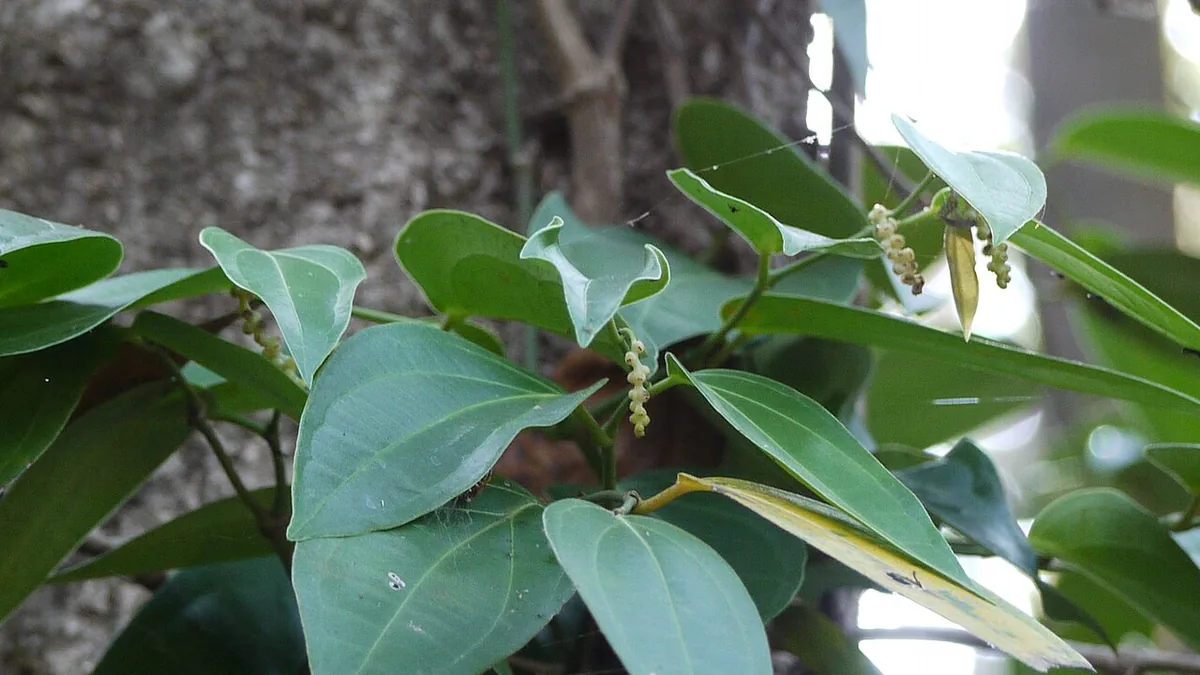
Buyers tracking pepper price in Kerala versus Karnataka notice a persistent ₹15 to ₹40 per kg gap favoring genuine Kerala Tellicherry and Malabar GI consignments—even when physical moisture looks identical. High-altitude vines grown across Idukki's cardamom hills and Wayanad's lateritic soils develop intense warm aroma notes, essential oil above 2.5%, and dense heavy kernels prized by spice packers. Meanwhile, Karnataka estates across Kodagu, Hassan, and Chikkamagaluru supply larger estate-scale commercial volumes, primarily intercropped under coffee shade canopies, offering reliable year-round supply liquidity at slightly sharper ex-estate rates. Both southern hubs operate under national horticulture support led by the Department of Agriculture & Farmers Welfare (Agricoop) and Kerala agricultural estate schemes, while planters compare input costs across modern pepper cultivation schedules, certified Panniyur & Karimunda vine varieties, and alternative spice crops like coriander and cumin.
4. Comparing Black Pepper Grades with White Pepper & Bulk Density Value
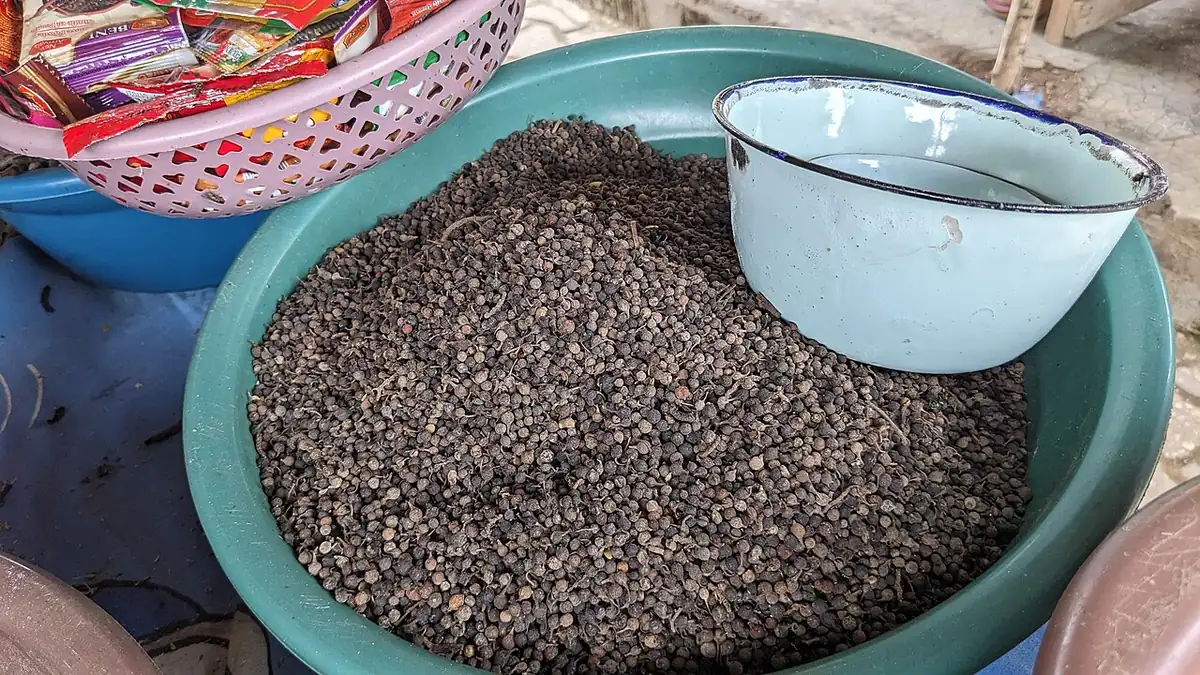
Before buying bulk 1 kg or 25 kg black pepper bags for foodservice or spice manufacturing, inspect grain density in addition to spot rate per kg. Low-priced lots selling 10% below Kochi terminal quotes frequently contain excess small pinheads or unripe light berries washed in coastal yards, reducing pungency per gram of spice. Dropping a small sample handful into clean room-temperature water quickly exposes excessive immature floaters. On the opposite tier, fully ripened red berries soaked and peeled into creamy White Pepper typically retail 30% to 40% above standard black pepper per kg due to lower ~25% weight recovery and extra labor. Buyers sourcing clean spices should verify FSSAI packaging labels (free of mineral oil coating or papaya seed adulteration), review our terminal market grading comparison, check long pepper (pipli) spice pricing, and track nearby agricultural market yards.
5. How Smallholder Planters & Bulk Buyers Lock Better Per-Kg Margins
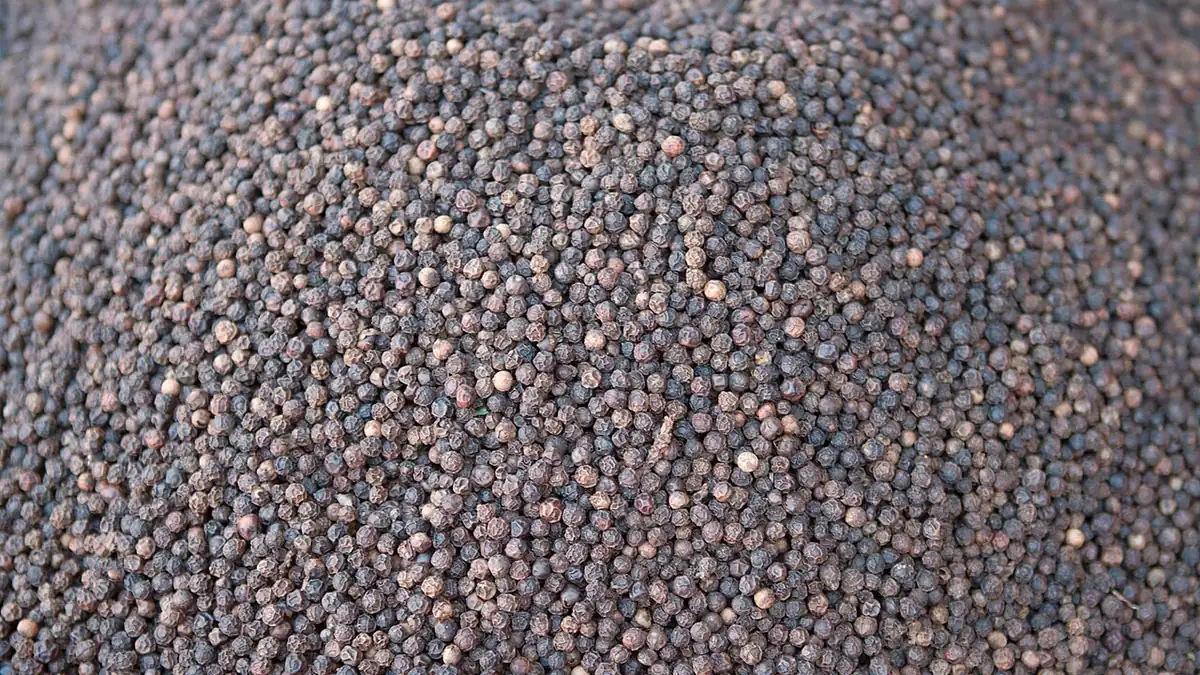
Farmers sell higher above local aggregator averages by shifting three estate practices ahead of harvest: picking spikes selectively only after 1–2 berries redden (raising dry recovery weight by 3%–4% per kg fresh weight), mechanical or solar-tunnel drying onto food-grade black sheets instead of dusty mud yards, and grading out light pinheads separately on the farm before negotiating with buyers. Simultaneously, bulk spice purchasers reduce working capital risk by checking daily KisanPe mandi intelligence spreads, tracking multi-month seasonal waves in the KisanPe price watch tool, confirming official auction closing sheets via Agmarknet bhav verification, and financing FPO inventory through KCC post-harvest facilities and rural godown storage support.
6. Frequently Asked Questions About Black Pepper Rate Per Kg
Explore direct, source-backed answers below on current 1 kg pricing across Kerala and Karnataka, drying weight ratios, white vs black pepper cost, and food safety compliance.
Frequently asked questions
- What is the indicative black pepper rate today per 1 kg in Kerala and retail markets?
- As of November 2026, indicative 1 kg black pepper rates range from ₹640–₹705/kg at Wayanad and Idukki farmgates, ₹685–₹750/kg at Kochi wholesale terminals for Garbled MG-1 and bold Tellicherry, and ₹850–₹1,250/kg for graded 1 kg retail pouches. Check daily spot updates on Spices Board India and Kochi pepper auction prices.
- Why does 1 kg retail black pepper cost noticeably more than farmgate pepper price?
- Converting ungarbled estate pepper into retail 1 kg packs incurs a 6%–9% cleaning shrinkage loss (removing light berries, stalks, and dust), laboratory moisture and piperine assays, interstate cold-chain freight, 5% GST, nitrogen-flushed barrier pouches, and wholesale/retailer distribution margins.
- How many kg of green pepper berries make 1 kg of dry black pepper?
- On average, fresh green pepper carries 65%–70% moisture, so growers harvest approximately 2.8 to 3.1 kg of green de-spiked berries to obtain 1 kg of crisp sun-dried black pepper at 11.5%–12.0% moisture. Follow post-harvest drying best practices inside our black pepper cultivation guide.
- Is Kerala black pepper better or pricier than Karnataka pepper per kg?
- Geographical Indication Malabar and high-range Idukki Tellicherry lots typically trade ₹15 to ₹40 per kg higher than mixed plains lots due to dense high-elevation berries, higher essential oil aroma (>2.5%), and 4.5%–5.5% piperine spice punch verified under Spices Board India export standards.
- How can a buyer verify purity when purchasing 1 kg black pepper?
- Check for a valid FSSAI licence number, verify tight dark wrinkled skins with high sink density in water (minimal hollow floaters), and inspect aroma sharpness—crushing 2–3 grains should release warm citrus-woody oils with zero mineral-oil greasiness.
- How much does White Pepper cost per 1 kg compared to Black Pepper?
- White pepper—prepared by soaking fully ripe red berries to remove the dark outer pericarp—typically retails 30% to 40% higher per kg (around ₹1,150–₹1,650/kg retail) because peeling yields only ~24%–28% dry weight versus ~33% for sun-dried black pepper.
- Where do FPOs and traders check official daily wholesale pepper rates?
- Commission buyers and estate owners verify daily closing terminal numbers on Spices Board India and regulated Karnataka APMCs on Agmarknet. Check step-by-step lookup filters inside our mandi rate lookup guide and KisanPe mandi rates page.
- What is the best storage method to maintain dry black pepper weight for months?
- Store fully dried (<11.5% moisture) garbled peppercorns inside moisture-proof high-density polyethylene liners placed inside breathable jute bags off wooden pallets. Properly cured lots keep flavor and bulk weight for 18–24 months without mold growth; explore storage support under our rural godown storage scheme guide.
- What makes Tellicherry Garbled Special Extra Bold (TGSEB) worth a higher 1 kg rate?
- TGSEB selects only the largest matured berries (>=4.75 mm diameter) reaching 570–600 g/L bulk density, resulting in uniform gourmet table-grinder peppercorns loaded with rich complex aroma and intense natural pungency.
- Do Spices Board subsidies support pepper cleaning and solar drying on farms?
- Yes—under Spices Board India grower schemes and Kerala estate horticulture programs, eligible individual planters and FPOs receive cost-sharing grants for polycarbonate solar dryers, mechanical pepper threshers, and clean spice grading sheds.
- Which pepper variety gives the heaviest dry yield per hectare for Indian farms?
- Released varieties from ICAR-IISR and Kerala Agricultural University—including Panniyur-1, Panniyur-5, IISR Sreekara, and Subhakara—deliver both high dry recovery (~34%–36%) and heavy 560+ g/L berries as highlighted in our pepper planting material overview.
- How should masala brands calculate buying parity between green, ungarbled, and MG-1 pepper?
- Small spice mills purchasing raw ungarbled farm lots should factor in ~7%–8% cleaning loss plus drying and electricity charges (~₹12–₹18/kg). Read our masala grinding feasibility guide alongside Agricoop value-chain benchmarks before locking inventory contracts.
This article is for general information only and is not financial advice. Loan and scheme eligibility depends on partner and government criteria.