Imidacloprid 17.8 SL: Dosage, Uses, Price & Safety 2026
Key takeaways
- Imidacloprid 17.8% SL (Soluble Liquid) is India’s standard systemic neonicotinoid formulation (IRAC Group 4A) targeting piercing-sucking insects across cotton, paddy, chilli, tomato, okra, mango, and citrus.
- Standard CIB&RC approved foliar spray dosage is 0.3 to 0.5 ml per liter of water (40 to 100 ml per acre in 200 L water; roughly 5 to 8 ml per 15-liter knapsack tank), depending on crop canopy and target pest.
- Because SL is a true water-miscible liquid concentrate, it dissolves instantly without nozzle clogging, absorbs rapidly through leaf cuticles, and translocates upward via plant xylem to protect emerging shoots.
- Indicative retail market prices in November 2026 range from Rs 140–Rs 210 for 100 ml, Rs 320–Rs 460 for 250 ml, and Rs 1,050–Rs 1,550 for 1-liter packs across licensed brands.
- Mandatory Pre-Harvest Intervals (PHI) vary sharply by crop—3 days for Okra and Tomato, 21 to 40 days for Paddy, Cotton, and Mango (always verify the bottle leaflet before spraying).
- Strict pollinator safety rule: Imidacloprid is highly toxic to honeybees; never spray on blooming mustard, orchard blossoms, or flowering vegetables during daytime foraging.
Imidacloprid 17.8% SL (Soluble Liquid) is one of the most widely adopted systemic crop protection formulations in Indian agriculture—popularly marketed across rural agri-retailers under licensed brand names such as Confidor, Media, Tatamida, Victor, and Imidagold. Unlike wettable granules or soil-drench concentrates covered in our broader Imidacloprid technical parent guide and Imidacloprid 17.8 SL chemical reference, the 17.8% SL liquid formulation is specifically engineered for rapid dissolution in spray tanks and swift cuticular foliar absorption against piercing-sucking pests.
When sap-feeding insects—including cotton jassids (leafhoppers), chilli thrips, mustard aphids, paddy brown planthoppers (BPH), and mango hoppers—pierce tender plant shoots, they drain plant vigor and transmit devastating viral diseases such as Leaf Curl Virus and Yellow Vein Mosaic. Under statutory label registrations enforced by the Central Insecticides Board & Registration Committee (CIB&RC) and the Directorate of Plant Protection, Quarantine & Storage (DPPQS), Imidacloprid 17.8% SL stops sap feeding within 15 to 30 minutes of uptake while guarding new vegetative flushes for 10 to 14 days. Farmers building integrated spray schedules can also check our broad-spectrum insecticide classification and calculate exact pump dilutions via the KisanPe pesticide dosage calculator.
1. How Imidacloprid 17.8% SL Works: Mode of Action & Xylem Mobility
Chemically belonging to the neonicotinoid (chloronicotinyl) family and classified under IRAC Group 4A by the Insecticide Resistance Action Committee (IRAC), Imidacloprid acts as a competitive agonist on nicotinic acetylcholine receptors (nAChR) inside the insect central nervous system. Once sprayed onto foliage, the 17.8% Soluble Liquid penetrates the waxy leaf cuticle via translaminar movement and enters the plant’s upward vascular transport system (xylem).
Because sucking pests feed directly inside leaf phloem and vascular tissues, they ingest active Imidacloprid alongside plant sap even if they hide on curled leaf undersides untouched by direct spray droplets. Upon ingestion, Imidacloprid binds irreversibly to nAChR nerve sites, triggering rapid neural hyperexcitation, immediate cessation of stylet probing (preventing further virus spread), paralysis, and mortality. Importantly, Imidacloprid targets sucking insects selectively and does not control leaf-chewing caterpillars (such as Helicoverpa bollworms or fruit borers) or spider mites.
- Zero Clogging SL Clarity: True Soluble Liquid mixes homogeneously in clear water without leaving grit or chalky residue inside hollow-cone brass nozzles or drone micro-atomizers.
- Acropetal New-Shoot Protection: Moves upward with transpiration flow to shield tender emerging leaves for 10 to 14 days post-spray.
- Dual Contact & Systemic Entry: Delivers immediate contact knockdown on exposed nymphs alongside prolonged systemic stomach activity inside sap vessels.
- Formulation Distinction: Use 17.8% SL for standard foliar sprays; choose 70% WG for compact bulk storage, 30.5% SC for subterranean termite barriers, and 48% FS exclusively for certified seed treatment.
2. CIB&RC Approved Crop-Wise Dosage, Water Volume & Waiting Periods
Over-dosing Imidacloprid wastes money, triggers chemical burn on tender buds, and violates food residue safety ceilings, whereas under-dosing selects resistant pest strains. Below are indicative CIB&RC approved label dosages across major Indian crops (always verify the physical pack leaflet before mixing):
| Crop | Approved Target Pests | Dosage per Acre | Dilution (15 L Tank) | Water / Acre | Mandatory PHI |
|---|---|---|---|---|---|
| Cotton | Aphids, Jassids, Thrips, Whitefly | 40 - 50 ml / acre (100 - 125 ml/ha) | 3.5 - 4.0 ml / 15 L | 150 - 200 L | 40 Days |
| Paddy (Rice) | Brown Planthopper (BPH), WBPH | 40 - 50 ml / acre (100 - 125 ml/ha) | 3.5 - 4.0 ml / 15 L | 200 L (Base) | 40 Days |
| Chilli | Jassids, Aphids, Thrips | 50 - 100 ml / acre (125 - 250 ml/ha) | 5.0 - 7.5 ml / 15 L | 200 L | 40 Days (Check label) |
| Tomato | Whitefly (Leaf Curl Vector) | 60 - 70 ml / acre (150 - 175 ml/ha) | 4.5 - 5.5 ml / 15 L | 200 L | 3 Days |
| Okra (Bhindi) | Aphids, Jassids, Thrips | 40 - 50 ml / acre (100 - 125 ml/ha) | 3.5 - 4.0 ml / 15 L | 200 L | 3 Days |
| Citrus & Mango | Psylla, Leaf Miner, Mango Hopper | 0.4 ml / L water (Trunk & Canopy) | 6.0 ml / 15 L | High Volume | 15 - 45 Days |
| Sugarcane | Termites (Setts / Soil Drench) | 140 ml / acre (350 ml/ha) | Drench along furrows | 400 - 500 L | 75 Days |
| Groundnut | Aphids, Jassids | 40 - 50 ml / acre (100 - 125 ml/ha) | 3.5 - 4.0 ml / 15 L | 200 L | 40 Days |
Source: Compendium of Approved Uses of Insecticides published by CIB&RC and DPPQS (Ministry of Agriculture & Farmers Welfare), reviewed November 2026. Note: In paddy, direct the spray nozzle downward toward the lower culm base near water level where Brown Planthoppers congregate, rather than spraying only upper leaf tips.
3. Imidacloprid 17.8% SL Price List in India (November 2026)
Because Imidacloprid went off patent years ago, scores of generic and multinational manufacturers formulate 17.8% SL across India—meaning per-acre spray cost is remarkably affordable (typically Rs 60 to Rs 120 per acre depending on brand positioning and dosage).
| Pack Size | Indicative Generic Brand Price (Rs) | Indicative MNC / Flagship Brand Price (Rs) | Approximate Acre Coverage (@ 50 ml/ac) |
|---|---|---|---|
| 50 ml Bottle | Rs 75 - Rs 110 | Rs 115 - Rs 150 | 1 Acre (1 Spray) |
| 100 ml Bottle | Rs 135 - Rs 185 | Rs 195 - Rs 245 | 2 Acres |
| 250 ml Bottle | Rs 290 - Rs 380 | Rs 410 - Rs 520 | 5 Acres |
| 500 ml Bottle | Rs 540 - Rs 720 | Rs 760 - Rs 950 | 10 Acres |
| 1 Liter Bottle | Rs 1,000 - Rs 1,350 | Rs 1,450 - Rs 1,800 | 20 Acres |
Source: Licensed agrochemical distributor listings and state cooperative federation rates compiled as of November 2026. Disclaimer: Indicative retail prices vary by brand (e.g., Confidor vs Media vs generic ISI-marked brands), state GST, and seasonal inventory; always demand an official GST invoice and verify manufacturing batch expiry.
4. Tank-Mix Compatibility, Water Quality & Spraying Best Practices
Farmers frequently combine sucking-pest sprays with foliar nutrients or disease protectants to save labor costs. Imidacloprid 17.8% SL mixes well in neutral clean water (pH 6.0 to 7.2) with most neutral agrochemicals, including water-soluble NPK 19:19:19, neutral systemic fungicides like Carbendazim + Mancozeb (Saaf), and modern strobilurin/triazole fungicides. However, it degrades rapidly via alkaline hydrolysis in strongly alkaline mixtures.
- Never Mix With Alkaline Fungicides: Strictly avoid mixing Imidacloprid 17.8% SL with Bordeaux mixture, lime-sulfur, or high-pH copper hydroxide sprays, which chemically break down the active molecule.
- Avoid Adding Extra Spreading Oils Blindly: Standard commercial 17.8% SL packs already contain calibrated wetting surfactants; adding high doses of mineral oil in 40°C heat can cause leaf scorching.
- Proper Spray Equipment: Calibrate hollow-cone nozzles on battery or manual sprayers (see our agricultural spray machine guide) to generate fine uniform mist droplets without runoff dripping.
- Jar Test First: Before mixing any new fertilizer or fungicide tank partner, mix proportional drops in a 1-liter clear glass jar and observe for 15 minutes for cloudiness, heat, or sediment.
5. Resistance Management & Mixed Pest Caution (When Not to Use 17.8% SL)
Because Imidacloprid 17.8% SL has been sprayed extensively across India for over two decades, entomologists at Indian Council of Agricultural Research (ICAR) centers warn that heavy repeated usage triggers severe resistance in Cotton Whiteflies, Chilli Thrips (Scirtothrips dorsalis and Thrips parvispinus), and Paddy Brown Planthoppers. Spraying Imidacloprid continuously every 10 days also harms predatory mirid bugs and spiders, triggering sudden BPH hopper-burn flare-ups in paddy.
- Limit to 1–2 Sprays Per Season: Do not spray IRAC Group 4A neonicotinoids (Imidacloprid, Thiamethoxam, Acetamiprid) in back-to-back cycles.
- Switch Chemistry When Thrips or Whiteflies Resist: Rotate with distinct IRAC groups such as Flonicamid (IRAC 29), Pymetrozine (IRAC 9B), Dinotefuran, or newer broad-spectrum options like Isocycloseram (Simodis).
- When Caterpillars Are Also Present: Because Imidacloprid 17.8% SL does not kill fruit borers or bollworms, growers facing simultaneous sucking + chewing pests may evaluate dual-action premixes like Thiamethoxam + Lambda-cyhalothrin (Alika) or selective diamides only at verified Economic Threshold Levels (ETLs).
6. Honeybee Protection, Toxicity Handling & Farmer Economics
Imidacloprid 17.8% SL typically carries a Yellow or Blue CIB&RC toxicity triangle depending on registrant formulation, alongside an explicit warning: Toxic to Honeybees. In flowering mustard, sunflower, cucumber, and fruit orchards, morning sprays contaminate nectar and pollen, causing disorientation and mortality in foraging bees essential for crop pollination and fruit yield. Apply Imidacloprid strictly during pre-flowering vegetative stages or—when unavoidable near neighboring fields—strictly in the late evening after 4:30 PM when hives have closed.
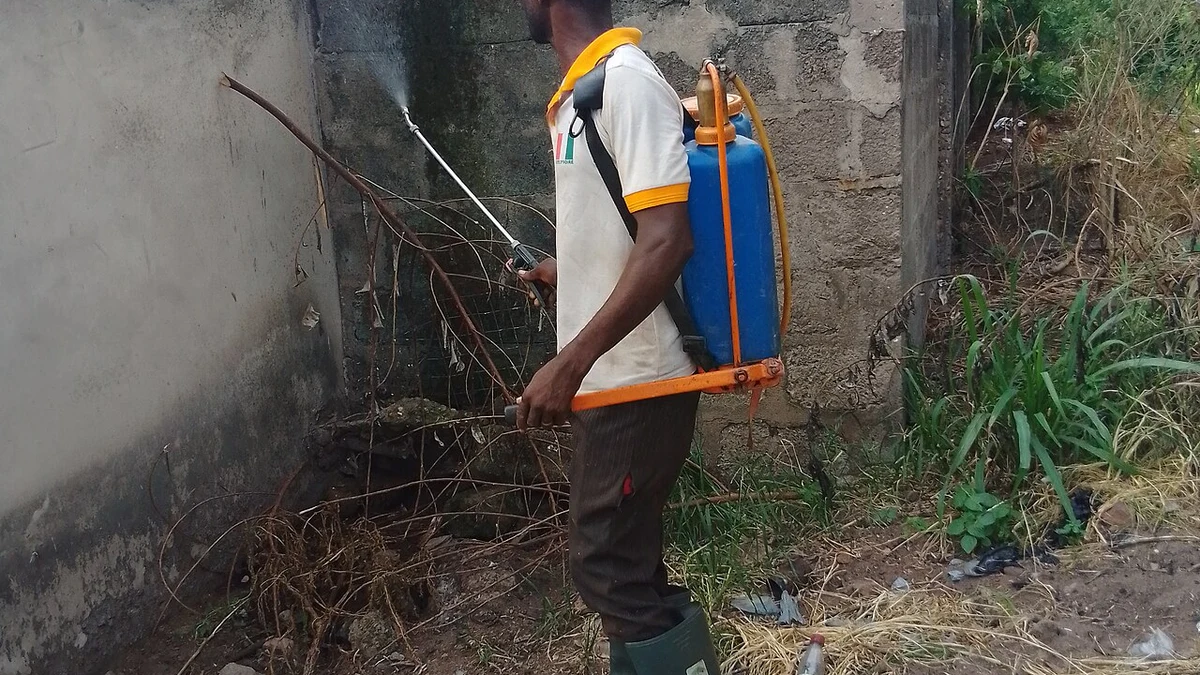
Applicators must wear nitrile rubber gloves, face respirator masks, eye goggles, and gumboots during mixing and spraying, walking strictly with wind direction. Farmers managing crop input expenses and seasonal income risk can also optimize cash flow via our KCC working capital calculator, safeguard harvests under PMFBY crop insurance, and explore central subsidies at KisanPe government schemes.
Frequently asked questions
- What is the correct dosage of Imidacloprid 17.8% SL per liter of water and per acre?
- The standard CIB&RC approved foliar spray dose is 0.3 to 0.5 ml per liter of water (roughly 5 to 7.5 ml per 15-liter knapsack tank), translating to 40 to 100 ml per acre in 150 to 200 liters of clean water depending on the crop. Compute exact tank mixes via our pesticide dosage calculator.
- Which crops and insects is Imidacloprid 17.8% SL approved for in India?
- Under CIB&RC guidelines, Imidacloprid 17.8% SL is registered for controlling aphids, jassids (leafhoppers), thrips, whiteflies, and brown planthoppers (BPH) in Cotton, Paddy, Chilli, Tomato, Okra, Groundnut, Citrus, and Mango, as well as soil termites in Sugarcane.
- Does Imidacloprid 17.8% SL kill caterpillars, bollworms, or fruit borers?
- No. Imidacloprid is selective toward piercing-sucking pests (aphids, jassids, thrips, hoppers) and termites; it does not control chewing caterpillars like cotton bollworms or tomato fruit borers. For mixed sucking and caterpillar outbreaks, consult our Alika dual-action insecticide guide.
- What is the price of Imidacloprid 17.8% SL (Media / Confidor) in 2026?
- In November 2026, indicative retail prices range from Rs 135 to Rs 245 for 100 ml, Rs 290 to Rs 520 for 250 ml, Rs 540 to Rs 950 for 500 ml, and Rs 1,000 to Rs 1,800 for 1-liter packs depending on whether you select generic ISI-certified brands or multinational flagship brands.
- What is the difference between Imidacloprid 17.8% SL, 70% WG, and 30.5% SC?
- Imidacloprid 17.8% SL is a clear water-soluble liquid built for standard foliar sprays. Imidacloprid 70% WG is a concentrated dry water-dispersible granule applied at tiny 12–15 g/acre doses, while 30.5% SC is a thick suspension concentrate mainly preferred for termite drenching. Compare all formulations in our Imidacloprid master guide.
- Can Imidacloprid 17.8% SL be mixed with NPK 19:19:19 or fungicides?
- Yes, it is compatible in neutral water with water-soluble NPK 19:19:19 and neutral fungicides like Carbendazim + Mancozeb after a 1-liter jar test. Never mix with strongly alkaline Bordeaux mixture or lime-sulfur.
- What is the Pre-Harvest Interval (PHI) for Imidacloprid 17.8% SL on vegetables?
- Waiting periods vary sharply by crop: 3 days for Tomato and Okra (Bhindi), and 40 days for Cotton, Paddy, and Groundnut. Always inspect the physical manufacturer bottle leaflet for crop-specific PHI rules to ensure produce meets food residue limits.
- Why is Imidacloprid 17.8% SL not recommended during crop flowering?
- Imidacloprid is highly toxic to honeybees and wild insect pollinators. Spraying blooming mustard, vegetables, or orchard flowers harms foraging bees and reduces natural cross-pollination and fruit set. Always spray before flowering or strictly late evening after foraging ceases.
- How should I spray Imidacloprid 17.8% SL in paddy for Brown Planthopper (BPH)?
- Because Brown Planthoppers feed near the base of paddy tillers just above standing water, drain excess field water temporarily if feasible and direct the hollow-cone sprayer nozzle directly onto the lower stem bases rather than misting only upper leaf blades.
- How long does Imidacloprid 17.8% SL stay active and become rainfast?
- Foliar sprays absorb into leaf tissues and achieve rainfastness within 2 to 3 hours once spray droplets dry completely. Systemic xylem protection typically lasts 10 to 14 days on actively growing shoots.
- Why does whitefly or BPH sometimes flare up after repeated Imidacloprid sprays?
- Continuous use of the same IRAC Group 4A neonicotinoid builds genetic pest resistance while wiping out beneficial predators (spiders and mirid bugs). Under IRAC resistance management rules, limit Imidacloprid to 1–2 sprays per season and rotate with distinct chemical modes of action.
- Where can farmers verify authentic registration and label claims for Media or Confidor?
- Farmers can verify legal CIB&RC registration numbers, approved crops, and official label claims on dppqs.gov.in and purchase only sealed bottles accompanied by GST retail bills.
This article is for general information only and is not financial advice. Loan and scheme eligibility depends on partner and government criteria.