Horticulture Department India: MIDH, NHB & State DBT
Key takeaways
- Two-Tier Institutional Architecture: Every Indian state operates its own State Horticulture Mission / Department (Bagwani Vibhag) connected centrally to the Mission for Integrated Development of Horticulture (MIDH) and the National Horticulture Board (NHB) under the Ministry of Agriculture & Farmers Welfare.
- Funding Share Ratios (PIB / MIDH): Centrally Sponsored MIDH programmes follow a 60:40 Centre-to-State funding split in general states, 90:10 in North-Eastern and Himalayan states, and 100% Central funding for designated national-level and NHB programmes.
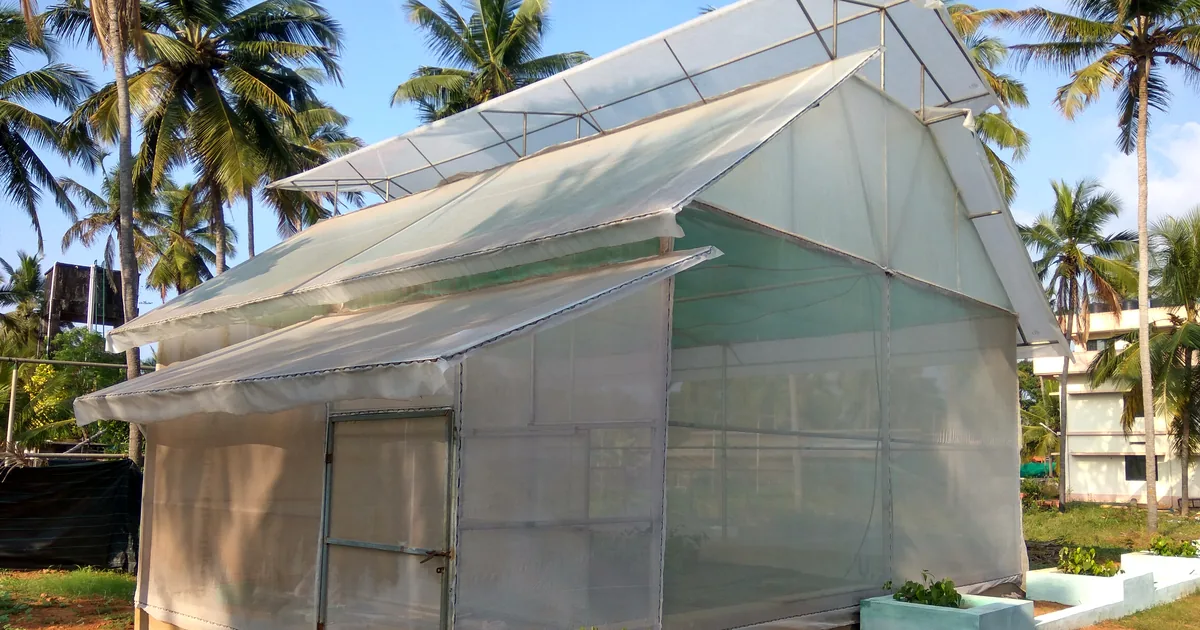
- Protected Cultivation & Orchard Support: MIDH State Horticulture Missions typically offer ~50% cost-norm subsidy for Naturally Ventilated Polyhouses (NVPH) and shade-net houses up to 4,000 sq. m per beneficiary, alongside 40% (general states) to 50% (NE/hilly states) assistance for new fruit orchard expansion integrated with drip irrigation.
- Commercial Scale via NHB: Large commercial polyhouses, high-tech nurseries, pack houses, ripening chambers, and cold storages move through credit-linked back-ended subsidies sanctioned via the National Horticulture Board (nhb.gov.in) paired with scheduled bank term loans.
- Mandatory Drip & Pre-Sanction Discipline: Under MIDH norms, new orchard subsidies require drip irrigation integration (often converged with PMKSY Per Drop More Crop), and farmers must obtain online departmental work-order approval before buying planting material or erecting structures.
Searching for your Horticulture Department portal (widely known as Udyan Vibhag or Bagwani Vibhag in Hindi-belt states) is the essential first step toward unlocking government subsidies for high-value fruit orchards, commercial vegetable nurseries, protected polyhouses, shade-net structures, solar cold rooms, plastic mulching, and mushroom units. While traditional field cereals fall under State Agriculture Departments, commercial horticulture—covering fruits, vegetables, spices, flowers, plantation crops, aromatic herbs, apiculture, and mushrooms—is administered through State Horticulture Missions linked to the Mission for Integrated Development of Horticulture (MIDH) and the National Horticulture Board (NHB).
Because there is no single login form covering all 28 states and 8 Union Territories, farmers frequently confuse central NHB credit-linked schemes with state-level Direct Benefit Transfer (DBT) portals. This guide maps out exact central and state horticulture department portals, verified Press Information Bureau (PIB) cost-share norms, polyhouse and orchard eligibility limits, drip irrigation linkage rules, and step-by-step online registration checks.
How India’s Horticulture Department ecosystem works: State Missions vs MIDH vs NHB
At the national policy level, India’s Horticulture Division under the Department of Agriculture & Farmers Welfare (agriwelfare.gov.in) oversees three complementary delivery channels. Understanding which office processes your file depends entirely on project scale, land area, and whether you seek direct state DBT assistance or a bank credit-linked commercial subsidy:
| Institution / Channel | Primary Mandate & Scheme Scope | Funding Pattern & Route | Best Suited Beneficiaries |
|---|---|---|---|
| Mission for Integrated Development of Horticulture (MIDH — midh.gov.in) | Holistic horticulture growth: nurseries, orchard area expansion, protected cultivation up to 4,000 sq. m, post-harvest pack houses, beekeeping & rejuvenation | 60:40 Centre:State (General states); 90:10 Centre:State (NE & Himalayan states) | Individual farmers, FPOs, SHGs, FIGs & cooperatives applying via State Horticulture Missions |
| National Horticulture Board (NHB — nhb.gov.in) | Commercial high-tech horticulture, larger protected cultivation (>4,000 sq. m / commercial blocks), cold storages, ripening chambers & reefer vans | 100% Central funding; credit-linked back-ended capital subsidy via scheduled banks | Progressive growers, FPOs, agri-entrepreneurs & registered trusts/companies taking term loans |
| State Horticulture Departments (Udyan / Bagwani Vibhag) | District verification, Aadhaar DBT disbursal, certified sapling/seed distribution & state top-up top-ups above central MIDH caps | Operated via state DBT portals (UP DBT, MahaDBT, Haryana, Bihar, TN, etc.) | Resident state farmers holding verified Aadhaar & digital land records (Khatauni / 7-12 / Jamabandi) |
Farmers looking to transition part of their cropping plan from wheat or paddy toward fruit orchards, spices, or floriculture can also inspect our KisanPe Horticulture hub, explore commercial fruit selection in our commercial mango varieties guide, compare nursery shade nets inside our green shade-net house guide, or review indoor enterprise options via our mushroom farming handbook.
Verified official central & major State Horticulture Department portals
Because commercial broker websites frequently mimic official scheme names to capture farmer phone numbers, always verify that any online application or grower subsidy registration happens strictly on an official .gov.in, .nic.in, or state-notified .in domain listed below:
| Jurisdiction | Official Portal / Agency | Primary Farmer Services Online |
|---|---|---|
| National / Central Umbrella | midh.gov.in (Mission for Integrated Development of Horticulture) | MIDH operational guidelines, cost norms, state mission directories & annual action plan status |
| National Commercial Board | nhb.gov.in (National Horticulture Board) | Credit-linked commercial horticulture, cold storage subsidy, nursery accreditation & Letter of Intent (LOI) filing |
| Central Ministry Portal | agriwelfare.gov.in (Ministry of Agriculture & Farmers Welfare) | National horticulture division circulars, APY/KVK linkages & central policy updates |
| Uttar Pradesh | dbt.uphorticulture.in (UP Directorate of Horticulture) | DBT beneficiary registration, mango/potato/polyhouse & Per Drop More Crop micro-irrigation slots |
| Haryana | hortharyana.gov.in (Department of Horticulture Haryana) | Bhavantar Bharpai Yojana horticultural price protection, protected cultivation & bee/orchard grants |
| Maharashtra | mahadbt.maharashtra.gov.in (MahaDBT Farmer Portal) | Unified Aadhaar DBT lottery for polyhouse, shade net, onion storage, fruit orchards & farm ponds |
| Bihar | horticulture.bihar.gov.in (Directorate of Horticulture Bihar) | DBT Bihar farmer ID login for makhana, litchi/mango plantation, mushroom kits & polyhouse units |
| Tamil Nadu | tnhorticulture.tn.gov.in (TN Horticulture & Plantation Crops) | Precision horticulture inputs, tissue-culture banana kits, flower/spice expansion & shade-net claims |
Before clicking "Apply" on any state DBT site above, verify exact digital land record details (Khasra, Khatauni, Jamabandi, or 7/12 extract) via our Bhulekh online land record guide—discrepancies between Aadhaar name spelling and revenue mutation records are the number-one reason horticulture applications stall at the District Horticulture Officer (DHO) scrutiny desk.
Major Horticulture Department subsidies: polyhouses, orchards & drip rules (MIDH / NHB)
Subsidy percentages and upper hectare or square-metre limits depend strictly on whether you apply through your State Horticulture Mission under MIDH cost norms or submit a bank-financed commercial project to the National Horticulture Board (NHB). Per official PIB policy summaries and MIDH operational documentation, three subsidy pillars drive the majority of grower applications:
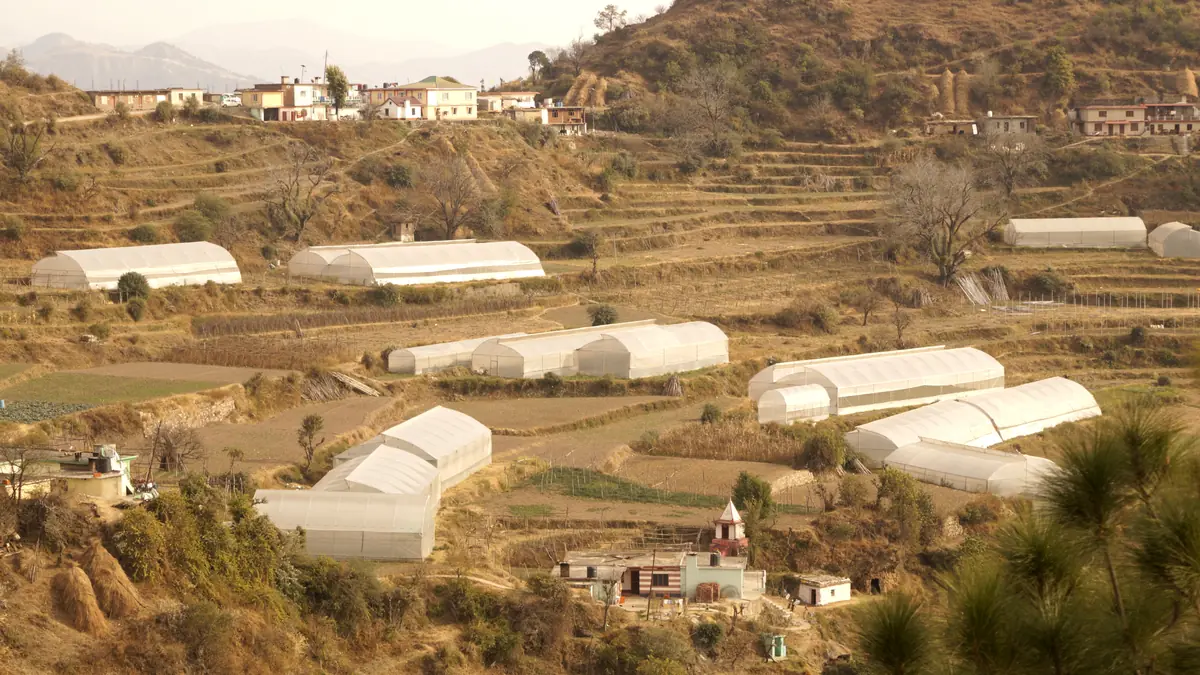
- 1. Protected Cultivation (Naturally Ventilated Polyhouses, Fan-and-Pad & Shade Nets): Standard MIDH guidelines support roughly 50% of notified cost norms up to specified area limits—typically 4,000 sq. metres per beneficiary for Naturally Ventilated Polyhouses (NVPH) and shade-net houses via State Horticulture Missions, empowering off-season capsicum, cucumber, tomato, and high-value flower nurseries. Review technical shade grades beforehand in our agro shade-net selector.
- 2. New Orchard Establishment & Spice/Plantation Area Expansion: Under MIDH area expansion guidelines cited via PIB, standard subsidies typically cover 40% of project cost norms in general states and 50% in North-Eastern and Himalayan states across normal spacing, high-density planting (HDP), and ultra-high-density orchards (such as mango, pomegranate, citrus, guava, and apple), paid in staged survival instalments.
- 3. Mandatory Micro-Irrigation (Drip & Sprinkler Integration): Current MIDH guidelines mandate that new orchard and polyhouse subsidy sanctions integrate drip irrigation systems (converged seamlessly with Pradhan Mantri Krishi Sinchayee Yojana — Per Drop More Crop / state micro-irrigation budgets). Calculate field pipe flow and pump sizing cleanly using our Irrigation Water Requirement Calculator and check multi-scheme support via KisanPe Agriculture Subsidies.
- 4. Credit-Linked Cold Chain, Ripening & Commercial NHB Units: FPOs, cooperatives, and commercial growers constructing cold storages, pack houses, refrigerated transport, or protected farms larger than state MIDH caps route applications directly through National Horticulture Board (nhb.gov.in) credit-linked back-ended capital subsidies backed by a formal bank loan.
Who is eligible & what documents you need before applying
Across both MIDH State Horticulture Missions and NHB commercial guidelines, eligibility covers individual farmers, registered Farmer Producer Organisations (FPOs), Farmer Interest Groups (FIGs), Self-Help Groups (SHGs), agricultural cooperatives, and (for commercial NHB post-harvest projects) trusts, societies, or agro-enterprises. Keep the following verified paperwork digitised before district target windows open each financial year:
- Identity & DBT Bank Seeding: Aadhaar card linked cleanly with an active mobile number and an NPCI-mapped bank savings or KCC account (plus PAN card for high-value polyhouse or NHB commercial projects). Model working-capital gaps with our KCC Loan Calculator.
- Land Ownership or Registered Lease Proof: Current digital 7/12, Khatauni, or Jamabandi land record proving cultivation title—high-tech polyhouse and NHB commercial schemes typically demand verified land ownership or a registered long-term lease (commonly 10+ years) covering project amortisation.
- Assured Water & Power Source Proof: Borewell, canal share, check-dam, or farm pond water availability proof (including Soil & Water EC/pH lab reports before erecting an expensive polyhouse where saline borewell water can burn nursery seedlings).
- DPR, Bank Sanction & Vendor Quotations (for Polyhouse / NHB): Detailed Project Report (DPR), structural design conforming to BIS/MIDH greenhouse specifications from an empanelled vendor, and (where credit-linked) preliminary bank term-loan sanction before committing own capital.
- Horticulture Insurance Awareness: Separate from basic PMFBY cereal plots, fruits, vegetables, and spices rely heavily on Weather-Based Crop Insurance (RWBCIS / PMFBY state notifications)—verify premium calculators on our PMFBY Crop Insurance hub and Farm Subsidy Estimator.
Step-by-step online registration & DBT verification workflow
Almost every rupee lost on rejected horticultural subsidy files traces back to farmers constructing sheds or buying saplings before receiving official work-order permission from the District Horticulture Officer (DHO). Follow this strict six-step sequence:
- Step 1 — Check Annual State District Targets: Early in April–July (and Rabi planting windows), inspect your state horticulture portal (for example, dbt.uphorticulture.in, hortharyana.gov.in, mahadbt.maharashtra.gov.in, or horticulture.bihar.gov.in) to confirm which scheme components carry open district quota targets.
- Step 2 — Complete State DBT Farmer Profile Registration: Register using your Aadhaar-seeded mobile OTP, upload digital land parcel records (Khasra/Khatauni/7-12), caste certificate (if claiming SC/ST priority allocation where notified), and bank passbook copy.
- Step 3 — Select Specific Horticulture Component & Registered Vendor/Nursery: Apply separately for Fruit Orchard Plantation, Protected Cultivation (Polyhouse/Shade Net), Micro-Irrigation, or Post-Harvest Pack House—buying grafted planting material only from NHB-accredited or state horticulture nurseries.
- Step 4 — Wait for Pre-Inspection & Official Work Order (Sanction Letter): A Block or District Horticulture Officer conducts initial site verification (measuring slope, sunlight, and water source) and issues an official Work Order / Provisional Sanction.
- Step 5 — Execute Installation with GST Invoices & Geo-Tagged Photos: Complete installation using approved BIS-compliant materials, pay vendors transparently through NEFT/RTGS/cheque rather than unaccounted cash, and upload GST tax invoices plus geo-tagged corner photographs.
- Step 6 — Joint Physical Verification & DBT Settlement: After post-completion inspection by DHO / district committee (and survival audit for orchards in Years 1–3), central/state subsidy tranches transfer straight via DBT into your registered bank or loan-subsidy reserve account.
Connecting horticulture production to KisanPe market & spice intelligence
Growing high-value horticultural crops under MIDH subsidies only raises household profit when harvest grades reach competitive markets cleanly. Pair state horticulture support with data-driven crop and market tracking across KisanPe: explore cured spice grading in our turmeric farming and curing economics guide, regional seedbed planning via our coriander cultivation guide, post-harvest market pricing inside our APMC mandi rate tracker, and complementary farm-support schemes inside our central government farmer schemes directory.
Frequently asked questions
- What is the official national portal of the Horticulture Department in India?
- At the central level under the Ministry of Agriculture & Farmers Welfare (agriwelfare.gov.in), farmer horticulture schemes operate mainly through two official national portals: midh.gov.in (Mission for Integrated Development of Horticulture) for state-delivered subsidies and nhb.gov.in (National Horticulture Board) for credit-linked commercial polyhouse, orchard, and cold-chain subsidies.
- How do I apply online to my State Horticulture Department (Bagwani Vibhag)?
- Resident farmers apply strictly through their state DBT portal—such as dbt.uphorticulture.in (Uttar Pradesh), hortharyana.gov.in (Haryana), mahadbt.maharashtra.gov.in (Maharashtra), horticulture.bihar.gov.in (Bihar), or tnhorticulture.tn.gov.in (Tamil Nadu). Keep your land records ready via our Bhulekh land record guide.
- What subsidy does the Horticulture Department offer on polyhouse and shade-net farming?
- Per official PIB and MIDH guidelines, State Horticulture Missions generally provide 50% of notified cost norms for Naturally Ventilated Polyhouses (NVPH), greenhouses, and shade-net houses up to 4,000 sq. metres per beneficiary, while larger commercial structures apply through NHB bank credit-linked schemes. Compare structure types via our shade-net house guide.
- Is drip irrigation mandatory to receive Horticulture Department orchard subsidies?
- Yes. Under MIDH operational rules noted on pib.gov.in, new fruit orchard expansion (receiving 40% subsidy in general areas and 50% in North-Eastern/hilly states) requires integration with drip irrigation—often converged with PMKSY Per Drop More Crop. Size farm flow accurately on our Irrigation Water Calculator.
- What is the difference between MIDH and National Horticulture Board (NHB) subsidies?
- MIDH runs primarily through State Horticulture Missions on a 60:40 Centre:State ratio (90:10 in NE/Himalayan states) for farmer-level nurseries, orchards, and polyhouses up to 4,000 sq. m, whereas NHB (nhb.gov.in) is 100% Central Government funded and administers credit-linked back-ended subsidies requiring a scheduled bank term loan for larger commercial protected farms, pack houses, and cold storages. Check finance planning on our KCC Loan Calculator.
- Can tenant farmers or FPOs apply for Horticulture Department schemes?
- Yes. Individual owners, FPOs, FIGs, SHGs, and agricultural cooperatives are eligible under MIDH and NHB norms. However, high-investment polyhouse and commercial NHB orchard/cold-storage grants typically require verified land ownership or a legally registered long-term land lease (commonly 10+ years) rather than informal verbal tenancy.
- Can I start constructing a polyhouse or planting saplings before getting Horticulture Department sanction?
- No. Buying saplings or erecting greenhouse pipes before the District Horticulture Officer (DHO) conducts pre-inspection and issues an official Work Order / Provisional Sanction generally disqualifies your claim from receiving DBT subsidy. Always estimate timelines and multi-scheme compatibility first on our Farm Subsidy Calculator and Agriculture Subsidy hub.
- Which crops qualify under the Horticulture Department rather than the Agriculture Department?
- Horticulture Departments cover perennial fruit orchards (mango, citrus, pomegranate, banana, apple, guava), vegetables, floriculture, spices (turmeric, coriander, chilli, ginger), plantation crops, mushrooms, medicinal/aromatic herbs, and beekeeping—whereas cereal staples like wheat, paddy, and pulses fall under state agriculture departments.
- Does the Horticulture Department also support cold storage, pack houses and onion storage units?
- Yes. Both MIDH (for farm-gate low-cost onion storage structures and pack houses) and NHB (for large multi-chamber cold storages, CA stores, and banana/mango ripening chambers) offer capital assistance to cut post-harvest spoilage before selling at regulated markets tracked on our APMC mandi rate tool.
- Bagwani Vibhag (Horticulture Department) ki subsidy ke liye aavedan kaise aur kahan karein?
- Horticulture ya bagwani subsidy (falon ka bagicha, polyhouse, green shade net aur drip irrigation) ke liye apne rajya ke adhikarik portal—jaise UP mein dbt.uphorticulture.in, Haryana mein hortharyana.gov.in, Bihar mein horticulture.bihar.gov.in, ya Maharashtra mein mahadbt.maharashtra.gov.in—par Aadhaar aur Khatauni/7-12 ke saath online panjikaran karen; Subsidy Calculator par patrata ka andaza bhi dekhen.
This article is for general information only and is not financial advice. Loan and scheme eligibility depends on partner and government criteria.