Mahindra 275 DI TU Price 2026: 39 HP, PTO, Lift & Review
Key takeaways
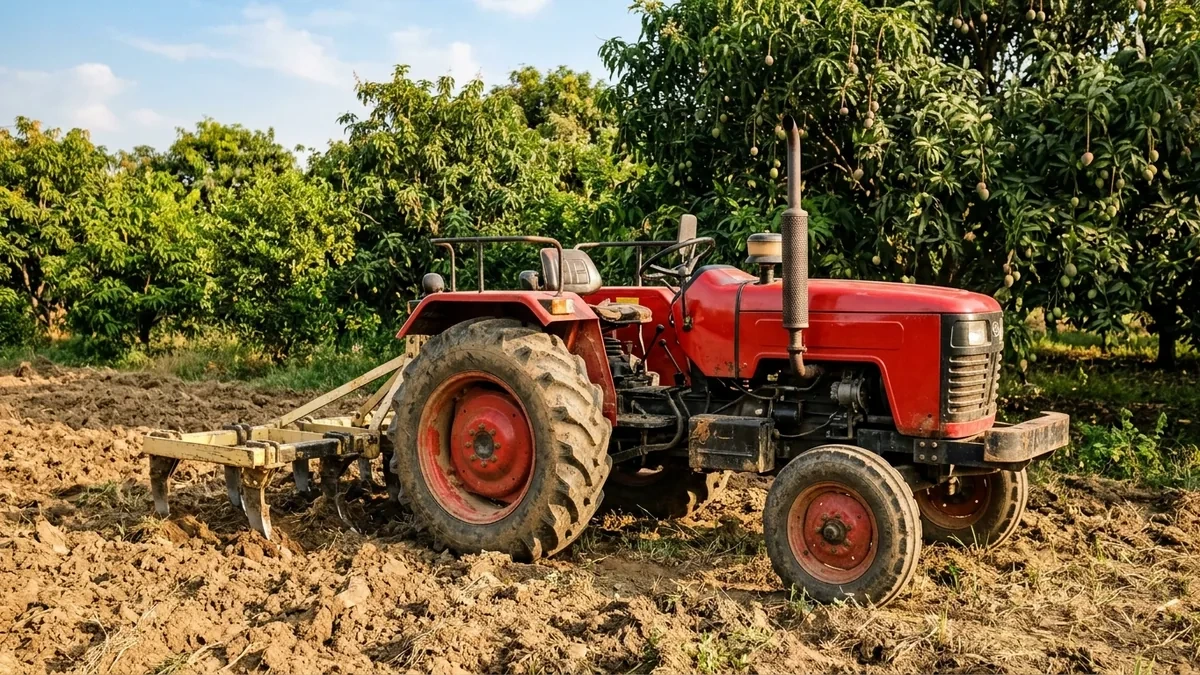
- The Mahindra 275 DI TU (available alongside upgraded B 275, SP Plus, and XP Plus trims) anchors India’s 39 HP utility class powered by a 2,048–2,235 cc Extra Long Stroke 3-cylinder diesel delivering 33.4–35.5 PTO HP and 1,200–1,500 kg ADDC hydraulic lift capacity.
- Indicative 2026 ex-showroom pricing spans Rs 5.59 Lakh to Rs 6.20 Lakh (~Rs 6.15–6.95 Lakh on-road depending on steering, OIB brakes, and state RTO slabs), qualifying neatly within 20–40 PTO HP SMAM smallholder subsidies.
- Renowned across potato, groundnut, orchard, and 5-ton rural trolley corridors for bare 2.4–3.3 L/hr fuel consumption, universal rural mechanics, and fast 65%–70%+ second-hand village resale value.
Checking the Mahindra 275 (275 DI TU / B 275 / 275 XP Plus) lineup puts Indian small and mid-sized growers face-to-face with one of rural India’s most trusted utility tractors ever engineered! Designed for holdings spanning 3 to 9 acres where giant Rs 9+ Lakh 50 HP models sit overkill on diesel and tight village turns, the 39 HP Mahindra 275 DI TU delivers crisp 2,048–2,235 cc Extra Long Stroke (ELS) lug power, ~33.4 to 35.5 PTO HP, and up to 1,500 kg hydraulic lifting force on XP Plus trims—all priced sensibly between Rs 5.59 Lakh and Rs 6.20 Lakh ex-showroom (also inspect our technical B-275 variant overview at Mahindra B-275 specifications guide and sibling 275 DI XP Plus breakdown).
Whether you are weighing a brand-new 275 DI SP/XP Plus carrying Mahindra’s 6-year factory warranty, comparing highway trolley performance directly against 40 HP Swaraj 735 FE or 39 HP Sonalika DI 35, or inspecting a clean 5-year-old second-hand machine in rural mandis (browse all Indian tractors), understanding exact variant differences and PTO-implement rules saves Rs 40,000+ over ownership.
1. Mahindra 275 DI Variants Compared: Classic TU vs SP Plus vs XP Plus Price
Walk onto an authorized Mahindra Tractors India showroom floor asking for "275 ka rate" and dealers typically quote three overlapping editions tailored by cylinder capacity and lifting strength (estimate loan EMI cashflows):
| Specification / Feature | Mahindra 275 DI TU (Classic) | Mahindra 275 DI SP Plus / XP Plus | Practical Ownership Value |
|---|---|---|---|
| Engine HP & Capacity | 39 HP | 2,048 cc 3-Cylinder @ 2,100 RPM | 37–39 HP | Up to 2,235 cc Extra Long Stroke | ELS torque recovers smoothly across sticky black soil & bunds |
| PTO Power Output | ~33.4 – 34.8 PTO HP (540 RPM Live) | Up to ~35.5 PTO HP (Multi-Implement PTO) | Cleanly runs 5-ft rotavators, potato diggers & water pumps |
| Hydraulic Lifting Capacity | 1,200 kgf Precision ADDC | 1,500 kgf High-Lift ADDC | XP Plus carries loaded 9-tyne seed-cum-fertilizer drills steadily |
| Steering & Brake Setup | Dry/OIB Options | Manual or Power Steering | Multi-Disc Oil-Immersed Brakes + Power Steering | Zero brake fade hauling 5-ton sugarcane/brick trolleys |
| Indicative Ex-Showroom Band | Rs 5.59 Lakh – Rs 5.95 Lakh | Rs 5.85 Lakh – Rs 6.20 Lakh | On-road adds ~Rs 55k–75k for state RTO, insurance & canopy |
| Factory Warranty Backing | 2 Years Standard Coverage | 6 Years / 6,000 Hours Transferable | Massive booster for long-term second-hand resale confidence |
2. Mahindra 275 vs Swaraj 735 FE vs Mahindra 265 DI: Which Wins for Your Soil?
Inside Indian farming districts, three legends dominate nearly identical 33–40 HP shopper budgets—making crisp side-by-side selection crucial (compare specifications directly):
- 1. Mahindra 275 DI (39 HP) vs Swaraj 735 FE (40 HP): Both command India’s fastest used-tractor cash liquidity! Swaraj 735 puts a slightly heavier 2,734 cc slower 1,800 RPM stroke suited heavily for continuous stationary wheat threshers, while Mahindra 275 accelerates noticeably brisker on village road trolley hauls, slices neatly inside narrow potato/cotton beds, and sips ~10% less daily diesel across light-to-medium cultivating.
- 2. Mahindra 275 DI (39 HP) vs Mahindra 265 DI (30–33 HP): Paying just ~Rs 35,000–45,000 above 265 DI steps you up cleanly into +5 to 6 PTO HP, turning 5-foot multi-speed rotavators and loaded 5-ton trailers effortlessly without straining clutch springs.
- 3. When to Step Higher to Mahindra 585 (49 HP) or 40–50 HP Units: If commercial custom hiring with 6-ft to 7-ft heavy rotavators or wet river wetland super-seeders represents over half your business hours, skip 39 HP and step cleanly into 48–50 HP frames.
3. Ideal Field Implements & Realistic Diesel Mileage Per Hour
Tested safely under DAC&FW Farm Mechanization / FMTTI Budni norms, keeping implements matched within ~33–35.5 PTO HP guarantees clean combustion for 8,000+ engine hours (check farm implement price guides):
- 5-Foot (36–42 Blade) Multi-Speed Rotavator: Clean golden pair averaging 0.85 to 1.1 acres/hour sipping just 2.8 to 3.5 liters diesel/hour!
- 9-Tyne Spring-Loaded Cultivator & 9-Row Zero-Till Fertilizer Drill: Cruises effortlessly in High-2 gears at bare 2.4 to 2.9 L/hr sowing wheat, mustard, groundnut, and chickpea.
- Orchard HTP Tank Sprayer & Potato Bed Planter / Digger: 1,500 kg ADDC lift on XP Plus trims carries rear sprayers cleanly across citrus, pomegranate, and guava aisles (calibrate spray volume cleanly).
- 13.6×28 Wide Rear Tyre Upgrade Option: Choosing wider 13.6×28 rear tyres (check tyre specs) + Oil-Immersed Disc Brakes (OIB) transforms stability hauling wet monsoon crop trolleys.
4. SMAM Subsidies (20–40 PTO HP Slab), Bank EMIs & Whole-Farm ROI
Notice a huge strategic subsidy edge hidden in Mahindra 275 DI’s ~34 PTO HP rating: many state-level SMAM DBT tractor lotteries assign maximum smallholder grant budgets specifically inside the 20 to 40 PTO HP bracket rather than costly >45 HP tiers! Small, marginal, women, and SC/ST growers buying eligible tractors + bundled 5-ft rotavators/seed-drills via state e-Krishi Yantra portals slash acquisition debt dramatically (estimate eligible tractor & DBT implement rebates & check our DBT implements list)!
Map complete cashflows accurately ahead of dealer visits: simulate 5-to-7 year harvest-linked EMIs via our tractor EMI calculator and farm ROI calculator, check central farm subsidy schemes, calculate crop returns across crop income planner, tap 4% seasonal fuel/seed working capital via our KCC loan calculator, insure planted crops under PMFBY (claim checker), track winter grain markets via wheat MSP rules & daily mandi rates, compare sibling tractors (MF 1035 & Eicher 551), check Parivahan RC compliance, and verify Farmer ID enrollment cleanly.
5. Buying Used Mahindra 275? 5-Minute Inspection & Maintenance Checklist
Because used Mahindra 275 DI units keep flying rapidly across central and western tractor mandis for Rs 2.80–Rs 4.50 Lakh, run five crisp mechanical checks before handing cash to brokers (full used tractor inspection guide): verify cold early-morning unheated cranking with ZERO thick blue exhaust smoke, confirm dual OIB brakes hold straight at road speed, verify 15-minute idle lift retention holding a heavy 9-tyne cultivator cleanly without sinking, check dry rear PTO seal oil tightness, and demand an official cleared bank NOC Form 35 plus matching Parivahan chassis stamping!
6. Keeping Diesel & Service Bills Ultra-Low Over 8,000+ Field Hours
Mahindra 275 engines shrug off rough village work for decades cleanly if you protect two simple habits: wash dust silt carefully out of the 3-stage oil bath air cleaner every week during dusty summer chaff operations (keeping clean 15W40 oil strictly up to the stamped ring line!), and replace genuine inline diesel primary + secondary fuel filters every 250 operational hours so clean fuel keeps mechanical injector tips spraying sharp mist across 10+ seasons without workshop downtime. Additionally, greasing front axle kingpins before wet monsoons, draining water-emulsified hydraulic UTTO transmission oil on 1,000-hour intervals, checking clutch free-play (~25 mm) before steep village canal ramps, and calibrating tyre inflation evenly (14 PSI soft puddling vs 20 PSI heavy road trolleys) keeps rear OIB brake discs silent and responsive while safeguarding steep 5-year used trade-in demand across regional rural mandis cleanly.
Frequently asked questions
- What is the Mahindra 275 DI tractor price in India in 2026?
- Across authorized dealerships aligned with Mahindra Tractors India, indicative ex-showroom pricing spans Rs 5.59 Lakh to Rs 6.20 Lakh across standard DI TU, SP Plus, and XP Plus editions—translating roughly to Rs 6.15–6.95 Lakh on-road (estimate monthly EMI).
- How many HP, cc, PTO HP, and lift capacity does Mahindra 275 DI offer?
- Sitting in the 39 HP segment, classic TU models run a 2,048 cc 3-cylinder diesel producing ~33.4–34.8 PTO HP and 1,200 kg lift, while upgraded XP Plus trims scale up to 2,235 cc, ~35.5 PTO HP, and 1,500 kg ADDC hydraulic lift.
- What is the difference between Mahindra B-275 DI TU and 275 DI XP Plus?
- Review detailed specs on our Mahindra B-275 technical page: classic B-275 TU carries 1,200 kg lift and 2-year warranty, whereas XP Plus elevates lift cleanly to 1,500 kg alongside Extra Long Stroke fuel thrift and a 6-year factory warranty.
- Does Mahindra 275 qualify for government SMAM mechanization subsidies?
- Yes! Because its ~33.4–35.5 PTO HP output rests squarely inside India’s prime 20–40 PTO HP smallholder slab on agrimachinery.nic.in, eligible smallholders and bundled implement buyers access 40%–50% DBT subsidies cleanly (calculate grant savings).
- Can Mahindra 275 operate a 5-foot vs 6-foot rotavator without lugging?
- A 5-foot (36–42 blade) multi-speed rotavator matches 39 HP cleanly sipping ~2.8–3.5 L/hr diesel; occasional 6-ft dry sandy loam passes work gently, while heavy commercial 6–7 ft wetland rotavation warrants stepping up to 48–50 HP tractors!
- How much diesel does a Mahindra 275 DI burn per hour in farming?
- Averaging just 2.4 to 3.3 liters/hour across 9-tyne cultivation and light rural trolley haulage, Mahindra 275 ranks among India’s thriftiest sub-40 HP utility diesel machines.
- Which is better for small farmers: Mahindra 275 or Swaraj 735 FE?
- Both earn tremendous village resale confidence (compare Swaraj 735 FE): Swaraj packs heavier 2,734 cc low-RPM flywheel inertia ideal for belt wheat threshers, whereas Mahindra 275 offers lighter orchard agility, quick highway trolley gear speeds, and sharp diesel thrift.
- Does Mahindra 275 feature Power Steering and Oil-Immersed Brakes?
- While budget base trims retained mechanical steering, popular 275 SP/XP Plus editions feature responsive Dual-Acting Power Steering and fade-proof Oil-Immersed Multi-Disc Brakes (OIB) essential for loaded road bridges.
- What rear tyre dimensions come on Mahindra 275 DI models?
- Buyers pick nimble 12.4×28 rear tyres for tight orchard and vegetable furrow clearances, or upgrade cleanly to wider heavy-grip 13.6×28 rear tyres for heavier trolley haulage and wet puddling.
- How strong is used second-hand resale demand for Mahindra 275 DI?
- Universal tehsil mechanic knowledge, cheap genuine inline pump/clutch spare parts, and trusted brand recall help 4-to-5 year old clean units hold roughly 65%–70%+ cash resale value cleanly!
- How do farmers check valid tractor RC and hypothecation clearance before buying used?
- Verify matching engine/chassis stamping, active tax clearance, and valid NOC Form 35 status directly on India’s official Parivahan portal (parivahan.gov.in) before settling used cash payments.
- What factory warranty comes on new Mahindra 275 DI XP Plus units?
- Mahindra supports upgraded XP Plus and SP Plus models with a full 6-year or 6,000-hour transferable warranty, giving buyers clean long-term peace of mind aligned with DAC&FW farm machinery quality norms.
This article is for general information only and is not financial advice. Loan and scheme eligibility depends on partner and government criteria.