Turnip in Tamil (டர்னிப் / கோசுக்கிழங்கு): Meaning & Farming
Key takeaways
- Exact Tamil Translation & Knol-Khol Split: Turnip (Brassica rapa) = கோசுக்கிழங்கு / டர்னிப், growing crisp underground swollen taproots unlike green above-ground stem நூல்கோல் (Knol-Khol)!
- Tropical 45-Day Pusa Sweti Magic: IARI’s snow-white Asian Pusa Sweti matures in just 40–45 mild plains days yielding 200–300 q/ha without waiting for alpine winter chills.
- Hill Station Export Champion: Ooty & Kodaikanal cool estates (12–20°C) anchor juicy purple-crowned Purple Top White Globe (60–70 days, 250–300 q/ha).
- Boron Deficiency Brown-Heart Shield: Even tiny Boron shortage hollows turnip root centres corky brown—soil-test pH (5.5–6.8) & apply borax gently!
Checking turnip in tamil gives the exact clear botanical translation across Tamil Nadu kitchens and Uzhavar Sandhai (farmers’ markets): Brassica rapa var. rapa is called கோசுக்கிழங்கு (Kosu kilangu) or டர்னிப் (Turnip)—strictly NOT to be confused with above-ground swollen stem நூல்கோல் (Noolkol / Knol-Khol / Kohlrabi, Brassica oleracea) (tnau.ac.in)! While cool Nilgiris (Ooty), Kodaikanal, and Yercaud hill terraces thrive year-round with European winter Purple Top White Globe (60–70 days, 250–300 q/ha), heat-tolerant Asiatic IARI Pusa Sweti (40–45 days harvest, 200–300 q/ha — iari.res.in) succeeds fast even across mild winter Tamil Nadu plains! Explore spacing, Boron Brown-Heart prevention & markets cleanly alongside Turnip Agronomy Hub & Turnip in Kannada.
Notice how clearing subtle Tamil culinary translations (Kosu kilangu vs Noolkol vs Mullangi radish) immediately stops kitchen gardeners AND Nilgiris vegetable growers from ordering mismatched seeds on agri portals!
Turnip in Tamil (கோசுக்கிழங்கு / டர்னிப்) vs Knol-Khol (நூல்கோல்) & White Radish (முள்ளங்கி)
Walk through Coimbatore’s MGR Wholesale Market, Chennai Koyambedu, or Madurai Uzhavar Sandhais asking vendors for turnip in tamil and cooks frequently point confusingly toward round light-green bulbs stacked beside cabbage baskets! Wait a second and verify foliage stems before paying (tnau.ac.in): those pale lime-green globes sprouting drumstick-like stalks out of an above-ground swollen stem bulb are actually நூல்கோல் (Noolkol = Knol-Khol / Kohlrabi, Brassica oleracea var. gongylodes)—super tasty in south Indian korma yet completely different botanically from genuine Turnip (Brassica rapa var. rapa = கோசுக்கிழங்கு / டர்னிப் / சீமை முள்ளங்கி in older texts)!
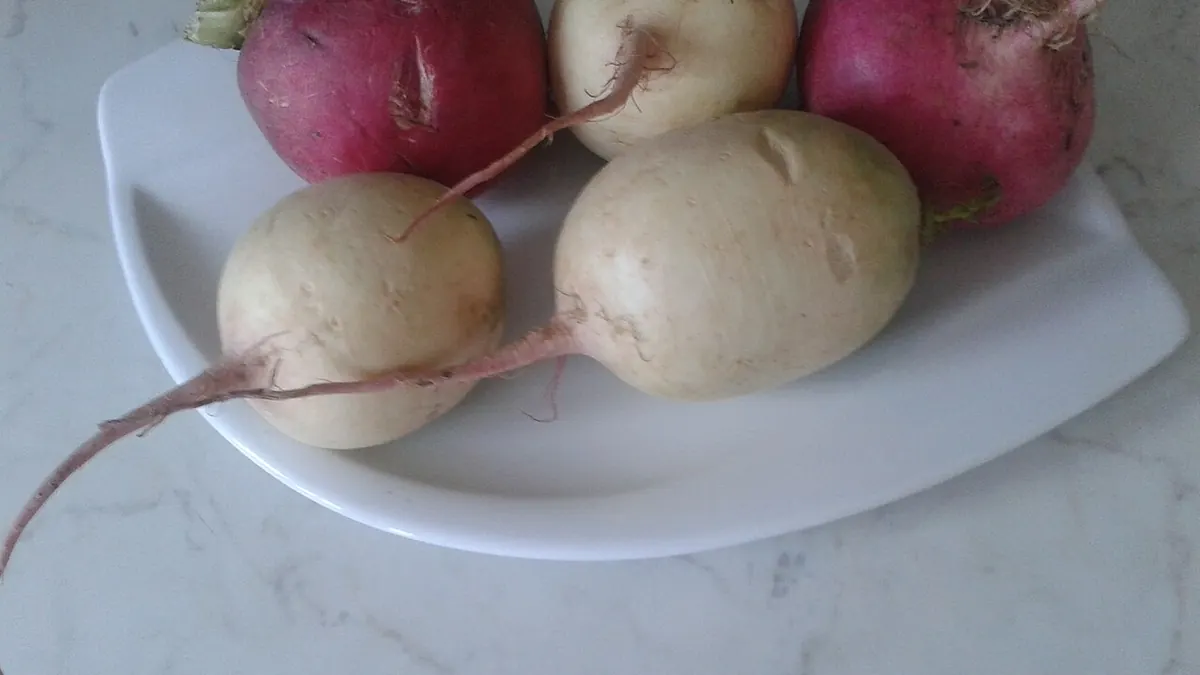
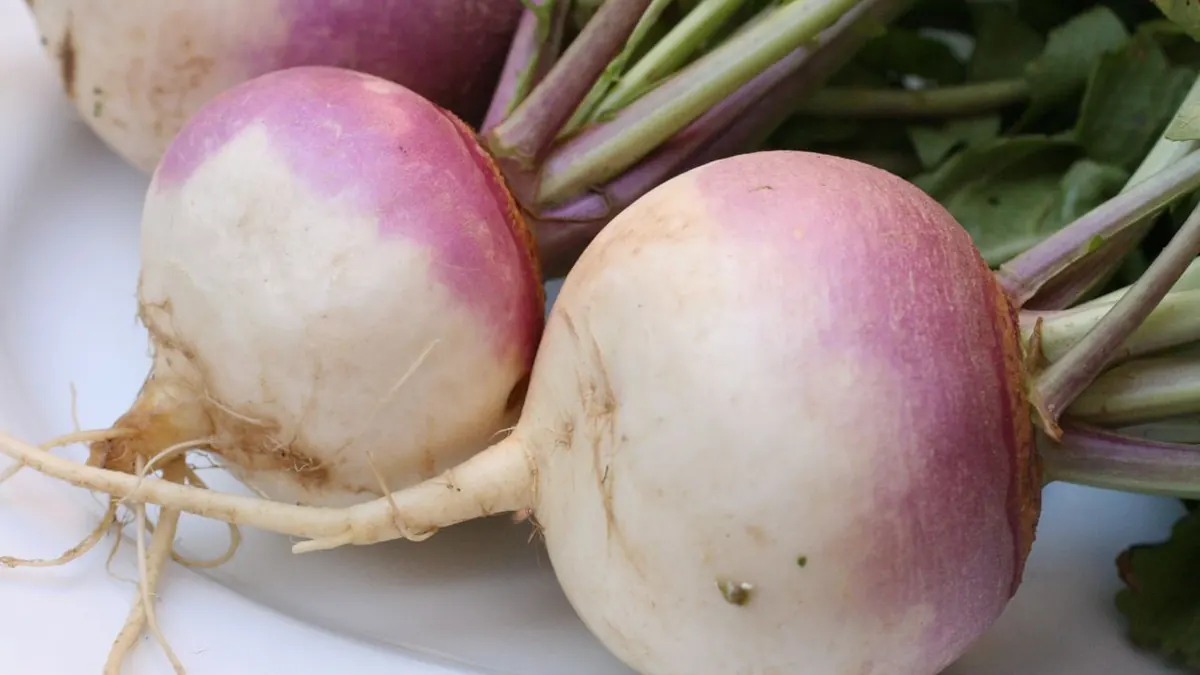
Genuine purple-topped or snowy Turnips (கோசுக்கிழங்கு) swell cleanly partially below soil line forming crisp juicy white tender-sweet flesh milder than peppery white முள்ளங்கி (Mullangi / Radish)! Compare neighbouring south Indian root terminology cleanly on Turnip in Kannada Guide and vegetable crop hubs on Full Turnip Farming.
| Root / Cole Vegetable | Authentic Tamil Name & Pronunciation | Botanical Part Eaten & Growing Habit |
|---|---|---|
| Turnip (Brassica rapa var. rapa) | கோசுக்கிழங்கு (Kosu kilangu) / டர்னிப் | Swollen crisp underground taproot, mild sweet-peppery purple-white crown |
| Knol-Khol / Kohlrabi (B. oleracea) | நூல்கோல் (Noolkol) | Swollen above-ground stem, pale green/violet (often confused for turnip!) |
| White Radish (Raphanus sativus) | முள்ளங்கி (Mullangi) | Long cylindrical pungent taproot thriving easily across all hot Tamil plains |
| Beetroot (Beta vulgaris) | பீட்ரூட் / செங்கிழங்கு (Beetroot) | Deep crimson-maroon earthy root cultivated broadly across Nilgiris & plains |
ICAR-IARI Pusa Sweti (40–45 days) vs Ooty cool Purple Top White Globe cultivation
Tamil Nadu’s geography lets progressive root-crop farmers grow BOTH classes of ICAR-IARI turnips profitably across different elevations! Across warm-to-mild winter plains (Hosur, Krishnagiri, Dindigul, Coimbatore cool Nov–Jan windows), European temperate varieties rush prematurely into spongy bitter roots (or fail bulbing), whereas rapid tropical Asiatic Pusa Sweti (snow-white crisp turnips ready just 40–45 days after line sowing yielding ~200–300 quintals/hectare) or Pusa Kanchan bulb rapidly without prolonged winter chill (Varieties Deep Dive)!
Meanwhile inside cool misty Nilgiris (Ooty, Coonoor, Kotagiri), Kodaikanal (Palani Hills), and Yercaud terraces (10°C–20°C), heirloom temperate Purple Top White Globe (60–70 days, 250–300 q/ha) swells bold glossy magenta-crowned globes shipped smoothly overnight down to Chennai, Bengaluru, and Kerala hotels! Check exact line-sowing seed requirements (3–4 kg/ha = ~1.2–1.5 kg/acre spaced cleanly at 30 × 10 cm on loose stone-free ridges) via KisanPe Seed Rate Tool.
- Thin Crowded Seedlings Promptly At 12–15 Days: Direct-sown turnip seeds germinate tightly; leaving doubles fighting side-by-side produces twisted forked tiny marbles instead of symmetrical clean market globes!
- Steady Gentle Soil Moisture Prevents Pithy Woodiness: Allowing raised ridges to crack stone-dry between drip cycles turns interior root crispness hollow corky stringy—run smooth balanced pulses via Drip Irrigation Scheduler (Drip Setup).
- Test Boron & Soil pH (5.5–6.8) Pre-Sowing: Check micronutrient levels via District Soil Labs; invisible Boron deficiency triggers ugly brown corky rings (Brown Heart) inside handsome white-purple turnips!
Beating Diamondback Moth, Mustard Sawfly & Clubroot in Nilgiris and plains turnips
Because Turnip belongs squarely to the Brassica cabbage-mustard family, planting turnips endlessly right behind Ooty cabbage, cauliflower, or Knol-Khol invites dreaded Clubroot (Plasmodiophora brassicae) swelling ugly gnarled galls across roots plus aggressive Mustard Aphid & Diamondback Moth (Plutella) caterpillars (icar.org.in)! Always rotate cleanly onto beans, potatoes, or garlic/leek terraces (never consecutive brassicas on acidic mountain soil below pH 5.8 without agricultural dolomite liming!) and scout young seedlings early for Aphid clusters (Spray Window Advice).
Harvesting baby crisp 6–8 cm tender roots, washing hygiene & urban superstore demand
Never leave mature Pusa Sweti or Purple Top bulbs lingering an extra lazy fortnight in sunny fields hoping strictly for heavier kilo bulk (over-mature turnips turn pithy dry hollow-spongy immediately rejecting buyers!)! Harvest uniformly at smooth 6 to 8 cm shoulder diameter (tender crisp succulent snap), wash mountain red mud gently cleanly in chilled well water keeping slender trimmed 8–10 cm fresh green leafy tops attached cleanly for Uzhavar Sandhai / boutique supermarkets, and verify season net margins via Horticulture Income Calculator & Fertilizer Planner cleanly.
Tamil culinary nutrition: comparing Kosu kilangu (Turnip) vs Radish & Carrot across sambar/poriyal
Across Tamil Nadu kitchens (Madurai, Coimbatore, Chennai, Salem), fresh tender roots of கோசுக்கிழங்கு (Kosu kilangu / Turnip) win growing favor cleanly among families managing seasonal calories and clean fiber (yielding rich Vitamin C, Potassium & crisp delicate sweetness with practically zero harsh starch burden!)! Unlike fibrous pungent long white முள்ளங்கி (Mullangi / Radish) requiring heavy boiling to mellow mustard oils, young 6–8 cm harvested Pusa Sweti or Purple Top cubes sauté tenderly inside light coconut Poriyal, quick Korma stews, mild Vegetable Kurma, and fresh crisp grated raw lemon salads—while crisp clean green vitamin-dense turnip tops (Keerai greens) stir-fry beautifully right alongside lentil dals without wasting half the crop cleanly (tnau.ac.in)!
Farmers marketing tidy bunches directly inside Uzhavar Sandhai (Tamil Nadu regulated farm-to-city direct farmer markets) attract urban household buyers effortlessly simply by pairing clean red-mud-free snow-white roots alongside simple Tamil recipe tip tags clearing confusion away from நூல்கோல் (Noolkol / Knol-Khol) cleanly (Agronomy Full Details & Kannada Turnip Hub)!
- 45-Day Quick Rotation Cashflow Advantage (Pusa Sweti): Transplanting slow crops lags months—fast direct-sown Pusa Sweti yields harvestable crisp roots cleanly in just 40–45 days, slotting effortlessly cleanly into irrigated drip tomato/chilli bed intervals (Seed Tool)!
- Keep Beds Levelled & Loose Stone-Free Before Drilling: Heavy cloddy hard red clay bends growing taproots awkwardly reducing Grade-1 symmetrical shelf appearance.
- Check Borax Micronutrient Ratio Strictly Ahead Of Monsoon Sowing: Prevent hollow corky Brown-Heart interior flaws cleanly via soil testing (Soil Labs Hub).
Drip irrigation scheduling, cool Nilgiris terrace drainage & post-harvest shelf freshness
Whether growing temperate Purple Top White Globe across lush Ooty-Kodaikanal valleys (250–300 q/ha) or warm mild winter Pusa Sweti across Krishnagiri-Hosur plains (200–300 q/ha), keeping soil evenly damp—NEVER flooded muddy soggy OR stone-dry cracked—spells clean profit (iari.res.in)! Run clean morning micro-drip or furrow pulses calibrated on Irrigation Calculator paired cleanly with split Potash (0-0-50) via Fertilizer Planner, lift mature 6–8 cm globes gently at cool dawn avoiding bruise marks, wash crisp mud free, and refrigerate/pack shaded ventilated crates preserving juicy snapping crunch all week cleanly (Compute Farm ROI).
Across Tamil Nadu hills and plains alike, sowing fresh Pusa Sweti or Purple Top White Globe turnip seeds onto crumbly raised ridges enriched cleanly with farmyard manure and calibrated micro-drip irrigation turns brief cool windows into crisp high-turnover vegetable earnings. Educating Uzhavar Sandhai customers clearly on tender mild Kosu kilangu root dishes separate from green Noolkol stems builds repeat farm-stall demand effortlessly cleanly while utilizing nutritious green turnip tops productively inside everyday family cooking. Keeping beds consistently free of standing monsoon waterlogging, rotating brassicas cleanly behind legumes or onions, and thinning dense seedling rows at fourteen days post-emergence delivers straight symmetrical creamy globes commanding strong retail prices across Coimbatore, Madurai, Salem, and Chennai markets smoothly throughout every harvest. Soil-testing acidic hill slopes for dolomite lime and adding gentle trace Boron ensures snowy solid inner root flesh free of brown corky cavities year after year. Bundling freshly washed roots gently in cool shaded breathable baskets before dawn loading preserves bright creamy purple shoulder lustre cleanly without cracked splits or wilted greens during humid coastal transport. Tracking urban consumer demand alongside cool mountain soil temperature patterns lets direct farmer stalls clear fresh daily crates swiftly before roots lose moisture or turn woody across warm southern markets sustainably cleanly.
For broader financial, market, and crop-planning continuity alongside turnip in tamil, farmers across India also consult KisanPe resources including Indian Farmer Government Schemes Directory, Central & State Agri Welfare Schemes, Agricultural Input & Machinery Subsidies, Direct Benefit Transfer (DBT) Subsidy Calculator, AI Farmer Scheme Eligibility Finder, AI KYC & Land Document Checker, PM-KISAN Samman Nidhi Portal Guide, PM-KISAN Beneficiary Status Lookup, PM-KISAN Aadhaar eKYC Completion Steps, PM-KISAN Installment Release Dates, State Bhulekh Digital Land Records Guide, Khasra & Khatauni RoR Extraction Guide.
Frequently asked questions
- What is the exact Tamil word for Turnip across Tamil Nadu farms and Uzhavar Sandhais?
- Botanical Turnip (Brassica rapa var. rapa) is cleanly called கோசுக்கிழங்கு (Kosu kilangu) or டர்னிப் (Turnip) in Tamil (distinct from green above-ground stem நூல்கோல் / Noolkol / Knol-Khol!) (tnau.ac.in; Turnip Guide).
- Why do buyers in Chennai and Coimbatore confuse Noolkol (Knol-Khol) with Turnip?
- Both share round crunchy mild cabbage-radish flavor profiles, yet Noolkol (நூல்கோல்) swells its green above-ground stem, whereas true Turnip (கோசுக்கிழங்கு) swells a smooth white/purple underground root (Compare Kannada Guide).
- Which Turnip varieties recommended by ICAR-IARI grow fastest in Indian plains vs hills?
- IARI’s heat-tolerant Asiatic Pusa Sweti matures cleanly in just 40–45 days (200–300 q/ha) on mild winter plains (Hosur / Dindigul), while Purple Top White Globe (60–70 days, 250–300 q/ha) thrives in cool Nilgiris/Kodaikanal (iari.res.in).
- How much turnip seed per acre and what spacing works best on raised ridges?
- Drill 1.2 to 1.5 kg clean seed per acre (~3–4 kg/ha) on fine crumbly raised beds spaced cleanly at 30 × 10 cm (and thin seedlings diligently at 12–15 days preventing crowded deformed marbles) (Seed Tool).
- Why do freshly sliced turnips occasionally show hollow brown corky patches inside (Brown Heart)?
- Classic Boron trace deficiency in sandy or heavy rains causes bitter brown internal heart cavities—test soil pre-sowing via Soil Labs and blend gentle borax (~10 kg/ha) or spray Solubor cleanly (Fertilizer Plan).
- Does direct transplanting work for Turnips just like Cabbage or Cauliflower seedlings?
- No—like carrots and radishes (taproot crops), transplanting breaks fragile vertical taproots producing twisted forked ugly tails! ALWAYS sow direct smoothly onto pre-formed fine raised ridges.
- How do Nilgiris hill farmers control swollen Clubroot disease in brassica turnip terraces?
- Raise dangerously acidic mountain soils cleanly back near pH 6.2–6.5 using agricultural lime/dolomite, drain soggy wet corners, and rotate strictly cleanly behind non-brassica potato or green peas (icar.org.in).
- When should turnips be lifted for crisp sweet flesh without wooden hollow interiors?
- Pull crisp bulbs steadily right at 6–8 cm diameter (leaving 4–5 fresh green top leaves neatly for local retail bundles) and harvest smoothly within optimal 45–70 day cultivar windows (Income Tool).
- Are tender green Turnip leaf tops (Kosu kilangu greens) edible and nutritious?
- Yes—young healthy pesticide-free Turnip leafy tops (keerai) supply rich Vitamin A, Vitamin K, Calcium & Iron sautéed softly cleanly alongside dals (tnau.ac.in).
- How fast can farmers harvest tropical Pusa Sweti turnips in Tamil Nadu plains?
- Sown directly onto fine loose drip ridges during cool Nov–Jan pockets, IARI Pusa Sweti hits tender 6–8 cm harvest size cleanly inside 40–45 days (Turnip Agronomy Hub).
This article is for general information only and is not financial advice. Loan and scheme eligibility depends on partner and government criteria.