Badam Price Per Kg in India: Kashmir, Mamra & Mandi Rate
Key takeaways
- Indicative badam price per kg in India (November 2026) ranges from Rs 620 to Rs 840 per kg wholesale (Rs 720 to Rs 1,050/kg retail) for standard US California Nonpareil / Independence shelled almond kernels (Badam Giri).
- Premium Kashmiri Kagzi paper-shell almonds (whole in-shell) retail between Rs 550 and Rs 850/kg, while shelled Kashmiri Badam Giri commands Rs 950 to Rs 1,450/kg across Jammu, Srinagar, and Delhi markets.
- Genuine Iranian and Afghani Mamra almonds—prized for ~48%–52% natural essential almond oil richness vs ~30%–35% in standard varieties—trade at Rs 2,200 to Rs 3,600+ per kg wholesale and up to Rs 4,500/kg retail.
- Wholesale dry fruit trade benchmarks originate at Delhi’s Khari Baoli Asia-largest spice/nut hub, Mumbai’s APMC Vashi Navi Mumbai Masala Market, and Amritsar / Jammu mandis.
- Domestic commercial almond cultivation thrives primarily in Jammu & Kashmir (Pulwama, Budgam, Baramulla — >85% of India’s output) and Himachal Pradesh (Kinnaur, Shimla) under ICAR-CITH Srinagar varieties (Makhdoom, Shalimar, Waris).
- Basic customs duty (Rs 100/kg on shelled and Rs 35/kg on in-shell almonds per Indian import tariffs) alongside USD/INR forex rates strongly shape domestic retail rates year-round.
Checking the daily badam price per kg (almond rate, badam kg price) in India requires distinguishing carefully among sharply different almond origins, shell states (in-shell vs giri kernels), and oil-rich cultivars. While global commodity imports from California dominate daily urban dry-fruit consumption across India’s sweets, bakery, and winter dietary traditions, indigenous Kashmiri Kagzi orchards and luxury imported Iranian/Afghani Mamra harvests carry vastly different prices and nutritional oil profiles.
This authoritative 2026 market guide breaks down wholesale carton benchmarks across Khari Baoli (Delhi) and APMC Vashi (Mumbai), Kashmiri orchard economics supported by the ICAR-Central Institute of Temperate Horticulture (CITH), Srinagar and National Horticulture Board (NHB), and import tariff benchmarks tracked via Agmarknet and APEDA. Buyers looking for structured retail 1-kg pack breakdowns can also cross-reference our 1 kg almond price guide, explore horticultural profiles on KisanPe almond crop insights, compare cashew rates, and monitor daily mandi rates nationwide.
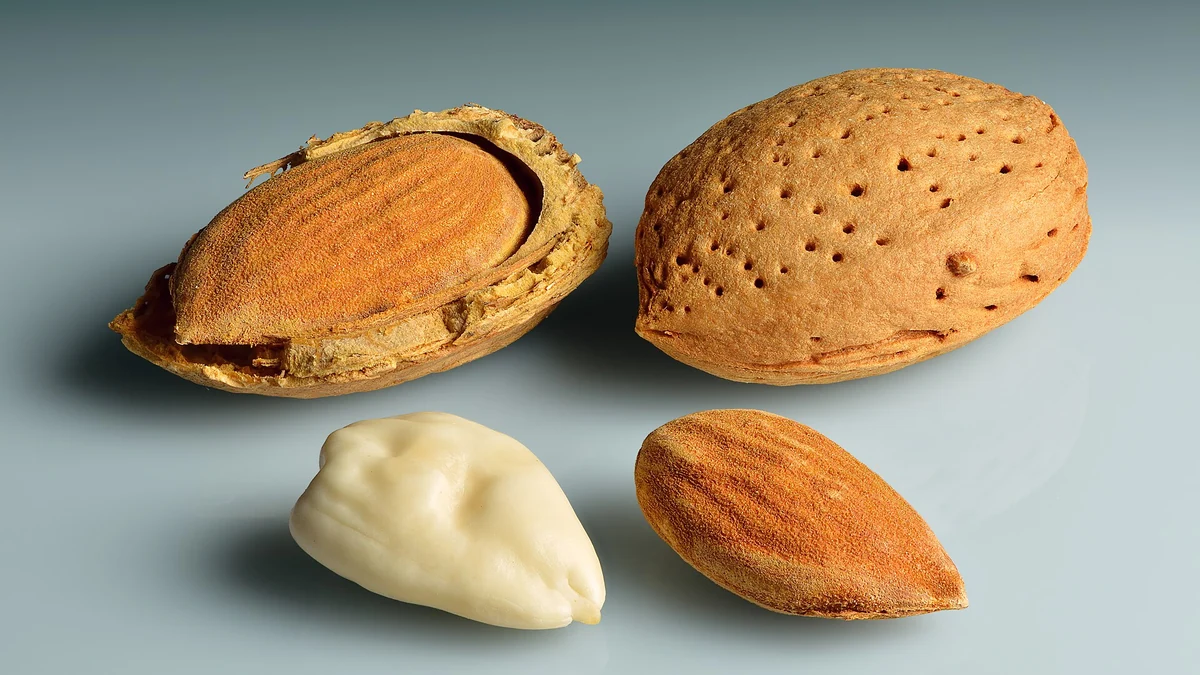
1. Badam Rate Per Kg Today in India: Wholesale & Retail Grade Chart (Nov 2026)
Dry fruit wholesale merchants in Khari Baoli (Delhi), Vashi APMC (Mumbai), Amritsar, and Srinagar trade almonds primarily in 10 kg / 22.68 kg (50-lb) vacuum/poly-lined cartons. Always confirm kernel count per ounce (e.g., bold 18/20 or 20/22 premium gifting grade vs smaller 27/30 bakery grade) alongside origin before locking wholesale purchases:
| Almond Type / Origin | Form & Grading Spec | Indicative Wholesale (Rs/kg) | Indicative Retail (Rs/kg) | Oil Content & Culinary Use |
|---|---|---|---|---|
| California Nonpareil (20/22 Bold) | Shelled Giri (US Extra No. 1) | Rs 680 - Rs 840 | Rs 820 - Rs 1,050 | ~32%–36% oil; uniform smooth skin for gifting & soaked daily use |
| California Independence / Carmel | Shelled Giri (23/25 – 27/30) | Rs 620 - Rs 760 | Rs 720 - Rs 940 | Popular mid-budget bakery, mithai & trail-mix grade |
| California In-Shell Nonpareil | Whole Thin Paper Shell | Rs 430 - Rs 540 | Rs 520 - Rs 680 | Crack-fresh shell (~65%–70% kernel yield by weight) |
| Kashmiri Kagzi Almond (In-Shell) | Whole Paper-Thin Kashmiri Shell | Rs 450 - Rs 680 | Rs 550 - Rs 850 | Locally grown organic/rainfed orchards in Pulwama & Budgam |
| Kashmiri Sweet Badam Giri | Shelled Hand-Cracked Kernels | Rs 950 - Rs 1,350 | Rs 1,150 - Rs 1,550 | Rich buttery sweetness, variable kernel shape (hand-cracked) |
| Gurbandi (Afghani Small Badam) | Small Rugged High-Oil Kernel | Rs 980 - Rs 1,450 | Rs 1,250 - Rs 1,800 | ~42%–45% rich oil; winter Ayurvedic & immunity decoctions |
| Iranian / Afghani Mamra Badam | Boat-Shaped Concave Luxury Giri | Rs 2,200 - Rs 3,400 | Rs 2,800 - Rs 4,400 | ~48%–52% rich natural oil; highest calorie & nutrient density |
Source: Indicative wholesale ranges compiled from Khari Baoli Delhi dry fruit merchants, Vashi Navi Mumbai APMC price circulars, Jammu/Srinagar fruit grower associations, and Agmarknet horticultural records as of November 2026. Retail prices vary cleanly based on branded vacuum tin packaging, GST (12% on processed/salted roasted vs 5%/exempt raw agricultural nuts depending on pack branding), and e-commerce logistics.
2. California vs Kashmiri vs Gurbandi vs Mamra: Why Prices Differ 4×
Many consumers confuse high price strictly with advertising, yet significant agronomic and oil-biochemistry differences separate imported mechanized US California harvests from hand-harvested Himalayan Kashmiri and Iranian Mamra crops:
- US California Badam (Rs 720–Rs 1,050/kg): Cultivated on massive drip-irrigated Central Valley orchards yielding 2,200–3,000+ lbs/acre with mechanized trunk shakers. Produces uniform crisp kernels with lower oil (~32%–36%) and huge global export volume keeping Indian pricing affordable.
- Kashmiri Kagzi & Shalimar Almonds (Rs 950–Rs 1,550/kg Giri): Grown organically in cooler karewa highlands of Pulwama, Budgam, and Baramulla mostly under snowmelt/rainfed terraces without harsh chemical bleaching. Yields slightly smaller asymmetric nuts bursting with aromatic flavor; low output (~10,000–12,000 tonnes nationally) keeps genuine Kashmiri giri scarce and pricey.
- Gurbandi Badam (Rs 1,250–Rs 1,800/kg): Small, tough-looking, occasionally mixed-bitter kernel (watch for rare bitter Prunus amygdalin nuts!) sourced largely via overland Wagah/dry-port trade from Afghanistan—prized for ~42%+ oil content during winter workouts.
- Iranian / Afghani Mamra (Rs 2,800–Rs 4,400/kg): Cultivated predominantly on arid non-forced orchards in Iran and Afghanistan yielding less than 5% of global volume. Distinct curved boat-shaped silhouette packed with nearly 50% natural monounsaturated almond oil—noticeably oily when chewed or crushed between fingers!
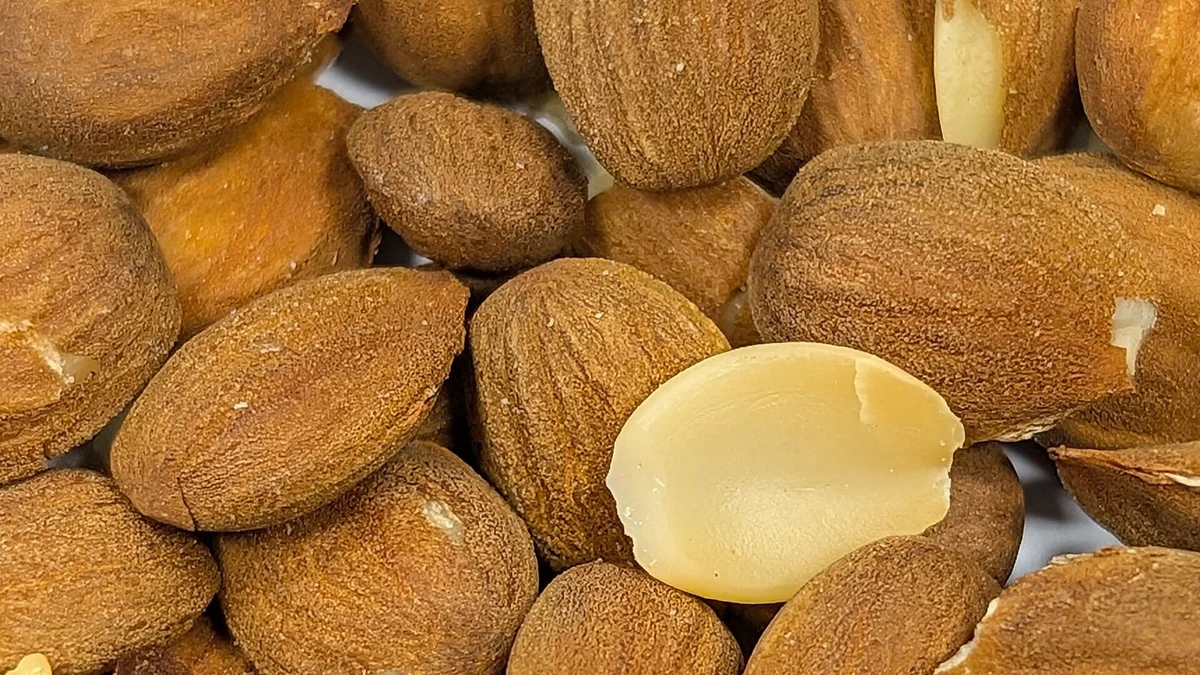
3. Kashmiri & Himachal Orchard Farming: Varieties, Economics & NHB Support
Indian domestic demand exceeds 1.5 to 1.8 lakh tonnes annually while Indian farms currently harvest only around 10,000 to 13,000 tonnes (overwhelmingly in Jammu & Kashmir plus Kinnaur/Chamba pockets of Himachal Pradesh), leaving tremendous import-substitution potential for temperate Himalayan fruit farmers. High-density grafting onto clonal rootstocks bred by ICAR-CITH Srinagar replaces old tall 10-year gestation seedling trees with compact orchards fruiting cleanly from Year 3–4 onward:
| ICAR / Temperate Variety | Shell Type & Kernel % | Flowering & Frost Risk | Potential Yield (Tonnes/Ha) | Best Market Positioning |
|---|---|---|---|---|
| Makhdoom (J&K Selection) | Thin Soft Paper Shell (~50% Kernel) | Early-Mid Bloom (Avoid deep frost pockets) | 2.5 - 3.5 t/ha (In-shell) | Premium whole Kagzi festive market |
| Shalimar & Waris (SKUAST-K) | Semi-Soft Shell (~45%–48% Kernel) | Late Blooming (Escapes March spring frost) | 3.0 - 4.0 t/ha (HDP) | Reliable commercial orchard planting |
| Pranyaj & Nonpareil (CITH) | Soft Thin Shell (~55% Kernel) | Requires cross-pollinizer varieties (33%) | 3.5 - 4.5 t/ha (Irrigated) | Large plump export-grade shelled giri |
| California Mission / Texas (HP) | Semi-Hard Shell (~40% Kernel) | Late Flowering (Frost hardy in Kinnaur) | 2.8 - 3.6 t/ha | Long ambient storage & confectionery |
Source: Temperate fruit descriptor trials published by ICAR-Central Institute of Temperate Horticulture (CITH), Srinagar and SKUAST-Kashmir under MIDH Horticulture Mission norms (2026). Orchardists planning high-density planting or drip irrigation upgrades can calculate grant entitlements via our farm subsidy calculator and crop income calculator.
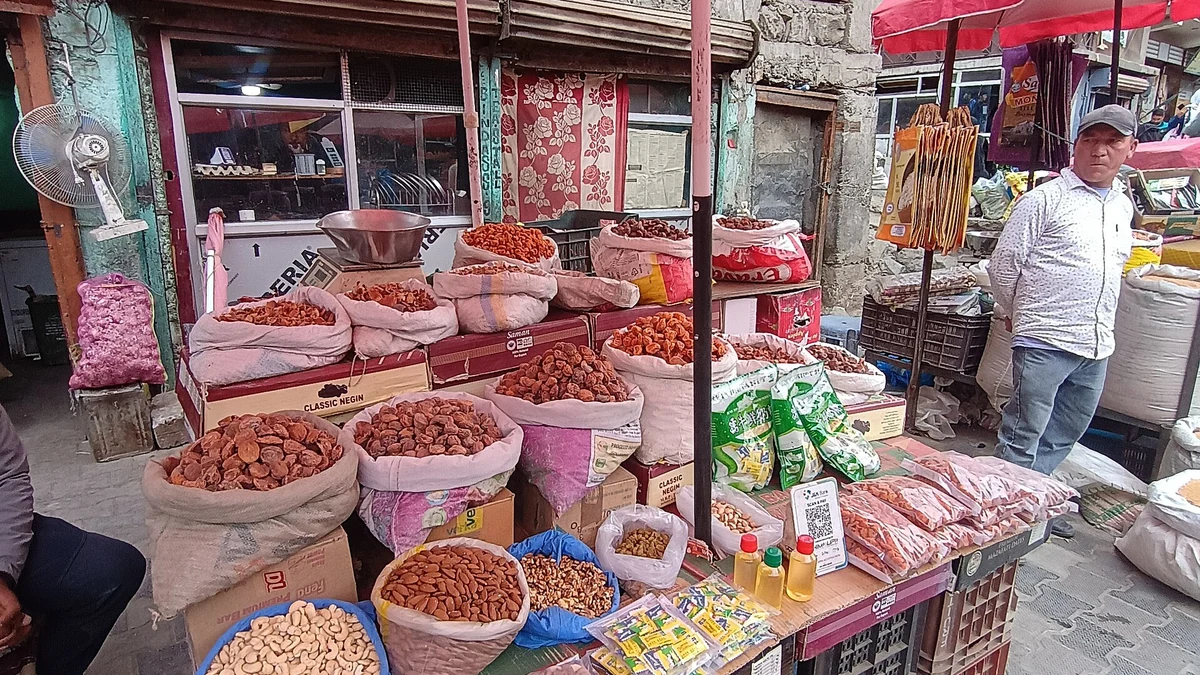
4. Consumer Quality Checks, Storage Tips & Agricultural Finance Tools
Because high-value Kashmiri and Mamra almonds attract adulteration (mixing inexpensive California kernels or machine-grooving shells to mimic Mamra!), smart buyers inspect color uniformity (Mamra varies naturally lighter tan with pronounced longitudinal wrinkles vs smooth dark-brown flat California Nonpareil), crunch freshness without rancid paint smell, and zero tiny pinholes from stored-grain moths.
Farmers and spice/dry-fruit agri-entrepreneurs scaling grading units, vacuum sealers, and cold storages (optimal 4°C–8°C at <60% RH prevents rancidity and aflatoxin for 18+ months!) can explore capital aid on our government schemes portal, check cold-chain loan eligibility via KCC calculators and agricultural EMI tools, verify weather frost cover via PMFBY crop insurance and PMFBY payout tracking, register Farmer ID profiles, compare regional tree crops in our banana varieties & turmeric guides, and follow Mandi Price Watch updates alongside official trade bulletins on Spices Board and Agmarknet.
5. Wholesale Buying Checklist: Moisture, Kernel Size & Adulteration Traps
Whether procuring a 10 kg festive carton for household use or 500 kg commercial stocks for bakery processing, testing every incoming batch on five clear metrics protects buyers cleanly:
- Water Soak & Skin Peel Check: Authentic California Nonpareil and fresh Kashmiri almonds absorb water evenly overnight, swelling crisp white inside while slipping skins smoothly; limp rubbery kernels after soaking signal old stale carryover bags.
- Natural Fragrance vs Paint/Cardboard Odor: Crack two nuts apart and smell immediately; fresh badam carries mild sweet milk-nut aroma whereas oxidized rancid oil smells sharp like stale cooking oil or varnish.
- Zero Insect Webbing or Shriveled "Chip" Ratio: Check box bottoms cleanly for tiny chalky powder or micro-pinholes caused by Plodia stored-product moths, and avoid cheap lots blended with >5% chipped broken kernel fragments sold at full-nut pricing.
- Verify Net Shell Recovery When Buying In-Shell: Never buy thick woody wild mountain shells marketed deceptively as "Kashmiri Kagzi"—squeeze gently in your palm; true Kagzi shells crack cleanly under light thumb pressure yielding >50% whole kernel mass!
Frequently asked questions
- What is the badam price per kg in India today (California vs Kashmiri vs Mamra)?
- As of November 2026, retail badam price per kg averages Rs 720–Rs 1,050/kg for US California shelled almonds, Rs 950–Rs 1,550/kg for shelled Kashmiri badam giri (or Rs 550–Rs 850 whole Kagzi in-shell), Rs 1,250–Rs 1,800/kg for Gurbandi, and Rs 2,800–Rs 4,400/kg for authentic Iranian/Afghani Mamra almonds across Indian wholesale mandis.
- Why is Mamra badam 3 to 4 times costlier than California badam?
- Authentic Iranian and Afghani Mamra varieties grow mostly under harsh arid conditions yielding far fewer nuts per tree than drip-fed California orchards, while packing 48%–52% natural almond oil vs ~32%–36% in commercial California cultivars—delivering visibly oilier richness and denser winter energy.
- How can buyers check if expensive Mamra or Kashmiri badam is genuine?
- Press a Mamra or Kashmiri kernel gently onto clean white tissue paper with a fingernail or pestle: authentic high-oil Mamra instantly leaves an unmistakable translucent oil smudge! Genuine Mamra nuts also show characteristic boat-curved concave shapes and paler grooved skins compared to smooth flat brown California Nonpareil.
- Which market is the biggest wholesale mandi for almonds in India?
- Delhi’s Khari Baoli serves as India’s primary import distribution and national wholesale price benchmark for almonds, followed by APMC Vashi (Navi Mumbai), Amritsar, and Jammu/Srinagar fruit mandis tracked partially under Agmarknet.
- How much almond kernel (giri) comes out of 1 kg whole in-shell badam?
- Depending on variety shell thickness, thin-shell California Nonpareil and Kashmiri Kagzi almonds yield 50% to 70% edible kernel (500–700 grams giri per 1 kg whole in-shell nuts), whereas thick hard-shell mountain varieties yield only 25%–35% kernel.
- Where are almonds commercially farmed inside India?
- Over 85% of India’s domestic almond production comes from the temperate karewa valleys of Jammu & Kashmir (Pulwama, Budgam, Baramulla, Shopian), alongside smaller high-altitude pockets in Himachal Pradesh (Kinnaur, Shimla) supported by ICAR-CITH Srinagar and National Horticulture Board.
- How long can badam be stored at home without turning rancid or bitter?
- Keep shelled badam airtight in glass jars inside a refrigerator (4°C–8°C) to preserve crisp sweetness for 12 to 18 months cleanly. At warm humid Indian room temperatures above 30°C, open bags oxidize almond oil rancid within 2–3 months and attract pantry weevils.
- What does California almond grading "18/20", "20/22", or "27/30" mean?
- Those numbers denote kernel count per ounce (28.35 grams): 18/20 or 20/22 are large jumbo bold kernels preferred for dry-fruit gift hampers (higher Rs/kg price), while 27/30 or 30/32 are smaller whole nuts often used in daily soaking, almond milk, and sweets.
- Are Kashmiri Kagzi almonds better than California almonds for soaking?
- Both provide strong protein, vitamin E, magnesium, and fiber! Kashmiri Kagzi nuts grow naturally with rich aromatic oils and lower chemical bleaching, while California Nonpareil peels effortlessly after overnight soaking at a noticeably lower cost per kg—compare full retail pack prices in our 1 kg almond guide.
- Can Indian farmers get subsidies for planting high-density almond orchards?
- Yes! Temperate farmers in J&K, Himachal Pradesh, and Uttarakhand qualify for 40%–50% grants under MIDH Horticulture Mission and NHB for clonal high-density saplings, hail-net canopies, and drip lines. Estimate project eligibility with our subsidy calculator.
- Why do almond prices spike right before Diwali and peak North Indian winter?
- Heavy festival sweet (kaju-badam katli) demand, corporate dry-fruit gifting hampers during October–November, and winter dietary immunity buying collide ahead of December container arrivals—lifting wholesale prices 8% to 15% seasonally.
- Why should buyers throw away intensely bitter Gurbandi/wild almond kernels?
- Occasional bitter wild Prunus seeds mixed in ungraded lots contain high natural amygdalin (which tastes sharp like bitter cough syrup). Always spit out any strongly bitter-tasting almond immediately rather than swallowing it.
This article is for general information only and is not financial advice. Loan and scheme eligibility depends on partner and government criteria.